
Beyond the First Order: Evaluating Gaming Chair Factories for Long-Term Distribution
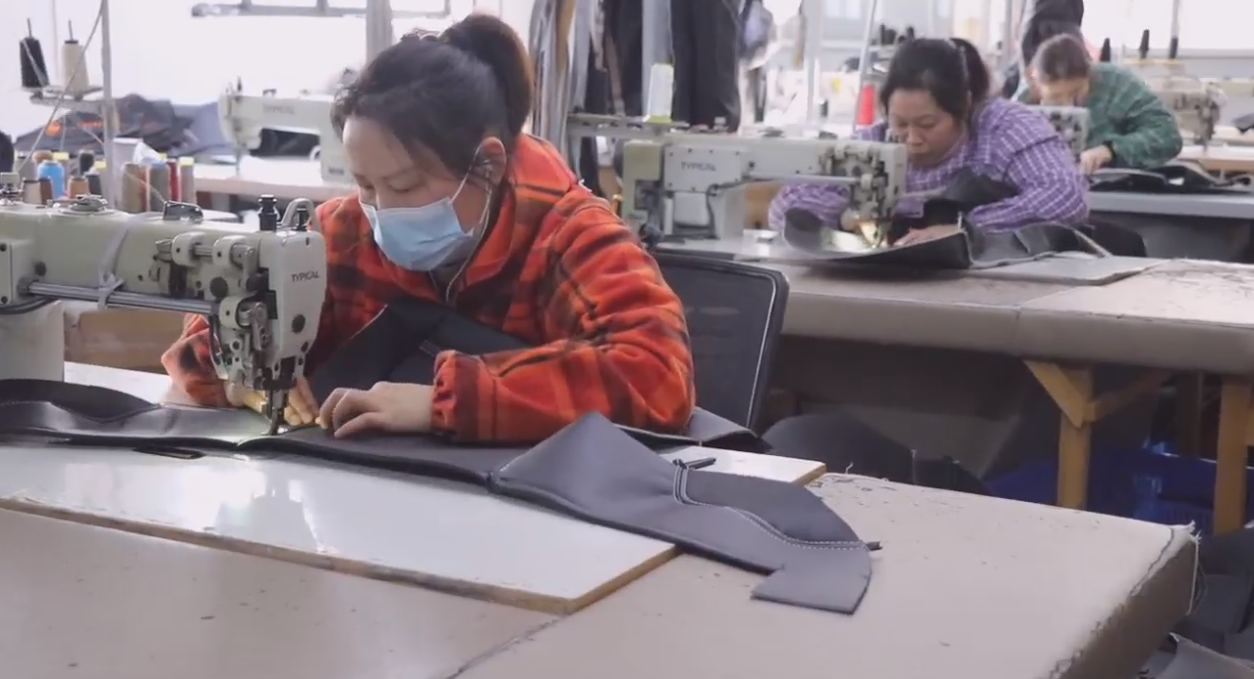
Anji Maochang Furniture's sewing workshop in Anji County, Zhejiang Province, China
Long-term gaming chair supply is built on repeatable performance, not on a single competitive quotation. For distributors, brands and importers, the challenge is to identify factories that can maintain product quality, meet delivery schedules and adapt their product range over multiple ordering cycles. Market fundamentals support this focus. The global gaming chair market is estimated at USD 1.37 billion in 2024 and is projected to reach approximately USD 2.05 billion by 2030, according to market research. PC gaming chairs account for 52.6% of the product segment, and North America holds a 36.4% regional revenue share. In this environment, supply stability becomes a competitive advantage.
This article provides a framework for buying organizations evaluating gaming chair factories for long-term distribution. It uses Anji Maochang Furniture Co., Ltd., a manufacturer based in the Anji furniture cluster of Zhejiang, China, as a working example.
The Problem: Why Long-Term Gaming Chair Sourcing Fails
An initial order rarely reveals how a supply relationship will perform over time. Quality drift often appears in later orders. A factory may agree to a specification and then switch to lower-cost materials such as cheaper plywood, thinner foam or a weaker base after the first shipment has been approved. Buyers may not notice until a full container arrives or warranty claims begin.
For gaming chairs, material-related risk is especially concrete. If plywood carries excessive moisture, mold can develop during container transport or in humid warehousing. This is why incoming-material inspection matters in long-term sourcing, not just final assembly checks.
Other long-term risks include inconsistent batch quality, delayed deliveries during seasonal peaks and weak communication when production issues arise. Buying organizations also depend on product development: if the market shifts toward work-and-game hybrid chairs and the factory cannot adjust specifications, the buyer is forced to search for a new supplier. An evaluation for a long-term relationship must therefore cover systems, capacity and product breadth, not only a tabletop prototype.
Evaluating a Factory for Long-Term Supply
Factory Profile: Anji Maochang Furniture Co., Ltd.
Anji Maochang Furniture Co., Ltd. is located at 198 Yangguang Road, Dipu Town, Anji County, Zhejiang Province, China. The company was established in 2016 and operates a 3,000 m² facility with 25 employees. Annual production capacity is about 75,000 units. Main products are game chairs, office chairs and manicure chairs. According to company information, roughly 98% of its products are exported worldwide, with key markets including the EU, USA, Thailand, Brazil and South Korea. The company website is www.mcrfurniture.com.
These figures give a buyer a realistic baseline. An annual capacity of 75,000 units indicates a balance between production capability and flexibility. This scale supports predictable order flows, mixed-model shipments and internal quality control without the overhead of very large factories. It also means the factory is not built for extreme peak production. A buyer planning a single order of tens of thousands of units may face a capacity constraint. In a long-term relationship, this is not a defect; it simply needs to be matched with realistic order scheduling.
Location should also be considered. The Anji furniture cluster in Zhejiang, China, is described in industry trade data as the world's leading production base for gaming chairs, contributing to China's 30.8% share of global furniture exports. The concentration of suppliers for fabrics, foam, plywood and metal components reduces material-supply risk and shortens response times.
Production Scope and Quality System
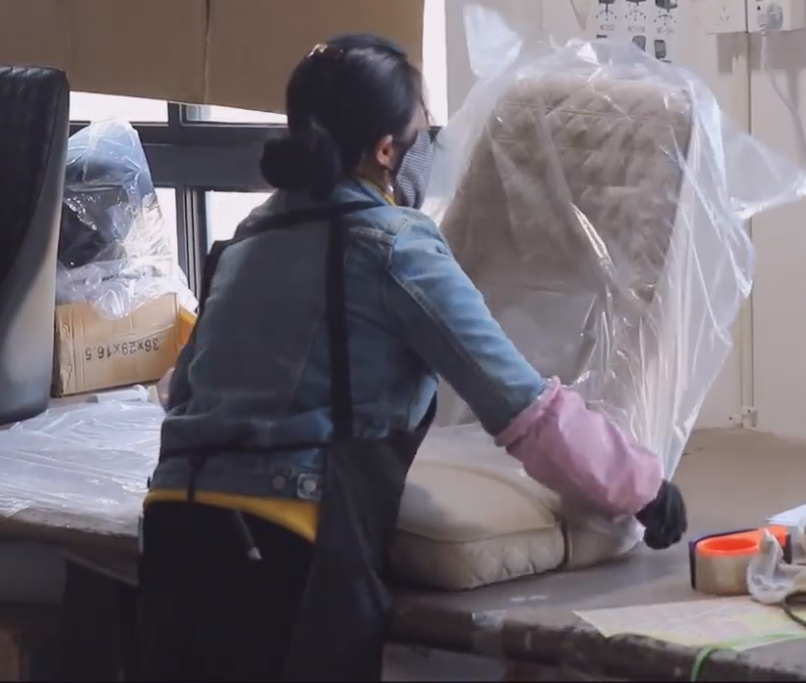
The production process covers cutting, woodworking, foam bonding, sewing, nailing, assembly, cleaning and packing. This vertically integrated flow allows the factory to keep most production steps under its own control, which supports consistency across batches.
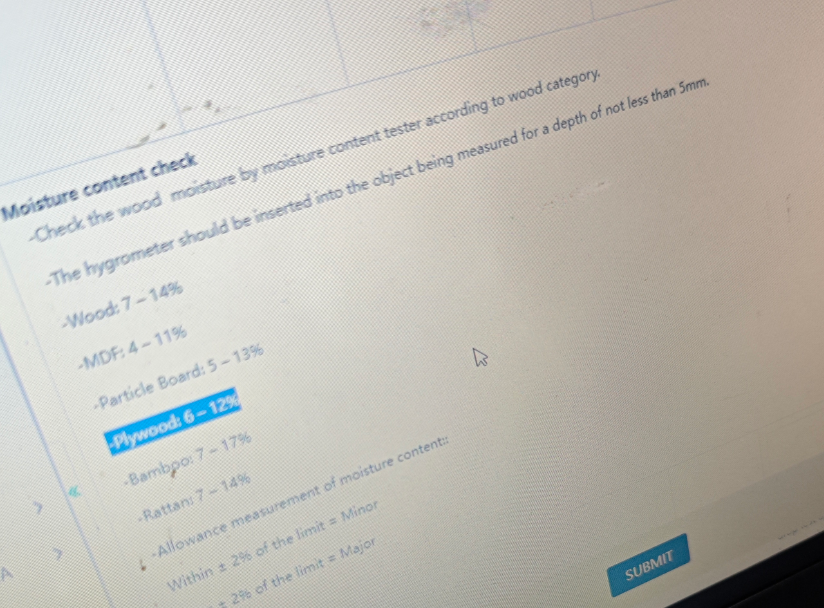
One specific quality measure stands out in the factory's risk-control process: the company inspects plywood with professional tools to measure humidity, and only qualified material is allowed into production. This is a direct response to the mold risk that can arise from high-moisture plywood. For importers, an incoming-material check is more reliable than a final visual check alone, because it prevents defective material from entering the production line in the first place.
Product Ecosystem: A Gaming Chair Range for Multiple Scenarios
A broad product range reduces the need to qualify multiple factories. The Maochang catalogue includes the following gaming chairs:
| Model | Type | Key Specifications | Materials | Scenarios |
|---|---|---|---|---|
| MC1039 | New-design big size gaming chair | Class 3 gaslift; 370mm starbase; frog-type mechanism; height-adjustable armrest; 1pc/carton | PU, PVC, mesh, fabric, plywood, metal frame | Home, office, live streaming, internet cafe |
| MC1039-1 | Heavy duty big size gaming chair | W74×D80×H126-132cm; carton 82×60×53cm; loading 260pcs | PU, metal, plastic | Gaming, home, live streaming, internet cafe |
| MC1040 | Gaming sofa | W80×D72×H119cm; 27.4kg; load capacity 150kg; loading 227pcs | PU+PVC, metal frame | Home, office, live streaming |
| MC196-1 | LED gaming chair | W67×D70×H124-132cm; carton 75×61×32cm; 462pcs/1×40HQ | Fabric, metal, plastic | Office, home, live streaming |
| MC196 | Hot-sale game-type office chair | W67×D70×H124-132cm; carton 76×32×61cm; loading 465pcs | Fabric, metal, foam, plastic | Home, office, live streaming |
| MC1025 | New-design computer chair | W70×D69×H121-130cm; carton 78×38×56cm; loading 410pcs | Fabric, foam, PU, metal, plastic | Home, office, live streaming |
| MC196-2-1 | Exclusive game chair | W70×D70×H118-128cm; carton 75×65×34cm; loading 410pcs | Fabric, metal, plastic, foam | Home, office |
| MC196-3-1 | Game-type computer chair | W66.5×D69×H106-114cm; carton 75×57×37cm; loading 441pcs | Fabric, PVC, PU, metal, plastic, foam | Home, office, internet cafe |
| MC1034 | Racing-type game chair | W71.5×D65×H123-131cm; carton 86.5×65×36cm; loading 334pcs/1×40HQ | Metal, PU, plastic | Office, gaming, live streaming |
| MC196-4 | Game chair with spider element | W68×D69×H122-132cm; carton 75×36×56cm; loading 447pcs | PU, metal, plastic | Gaming, home, live streaming |
The catalogue serves several market scenarios. The MC1040 game sofa, with a 150 kg load capacity, is suitable for heavier users and multi-purpose rooms. The MC196-3-1 game-type computer chair is a practical option for internet cafe operators. The MC196 hot-sale game-type office chair addresses the work-and-game crossover. The MC196-1 LED gaming chair adds visual differentiation for streaming and gaming setups. From a distributor's perspective, this breadth simplifies SKU planning and order consolidation.
Product comparison data also provides a pricing signal. Compared with a regular LED game chair, the factory's exclusive structure is described as delivering 10% improved weight load capacity at approximately 8% higher manufacturing cost for the premium structure. The same source reports a low failure rate and an ergonomic structure that reduces physical fatigue during long sitting sessions. This transparent trade-off helps a buyer position a higher-tier product without guessing at cost drivers.
Market Trends Shaping Long-Term Gaming Chair Demand
Several verified trends are relevant to long-term gaming chair procurement:
- The global gaming chair market is estimated at USD 1.37 billion in 2024 and is projected to reach approximately USD 2.05 billion by 2030.
- North America is the largest regional market, with a 36.4% revenue share in 2024.
- PC gaming chairs dominate the product segment with a 52.6% share.
- PU leather is the most common chair material, with a 57.3% share.
- The work-and-game hybrid chair segment holds a 29.8% share, reflecting demand for home office and gaming versatility.
- Secretlab and DXRacer are identified by market research as market leaders, with estimated shares of 18% and 15%, respectively.
For suppliers, these trends create a clear requirement set. First, core demand remains attached to PC gaming, so racing-style and high-back designs still matter. Second, ergonomic and hybrid products are becoming a necessary category. Third, documentation such as ANSI/BIFMA X5.1 for North America, EN 1335 for Europe and BS 5852 for UK market fire-safety requirements should be checked against specific models before orders are placed.
Procurement Execution: From Decision to Implementation
Execution terms determine how easily a long-term relationship can be managed. Anji Maochang Furniture's standard commercial terms for gaming chairs are:
- MOQ: 50 units
- Delivery: FOB Shanghai or Ningbo
- Acceptance: pre-shipment inspection
- Payment: 30% deposit in advance, balance against copy of bill of lading
A 50-unit MOQ is strategically useful. It allows a distributor to run a small launch order, observe how the factory handles production and documentation, and then scale steadily. FOB Shanghai or Ningbo is a transparent delivery term. The pre-shipment inspection requirement creates a defined acceptance point. The payment structure balances risk: the supplier receives a deposit, and the buyer retains the balance until shipping documents are available.
These terms do not by themselves guarantee continuity, but they provide a repeatable process that both teams can rely on when scaling order frequency.
Comparison: Long-Term Factory Partnership vs. Traditional Sourcing
Traditional buyers of gaming chairs often purchase through trading companies or spot markets, comparing prices on each transaction. This approach works when the goal is immediate stock. It has weaknesses for building a brand: the actual manufacturing origin may change between orders, material quality may shift, and root-cause analysis for problems is harder.
Direct factory partnership offers an alternative. Benefits include direct visibility into production, clearer communication during specification changes, systematic handling of product issues, and the possibility of design collaboration. For a distributor, a direct relationship also supports better forecasting and more stable costing.
There are, however, realistic boundaries. Anji Maochang Furniture's production capacity of roughly 75,000 units per year is not designed for extreme peak volumes. Distributors that need tens of thousands of units in a single compressed window should compare this capacity against peak demand scenarios. The R&D team is small, with 3 engineers. Deep custom engineering of new mechanisms or structural designs will require longer lead times and earlier planning than simple model modifications.
These limits do not disqualify the factory as a long-term partner. They define where it fits best: buyers using phased orders, mixed models and incremental product development are likely to find the fit more realistic.
Future Outlook
The gaming chair market is moving toward more versatile seating. The 29.8% share of work-and-game hybrid chairs shows that long-hour comfort and office-compatible appearance are becoming key product attributes. Supply-chain evaluation is also moving from price-oriented spot buying toward capability-based partnerships. Regional production clusters like Anji, with their contributor role to China's 30.8% share of global furniture exports, offer concentrated supply ecosystems that support this shift.
For buyers who plan to stay in the gaming chair category for several years, the evaluation criteria that matter most are the ones that are difficult to reverse after a bad batch: production control over materials, realistic capacity planning, documented commercial terms and a product line that can evolve with the market. These criteria are exactly what a long-term distribution strategy should be built on.
For reference, the current Maochang Furniture catalogue is available as a PDF: 2026 product catalogue
FAQ
Q: Why does the Anji factory factor matter for long-term gaming chair supply?
A: The Anji furniture cluster in Zhejiang, China, is recognized as the world's leading production base for gaming chairs and contributes to China's 30.8% share of global furniture exports. The cluster offers a concentrated material supply chain and a skilled furniture workforce. Anji Maochang Furniture operates within this cluster and was established in 2016 to produce game chairs, office chairs and manicure chairs.
Q: What is the annual production capacity of Anji Maochang Furniture?
A: The company operates a 3,000 m² factory with 25 employees and produces about 75,000 units per year. Approximately 98% of its products are exported to markets including the EU, the USA, Thailand, Brazil and South Korea.
Q: Which gaming chair models and scenarios does the factory cover?
A: The product range includes the MC1039 and MC1039-1 heavy duty big size models, the MC1040 gaming sofa with a 150 kg weight capacity, the MC196-1 LED gaming chair, the MC196 game-type office chair, the MC196-3-1 game-type computer chair for internet cafes, the MC1034 racing-type game chair and more. These target home, office, live streaming and internet cafe use.
Q: What is the MOQ for gaming chairs at Maochang Furniture?
A: The standard MOQ is 50 units. Delivery terms are FOB Shanghai or Ningbo, and the process includes a pre-shipment inspection.
Q: How does Maochang Furniture handle long-term material quality risks?
A: The company checks plywood humidity with professional tools before production and uses only qualified materials. This reduces the risk of mold and material-related failures during shipping and storage.
Q: What are the payment terms for gaming chair orders?
A: The standard payment arrangement is 30% deposit in advance, with the balance paid against a copy of the bill of lading. The standard MOQ is 50 units.