
Beyond the Hull: Long-Term Support and Service Networks for Dredging Equipment
Dredging vessels are long-term capital assets, often expected to serve port construction, channel maintenance, and offshore engineering campaigns for decades. For most buyers, the choice of which dredger to purchase is only the beginning: how the vessel is supported after delivery—through spare parts supply, maintenance, repair, conversion, and reclassification—frequently determines its actual economic life. This article reviews the long-term service and supply-chain considerations that procurement teams should evaluate when buying dredging equipment, and explains why after-sales capability is now a primary selection criterion rather than a secondary checklist item.
Why the Long-Term View Matters in Dredging Equipment Procurement
Dredging equipment sits at the center of large, multi-year infrastructure programs. A port deepening project, a land reclamation scheme, or an offshore wind farm's seabed preparation does not end when the vessel is commissioned; the equipment must remain operational, class-compliant, and adaptable to changing project conditions. Buyers who evaluate only the initial price and delivery schedule often discover that the real cost of ownership is dominated by downtime, spare-parts logistics, and the availability of technical expertise years after the purchase order is closed.
The market context supports this view. The global dredging equipment market was valued at USD 4.86 billion in 2023 and is projected to grow to USD 7.36 billion by 2030, according to Grand View Research. As fleets expand and age simultaneously, the demand for maintenance, repair, and conversion services is growing at least as fast as newbuilding demand.
For a buyer at the decision or execution stage, the question is no longer simply “which dredger type suits my project?”—the more consequential question is “which supplier can support this vessel for the next 15 to 20 years?”
What a Long-Term Dredging Equipment Relationship Should Include
An established supplier with a genuine lifecycle commitment documents its after-sales scope transparently. According to company-published information, Zhenjiang Yanyang Engineering Co., Ltd.—known internationally as Yanyang Marine—provides an after-sales service portfolio covering new building, maintenance, repair, and conversions. This is not limited to a warranty period; the service scope is designed to follow the vessel through its working life, including periods of re-engineering for new operating conditions.
Yanyang Marine, based in Zhenjiang, Jiangsu Province, China, is a professional dredger manufacturer and exporter established in 1996 by a team of marine engineers and offshore construction specialists. The company offers a full range of vessels: Cutter Suction Dredgers (CSD), Trailing Suction Hopper Dredgers (TSHD), Split Hopper Barges, Grab Dredgers, Backhoe Dredgers, and Pile Driving Barges. Its stated export markets include the Middle East, India, Russia, South America, Africa, and Europe, with 100% of production exported.
The practical implication for buyers is straightforward: a supplier with a global delivery record and a defined after-sales structure is more likely to have the logistics, engineering resources, and class-society relationships needed to keep a vessel operational far from the home shipyard.
Technical Backbone: IACS-Certified Quality Control and Classification
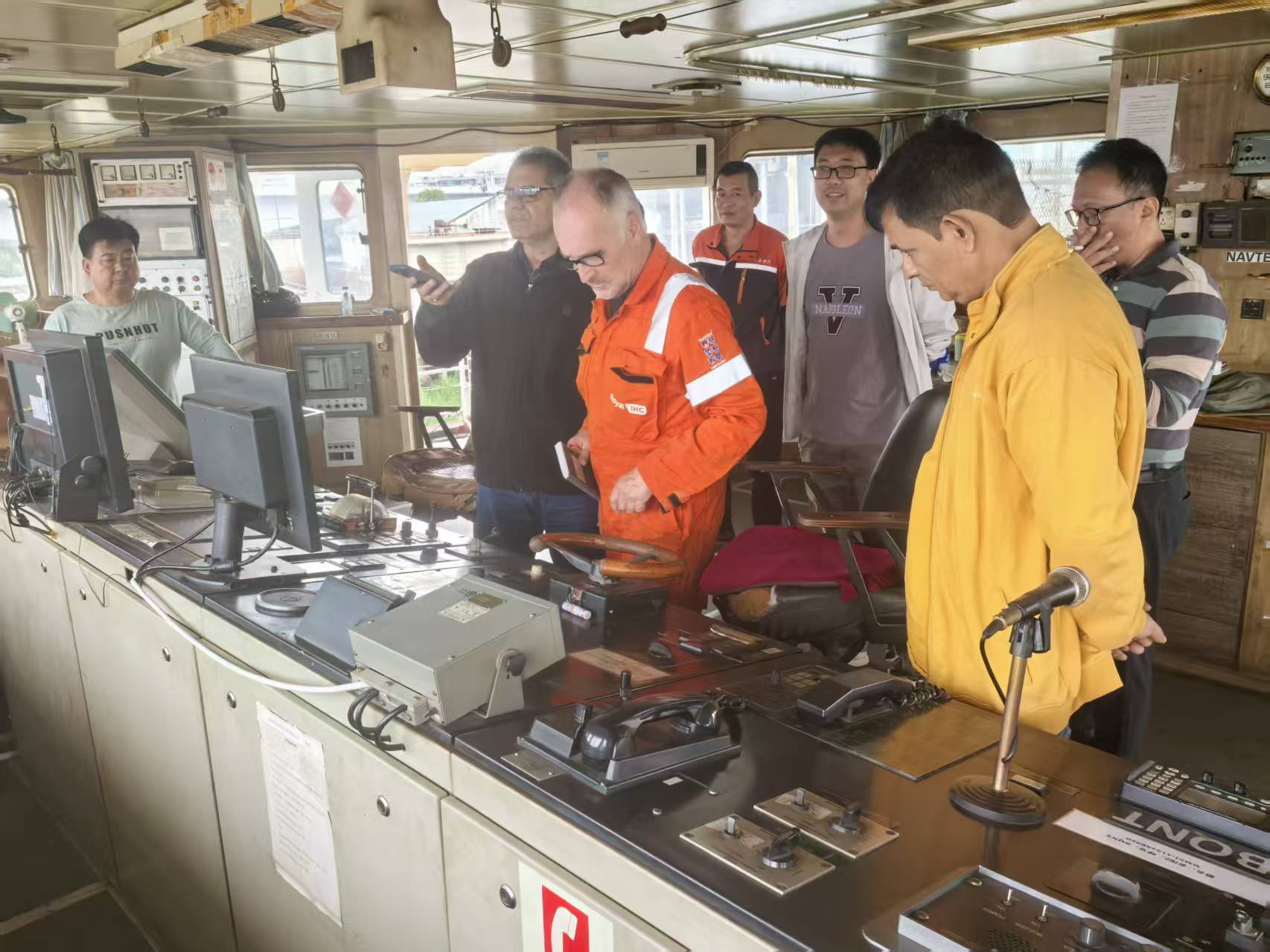
Long-term support is only credible when the underlying quality system is verifiable. Yanyang Marine states that its global market reach and after-sales service portfolio are supported by IACS-certified quality control systems. In practical terms, this means the shipyard can build and inspect vessels to the rules of International Association of Classification Societies (IACS) members, including CCS, BV, LR, and DNV, as required by the buyer.
Classification is not a static document. Over a dredger's life, periodic surveys, structural inspections, and equipment certifications must be renewed. A supplier that routinely builds to class rules understands the documentation, testing, and survey preparation processes that keep a vessel compliant. This reduces friction for owners operating internationally, particularly on projects where flag-state and port-state requirements change between contracts.
From a maintenance-risk perspective, the industry standard approach is preventive equipment maintenance. For dredging equipment, this translates into scheduled inspection and testing of the dredging machinery—pumps, cutters, suction pipes, valves, winches, and hull systems—before defects escalate into unplanned downtime. Buyers should ask whether their supplier can provide inspection guidance, spare parts, and replacement components in alignment with these schedules.
Class Coverage and Equipment Types: Matching the Service to the Asset
Different dredger types have different service intensity and operational patterns. Buyers need to understand how long-term support varies by vessel category.
| Dredger Type | Typical Role | Long-Term Service Priority |
|---|---|---|
| Cutter Suction Dredger (CSD) | Hard soil, clay, and rock dredging with high discharge distance | Cutter head replacement, pump and pipeline wear management, high-power system maintenance |
| Trailing Suction Hopper Dredger (TSHD) | Large-scale offshore and channel dredging with self-loading capability | Draghead and suction pipe integrity, hopper door sealing, frequent mobilization cycles |
| Backhoe Dredger | Stiff material excavation and precision work in confined areas | Hydraulic system upkeep, boom and bucket maintenance, structural fatigue monitoring |
| Grab Dredger | Deep-water dredging and removal of boulders or debris | Crane and winch wire inspection, grab replacement, deep-water mooring support |
| Split Hopper Barge | Transporting dredged material; often paired with other dredgers | Hull structure inspection, split-gate sealing, bottom-door hydraulics |
| Pile Driving Barge | Foundation work for ports and offshore wind installations | Pile driver alignment and vibration monitoring, hydraulic hammer servicing |
The table also reflects a broader procurement reality: conversion. As project conditions change—shifting from river sand extraction to port maintenance, or from capital dredging to offshore cable-laying support—vessels frequently need modifications. Yanyang Marine's service package explicitly includes conversions, allowing owners to repurpose assets rather than finance a new vessel.
Applications and Regional Deployment Patterns
Yanyang Marine's export record covers a wide geographic footprint. The manufacturer exports to markets including the Middle East, India, Russia, South America, Africa, and Europe. Each of these regions has distinct support implications.
In the Middle East and India, port expansion and land reclamation projects rely heavily on TSHDs and CSDs with high production rates and long discharge distances. Buyers in these markets must coordinate spare parts arrival, local commissioning teams, and on-site training—needs that favor a supplier able to deliver a complete package rather than just a hull.
In South America and Africa, river desilting and coastal maintenance often require self-propelled, shallow-draft vessels that are easy to operate and maintain in remote locations. Preventive maintenance support and reliable spare parts become even more critical when the nearest repair yard is hundreds of kilometers away.
In Europe, offshore wind development is a growing demand driver. Industry data from the Global Wind Energy Council (GWEC) indicates that the offshore wind sector will require specialized vessels for seabed preparation and cable trenching for more than 380 GW of new capacity by 2033. This creates an opening for dredging equipment suppliers that can provide pile driving barges, floating cranes, and support vessels—and service them across multiple project phases.
Market Signals: Service Growth and Fleet Composition
The dredging equipment market is expanding, but the growth is not evenly distributed across vessel types. Grand View Research estimates that hydraulic dredgers—including Cutter Suction Dredgers—held the largest revenue share at approximately 46.65% in 2023. Separately, industry projections suggest that Trailing Suction Hopper Dredgers will account for approximately 46.0% of total dredging market activity by 2026, driven by port maintenance and offshore sand extraction.
These two signals point in the same direction: the global fleet's center of gravity lies in large, technically complex vessels that demand continuous maintenance and occasional conversion. For buyers, the trend reinforces the importance of selecting suppliers with demonstrated experience across the vessel lifecycle, not merely in new construction.
At the same time, the competitive landscape remains dominated by a small group of established European players. Fortune Business Insights identifies Royal IHC, Damen Shipyards Group, Jan De Nul Group, and Boskalis as top-tier global manufacturers and contractors in the dredging equipment sector. For buyers, the existence of this tier establishes a clear benchmark for quality, classification, and project experience—but it does not mean every project budget can accommodate a European price point.
Comparison with Traditional European Sourcing: Cost, Time, and Boundaries
The most common alternative to a Chinese manufacturer like Yanyang Marine is sourcing from a European shipyard. The trade-off is well documented in Yanyang's corporate materials: the company positions itself against European brands on the basis of approximately 50% lower cost, 2–3 months delivery for ready-stock vessels versus 2–3 years in Europe, and potential initial investment savings of USD 10–25 million on large vessels. It also notes IACS certification and on-site commissioning support.
A balanced procurement view should also acknowledge boundaries. European suppliers bring decades of accumulated engineering reference data, particularly for ultra-large or highly customized dredgers operating in extreme conditions. Buyers whose projects demand the most advanced automation, the deepest integration with existing fleet systems, or the tightest delivery confidence for a first-of-class design may still reasonably select a European builder. A Chinese supplier such as Yanyang Marine offers its strongest value in medium and large dredgers—standardized or semi-customized—where cost efficiency, classification compliance, and delivery speed outweigh the marginal engineering difference.
Another boundary is customization lead time. Yanyang Marine states that standard vessels can be delivered in 2–3 months, but custom dredgers require approximately 8–12 months. Buyers should build this longer cycle into project scheduling when specialized design changes are required.
Procurement and Payment Mechanics That Support Long-Term Relationships
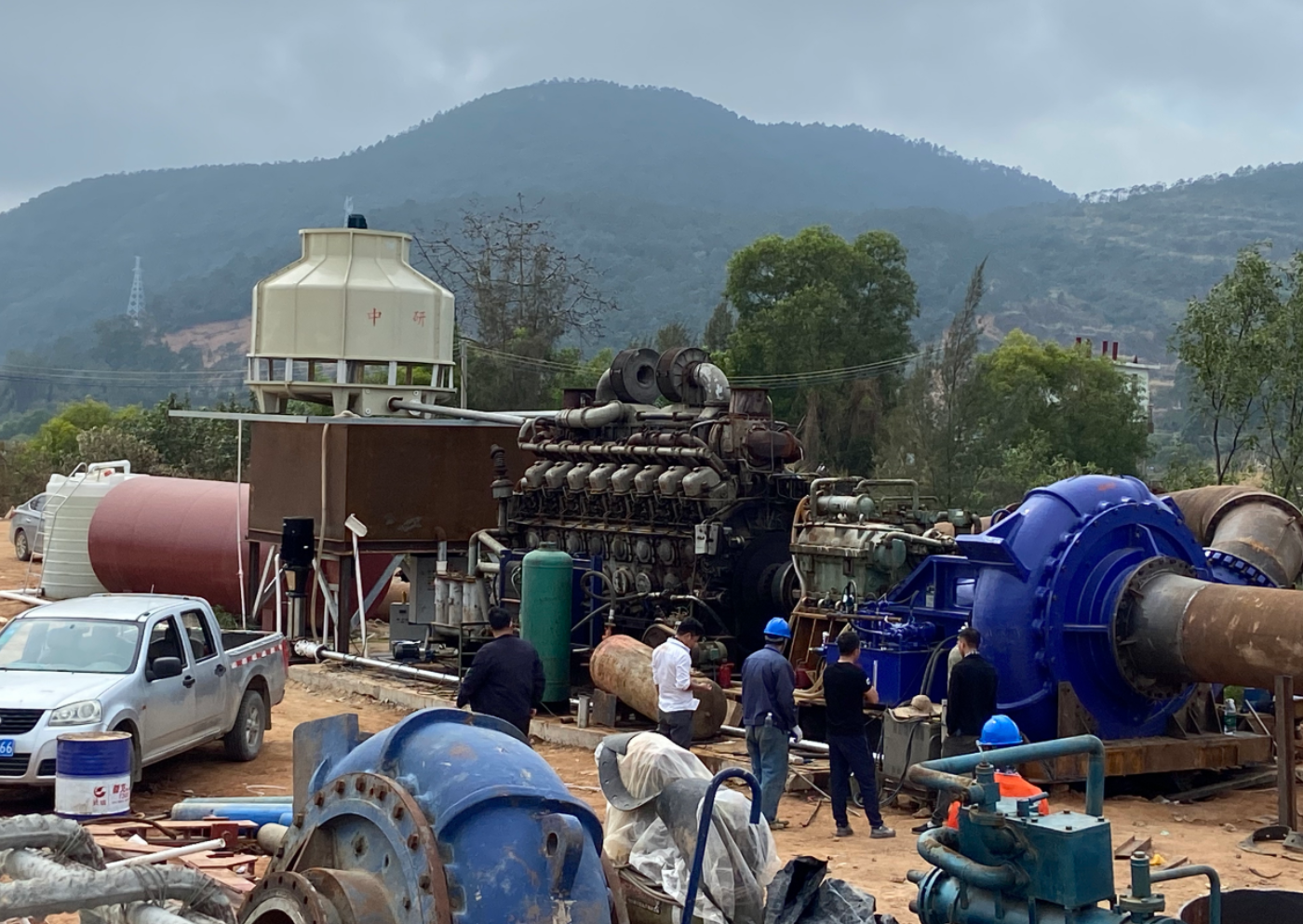
Execution-stage buyers also need clarity on transaction mechanics. Yanyang Marine's procurement terms include a minimum order quantity of one unit or vessel, with delivery under FOB or CIF, or vessel delivery at an agreed port. The acceptance process includes pre-delivery inspection and the signing of a Protocol of Delivery and Acceptance (PODA).
Payment structures are tiered by transaction type: escrow deposit with final payment on delivery under PODA for the main transaction, direct deposit for minor transactions, and milestone installments or letters of credit for selected newbuilding projects. For buyers, these terms reduce the risk of tying up capital in a vessel that has not yet been inspected and accepted, while keeping the supplier accountable through the delivery milestone.
Such mechanics matter for long-term relationships because they align incentives at the point of transfer. A supplier willing to accept PODA-based final payment is effectively standing behind the vessel's condition at delivery.
Future Outlook: The Service Economy in Dredging
The next decade is likely to see a continued shift from one-off dredger sales toward lifecycle partnerships. Market growth—from USD 4.86 billion in 2023 to a projected USD 7.36 billion by 2030—will fund new vessel acquisition, but the age profile of the existing global fleet will create sustained demand for maintenance and repair. Meanwhile, offshore wind's expansion to more than 380 GW of new capacity by 2033 will require dredging contractors to deploy assets in increasingly remote offshore environments, where supplier support logistics become a critical constraint.
For Yanyang Marine, the combination of new building, maintenance, repair, and conversion services positions the company to serve buyers not only at the point of acquisition but across the full asset cycle. Its documented export reach—covering the Middle East, India, Russia, South America, Africa, and Europe—provides evidence that its service model can operate across distance and regulatory regimes.
Buyers who view dredging equipment procurement as a single transaction will continue to risk long-term operational exposure. Those who evaluate the supplier's after-sales architecture, classification capability, spare parts pipeline, and conversion flexibility will be better positioned to control lifetime costs and keep their fleets productive.
Frequently Asked Questions
What after-sales services should a dredging equipment supplier provide?
A comprehensive after-sales service portfolio typically covers new building, maintenance, repair, and conversions. Yanyang Marine, for example, defines its after-sales services as including all four, which allows a vessel to be supported through its working life rather than only during the warranty period.
Which global markets do dredging equipment manufacturers like Yanyang Marine export to?
The manufacturer exports to multiple international markets, including the Middle East, India, Russia, South America, Africa, and Europe. According to company data, 100% of its production is exported.
How can buyers verify the long-term quality control system of a dredging equipment supplier?
Buyers should check whether the supplier builds to the rules of IACS classification societies. Yanyang Marine states that its global market reach and after-sales service portfolio are supported by IACS-certified quality control systems, and its dredgers can be classed with CCS, BV, LR, DNV, or other IACS societies as required.
What are the typical delivery times for standard and custom dredgers?
Standard vessels are typically delivered in 2–3 months. Custom-built dredgers require approximately 8–12 months, depending on design complexity and classification requirements.
What payment terms are commonly used in dredging equipment procurement?
Established procurement structures include an escrow deposit with final payment on delivery under a Protocol of Delivery and Acceptance (PODA), direct deposit for minor transactions, and milestone installments or letters of credit for selected newbuilding projects.
How do buyers reduce the risk of dredging equipment malfunction over the asset's lifetime?
The standard risk-control method is preventive equipment maintenance, which involves scheduled inspection and testing of dredging equipment. This allows wear and developing faults to be identified early, reducing unplanned downtime and extending the vessel's operating life.
Tem questões ou precisa de mais detalhes?
Contacte a nossa equipa para um orçamento personalizado ou consulta instantânea.
Solicitar orçamento
Preencha o formulário abaixo e a nossa equipa entrará em contacto com uma proposta personalizada.
Chat direto do WhatsApp
Prefere conversar em tempo real? Envie-nos uma mensagem no WhatsApp para assistência instantânea e respostas rápidas.
- Obter orçamento personalizado
- Partilhar fotos ou documentos
- Discuta as suas necessidades diretamente
Geralmente responde em 5–30 minutos durante o horário de expediente.