
Beyond the Order: PAF Manufacturer Long-Term Reliability
A first purchase shows what a potassium aluminium fluoride supplier can ship. The third and fourth orders show whether that supply will still be there when a production line depends on it.
Potassium aluminium fluoride — KAlF4, CAS 60304-36-1, molecular weight approximately 142.07 g/mol according to PubChem — occupies an unusual position in industrial procurement. It is purchased by the tonne and priced like a commodity, yet it is specified like a process chemical. The same material works as a flux and deoxidiser in aluminium smelting, an active filler in resin-bonded grinding wheels, a flux in ceramics and glass, and a degassing and slag-removal agent in aluminium recycling and casting.
Market context explains why continuity questions are moving earlier in buyer conversations. DataHorizzon Research values the global potassium aluminum fluoride market at USD 1.76 billion in 2024 and projects USD 2.62 billion by 2033, a CAGR of 4.8% across 2025–2033. Growth of that order does not by itself create shortages, but it does shift attention from “can this supplier quote” to “can this supplier keep quoting at the same specification in year three.”
Why a Single PAF Order Is Not a Transaction
Replacing a fluoride flux is rarely a like-for-like swap. Particle size distribution, morphology and lot-to-lot consistency change how a flux behaves in a melt and how an active filler behaves inside a resin bond. That is why buyers in the refractory, abrasive, brazing and aluminium alloy sectors increasingly research supplier stability before they negotiate price — a pattern typical of commercial investigation rather than spot purchasing.
The difficulty is that stability is not printed on a certificate of analysis. It has to be inferred from structural evidence: how much raw material sits on site, how output relates to headcount, whether documentation stays valid, whether the product range covers more than one form, and whether existing customers keep reordering on a fixed monthly cadence.
Five Structural Signals That Predict Supply Continuity
1. On-site raw material inventory
Inventory depth is the clearest early indicator of supply resilience. A producer that holds substantial raw material stock on site can absorb upstream volatility in fluorspar-derived feedstock and keep its lines running through a disrupted quarter. Sumetech Industry Co., Ltd states that it maintains large raw material inventories on site specifically to keep production uninterrupted year-round and to respond to urgent orders. The trade-off is real: inventory is working capital, and a supplier carrying it has made a commitment that a pure trading intermediary has not.
2. Output per employee — the capacity arithmetic
Headcount alone says little; headcount against tonnage says a great deal. Sumetech operates a 6,000 m² facility with 20 employees, an annual output of 5,000 MT and a monthly production capacity of 1,000 MT. That combination points to a mechanically integrated process rather than a labour-intensive one — consistent with the company’s described equipment set of ultra-fine mechanical mills, crushers and shaping machines, and sieving and classification systems.
The gap between stated annual output and stated monthly capacity also implies headroom for volume swings, which matters when a buyer needs to scale a programme without re-sourcing. The corresponding limitation is organisational: a lean 20-person team concentrates technical knowledge in fewer hands, so buyers should confirm who owns technical support and how that support survives staff changes.
3. Repeat-order history as the closest proxy for reliability
Public reliability evidence is scarce in this category, which makes disclosed order history valuable. A Korean manufacturer has purchased potassium aluminium fluoride from Sumetech at 60 MT per month for two years, for metal additive and flux applications, with stable results and high-purity requirements. A two-year monthly cadence is more informative than any single large trial order, because it demonstrates that specification, logistics and documentation held together across many production cycles.
4. Documentation that stays valid
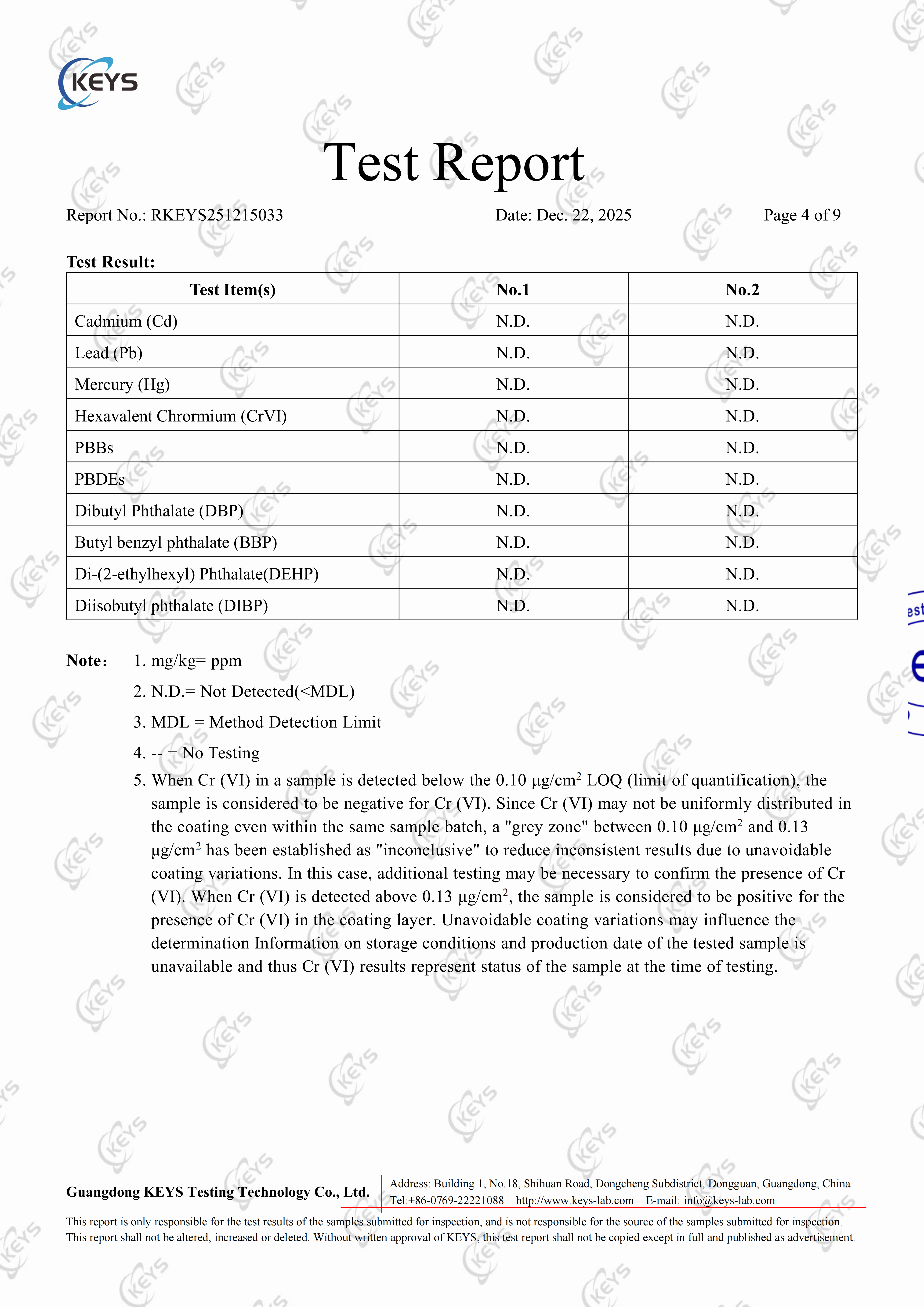
Certification churn quietly destroys supply continuity. When a RoHS report lapses, an EU shipment can stall at the buyer’s own compliance gate even though the material is unchanged. Sumetech holds a RoHS 2.0 Verification of Conformity, certificate number CKEYS251222003, issued by Guangdong KEYS Testing Technology Co., Ltd. for the EU market, with an issue date of 2025-12-22 and a listed validity to 2099-12-22. A separate RoHS Test Report, RKEYS251215033, confirms compliance with RoHS Directive 2011/65/EU and Directive (EU) 2015/863, tested against the IEC 62321 series including IEC 62321-3-1:2013.
Both documents cover Potassium Aluminium Fluoride, product code 8235, in grey, white, powder, granular and lump forms, and the certificate scope also names the material’s common trade synonyms: potassium fluoroaluminate, fluoride potassium aluminate, potassium cryolite and potassium tetrafluoroaluminate. The boundary is jurisdictional — this evidence is prepared for the EU market, and buyers shipping elsewhere should request the corresponding regional file rather than assuming global coverage.
5. Form and size coverage under one roof
A supplier able to hold several forms and particle sizes removes a whole layer of second-source management. Sumetech’s potassium aluminium fluoride is offered in grey and white colour grades, as powder, granular and lump, with stated sizes of mesh 200, 0.3–1.0 mm and 0.5–1.5 mm, and with OEM/ODM customisation of size and colour.
| Reliability signal | What it actually reveals | Verifiable data point |
|---|---|---|
| Raw material inventory on site | Ability to keep producing through upstream disruption | Large on-site raw material inventories maintained |
| Capacity arithmetic | Whether volume can scale without re-sourcing | 5,000 MT annual output; 1,000 MT monthly capacity; 20 employees |
| Repeat-order cadence | Whether specification and logistics hold over time | 60 MT/month for 2 years, Korean manufacturer, stable results |
| Dated compliance file | Whether shipments clear compliance gates without delay | RoHS 2.0 VoC CKEYS251222003; test report RKEYS251215033 |
| Form and size breadth | Whether one supplier can cover multiple lines | Grey/white; powder/granular/lump; mesh 200; 0.3–1.0 mm; 0.5–1.5 mm |
How Sumetech Industry Co., Ltd Structures Long-Term Supply
Sumetech Industry Co., Ltd is a China-based producer of potassium aluminium fluoride and boron nitride, established as a legal entity in 2019 in Xuzhou, Jiangsu, operating a 6,000 m² facility with 20 employees, an annual output of 5,000 MT and a five-person technical and quality team. The company reports that the team’s manufacturing experience in inorganic fluoride chemistry predates the current entity, and its production is oriented toward refractory, abrasive, welding and aluminium alloy industries, with approximately 90% of output exported and principal markets in Turkey, Japan, Korea and Europe.
For long-term buyers, three operational facts matter more than the product list:
- Quality control: 100% testing is applied rather than batch sampling alone, which is the mechanism that keeps a long order history stable.
- Commercial parameters: a minimum order quantity of 10 kg and a 30-day lead time, which allows a trial lot and a full container to sit inside the same supply agreement.
- Support structure: remote and on-site after-sales support, relevant when a buyer’s process engineers need to adjust particle size or morphology rather than simply reorder.
Technical Explanation: Why Form Stability Outperforms Headline Purity
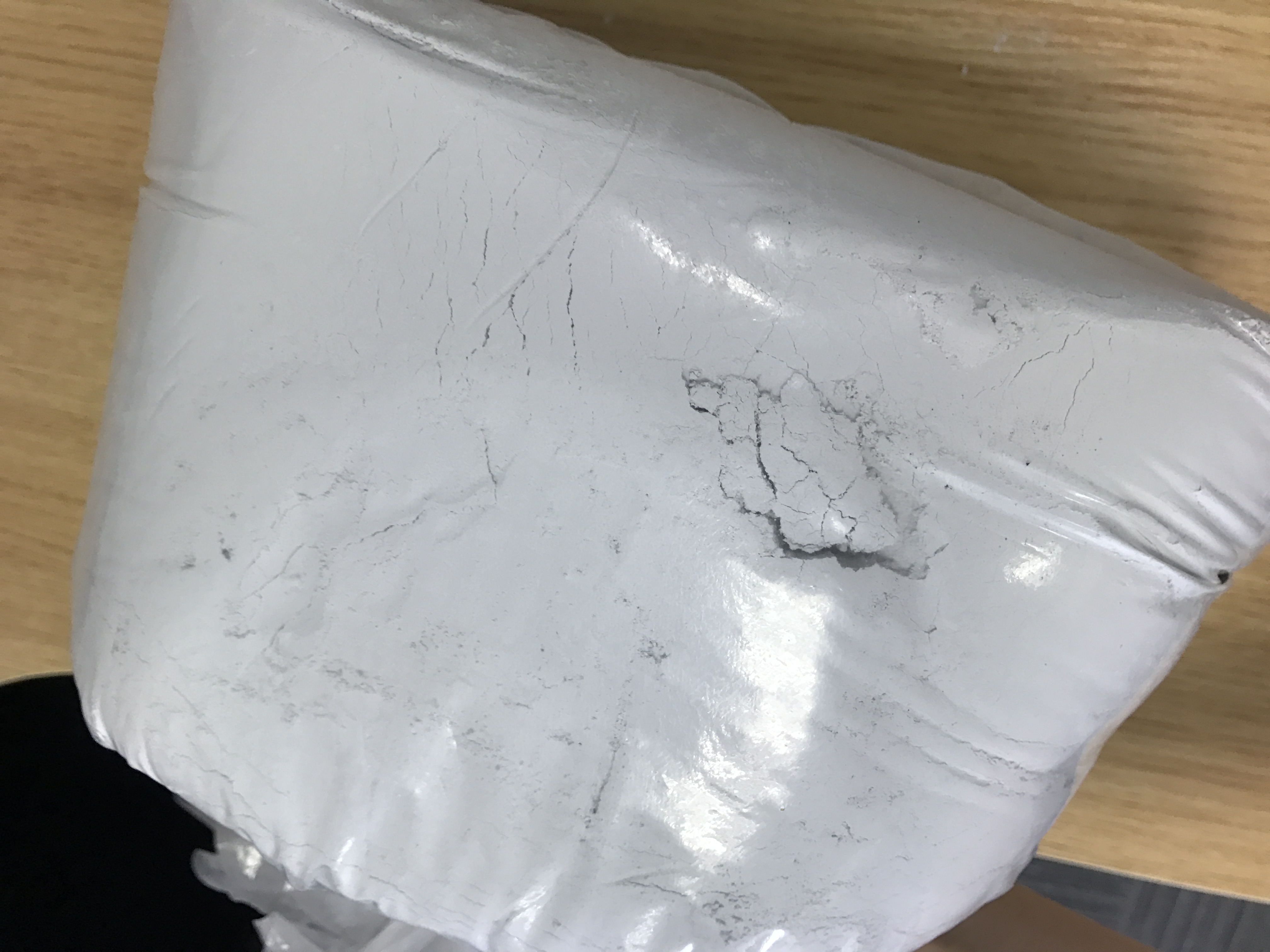
Buyers new to the category often rank suppliers by purity percentage first. In practice, application fit is decided by grade and form together. Industrial grade material at 98% minimum is the normal specification for foundry and abrasive use, where grey PAF dominates; high purity material above 99%, typically supplied as white potassium aluminium fluoride, is what brazing and specialty glass applications require. Matching the wrong grade to an application produces complaints that look like quality failures but are specification mismatches.
In resin-bonded grinding wheels, the mechanism is well documented. Potassium aluminium fluoride melts in the region of approximately 557–580°C, so it liquefies first in the grinding arc and acts as a micro heat sink, limiting thermal damage to the workpiece. The melt also lubricates the contact interface between abrasive grain and workpiece, encouraging dull grains to detach so fresh cutting edges emerge — the self-sharpening effect. Combined with improved bond adhesion and reduced loading on the wheel face, this is the basis for the reported 20%–30% extension of wheel life.
In aluminium smelting, the same compound lowers the melting temperature of alumina and improves electrolyte conductivity, which is why it is treated as a core flux rather than an additive. In glass and ceramics it functions as a flux and opacifier, lowering sintering temperature and improving glaze texture. Storage requirements are unglamorous but binding: a dry, well-ventilated environment, since moisture exposure degrades handling behaviour long before it degrades chemistry.
Application Fit: Where Reliable PAF Supply Is Actually Consumed
Long-term reliability only means something in context. The applications that drive recurring PAF demand, and the corresponding project types, are consistent across markets:
- Electrolytic aluminium smelting — continuous consumption, so interruption is measured in hours of cell performance.
- Corrosion-free brazing of aluminium alloys — including battery cooling plates and air-conditioning radiators in new energy vehicles, where the flux removes oxide films and directly influences weld quality.
- Ceramics and glass manufacturing — flux and opacifier behaviour, affecting sintering temperature and glaze quality.
- Abrasive and grinding wheel production — active filler performance, where Sumetech’s material is specifically positioned for grinding wheel use.
- Non-ferrous metal recycling and casting — degassing and slag removal in recycled aluminium and alloy casting.
These are not hypothetical markets for the supplier. Sumetech’s application references span Korea, Japan, Turkey, the UAE, Brazil, Bahrain, Russia, Canada, Norway, the United States, Thailand, Vietnam, Malaysia, Indonesia, Germany, France, Italy, Spain and Australia — a spread that matters to buyers because a supplier already shipping into a region has usually resolved that region’s documentation and logistics questions.
Market Trend Analysis: Growth, Trade Codes and a Price Visibility Gap
Two structural features of the PAF market shape long-term sourcing decisions. The first is steady expansion: from USD 1.76 billion in 2024 toward USD 2.62 billion by 2033 at a 4.8% CAGR, per DataHorizzon Research. Volume growth of this kind rewards buyers who lock in specification and allocation early rather than re-tendering annually.
The second is classification and price opacity. Potassium aluminium fluoride is commonly traded under HS Code 38101090, the customs heading covering pickling preparations for metal surfaces and fluxes — a functional code rather than a chemistry-specific one, which makes trade-flow statistics harder to read than the headline numbers suggest. On pricing, the nearest public indicator is the adjacent fluoride benchmark: Northeast Asia pricing for AlF3 reached USD 1.80/kg in March 2026, up 6.5% from Q4 2025, according to IMARC Group. That figure is a benchmark for a related fluoride, not a PAF price index, and should be used directionally only.
A genuine gap remains in publicly available data: there is no transparent market spread between white PAF and grey PAF, and no published split of demand by lump, powder and granular form. Buyers building a multi-year budget should therefore validate grade premiums through direct quotation and written specification rather than through published indices.
Direct Manufacturer vs Intermediary: Where Each Model Breaks Down
The comparison that matters for long-term reliability is not brand against brand. It is supply model against supply model. Both routes function; they fail in different conditions.
| Dimension | Direct manufacturer model | Trading intermediary model |
|---|---|---|
| Raw material buffer | Inventory held at the production site | Inventory held upstream and not visible to the buyer |
| Specification adjustment | Particle size and morphology can be modified at the line | Limited to what is available from the producing mill |
| Compliance documentation | Certificates issued against the producer’s own product code | Documentation passed through; traceability depends on the chain |
| Response to volume spikes | Bounded by stated capacity | Bounded by the intermediary’s allocation from its mill |
| Flexibility of small lots | Possible where MOQ is low | Often aggregated into larger consignments |
The direct model is not automatically superior, and it carries its own boundaries that buyers should price in:
- Single-site concentration. Sumetech’s production sits in one 6,000 m² facility. A site-level disruption affects the entire output, whereas a multi-plant producer or a well-diversified intermediary spreads that exposure.
- Lean organisation. Twenty employees across production, quality and support means fewer parallel contacts. Buyers should establish more than one technical contact during qualification.
- Certification scope. The RoHS 2.0 documentation covers the EU market. Other jurisdictions require separate evidence.
- Lead time is standard, not elastic. A 30-day lead time supports planning but does not replace safety stock, particularly for buyers running continuous smelting or brazing lines.
- Handling obligations remain with the buyer. PAF is classified under GHS as Acute Toxicity Category 4 for oral, dermal and inhalation exposure and Skin Irritation Category 2, so storage and handling controls stay a buyer responsibility regardless of supplier.
Future Outlook
As the PAF market expands toward USD 2.62 billion by 2033, procurement patterns are likely to shift from annual re-tendering toward multi-year specification agreements. Three consequences follow for buyers in the refractory, abrasive and aluminium alloy sectors.
First, allocation will be negotiated on evidence rather than on price alone, and dated compliance documentation will be part of that evidence file. Second, form-level flexibility — the ability to move between powder, granular and lump without changing supplier — will reduce the administrative load of running several lines on one material. Third, the data gap around white versus grey grade premiums is unlikely to close quickly, which keeps written quotation and specification discipline more valuable than published indices.
Suppliers structured like Sumetech — a single integrated site, on-site raw material inventory, 100% testing, and certification held against the producer’s own product code — are positioned for that shift, provided buyers verify the boundaries described above rather than treating the model as risk-free.
Frequently Asked Questions
Which product forms and particle sizes are available from Sumetech for potassium aluminium fluoride?
Sumetech supplies potassium aluminium fluoride, product code 8235, in grey and white colour grades and in powder, granular and lump forms. Stated sizes are mesh 200, 0.3–1.0 mm and 0.5–1.5 mm, and OEM/ODM customisation of size and colour is offered. The material is produced from potassium fluoroaluminate lump.
What RoHS evidence should an EU buyer request before accepting a PAF shipment?
Two documents are relevant for this product. The RoHS 2.0 Verification of Conformity, certificate number CKEYS251222003, applies to Potassium Aluminium Fluoride, product code 8235, across grey, white, powder, granular and lump forms, and is issued for the EU market by Guangdong KEYS Testing Technology Co., Ltd. with an issue date of 2025-12-22. The supporting RoHS Test Report, RKEYS251215033, confirms compliance with RoHS Directive 2011/65/EU and Directive (EU) 2015/863, tested against the IEC 62321 series.
What are the minimum order quantity and lead time constraints for PAF supply?
Sumetech states a minimum order quantity of 10 kg and a lead time of 30 days, with a monthly production capacity of 1,000 MT and an annual output of 5,000 MT. Quality control is listed as 100% testing, and export markets are given as the EU, Middle East and Asia. A 10 kg MOQ allows a trial lot to be validated before a full container commitment.
How is potassium aluminium fluoride classified for handling, storage and trade?
Potassium aluminium fluoride is classified under GHS as Acute Toxicity Category 4 for oral, dermal and inhalation exposure and as Skin Irritation Category 2, referenced to OSHA HCS 29 CFR 1910. It is commonly traded under HS Code 38101090, the heading covering pickling preparations for metal surfaces and fluxes. Storage should be in a dry, well-ventilated place.
How should white and grey PAF grades be compared commercially?
Compare them by application rather than by colour. Industrial grade material at 98% minimum, typically grey, is used for foundry and abrasive applications, while high purity material above 99%, typically white, is required for brazing and specialty glass. Public data does not provide a transparent price spread between the two grades, and the nearest published indicator — Northeast Asia AlF3 pricing at USD 1.80/kg in March 2026, up 6.5% from Q4 2025 per IMARC Group — refers to a related fluoride, not to PAF. Grade premiums should therefore be confirmed through written quotation.
A technical catalogue covering product forms, facility specifications and compliance documentation is available for reference: Sumetech 2026 catalogue.
Tem questões ou precisa de mais detalhes?
Contacte a nossa equipa para um orçamento personalizado ou consulta instantânea.
Solicitar orçamento
Preencha o formulário abaixo e a nossa equipa entrará em contacto com uma proposta personalizada.
Chat direto do WhatsApp
Prefere conversar em tempo real? Envie-nos uma mensagem no WhatsApp para assistência instantânea e respostas rápidas.
- Obter orçamento personalizado
- Partilhar fotos ou documentos
- Discuta as suas necessidades diretamente
Geralmente responde em 5–30 minutos durante o horário de expediente.