
Beyond the Shortlist: Convex Mirror Supply Execution
Once a convex mirror supplier has passed initial qualification, the remaining risk in the buying process shifts to execution. A product line can fail after selection not because the mirror was untested, but because capacity, batch-to-batch quality, protective packaging, documentation, and communication were not aligned with how the buyer reorders, imports, and supplies customers. For distributors, contractors, importers, and infrastructure suppliers, long-term sourcing success depends less on finding the best shortlist and more on managing the relationship that begins after the first purchase order.
This article examines the execution side of convex mirror procurement. It uses one manufacturer, Mnsd, the road safety equipment brand of Tiantai Yuanda Traffic Device Co., Ltd., as a reference point because its disclosed production data and client structure illustrate the operational variables that repeat buyers need to verify.
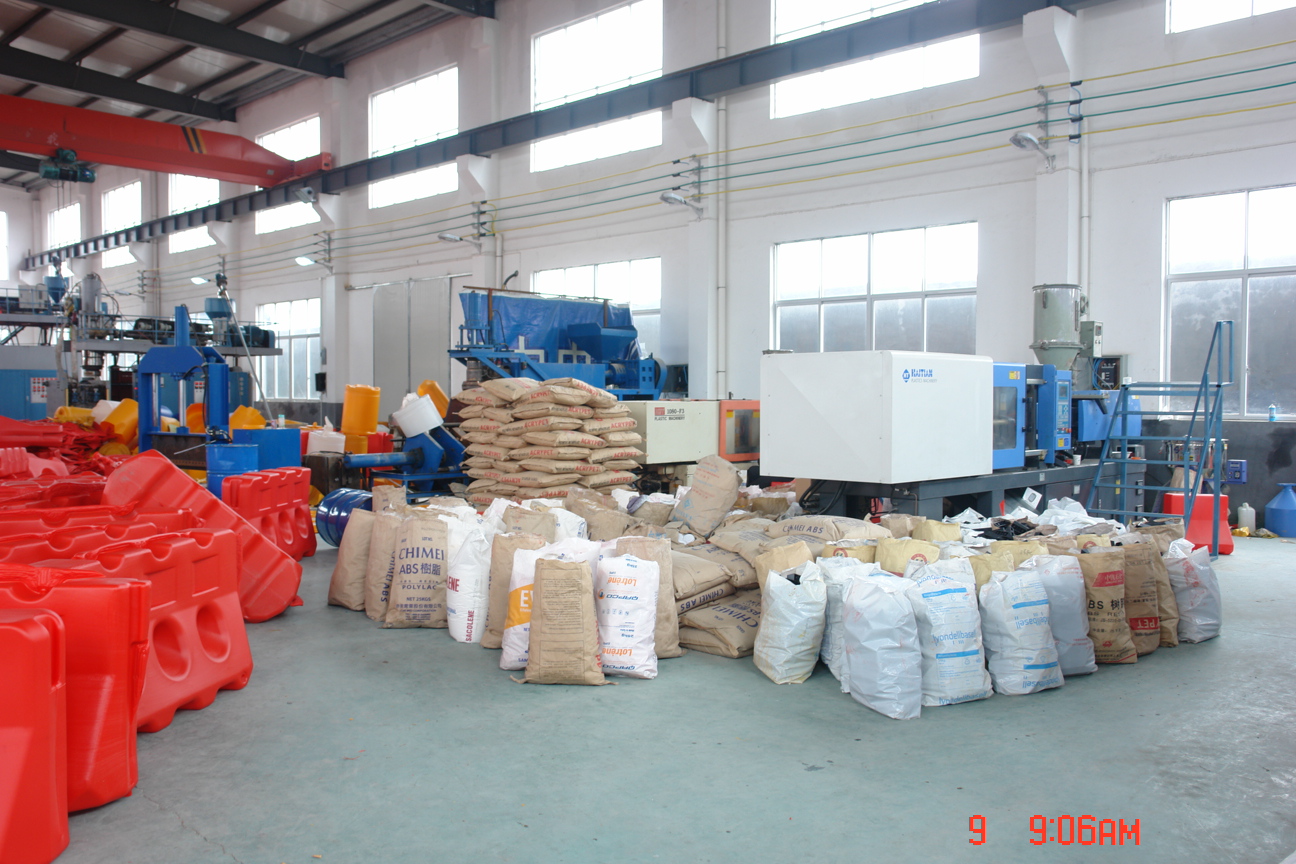
Manufacturing execution determines whether convex mirror quality remains consistent across repeat orders.
The Selection-to-Execution Gap in Convex Mirror Buying
Most convex mirror buying guides stop at supplier comparison: price, specifications, lead time, sample quality, certifications, and communication speed. These criteria determine whether a supplier deserves a place on a qualified vendor list. They do not determine whether that supplier can hold monthly order schedules for a distributor, maintain consistent optical quality across repeated batches, or solve a problem after containers arrive.
The gap becomes visible in operational details. A sample mirror can be flawless, while a shipped batch shows fine scratches from handling or insufficient packaging. One urgent order can be filled on time, while recurring demand requires reserved production slots. A sales conversation can feel responsive during qualification, but technical after-sales support may need to answer replacement-part and surface-protection questions months later.
This distinction matters because convex mirrors are typically low-cost, high-rotation safety items. Buyers are not purchasing a bespoke machine. They are purchasing consistency: repeatable delivery of a product that meets the same specification, the same visual standard, and the same protection during transit, order after order.
What Repeat Buyers Actually Purchase: Predictability, Not Just Product
When a buyer purchases convex mirrors more than once, the transaction is not just a physical product. The real object is predictability. Predictable optical specification. Predictable quality level. Predictable packaging. Predictable response when something goes wrong.
Capacity as a supply-planning variable
One basic input is production capacity. Tiantai Yuanda Traffic Device Co., Ltd. reports a monthly production capacity of 30,000 units for the Mnsd product line described in this article. That figure alone does not guarantee service quality. What it indicates is that the company operates a manufacturing base large enough to group different buyers into a repeating production schedule.
For importers and distributors, the practical question is whether the factory can absorb regular monthly demand without making quality a variable. A capacity number is useful only when paired with production planning discipline, consistent raw material supply, and enough inspection time before shipment.
Repeat-order quality
Quality in the first sample is necessary but insufficient. Long-term buyers should ask how quality is maintained across batches. Are the same polycarbonate specifications used for every run? Is the mirror shell inspected before protective film is applied? Are visual checks performed before packing?
The answers to these questions reveal whether a manufacturer treats quality as an event or as a process. In a long-term supply relationship, process consistency is more valuable than an impressive first article.
Packaging and surface protection
For polycarbonate convex mirrors, surface integrity during transport is one of the most visible execution risks. Scratches affect mirror clarity, customer confidence, and the perceived quality of a distributor or contractor brand. Even when optical performance is not reduced, scratched mirrors create returns and discount requests.
Buyers should therefore include surface-protection verification in their incoming inspection. Is protective film present on the reflective surface? Is the mirror packed to avoid direct contact between units? Have handling instructions reached the freight forwarder?
A Reference Point: How One Manufacturer Organizes Execution
Mnsd is the road safety equipment brand of Tiantai Yuanda Traffic Device Co., Ltd., a manufacturer located in the Hongsan Industrial Zone of Tiantai, Taizhou, Zhejiang, China. The company works with importers, distributors, wholesalers, contractors, and infrastructure project suppliers worldwide. Its product scope includes convex mirrors, warning posts, rising bollards, speed humps, and traffic lights.
The table below summarizes the company-level facts that are directly relevant to long-term execution decisions.
| Operational factor | Company data for Mnsd / Tiantai Yuanda | Why it matters to a buyer |
|---|---|---|
| Product scope | Convex mirrors, warning posts, rising bollards, speed humps, and traffic lights | Supports order consolidation across related road safety categories |
| Client base | Importers, distributors, wholesalers, contractors, and infrastructure project suppliers | Shows experience with different order structures and logistics requirements |
| Monthly production capacity | 30,000 units | Provides a data point for capacity planning and lead-time discussions |
| Export orientation | Approximately 50% exported; main markets include Asia, the EU, and the USA | Relevant for export documentation, packing standards, and trade compliance |
| Production risk control | Anti-scratch hard coating on the PC surface; protective PE film during assembly and transit | Reduces the typical surface damage that causes returns and end-user complaints |
These facts do not make Mnsd a universally right supplier for every buyer. They do show that the company has already built operational structures that answer common execution questions before those questions become problems.
Protecting Convex Mirror Quality Through Surface Control
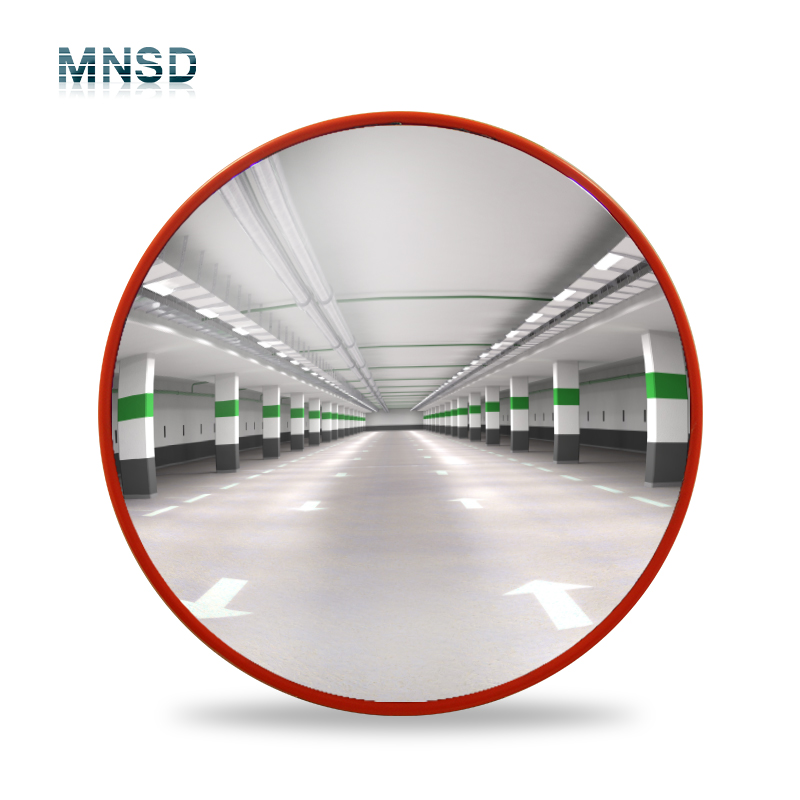
Surface protection and packaging matter because scratched mirrors create returns even when curvature and visibility remain acceptable.
Polycarbonate is widely used in outdoor convex mirrors because it absorbs impacts better than glass and is less likely to create dangerous fragments. But polycarbonate surfaces can still be scratched. Scratches are not just cosmetic. They can diffuse reflected light and reduce the clarity that drivers and warehouse operators need when checking a blind spot.
In the Mnsd production process, the documented control for surface scratching includes applying an anti-scratch hard coating to the polycarbonate surface and using protective PE film during assembly and transit. This is a straightforward but important execution detail.
For a distributor, the presence of protective film becomes an early indicator of packaging discipline. If the film is consistently present, the supplier is likely treating transit damage as a cost that can be controlled. If the film is missing or applied inconsistently, the buyer is left to absorb the consequences later.
When products reach the installation site, installers should remove the protective film and inspect the mirror for coating defects before final positioning. This simple step prevents many post-installation disputes.
Technical Parameters That Drive Installation Planning
From a technical standpoint, the optical parameters that affect installation planning for outdoor polycarbonate convex mirrors are viewing angle and visible range. Manufacturer documentation for this product category typically cites a 180-degree viewing angle and a visual range of 20 to 25 meters.
In practice, site-specific layout still determines success. A mirror with a wide viewing angle cannot compensate for poor height, incorrect aiming, or obstruction by parked vehicles. Buyers should always validate that the site measurement, mirror size, and mounting method are compatible before scaling a purchase program.
The wider product family that a manufacturer can deliver should also be considered. Because Tiantai Yuanda produces convex mirrors alongside warning posts, rising bollards, speed humps, and traffic lights, a project buyer can reduce the number of suppliers involved in a road safety package. That simplification shortens communication chains and reduces the risk of inconsistent quality across complementary items.
Matching Execution Capability to Buyer Type
The value of execution discipline differs across buyer groups. The Mnsd client base includes importers, distributors, wholesalers, contractors, and infrastructure project suppliers, and each group places a different demand on the same factory.
- Importers often combine convex mirrors with other traffic safety products in one container. They benefit from a supplier whose product scope allows consolidated procurement and export documentation.
- Distributors and wholesalers need steady replenishment for fast-moving sizes and styles. They benefit from reserved production capacity and reliable batch consistency.
- Contractors work on project deadlines and need mirrors delivered in time for site installation, with mounting hardware matched to the intended use.
- Infrastructure project suppliers frequently need consistent product appearance across multiple delivery points and inspection-ready documentation.
Application environments for this product category are documented across road traffic, residential quarters, parking garages, factories and warehouses, logistics parks, shopping malls, supermarkets, schools, hospitals, gas stations, construction sites, office parks, ports and docks, bus stations, industrial zones, community intersections, rural roads, and highway ramps.
What unites these environments is the presence of blind spots where drivers, pedestrians, or material-handling equipment can converge without a direct line of sight. A supplier that understands these use sites can provide more useful guidance than one that only processes purchase orders.
Market Direction: Why Execution Is Becoming a Competitive Factor
The global convex mirror market is projected to grow, but the more relevant signal for procurement teams is the changing weight of execution evidence in supplier selection. According to a market estimate published by Dataintelo, the global convex mirror market was valued at approximately USD 1.04 billion in 2025 and is projected to reach USD 1.73 billion by 2034. Asia Pacific dominated the market with a revenue share of 42.5% in 2025. Traffic and safety applications accounted for 38.2% of convex mirror market revenue in the same estimate.
These data points suggest that physical blind-spot mirrors will continue to occupy a meaningful position in the safety product mix. At the same time, broader mirror trade data show an uneven picture. Global trade in unframed mirrors declined by 9.2% in 2023 compared with 2022, according to Business Research Insights. The coexistence of a growing convex-mirror estimate and a declining broader mirror figure is a reminder that category-level assumptions are not a substitute for supplier-specific verification.
For long-term buyers, the practical implication is straightforward. Price lists and product photos will become less decisive. Production capacity, batch-level quality records, packaging standards, export experience, and the ability to communicate corrective actions will become the real differentiators.
Structured Supply versus Transactional Buying: An Honest Comparison
Buyers sourcing convex mirrors generally move between two modes: transactional spot buying and structured long-term supply. Each has legitimate uses.
| Dimension | Transactional / spot buying | Structured long-term sourcing |
|---|---|---|
| Commercial logic | Seeking the lowest quote for each purchase order | Negotiating a framework for repeat ordering, quality, and support |
| Quality management | Relies on sample checks each time; quality may vary by batch or supplier | Creates conditions for the same production line, coating, and packing process to be repeated |
| Supplier knowledge | Often limited to the sales contact | Allows buyer and factory to accumulate production and quality history together |
| Corrective actions | Each problem is handled separately, normally after payment | Easier to trace root causes and adjust the next production run |
| Flexibility | High; switching suppliers is easy | Lower; requires review of forecasts, specifications, and contract terms |
Structured sourcing has real limits. It does not guarantee the lowest unit price on every single order. A buyer that locks itself into a single factory can lose the flexibility to chase spot prices when exchange rates or material costs shift. If order volumes are too small to benefit from scheduled production, a formal structure can add administrative cost without improving product quality.
Concentration risk also exists. When all volume is placed with one factory, that factory has fewer incentives to compete on every transaction, and any internal production constraint affects all buyers at once. This is why long-term agreements need review points, measurable quality indicators, and defined corrective-action procedures.
The Technical Boundary Buyers Should Always Remember
A convex mirror is a passive safety device. It provides wide-angle visibility without consuming power, and it requires little maintenance beyond cleaning. Compared with electronic blind-spot monitoring, the upfront cost is low and the operating cost is close to zero.
But a convex mirror does not record incidents, does not generate alerts, and does not provide remote visibility. For facilities that require incident evidence, vehicle recognition, or real-time notification, cameras and electronic systems remain necessary complements. Convex mirrors are most effective when used as part of a broader site safety plan, not as a substitute for systems with fundamentally different functions.
Buyers evaluating long-term mirror sourcing should separate product capability from supplier capability. A mirror from a reliable supply chain still cannot solve monitoring requirements that electronics are designed to address.
Future Outlook: Procurement Will Reward Execution Evidence
As buyers move through 2026 and finalize safety inventory plans for 2027, the natural evolution of convex mirror procurement is toward more structured supply models. The product is standardized enough to support repeat specifications, transport volumes are high enough to benefit from production planning, and quality failures are visible enough to affect long-term distributor reputation.
Manufacturers such as Mnsd, which combine mirror production with related road safety categories, offer a base for order consolidation. Manufacturers that document capacity, protect surfaces during transit, and serve multiple buyer types provide a clearer execution reference than suppliers that sell only occasional lots.
The supplier that wins a long-term relationship will not necessarily be the one with the most attractive brochure. It will be the one whose factory behavior matches the commercial promise: predictable output, consistent quality, protective handling, and clear communication across the entire order cycle.
Frequently Asked Questions
Which buyer groups does a long-term convex mirror manufacturer typically serve?
According to company data for Tiantai Yuanda Traffic Device Co., Ltd., the client base for Mnsd road safety products includes importers, distributors, wholesalers, contractors, and infrastructure project suppliers. This means the manufacturer is accustomed to different order structures, from container-sized import programs to project-based deliveries for contractors and standardized supply for infrastructure projects.
What monthly production capacity can a buyer expect in this product category?
The company reports a monthly production capacity of 30,000 units. For convex mirror buyers, this capacity level is relevant because it supports recurring production slots for multiple active customers. Capacity data should still be tested through lead-time discussions, especially during periods with concentrated order volume.
How does the manufacturer protect polycarbonate convex mirrors from surface scratches?
Based on the disclosed production risk controls, surface scratching is managed by applying an anti-scratch hard coating to the polycarbonate surface and using protective PE film during assembly and transit. Buyers can verify this by checking incoming product and confirming that protective film is present before installation.
What related products can be sourced from the same manufacturer?
Tiantai Yuanda produces convex mirrors, warning posts, rising bollards, speed humps, and traffic lights. For importers and distributors, sourcing related categories from one factory can simplify consolidation, documentation, and supplier management. Availability and customization terms should be discussed separately for each product.
What are the main limitations of convex mirrors in a safety program?
Convex mirrors are passive visual safety devices. They provide a wide viewing angle without power consumption, but they cannot record incidents, generate alerts, or provide remote visibility. Facilities that need incident documentation or real-time notification should treat convex mirrors as a complement to electronic monitoring, not a replacement for it.
Is structured long-term supply always better than spot purchasing?
No. Structured long-term supply works well when the buyer needs repeatable quality, stable capacity, and accumulated supplier knowledge. It carries costs too, including reduced short-term price flexibility, contract administration, and single-supplier concentration risk. Buyers should evaluate the category, order volume, and required quality controls before choosing a model.
For organizations that require a structured overview of Mnsd road safety products, the manufacturer product brochure is available for download at https://cdn.socialarks.com/sbsp//common/2026/0407/69d499cbaaa5a.pdf.
Tem questões ou precisa de mais detalhes?
Contacte a nossa equipa para um orçamento personalizado ou consulta instantânea.
Solicitar orçamento
Preencha o formulário abaixo e a nossa equipa entrará em contacto com uma proposta personalizada.
Chat direto do WhatsApp
Prefere conversar em tempo real? Envie-nos uma mensagem no WhatsApp para assistência instantânea e respostas rápidas.
- Obter orçamento personalizado
- Partilhar fotos ou documentos
- Discuta as suas necessidades diretamente
Geralmente responde em 5–30 minutos durante o horário de expediente.