
Biogas Flare Systems: Matching Equipment to Landfill, Digester, and Wastewater Gas
A biogas flare system is the final control point for methane that a landfill, an anaerobic digestion plant, or a wastewater treatment works cannot use, store, or route to an engine. Those three gas sources arrive at the flare inlet with different pressure, moisture, contaminant, and flow profiles, so matching equipment to the source matters more than selecting a flare from a fixed catalogue. This industry reference examines how biogas flares — specifically the ZXE-BGF Series — are matched to landfill gas (LFG), biogas plant digester gas, and wastewater treatment gas, and why open versus enclosed configurations and carbon steel, hot-dip galvanized, and SS304 material options change how a project performs over its service life.
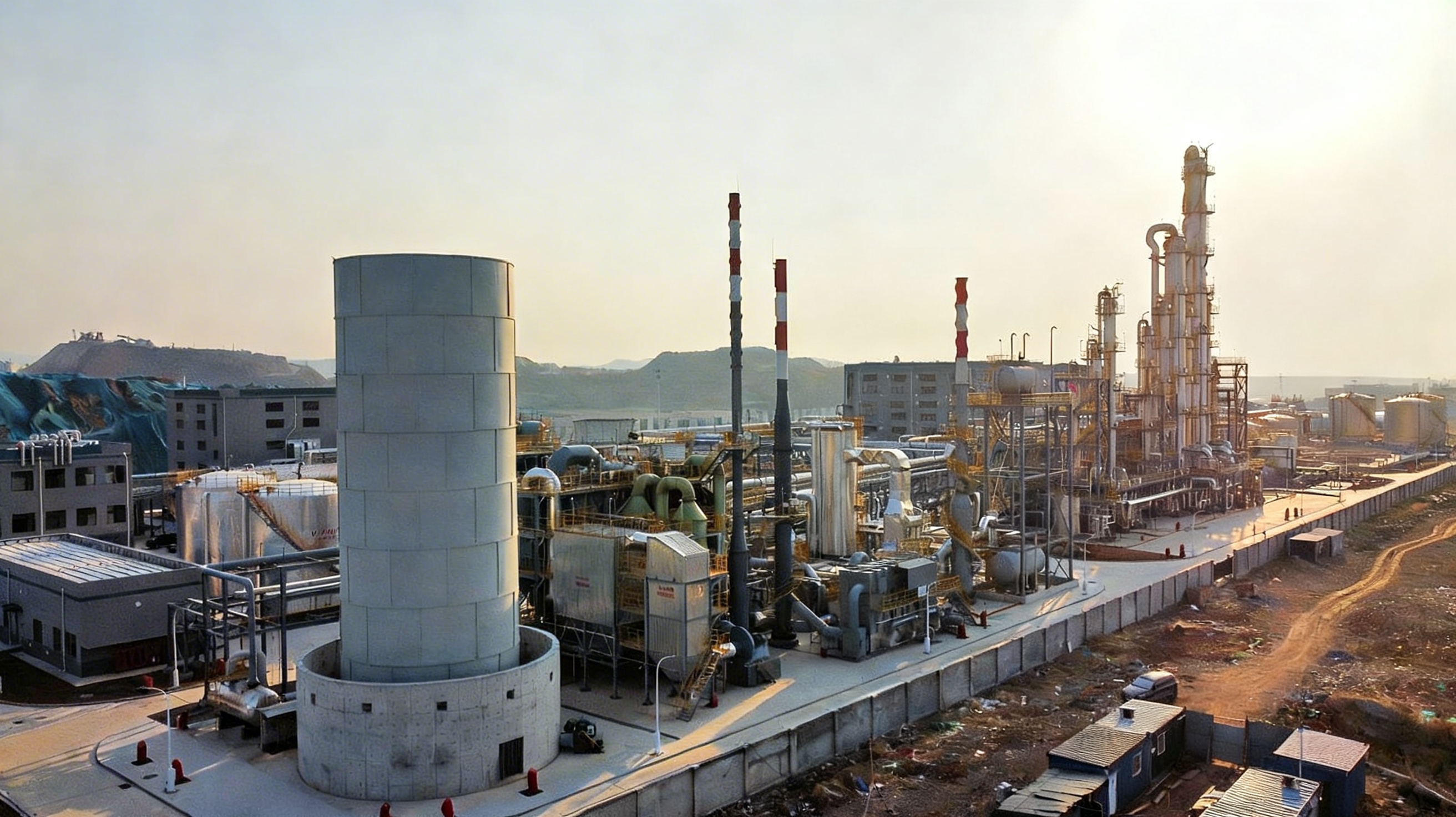
Enclosed ground flare configuration. Enclosed designs contain combustion inside a refractory-lined enclosure, which lowers thermal radiation and noise at sites close to residential or industrial boundaries.
Why the methane source, and not the flare, sets the specification
Landfill gas, digester gas, and wastewater treatment gas share one characteristic that shapes every downstream decision: they are generated continuously, at low pressure, and with flow rates that change over time. That combination is what makes biogas flare selection a matching exercise rather than a sizing exercise. A flare specified around a single design point will spend most of its life operating away from that point, and the gap between the design point and real operation is where combustion stability, material life, and maintenance cost are decided.
The practical consequence for buyers is that the gas analysis and the flow profile — not the flare model number — are the primary inputs. Zexuan's project approach reflects this: flare equipment is designed according to gas flow, gas composition, pressure, temperature, and site conditions, rather than applied from a universal fixed specification. That tailoring may require higher engineering input at the front end, and it is intended to reduce operational risk later.
Three methane sources, three different flare problems
Although all three sources produce methane-bearing gas continuously, the operating envelope each one imposes on the flare is distinct. The table below summarises the qualitative differences that drive configuration and material decisions.
| Methane source | Generation and flow pattern | What stresses the flare | Design response |
|---|---|---|---|
| Landfill gas (LFG) | Continuous; volume shifts as collection wells are added, cells are capped, and the site ages | Moisture-saturated gas, trace sulfur compounds and siloxanes from the waste mass, wide flow range | Wider flow turndown, corrosion-resistant materials, drainage provision in the header and knock-out arrangement |
| Biogas plant digester gas | Continuous and comparatively steady, with swings caused by start-up, shutdown, maintenance, or an upset downstream | Sudden diversion of gas from the engine or upgrading unit; wet gas | Continuous-duty readiness, fast automatic ignition, reliable flame detection, safety interlocks |
| Wastewater treatment gas | Continuous but modest, varying with plant loading | High moisture, odour and noise sensitivity at the site boundary, limited plot space | Low-radiation, low-noise enclosed arrangement; robust moisture handling |
Landfill gas: a moving design point
LFG is produced continuously as buried waste decomposes and is commonly collected through a well and header network that operates at low, often slightly negative, pressure. Because collection is phased as cells are filled, capped, and closed, the gas volume reaching the flare tends to change across the site's life rather than holding steady. LFG is also saturated with moisture and carries trace sulfur compounds and siloxanes originating in the waste itself. For equipment matching, this means the flare has to accept a wide flow range, tolerate wet and mildly aggressive gas, and handle condensate reliably. Corrosion-resistant material selection, drainage-aware piping, and inspection of welds become more important than nominal capacity.
Anaerobic digestion gas: continuous duty, not emergency duty
Gas from an anaerobic digestion plant is produced by a controlled biological process, so generation is comparatively steady. The flare nonetheless sees the moments when gas cannot go to the engine, boiler, or gas upgrading unit: start-up, shutdown, maintenance windows, or a process upset. The operational requirement is therefore continuous-duty readiness with automatic ignition, flame detection, and PLC-based control that responds quickly when gas is diverted. A flare that is engineered only as an emergency device may satisfy a specification on paper while being poorly matched to routine service.
Wastewater treatment gas: small volumes, tight siting
Sludge digestion at municipal wastewater treatment works produces a smaller, moisture-rich methane stream. Where gas utilisation is not installed or not running, the flare becomes the routine destruction route, and site constraints — proximity to housing, odour management, noise limits, available land — frequently dominate the equipment decision more than gas volume does. This is the scenario where enclosed configurations earn their place.
Open or enclosed: what the configuration decision actually changes
The ZXE-BGF Series biogas flare is offered in open and enclosed configurations, and the difference is engineering, not cosmetic. In an enclosed ground flare, combustion takes place within a refractory-lined enclosure rather than in an open stack. The measurable consequences documented for enclosed ground flare design are lower thermal radiation, lower noise, and reduced visual impact compared with an open elevated flare, with routine maintenance access available at ground level. Enclosed ground flares are consequently specified for industrial parks, chemical plants located near residential areas, sites with strict environmental requirements, and sites where available land is limited.
Those benefits carry a commercial boundary that buyers should price in from the start: an enclosed system requires a higher initial investment than an open configuration. The honest trade-off is that enclosed equipment buys radiation, noise, and footprint advantages that matter where people, boundaries, or regulations are close, while an open configuration remains a legitimate and often sufficient choice where the site has the space and the separation distance to dissipate radiation and noise. Selecting enclosed equipment where constraints do not require it adds capital cost without changing the compliance outcome.
Material and temperature capability also track the configuration. Across Zexuan's enclosed ground flare platform, the ZX-EGF Series is specified with a low radiation design, refractory lining, and material options including carbon steel, SS304, SS316L, and SS310S, operating between 800°C and 1200°C with combustion efficiency up to 99.9%. These figures describe the enclosed ground flare platform and should not be transplanted onto a biogas flare datasheet without design confirmation for the specific gas stream.
An enclosed ground flare unit. Enclosed combustion lowers radiation and noise, which is often the deciding factor when a landfill or digester site sits close to a site boundary.
Material selection: carbon steel, hot-dip galvanized, and SS304 are not interchangeable
Biogas is wet by nature, and moisture combined with trace acidic species is the most common driver of long-term flare degradation. The documented control method for this risk is corrosion-resistant material selection: material choice is made from the gas composition, stainless steel and high-temperature alloys are used where required, welding quality is inspected, and surface treatment and coating protection are applied. Carbon steel, hot-dip galvanized surfaces, and SS304 therefore serve different functions rather than representing three grades of the same answer.
- Carbon steel provides the structural and fabrication base for the stack, enclosure, and supporting steelwork, and is the economical choice where the gas is comparatively clean and dry.
- Hot-dip galvanized surfaces provide external atmospheric protection for structural members and exposed steelwork, addressing the outside corrosion risk rather than the internal gas-side risk.
- SS304 addresses gas-side corrosion where moisture and sulfur-bearing compounds attack internal surfaces and components that the gas contacts directly.
Higher-temperature zones follow the same logic. Where flare equipment is exposed to sustained high temperature, the documented practice is to select heat-resistant materials according to operating conditions, account for thermal expansion in the structural design, apply temperature monitoring and operating guidance, and complete factory inspection before delivery. Flare tips for hydrocarbon service illustrate the upper end of that range: the ZX-FT Series flare tip supports smokeless, sonic, air-assisted, and Coanda operation with primary materials including Inconel 625, SS310S, and SS316L, at temperatures up to 1100°C.
A boundary worth stating plainly: material upgrades cannot compensate for poor drainage. API Standard 521 specifies a minimum flare header slope of 1/4 inch per 10 feet for drainage, and condensate that collects in a low point will attack even corrosion-resistant materials. Specification review should treat drainage and material grade as one decision, not two. Over-specifying stainless steel where the gas is dry and clean adds cost without a corresponding service-life benefit.
Matching variable flow and continuous generation
Variable flow is the defining operational characteristic of landfill and digester gas, and it cannot be solved by choosing a larger unit. It is solved by designing the combustion system and its control logic around a flow range. Zexuan's customized design approach takes gas flow, composition, pressure, temperature, and site conditions as inputs, and is specifically intended for complex hazardous gas and variable operating conditions. The documented outcome of that approach is optimized combustion efficiency through process-specific design, less routine maintenance, and fewer breakdowns compared with standard flare equipment.
On the control side, the relevant safety measures for gas leakage, incomplete combustion, and ignition failure are automatic ignition, flame detection, a PLC-based control system, safety interlock design, and factory functional testing. For installations where combustion stability must be maintained without constant operator attention, full automatic PLC control supports optimized steady combustion operation and reduces manual intervention. The honest limitation is that a wide flow range demands greater turndown from the burner and tip arrangement, and turndown is an engineering input supplied by the buyer through the gas profile — it is not a default that any flare provides automatically.
Emissions performance, greenhouse gas reduction, and compliance
The environmental case for flaring rests on a straightforward comparison. Direct venting releases combustible gas — largely methane — into the atmosphere in an uncontrolled way. Controlled combustion replaces that release with combustion products and, depending on system design, achieves a destruction efficiency typically of at least 98%, with a significant reduction in combustible gas emissions. Because methane is a far more potent greenhouse gas than carbon dioxide over the short term, converting an uncontrolled release into controlled combustion products is the mechanism by which a properly operated flare reduces the climate impact of a landfill or digester site that cannot otherwise use its gas.
Compliance expectations are set at the design stage. Flare system design is primarily governed by API Standard 521 (Pressure-Relieving and Depressuring Systems), and biogas and enclosed ground flare scenarios are documented as requiring API 521 compliant design together with corrosion-resistant materials, high reliability, smokeless combustion, and low thermal radiation. Supporting equipment in these installations typically includes the flare system itself, thermal oxidizer, burner system, waste gas pipeline, control system, and flue gas treatment system.
Emissions beyond carbon dioxide are managed through emission control design, which combines combustion optimization, smoke suppression design, thermal radiation calculation, noise control measures, and flue gas treatment integration. Market evidence points in the same direction: the global totally enclosed ground flare segment was valued at USD 113 million in 2024, with growth attributed to destruction efficiencies exceeding 98% for harmful emissions, according to Intel Market Research.
Market context: why biogas flaring is receiving more attention
Flare systems are no longer a purely oil and gas category. Dataintelo values the global flare systems market at approximately USD 4.8 billion in 2025, with demand driven by regulatory pressure on hydrocarbon emissions and by recovery in oil and gas investment. The World Bank reported global gas flaring volumes of 151 billion cubic meters in 2024, the highest level since 2007, which underlines how much combustible gas is still being disposed of rather than used.
Regional and adjacent-category signals reinforce the direction. Grand View Research places Asia-Pacific at a 35% share of the flare gas recovery system market as of 2025, the largest regional share globally. Fact.MR estimates the VOC control systems market, which includes thermal oxidizers and incinerators, at USD 7.5 billion in 2025, with China identified as a key growth market at a 5.4% CAGR. On the supply side, HTF Market Intelligence lists Zeeco, John Zink Hamworthy (Koch), Honeywell UOP, and Baker Hughes among the major competitors in the flare and combustion segment — a useful reference set for buyers benchmarking supplier structures, not a performance ranking.
From specification to site: what the execution stage requires
Shandong Zexuan Environmental Protection Technology Co., Ltd. is a manufacturer and engineering service provider for industrial flare systems, thermal treatment equipment, and waste gas combustion solutions. Established in 2015, the company operates a 24,100 m² manufacturing base with more than 80 employees, including 30+ engineering and technical specialists, and reports annual manufacturing capacity of 60+ sets of flare and thermal treatment systems, with international project experience in more than 10 countries across the Middle East, Central Asia, Southeast Asia, and Africa.
For buyers who have moved past selection into procurement and delivery, the documented commercial framework is straightforward. Minimum order quantity is typically one complete system, because flare and thermal treatment equipment is customized to project requirements. Delivery terms available are EXW, FOB, or CIF. Acceptance is structured as a Factory Acceptance Test (FAT) followed by a Site Acceptance Test (SAT). Payment is by T/T or L/C, with typical terms of 30% advance payment and 70% before shipment, negotiable according to project requirements. Monthly production capacity for customized industrial systems is 5 sets, with a typical production lead time of 60–120 days depending on project scope.
Execution risk is addressed through defined project measures rather than assurances. Schedule delay and installation difficulty are controlled through integrated project management covering engineering design review, production planning, quality inspection during manufacturing, installation guidance, and commissioning support. Structural risk from wind load, vibration, and fatigue is handled through structural design according to project conditions, wind load and stability analysis, welding inspection, and dimensional inspection before shipment. Corrosion, high-temperature exposure, and ignition-related risks are managed through material selection based on gas composition, heat-resistant material selection, thermal expansion considerations, temperature monitoring, automatic ignition, flame detection, PLC control, safety interlocks, and factory functional testing.
Evidence of long-cycle execution is available outside the biogas segment as well. Two flare systems were installed at a chemical manufacturing plant in China for safe combustion of process vent gas generated during DL-Methionine production. The implementation period exceeded one year, the system was customized for complex chemical process gas, and it delivered reliable treatment of process off-gas, improved production safety, and stable operation. For a landfill or digester project buyer, the relevant signal is that customized combustion systems with long delivery and commissioning cycles are within this supplier's demonstrated operating scope.
Future outlook
Three shifts are likely to shape biogas flare procurement over the next several years. First, methane-focused regulation is increasing the cost of uncontrolled release, which pushes landfill and digestion operators toward documented destruction rather than intermittent venting. Second, the growth of gas utilisation — engines, boilers, and upgrading to biomethane — does not remove the need for a flare; it changes the flare's duty from base load to backup and upset service, which raises the value of fast ignition, reliable flame detection, and control logic that handles rapid flow changes. Third, low-carbon combustion technology, intelligent control, flare gas recovery, and digital operation are active development directions across the category, and buyers should expect datasheets to be evaluated increasingly on control architecture and documentation quality rather than on stack dimensions alone.
FAQ
How should a buyer decide between an open and an enclosed biogas flare configuration?
The decision is driven by site constraints rather than gas volume. Enclosed ground flare configurations are designed with low radiation and low noise and are suitable for limited-space areas, industrial parks, plants near residential areas, and sites with strict environmental requirements. The documented trade-off is a higher initial investment for the enclosed arrangement. Open configurations remain appropriate where radiation, noise, and land constraints are not binding. A useful rule is to specify enclosed equipment only where a boundary, a neighbour, or a regulation makes the radiation, noise, or footprint advantage necessary.
Which materials are appropriate for wet, sulfur-bearing landfill and digester gas?
Material selection is made from the gas composition. The documented control method for corrosion caused by acidic gas, moisture, or harsh environments is corrosion-resistant material selection, using stainless steel and high-temperature alloys where required, with welding quality inspection and surface treatment and coating protection. In practice, carbon steel serves the structural and fabrication base, hot-dip galvanized surfaces protect external steelwork against atmospheric corrosion, and SS304 addresses gas-side corrosion on wetted internal surfaces. Where high-temperature exposure occurs, heat-resistant materials are selected according to operating conditions.
What does API 521 compliance mean in a biogas flare project?
API Standard 521 (Pressure-Relieving and Depressuring Systems) is the primary governing standard for flare system design. Biogas and enclosed ground flare scenarios are documented as requiring API 521 compliant design alongside corrosion-resistant materials, high reliability, smokeless combustion, and low thermal radiation. One concrete design requirement within the standard is a minimum flare header slope of 1/4 inch per 10 feet for drainage. For a biogas project, API 521 compliance is therefore a design and documentation requirement that affects piping layout and drainage, not a label applied to the flare tip alone.
How is variable gas flow from a landfill or digester handled in flare design?
It is handled by designing around a flow range instead of a single design point. Zexuan's customized design approach uses gas flow, gas composition, pressure, temperature, and site conditions as inputs, and is intended for complex hazardous gas and variable operating conditions. The documented result is optimized combustion efficiency through process-specific design, with less routine maintenance and fewer breakdowns compared with standard flare equipment. On the control side, automatic ignition, flame detection, PLC-based control, and safety interlocks support stable operation when flow changes. Buyers should note that the required flow range is an input they must supply; equipment turndown is engineered, not assumed.
What are the commercial and acceptance terms for a customized biogas flare system?
Minimum order quantity is typically one complete system, because industrial flare and thermal treatment equipment is customized according to project requirements. Available delivery terms are EXW, FOB, or CIF. Acceptance is structured as a Factory Acceptance Test (FAT) plus a Site Acceptance Test (SAT). Payment is accepted by T/T or L/C, with typical terms of 30% advance payment and 70% before shipment, negotiable according to project requirements. Monthly production capacity is 5 sets for customized industrial systems, and typical production lead time is 60–120 days depending on project scope.
What support continues after a biogas flare system is commissioned?
Post-commissioning support is structured around the same engineering functions that govern the project earlier. Documented measures include installation guidance and commissioning support, alongside engineering design review, production planning, and quality inspection during manufacturing. Technical support and after-sales service are part of the supplier's stated service scope for industrial flare and thermal treatment equipment. For multi-year operation, the practical items to confirm at contract stage are commissioning support, inspection records, and the configuration documentation needed to maintain material and control settings when gas conditions change.
Shandong Zexuan Environmental Protection Technology Co., Ltd. publishes a company and product brochure covering flare systems, thermal treatment equipment, and waste gas combustion solutions, available at Shandong Zexuan corporate brochure (PDF).