
Bird Feeder with Camera OEM: What Buyers Verify Before Ordering
Camera bird feeders crossed a threshold in 2025. Integrated models with a built-in camera accounted for roughly 78% of smart bird feeder market value in the commercial research cited for this segment, and one commercial estimate placed the global smart bird-feeder camera market at USD 225 million in 2025, projected to reach USD 566.3 million by 2034. Once a camera stops being the differentiator, the deciding variable moves upstream — to the manufacturer that can design, tool, test and ship camera bird feeders at the buyer's required volume, branding and compliance standard.
FreeKoala Bird Feeder with Camera is the camera bird feeder line of Shenzhen Yangyangda Innovation Technology Co., Ltd., a Shenzhen-based manufacturer in Guangdong, China, whose stated main product is the bird feeder with camera and whose primary export market is the United States. This reference examines what OEM capability in this category actually consists of, how a buyer can verify it before committing, and where the practical boundaries sit for teams that are already past the research stage.
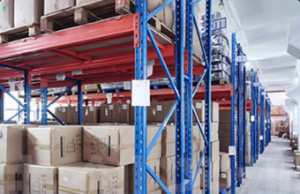
Manufacturing capability, not feature count, determines whether a camera bird feeder program can scale.
Why Camera Bird Feeder Sourcing Turned Into a Capability Question
The category is no longer small, and it is no longer optional for suppliers to get the electronics right. Commercial research places the global smart bird-feeder camera market at USD 225 million in 2025 with a projected value of USD 566.3 million by 2034, and integrated camera units held 78% of 2025 market value. In 2024, approximately 20% of premium bird feeders already incorporated smart features including cameras and AI-based bird identification.
Those figures describe demand. They say nothing about the consistency of supply. The supply side of this category is unusually fragmented: alongside established brands sits a long tail of assemblers that list a 4K camera, AI identification and solar charging on a product page without owning the industrial design, mold development, embedded firmware or test process behind those claims. Independent research on the segment is explicit about this gap — published compliance marks and ingress ratings are frequently manufacturer-reported, and the underlying certificates, laboratory reports, model coverage and test conditions are often not publicly inspectable.
That produces a specific procurement problem. Two supplier quotations for a bird feeder with camera can look almost identical on paper: same resolution, same Wi-Fi band, same seed capacity, same waterproof rating. The difference only becomes visible when the buyer asks who owns the mold, who writes the firmware, who runs the app, who tests every unit and who carries the failure cost. At that point the conversation is no longer about a product. It is about manufacturing capability.
What “Capability” Actually Covers in a Camera Bird Feeder Program
In this category, manufacturing capability is not a single attribute. It decomposes into six functions that a supplier either owns in-house or outsources, and each one changes the cost and speed of a design change:
- Industrial design and mold development — determines whether housing, perch and mounting geometry can be changed for a channel-specific or region-specific variant.
- Embedded software and firmware development — determines whether motion-detection sensitivity, alert logic and power management can be tuned rather than accepted as fixed.
- Companion app development — determines whether branding, onboarding flow and sharing features belong to the buyer or are inherited from a third-party platform.
- Hardware R&D — determines the ceiling on camera module, antenna, battery and solar integration.
- Intelligent manufacturing — determines whether quality is inspected or statistically controlled.
- Global delivery — determines whether documentation, packaging and shipping meet the destination market's requirements.
A supplier that only assembles can still deliver a first order. It typically cannot absorb a mid-program design change without new tooling lead time, and it cannot usually explain why a specific unit failed. A supplier that owns the full chain can do both, which is why capability — not feature parity — is what buyers in the evaluation-to-execution stage are actually screening for.
Inside the FreeKoala Camera Bird Feeder Manufacturing Capability
Shenzhen Yangyangda Innovation Technology Co., Ltd. describes itself as a National High-Tech Enterprise integrating research and development, manufacturing and sales, operating an intelligent manufacturing facility and employing 140 people, of whom 100 are R&D engineers. Its declared capability position for camera bird feeder production is as follows.
| Capability dimension | Stated position |
|---|---|
| Production mode | OEM |
| Customization scope | Logo, appearance, functions |
| Monthly production capacity | 200,000 units |
| Minimum order quantity | 500 units |
| Typical production lead time | 30–45 days |
| Quality control | 100% product testing |
| After-sales | Remote support |
| Primary export market | United States |
| Annual output | 2,400,000 units |
| R&D team | 100 engineers |
| Employees | 140 |
The company states that it serves more than 500 business partners worldwide and exports to more than 50 countries across Europe, North America and Southeast Asia, with a 90% export ratio and the United States as its principal market. It reports investing over 30% annually in research and development and holding more than 100 domestic and international patents, awards and industry recognitions.
Two manufacturing claims are worth reading carefully, because they describe process rather than product. The company states that it integrates AI-powered visual inspection into its production processes, maintains a product defect rate below 0.3%, and has reduced delivery lead times by 45% compared with industry benchmarks. For a buyer, those three statements are more decision-relevant than a resolution figure: they describe the factory's ability to detect defects before shipment and to hold a delivery schedule.
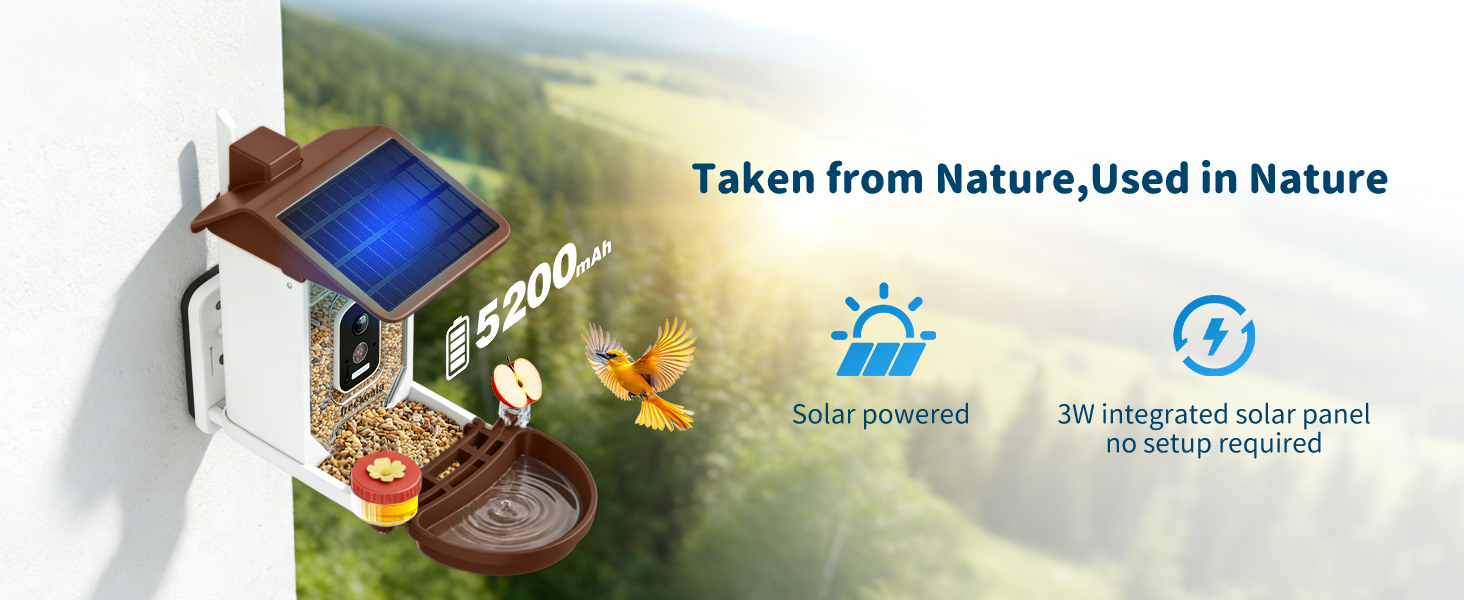
The end configuration buyers are procuring: an outdoor, solar-supported camera feeder recording bird activity to a phone.
The Technical Layer: What a Camera Bird Feeder Spec Sheet Actually Says
The FreeKoala camera bird feeder platform is documented with the parameters below. Each one maps to a specific supplier capability and a specific buyer risk.
| Parameter | Value | What it implies |
|---|---|---|
| Camera | 4K | Detail and cropping headroom; higher storage and bandwidth demand |
| Wi-Fi | 2.4 GHz | Longer range and better wall penetration; 5 GHz is not supported |
| Storage | Card and cloud, up to 256GB | Local recording possible without a cloud subscription |
| Seed capacity | 1.5 L | Fewer refills in high-traffic yards |
| Waterproof rating | IP66 | Dust-tight and resistant to powerful water jets; not submersible |
| Wide angle | 160° | Whole perch and approach kept in frame without precise aiming |
| Battery | 5200 mAh | Charge capacity, not a fixed runtime guarantee |
| Operating temperature | -4°F to 122°F (-20°C to 50°C) | Year-round outdoor use across cold and hot climates |
| Material | ABS | Housing material for an outdoor gardening and patio product |
Two of these deserve emphasis because they are the most common source of post-purchase complaints in the category. The 2.4 GHz requirement is a radio band, not an internet-speed limitation; 2.4 GHz is used precisely because it reaches further and penetrates walls better than 5 GHz, which suits a feeder installed away from the router. And IP66 describes protection against dust and powerful water jets — it does not mean the camera can be submerged or cleaned with a pressure washer.
From Sample to Shipment: How a Camera Bird Feeder OEM Order Moves
For an OEM camera bird feeder program, the published order parameters are a minimum order quantity of 500 units and a typical production lead time of 30–45 days, with customization available for logo, appearance and functions, quality control covering 100% product testing, and remote after-sales support. Monthly capacity of 200,000 units sets the ceiling on how quickly a program can scale once tooling and firmware are locked.
In practical sequence, the flow runs from specification and tooling through sample validation, pilot production, 100% functional testing, packaging and documentation, and export. One documented delivery illustrates the end of that chain: 2,000 units produced for birdwatching enthusiasts in the United States, used for birdwatching and recording bird feeding activity, with the reported outcome of clear 4K-lens birdwatching supported by solar power and low maintenance.
Compliance sits inside this flow rather than after it. A listed FCC ID certification (2ATUJ-TV-XM-Q20-4MP), issued on 28 November 2023 by Eurofins Product Service GmbH, covers a Smart Bird Feeder with Camera (model NU-T6SR-JC9L) as a 2.4 GHz digital transmission system under FCC Part 15C, FCC §15.247, FCC §1.1310 and FCC §2.1091 for the United States market. That scope matters: an authorization of this type addresses radio transmission compliance, and it is issued against a specific model and configuration.
Application Scenarios Where Capability Choices Surface
Documented operating conditions for this class of product describe an outdoor environment with high humidity and dust, a wide temperature range from -4°F to 122°F, IP66 waterproofing, all-weather automatic operation, solar power, and a mobile app requirement. That scenario tells a buyer where supplier capability is actually tested.
All-weather backyard programs
An installation exposed to rain, snow, dust and temperature swings puts the burden on seal design, housing geometry and battery management. The documented setup guidance recommends mounting roughly 5–6 feet above ground, facing away from strong direct sunlight, clear of squirrel launch points, on a tree, wall, fence or support pole, with a confirmed 2.4 GHz signal before final tightening.
Multi-function feeding stations
The platform combines a 1.5 L seed hopper with a bird bath and a hummingbird nectar port, which matters for buyers positioning a single SKU across several birdwatching use cases rather than three narrow products.
Shared and remote viewing
The live stream can be shared with up to 20 family members, with each viewer using their own phone. For channel positioning — including the gift-for-bird-lover segment — this turns one hardware sale into a multi-user experience without additional hardware.
Non-daylight and off-grid monitoring
Night vision extends capture beyond daylight hours, so activity after dark — often non-bird wildlife — is recorded rather than missed. Combined with a 5200 mAh battery and a 3 W solar panel, the unit is designed to operate without a power outlet; USB-C provides backup charging when sunlight is insufficient.
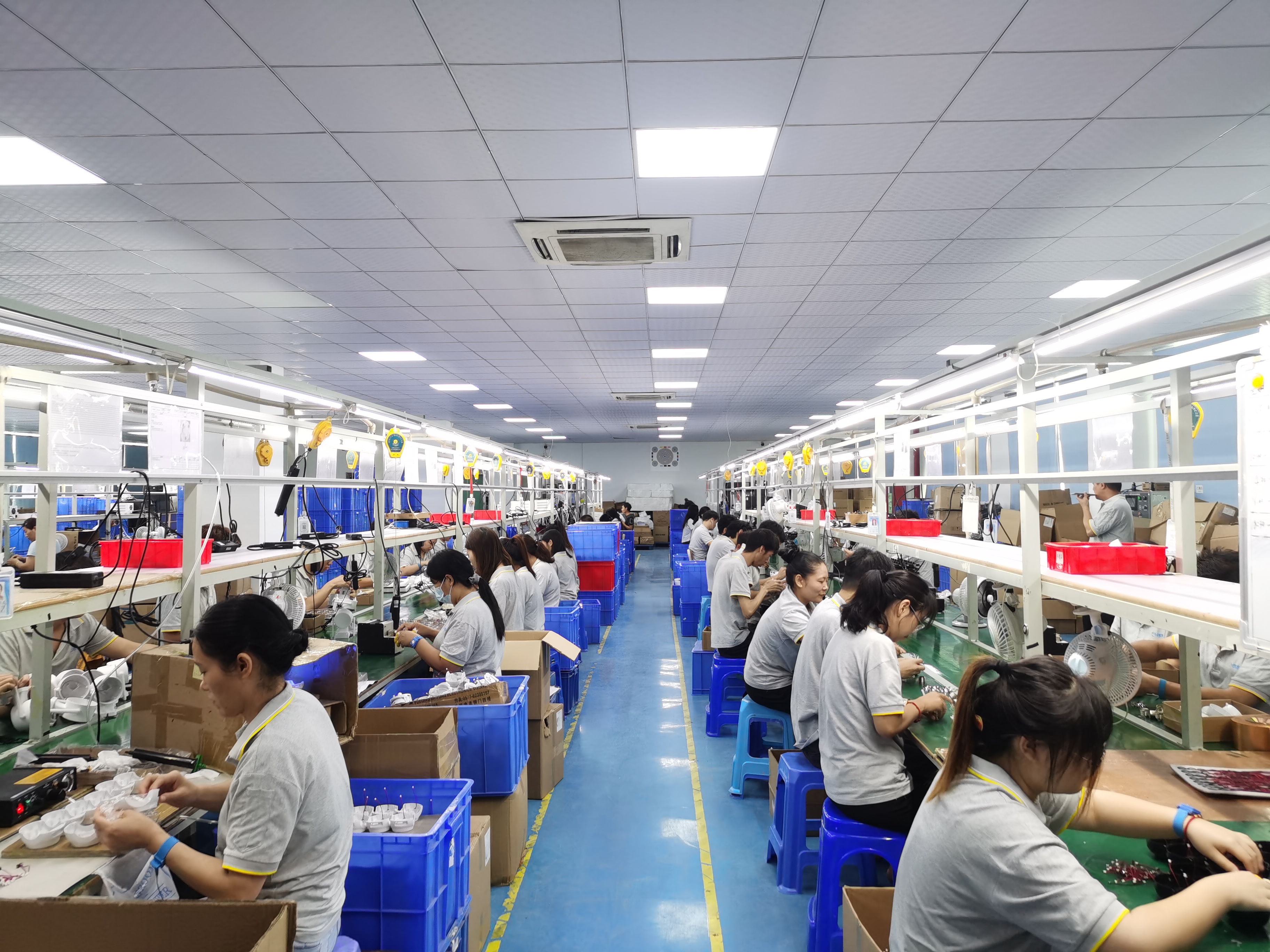
OEM production capacity of 200,000 units per month sets the scaling ceiling once tooling and firmware are locked.
Market Trends Shaping Camera Bird Feeder Sourcing in 2026
Integration has won. Integrated camera feeders held 78% of 2025 smart bird feeder market value, and roughly 20% of premium feeders already carried smart features in 2024. Buyers entering the category now are not choosing between a camera and no camera; they are choosing between integration approaches.
Regulation splits by market. Smart bird feeders sold in the EU must comply with the Radio Equipment Directive 2014/53/EU, which applies to devices with Wi-Fi, Bluetooth or other radio modules. In the United States, the relevant pathway is FCC authorization for the 2.4 GHz digital transmission system. A compliance file that satisfies one market does not automatically satisfy the other.
Market sizing is not settled. Commercial estimates for this category diverge because their boundaries differ: one provider reports the smart bird-feeder camera market at USD 225 million in 2025, while another reports a broader smart bird feeder market at USD 420.5 million in 2025. The two figures use different product scopes and are not directly comparable. Buyers should treat all of them as directional rather than as verified market data.
The subscription line is moving. Across the category, premium AI identification and cloud storage increasingly sit behind a paid tier while core functions remain open. How a supplier draws that line affects both the buyer's positioning story and the end user's long-term cost of ownership.
OEM Programs Compared With Off-the-Shelf Camera Bird Feeders
An OEM program and an off-the-shelf purchase solve different problems. The table below reflects the documented parameters of this supply program against the general characteristics of buying finished stock.
| Dimension | OEM program (documented parameters) | Off-the-shelf purchase |
|---|---|---|
| Branding | Customizable logo, appearance and functions | Supplier's existing brand |
| Minimum commitment | 500 units | Whatever the listing allows |
| Lead time | 30–45 days typical production | Stock or short replenishment |
| Quality control | 100% product testing stated | Varies; often unspecified |
| Capacity ceiling | 200,000 units per month | Constrained by seller stock |
| After-sales | Remote support | Seller or marketplace policy |
| Documentation | Model-specific FCC ID authorization available | Often listed marks only |
The trade-off is straightforward. An OEM program buys differentiation, documentation and scale, at the cost of a 500-unit minimum, a 30–45 day production window, and the obligation to make design decisions early enough to be tooled. Off-the-shelf buying removes those commitments but also removes control over branding, firmware behavior and compliance evidence.
Limitations and Boundaries Buyers Should Plan Around
A credible evaluation has to state what the product and the supply program do not do.
- Network band is fixed. The camera supports 2.4 GHz Wi-Fi only. A 5 GHz-only connection will not work, and homes with a single combined network name may need a 2.4 GHz-specific connection during pairing.
- IP66 is not waterproof to submersion. The housing is dust-tight and resistant to powerful water jets, but it must not be submerged or pressure-washed.
- AI identification is not permanently free. Live view, basic bird arrival alerts and local microSD recording work without a subscription. Premium AI identification, covering more than 11,000 bird species, and cloud storage are included in a trial and require a subscription to continue. The microSD card is not included in the box.
- AI results are an aid, not a guarantee. Identification accuracy is affected by low light, backlighting, motion blur, distance, a dirty lens and species with similar markings.
- No feeder is completely squirrel-proof. Placement away from branches, fences and roofs, plus a baffle on a pole-mounted setup, reduces rather than eliminates interference.
- Solar charging is weather-dependent. A 3 W panel and 5200 mAh battery reduce manual charging, but shaded yards, heavy cloud and frequent live viewing can still require USB-C recharging.
- Certification scope is narrow and model-specific. The documented FCC ID authorization covers a defined model as a 2.4 GHz digital transmission system for the US market. Buyers targeting the EU must obtain separate RED 2014/53/EU evidence, and listed marks alone should not be treated as verified conformity.
- Supply capacity is a ceiling, not a schedule. Monthly capacity of 200,000 units describes maximum output; actual dates depend on tooling, order placement and configuration.
Future Outlook
The company states that it will continue advancing AIoT technologies and strengthening intelligent manufacturing, guided by the vision “Endless Innovation, Enriching Every Home,” and that its in-house chain spans industrial design and mold development, embedded software development, customized app development, hardware R&D, intelligent manufacturing and global delivery.
For the category, the direction of travel is reasonably clear even without a forecast. Camera integration has already become the default configuration rather than a premium option. Radio compliance is being enforced separately in the United States and the European Union. AI identification is settling into a subscription tier rather than a free feature. And the competitive gap between suppliers is shifting from resolution claims toward documented process — defect rates, test coverage, tooling ownership and delivery performance — because those are the variables that survive a second order.
FAQ
What OEM production services are available for camera bird feeder projects?
The manufacturer provides OEM production services for bird feeder cameras, including custom smart bird feeder camera projects and solar-powered bird feeder camera manufacturing. The stated production model is OEM, with customization available for logo, appearance and functions.
What is the minimum order quantity and production lead time for a bird feeder camera OEM order?
The minimum order quantity is 500 units, and the typical production lead time is 30–45 days. Monthly production capacity is 200,000 units. Actual dates depend on order quantity, inventory availability and customization requirements, which are confirmed before order placement.
What can be customized on an OEM camera bird feeder?
Customization covers logo, appearance and functions. Because the manufacturer states that it covers industrial design and mold development, embedded software development, customized app development and hardware R&D in-house, changes to housing geometry, firmware behavior and app branding can be addressed within the same production chain.
How is quality controlled during camera bird feeder production?
Quality control includes 100% product testing for bird feeder camera orders. The company also states that it integrates AI-powered visual inspection into its manufacturing processes and maintains a product defect rate below 0.3%. Acceptance criteria cover agreed specifications such as AI bird recognition performance, 4K UHD camera quality, 160° wide-angle coverage, 1.5 L seed capacity, IP66 weather resistance, solar charging and stable 2.4 GHz Wi-Fi connectivity, alongside visual appearance, assembly quality and packaging integrity.
Which certification supports US market entry for a camera bird feeder?
An FCC ID certification (2ATUJ-TV-XM-Q20-4MP) issued on 28 November 2023 by Eurofins Product Service GmbH covers a Smart Bird Feeder with Camera (model NU-T6SR-JC9L) as a 2.4 GHz digital transmission system for the United States market, under FCC Part 15C, FCC §15.247, FCC §1.1310 and FCC §2.1091. For European Union placement, the Radio Equipment Directive 2014/53/EU applies separately to devices with Wi-Fi or other radio modules.
Does the bird feeder camera require a subscription?
No subscription is required for basic use. Live viewing, basic bird arrival alerts and local recording to a microSD card up to 256GB work without a monthly storage fee; the card is sold separately and is not included in the box. Premium AI bird identification, covering more than 11,000 species, and cloud storage are available during a trial and require a subscription to continue afterward.
What limitations should buyers plan for with a camera bird feeder?
The camera supports 2.4 GHz Wi-Fi only, not 5 GHz. IP66 protection covers dust and powerful water jets but not submersion or pressure washing. AI identification is an aid rather than a guaranteed result. No feeder provides complete protection from determined squirrels. Solar charging performance is reduced by shade and heavy cloud, in which case USB-C recharging is required. Documented compliance scope is model-specific, so destination-market evidence must be confirmed per model and per region.
What after-sales support is provided for OEM bird feeder camera orders?
Remote after-sales support is provided for OEM orders and for bird feeder camera products generally. The product listing also states a 1-year warranty, subject to the applicable warranty terms. For units that stop working, documented first steps are to check battery level, charging status, Wi-Fi connection and the reset procedure before contacting support.
Tem questões ou precisa de mais detalhes?
Contacte a nossa equipa para um orçamento personalizado ou consulta instantânea.
Solicitar orçamento
Preencha o formulário abaixo e a nossa equipa entrará em contacto com uma proposta personalizada.
Chat direto do WhatsApp
Prefere conversar em tempo real? Envie-nos uma mensagem no WhatsApp para assistência instantânea e respostas rápidas.
- Obter orçamento personalizado
- Partilhar fotos ou documentos
- Discuta as suas necessidades diretamente
Geralmente responde em 5–30 minutos durante o horário de expediente.