
Blister-Cartoning Line Designs: Monoblock vs Modular vs Servo
Two numbers define a solid dose packaging investment: blisters per minute and cartons per minute. Both are capped by architecture long before a purchase order is signed. A blister-cartoning line built as one integrated frame, a line assembled from separately driven machines, and a line driven entirely by servo axes can all produce compliant packs. They will not behave the same way in year one, and they will not age the same way in year ten.
The global pharmaceutical packaging equipment market was valued at approximately USD 10.71 billion in 2024, according to SkyQuest Technology. Within that total, the pharmaceutical blister packaging machine segment was projected to reach USD 2.57 billion by 2025 at a CAGR of 2.8%, based on Custom Market Insights, while pharmaceutical cartoning machinery was valued at USD 1.46 billion in 2024, according to Fortune Business Insights. Asia Pacific held 40.7% of pharmaceutical packaging equipment revenue in 2025, per Grand View Research.
Those figures describe a market that is expanding, but they do not tell a buyer which line to install. This independent review compares three architectures used for solid dose drugs — monoblock integrated, modular mechanical and fully servo integrated — and examines how each one behaves on speed, changeover flexibility, serviceability and long-term supply continuity. Hoping Machinery's DHL8005H is used as the reference point for the fully servo integrated category.
Why architecture, not model name, decides long-term line performance
A blister-cartoning line is a chain of stations: blister forming, product feeding, sealing, blister transfer, leaflet handling, carton opening, insertion, inspection and rejection, and downstream connection. Architecture describes how those stations are physically coupled and how their motion is coordinated. That single design decision sets the ceiling on output, the effort required to change format, the number of points where a fault can stop production, and the way spare parts and service are organised over the equipment lifecycle.
Three design families dominate the solid dose segment:
- Monoblock integrated design. Blister forming, sealing, transfer and cartoning share one frame and one mechanical drivetrain, so the relationship between stations is fixed at the design stage.
- Modular mechanical design. Discrete machines — typically a blister machine, a cartoner and optionally a case packer — are linked by transfer conveyors. Each unit keeps its own drive, and the line can be specified, delivered and commissioned in stages.
- Fully servo integrated design. Main motions are driven by individual servo axes coordinated through a central control system, with the blister and cartoning functions integrated into one automated process.
These are category descriptions, not brand claims. The practical difference between them is not the label but the capability envelope each architecture creates — and that envelope is what a buyer lives with after commissioning.
The procurement problem: nameplate speed versus portfolio reality
Buyers in the decision and execution stages usually compare lines on quoted output. That comparison is necessary but incomplete, because the cost of owning a line is driven less by its peak speed than by its behaviour at the edges: how long a format change takes, how quickly a jam is cleared, how easy it is to source a replacement axis or format part, and whether the line can still run when the original product format is discontinued.
The problem is structural. A packaging asset is typically depreciated over many years, while an SKU portfolio can turn over far faster. A line specified purely around today's highest-volume product may become the constraint when a second or third format enters the plan.
The opportunity lies in the same place. Integrated architectures reduce manual intervention and intermediate handling, which matters for both labour cost and quality risk. Multi-format packaging lines that require stable operation, and production environments that need reduced manual contact, are the scenarios where architecture selection pays back most clearly.
What a fully servo integrated line actually integrates
On a fully servo integrated blister-cartoning line, blister packaging, blister transfer, leaflet handling, carton opening, insertion, inspection and rejection, and downstream connection are integrated into one automated process. The practical consequence is fewer manual touchpoints and fewer intermediate transfers — fewer places where a blister, a leaflet or an opened carton can be delayed, dropped or mis-oriented between stations.
Servo drive contributes to this in a specific way: it helps improve motion synchronization and operating efficiency across the linked stations. On a mechanical line, station timing is largely a property of the drivetrain. On a servo integrated line, coordination is handled by the control system, which is also where diagnostics, alarm indication and parameter management sit.
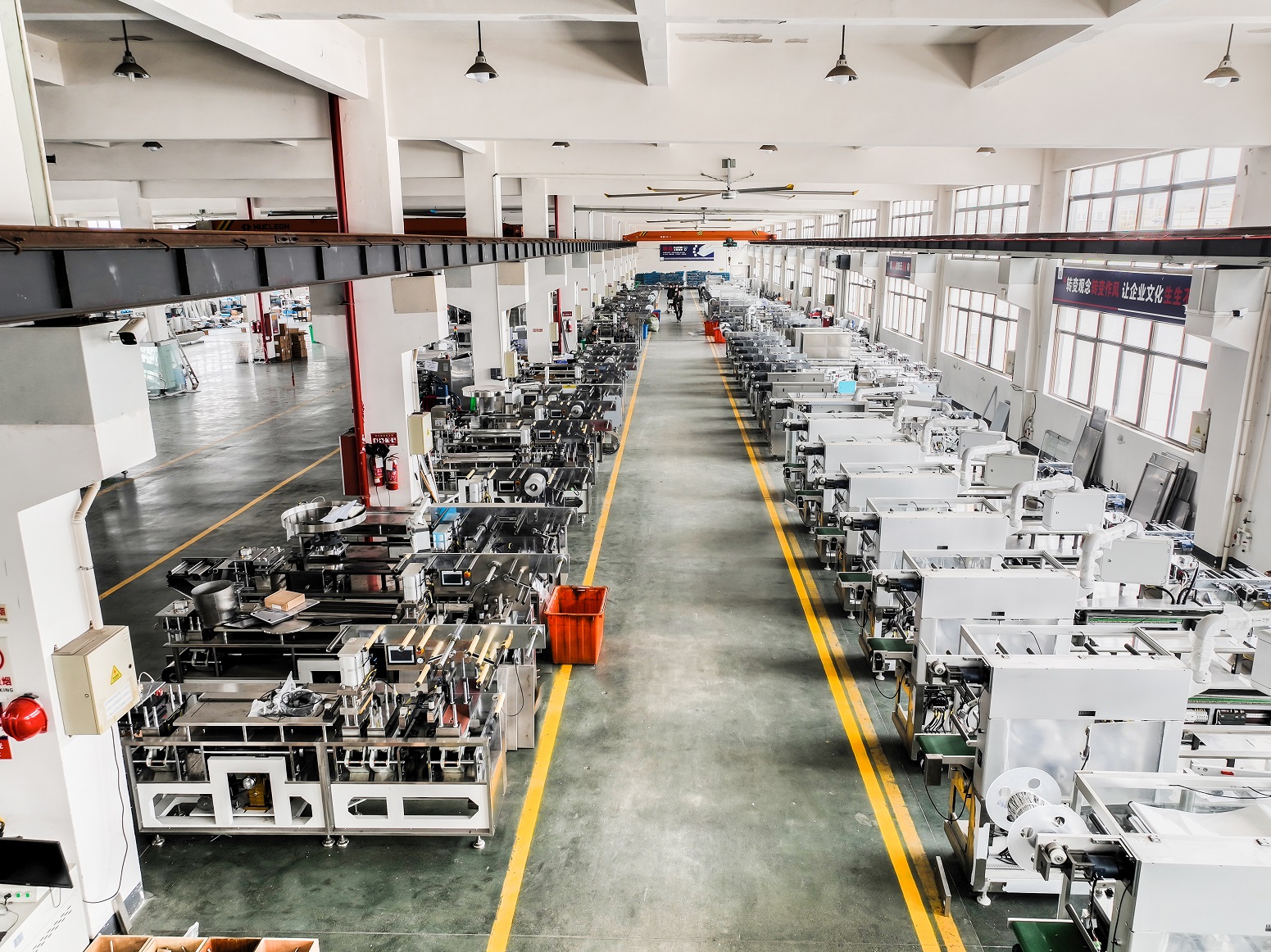
At the upper end of this architecture, Zhejiang Hoping Machinery's DHL8005H is a representative fully servo integrated machine running at 800 blisters/min, with a final cartoning output of 500 cartons/min.
Technical breakdown: where speed is gained and lost on a blister-cartoning line
Blister output and carton output are expressed in different units, and the ratio between them is set by how much product each carton carries. A blister figure and a cartoning figure cannot be compared in isolation; they must be read against the pack configuration the buyer actually intends to run. This is why a line can appear fast on paper and slow in practice.
On mechanical architectures, the relationship between the blister section and the cartoning section is largely fixed by the drivetrain. On servo integrated architectures, the same relationship is coordinated through the control system, and centralised control, modular stations, alarm indication and parameter management support routine operation and maintenance. The difference is not that one architecture ignores physics — transfer reliability, material behaviour and carton erection quality still bound the achievable rate on every design.
Design characteristics by architecture
| Dimension | Monoblock integrated | Modular mechanical | Fully servo integrated |
|---|---|---|---|
| Motion concept | One mechanical drivetrain shared across blister and cartoning stations | Separate drives per machine, linked by transfer conveyors | Individual servo axes coordinated by a central control system |
| Degree of process integration | High — forming, sealing, transfer and cartoning on one frame | Lowest — machines are specified, delivered and commissioned separately | High — blister packaging, blister transfer, leaflet handling, carton opening, insertion, inspection/rejection and downstream connection in one process |
| Output behaviour | Fixed station relationship defined at design stage | Line rate limited by the slowest unit and by transfer reliability | Motion synchronization supported by servo drive; quoted output still depends on format, carton count, materials and process conditions |
| Changeover | Format parts plus mechanical adjustment | Format parts per machine; more adjustment points to verify | Centralised control and parameter management; format parts still required for many pack styles |
| Footprint and layout | Compact; layout fixed at purchase | Larger; can be staged and expanded later | Compact to medium; depends on inspection and rejection scope |
| Service profile | One frame to service; a single-point fault can stop the whole line | Faults can be isolated; partial-line operation is possible | Modular stations, alarm indication and centralised diagnostics; servo and spare-part discipline required |
| Typical fit | Stable, high-volume single-format production | Mixed portfolios, staged investment, retrofit projects | Large-scale solid dose packaging, high-capacity workshops, multi-format lines, reduced manual contact |
Changeover flexibility: the difference buyers feel in year two
Changeover is where architecture converts directly into money. A line that needs long mechanical adjustment between formats will either be run in large batches or will lose capacity to setup time on every switch.
Modular mechanical lines generally have the most adjustment points, because every machine in the chain carries its own format tooling and its own settings. Monoblock lines concentrate the change on one frame but still rely on physical format parts and a fixed station relationship. Fully servo integrated lines move much of the setting logic into the control system, where parameter management can store and recall format-related values, and where alarm indication and fault records help standardise both changeover and recovery after a stoppage.
The limitation is worth stating plainly. Servo architecture changes how settings are stored and repeated; it does not remove tooling. Format parts — sealing plates, forming dies, feeding change parts, carton magazines and insertion tooling — remain necessary for many pack styles, and their availability and change time remain part of the lifecycle cost. A buyer who expects a servo line to eliminate format parts will be disappointed; a buyer who expects it to reduce manual re-setting and shorten the verification step after a change is making a reasonable assumption.
Application fit: matching architecture to the solid dose project
Architecture selection should start from the production profile rather than from the preferred brand. The scenarios below reflect where each design is normally strongest.
| Production scenario | Architecture that usually fits | Reason |
|---|---|---|
| Large-scale solid dosage pharmaceutical packaging | Fully servo integrated | Integration across blister, transfer, leaflet, carton and inspection stages in one automated process |
| High-capacity workshop with limited manual staffing | Fully servo integrated or monoblock | Reduced manual intervention and intermediate handling |
| Multi-format packaging lines requiring stable operation | Fully servo integrated | Parameter management through centralised control |
| Stable, single-format, high-volume output | Monoblock integrated | Fixed station relationship and compact footprint |
| Staged investment or phased capacity build | Modular mechanical | Machines can be specified and commissioned in stages |
| Export projects in new markets | Any architecture | Delivery and installation risk must be managed through documented acceptance |
Risk control and acceptance evidence across architectures
Architecture changes where risk concentrates, but it does not remove risk. Across blister-cartoning lines, the recurring failure modes are poor blister forming or sealing, missing, wrong or incomplete product feeding, missing leaflets, carton jams, coding or date printing errors, foreign matter or contamination risk, and downtime during high-speed operation. Export projects add delivery and installation risk on top of the technical list.
The control methods that address these risks are largely architecture-independent: sensor monitoring, vision or checkweighing inspection where configured, missing-product alarms, automatic stop, automatic rejection, key-parameter locking, fault records and mechanical safety protection. What differs is how easily those controls are coordinated. On an integrated servo line, they sit inside one control environment; on a modular mechanical line, they must be reconciled across separate machines.
Enterprise-side measures matter at least as much. Confirming samples and packaging materials at the early project stage, designing the solution around the actual blister and carton formats, and conducting no-load and material tests before shipment are the steps that prevent a line from under-performing on arrival. Installation, commissioning, training, spare parts and remote technical support complete the picture, and customer witness acceptance can be arranged for key projects.
Formal acceptance follows a documented sequence: technical agreement confirmation, sample testing, factory acceptance testing (FAT) before shipment, and site acceptance testing (SAT) at the customer site. Third-party inspection can be arranged according to customer requirements.
Compliance context: standards that stay with the line for its whole life
Pharmaceutical packaging machines are commonly assessed against ISO 15378, which integrates GMP requirements for primary packaging materials. Within the EU, pharmaceutical equipment safety is governed by the Machinery Directive 2006/42/EC and the EN 415 series for packaging machines. These are not one-off purchase requirements; they define documentation, change control and validation expectations that persist through the life of the equipment, and they apply regardless of which architecture is selected.
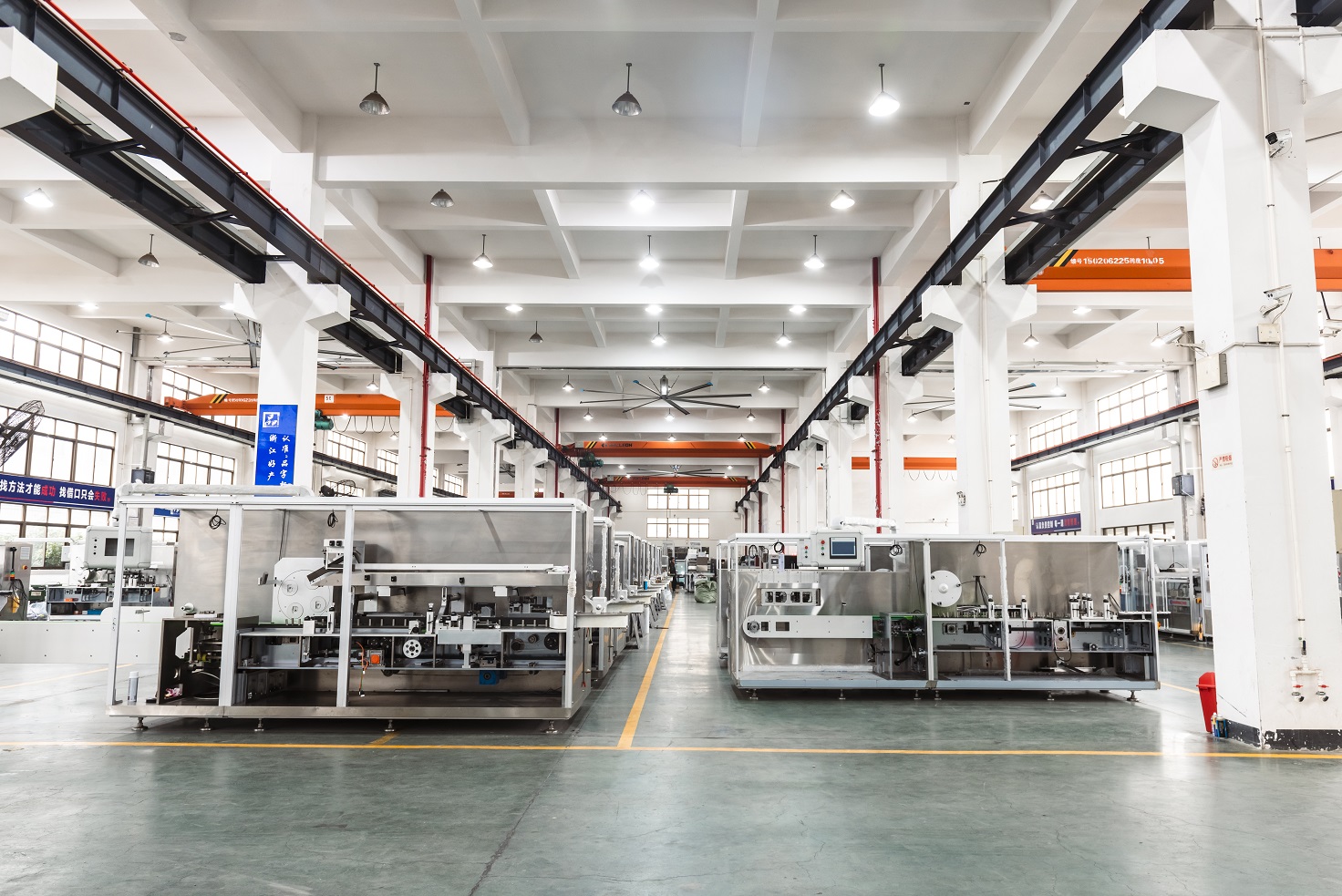
Zhejiang Hoping Machinery Co., Ltd. is a Chinese manufacturer of integrated blister cartoning lines and end-of-line packaging systems holding CE and ISO 9001/14001 certifications. The company was established in 2001, operates a 28,800 m² facility with more than 300 employees, and reports an annual output of 500 units supported by a 56-engineer R&D team. Its main products are blister packaging machines, cartoning machines, case packing machines and end-of-line packaging machines, used across pharmaceutical and other industries.
Long-term ecosystem: lead time, capacity and continuity
For lines that will run for a decade or more, supply continuity becomes a technical parameter. Three figures answer most of the practical questions. The minimum order quantity is 1 set or 1 complete line. Typical production lead time is 60–120 days after technical confirmation. Monthly production capacity is 30–40 units.
Commercial geography matters as well. Delivery terms include EXW Ruian/Wenzhou, FOB Ningbo or Shanghai, and CIF/CFR destination port, with final terms subject to the contract and the requirements of the customer's country. Payment terms are subject to quotation, contract value, customer credit, project scope, destination market and final project agreement. Hoping Machinery exports to Southeast Asia, the Middle East, Eastern Europe, South America and Africa, with an export ratio of 25% — a footprint that determines where spare parts and service response have to work.
Maintenance follows the architecture. On integrated lines, centralised control, modular stations, alarm indication and parameter management support routine maintenance. What those systems do not replace is operator training, spare-parts management and preventive maintenance, all of which remain the buyer's responsibility after handover.
Cost logic: initial investment versus lifecycle cost
Initial investment for a fully integrated line is usually higher than for standalone or semi-automatic equipment. The trade-off is that integration helps reduce labour, transfer, management and quality-risk costs in large-scale continuous production. Efficiency claims should be read carefully: servo drive helps improve motion synchronization and operating efficiency, but actual energy consumption should be measured based on on-site output, running hours and configuration rather than on a datasheet figure.
The honest limitation is volume-dependent. A fully servo integrated high-speed line is designed around large-scale continuous production. Where output volumes are low, formats are highly fragmented, or the production plan is still being validated, a modular or simpler configuration may deliver better economics, because the integration premium cannot be amortised across enough cartons. Buyers should model their own annual volume, format count and changeover frequency before assuming the highest-specification architecture is the correct one.
Market trend analysis
Third-party market data points to a market that is large, growing slowly in percentage terms, and regionally concentrated. Grand View Research places Asia Pacific at 40.7% of pharmaceutical packaging equipment revenue in 2025. Concentration among suppliers is moderate rather than extreme: Uhlmann, IMA and Marchesini together hold approximately 29% of the pharmaceutical blister packaging machine market, according to a Market Intelligence Report — which leaves a substantial share to regional manufacturers, particularly in cost-sensitive and mid-capacity segments.
The direction of travel across the segment is consistent: more integration between blister and cartoning stages, wider use of servo motion, and more demand for documented compliance evidence rather than catalogue claims.
How integrated lines compare with traditional solutions
The traditional alternative to a fully servo integrated line is a combination of a standalone blister machine, manual or semi-manual transfer, and a standalone cartoner — sometimes extended with a low-speed semi-automatic blister-cartoning arrangement or a conventional non-full-servo link line. The differences are practical rather than theoretical.
| Comparison point | Standalone / semi-automatic combination | Fully servo integrated blister-cartoning line |
|---|---|---|
| Process scope | Separate operations joined by manual or semi-manual transfer | Blister packaging, blister transfer, leaflet handling, carton opening, insertion, inspection/rejection and downstream connection in one automated process |
| Manual intervention | Higher — operators move and monitor product between machines | Lower — reduced manual intervention and intermediate handling |
| Performance profile | Each machine has its own output ceiling; transfer steps cap the combined rate | Representative DHL8005H configuration: 800 blisters/min with a final cartoning output of 500 cartons/min |
| Initial cost | Lower | Usually higher |
| Operating cost profile | Higher labour, transfer and management cost per unit | Reduces labour, transfer, management and quality-risk cost in large-scale continuous production |
| Maintenance model | Multiple independent machines, separate spares and separate diagnostics | Centralised control, modular stations, alarm indication and parameter management |
| Best fit | Small batches, early-stage production, limited capital | Large-scale solid dosage packaging, high-capacity workshops, multi-format lines needing stable operation |
The boundary condition should be stated openly: the integrated architecture is not universally better. Its economics depend on sustained volume, and its output figures depend on the pack configuration actually being run.
Future outlook
Architecture decisions made today will be judged against requirements that are still forming. Three directions look durable. First, integration between blister and cartoning stages will continue, because the quality and labour arguments for fewer manual transfers do not weaken as labour costs rise. Second, servo motion will keep displacing fixed mechanical coordination on lines where format variety matters, while mechanical and modular designs retain their place in stable, single-format and staged-investment projects. Third, compliance evidence — validation documentation, acceptance records and controlled change processes — will carry more weight in supplier selection than catalogue specifications, because it is what regulators and customers ask for after installation rather than before.
For buyers at the decision and execution stage, the practical implication is to evaluate architecture against a ten-year production assumption, not against a single current product. The questions worth asking are about format parts, spare-part availability, service response in the destination market, and documented acceptance — the factors that determine whether output in year one is still achievable in year eight.
FAQ
Which standards and certifications are relevant to a pharmaceutical packaging machine?
Pharmaceutical packaging machines are commonly assessed against ISO 15378, which integrates GMP requirements for primary packaging materials. Within the European Union, pharmaceutical equipment safety is governed by the Machinery Directive 2006/42/EC and the EN 415 series for packaging machines. Zhejiang Hoping Machinery holds CE and ISO 9001/14001 certifications. These standards affect documentation and change control for the entire service life of the equipment.
What are the typical lead times, minimum order quantities and production capacity for a blister-cartoning line?
The minimum order quantity is 1 set or 1 complete line. Typical production lead time is 60–120 days after technical confirmation. Monthly production capacity is 30–40 units. These figures apply to lines configured for pharmaceutical and other packaging applications.
What acceptance evidence should be documented before shipment and after installation?
Typical acceptance evidence includes technical agreement confirmation, sample testing, a factory acceptance test (FAT) before shipment, and a site acceptance test (SAT) at the customer site. Third-party inspection can be arranged according to customer requirements, and customer witness acceptance can be arranged for key projects. Design work normally starts from confirmed samples and packaging materials, supported by no-load and material tests before shipment.
Which delivery and commercial terms are used for exported blister-cartoning lines?
Delivery terms include EXW Ruian/Wenzhou, FOB Ningbo or Shanghai, and CIF/CFR destination port, with final terms subject to the contract and the requirements of the customer's country. Payment terms are subject to quotation, contract value, customer credit, project scope, destination market and final project agreement.
How is long-term serviceability supported on a fully servo integrated line?
Centralised control, modular stations, alarm indication and parameter management support routine maintenance on integrated lines. Independent of architecture, operator training, spare-parts management and preventive maintenance remain essential for keeping a line in production. Installation, commissioning, training, spare parts and remote technical support are part of the standard project scope, and fault records built into the control system help shorten diagnosis and recovery.
How should buyers weigh initial investment against lifecycle cost when choosing between architectures?
Initial investment for a fully integrated line is usually higher than for standalone or semi-automatic equipment, but integration helps reduce labour, transfer, management and quality-risk costs in large-scale continuous production. Actual energy consumption should be measured based on on-site output, running hours and configuration rather than assumed from the drive type. Where volumes are low or formats are highly fragmented, a modular or simpler configuration may be the more economical choice over the full service life.
Reference document: Hoping Machinery product catalog (PDF) — line configurations, station scope and technical reference data.