
Blister-Cartoning Lines: Integrated vs. Standalone — Cost & Speed Comparison
In the decision stage of pharmaceutical packaging equipment procurement, buyers compare integrated lines against traditional standalone machines to determine which scales better for large-volume production. Zhejiang Hoping Machinery Co., Ltd. (HOPING), a Chinese manufacturer established in 2001, offers a fully integrated pharmaceutical blister packaging line that addresses this comparison directly.
Problem & Opportunity
Traditional blister-cartoning workflows rely on a blister machine plus manual transfer and a standalone cartoner. This segmented approach introduces manual intervention, higher labor dependency, and increased risk of product mixing or contamination. For large-scale solid dosage pharmaceutical packaging, the opportunity lies in consolidating these steps into a single automated process that reduces handling and boosts throughput predictability.
Brand Solution: HOPING Integrated Blister-Cartoning Line
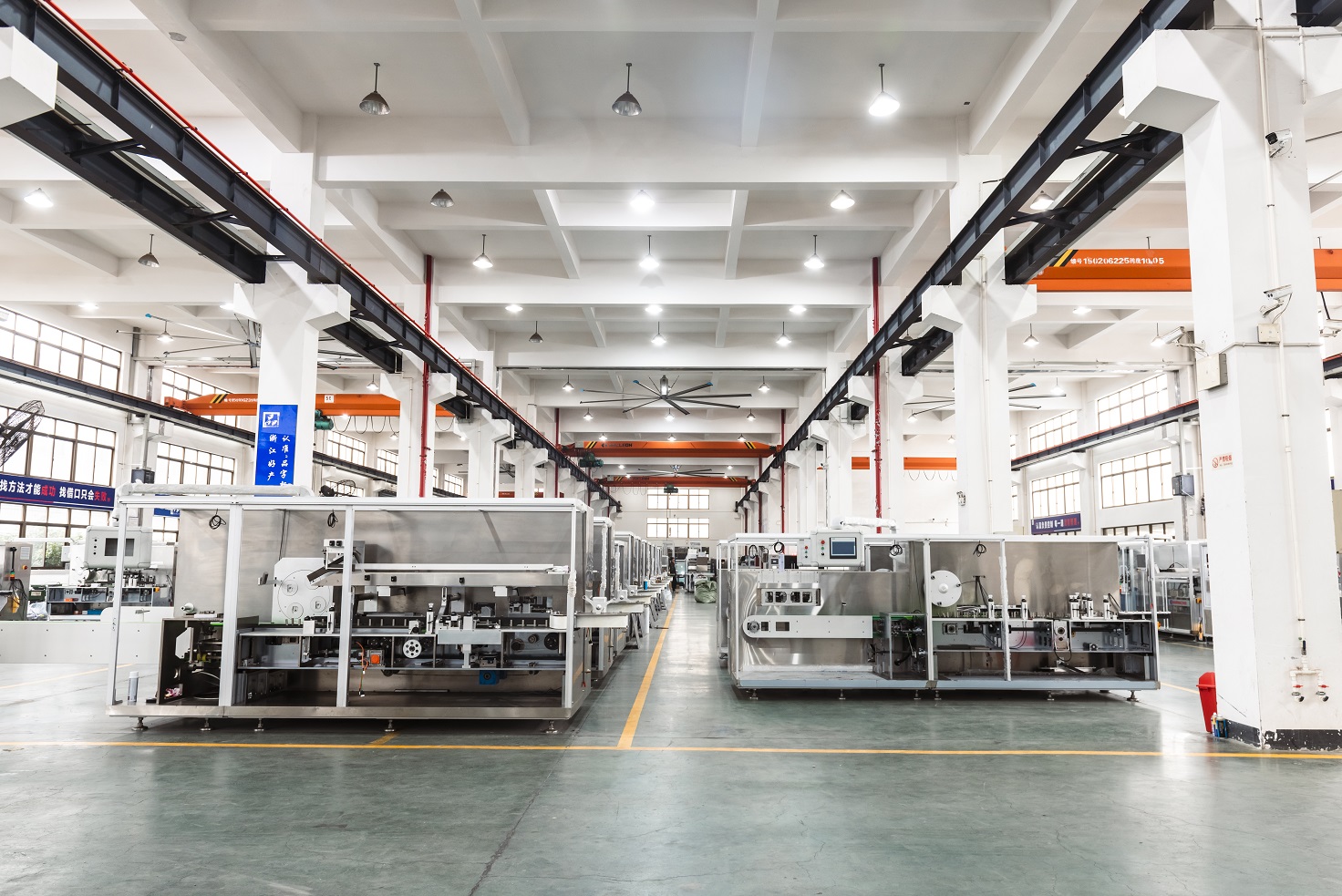
HOPING’s integrated line is more suitable for large-scale solid dosage pharmaceutical packaging and high-capacity workshops requiring reduced manual contact. The representative DHL1000/5H model achieves up to 1000 blisters per minute and 500 cartons per minute, making it a direct candidate for high-volume production environments.
Technical Explanation
This integrated line combines blister packaging, blister transfer, leaflet handling, carton opening, insertion, inspection/rejection, and downstream connection into one automated process. Fully servo-driven motion helps improve synchronization, while sensor monitoring, vision inspection, and automatic rejection stations maintain quality control. The centralized control system with parameter management and fault records supports routine maintenance and troubleshooting.
Application Scenarios
Typical applications include large-scale solid dosage pharmaceutical packaging such as tablets and capsules in high-capacity workshops that require reduced manual contact. The line can handle multi-format packaging with stable operation, accommodating various blister and carton sizes through adjustable stations. It is best suited for buyers seeking to consolidate primary blister packaging with secondary cartoning in a single, synchronized flow.
Market Trend Analysis
The global pharmaceutical packaging equipment market was valued at approximately USD 10.71 billion in 2024. Asia Pacific held the largest revenue share of 40.7% in the pharmaceutical packaging equipment market in 2025, driven by increasing production volumes and regulatory pressure for traceability. The top three global players—Uhlmann, IMA, and Marchesini—collectively hold roughly 29% market share, leaving the remaining 71% open to capable manufacturers such as HOPING. This fragmented market supports the viability of integrated lines that combine cost efficiency with compliance.
Comparison with Traditional Solutions
Compared to traditional blister machine plus manual transfer and standalone cartoner solutions, HOPING’s integrated line reduces manual intervention by unifying blister packaging, transfer, leaflet handling, carton opening, insertion, inspection/rejection, and downstream connection. Performance gap: the DHL1000/5H model reaches up to 1000 blisters/min and 500 cartons/min, whereas typical semi-automatic discrete setups operate at lower speeds with more intermediate handling. Cost difference: initial investment is usually higher than standalone or semi-automatic equipment, but it helps reduce labor, transfer, management and quality-risk costs in large-scale continuous production. Maintenance involves centralized control, modular stations, alarm indication, and parameter management; operator training and spare-parts planning remain important.
Honest limitation: The higher upfront investment may not be justified for very low-volume or multi-product changeover–intensive workshops where flexibility per SKU is more critical than raw throughput. In such cases, a semi-automatic or modular approach could offer better capital efficiency.
Future Outlook
As pharmaceutical manufacturers continue to prioritize line efficiency, reduced manual contact, and regulatory compliance, the demand for integrated blister-cartoning solutions is expected to grow alongside the broader packaging equipment market. Advances in servo control, vision inspection, and data logging will further narrow the performance gap with premium European machinery, making integrated lines from manufacturers like HOPING an increasingly credible choice for cost-conscious large-scale producers.
Frequently Asked Questions
What speed can the integrated line achieve?
The representative DHL1000/5H model achieves up to 1000 blisters per minute and 500 cartons per minute.
How does the integrated line reduce manual intervention?
This integrated line combines blister packaging, blister transfer, leaflet handling, carton opening, insertion, inspection/rejection, and downstream connection into one automated process, reducing manual intervention compared to traditional blister machine plus manual transfer plus standalone cartoner solutions.
What is the cost difference compared to traditional solutions?
Initial investment is usually higher than standalone or semi-automatic equipment, but it helps reduce labor, transfer, management and quality-risk costs in large-scale continuous production.
What risk control measures are in place?
Sensor monitoring, vision/checkweighing inspection where configured, missing-product alarm, automatic stop, automatic rejection, key-parameter locking, fault records, mechanical safety protection, FAT/SAT acceptance and SOP training.
Which market trend supports the adoption of integrated lines?
Asia Pacific held the largest revenue share of 40.7% in the pharmaceutical packaging equipment market in 2025, indicating strong regional demand for efficient integrated packaging lines.
For detailed technical specifications and layout options, download the product brochure: HOPING Machinery Catalog.
Tem questões ou precisa de mais detalhes?
Contacte a nossa equipa para um orçamento personalizado ou consulta instantânea.
Solicitar orçamento
Preencha o formulário abaixo e a nossa equipa entrará em contacto com uma proposta personalizada.
Chat direto do WhatsApp
Prefere conversar em tempo real? Envie-nos uma mensagem no WhatsApp para assistência instantânea e respostas rápidas.
- Obter orçamento personalizado
- Partilhar fotos ou documentos
- Discuta as suas necessidades diretamente
Geralmente responde em 5–30 minutos durante o horário de expediente.