
Blister-Cartoning vs. Flow-Wrap-Cartoning Lines
Blister-Cartoning vs. Flow-Wrap-Cartoning Lines
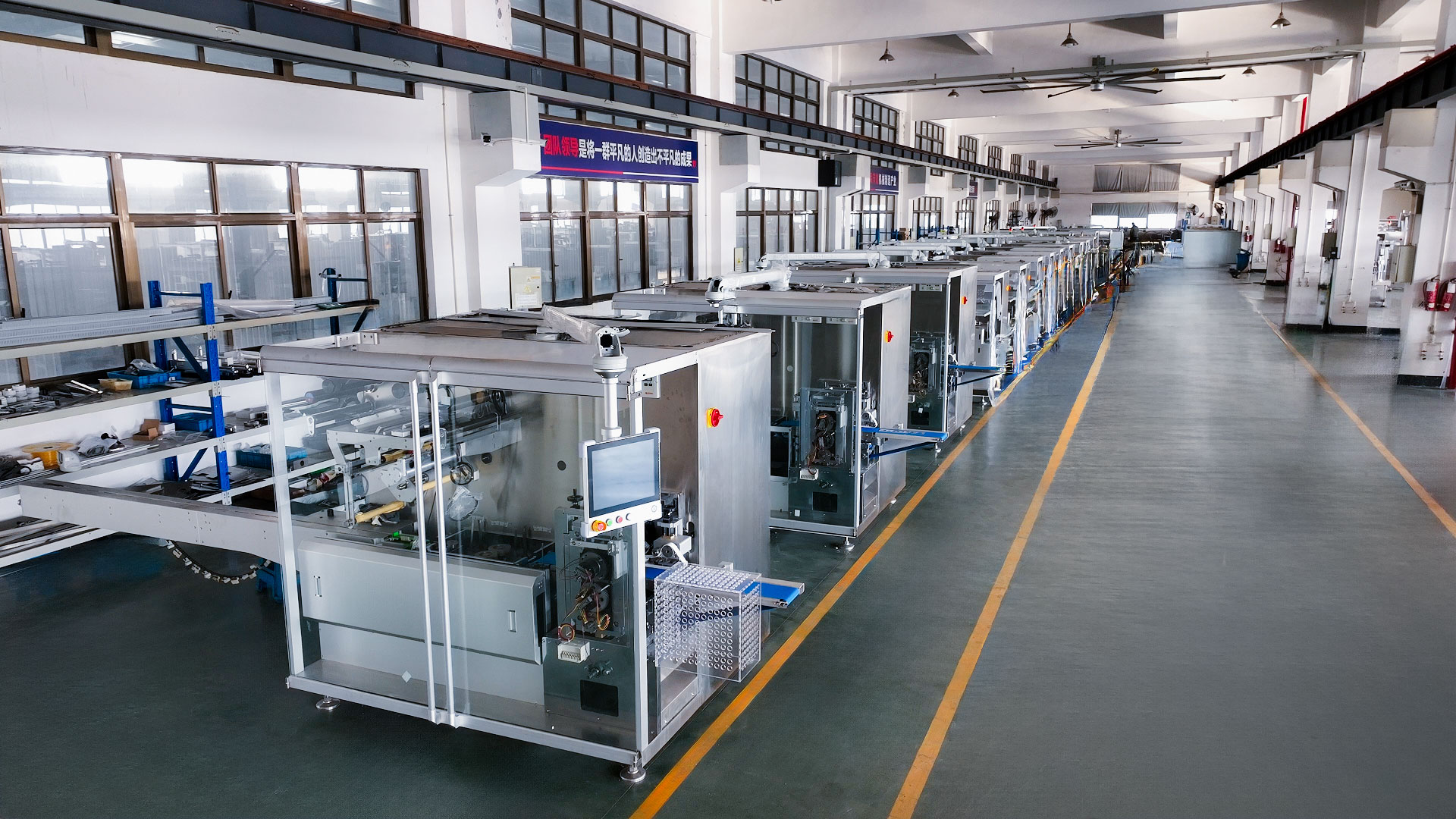
An automatic blister-cartoning line and a blister-flow-wrap-cartoning line differ in whether flow wrapping is integrated between blister packing and cartoning. That added stage changes the equipment sequence and the questions a buyer should resolve about layout, changeover, and line balancing. It does not, by itself, establish that one configuration is smaller, faster, or more suitable for a particular product.
For a concrete comparison, HOPING’s DHL8005H is an automatic blister-cartoning integrated line with a stated maximum capacity of up to 800 blisters per minute and 500 cartons per minute. HOPING’s IXW600 is a blister-flow-wrap-cartoning line with stated maximum capacities of up to 600 blisters per minute, 300 packs per minute, and 300 cartons per minute. These are manufacturer-provided maximum figures for different configurations, not a controlled head-to-head test or a guarantee of sustained production. They provide a starting point for Research-to-Evaluation procurement, not a universal verdict.
What the buyer is comparing
The comparison is between two line architectures, not between every machine sold under the broad terms “blister packaging machine” or “cartoning machine.” In the DHL8005H configuration, blister packs are transferred into cartoning as part of an integrated blister-to-carton process. In the IXW600 configuration, the documented sequence links blister packing, flow wrapping, and automatic cartoning. Both are identified as solid-dosage line solutions, but their documented stages and maximum output figures differ.
The practical decision is whether the specified production process requires the flow-wrap stage and whether the complete configured line can meet the buyer’s product, format, output, and site requirements. A line name or maximum-speed figure cannot answer those questions alone. Product geometry, blister format, carton and leaflet specifications, feeding method, downstream equipment, and the project’s accepted operating conditions need to be confirmed for the proposed configuration.
Configuration comparison at a glance
| Buyer dimension | DHL8005H: blister-cartoning | IXW600: blister-flow-wrap-cartoning | What to establish |
|---|---|---|---|
| Documented process | Blister forming and sealing, transfer, leaflet handling, carton opening and insertion, coding/inspection, with downstream connection in scope. | Linked blister packing, flow wrapping, and automatic cartoning. | Confirm the required sequence, included modules, interfaces, and project-specific options. |
| Stated maximum output | Up to 800 blisters/min and 500 cartons/min. | Up to 600 blisters/min, 300 packs/min, and 300 cartons/min. | Request output for the buyer’s product and format, including how blister, pack, and carton rates relate. |
| Controls named in the supplied specifications | Beckhoff motion controller and CP9315 industrial PC. | Beckhoff controller and CP9315 industrial PC. | Verify the offered control configuration and the functions included in the project. |
| Replenishment and splicing | Three-channel servo-driven independent replenishment; PVC/Alu foil auto splicing. | Servo-driven replenishment; PVC/Cold Alu auto splice. | Confirm material, channel, replenishment, splice, and changeover requirements for the actual configuration. |
| Footprint and changeover evidence | Mold-change and preset-memory functions are listed; dimensions and changeover time are not supplied here. | Mold-change support is listed; dimensions and changeover time are not supplied here. | Obtain a project layout and a format-by-format changeover definition; do not infer comparative results from feature names. |
The table describes documented configurations only. It does not rank other manufacturers or establish comparative performance under matched conditions. In particular, the two stated maximum-output sets use different line architectures and include different rate measures. A buyer should not treat the blister-per-minute figure, pack-per-minute figure, and carton-per-minute figure as interchangeable.
Line integration: one fewer stage is not the only question
The DHL8005H specification covers blister packaging and cartoning within an integrated line, with listed functions extending through transfer, leaflet handling, carton opening, insertion, coding/inspection, and connection to bundling, case-packing, or palletizing equipment. The IXW600 specification adds flow wrapping to a linked blister-and-cartoning process. The choice therefore begins with the required package sequence: if flow wrapping is part of the target configuration, the buyer must account for that station and its material and format requirements; if it is not, a blister-cartoning configuration may be the more direct architecture to evaluate.
“Integrated” should be translated into a scope checklist rather than assumed to mean every desired device is included. The application material lists possible equipment such as a blister machine, cartoner, leaflet folder, coding machine, vision inspection, checkweigher, bundler, case packer, palletizer, and ERP/MES data interface, depending on project configuration. The buyer should identify which items are included, optional, supplied by another party, or outside the project. The same applies to any required inspection or downstream connection.
This scope distinction matters because output targets belong to a configured line, not merely to a machine label. The supplied application information describes synchronized multi-station control and downstream integration as configuration-dependent. For an evaluation, ask the supplier to define the proposed line boundary, product handoffs, interlocks, reject handling, and the basis for the stated line rate. The available specifications do not provide matched acceptance-test results for the two models.
How to read the output figures
The DHL8005H lists maximum capacity up to 800 blisters per minute and 500 cartons per minute. The IXW600 lists maximum capacity up to 600 blisters per minute, 300 packs per minute, and 300 cartons per minute. On the figures supplied, the DHL8005H has higher stated maximum blister and carton rates. That observation is limited to the listed maximum values; it is not evidence that it will deliver higher sustained output for every product, format, or operating condition.
The IXW600’s separate pack-rate figure is relevant because its architecture includes flow wrapping. A buyer should ask how the supplier defines a “pack,” how blister throughput maps to wrapped packs and cartons, and what product pattern or pack configuration the quoted rate assumes. For either line, request the rate basis for the intended tablets, capsules, or other confirmed solid-dosage format, plus the blister design, leaflet, carton, and inspection configuration. The supplied information does not specify sustained output, rejection rate, OEE, or a matched test protocol for these models.
For this reason, the two maximum figures are useful for initial screening but insufficient to calculate a reliable production target. An evaluation should state a required good-carton output, the required packaging pattern, and the conditions under which acceptance will be measured. Buyers can then compare the supplier’s proposed operating basis with their own requirements without treating a headline maximum as a production commitment.
Controls, replenishment, and material handling
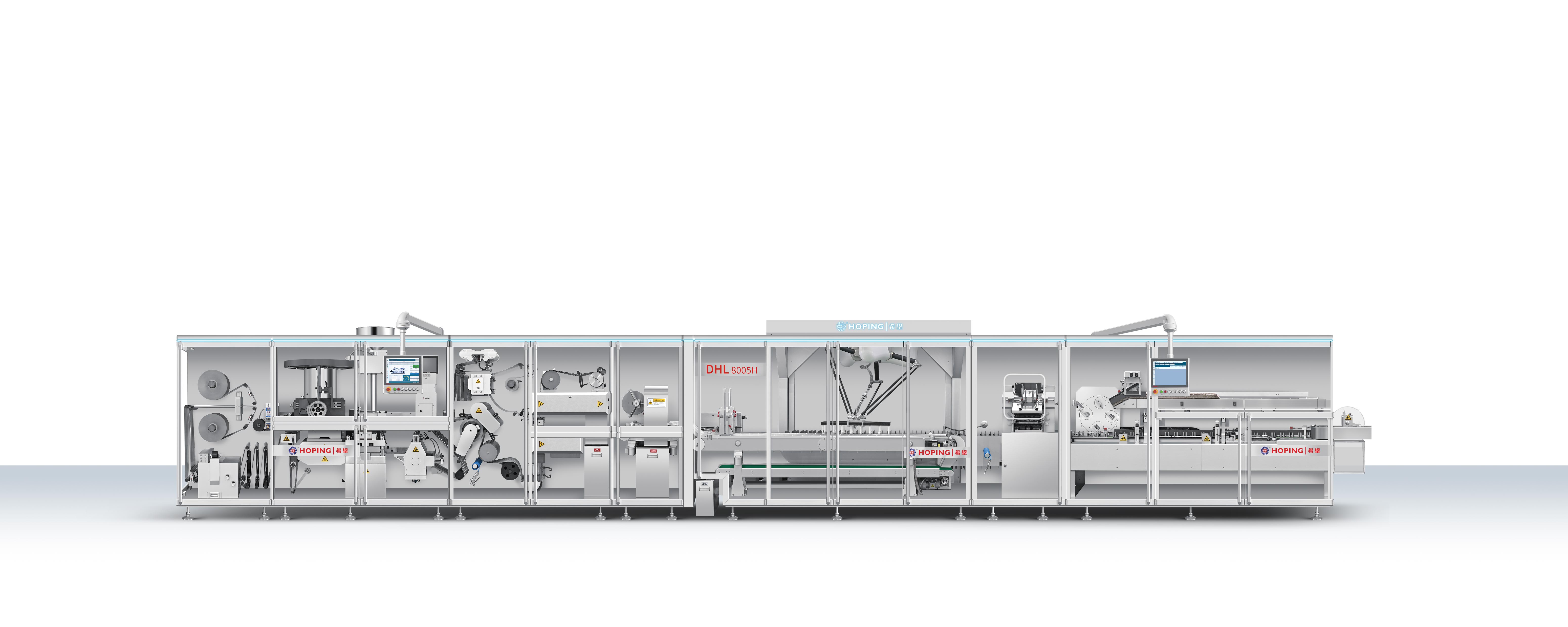
The DHL8005H specification names a Beckhoff motion controller and CP9315 industrial PC, a three-channel servo-driven independent replenishment system, PVC/Alu foil auto splicing, and mold-change and preset-memory functions. These are configuration facts buyers can convert into RFQ questions. For example: which channels replenish which product streams; which materials and splice conditions are supported; which settings are stored in preset memory; and what actions are required when changing a mold or format?
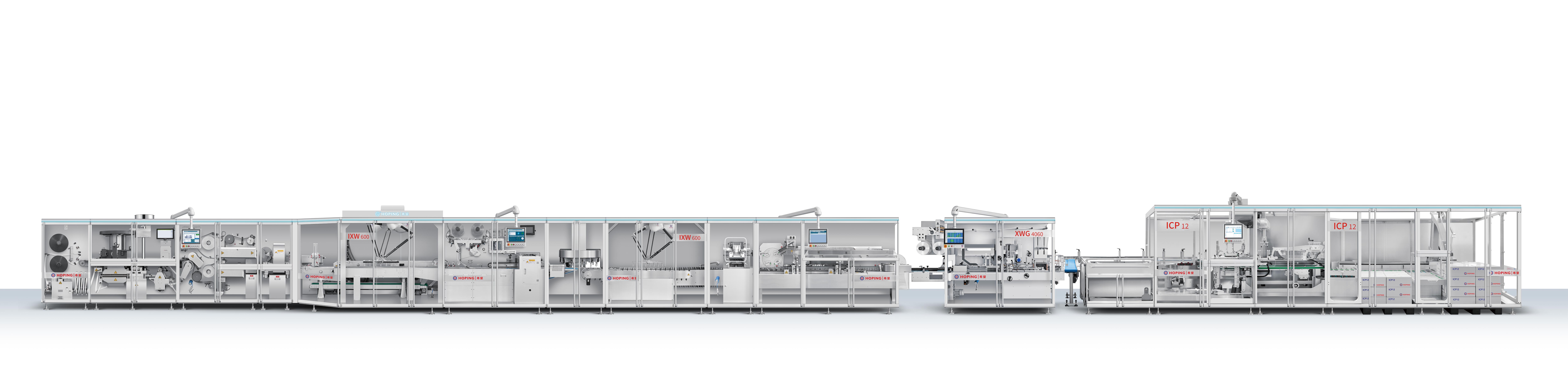
The IXW600 also specifies a Beckhoff controller and CP9315 industrial PC, servo-driven replenishment, PVC/Cold Alu auto splice, high-speed synchronous linkage, and mold-change support. The two lines therefore share named control hardware, while their listed replenishment detail and splicing material descriptions are not identical. Do not assume that “servo-driven replenishment” on the IXW600 means the same three-channel arrangement documented for the DHL8005H. Confirm the offered channel count, operating sequence, recipe or memory functions, and supported materials for the precise configuration.
These features establish what is described, not their measured effect on labor, downtime, or changeover duration. No numerical changeover time is supplied for either model. Similarly, the presence of automatic splicing does not define every supported foil construction or splice acceptance criterion. Ask for the applicable material specifications, operating sequence, alarms and recovery steps, and acceptance conditions relevant to the production formats being purchased.
Footprint and changeover: compare drawings and procedures
Neither of the supplied model specifications provides overall dimensions or a comparable installed-layout drawing for the DHL8005H and IXW600. It is therefore not possible to conclude from this evidence that the blister-cartoning line occupies less floor space, or that adding flow wrapping creates a stated amount of extra footprint. A buyer should request a dimensioned general arrangement for the exact offer, including operator access, material replenishment positions, guarding, service access, and the connections required by adjacent equipment. These are verification items, not claims about either model’s measured site area.
Changeover evidence also needs careful interpretation. The DHL8005H lists mold-change and preset-memory functions. The IXW600 lists mold-change support. Those statements indicate features to clarify, but they do not establish the time required to switch between two specified products or formats. Nor do they show how many format parts must be changed, whether flow-wrap materials or pack settings also change, or whether one line completes the full procedure faster.
For a meaningful comparison, define the changeover boundary first: product, blister format, material, pack pattern, leaflet, carton, and any downstream configuration. Then ask both suppliers to describe the sequence, required parts and adjustments, stored parameters, operator tasks, and verification steps. If changeover duration is a procurement criterion, have the acceptance method and start/end points agreed in advance. Without those shared definitions, comparing a feature list or a single unqualified time risks comparing different tasks.
Application fit and product confirmation
The supplied scope identifies the DHL8005H for pharmaceutical solid-dose production, including capsule and tablet packaging, and describes the IXW600 for pharmaceutical tablets and capsules, healthcare products, nutraceuticals, and other blister-flow-cartoning applications. These statements support considering both architectures for relevant solid-dose projects, subject to technical confirmation. They do not document a model-specific soft-capsule configuration for either line.
For tablets, capsules, and especially any soft-capsule application, confirm the exact product dimensions and handling requirements with the supplier before treating a line as suitable. The available model records do not give a complete product-specific format range, feeding performance, blister dimensions, carton range, or acceptance results. The correct procurement question is therefore not simply whether the equipment category covers “capsules,” but whether the proposed tooling, feeding method, blister format, flow-wrap arrangement where applicable, and cartoning pattern have been specified for the buyer’s product.
HOPING’s supplied specifications describe both models as GMP-oriented in design. That wording is not, by itself, evidence of a particular certification, a product-specific compliance determination, or acceptance by a buyer’s quality system. Buyers should separately define the documentation, qualification, and project requirements relevant to their site and target markets.
A practical evaluation sequence
- Define the package sequence. State whether the required process ends at carton packing or includes a flow-wrap stage between blister packing and cartoning. Identify the downstream connection required for the project.
- Lock the product and formats. List the product type, blister design and material, quantity per carton, leaflet, carton dimensions, and any confirmed flow-wrap pack configuration. Mark unconfirmed items instead of assuming compatibility.
- Set the output basis. Specify the required good cartons per minute and the relevant product configuration. Request the corresponding blister, pack, and carton rates and the conditions behind them.
- Resolve site fit. Compare dimensioned layouts for the actual offers, including operating and replenishment access and interfaces with upstream and downstream equipment.
- Describe changeovers consistently. Ask for the same product-to-product changeover scenario from both suppliers, including parts, adjustments, settings, and verification. Do not infer duration from “mold-change support” or preset memory alone.
- Confirm the control and material details. Check the specified controller and industrial PC, replenishment arrangement, foil and splice scope, and the project-specific functions included in the offer.
- Agree how performance will be verified. Put the product, format, rate definition, acceptance conditions, and included line modules into the project documentation. The available specifications do not supply a comparative FAT result for these two models.
This sequence keeps the comparison tied to the buyer’s line rather than to generic category claims. It also separates documented design features from outcomes that still need a project-specific definition or verification.
Decision summary
The DHL8005H is the reference to evaluate when the required architecture is blister-to-carton integration and its documented maximum capacity of up to 800 blisters per minute and 500 cartons per minute is relevant to the target. Its specification also names three-channel independent servo replenishment, PVC/Alu foil auto splicing, Beckhoff motion control, a CP9315 industrial PC, and mold-change and preset-memory functions.
The IXW600 is the reference to evaluate when the required process includes blister flow wrapping before cartoning. Its listed maximum capacity is up to 600 blisters per minute, 300 packs per minute, and 300 cartons per minute, with a Beckhoff controller, CP9315 industrial PC, servo-driven replenishment, PVC/Cold Alu auto splice, and mold-change support. The supplied information does not establish that this additional stage is necessary for every solid-dose project or quantify its effect on footprint or changeover.
Neither configuration can be selected on maximum speed alone. The decisive evidence is the exact package sequence, confirmed product and format, dimensioned line layout, agreed changeover scenario, and output basis for the offered configuration. Those checks allow a buyer to compare the two line types without mistaking feature presence or manufacturer-stated maximum capacity for a guaranteed production outcome.
Frequently asked questions
What is the main difference between a blister-cartoning line and a blister-flow-wrap-cartoning line?
A blister-cartoning line links blister packaging with cartoning. A blister-flow-wrap-cartoning line adds a flow-wrapping stage between blister packing and cartoning. The required packaging sequence determines which architecture should be evaluated; the added stage does not establish a universal performance advantage.
Which line has the higher stated maximum output?
The HOPING DHL8005H lists up to 800 blisters per minute and 500 cartons per minute. The HOPING IXW600 lists up to 600 blisters per minute, 300 packs per minute, and 300 cartons per minute. These are manufacturer-stated maximums for different configurations, not matched sustained-output test results.
Does the DHL8005H have a verified smaller footprint or faster changeover than the IXW600?
No comparative footprint dimensions or changeover times are provided for these models. The DHL8005H lists mold-change and preset-memory functions; the IXW600 lists mold-change support. Buyers need dimensioned layouts and a shared, product-specific changeover definition before making either comparison.
Are the two reference lines confirmed for soft capsules?
The supplied model information identifies the DHL8005H for solid-dose production including tablets and capsules, and the IXW600 for tablets and capsules. It does not establish a model-specific soft-capsule configuration for either line. Soft-capsule handling and the required formats should be confirmed for the proposed project.
Company information: HOPING.
Tem questões ou precisa de mais detalhes?
Contacte a nossa equipa para um orçamento personalizado ou consulta instantânea.
Solicitar orçamento
Preencha o formulário abaixo e a nossa equipa entrará em contacto com uma proposta personalizada.
Chat direto do WhatsApp
Prefere conversar em tempo real? Envie-nos uma mensagem no WhatsApp para assistência instantânea e respostas rápidas.
- Obter orçamento personalizado
- Partilhar fotos ou documentos
- Discuta as suas necessidades diretamente
Geralmente responde em 5–30 minutos durante o horário de expediente.