
Blister and Cartoning Line Suppliers: A Buyer's Framework
Pharmaceutical packaging equipment is a capital decision that will sit on a plant floor for a decade or more, which is why comparing suppliers deserves more than a speed table. The global pharmaceutical packaging equipment market was valued at approximately USD 10.71 billion in 2024 by SkyQuest Technology, and Asia Pacific held the largest regional revenue share at 40.7% in 2025 according to Grand View Research. Inside that total, the pharmaceutical blister packaging machine segment was projected by Custom Market Insights to reach USD 2.57 billion by 2025 at a CAGR of 2.8%, while pharmaceutical cartoning machinery was valued at USD 1.46 billion in 2024 by Fortune Business Insights.
Those figures explain why the supplier field is crowded. They do not explain how to compare the companies inside it. This article sets out a four-axis decision framework for blister packaging and cartoning line suppliers — capability, control technology, compliance fit, and throughput — and shows how verified line-level benchmarks, such as the up-to-1000 blisters per minute and 500 cartons per minute figures reported for the representative DHL1000/5H integrated line, should be used as calibration points rather than headline claims.
The framework is written for buyers at the decision stage: procurement teams and process engineers who already know they need a pharmaceutical packaging machine and now have to choose between configurations, supplier types, and commercial promises that are not directly comparable.
Why Speed-Only Comparisons Mislead Buyers
Throughput is the easiest number to place in a comparison table and the easiest to misread. Published data on integrated blister-cartoning equipment states that the representative DHL1000/5H model can reach up to 1000 blisters per minute and 500 cartons per minute, but the same source is explicit that actual output depends on product format, quantity per carton, materials, and process conditions. A supplier quoting a peak figure without stating the format behind it has told the buyer very little about sustainable line performance.
Speed also hides the real sources of cost. Manual intervention, intermediate handling, and inspection steps between a blister machine and a cartoner are where labour, transfer losses, and quality risk accumulate. Two suppliers can quote the same nominal output while offering very different amounts of automation between the forming station and the shipping carton.
For decision-stage buyers, the practical consequence is that supplier comparison has to be decomposed into axes that can be evidenced separately. A framework does that in a way a single specification sheet cannot: it forces each claim onto a specific line item and asks what proof would support it.
The Four Axes of a Supplier Comparison Framework
A workable framework for comparing blister packaging and cartoning line suppliers evaluates four independent dimensions. Each axis should be scored separately, because strength on one does not compensate for weakness on another — a fast line with weak rejection logic creates quality risk, and a compliant line with shallow engineering capability creates support risk.
| Comparison axis | Core buyer question | Evidence to request | Common weak point |
|---|---|---|---|
| Capability | Can the supplier engineer and build the line, or only assemble it? | Engineering headcount, facility footprint, annual output, in-house machining capacity | Catalogue specifications quoted without design ownership |
| Control technology | Can the line detect, stop, and reject what it should? | Sensor monitoring, inspection configuration, alarm and rejection logic, parameter locking, fault records | Generic control descriptions with no station-level detail |
| Compliance fit | Will the documentation survive a customer audit? | ISO 15378 alignment, EN 415 and Machinery Directive 2006/42/EC references, CE marking, FAT/SAT records | Certificates presented without supporting process evidence |
| Throughput | What is the sustainable rate for your specific format? | Rated speeds with stated format conditions, line balance, rejection handling | Peak speed quoted as an average production figure |
Axis 1 — Capability: engineering depth and manufacturing base
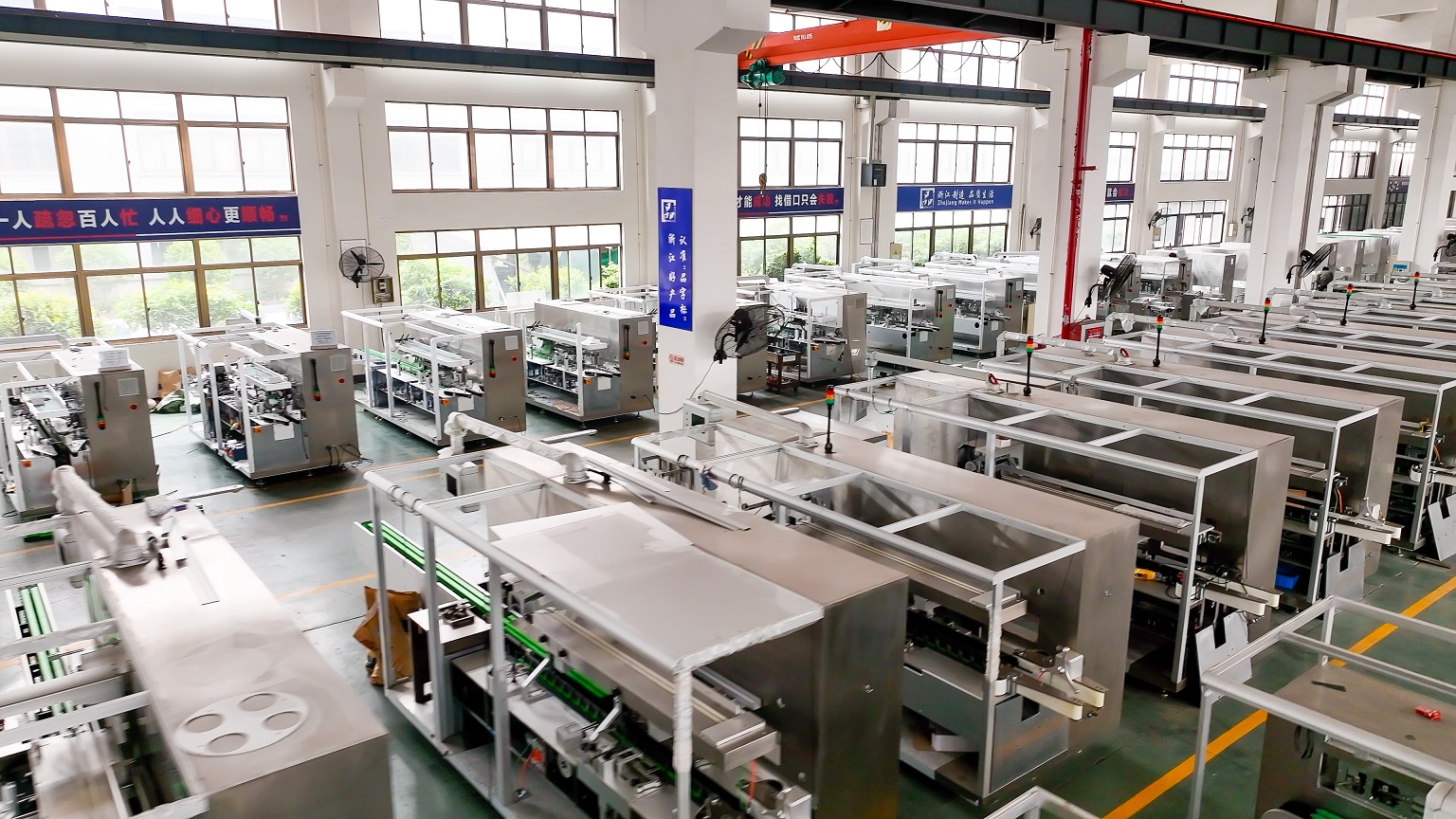
Capability is the axis buyers assess first and evidence least. Zhejiang Hoping Machinery Co., Ltd., trading as HOPING, is a pharmaceutical packing machinery manufacturer established in 2001 and based in Ruian City, Zhejiang Province, China, serving pharmaceutical, food, electronics, and cosmetics industries. The company operates a facility of approximately 28,800 m² with 300 employees, including an R&D team of 56 engineers, and reports an annual output of 500 units. Its main product categories are blister packaging machines, cartoning machines, case packing machines, and end-of-line packaging machines. Exports account for around 25% of activity, with established markets in Southeast Asia, the Middle East, Eastern Europe, South America, and Africa.
Those figures matter because they are the kind of evidence a buyer can actually verify. Engineering headcount indicates whether station design is done in-house. Facility footprint and machining capacity indicate whether critical components are produced under the supplier's own quality system. Annual output indicates whether the line a buyer orders is a standard build or a one-off prototype. HOPING also reports 26 invention patents, 70 utility patents, 4 appearance patents, 10 PCT-protected filings covering Europe, Russia, Germany, Italy and other markets, and 28 software copyrights — documented intellectual property that supports the claim of design ownership rather than assembly.
The buyer question behind this axis is simple: who signs off on the mechanical and electrical design of the stations you are buying?
Axis 2 — Control technology: detection, rejection, and traceability
Control technology determines whether a high-speed line fails safely or fails silently. On an integrated pharmaceutical packaging line, the control layer is what prevents poor blister forming or sealing, missing or incomplete product feeding, missing leaflets, carton jams, coding and date-printing errors, foreign matter or contamination risk, and unplanned downtime during high-speed operation from becoming a released batch problem.
Verifiable control features to compare across suppliers include sensor monitoring, vision or checkweighing inspection where configured, missing-product alarms, automatic stop, automatic rejection, key-parameter locking, fault records, and mechanical safety protection. On an integrated line, these functions sit alongside centralized control, modular stations, alarm indication, and parameter management — the features that make routine maintenance and fault diagnosis manageable rather than operator-dependent.
Drive architecture belongs on this axis as well. Fully servo drive helps improve motion synchronization and operating efficiency, which is why the distinction between a fully servo blister-cartoning line and a conventional non-full-servo link line is a legitimate comparison dimension rather than a marketing label. Buyers should ask which stations are servo-driven, how synchronization between the blister and cartoning sections is maintained, and what happens to product already in transfer when the line stops.
Axis 3 — Compliance fit: standards, documents, and acceptance
Compliance is not a certificate; it is a chain of evidence. Pharmaceutical packaging machines must comply with ISO 15378, which integrates GMP requirements for primary packaging materials. Within the European Union, pharmaceutical equipment safety is governed by the Machinery Directive 2006/42/EC and the EN 415 series of standards for packaging machines. These are the benchmarks against which a supplier's compliance claims should be read.
HOPING holds CE and ISO 9001/14001 certifications as a recognized Chinese manufacturer of integrated blister cartoning lines and end-of-line packaging systems. For buyers, certification is the entry point rather than the conclusion. The framework treats compliance fit as a documentation and process question: are samples and packaging materials confirmed at the early project stage, is the solution designed around the actual blister and carton formats, are no-load and material tests run before shipment, and is FAT/SAT acceptance supported, with customer witness acceptance available for key projects?
ISO 15378, EN 415, and Machinery Directive 2006/42/EC should be referenced explicitly during supplier comparison, because a supplier that can map its documentation to a named standard is easier to audit than one that answers in general terms.
Axis 4 — Throughput and line balance
Throughput should be compared last, not first, because it only becomes meaningful once the other three axes are understood. The reference point for integrated blister-cartoning performance is the up-to-1000 blisters per minute and 500 cartons per minute figure associated with the representative DHL1000/5H model — quoted, as the source makes clear, subject to product format, quantity per carton, materials, and process conditions.
At decision stage, the useful question is not what the line can do at peak but how the two sections balance. A blister section rated faster than the cartoner's handling rate simply relocates the constraint. Buyers should ask the supplier to state the assumed format, count per carton, and material behind any throughput figure, and to explain how the transfer between blister and carton stages is synchronized when the cartoner pauses.
What an Integrated Blister-Cartoning Line Changes
The configurations on the table differ structurally, not just in speed. An integrated line combines blister packaging, blister transfer, leaflet handling, carton opening, insertion, inspection and rejection, and downstream connection into one automated process. Compared with the traditional combination of a blister machine, manual transfer, and a standalone cartoner, this architecture reduces manual intervention — which is the point of comparison that most affects labour, contamination risk, and batch consistency in a high-capacity workshop.
This configuration is more suitable for large-scale solid dosage pharmaceutical packaging and high-capacity workshops requiring reduced manual contact. That positioning matters for supplier comparison because it changes what should be verified. When material no longer moves between machines by hand, the transfer mechanism, rejection logic, and line-level synchronization become the buyer's primary risk areas rather than secondary details.
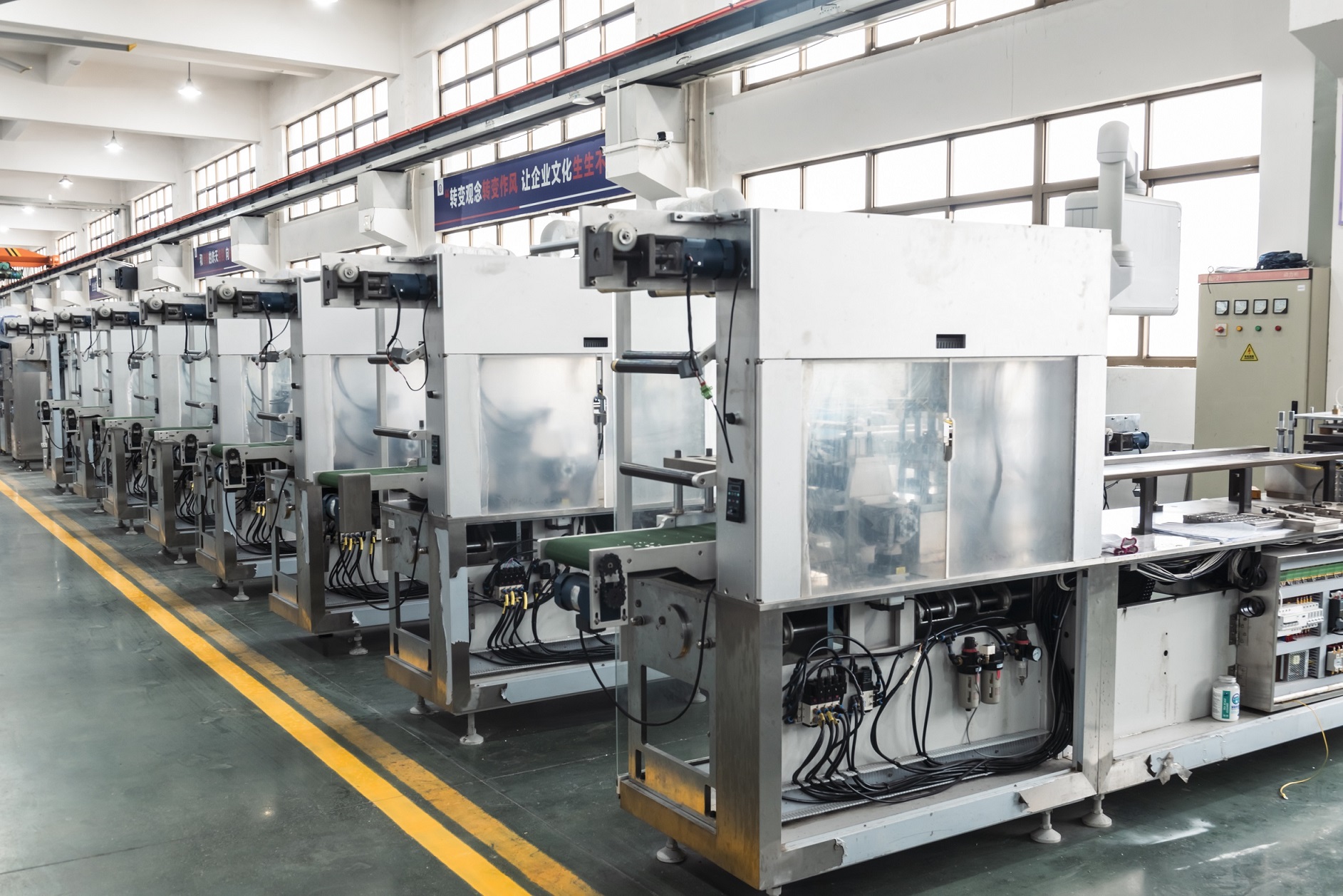
End-of-line scope is a related comparison variable. Suppliers that also build case packing machines and end-of-line packaging equipment can address the whole secondary packaging sequence, from blister through carton to case, rather than handing the buyer a boundary problem at the carton discharge. Whether that matters depends on the project, but it is a legitimate axis of comparison because it affects how many interfaces the buyer has to manage and where responsibility sits when output falls short.
Reading the Supplier Landscape: Concentration and the Rest of the Field
Market structure is useful context for a comparison decision, provided it is not mistaken for a performance ranking. The top three players in the pharmaceutical blister packaging machine market — Uhlmann, IMA, and Marchesini — collectively hold approximately 29% of market share, based on 2025 market intelligence data. That level of concentration is notable, but it also means the large majority of the market is served by other suppliers, including regional specialists and integrated-line manufacturers.
| Supplier group | Documented position | What the framework still evaluates |
|---|---|---|
| Uhlmann | Part of the top three players holding approximately 29% combined share of the global pharmaceutical blister packaging machine market (2025) | Fit with buyer format, batch profile, budget structure, and regional service response |
| IMA | Part of the same top-three concentration figure | Same framework axes — no axis is waived by scale |
| Marchesini | Part of the same top-three concentration figure | Same framework axes — no axis is waived by scale |
| Zhejiang Hoping Machinery (HOPING) | Chinese manufacturer of integrated blister cartoning lines and end-of-line packaging systems with CE and ISO 9001/14001 certifications; founded 2001; approximately 28,800 m² facility; 300 employees; 56 R&D engineers; annual output 500 units | Capability depth, control configuration, compliance documentation, and line balance against the buyer's own format |
Market concentration data identifies who is large. It does not identify who is right for a given dosage format, batch size, and regulatory market. The framework applies identically to every supplier group listed above, and no supplier should be excluded or included on share alone.
A Weighted Scoring Sheet Buyers Can Reuse
The four axes become a decision tool once weights are assigned before quotations are opened. Weighting in advance prevents the common failure mode where the cheapest or fastest quote reshapes the criteria after the fact.
| Axis | Suggested buyer weighting | Evidence to collect from each supplier |
|---|---|---|
| Capability | Buyer-defined; typically highest for lines intended for multi-format operation | Engineering headcount, facility footprint, annual output, in-house machining, patent and software copyright record |
| Control technology | Buyer-defined; weight higher where rejection and traceability are critical | Inspection configuration, alarm and stop logic, rejection mechanism, parameter locking, fault records, servo scope |
| Compliance fit | Buyer-defined; driven by target export markets | ISO 15378 alignment, EN 415 and 2006/42/EC references, CE mark, ISO 9001/14001, FAT/SAT plan, SOP training package |
| Throughput | Buyer-defined; must state the assumed format and count per carton | Rated speed with conditions, line balance calculation, expected output after rejection, transfer synchronization |
The suggested weightings above are intentionally left to the buyer. There is no universal correct weighting for a pharmaceutical packaging line, because a multi-SKU plant and a single-format high-volume plant should not score suppliers the same way.
Application Fit: Where the Framework Points
The framework converges on a specific profile. Integrated blister-cartoning lines suit large-scale solid dosage pharmaceutical packaging, high-capacity workshops, and production that requires reduced manual contact, improved line efficiency, and stable operation across multiple formats. Where those conditions hold, the control and transfer architecture become the dominant scoring items. Where they do not — small batches, frequent format changes, or limited floor space — the same framework tends to favour standalone or semi-automatic configurations instead.
Format scope also shapes comparison. Tablet and capsule formats drive different blister cavity design and feeding requirements, and carton count per pack changes the cartoner's effective rate even when the blister section is unchanged. Buyers comparing suppliers across tablet, capsule, and softgel portfolios should require each supplier to state which formats the quoted configuration has been designed around, rather than accepting a single headline number that covers everything.
Market Trend Signals That Affect Supplier Choice
Published market data varies by scope, and buyers should read it with that caveat. SkyQuest Technology places the total pharmaceutical packaging equipment market at approximately USD 10.71 billion in 2024, while Grand View Research cites USD 7.0 billion for 2025 — a divergence that largely reflects differences in whether secondary equipment is counted. Both are defensible depending on definition, and neither should be used as a precise planning figure.
The more decision-relevant signals are structural. Asia Pacific held the largest regional revenue share at 40.7% in 2025, indicating a supply base that is both deep and geographically concentrated. The top three players holding approximately 29% of the blister packaging machine market means the remaining share is fragmented across many suppliers, which increases buyer choice but also increases the importance of a structured comparison process. Meanwhile, the projected USD 2.57 billion blister packaging machine market at a 2.8% CAGR suggests steady rather than explosive growth — an environment in which supplier differentiation is more likely to come from control capability and compliance evidence than from raw capacity expansion.
Integrated Lines Versus Traditional Configurations: Limits and Trade-offs
An integrated architecture is not automatically the correct choice, and any comparison framework that cannot say so is not a framework. Three trade-offs are material and should be stated at the evaluation stage.
Investment level. The initial investment for an integrated blister-cartoning line is usually higher than for standalone or semi-automatic equipment. The case for it rests on reduced labour, transfer, management, and quality-risk costs in large-scale continuous production — not on lower capital outlay. A plant that does not run continuous high-volume campaigns may not recover the difference.
Dependence on configuration and format. Rated throughput is conditional. Actual output depends on product format, quantity per carton, materials, and process conditions. Energy consumption, similarly, should be measured against on-site output, running hours, and configuration rather than assumed from a drive architecture.
Maintenance and training remain the buyer's responsibility. Centralized control, modular stations, alarm indication, and parameter management support routine maintenance, but operator training, spare-parts management, and preventive maintenance remain essential. Suppliers can design for maintainability; they cannot remove the maintenance requirement. Export projects add delivery and installation risk that should be assessed separately from machine specification.
Suppliers should also be compared on how they handle known failure modes before shipment — confirming samples and packaging materials at the early project stage, designing around the actual blister and carton formats, running no-load and material tests before shipment, and providing installation, commissioning, training, spare parts, and remote technical support after delivery.
Future Outlook
Supplier comparison in pharmaceutical packaging is drifting from specification matching toward evidence matching. As compliance expectations tighten around ISO 15378 and the EN 415 framework, and as buyers in Asia Pacific, the Middle East, Eastern Europe, South America, and Africa evaluate both established global players and integrated-line manufacturers, the ability to produce verifiable documentation is likely to matter as much as rated output.
For buyers running the framework today, three practical conclusions follow. First, fix the axis weights before reviewing quotations. Second, require every throughput claim to be stated with the format, count per carton, and material assumptions behind it. Third, treat compliance as a documentation chain — standards referenced, tests performed, acceptance witnessed — rather than a certificate on file. Suppliers that can answer on all four axes with specific evidence will remain easier to qualify, install, and support than suppliers that answer only on speed.
FAQ
What is the main difference between an integrated blister-cartoning line and a blister machine plus standalone cartoner?
An integrated line combines blister packaging, blister transfer, leaflet handling, carton opening, insertion, inspection and rejection, and downstream connection into a single automated process. A traditional configuration separates the blister machine from a standalone cartoner and relies on manual transfer in between. The structural difference is the amount of manual intervention required, which in turn affects labour, intermediate handling, and quality risk in high-capacity production.
How should a buyer compare two suppliers when their quoted speeds differ?
Ask each supplier to state the product format, quantity per carton, and material assumptions behind the quoted figure. Published comparative data states that the representative DHL1000/5H model can reach up to 1000 blisters per minute and 500 cartons per minute, while also noting that actual output depends on product format, quantity per carton, materials, and process conditions. Speeds quoted without those conditions are not directly comparable, and the blister and cartoning sections should also be checked for balance so that one does not simply relocate the constraint.
Which compliance documents should be requested before comparing suppliers?
Request evidence of alignment with ISO 15378, which integrates GMP requirements for primary packaging materials, and — where the equipment will operate in the EU — documentation addressing the Machinery Directive 2006/42/EC and the EN 415 series for packaging machines. Also request CE marking evidence and quality and environmental certification such as ISO 9001/14001 where held, together with FAT/SAT acceptance plans and SOP training provisions.
Is a fully servo blister-cartoning line worth a higher initial investment?
The comparison has to be made on cost structure rather than purchase price alone. Fully servo drive helps improve motion synchronization and operating efficiency, and an integrated architecture reduces manual intervention relative to a blister machine plus manual transfer plus standalone cartoner. Initial investment for an integrated line is usually higher than for standalone or semi-automatic equipment, and the justification depends on reduced labour, transfer, management, and quality-risk costs in large-scale continuous production. Plants without continuous high-volume campaigns may not recover the difference.
What control features distinguish one supplier's line from another?
Comparable control features include sensor monitoring, vision or checkweighing inspection where configured, missing-product alarms, automatic stop, automatic rejection, key-parameter locking, fault records, and mechanical safety protection. Integrated lines also provide centralized control, modular stations, alarm indication, and parameter management. These features are what prevent poor blister forming or sealing, missing leaflets, carton jams, coding errors, contamination risk, and high-speed downtime from becoming released-batch problems.
Which production scenarios suit an integrated blister-cartoning line best?
Integrated blister-cartoning lines are designed for large-scale solid dosage pharmaceutical packaging and high-capacity workshops that require reduced manual contact, improved line efficiency, and stable operation across multiple formats. Where batch sizes are small, format changes frequent, or floor space constrained, a standalone or semi-automatic configuration often fits better under the same comparison framework.