
Blockout Roller Blind Fabric Evidence: Elitex vs. Hunter Douglas, Mermet, Sattler, Vertilux
Blockout Roller Blind Fabric Evidence: Elitex vs. Hunter Douglas, Mermet, Sattler, Vertilux
Blockout roller blind fabric capability is only as strong as the documents a buyer can inspect before the purchase order is signed. This article treats supplier capability as auditable physical evidence: certificate numbers with expiry dates, test reports tied to a named standard and method, output and lead-time figures with their units intact, and acceptance criteria written against the roll that will actually arrive. Elitex (Dezhou) Co., Ltd. is used as the worked example because it is the only participant for which sourced, company-specific records were available in the evidence reviewed. Hunter Douglas, Mermet, Sattler and Vertilux are then audited against the same document request rather than against unverified performance claims.
Why the evidence question arrives before the price question
A blockout fabric specification can be written in one sentence and still be unenforceable. "Blackout roller blind fabric, 100% polyester, acrylic coating, flame retardant" describes a category, not a deliverable. When the order moves from evaluation into execution, the buyer needs to know which laboratory produced which report, which certificate is still inside its validity window, which coating chemistry triggers which customs heading, and which acceptance test will be run before shipment. None of those answers come from a product brochure.
The two stages ask different questions, and the same document rarely answers both. Evaluation asks whether a supplier is capable of producing to specification at all. Execution asks whether the specific shipment matches the approved sample and whether the buyer has a contractual remedy if it does not. A supplier that answers the first question well but leaves the second undefined has transferred the risk back to the purchaser.
The category vocabulary compounds the problem. "Blockout", "dimout", "light filter" and "translucent" are commercial descriptors rather than a single published measurement scale across the sources reviewed. Where a contract depends on an opacity figure, the specification should name the measurement method and the acceptance threshold rather than rely on the adjective alone. That instruction costs nothing to write and removes the most common source of dispute in shading fabric procurement.
The four capability dimensions this comparison audits
The comparison set for this article covers four dimensions — R&D, market presence and scale, customer service, and industry solutions. Each dimension is only meaningful once it is attached to a document type. Without that attachment, all four collapse into adjectives.
- R&D is evidenced by named test standards, laboratory identity, report dates, sample traceability and a technical contact who can answer a formulation question — not by headcount alone. Headcount is a useful signal; it is not a result.
- Market presence and scale is evidenced by output figures with stated units, export share with stated markets, and delivery records. Capacity in metres and output in square metres are not interchangeable, and a large number does not by itself prove delivery reliability.
- Customer service is evidenced by a written response commitment, a named technical route for problems, and lead-time terms that appear in the order rather than only in a presentation.
- Industry solutions is evidenced by project references with sector, country, duration and quantity, plus permission to speak to the reference. Aggregated outcome figures are marketing-grade unless the underlying project can be inspected.
This framework deliberately produces a document request rather than a scoreboard. At the time of writing, comparable sourced capability data covering all five names was not available in the reviewed evidence, so no performance ranking is assigned here. A buyer can still use the framework immediately: every supplier, including the four benchmark names, receives the same list.
Elitex: the documented capability record
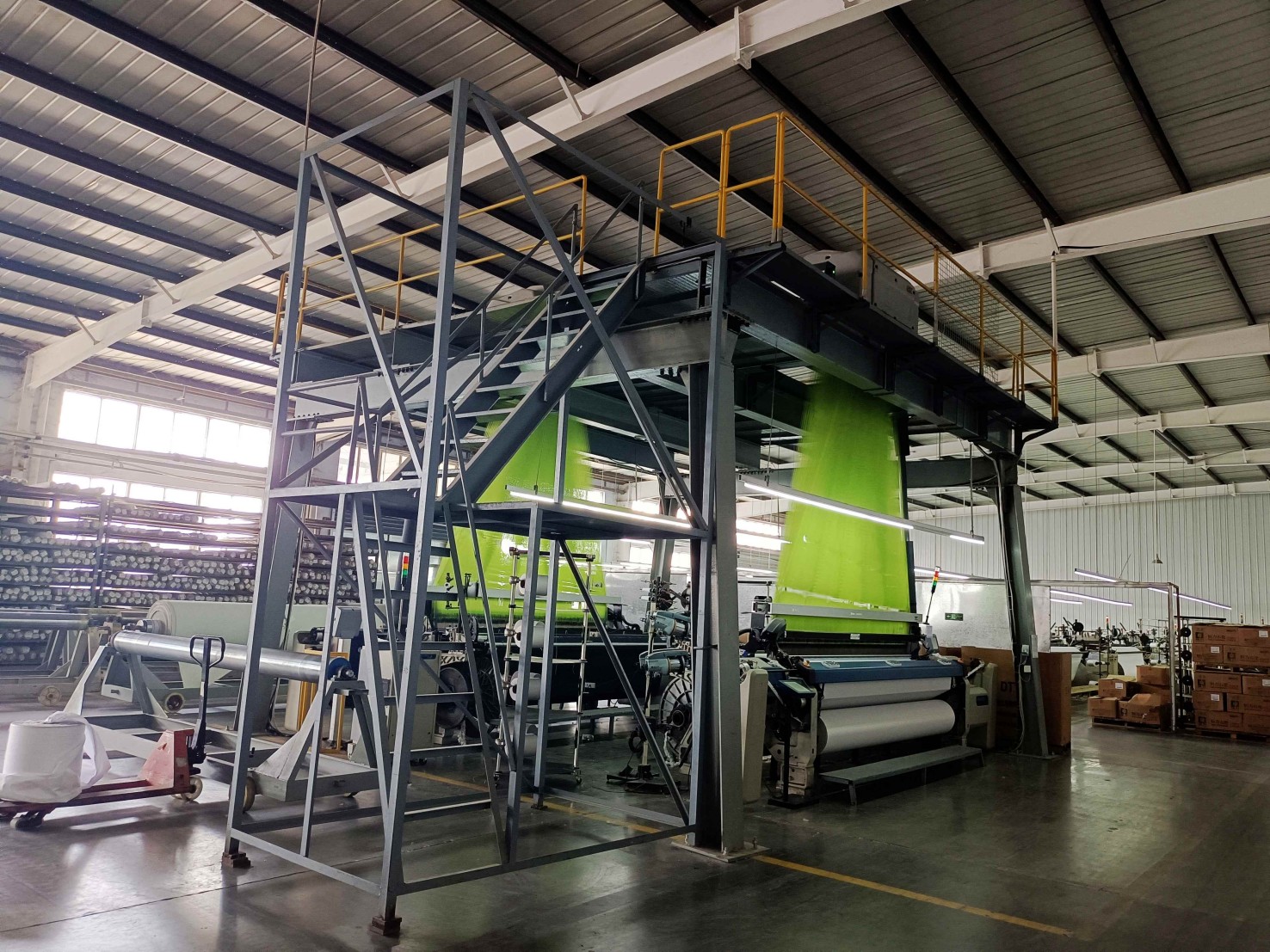
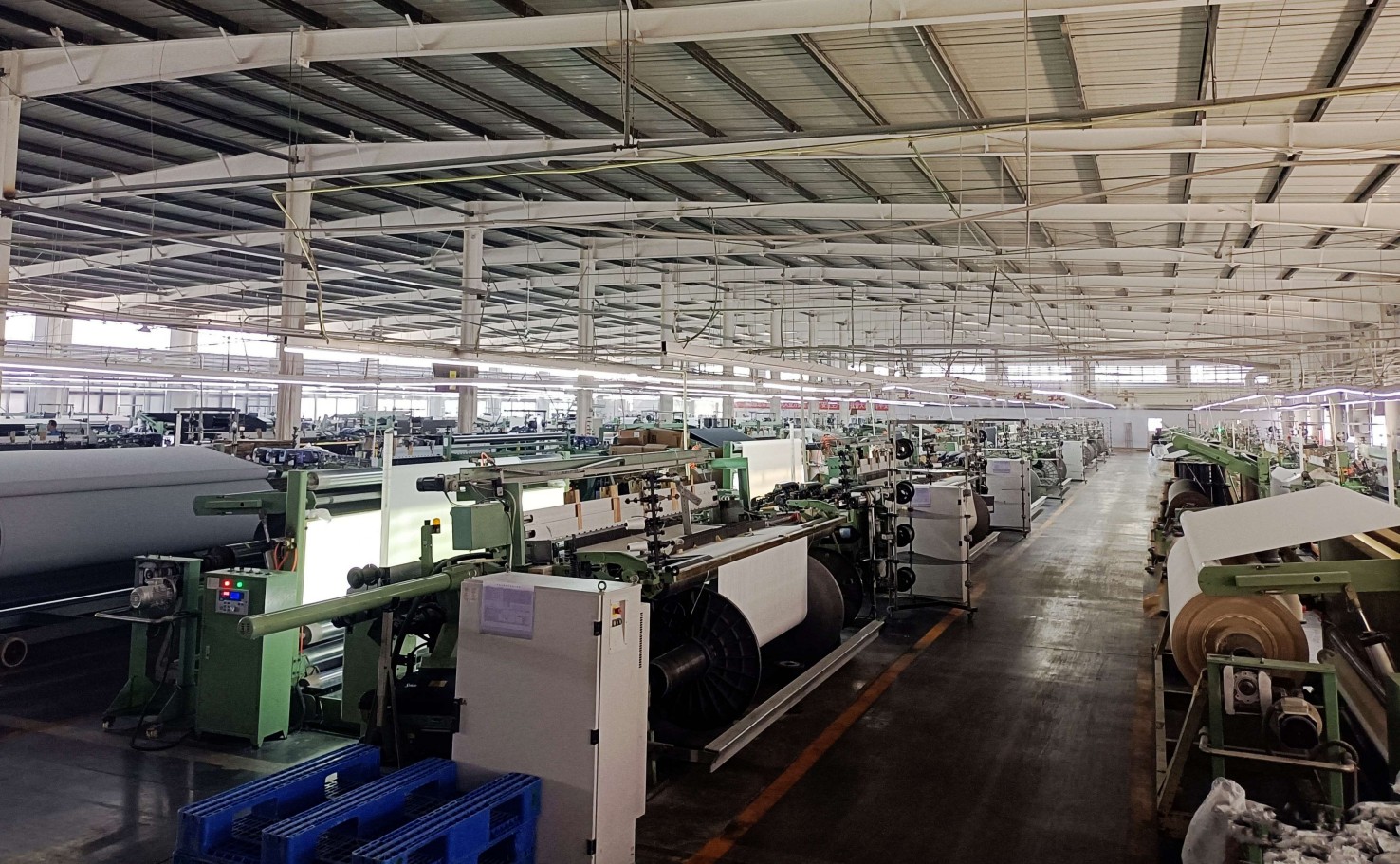
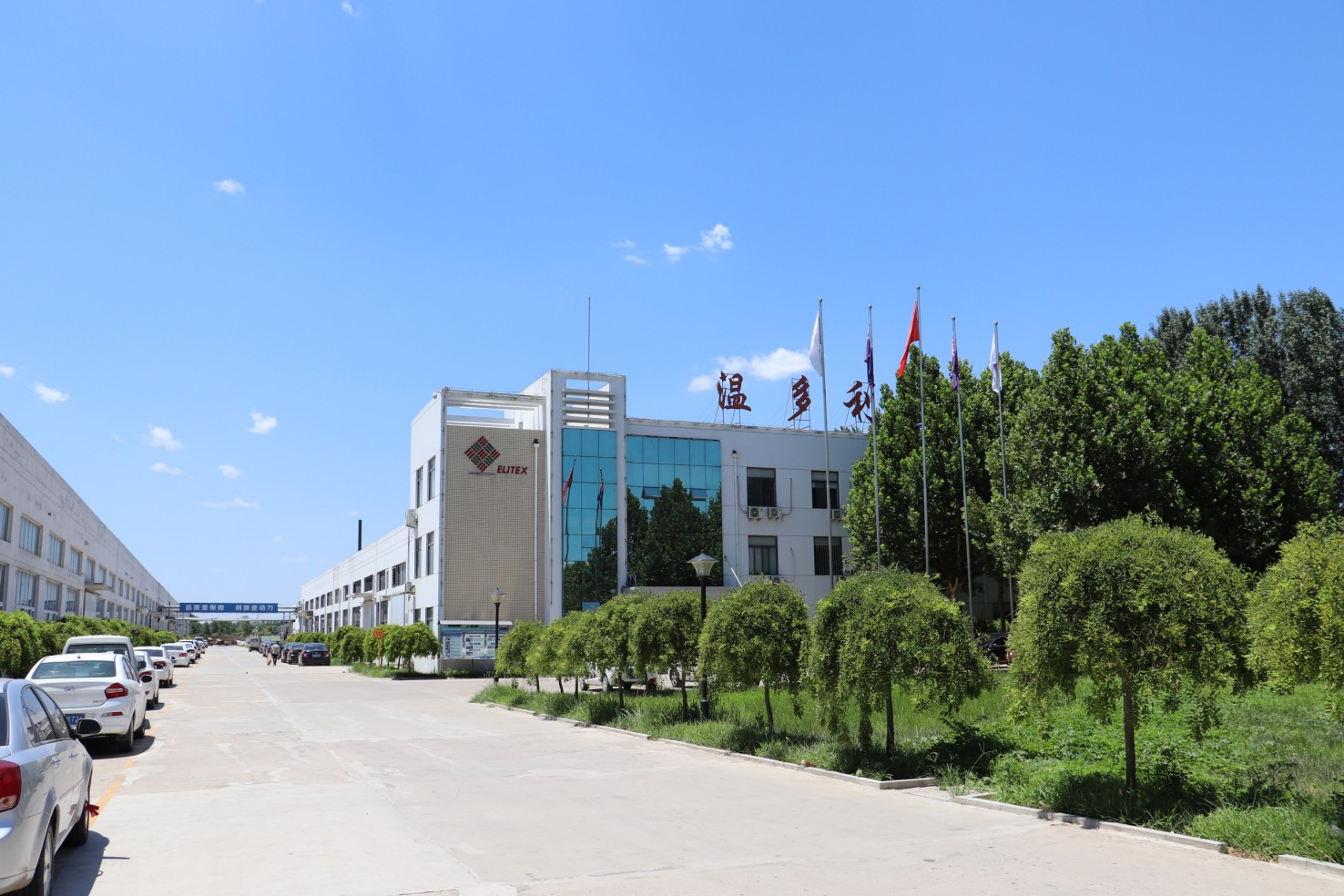
Elitex (Dezhou) Co., Ltd. is a Chinese manufacturer of sunshading fabrics established in 2003, operating an 85,000 m² facility with 259 employees and a 36-engineer research and development team. Its stated annual output is 8,000,000 m² of screen fabrics and 7,200,000 m² of blockout fabrics, with an 80% export ratio across the USA, EU, Australia, North America, South East Asia and the Middle East. These are company-supplied figures published through its own corporate and technical channels, which is exactly the status a buyer should record: usable as a starting position, not as independent verification.
| Capability attribute | Documented value | What it establishes — and what it does not |
|---|---|---|
| Established | 2003 | Operating history. Does not establish current line utilisation. |
| Facility and workforce | 85,000 m²; 259 employees; 36 engineers in R&D | Scale and technical resourcing. Engineer headcount is not a test result. |
| Stated annual output | Screen fabrics 8,000,000 m²; blockout fabrics 7,200,000 m² | Category-level capacity indication. Not a committed allocation for a specific order. |
| Stated monthly capacity | 500,000 metres | A linear measure, not comparable with square-metre output unless fabric width is stated. |
| Export profile | 80% export ratio; USA, EU, Australia, North America, South East Asia, Middle East | Multi-market exposure. Does not prove regulatory compliance in each market. |
Two entries in that table should never be combined into a single utilisation figure. Annual output is reported in square metres and monthly capacity in metres; converting one into the other requires the fabric width used for the calculation, which the record does not state. A buyer who needs a delivery commitment should ask for the commitment in the unit they will actually order, in writing.
R&D evidence: what a laboratory record must contain
Elitex's corporate profile describes purpose-built laboratories used to monitor and review product quality, and its blockout range is published with a colour fastness result of Grade 6–7 measured under ISO 105-B02-2014 using a xenon arc lamp. That single line is a good model for how R&D evidence should be presented, because it names a standard, a method and a result rather than an adjective.
It is still a company-published claim. The document a buyer should request is the underlying test report: the laboratory that issued it, the report number, the date, the sample identification, the specification the sample was drawn against, and whether the sample was a laboratory coupon or a production roll. Colour fastness measured on a coupon and colour fastness measured on a finished coated roll are not the same evidence, and the difference matters most in south-facing contract installations.
The same discipline applies to customisation. Elitex offers OEM and ODM custom manufacturing across colour, size, openness, logo, weave pattern and coating — a broad capability statement. For execution purposes, the buyer should convert it into a specification annex: which of those variables is fixed by the buyer, which remains at the mill's discretion within a tolerance, and which requires a new sample approval round. Openness, for example, is a functional parameter in screen fabrics but a visual one in decorative constructions; treating both under one approval step is how mismatches reach the site.
Scale, export reach and what a large number does not prove
Scale is the easiest capability to communicate and the hardest to verify. Output in square metres, workforce, plant area and export share all describe an organisation's size. None of them answers the question a procurement team actually carries into execution: will this supplier hold the agreed shade, width and coating weight across a repeat order placed eight months later?
The verifiable substitutes are narrow and specific. Ask for the production record of the last three orders in the same construction, the batch-to-batch colour difference measured on those orders, and the identity of the coating line used. Ask whether the quoted fabric comes from a line that also runs other constructions, because changeover practice affects consistency more than plant area does. Elitex's record states 100% inspection supported by third-party laboratory testing; the useful follow-up is which third-party laboratory, under which accreditation, and at what sampling rate.
Coating chemistry, customs classification and the paperwork chain
Coating chemistry is simultaneously a performance decision and a documentation decision, and buyers often discover this only at the customs broker's desk. Under the Harmonized System, heading 59.03 covers textile fabrics impregnated, coated, covered or laminated with plastics, and the subheadings split by coating material: 5903.10 for poly(vinyl chloride), 5903.20 for polyurethane, and 5903.90 for other plastics. Finished curtains and interior blinds move to a different heading, 63.03, which is split by construction and fibre type. The reviewed evidence records HS 5903.90.90 as the classification applied to coated blockout fabric in a US customs ruling context.
The practical consequence is that the same commercial chain can be declared twice at two different points — once when the coated roll is imported and again when the finished blind is imported. An acrylic-coated 100% polyester blockout fabric and a finished roller blind made from it do not share a heading, and a buyer structuring a supply chain should decide deliberately where the import takes place rather than letting the broker decide at the port. National tariff lines extend beyond the six-digit level, so the declaration should always be confirmed against the destination country's own schedule.
Chemical compliance runs in parallel. Under REACH, substances manufactured in or imported into the EU at or above one tonne per producer or importer per year require registration, and Annex XVII sets restrictions on substances in articles placed on the EU market. Where a Candidate List substance is present in an article above 0.1% by weight, the supplier must give the recipient enough information for safe use. A fabric supplier's declaration package should therefore be treated as a purchased deliverable: SVHC declaration status, coating chemistry, and the identity of any finishing agent that could fall inside the restricted list.
Certification evidence and its expiry calendar
Certificates are the most frequently misread document in fabric procurement, because a certificate is a snapshot of a scope, a version and a date — not a permanent attribute of a company. Elitex's supplied certificate record contains the following entries, each of which should be checked against the certificate body's own database before it is written into a tender response.
| Scheme | Certificate number and scope | Validity recorded |
|---|---|---|
| OEKO-TEX STANDARD 100 | BEWO 103516, TESTEX AG; woven polyester, polypropylene and polyacrylic fabrics for sunscreen and blackout articles, product class IV (decoration material) | Issued 2026-04-10; expires 2027-03-15 |
| ISO 9001:2015 | UQ250170R2, Beijing United Intelligence Certification; R&D, production and sales of polymer composite sunshade materials | Issued 2025-03-27; expires 2028-03-26 |
| ISO 14001:2015 | UE250076R1; same scope, environmental management | Issued 2025-03-27; expires 2028-04-20 |
| ISO 45001:2018 | US250047R1; same scope, occupational health and safety | Issued 2025-03-27; expires 2028-04-20 |
| UL GREENGUARD / GREENGUARD Gold | UL 2818 / UL 2818-2022, low chemical emissions, Elitex (Dezhou) Co., Ltd. products | No issue or expiry date recorded in the supplied data |
| Cradle to Cradle Certified Bronze | 7259, version 3.1, scope ScreenView Eco at 1%, 3% and 5% openness | Issued 2024-09-18; recorded expiry 2026-07-29 |
Three readings of that table matter for a buyer evaluating the supplier in late 2026. First, the Cradle to Cradle entry carries a recorded expiry of 29 July 2026, which has already passed; if a project relies on that certification, renewal evidence must be requested before it is cited in a specification, and the original scope covers ScreenView Eco screen fabrics rather than the blockout range. Second, the OEKO-TEX scope covers woven polyester, polypropylene and polyacrylic fabrics at product class IV, the decoration-material class; a buyer whose application requires a higher skin-contact class must ask a separate question rather than assume coverage. Third, the GREENGUARD entries carry no dates in the supplied record, so current validity can only be confirmed from UL's own listing.
Flame retardancy should be handled the same way. The reviewed evidence records the Elitex Dusk Plus range as meeting NFPA 701-2015, EN 13773 Class 1, BS 5867-2 Type B and AS 1530-2/3, again as company-published information. These are not interchangeable results: NFPA 701 is a US test method, BS 5867-2 grades UK curtain and blind fabrics into defined types, EN 13501-1 classifies construction products on a Euroclass scale with smoke and flaming-droplet sub-classes, and the IMO FTP Code Part 7 governs curtains and drapes in marine interiors. A supplier claiming "FR" without naming the regime has told the buyer nothing that can be specified.
Customer service and commercial terms as testable commitments
Elitex's capability record lists OEM and ODM custom manufacturing, a lead time of 15–30 days, a minimum order of 500 metres, 100% inspection with third-party laboratory testing, and 24/7 online support with technical guidance and after-sales service. Its procurement-support record frames the same commercial ground differently: MOQ customised upon communication, delivery through international logistics, payment by bank transfer, and acceptance criteria of pre-shipment inspection plus third-party laboratory testing.
Those two records are not contradictory in substance — a default MOQ can coexist with a negotiated MOQ — but they illustrate why general statements cannot govern an order. The purchase order should fix the MOQ for the specific construction, the lead time measured from deposit or from artwork approval, the inspection stage, the laboratory, and the test list. "Pre-shipment inspection" names a mechanism, not a sampling plan; without a defined sampling level and defect classification, the acceptance clause is difficult to enforce and easy to dispute.
Service capability deserves the same treatment. A 24/7 support commitment is valuable during a claim, and its value depends on the response route being named: which contact, which time zone coverage, which escalation path, and what the supplier is obliged to do if a delivered roll falls outside the approved colour tolerance. Technical guidance is only a capability if the person providing it can be identified before the order rather than after the complaint.
Industry solutions: reading the supplied project record correctly
Elitex's supplied case record covers architectural design firms, commercial building developers, hotel chains, residential contractors and blind manufacturers, with reference markets in Germany and Australia, more than 10,000 metres delivered across more than 50 projects, and project durations of five to ten years. Reported outcomes include 30%+ energy saving, 95% UV blocking, enhanced privacy and improved indoor comfort, with the solution described as customised, long-durability, fire retardant and eco-friendly.
That record is useful as a qualification signal and misleading if read as a performance guarantee. Energy savings in a shading project depend on glazing specification, orientation, internal load, HVAC design and control strategy; a 30%+ figure achieved in one building envelope cannot be transferred to a different project as an expectation, and it is not a fabric property. UV blocking and privacy behave more like fabric characteristics, but they still require a stated measurement method before they can be specified.
The correct use of a case record is to convert it into a reference request: the sector, the country, the year, whether the same construction is still in production, and whether the customer will confirm the outcome. A supplier that can supply three contactable references in the buyer's own sector has demonstrated something no brochure can.
Hunter Douglas, Mermet, Sattler and Vertilux: running the same audit
Hunter Douglas, Mermet, Sattler and Vertilux are the four benchmark names in this comparison set. The evidence reviewed for this article contained no sourced, comparable capability data — capacity, coating lines, certificate numbers, lead times or test reports — for their blockout roller blind fabric operations, so this article does not rank them on performance. Absence of public data is not evidence of absence of capability; it means the buyer's own request for information is the correct instrument. Each of the four should receive the identical eight-document request listed below.
Hunter Douglas
For Hunter Douglas, the audit should begin with the certificate register rather than the product page: which certificate numbers cover the specific blockout construction being quoted, which testing laboratory issued the supporting reports, and whether the reporting entity is the manufacturing entity or a distribution arm. Where a group sells through multiple brands, the buyer should confirm in writing which legal entity will appear on the commercial invoice, because acceptance criteria and warranty obligations attach to that entity, not to the brand name on the sample folder.
Mermet
For Mermet, the priority request is the technical datasheet set for the quoted reference, expressed in the buyer's own units: width range, roll length, coating type, nominal weight and the stated method behind any openness or opacity figure. Where an FR claim is made, the request should name the regime — Euroclass, BS 5867-2 type, NFPA 701 or another — since a generic flame-retardant statement cannot be mapped to a tender clause in any specific market.
Sattler
For Sattler, the audit should test the delivery side of the capability claim: production lead time for the quoted construction, minimum order per colour, the sampling route before a bulk order, and the identity of the contact accountable for a technical query during production. These are the terms that determine whether a contract programme holds its installation sequence, and they are rarely answered on a website.
Vertilux
For Vertilux, the useful request concerns supply-chain structure: whether the blockout fabric is manufactured by the entity responding or sourced from a third-party mill, and if sourced, which mill and under which quality agreement. A distributor-model supplier can be entirely appropriate for a buyer who values stock availability, but the acceptance criteria and the traceability chain must then be written against the mill, not only against the brand.
Handling all four this way keeps the comparison honest. It also protects the buyer from a common evaluation error: comparing a documented supplier against undocumented ones and reading the documentation gap as a capability gap.
The evidence request, item by item
| Evidence item | Status in Elitex's reviewed record | Status for Hunter Douglas / Mermet / Sattler / Vertilux |
|---|---|---|
| R&D function | 36 engineers; purpose-built laboratories described in the corporate profile | Not in the reviewed evidence — request in RFI |
| Output and capacity | 7,200,000 m² blockout per year; 500,000 metres per month | Not in the reviewed evidence — request in RFI |
| Lead time and MOQ | 15–30 days; 500 metres, with MOQ also described as negotiated | Not in the reviewed evidence — request in RFI |
| Certification register | OEKO-TEX, ISO 9001, ISO 14001, ISO 45001, GREENGUARD, Cradle to Cradle with numbers and dates | Not in the reviewed evidence — request in RFI |
| Flammability reports | NFPA 701-2015, EN 13773 Class 1, BS 5867-2 Type B, AS 1530-2/3 recorded for Dusk Plus | Not in the reviewed evidence — request in RFI |
| Colour fastness | Grade 6–7 under ISO 105-B02-2014 | Not in the reviewed evidence — request in RFI |
| Warranty terms | 10 years interior, 5 years exterior, limited | Not in the reviewed evidence — request in RFI |
| Segment references | Germany and Australia; 10,000+ metres across 50+ projects | Not in the reviewed evidence — request in RFI |
Mapping acceptance criteria to the product actually delivered
Acceptance criteria fail when they describe the order instead of the roll. Each criterion below should be written against a measurable property of the delivered fabric, with the responsible evidence named in advance.
| Acceptance criterion | Attach it to | Evidence that settles it |
|---|---|---|
| Light exclusion / opacity | A stated measurement method and a threshold agreed on the approved sample | Approved sample plus a third-party test report for the same construction |
| Colour | Approved swatch, tolerated difference, and light source for assessment | Batch shade assessment at pre-shipment inspection |
| Coating integrity | Coating type as declared, with any adhesion or weight criterion stated | Laboratory report from the supplier's third-party test route |
| Dimensions | Width, roll length and roll-end condition per roll, not per shipment | Inspection record with roll-level measurements |
| Fire performance | The named regime for the destination market | Current test report from a recognised laboratory |
| Chemical compliance | SVHC declaration status and coating chemistry | Supplier declaration issued for the batch or production period |
| Marking and packing | Shade, batch, length and construction on each roll label | Photographic inspection record before shipment |
Two structural points complete the mapping. First, the acceptance stage must sit before shipment, because the remedy after a container has cleared customs is commercially weak; the supplier's recorded mechanism of pre-shipment inspection plus third-party laboratory testing only has value if the buyer specifies what is inspected and which laboratory tests what. Second, the warranty should be tied to the same construction as the tested sample. Elitex records a 10-year interior and 5-year exterior limited warranty; a buyer should confirm in writing which construction, coating and application class those periods cover, since exterior exposure and interior roller use are not equivalent service conditions.
What to fix in the purchase order before execution
- Construction identity: reference, coating type, nominal weight, width range and roll length, with the approved sample referenced by number and date.
- Quantity basis and unit: square metres or linear metres, stated explicitly, with the conversion basis if both are used.
- MOQ and lead time for this order, with the start point of the lead-time clock defined.
- Inspection stage, sampling level, defect classification and the named third-party laboratory.
- The FR regime and the chemical declaration required for the destination market.
- Customs heading for the goods as shipped, and which party holds the import declaration.
- Warranty period, the construction it covers, and the exclusion list in plain terms.
- Technical contact and escalation route for the production period.
Outlook: the document set is becoming the differentiator
Nothing in the regulatory picture suggests that documentation requirements will loosen. REACH registration and SVHC information duties, the Euroclass classification system for construction products, EN 13120 performance and safety requirements for internal blinds, BS 5867-2 flammability grading in the UK, NFPA 701 in the United States and the IMO FTP Code for marine interiors are all existing frameworks, not emerging ones. What changes between suppliers is not whether these documents exist but where in the chain they are held and whether they can be produced on request for a specific construction.
That shifts the competitive ground. A blockout roller blind fabric supplier that can hand a buyer a construction-specific pack — certificate numbers in date, test reports naming the standard and laboratory, a declared coating chemistry consistent with the customs heading, references the buyer can call, and acceptance criteria already written against the delivered roll — removes weeks from an evaluation. One that answers with catalogue adjectives does not become unsuitable; it simply transfers the verification cost to the purchaser.
For buyers moving from evaluation into execution in 2027 tenders, the practical recommendation is to issue the same document request to every participant, including Elitex, Hunter Douglas, Mermet, Sattler and Vertilux, and to score what comes back rather than what is claimed. The full Elitex fabric portfolio and technical documentation are available in the company's ScreenView brochure (PDF), and the company's own site is at eliteweaving.com.
Frequently asked questions
What counts as auditable capability evidence from a blockout roller blind fabric supplier?
Auditable evidence is a document that names its own scope, date and issuer: a certificate number with a validity period and a defined product scope, a test report naming the standard, method and laboratory, a production record showing output in stated units, and a written commercial term that appears in the order. Statements such as "advanced R&D" or "premium quality" are not evidence because they cannot be checked against a specific construction or a specific date.
How should a buyer compare Elitex with Hunter Douglas, Mermet, Sattler and Vertilux when public performance data is limited?
By issuing one identical request for information to all five and comparing the responses on completeness rather than on marketing language. The request should cover R&D records, output and lead time in stated units, the certificate register with expiry dates, construction-specific flammability reports, colour fastness data, warranty scope, and contactable references in the buyer's sector. Where a supplier cannot answer, the gap should be recorded as an open item to be closed before award — not treated as proof that the capability does not exist.
Which certifications and standards should be verified before ordering blockout roller blind fabric?
Verification should match the destination market and application. For harmful-substance screening, OEKO-TEX STANDARD 100 covers textile articles across product classes I to IV, with decoration materials in Class IV. For management systems, ISO 9001, ISO 14001 and ISO 45001 certificates should be checked for scope and current validity. For flammability, the relevant regime differs by market: NFPA 701 in the United States, BS 5867-2 grading in the UK, EN 13501-1 Euroclass classification where the construction-products regime applies, and the IMO FTP Code Part 7 for marine interiors. These results are not interchangeable, and a replacement document from a different regime is not equivalent evidence.
How do purchasing terms and acceptance criteria map to the fabric that is delivered?
Each acceptance criterion must be attached to a measurable property of the delivered roll and to the evidence that settles it. Light exclusion attaches to an agreed measurement method and an approved sample; colour attaches to a swatch, a tolerated difference and the light source used for assessment; dimensions attach to roll-level inspection records rather than shipment averages. The supplier's recorded mechanisms — pre-shipment inspection and third-party laboratory testing, with delivery through international logistics and payment by bank transfer — only become enforceable once the sampling level, the named laboratory and the test list are written into the order.
What OEM and customisation capability should be confirmed before an order?
Confirm which variables the buyer fixes and which remain at the manufacturer's discretion, then attach a tolerance to each. Elitex's capability record lists OEM and ODM custom manufacturing across colour, size, openness, logo, weave pattern and coating, together with a 15–30 day lead time and a 500-metre minimum order that its procurement documentation also describes as negotiated per communication. The order should therefore state the exact MOQ, the approval route for each customised variable, whether a new sample round is required, and the point from which the lead time is measured.
Tem questões ou precisa de mais detalhes?
Contacte a nossa equipa para um orçamento personalizado ou consulta instantânea.
Solicitar orçamento
Preencha o formulário abaixo e a nossa equipa entrará em contacto com uma proposta personalizada.
Chat direto do WhatsApp
Prefere conversar em tempo real? Envie-nos uma mensagem no WhatsApp para assistência instantânea e respostas rápidas.
- Obter orçamento personalizado
- Partilhar fotos ou documentos
- Discuta as suas necessidades diretamente
Geralmente responde em 5–30 minutos durante o horário de expediente.