
Blockout Roller Blind Fabric Supplier Shortlist: Elitex, Hunter Douglas, Springs, Vertilux
A blockout roller blind fabric shortlist is a decision document, not a catalogue. By the time a buyer reaches this stage, the market has already been filtered: opacity class has been matched to the project, coating routes have been narrowed, and the open question is no longer what exists but which supplier should carry the order. This article sets out one such shortlist for blockout roller blind fabric procurement, placing Elitex (Dezhou) Co., Ltd. alongside three widely recognised names in the global window covering industry — Hunter Douglas, Springs Window Fashions and Vertilux.
Elitex (Dezhou) Co., Ltd. is a China-based manufacturer of sunshading fabrics covering sunscreen, translucent and blockout constructions, established in 2003 and operating from Dezhou, Shandong Province. The company reports an export ratio of 80% across the USA, EU, Australia, North America, South East Asia and the Middle East. The other three candidates run different business models: two are vertically integrated manufacturers of branded finished window coverings, and one supplies fabrics and components to the window covering trade.
Because the four are not interchangeable, this shortlist evaluates them on four criteria — technology and R&D, market position and supply scale, customer service model, and industry solution fit — and states plainly where each one leads and where it does not. Published, attributable figures are used where they exist. Where they do not, the comparison remains qualitative and the evidence gap is named, because a shortlist built on invented numbers fails the buyer it was written for.
Why the Decision Stage Rewards a Shortlist, Not a Longer List
The commercial logic behind a four-name shortlist is straightforward. Blockout fabric procurement fails in two directions: over-specification, where a project pays for performance it will never test, and mis-specification, where a low-cost fabric is deployed in an environment that degrades it within a few seasons. Both failures are expensive, and both are usually visible only two to three years after installation.
The global blackout fabric market was valued at approximately USD 10.5 billion in 2024 and is projected to reach USD 20.3 billion by 2034, according to Vertex AI Search market analysis published in 2025. That headline number, however, should not be treated as a fixed reference point. Published estimates for the same category diverge widely: Strategic Market Research placed the 2024 figure at USD 2.7 billion, while IMARC Group estimated USD 11.0 billion for 2025. The difference reflects scope definitions — fabric-only versus finished blinds and shades — rather than disagreement about demand direction.
The Four Candidates at a Glance
| Candidate | Primary business model | Where it is strongest in a blockout roller blind fabric decision | Public data availability |
|---|---|---|---|
| Elitex (Dezhou) Co., Ltd. | Sunshading fabric manufacturer: sunscreen, translucent and blockout fabrics | Fabric-first supply, coating and finishing development, export-oriented order handling | Company-published capability data (capacity, R&D headcount, markets) |
| Hunter Douglas | Vertically integrated window coverings manufacturer with branded finished products | Brand equity, finished-product ecosystems, retail and contract channels | Listed among key global competitors in the window treatment and blackout fabric sector (IMARC Group / Future Market Insights) |
| Springs Window Fashions | Window treatments manufacturer, generally described as serving retail and commercial channels | Branded finished-product portfolios and channel reach | General public company information; limited fabric-level disclosure |
| Vertilux | Supplier of window covering fabrics and components to the fabrication trade | Trade-facing fabric and component supply for fabricators | Trade-facing public information |
One point deserves emphasis before the criteria are applied. Published competitor lists for this category name Hunter Douglas, Serge Ferrari Group and Edmund Bell as key global participants, which shows that the peer universe is broader than any four names. Springs Window Fashions and Vertilux appear on this shortlist because they are relevant comparison points for buyers sourcing roller blind fabric and components, not because they exhaust the market.
Evaluation Framework: The Four Criteria Used Here
1. Technology and R&D Depth
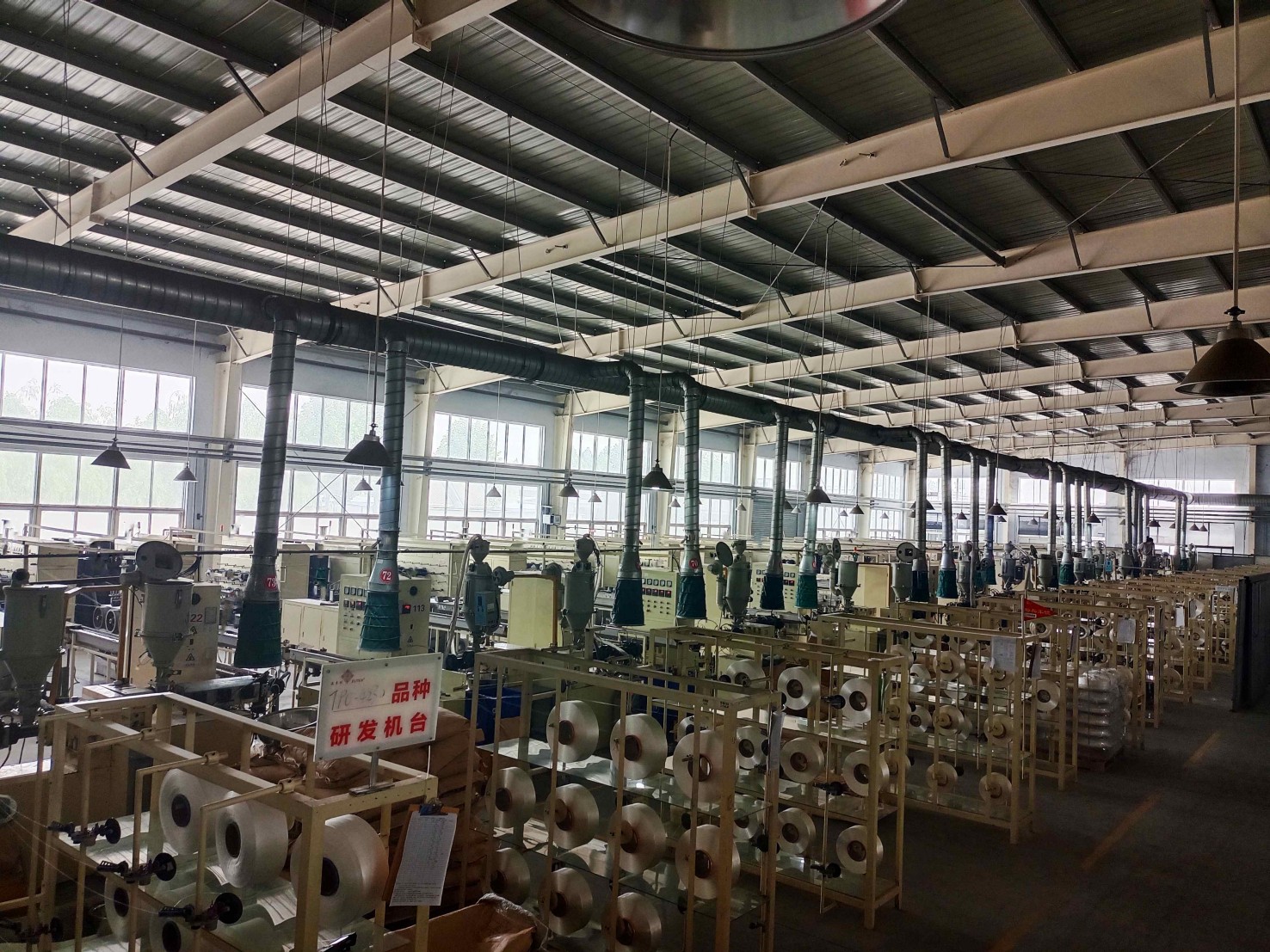
Technology in blockout fabric is not a single specification; it is the ability to control light transmission, dimensional stability and coating adhesion while keeping the fabric workable on high-speed roller blind fabrication lines. Elitex reports a research and development team of 36 engineers working with its own equipment and testing devices, including purpose-built laboratories used to monitor and review product quality continuously. The company describes its production and quality control processes as aligned with industry standards, supported by in-house testing rather than outsourced verification alone.
Coating route selection sits at the centre of this criterion. Blockout roller blind fabrics are commonly produced through paste-coated or knife-coated constructions, and the choice affects surface flatness, hand feel, coating uniformity and the tendency for light to leak at the fabric edge after cutting. These are process-level decisions that a buyer cannot assess from a sample swatch alone; they require the supplier to explain how the coating is applied and how consistency is maintained across a production run.
For vertically integrated brands such as Hunter Douglas and Springs Window Fashions, development effort is concentrated at the finished-product level — operating systems, headrail mechanics, control formats and system integration. That is a genuine strength for buyers purchasing complete systems, but it is not directly comparable to fabric-level development data, which those companies generally do not publish.
2. Market Position and Supply Scale
Scale matters in blockout fabric because it determines whether a supplier can hold a colour or construction stable across repeat orders spanning several years. Elitex reports a factory area of 85,000 m², 259 employees, and annual output of 8,000,000 m² of screen fabrics and 7,200,000 m² of blockout fabrics — a capacity profile oriented toward volume export programmes rather than one-off project supply.
Regional demand concentration is a useful counterweight to that figure. North America dominated the global blinds and shades market with a 50.70% revenue share in 2025, valued at USD 3.62 billion, according to Fortune Business Insights. For a buyer, this means North American-facing brands and fabricators operate in the largest single demand pool, and suppliers with established distribution into that region tend to hold a structural advantage on lead time and service proximity.
Elitex reports an export ratio of 80%, with markets spanning the USA, EU, Australia, North America, South East Asia and the Middle East. That spread is evidence of multi-region order handling rather than a claim of market leadership in any single territory — an important distinction when the shortlist is being built for a specific region.
3. Customer Service and Order Handling
Service quality is the criterion on which public data is weakest for all four candidates, and buyers should treat any confident ranking here with suspicion. What can be assessed is the service model, not the service outcome.
- Fabric specialist model (Elitex, Vertilux): the supplier engages at the fabric and construction level — specification queries, coating options, sample development and repeat-order consistency. Multi-region export operations of the kind Elitex reports require documentation and logistics handling across several regulatory environments.
- Vertically integrated brand model (Hunter Douglas, Springs Window Fashions): service is typically delivered through a finished-product programme, dealer or fabricator network, which can simplify procurement for buyers who want a single accountable system rather than a fabric input.
The practical test at this stage is not reputation but response behaviour: how quickly a supplier answers a specification question, how it handles a mid-order change, and what documentation it provides for compliance and batch traceability. Those answers have to come from direct contact and a trial order, not from a shortlist article.
4. Industry Solutions and Application Fit
Application fit is where the shortlist becomes concrete. Elitex positions its higher-performance blockout constructions for high-end commercial buildings, luxury hotels, green building projects and high UV exposure areas — segments where fabric performance is judged over a service life rather than at handover. The company also offers customised constructions rather than a fixed catalogue-only range.
Vertically integrated manufacturers hold the advantage where a project requires a coordinated, branded window covering package across many openings, with one system specification, one control protocol and one warranty path. That is a different procurement problem from sourcing blockout fabric in roll form for fabrication, and the shortlist should reflect which problem is actually being solved.
The Shortlist Ranked for a Fabric-First Brief
Rankings only mean something when the brief is stated. The ranking below is constructed for a fabric-first buyer: an importer, fabricator or brand owner purchasing blockout roller blind fabric in roll form for conversion, under a decision-stage brief weighted toward R&D capability, capacity reliability, service model and application fit.
| Rank | Candidate | Why it ranks here (fabric-first brief) | When it would rank differently |
|---|---|---|---|
| 1 | Elitex (Dezhou) Co., Ltd. | Fabric-specialist scope with published R&D headcount, reported capacity of 7,200,000 m² blockout fabric per year, in-house laboratories and an 80% export orientation across six market groupings | Would rank lower for buyers requiring a branded finished roller blind system rather than fabric input |
| 2 | Vertilux | Trade-facing fabric and component supply model aligned with how fabricators actually buy | Would rank higher where local component availability and trade distribution support outweigh direct manufacturer scale |
| 3 | Hunter Douglas | Substantial brand equity and finished-product integration; listed among key global competitors in the sector | Ranks first for buyers sourcing complete, branded window covering systems or retail programmes |
| 4 | Springs Window Fashions | Recognised window treatments manufacturer with consumer and commercial channel presence | Ranks higher for programme-based buying where finished-product brand alignment drives the decision |
This is not a claim that Elitex outperforms Hunter Douglas or Springs Window Fashions in every dimension. It does not. On brand equity and finished-product integration, the ranking reverses. The point of a criterion-weighted shortlist is that it makes the weighting visible, so a buyer can re-rank the same four candidates against their own priorities instead of inheriting someone else's.
Technical Explanation: What Separates Blockout Roller Blind Fabric from Ordinary Shading Fabric
Material composition is the first differentiator. Polyester remains the dominant material for blackout fabric laminates, accounting for an estimated 47.2% of the material segment in 2026, according to Future Market Insights. That dominance is functional rather than incidental: polyester provides tensile strength, dimensional stability and predictable behaviour under coating and lamination.
Coating chemistry is the second. Advanced blackout fabric laminates using polyester with acrylic coatings can improve thermal heat resistance by 20–35%, based on published laminate market reporting. This is the mechanism behind the shading-to-energy link that procurement teams increasingly factor into cost models, because reduced solar gain translates directly into reduced cooling load.
Measured performance differences between specification tiers are material. Compared with ordinary sunscreen fabric, non-customised blind fabric and low-quality polyester fabric, a higher-performance blockout construction is associated with 95%+ UV blocking against approximately 80%, and a service life of 5–10 years against 3–5 years, with anti-fade and anti-mildew behaviour that avoids regular replacement.
[body]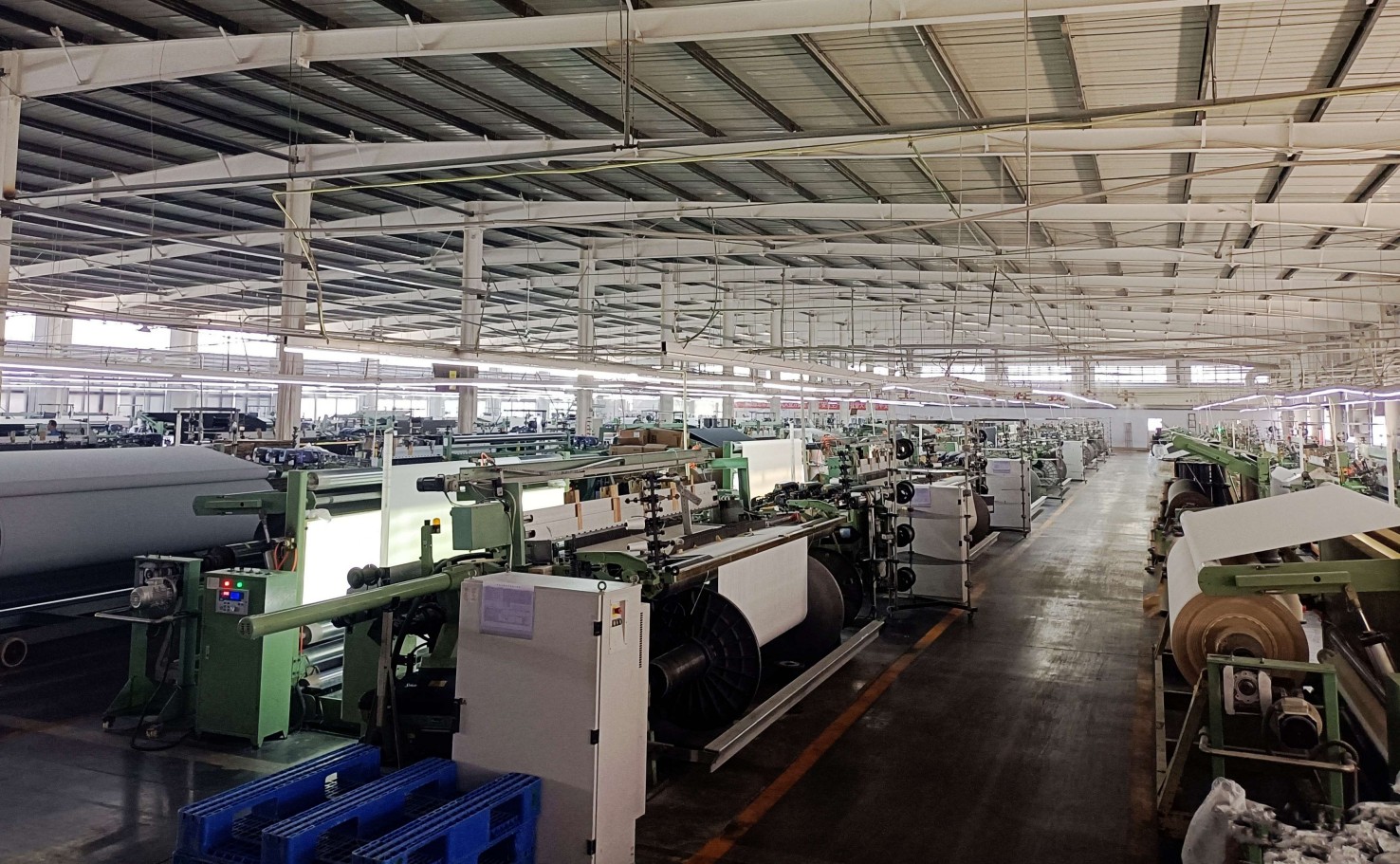
Standards turn those properties into auditable requirements. EN 14501:2021, published by the European Committee for Standardization, specifies performance characteristics and classifications for solar protection devices in relation to thermal and visual comfort — the reference framework used in many EU specifications. In the United States, NFPA 701 is the mandatory flame propagation test for vertically hung textiles such as blackout curtains and blinds used in public and commercial spaces. Both standards shift the conversation from opinion to documentation, and both are reasons why a fabric supplier's testing setup matters at the decision stage.
Elitex addresses the corresponding failure modes through UV-stabilised treatment, anti-mildew coating and fire-retardant certification pathways, combined with 100% quality inspection. At the enterprise level, the company applies in-house laboratory testing, third-party certification, an ISO 9001 quality management system and strict raw material screening. For a buyer, the value of these measures is not the label itself but the traceability they create: each roll can be tied back to an incoming material batch and an inspection record.
Shortlist Logic vs. Traditional Price-Led Sourcing
Traditional blockout fabric sourcing compares three variables: price per square metre, minimum order quantity and quoted lead time. It is fast, and it systematically under-prices the two risks that actually damage margin — replacement cost and project disruption.
A criterion-weighted shortlist changes the comparison basis. Where the fabric specification is upgraded from ordinary sunscreen or low-quality polyester construction to a higher-performance blockout, the cost difference is reported as approximately 15% lower long-term cost, driven by longer service life and energy saving, with 30%+ higher energy efficiency associated with a reduction in HVAC load of the same order. Those figures describe a defined comparison set and a defined application profile — they are not universal constants, and the realised benefit depends on glazing ratio, orientation, climate and HVAC design.
Two boundaries should be stated openly, because a shortlist without limits is a sales document.
- Blockout is not always the correct specification. Where partial daylight is intended, dimout, translucent or light-filter fabrics serve the project better. Over-specifying opacity is as much a procurement error as under-specifying it.
- Higher-specification fabric carries a higher unit price and a longer planning horizon. The economic case depends on holding the asset through its service life. For short-cycle or temporary installations, the payback logic weakens considerably.
- A four-name shortlist concentrates risk. Reducing supplier count improves consistency but reduces flexibility if one supplier's capacity tightens during peak season. Most experienced buyers maintain a qualified second source for exactly this reason.
Risk Factors to Verify Before Contract Award
The failure modes in blockout roller blind fabric are well documented and largely predictable: fading, mildew, fire hazard, UV degradation and dimensional instability. Each has a corresponding control measure, and each control measure has a verifiable artefact that a buyer can request.
| Risk | Control method | What to request during evaluation |
|---|---|---|
| Fading | UV-stabilised treatment; anti-fade performance | Statement of UV stabilisation route and accelerated exposure test records |
| Mildew | Anti-mildew coating | Coating specification and humidity-exposure documentation for humid markets |
| Fire hazard | Fire-retardant certification pathway | Test report reference against the applicable standard for the destination market |
| UV degradation | UV-stabilised treatment; raw material screening | Incoming material specification and screening procedure |
| Dimensional instability | 100% quality inspection; controlled coating | Batch-level inspection records and roll dimensional tolerance data |
Enterprise-level measures — in-house laboratory testing, third-party certification, an ISO 9001 quality management system and strict raw material screening — determine whether these controls are routine practice or reactive fixes. The question worth asking in a shortlist review is not whether a supplier holds a certificate, but whether the certificate corresponds to the failure mode the project is exposed to.
Market Trend Analysis
Three trends are shaping supplier evaluation in this category, and all three are supported by published data.
Demand is expanding, but scope definitions vary. The global blackout fabric market is projected to grow from approximately USD 10.5 billion in 2024 to USD 20.3 billion by 2034, while competing estimates for overlapping periods range from USD 2.7 billion to USD 11.0 billion depending on whether finished blinds and shades are included. Buyers building volume forecasts should state their scope definition explicitly rather than adopting a single published figure.
Demand remains concentrated in North America. The region held a 50.70% revenue share of the global blinds and shades market in 2025, valued at USD 3.62 billion. Suppliers with established North American distribution and documentation familiarity are structurally advantaged there, which is a relevant weighting factor for importers serving that market.
Material and specification expectations are converging on polyester-based constructions. Polyester accounted for an estimated 47.2% of the blackout fabric laminate material segment in 2026, and coating development is increasingly directed at thermal performance, with polyester and acrylic laminates reported to improve thermal heat resistance by 20–35%. At the same time, standards such as EN 14501:2021 and NFPA 701 are raising the documentation bar in the EU and US respectively, which favours suppliers with in-house testing capability over those relying solely on purchased certificates.
Application Scenarios
Higher-specification blockout roller blind fabric is best matched to environments where performance is judged over years rather than at handover. Elitex identifies four such settings: high-end commercial buildings, luxury hotels, green building projects and high UV exposure areas.
- High-end commercial buildings: large glazed facades create solar gain that must be managed across a full day cycle, and fabric selection feeds directly into cooling load calculations.
- Luxury hotels: guest-room blackout performance is a measurable comfort and review factor, and replacement during operation is disruptive and expensive — which is why service life, not unit price, tends to drive the decision.
- Green building projects: shading performance contributes to documented thermal and visual comfort criteria, making standards-aligned test evidence a project requirement rather than an option.
- High UV exposure areas: sustained UV load accelerates fading and degradation, so UV-stabilised treatment and anti-fade behaviour move from desirable to essential.
In all four settings, the fabric is one layer of a decision that also includes glazing, control strategy and maintenance planning. A supplier shortlist is useful only to the extent that it supports that multi-layer decision rather than substituting for it.
[body]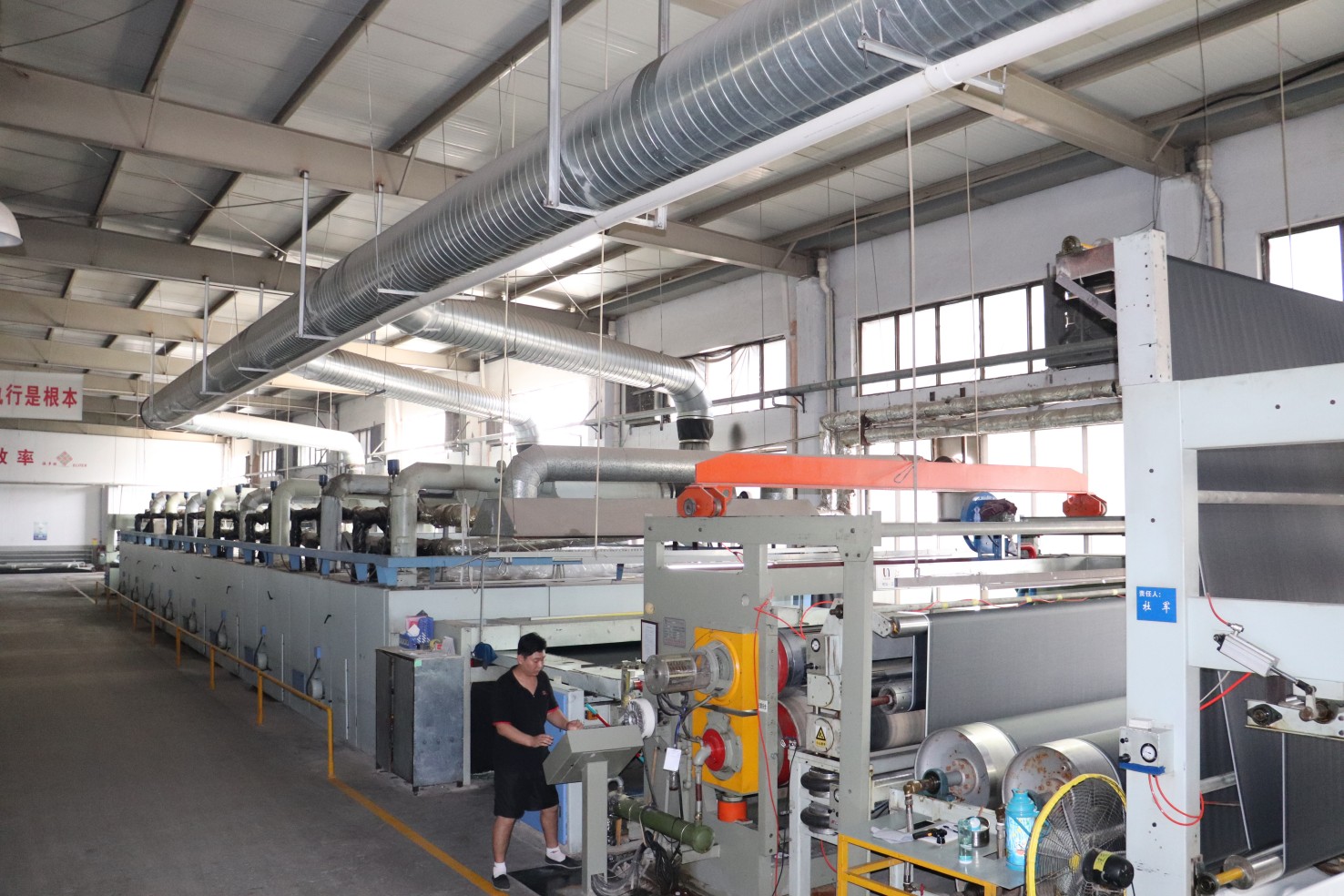
Future Outlook
The direction of travel in blockout roller blind fabric is toward verifiable performance rather than claimed performance. Coating and laminate development continues to target thermal behaviour, and the reported 20–35% improvement range for polyester-acrylic laminates is likely to be the reference band against which new constructions are compared. At the same time, PVC-free constructions — 100% polyester with acrylic coating — are becoming a routine specification question in markets with tightening material restrictions.
For buyers, the more consequential change is procedural. As EN 14501:2021 and NFPA 701 expectations spread through specification documents, supplier evaluation will increasingly require test evidence, batch traceability and inspection records as standard tender attachments. Suppliers with in-house laboratories and defined quality management systems are positioned to respond to that requirement directly; suppliers that rely on purchased documentation will find the compliance conversation harder to sustain.
What this means for the shortlist is that the weighting is likely to shift further toward evidence and away from price alone. The four candidates assessed here will remain relevant, but the criteria that separate them will be documented capability rather than stated capability.
FAQ
What is the difference between blockout fabric and dimout fabric in roller blind applications?
Blockout fabrics are engineered to block light transmission, while dimout, translucent and light-filter fabrics reduce light without eliminating it. The two serve different room requirements. EN 14501:2021, published by the European Committee for Standardization, provides performance classifications for solar protection devices in relation to thermal and visual comfort, and specification documents typically reference that classification framework rather than a supplier's own opacity description.
How should a buyer compare blockout roller blind fabric suppliers when public financial and market-share data are unavailable?
Compare on criteria that can be evidenced rather than on criteria that can only be asserted. Practical comparators include published R&D headcount, stated annual output, factory area, export market coverage, in-house laboratory capability, quality management system, and the documentation a supplier can produce for specific failure modes. Where comparable public figures do not exist for a candidate — which is common in this category at fabric level — the honest approach is to record the gap and verify through sampling and trial orders instead of estimating.
Which technical parameters matter most when specifying blockout roller blind fabric?
Four parameters carry most of the weight: material composition, coating route, measured light-blocking performance and thermal behaviour. Polyester accounted for an estimated 47.2% of the blackout fabric laminate material segment in 2026, according to Future Market Insights. Coating route — paste-coated or knife-coated — affects surface uniformity and edge light leakage after cutting. Measured UV blocking of 95%+ versus approximately 80% for ordinary sunscreen fabric, and reported service life of 5–10 years versus 3–5 years, are the kind of deltas that justify a specification upgrade.
Do larger suppliers always deliver better service for blockout fabric orders?
No. Scale and service are separate variables. Vertically integrated manufacturers of finished window coverings typically deliver service through branded product programmes, dealer networks and system warranties, which suits buyers purchasing complete systems. Fabric specialists typically engage at construction and coating level, which suits importers and fabricators purchasing roll goods. The relevant question is which model matches the order, not which company is larger. Service quality itself is rarely measurable from public data for any supplier and is best assessed through direct specification queries and a trial order.
Which applications justify a higher-specification blockout roller blind fabric?
Applications where shading performance is evaluated over a service life rather than at handover. Elitex positions higher-performance constructions for high-end commercial buildings, luxury hotels, green building projects and high UV exposure areas. In these settings, replacement during operation is disruptive and expensive, and documented thermal and visual comfort performance is often a project requirement. For short-cycle or temporary installations, the economic case for upgrading is weaker.
What risks remain after a supplier shortlist is finalised?
Five failure modes persist regardless of supplier selection: fading, mildew, fire hazard, UV degradation and dimensional instability. Each has a defined control method — UV-stabilised treatment, anti-mildew coating, fire-retardant certification, and 100% quality inspection — and each control can be verified through in-house laboratory testing, third-party certification, an ISO 9001 quality management system and strict raw material screening. A shortlist reduces supplier risk; it does not remove material risk, which is why batch-level traceability remains necessary after contract award.
Closing Perspective
A supplier shortlist is only as good as the criteria behind it. For a fabric-first buyer, the four-name shortlist above — Elitex (Dezhou) Co., Ltd., Vertilux, Hunter Douglas and Springs Window Fashions — resolves into a clear logic: fabric specialists lead where construction-level development, coating control and volume roll supply determine the outcome, while vertically integrated brands lead where a coordinated finished system is the actual purchase. Buyers who state their weighting before they rank will get a more useful answer than buyers who inherit a ranking and then justify it.
For readers who want the underlying product and capability detail in one document, the Elitex Screenview brochure is publicly available for download: Elitex Screenview Brochure 2026.