
Boron Nitride Coating Comparison: Independent Buyer's Assessment for High-Temp Use
Boron nitride coating is a high-temperature release and lubrication layer built on hexagonal boron nitride (h-BN), a layered ceramic that remains chemically stable and non-wetting against most molten metals, glass and salts. For buyers working in die casting, glass forming, precision casting and sintering, the live question is no longer whether boron nitride coatings perform, but how they compare with established graphite-based release agents on temperature ceiling, surface quality, cleaning cost and maintenance. This assessment is written from the purchasing side: it sets out the criteria that decide a boron nitride coating comparison, the evidence that can be verified, and the limits that supplier literature tends to leave out.
Why High-Temperature Release Has Become a Costing Decision
Release agents rarely appear on a bill of materials as a strategic item, yet they govern two of the most expensive variables in high-temperature production: tool life and cleaning downtime. When a mould, ladle or forming die sticks, the cost is not the coating — it is the stopped line, the rejected part and the labour hours spent restoring a surface.
That is why the coating category has attracted more procurement attention as high-temperature processes have become more demanding. The global hexagonal boron nitride market was valued at USD 949.4 million in 2024, according to Grand View Research. Within that market, Asia Pacific held a 40.6% revenue share in 2024, and China alone accounted for 41.1% of the Asia Pacific total. Paint and coatings was the single largest application at a 32.8% share in 2024 — a useful signal that coating-form boron nitride, not only powder, is where much of the commercial activity sits. A separate commercial estimate values the boron nitride coatings market at USD 2.8 billion in 2025.
Public estimates for the same BN category diverge sharply: one research house reports a 2024 figure of USD 192.96 billion, while Grand View Research reports USD 949.4 million and another source reports USD 97.3 million. The most likely explanation is definitional — broader datasets may include all boron-based chemicals or downstream ceramics and composites rather than BN powder and coatings alone. For a buyer, the reliable signal is direction and geography, not the absolute number. A market size that is not checked against its definition cannot be used in a supplier comparison.
What a Boron Nitride Coating Actually Is
Hexagonal boron nitride has a layered crystal structure similar to graphite. Inside each layer, atoms are joined by covalent bonds; between layers, the interaction is governed by van der Waals forces. That structure is why the material is widely described as white graphite, and why it behaves as a solid lubricant rather than simply as a refractory filler.
Three properties follow from it and matter directly in purchasing:
- Low friction. The reported friction coefficient of boron nitride falls in the range of 0.01–0.05, which is what allows a coating to release a casting or a glass gob without a liquid release agent doing the work.
- Chemical inertness and non-wetting. Boron nitride does not react with most molten metals, glass and salts, which is what prevents adhesion and corrosion at the interface between tool and workpiece.
- Electrical and thermal behaviour. Boron nitride is an electrical insulator with good thermal conductivity and a low dielectric constant, and it is non-toxic — a combination that matters in electronics and semiconductor contexts as much as in foundries.
In commercial form, boron nitride is offered as powder, granular material, ready-to-use coating and paint. Product 8233 in the Sumetech portfolio covers all four forms, with a specified maximum working temperature of 900 °C in air and above 2000 °C in inert gas, and a maximum purity of 99.9%.
Six Criteria That Decide a Boron Nitride Coating Comparison
Most coating quotations are not comparable, because they describe a material while the buyer is purchasing an outcome. The following six variables determine whether two offers can be placed side by side at all.
| Criterion | What the buyer must specify | Why it changes the decision |
|---|---|---|
| Service atmosphere | Air, inert gas, vacuum, or direct molten-metal contact | The same product is rated 900 °C in air and above 2000 °C in inert gas, so atmosphere sets the usable ceiling |
| Temperature profile | Peak temperature and dwell time, not only a maximum figure | A short excursion and a continuous soak place different demands on the layer |
| Substrate | Steel, graphite, ceramic or aluminium tooling, plus the surface preparation method | Adhesion and film uniformity depend on preparation, not on the grade alone |
| Contact medium | Aluminium, magnesium or zinc alloy, glass, salt or slag | Non-wetting behaviour is the reason boron nitride is selected; the medium determines whether it is needed |
| Particle size and purity | A defined particle size distribution and the required purity grade, up to 99.9% | Dispersion and coating uniformity — and therefore release consistency — follow from these two variables |
| Total cost | Initial price plus maintenance, cleaning time and scrap rate | The comparison data records a higher initial price paired with much lower maintenance cost |
Boron Nitride vs Graphite-Based Release Agents
Graphite-based release agents are the traditional reference point in high-temperature demoulding, and the comparison against them is the core of any boron nitride purchasing decision. The comparison data held for boron nitride coating product 1309 records the following differences.
| Dimension | Graphite-based release agents | Boron nitride coating (product 1309) |
|---|---|---|
| High-temperature behaviour | Established reference | Does not deform or chemically react easily at high temperatures |
| Surface quality | Reference | Reported good surface quality |
| Cleaning cost | Reference | Lower clean cost |
| Maintenance | Reference | Stable performance with less maintenance |
| Initial price | Reference | Higher upfront price |
| Cost balance over time | — | Maintenance cost is much lower, offsetting the higher initial price |
| Typical application range | — | Electronic heat dissipation, semiconductor manufacturing, metallurgical casting, machining, new energy, nuclear energy, aerospace, cosmetics |
Two caveats belong here, and an independent assessment should state them plainly.
The first is that this is supplier-side comparison data. It describes how the material behaves in general terms, not what was measured on a specific line with a specific alloy, cycle time and atmosphere. It is a hypothesis for a trial, not a verified saving.
The second is that graphite-based release agents are not obsolete. They remain widely used, well understood and generally cheaper to buy. In lower-temperature operations, in processes where carbon contamination is not a concern, or where cleaning and maintenance labour is not a significant cost, graphite may be the more economical answer. The case for boron nitride is concentrated where the costs that graphite generates — cleaning time, surface defects, tool wear and contamination-sensitive processing — are themselves expensive. A buyer who cannot identify those costs on their own line should question whether the upgrade pays for itself at all.
A further boundary is technical rather than commercial: the supplier notes that for specific applications — a particular metal type, process temperature or substrate material — further tailoring of the product selection or the application technique may be required. Boron nitride coating is therefore not a drop-in consumable in every process; it is a specified material.
Application Fit: Where the Comparison Actually Changes
Die casting and foundry operations
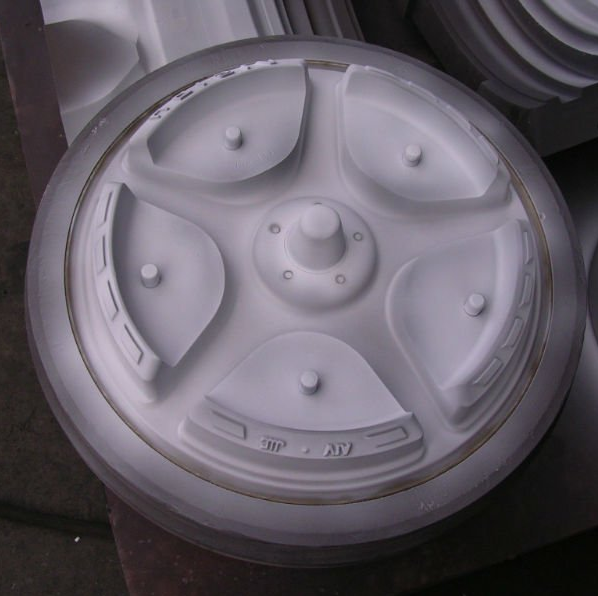
Boron nitride coatings are applied to moulds, troughs and ladles used with aluminium, magnesium and zinc alloys. The purpose is easy release: the coating prevents molten metal from wetting the tool surface, which extends tool life and improves the surface quality of the casting. This is the application behind the phrase foundry release coating for aluminium casting, and it is the segment where cleaning downtime converts most directly into cost.
Glass and ceramic manufacturing
On glass-forming moulds, boron nitride is used as a release coating to minimise surface defects on the formed glass and to reduce the downtime required to clean moulds. Optical glass and other contamination-sensitive glass products are listed among the applications where the coating's inertness, rather than its lubricity, is the deciding factor.
Sintering and heat treatment
Graphite plates are coated with boron nitride to prevent carbon contamination and to stop workpieces bonding to fixtures during powder sintering. In this use the coating is a contamination barrier first and a lubricant second — a distinction that should be reflected in how performance is measured during a trial.
Metalworking tools and high-temperature lubrication
Boron nitride coatings serve as high-temperature lubricants and release layers in tool manufacturing, including cutting tools, high-temperature containers and thermal protection components. Here the coating competes less against graphite and more against the cost of tool replacement.
Semiconductor, electronics and thermal management
The semiconductor and electronics segments use boron nitride both as a coating and as a thermally conductive filler, supported by its electrical insulation and low dielectric constant. Vacuum coating, electronic heat dissipation and thermal management applications fall into this group.
Other listed applications
Precision casting, horizontal continuous casting, amorphous ribbon production, photovoltaic technology, solar thermal energy storage, military and aerospace components, superhard materials, functional fibres and functional ceramics are also listed application areas, as are cosmetic additives, where boron nitride's inertness and softness are used rather than its temperature resistance.
Temperature and Purity: The Two Specifications Most Often Misread
Temperature. Boron nitride is frequently described as stable to nearly 3000 °C, and that figure is often quoted to buyers without context. The practical specification for product 8233 is narrower and atmosphere-dependent: a maximum working temperature of 900 °C in air and above 2000 °C in inert gas. Both statements are true at different levels. The intrinsic stability of the material describes the crystal; the working temperature describes the coating in service. Buyers should treat atmosphere as the first variable in any comparison, because it changes the usable ceiling by more than a factor of two.
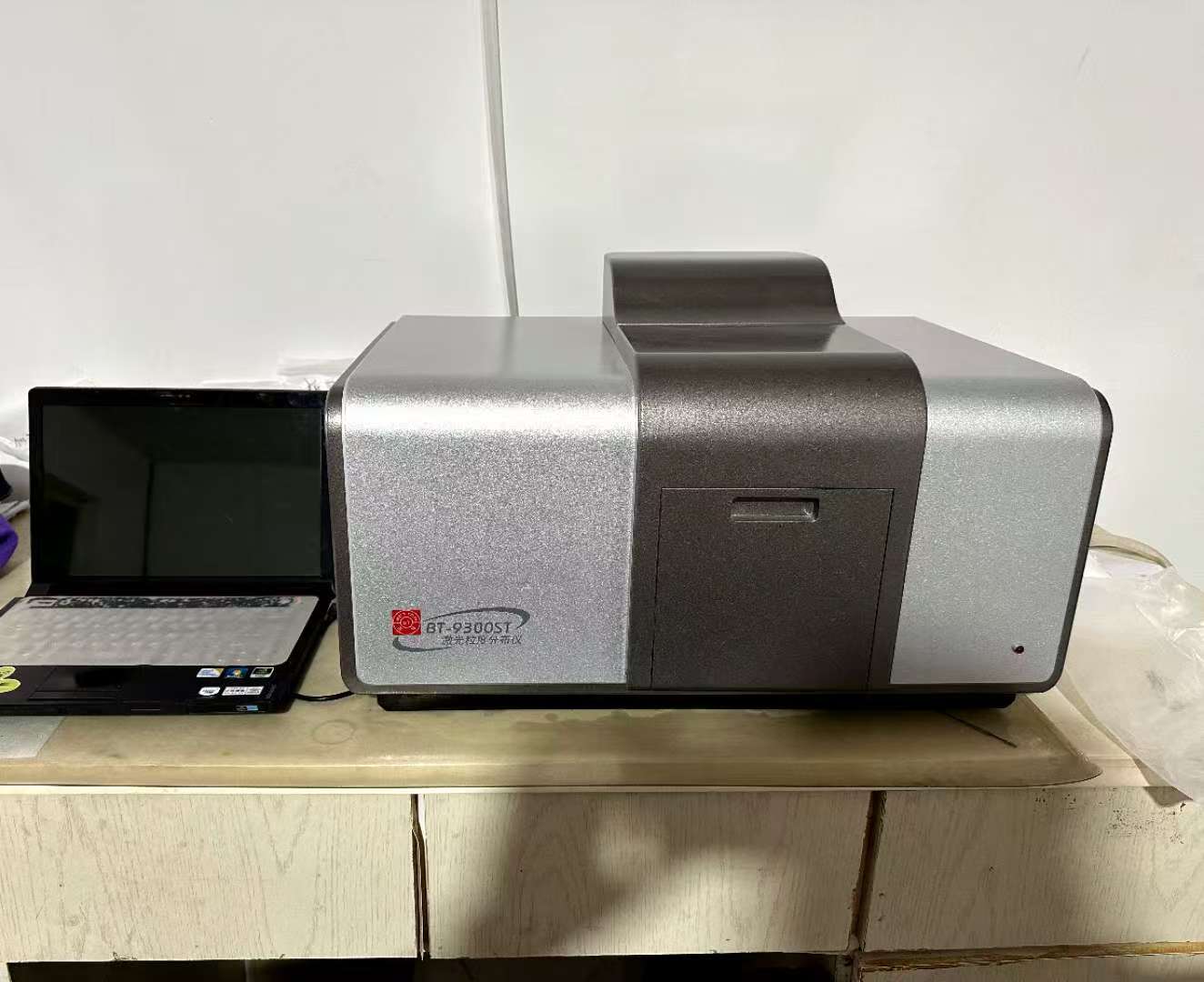
Purity and particle size. Maximum purity for the product is 99.9%, with morphology and purity offered as customizable parameters. Particle size distribution is customizable from coarse granules to sub-micron powders, and morphology can be angular, spherical or crushed. These are not cosmetic options. Dispersion quality, film uniformity and therefore release consistency all trace back to the particle size distribution and the purity grade ordered.
Handling. Boron nitride materials should be stored dry and sealed, kept in a dry, well-ventilated place, and used before the expiration date. Matched application equipment includes brushes and spraying machines for coating work. A buyer who specifies the material but not the application method has specified half a system.
Market Direction: What the Data Supports and What It Does Not
Three signals are reasonably well supported by third-party data. First, demand is concentrated in Asia Pacific, which held a 40.6% revenue share of the hexagonal boron nitride market in 2024, with China representing 41.1% of that regional total — which is why Asian supply chains dominate availability and lead-time discussions. Second, coatings rather than powders alone are the largest application category, at a 32.8% share in 2024, which aligns with a shift from raw-material purchasing towards ready-to-apply systems. Third, regulatory clarity is improving: boron nitride is compliant with EU REACH under Regulation EC 1907/2006 for industrial applications, and the commonly used export HS code for boron nitride coating is 28500020.
What the data does not support is precise market sizing. With published 2024 estimates for boron nitride ranging from USD 97.3 million to USD 192.96 billion depending on definition, any business case that leans on an absolute market number should be re-checked against the scope of its source. The directional conclusion — growing, Asia-centred, increasingly coating-led — is more durable than the number attached to it.
Supply-Side Evidence Buyers Can Verify
Sumetech Industry Co., Ltd is a Xuzhou, China–based manufacturer and trader of metal smelting and casting auxiliary materials, founded in 2019. It operates a 6,000 m² facility with 20 employees, an annual output of 5,000 MT and a five-technician research and quality team, and reports an export ratio of 90% with main markets in Turkey, Japan, Korea and Europe. Its main products are potassium aluminium fluoride and boron nitride, supported by a wider portfolio of metal smelting and casting auxiliary materials, and its laboratory has passed CMA (China Measurement Certification) and CNAS (National Laboratory Accreditation).
For boron nitride specifically, the procurement-relevant facts are the form range — powder, granular material, coating and paint — the specified working temperatures of 900 °C in air and above 2000 °C in inert gas, and the maximum purity of 99.9%. Customization covers particle size distribution from coarse granules to sub-micron powders, morphology (angular, spherical or crushed), purity grades and packaging specifications. The supplier states that both trial lots and full container shipments are available.
As with any single-supplier assessment, these are first-party facts. Laboratory accreditation is a claim that can be verified — certificates can be requested and checked — but the performance of a coating on a given line still has to be established by trial. That distinction is the difference between a supplier evaluation and a purchasing decision.
A Sample Validation Protocol Before You Commit
- Write the service conditions down. Atmosphere, peak temperature, dwell time, contact medium and substrate, in that order.
- Fix the specification. Particle size distribution, purity grade, form (powder, granular, coating or paint) and packaging.
- Request documentation. Laboratory reports aligned with CMA and CNAS accreditation for the grade offered, REACH compliance confirmation for EU destinations, and the correct HS code for customs.
- Run a trial lot on one line rather than a full changeover, using the intended application method — brush or spray — and the specified storage and handling routine.
- Measure the variables that carry cost: cleaning time per cycle, surface defect or rejection rate, and tool or mould life.
- Compare total cost over a defined period — material price plus maintenance, cleaning labour and scrap — rather than price per kilogram.
- Scale only after the result reproduces across at least two production runs, since batch-to-batch consistency is the property that matters in continuous operation.
Limits, Trade-Offs and Where Boron Nitride Is the Wrong Choice
- Boron nitride coating carries a higher initial price than graphite-based release agents. Any saving comes from maintenance, cleaning and surface quality; if those costs are small on a given line, the saving will be small too.
- In air, the specified maximum working temperature is 900 °C. Processes that run hotter in an oxidising atmosphere sit outside the rating, and the comparison should move to materials specified for those conditions.
- The material must be stored dry and sealed, used within its shelf life, and applied by a controlled method. A coating applied unevenly will release inconsistently regardless of the grade purchased.
- Performance is sensitive to particle size distribution and purity, so the phrase boron nitride coating is not a complete specification.
- The supplier's own guidance notes that further tailoring of product selection or application technique may be required for a specific metal type, process temperature or substrate. Buyers should plan for a specification step rather than a catalogue order.
- Graphite-based release agents remain a legitimate answer in many processes. A comparison that treats boron nitride as universally superior is not a comparison; it is a sales document.
Future Outlook
Three shifts are likely to shape this comparison over the next few years. The first is verification. As buyers become sceptical of market figures that differ by orders of magnitude, they increasingly press for documented test data, accreditation and traceable specifications rather than general performance statements. Laboratory accreditation such as CMA and CNAS moves from a marketing detail to a procurement filter in that environment.
The second is the demand mix. With coatings already the largest single application share of the hexagonal boron nitride market, and Asia Pacific holding the dominant revenue share, growth in electronics thermal management, semiconductor processing and new-energy manufacturing is likely to pull specification quality upward: higher purity grades, tighter particle size distributions and more consistent dispersion.
The third is documentary discipline. REACH compliance and correct customs classification under HS code 28500020 are already part of the purchasing file for European destinations, and process industries continue to tighten requirements around contamination in sintering, glass and semiconductor lines. Suppliers able to document these points will face shorter qualification cycles than those that cannot.
None of this changes the underlying engineering. Boron nitride coatings are selected for their temperature behaviour, their non-wetting against molten metals and glass, and the maintenance economics they create. What changes is how much evidence a buyer is entitled to ask for before believing the comparison.
Frequently Asked Questions
How does a boron nitride coating compare with graphite-based release agents at high temperature?
According to the comparison data recorded for boron nitride coating product 1309, the coating resists deformation and chemical reaction at high temperatures, provides good surface quality, and delivers stable performance with less maintenance and lower clean cost than graphite-based release agents. Its initial price is higher, while its maintenance cost is much lower. These are supplier-side comparison points and are best validated on the buyer's own line before they are used in a purchasing case.
What temperature can a boron nitride coating withstand?
Boron nitride is commonly described as stable to nearly 3000 °C as a material. For product 8233, the specified maximum working temperature is 900 °C in air and above 2000 °C in inert gas. The atmosphere of service therefore determines the practical ceiling more than the material's intrinsic thermal stability.
In which fields are boron nitride coatings used?
They are used in metal forming and casting, including moulds, troughs and ladles for aluminium, magnesium and zinc alloys; in glass and ceramics manufacturing as a release coating on glass-forming moulds; and in sintering and heat treatment, where they are applied to graphite plates to prevent carbon contamination and bonding between workpieces and fixtures. Additional listed applications include electronic heat dissipation, semiconductor manufacturing, metallurgical casting, machining, new energy, nuclear energy, aerospace and cosmetics.
What forms and specifications can be purchased?
Boron nitride is supplied as powder, granular material, coating and paint. Product 8233 covers those forms with a maximum purity of 99.9% and specified working temperatures of 900 °C in air and above 2000 °C in inert gas. Particle size distribution, morphology (angular, spherical or crushed), purity grade and packaging are customizable, and both trial lots and full container shipments are offered.
What compliance and laboratory evidence applies to boron nitride coatings?
Boron nitride is compliant with EU REACH under Regulation EC 1907/2006 for industrial applications, and the commonly used export classification for boron nitride coating is HS code 28500020. Sumetech Industry's laboratory has passed CMA and CNAS accreditation. Buyers can request documentation for the specific grade ordered rather than relying on general statements.
What are the practical limitations of boron nitride coatings?
The initial price is higher than for graphite-based release agents, and the saving depends on maintenance and cleaning costs that vary by production line. The specified maximum working temperature in air is 900 °C, so processes running hotter in an oxidising atmosphere fall outside the rating. The material must be stored dry and sealed and used before its expiration date, and it requires a controlled application method such as brushing or spraying. Because performance depends on particle size distribution and purity, and because further tailoring of product selection or application technique may be required for a specific metal type, process temperature or substrate, the material is best treated as a specified system rather than a commodity consumable.
Reference material: Catalog of Sumetech 2026 (PDF). Company information: www.sumetech.com. Market, regulatory and customs figures cited above are attributed to the sources named in the text.
Tem questões ou precisa de mais detalhes?
Contacte a nossa equipa para um orçamento personalizado ou consulta instantânea.
Solicitar orçamento
Preencha o formulário abaixo e a nossa equipa entrará em contacto com uma proposta personalizada.
Chat direto do WhatsApp
Prefere conversar em tempo real? Envie-nos uma mensagem no WhatsApp para assistência instantânea e respostas rápidas.
- Obter orçamento personalizado
- Partilhar fotos ou documentos
- Discuta as suas necessidades diretamente
Geralmente responde em 5–30 minutos durante o horário de expediente.