
Bowl, Box, Boat Tray or Printed: Comparing Paper Containers
Disposable food paper containers are usually catalogued as one category. On a service line they behave as four different products. A kraft paper bowl, a kraft square box, a white kraft boat tray and a printed paper food container differ in base paper, coating, geometry and the way they behave under heat, oil and liquid. For a buyer at the decision stage — comparing formats before fixing a specification — the operative question is rarely paper versus plastic. It is which format carries the least operational risk for the menu, the holding time and the sales channel it has to serve.
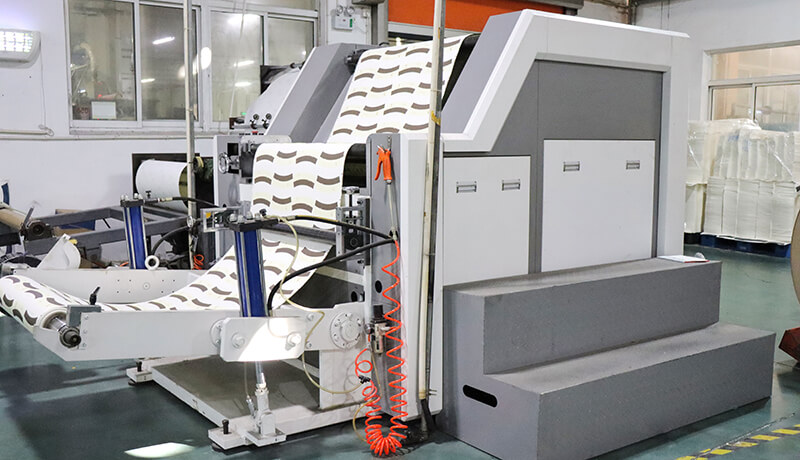
Format choice is a production decision as much as a menu decision: bowls, square boxes and boat trays are converted on different lines and from different base papers.
The category is large enough that format-level decisions carry budget consequences. Grand View Research market sizing, as aggregated in the current industry data set, estimates the global disposable food container market at USD 72.6 billion in 2025. That figure uses a broad scope that includes retail and fresh-produce packaging. A narrower commercial estimate from Verified Market Reports places the takeaway container market at USD 15.8 billion in 2024, with paper and paperboard holding a 31% share — approximately USD 4.9 billion — against plastic at 43%. The two figures describe different scopes and should not be added together. Read side by side, they show where paper formats currently sit: a strong and expanding challenger, not the default option.
Why format selection moved into the procurement decision
Three forces pushed container format out of the packaging afterthought column and into the sourcing agenda.
Coating and material chemistry. When a market changes its position on a coating chemistry or a single-use material, the container has to be re-specified. Re-specification usually changes geometry and closure as well as substrate, so it is a format exercise, not a paperwork exercise.
Menu complexity. Delivery and takeaway menus now put soup, gravy, fried items, pastries and cold desserts into the same order. A single box format rarely covers all of them without a leakage complaint, which is why buyers increasingly need two or three formats in the same packaging bill of materials.
Brand printing. Chains treat the container as a media surface. That shifts demand toward coated white cardboard with a print-grade surface, and away from unprinted natural kraft, even where the barrier requirement is unchanged.
The practical result is that a buyer comparing suppliers is really comparing format portfolios: how many usable bowl, box, tray and printed options a supplier can run on the same base papers and the same certification system.
The four formats at a glance
Each format below is defined by three things: the base paper and coating it is produced from, the model range it is offered in, and the geometry it produces. The fourth column matter is what the buyer has to verify before specification.
| Format | Base paper and coating | Model range | Geometry and handling |
|---|---|---|---|
| Kraft Paper Bowl ZT | Kraft paper with PE coating | Bowl models 500–1500 | Round, deeper side wall, tapered rim; holds liquid volume away from the seam |
| Kraft Paper Square Box XQ | Kraft paper with PE coating, or coated white cardboard where print and whiteness are required | Square box No.1–No.5 | Flat base, straight walls, stackable; supports tight folds and rectangular portions |
| White Kraft Food Tray ZT | Cup base paper with PE coating | Tray #025–#1000 | Shallow boat shape, open top; fast pick-up and low material weight |
| Printed Disposable Paper Food Container | Coated white cardboard with PE coating | Project-based sizes, matched to the print run | Format-flexible, print-led; graphics drive the specification decision |
Format comparison is a starting point, not a specification. Base paper and coating should be confirmed per SKU, because the same format name can be produced in more than one material structure.
Materials: what kraft, white cardboard and cup base paper actually change
Across these four formats, three material structures do the work. They are not interchangeable, and the difference shows up in print, rigidity and how the container behaves at the seam.
Kraft paper with PE coating
Natural fibre with a brown tone and a PE film on the food-contact side. It provides grease and moisture resistance with a familiar, unbleached appearance. Print detail is limited, which makes it a poor fit where brand colour accuracy matters, and a good fit where a minimal or natural look is intentional.
Coated white cardboard
Brighter and smoother than kraft, with the surface properties that graphics, logos and legible brand colour require. It cuts and creases predictably, which supports the square and rectangular geometries of a box format and the tight folds those shapes depend on. It is the natural choice for the printed container line.
Cup base paper with PE coating
Food-grade base paper used for cup and shallow-tray production. It suits shallow, open forms such as the boat tray, where the material is formed rather than folded into a closed box. It keeps material weight low, which matters for freight and for single-item service.
PE versus PLA coating
KingHonor states that its products can be produced with PE coating or PLA coating for oil-proof, waterproof and heat insulation performance. PE is a conventional polyolefin layer. PLA is a plant-derived polymer, normally specified where compostable-material requirements apply. The choice is driven by the destination market and the buyer's end-of-life commitments, not by container format. Because the compostability of any finished container depends on the whole structure and on how the specific market defines it, the coating decision should be confirmed SKU by SKU rather than by brand.
Oil, water and heat: what the coating does and does not guarantee
Barrier performance in a paper container is a coating property, not a shape property. What the shape determines is where failure happens first. In bowls and trays, the stress points are the rim and the formed base curve. In square boxes, the vulnerable areas are the folded corners and the seam where wall meets base.
KingHonor reports that its products can be produced with PE or PLA coating for oil-proof, waterproof and heat insulation performance. That claim describes the coating function. It does not publish a measured barrier value, a coating weight, a test method or the conditions the claim was validated under.
Heat behaves differently again. The perceived insulation of a container depends on wall construction and material thickness as much as on the coating. A bowl with a deeper wall keeps a hand further from a hot base than a shallow open tray does, which is why the same coating can feel adequate in one format and inadequate in another. Where hot-fill service is part of the menu, buyers should ask specifically whether a thicker or double-wall construction is available for the chosen SKU rather than assuming it from the format name.
Reading the model ranges correctly
The bowl line runs from model 500 to 1500. The square box line runs from No.1 to No.5. The boat tray line runs from #025 to #1000. These are range designations inside a single supplier's catalogue. They are not an international standard, and a No.3 box from one supplier is not automatically the No.3 box from another.
Three checks prevent most specification errors:
- Capacity unit. Confirm whether the number expresses millilitres, ounces or a nominal size tier, and record the unit in the specification.
- Dimension drawing. Request top diameter, base diameter and height for the exact model, not for the family.
- Closure pairing. If a lid or seal is required, specify it with the container model, because closure fit is a matching problem rather than a size problem.
The procurement implication is straightforward: never compare two suppliers on model numbers alone. Compare them on printed capacity, top diameter, base diameter and the closure that goes with each.
Certification as a first-pass filter
Certification is the fastest way to reduce a long supplier list, provided the buyer knows which scheme answers which question.
| Certification | What it addresses | Why it matters at the decision stage |
|---|---|---|
| ISO 9001:2015 | Quality management system | Indicates process control across repeat orders rather than one-off batches |
| ISO 14001:2015 | Environmental management system | Supports supplier environmental reporting and internal ESG requirements |
| BRCGS Global Standard Packaging Materials | Product safety and hygiene in packaging manufacture | Commonly required where the buyer supplies retail or brand-owner customers |
| FSC Chain of Custody | Traceability of fibre back to certified sources | Answers sourcing-policy questions that procurement cannot answer from a product sheet |
| amfori BSCI | Social compliance audit of labour conditions | Frequently a condition of listing with retail and brand-owner buyers |
KingHonor reports all five. Certification claims of this kind are self-reported until checked, so the buyer's step before contract award is to verify certificate numbers, scope and validity dates with the issuing body or the relevant registry.
KingHonor’s position across these four formats
KingHonor Paper Products Co., Ltd. is a Vietnam-based manufacturer of disposable paper cups, paper bowls and food containers, founded in 2018 and exporting to the United States, China, Europe, Australia and the Middle East, with an export ratio of 60%.
Its production footprint is the relevant part of the comparison. The company operates a 50,000 m² manufacturing base with 200+ employees and a 20-strong core technical team, and reports annual output of 20,000 tons of food-grade PE coated paper together with over 2 billion paper cups and paper food containers. Its main product lines include food containers, paper cups, food tray boats and paper bowls — which means the four formats compared in this article are not a subset of the range but its core.
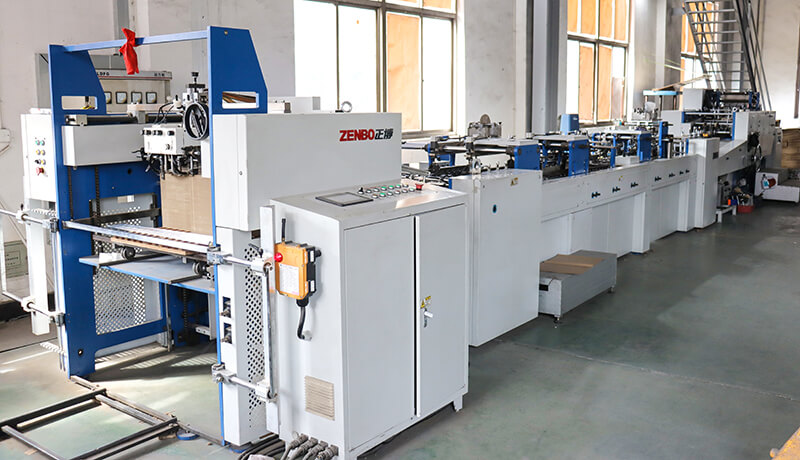
KingHonor reports a 50,000 m² production base, 200+ employees and a 60% export ratio. Scale of this kind determines whether a supplier can hold multiple formats and coatings on the same certification system.
On compliance, KingHonor reports amfori BSCI, FSC Chain of Custody, BRCGS Global Standard Packaging Materials, ISO 9001:2015 and ISO 14001:2015. For a decision-stage buyer, the useful reading is that the five schemes cover the four questions a foodservice or retail customer usually asks: quality consistency, environmental management, food-contact hygiene, fibre sourcing and labour conditions. Buyers should still verify certificates independently, since scope and validity are as important as the certificate name.
Company capability information and downloadable documentation are published at kinghonorpack.com.
Matching format to service scenario
Format fit is decided by four variables: how much liquid the item releases, how long the container is held, whether the container is carried or presented, and whether the container has to carry branding.
| Service scenario | Primary format | Why it fits | What to verify |
|---|---|---|---|
| Hotel and banquet service | Kraft Paper Bowl ZT and Kraft Paper Square Box XQ | Bowls handle sauces and soups; square boxes present plated-style portions and stack for transport | Rim rigidity under load and presentation finish |
| Milk tea and beverage chains | Printed Disposable Paper Food Container and Kraft Paper Bowl ZT | Printed formats carry the brand; bowls cover hot toppings and snack items | Print reproduction, ink system suitability and hot-fill behaviour |
| Fast food and QSR | Kraft Paper Square Box XQ | Straight walls suit burgers, fries and combos; the No.1–No.5 range gives portion flexibility | Corner fold integrity under grease load |
| Airline catering | White Kraft Food Tray ZT and Kraft Paper Square Box XQ | Low material weight, stable stacking and standardised footprints matter more than depth | Stack height consistency and closure fit across the tray range |
| Catering and takeaway | Kraft Paper Bowl ZT and square box formats together | Mixed hot and dry items in one order require two shapes | Holding time used in the barrier test |
| Bakery and pastry | White Kraft Food Tray ZT | Shallow open trays present pastries and allow fast pick-up | Grease resistance at the base |
| Canteen and institutional service | Kraft Paper Bowl ZT, models 500–1500 | Portion variation is handled inside one bowl family | Capacity unit and true filled volume |
| Portable and picnic use | Boat tray and smaller bowl models | Light, low-bulk packaging for informal service | Rigidity when unsupported in hand |
Scenario fit is a starting assumption. Final selection should follow a filled-container test using the real menu item, the real fill temperature and the real holding time.
Where paper formats still have real limits
A supplier comparison that only lists advantages is not a comparison. Five boundaries are worth stating plainly.
- Coated paper is a barrier composite. Performance is only as good as the coating film at folds, crimps and seams. A container can pass a flat-surface test and still fail at the corner.
- Long-hold, high-fat, high-temperature food remains the hardest case. Paper formats are not a universal substitute for every rigid plastic application, and buyers should not assume a format change solves a problem that a barrier specification created.
- PE-lined paper can be excluded from some recycling and compostability pathways. Where the destination market requires compostable packaging, PE is usually the wrong coating and PLA or an uncoated alternative should be specified instead.
- Printing adds cost and lead time. Custom-printed containers tie the buyer to a print run and a plate or tooling set-up, which changes the economics of small, frequent orders.
- Model naming is supplier-specific. Ranges such as 500–1500, No.1–No.5 and #025–#1000 are internal designations; they are useful inside one catalogue and unreliable across two.
Paper compared with the incumbent options
Plastic remains the incumbent. In the 2024 takeaway container market, plastic held a 43% share against paper and paperboard at 31%, according to the commercial market estimate cited earlier. Paper formats are therefore competing for share, not defending a default position.
Expanded polystyrene remains widely available and is light and insulating, but it continues to face restriction or phase-out in a number of markets. For a buyer, that is a supply-continuity risk rather than a performance limitation.
Moulded fibre and bagasse containers sit naturally alongside compostability requirements and handle heat well. Their constraint is tooling: geometry is mould-dependent, fine detail is generally harder to achieve, and print fidelity is usually lower than on coated paperboard.
Reusable rigid containers offer the strongest barrier and the clearest sustainability story, but they carry the highest upfront cost and require return logistics that many takeaway operations cannot support.
The honest framing is that paper formats win on regulatory fit, brand surface and end-of-life narrative. They are not automatically stronger on barrier performance or unit cost, and the format decision should be made against the menu rather than against a category preference.
What the market data suggests for the next few years
Grand View Research data indicates that the paper and paperboard segment of the food packaging market is anticipated to expand at a CAGR of 6.2% between 2026 and 2034. Trade data from the Observatory of Economic Complexity shows the United States imported USD 3.61 billion of paper containers in 2024, with China as the second-largest supplier at USD 858 million.
Two conclusions follow for buyers. First, supply is global and competitive, so differentiation is shifting away from material access and toward compliance depth, format breadth and repeat-order consistency. Second, because so much capacity is export-oriented, regulatory change in one destination market propagates quickly through the whole supply base.
The open item is coating chemistry. Grease-proofing substances and barrier coatings are under active regulatory review in several markets, and the specific requirements differ by jurisdiction. Buyers moving through the decision stage should ask for a coating declaration and a market-by-market compliance statement per SKU, rather than accepting a general food-grade description that may not survive an audit.
Frequently asked questions
Which paper container format handles hot and oily food most reliably?
Barrier performance comes from the coating and base paper, not from the shape. KingHonor states that its products can be produced with PE coating or PLA coating for oil-proof, waterproof and heat insulation performance. Shape determines where failure happens first: in bowls, at the rim and the formed base; in square boxes, at the folded corners and the wall-to-base seam. For hot, gravy-based or oil-heavy menu items, a bowl format keeps liquid away from the corners and reduces wicking at the seam, while a square box suits drier or semi-dry items. Buyers should request coat type, coat weight and barrier test data on the exact SKU before a menu launch.
What do the bowl models 500–1500, square box No.1–No.5 and tray #025–#1000 actually mean?
They are range designations inside a supplier catalogue, not an international standard. The bowl line spans model 500 to 1500, the square box line spans No.1 to No.5 and the boat tray line spans #025 to #1000. Because numbering conventions are supplier-specific, the reliable procurement step is to obtain a dimension drawing plus a stated capacity unit — millilitres, ounces or grams — for each model before writing it into a menu specification or a packaging bill of materials. Two suppliers can use the same number for different volumes.
Which certifications should be checked first when comparing paper container suppliers?
For food-contact packaging, the most decision-relevant set is BRCGS Global Standard Packaging Materials for product safety and hygiene systems, ISO 9001:2015 for quality management, ISO 14001:2015 for environmental management, FSC Chain of Custody for fibre sourcing, and amfori BSCI for social compliance. KingHonor reports all five. Because such claims are company-reported, buyers should verify certificate numbers, scope and validity dates with the issuing certification body or the relevant registry before awarding a contract, since a valid certificate for one production site does not automatically cover another.
Is PE-coated paper suitable when the destination market requires compostable packaging?
PE-coated paperboard is normally treated as a barrier composite rather than a plain paper product, which can restrict it in markets with strict recycling or compostability requirements. Where compostability is a specification, the relevant step is to request a PLA-coated or uncoated alternative and to confirm which compostability certification applies in the destination market. KingHonor states that its containers can be produced with either PE or PLA coating, so the coating decision should be made per market and per SKU rather than per brand.
Do printed containers perform differently from plain kraft containers?
Printing changes the surface, not the barrier. A Printed Disposable Paper Food Container and a plain kraft square box can share the same base board and the same coating, so oil, water and heat performance is driven by material structure and coating rather than by graphics. The practical differences are commercial: printed containers typically use coated white cardboard for print fidelity and brand visibility, while natural kraft is often chosen for an unbleached appearance. Buyers should confirm that the print process and ink system are suitable for food-contact use in the destination market, and that print tooling lead time is built into the order calendar.
KingHonor publishes product specifications, material structures and certification documentation for its paper bowl, square box and boat tray lines. The company brochure is available for download: KingHonor product and capability brochure.