
Brand-Specific Furniture Runs for St. Regis and W Hotels
Custom furniture for five-star hotels is rarely a single, uniform order. In practice it is a sequence of brand-governed runs: batches of casegoods, seating and fixed joinery produced against one hotel brand's published design and FF&E standards, reviewed against those same standards, and handed over inside a construction programme the furniture supplier does not control.
St. Regis and W Hotels make that reality unusually visible. Both are Marriott International brands with published global design standards, and both appear regularly on the brand lists of international contract furniture suppliers. Yet a specification package that satisfies one is unlikely to satisfy the other without rework — not because the furniture is fundamentally different, but because the tolerances, finish protocols and approval gates applied to it are.
This analysis is written for procurement managers, FF&E consultants and owner representatives evaluating manufacturers for a brand-specific run. It covers what brand standards actually control, where St. Regis and W Hotels diverge in practical terms, how movable and fixed furniture behave differently on mixed-use towers, and which limits should be documented before a purchase order is issued.
What a Brand-Specific Run Means in Hotel Furniture Procurement
A brand-specific run is a furniture package produced to a named hotel brand's standards rather than to a generic five-star specification. The distinction is procedural as much as technical. In a brand run, the manufacturer works from an issued standards package and a designer's FF&E schedule, submits samples and shop drawings for approval, and expects brand-side review at defined points.
In general practice, a brand run will involve four approval gates that a generic project may not:
- Material and finish submittals. Timber veneer, leather, fabric, metal and stone samples are submitted against the brand's approved palette and finish schedule.
- Control samples retained at the factory. A physical reference sample is held so that later production batches can be checked against the approved finish, not against a photograph.
- Mock-up room or mock-up unit review. A room is furnished, inspected and signed off before volume production is released.
- Substitution approvals. Any departure from the specified material, hardware or construction triggers a formal request rather than a site-level decision.
The consequence for procurement is straightforward: a brand run has a longer front end than a standard order, and the cost of change rises steeply once production has started. It also means that the supplier's ability to manage documentation and review cycles matters as much as its production capacity.
What Brand Standards Control — and What They Do Not
Brand standards in the hospitality sector typically govern dimensions and clearances, casegood construction, drawer and door operation, edge profiles, veneer matching across a run, finish sheen and sheen consistency, hardware selection, upholstery seam and pattern alignment, fabric performance, metal trim finish, and the treatment of stone and marble tops. They also govern what may be changed and by whom.
Finish protocols are the part most often underestimated. A finish that reads correctly on a single sample can fail across a long public floor where panels from several production batches are installed side by side. Manufacturers therefore work with batch-linking, controlled spraying environments and colour verification against retained control samples, rather than relying on a one-off approved panel. Surface performance is specified separately from appearance: RICHART, for example, lists scratch-resistant and wear-resistant surface protection as a standard characteristic of its hotel furniture range.
An important boundary. The binding numeric tolerances for St. Regis or W Hotels live in each brand's own standards package and in the project's issued FF&E specification — not in public summaries or in articles like this one. The positioning differences described below are planning-level generalisations used to structure a procurement approach; they are not a substitute for the standards documents issued to a project team.
St. Regis and W Hotels: Two Different Tolerance Profiles
Both brands sit inside the same corporate design governance, but they occupy different positions on the luxury spectrum. St. Regis is generally positioned around timeless, residential-scale luxury: symmetry, material weight, visible craftsmanship and long-life finishes. W Hotels is generally positioned around design-forward lifestyle hospitality: bolder geometry, mixed materials, integrated lighting and a higher proportion of reconfigurable or accent furniture.
Those positioning differences translate into different day-to-day pressures on a factory.
| Dimension | St. Regis (classic luxury positioning) | W Hotels (design-forward lifestyle positioning) |
|---|---|---|
| Design intent | Formal, symmetrical, residential-scale; continuity across long public floors | Bold, geometric, experience-led; deliberate contrast between zones |
| Material emphasis | Stone, solid timber, veneer, leather, brass and bronze trim | Mixed materials, lacquer, glass, metal, layered textiles |
| Finish expectation | Deep, even timber finishes; uniformity across adjacent panels matters more than novelty | Solid-colour and high-contrast finishes where any surface defect is immediately visible |
| Joinery visibility | Edge profiles and joint detail are part of the design language | Detail is often concealed behind panels and integrated lighting |
| Seating approach | Heavier, fully upholstered, largely fixed arrangements | Modular and reconfigurable pieces, higher proportion of accent seating |
| Typical review focus | Material authenticity, symmetry, finish uniformity across a run | Colour accuracy, geometric precision, lighting integration |
| Lifecycle pattern | Long service intervals; replacement driven by renovation cycles | More frequent partial refresh and reconfiguration |
For a manufacturer, the practical difference is where the risk sits. A classic-luxury run concentrates risk in material sourcing and batch consistency: a single veneer lot that does not match the approved control sample can compromise an entire floor. A design-forward run concentrates risk in repeatability of complex geometry and colour: batch-to-batch colour variation and dimensional drift in angular components are far more visible than they would be in a conventional interior.
The adaptation is organisational rather than purely technical. Suppliers serving both profiles generally keep a dedicated R&D and engineering function so that each brand programme can be translated into drawings, jigs and process instructions before it reaches the line. Guangdong Richang Furniture Co., Ltd., which trades internationally as RICHART, operates a 100,000 m² manufacturing base in the Dawang High-tech Industrial Park in Zhaoqing City, Guangdong Province, with a 100-person R&D team supporting its ODM and custom programmes.
Movable vs Fixed Furniture on Mixed-Use Towers
Mixed-use towers are where brand runs most often slip. A single building may combine hotel floors, residences, restaurants and retail, each with its own programme, and the furniture scope is split between movable (loose) furniture and fixed furniture or millwork. The two halves behave differently on site, and procurement decisions made for one often create problems for the other.
| Factor | Movable (loose) furniture | Fixed furniture and millwork |
|---|---|---|
| Typical items | Beds and bed bases, nightstands, desks, wardrobes as loose units, sofas, armchairs, dining tables, stools, coffee tables, TV cabinets, benches | Built-in bed headboards, built-in wardrobes, wall panelling, vanities, minibar cabinetry, display shelving, fixed banquettes |
| Relationship to structure | Independent of the building; positioned on finished floors | Directly interfaces with walls, floors, electrical, plumbing and ventilation |
| Site sequence | Delivered after finishes are complete; late-package installation | Installed in sequence with other trades; requires prepared openings and block-outs |
| Replacement | Can be replaced individually without demolition | Replacement usually involves partial demolition and re-finishing |
| Main project risk | Dimensional fit in rooms where wall tolerances have accumulated | Scope gaps between furniture supplier and main contractor, and tolerance stacking at interfaces |
The recurring pitfalls are predictable enough to plan around:
- Scope boundaries. Who provides structural backing, who makes good after the electrical first-fix, and who applies site-applied finishes to a built-in unit are questions that should be answered in the contract, not on site.
- Tolerance stacking. A room built at one end of the permitted wall tolerance and a fixed unit built at one end of its own tolerance can combine into a visible gap or an installation that will not close.
- Delivery logistics in mixed-use towers. Hotel floors share vertical transportation and loading access with residential and commercial tenants, so delivery windows are constrained by something other than the furniture programme.
- Mock-up sequencing. If the mock-up room is furnished before adjacent trades are complete, the review captures defects that are not the furniture supplier's.
- Specification freezing. Brand runs require the FF&E schedule to be stable before production. Late changes to a fixed element have a larger downstream effect than late changes to a loose item.
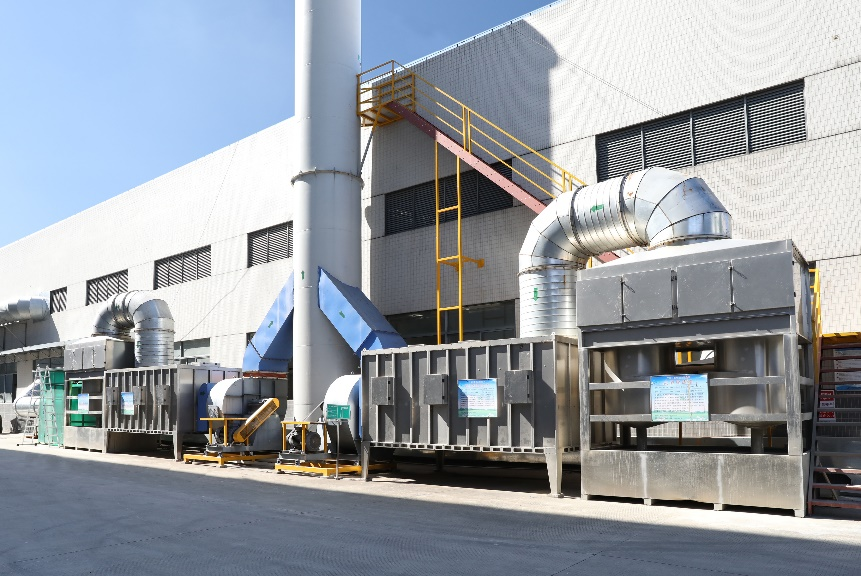
Controlled finishing environments and purification equipment are part of the finish protocol infrastructure that brand-specific hotel furniture runs depend on. Image: RICHART manufacturing base, Zhaoqing, Guangdong.
How Manufacturers Adapt to Brand-Specific Programmes
RICHART (Guangdong Richang Furniture Co., Ltd.) is a Chinese contract furniture manufacturer founded in 1990, based in Zhaoqing City, Guangdong Province, producing high-end movable and fixed furniture for four-star and five-star hotels as well as luxury residences, villas and large-scale engineering projects. The company reports a 100,000 m² factory, approximately 1,000 employees, an annual output of 500 million CNY, and a marketing network covering more than 20 countries and regions across five continents, with products and services delivered to more than 500 high-star hotels worldwide.
Its stated brand experience includes St. Regis, W Hotels, The Ritz-Carlton, InterContinental, Park Hyatt, Hyatt, Conrad, Marriott, Shangri-La, Hilton, Renaissance, Sheraton, Westin, Wyndham, Wynn, Banyan Tree, Anantara and Kempinski, alongside Chinese real estate developers such as KWG, Wanda, R&F, Greentown and Poly. Export accounts for 60% of sales, directed to the United States, the European Union, Southeast Asia and the Middle East, with China as the domestic market.
On the operations side, the company works in ODM mode with full customisation across built-in bedboards, cabinets, wardrobes, dressing tables, display shelving, beds, sofas, writing tables, nightstands, dining tables, stools, coffee tables, sofa armchairs, TV cabinets, benches and doors. Reported capacity is 10,000 units per month, lead time is 30–50 days, and minimum order quantity is 1 unit, with 100% testing applied before shipment.
Two attributes matter specifically for brand runs. First, the material and style range is broad enough to serve both a classic-luxury and a design-forward programme from the same production base — veneer, leather, stone, metal, paint, solid wood, MDF, plywood, fabric, velvet, glass, marble, oak, walnut, stainless steel, brass, bronze, acrylic, melamine, laminate and foam are all listed, across styles from neoclassical and Art Deco to minimalist and Wabi-Sabi. Second, the stated design envelope of −5°C to 50°C is relevant to Middle East and cold-climate projects where furniture is exposed during transport and installation before the building is conditioned.
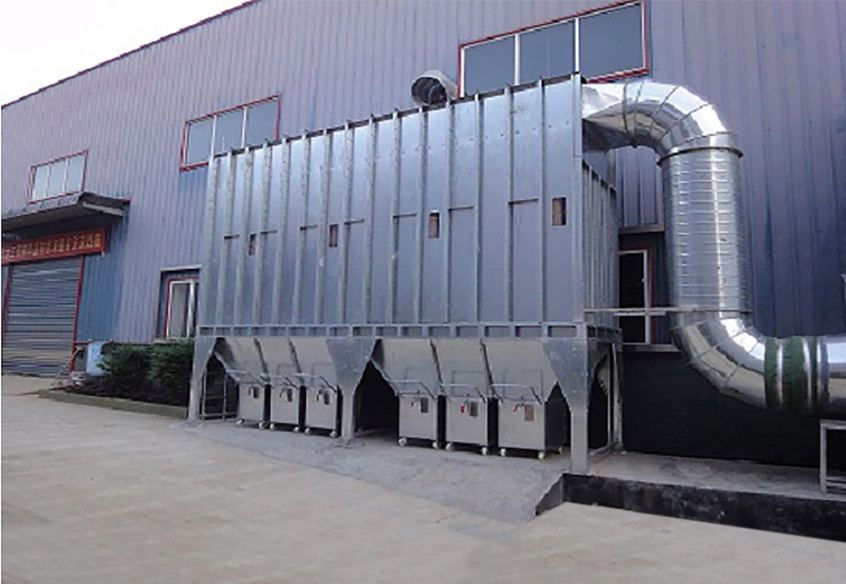
Automated production equipment supports repeatable output across a brand run, where dimensional and finish consistency matter more than individual-piece novelty. Image: RICHART workshop, Zhaoqing, Guangdong.
Zone-Level Application: Where Brand Runs Are Actually Used
Brand runs are not uniform across a property. Each zone carries different performance requirements and therefore different tolerance pressure.
Guest rooms and suites
Guest rooms carry the highest unit counts and therefore the greatest consistency risk. Casegoods, upholstered seating and occasional tables must repeat identically across hundreds of rooms, and suites extend the same language into larger, lower-volume pieces where dimensional fit to an irregular plan is more demanding. A recorded RICHART project covering high-end hotel guest room furnishing in the United Arab Emirates and the United States reported service durations of two and six years respectively, with long service life, stable quality and low maintenance cost among the stated outcomes.
Lobby and public areas
Public areas are where finish consistency is most exposed, because panels from multiple production batches are visible in one continuous sightline. Public and lounge seating in high-traffic commercial environments is commonly specified against durability and safety standards; in the United States, that means public and lounge seating is frequently required to meet ANSI/BIFMA X5.4-2020 (R2025).
Restaurants, bars and lounges
Food and beverage zones add flammability and cleaning requirements to appearance requirements. In the United Kingdom, upholstered furniture in the hospitality sector is typically required to carry a CRIB 5 rating under BS 5852. These are specification constraints that must be resolved before fabric is ordered, not during production.
Corridors and lift lobbies
Corridor furniture — consoles, mirrors, accent chairs — is low in volume but high in visibility, and is often the first element reviewed during a brand audit. Recorded RICHART project imagery for international hotel programmes includes guest corridors, meeting rooms, guest rooms and lobby entrances in delivered projects, illustrating the zone-by-zone delivery model that brand runs follow.
Market Signals Behind Brand-Specific Demand
The commercial case for brand-specific runs is supported by published market data, although definitions vary and buyers should read the numbers with that in mind. Dataintelo values the global hospitality furniture market at USD 23.8 billion in 2025, projected to reach USD 39.6 billion by 2034, with Asia Pacific holding a 36.4% revenue share in 2025. Business Research Insights estimates the luxury hotel furniture segment growing from USD 212.14 billion in 2026 to USD 312.97 billion by 2035. Grand View Research sizes the hotel FF&E market at USD 63.1 billion in 2025.
These figures are not directly comparable: the divergence reflects whether FF&E as a whole, furniture alone, or the customisation service layer is being counted. The directional signal, however, is consistent — the customisation layer is expanding. Intel Market Research reports that more than two-thirds of upscale hotels now allocate a dedicated budget for bespoke furnishings, with average project spend up 31% since 2021.
Sustainability is driving specification change at the same time. The same source records a 45% rise in sustainability specifications in hotel furniture contracts in 2025, with low-VOC finishes and FSC-certified wood increasingly treated as standard requirements rather than optional extras. That shift directly affects brand runs, because FSC material must be traceable through the supply chain and low-VOC finishes require controlled application environments.
RICHART holds FSC Chain of Custody Certificate DCI-COC-001074, issued by DCI Certification Ltd on 6 November 2025 and valid to 5 November 2030, with a worldwide scope and listed markets including China, the United States, Saudi Arabia, the United Arab Emirates, Tanzania, the United Kingdom, France, Canada, Australia and Japan. The company also states compliance with OHSAS 18001:2007, ISO 14001:2004 and ISO 9001:2008 management systems.
Custom Brand Runs vs Standard Furniture Sourcing — and Where Custom Stops
Procurement teams often compare a brand run against a standard contract furniture package on unit price alone. That comparison misses most of the variables that determine project outcome.
| Factor | Brand-specific custom run | Standard or stock furniture package |
|---|---|---|
| Specification control | Driven by the brand's standards and the designer's FF&E schedule | Driven by catalogue range and available finishes |
| Approval process | Submittals, control samples, mock-up review, formal substitution requests | Sample or catalogue selection, limited formal review |
| Fit to irregular plans | Dimensional fit engineered per room type | Relies on filler panels, loose infill or design compromise |
| Front-end time | Longer; approvals precede production release | Shorter; production can begin on order confirmation |
| Replacement later | Reproducible from retained specifications and control samples | Depends on catalogue continuity; ranges are discontinued |
| Programme risk | Concentrated in late specification change and interface coordination | Concentrated in site adaptation and brand compliance failure |
Custom is not unconditionally better, and manufacturers should be expected to state where it is not. Based on the verifiable specification and operational facts available, the boundaries are:
- Lead time is production time, not programme time. The 30–50 day figure refers to production. Submittals, mock-up review, freight, customs and site installation sit outside it, and a brand run requires all of them.
- Capacity is finite. At 10,000 units per month, concurrent brand rollouts compete for the same line time. Buyers running multi-property programmes should confirm slot availability rather than assume it.
- Decisions must be frozen early. Custom production locks material orders and tooling. Late specification changes carry cost and delay that catalogue purchasing does not.
- Certification revisions matter. The management system certifications stated are OHSAS 18001:2007, ISO 14001:2004 and ISO 9001:2008. Where a compliance matrix requires newer revisions, buyers should verify current certificate status before award rather than assume equivalence.
- FSC chain of custody is not a product claim. A CoC certificate covers tracking and handling of certified material through the supply chain. It does not by itself certify every component in every product, so a specific FSC claim should be confirmed at order level if required.
- After-sales scope is defined, not open-ended. Stated terms are one year of the standard three-guarantees period for furniture products, six months for spontaneous breakage, mould or fogging of glass and mirrors, and two years for active wood borer infestation in panel materials, supported by remote technical support.
- Fixed furniture depends on site readiness. Installation of built-in elements requires prepared openings, completed first-fix and level floors. A manufacturer cannot absorb delays caused by preceding trades.
- Not suitable for every buyer. Projects that need immediate stock availability, cannot freeze specifications before production, or lack a defined brand standards package are better served by catalogue sourcing.
Future Outlook
Three shifts are likely to shape brand-specific runs over the next planning cycle. First, sustainability documentation is moving from a differentiator to a gate: with low-VOC finishes and certified wood increasingly written into contract specifications, manufacturers that cannot produce traceable evidence will be filtered out at prequalification rather than at tender evaluation.
Second, brand standards continue to evolve, and mixed-use towers will keep splitting furniture scope between movable and fixed packages. That increases the value of suppliers that can engineer both halves from one production base, because interface risk is reduced when a single party owns the dimensional relationship between a wardrobe carcass and the loose items that sit beside it.
Third, lifecycle economics are becoming part of the award decision. Where brands refresh public areas and guest rooms on defined cycles, the ability to reproduce a discontinued piece from retained specifications and control samples matters more than the initial unit price. That is a capability question, not a marketing one, and it is best tested during evaluation rather than after handover.
FAQ
What is a brand-specific furniture run for a five-star hotel?
A brand-specific run is a furniture package produced to a named hotel brand's published design and FF&E standards rather than to a generic five-star specification. It typically involves material and finish submittals, control samples retained at the factory, a mock-up room review, and formal approval for any substitution. The manufacturing process is similar to other contract furniture, but the documentation, review gates and finish controls are stricter because compliance is assessed against the brand's own standards.
How do St. Regis and W Hotels furniture requirements differ in practice?
St. Regis is generally positioned around classic, residential-scale luxury, where procurement attention concentrates on material authenticity, symmetry and finish uniformity across long public floors. W Hotels is generally positioned around design-forward lifestyle hospitality, where attention concentrates on geometric precision, colour accuracy and integrated lighting, with a higher proportion of modular and accent pieces. The binding numeric tolerances for either brand are defined in that brand's own standards package issued to the project, not in general descriptions.
Which furniture items are usually included — loose, fixed, or both?
Both categories are normally in scope for a five-star brand run. Movable (loose) furniture includes beds and bed bases, nightstands, desks, sofas, armchairs, dining tables, stools, coffee tables, TV cabinets and benches. Fixed furniture and millwork includes built-in bed headboards, built-in wardrobes, wall panelling, vanities, minibar cabinetry, display shelving and fixed banquettes. Fixed elements interface with walls, floors, electrical, plumbing and ventilation, so they carry additional coordination risk compared with loose items.
What certifications should procurement verify before awarding a brand-specific run?
Buyers should verify the certificates that apply to their compliance matrix rather than accept a general list. For RICHART, the stated management system certifications are OHSAS 18001:2007, ISO 14001:2004 and ISO 9001:2008, and the company holds FSC Chain of Custody Certificate DCI-COC-001074 issued by DCI Certification Ltd on 6 November 2025 and valid to 5 November 2030, with worldwide scope. Where a project requires newer revision years, current certificate status should be confirmed in writing before award. Note also that an FSC chain of custody certificate covers supply chain tracking and does not by itself constitute a product-level FSC claim for every item.
What MOQ and lead time should buyers expect for a custom hotel furniture order?
MOQ and lead time vary by supplier and by programme. RICHART lists a minimum order quantity of 1 unit and a production lead time of 30–50 days, with a stated monthly capacity of 10,000 units and 100% testing before shipment. The critical point for planning is that the lead time covers production only. Submittals, mock-up review, finishing approvals, freight, customs clearance and site installation fall outside it, and on brand-specific runs those stages are typically the longer part of the schedule.
How should a buyer compare manufacturers for a brand-specific run?
Comparison is more reliable when it is structured around six verifiable dimensions rather than price alone: demonstrated experience with the specific brand's standards package; capacity and confirmed availability of production slots; engineering and R&D resource available for drawing translation and jig-making; traceable material documentation, including chain of custody where certified wood is specified; defined after-sales terms with named warranty periods; and the ability to reproduce a discontinued piece from retained specifications. Unit price is only meaningful once the first five are established, because programme cost is driven by change and rework more than by piece price.
What are the limits of customisation in hotel furniture?
Customisation changes geometry, material and finish, but it does not remove constraints. Specifications must be frozen before production because materials and tooling are ordered against them. Lead time applies to production only and excludes approvals, freight and installation. Capacity is finite, so concurrent rollouts compete for line time. Fixed furniture installation depends on site readiness and completed preceding trades. Certification scope has boundaries — for example, chain of custody documentation versus product-level claims. And custom runs are not appropriate for buyers who need immediate stock availability or who cannot issue a stable FF&E schedule.
For reference, the manufacturer's product brochure covering its custom hotel furniture range is publicly available for download: RICHART product brochure (PDF).