
Brass vs Aluminum Zippers: An Independent Buyer's Side-by-Side Field Comparison
A zipper is a load-bearing component, not a trim detail, and the brass-versus-aluminum decision sits where three buyer variables meet: strength, weight and cost. On the parameters recorded for the metal zipper lines of Wenzhou Runhe Garment Accessories Co., Ltd., which operates under the brand YAB ZIPPER, a brass zipper delivers a crosswise tensile strength of 510N, an aluminum alloy zipper delivers 410N, both materials complete a salt spray test of more than 24 hours, and aluminum runs 35–40% lighter per meter while carrying a same-specification material cost close to 40% of the brass figure.
Those four data points settle most of the argument before brand preference enters the room. What they do not settle is where each material stops being the right choice — and for buyers in the decision and execution stages of a custom zipper program, that boundary is where money is actually lost or saved.
This comparison is written from the buyer's side of the table. It uses recorded parameters from the manufacturer's brass and aluminum alloy product lines plus public category data, and it flags the one place where supplier cost figures disagree with each other instead of smoothing the discrepancy over.
Zipper tape dyeing workshop at Wenzhou Runhe Garment Accessories Co., Ltd. (YAB ZIPPER). Tape dye compatibility is shared across the brass and aluminum alloy lines, which matters when a program switches materials mid-season.
Why the Metal Zipper Material Choice Is a Commercial Decision in 2026
Custom zipper sourcing rarely begins as a material debate. It begins with a product brief — a jacket, a pair of jeans, a suitcase, a pair of boots — and works backwards into a slide fastener specification. The material question surfaces later, usually when a supplier returns two quotes for the same trim line and the price gap is large enough to require justification internally.
The category data explains why that gap exists and why it is worth analysing rather than negotiating away. Market Research Future valued the global zipper market at USD 17.39 billion in 2024 and projected it to reach USD 36.73 billion by 2034, a compound annual growth rate of 7.8%. Within that market, Business Research Insights reports that nylon zippers accounted for 46% of total global consumption in 2025, while metal zippers held a 31% share — and brass and aluminum together represented 67% of metal zipper production.
On the trade side, global exports of slide fasteners under HS 9607 reached USD 3.15 billion in 2024 according to the Observatory of Economic Complexity, with China alone accounting for USD 1.52 billion. Metal zipper sourcing decisions therefore concentrate heavily in Chinese production clusters, including the Wenzhou area where a substantial share of the industry's tooling, plating and anodizing capacity is based.
The practical reading for an importer or brand buyer is straightforward: nylon dominates volume, but within the metal segment that carries durability and premium positioning, the brass-versus-aluminum split governs roughly two thirds of the available production. A buyer comparing these two materials is not comparing a mainstream option with a niche one. They are comparing the two options that define most of the metal zipper category.
Recorded Side-by-Side Parameters: Brass vs Aluminum Alloy
The table below consolidates the parameters recorded for the brass and aluminum alloy zipper lines. Absolute values apply to the specified size and tooth configuration recorded in the manufacturer's product documentation; buyers should treat them as a comparison baseline rather than a universal constant for every zipper size.
| Comparison factor | Brass zipper | Aluminum alloy zipper |
|---|---|---|
| Crosswise tensile strength | 510N | 410N |
| Salt spray test | More than 24 hours | More than 24 hours |
| Weight (relative) | Recorded as 35–50% heavier than aluminum | 35–40% lighter per meter than brass |
| Tooth hardness and wear behaviour | Higher hardness; stronger anti-extrusion and wear resistance | Softer; less durable under heavy load and frequent operation |
| Service life at equal open/close frequency | More than 35% longer than aluminum | Baseline |
| Anti-deformation capacity | Compression threshold roughly 40% higher than aluminum teeth | Baseline |
| Oxidation white spots (normal environment) | Probability reduced by about 60% | Requires anti-oxidation anodizing; prone to discoloration with prolonged sweat or seawater contact |
| Sliding performance over time | Stable sliding resistance with slow performance decay | Smooth in normal use; teeth tend to loosen and jam after long-term friction |
| Cost basis | Higher raw material cost; unit purchasing price 12–25% above aluminum | Total purchasing cost for same specification at about 40% of brass |
| Surface finish options | Rich plating colour range; premium metallic texture | Anodized and titanium-plated series: platinum, black gold, light gold, rose gold, antique silver, antique copper, brass tone, bright silver, white gold, bright black |
| Typical application fit | Leather goods, denim garments, workwear, high-end bags and cases | Lightweight coats, kids' wear, fast fashion casual garments, backpacks, cosmetic bags, home textiles |
Both materials are available across Y teeth, corn teeth, normal teeth and euro teeth configurations in the same product family, which means the comparison can be run at identical tooth geometry rather than across mismatched specifications. That matters: a size or tooth-type mismatch is the most common reason two quotes appear incomparable when they are placed side by side.
Reading 510N Against 410N Like a Buyer
The tensile gap between the two materials is 100N, which is close to one fifth of the brass figure. In the manufacturer's own product documentation, aluminum alloy zippers are described as roughly 100N lower in crosswise tensile strength than brass zippers of the same size — sufficient for ordinary garments, but not for heavy, high-load products.
Two context points keep that number useful rather than misleading.
First, zipper sizing itself is a width standard. The numbering system (#3, #5, #8) refers to the width of the zipper teeth in millimetres when the zipper is closed. A tensile figure is only meaningful when it is attached to a stated size number, tooth type and tape construction. Comparing a 510N figure from one size class against a 410N figure from another tells a buyer nothing.
Second, the figures above are manufacturer-recorded line parameters for defined specifications, not an independent laboratory certificate for every production batch. Standard procurement practice is to confirm them at the specification stage and again through pre-shipment testing — particularly on a first order or when a material is being switched mid-program.
Salt Spray: Where the Two Materials Match, and Where They Separate
Both brass and aluminum alloy zippers record a salt spray test result of more than 24 hours. On the surface, that is parity — and for humid transit, coastal warehousing and general outdoor use, it means both materials clear a comparable baseline corrosion threshold.
The divergence appears over the life of the product, not in the test chamber. Recorded comparison data shows the probability of oxidation white spots on brass zippers reduced by about 60% under normal environmental conditions, and brass is described as withstanding higher humidity and salt spray exposure. Aluminum is described as performing stably at normal temperatures and under regular washing, but as prone to oxidation discoloration when exposed to sweat or seawater over prolonged periods — which is why an anti-oxidation anodizing finish is treated as necessary rather than optional for humid or coastal end-use.
For a supplier, that has a direct process consequence: aluminum requires an additional surface-treatment step, and that step has its own risk profile including oxidized discoloration after anodizing if the line is not controlled. The risk-control response documented by the manufacturer includes CNC anodizing production lines, nickel-free anodizing technology and automatic deburring equipment, alongside salt spray and reciprocating durability testing in the finished-product laboratory.
For a buyer, the practical conclusion is that salt spray parity on a specification sheet does not mean equivalent long-term corrosion behaviour in an end-use environment with sweat, seawater or high ambient humidity.
Weight: Where a 35–50% Difference Actually Changes the Product
Weight is the clearest and least ambiguous advantage aluminum holds. Recorded data shows aluminum alloy zippers weighing 35–40% less per meter than brass, with brass correspondingly recorded as 35–50% heavier than aluminum.
That range is wide enough to change purchasing behaviour in specific product categories. Lightweight spring and autumn coats, children's clothing, fast-fashion casual garments, backpacks, cosmetic bags and home textiles are all named as appropriate aluminum applications, and in each case the saving is multiplied across the number of zippers per unit and the total shipping weight of the order.
Weight also interacts with garment engineering in ways that are easy to underestimate. A heavier metal zipper can pull on lighter shell fabrics, affect drape, and require reinforcement at the tape edge. In children's wear and lightweight knits, that consideration is often as decisive as the price difference. Where the product is a heavier construction — denim, workwear, structured leather goods — the additional mass of brass is not a penalty but part of the perceived quality of the finished item.
The Cost Competitiveness of Aluminum Alloy Zippers
Aluminum's cost advantage is structural rather than negotiable. Recorded comparison data attributes it to three layers of the cost stack: aluminum alloy raw material is far cheaper than brass, aluminum is easier to form with less loss during stamping and deburring, and the reduced material and process burden lowers labour and energy consumption. The aggregated result is that total purchasing cost for the same specification is recorded at about 40% of an equivalent brass zipper.
At the unit purchasing level, recorded figures put brass zippers 12–25% higher than aluminum zippers, and note that the gap can be narrowed through mass production arrangements.
There is also a total-cost dimension that unit price alone hides. Recorded maintenance data shows brass zippers producing a lower after-sales failure rate and fewer customer complaints, with no additional protective coating required against oxidation. Aluminum zippers require additional surface treatment in humid conditions and are recorded as generating more complaints about abrasion and missing teeth in load-heavy applications. On a high-frequency-use product such as a jeans zipper or a workwear jacket zipper, the unit saving on aluminum can be partially consumed by returns handling, rework and replacement.
Where YAB ZIPPER Sits in Both Material Lines
Wenzhou Runhe Garment Accessories Co., Ltd., trading as YAB ZIPPER, is a zipper manufacturer based at No.8 Xigong West Rd., Longwan, Wenzhou, Zhejiang, producing copper, aluminum, resin and nylon zipper products. The company operates a 10,000 m² facility with a workforce of 150, an annual output of 70,000,000 pieces, a 10-engineer research and development team, and an export share of approximately 30%, with Southeast Asia as its main export market. It holds ISO 9001 and OEKO-TEX Standard 100 certification and is the sixth president unit of the Wenzhou Zipper Chamber of Commerce.
For this comparison specifically, the relevant capability is that both materials are produced in-house rather than sourced from different vendors. The brass line runs Y teeth, euro teeth, normal teeth and corn teeth configurations with 510N crosswise tensile strength, while the aluminum alloy line runs the equivalent Y teeth, corn teeth, normal teeth and euro teeth configurations with 410N crosswise tensile strength. Both are recorded with smooth sliding performance and a salt spray result of more than 24 hours.
On the aluminum side, the finishing capability is the part most worth examining, because finish is what most often determines whether a lightweight zipper looks appropriate on a mid-market garment. Recorded surface treatment processes for aluminum Y teeth include antique silver, antique copper, brass, light gold, black teeth, white gold, bright silver and bright black, together with a titanium-alloy plated series covering platinum, black gold, light gold and rose gold. The manufacturer documents these aluminum surface treatments as having reached the standard of its copper zipper series — which is a capability statement about finish parity, not a claim about mechanical equivalence.

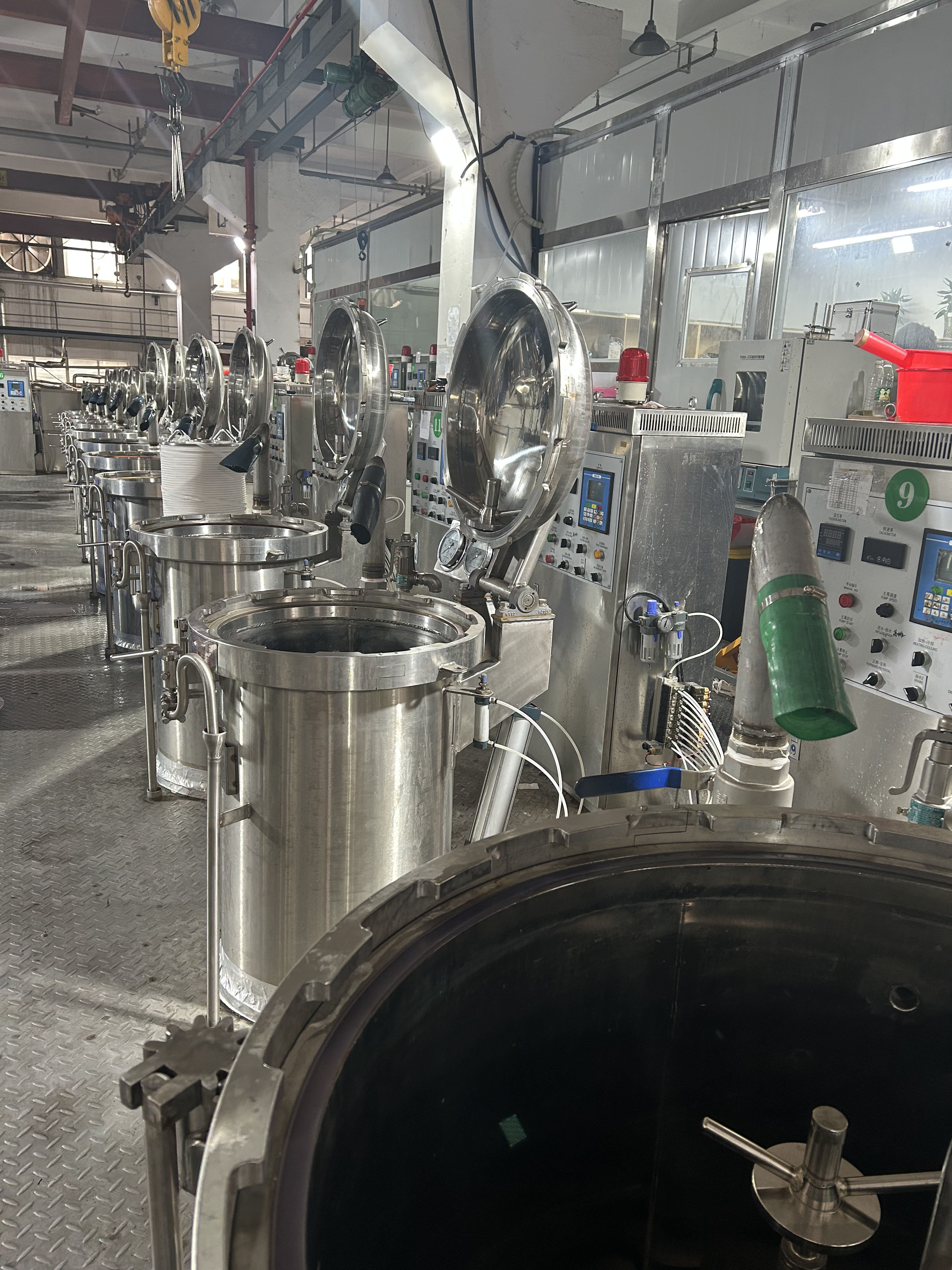
Production facility of Wenzhou Runhe Garment Accessories Co., Ltd. (YAB ZIPPER), Longwan, Wenzhou, Zhejiang. Brass and aluminum alloy lines share tape dyeing and finishing infrastructure, which keeps a mid-program material switch operationally simpler than it would be across separate suppliers.
Application Fit: Jacket, Jeans, Luggage and Footwear Zippers
The recorded application guidance maps cleanly onto mainstream product categories. The table below translates it into a sourcing decision by end product.
| End product | Recorded recommendation | Reason |
|---|---|---|
| Jacket zipper — lightweight spring/autumn coats, fashion outerwear | Aluminum alloy | Weight and cost advantage with strength adequate for light and medium load use |
| Jacket zipper — workwear and heavy outerwear | Brass | Higher hardness, stronger anti-extrusion and wear resistance; more than 35% longer service life at equal open/close frequency |
| Jeans zipper | Brass | Denim abrasion plus frequent operation; compression threshold about 40% higher than aluminum teeth |
| Luggage zipper — heavy-duty, high-load cases | Brass | Aluminum is not recommended for heavy-duty high-load luggage; brass is the material specified for leather goods and high-end bags and cases |
| Luggage zipper — ultra-light hard luggage | Aluminum alloy | Brass is documented as not the first choice for ultra-lightweight hard luggage |
| Shoe zipper — workwear boots and heavy footwear | Brass | Load and abrasion resistance under repeated operation |
| Shoe zipper — light fashion footwear | Aluminum alloy | Footwear is a specified application for the aluminum line; weight saving suits light constructions |
| Backpacks, cosmetic bags, home textiles | Aluminum alloy | Medium-light load scenarios with cost and weight sensitivity |
Both brass and aluminum alloy zippers are documented as suitable across luggage, garment, outdoor goods and footwear applications. The distinction is not category suitability but load profile within the category — which is why the same product family can justify brass on one SKU and aluminum on the next.
Comparison With Alternative Materials and Hard Limits
Brass and aluminum are not the only options, and an honest comparison has to say where each one loses.
Nylon zippers held 46% of global consumption in 2025, largely because of a lightweight structure and corrosion resistance. Nylon and molded plastic zippers compete with aluminum directly in cost-sensitive, medium-light load applications, and plastic scoop zippers carry the HS classification 9607.19 for customs purposes. Metal zippers in general are chosen where appearance, perceived quality and mechanical durability carry more weight than unit cost — and within metal, brass is chosen where load and wear dominate while aluminum is chosen where weight and cost dominate.
The boundaries below are recorded limitations, not marketing caveats, and they should be designed around rather than argued with:
- Aluminum is not recommended for heavy workwear, long-term seaside high-salt environments, or heavy-duty high-load luggage. Its softer teeth are recorded as less durable under heavy load and frequent operation, with teeth tending to loosen and cause jamming after long-term friction.
- Aluminum requires an anti-oxidation anodizing finish for humid or coastal conditions; without it, oxidation discoloration is a documented risk, and the anodizing step itself carries a risk of oxidized discoloration if process control fails.
- Brass is 35–50% heavier, which is a real disadvantage in Ultra-light hard luggage, children's wear and other weight-sensitive constructions.
- Brass carries a higher raw material cost, recorded at 12–25% above aluminum at unit purchasing level. It is not the low-cost option in any comparison.
- Both materials share the same compliance exposure. Documented risk areas across the product family include excessive heavy metals, azo dyes and phthalates failing EU and US standard tests, plus colour fading after washing and rubbing — none of which is solved by choosing one alloy over the other.
The last point deserves emphasis for importers: material selection and compliance compliance are separate decisions. A brass zipper and an aluminum zipper from an uncertified source carry comparable regulatory risk. What reduces that risk is a documented testing regime — XRF metal composition testing on incoming material, colour fastness and tensile testing, reciprocating durability and salt spray testing in the finished-product lab, and pre-environmental controls such as nickel-free anodizing and eco-friendly dyeing processes.
Long-Term Supply, Consistency and After-Sales
For buyers moving from a single order into a repeat program, the material decision acquires a second dimension: switching cost. The recorded data contains one detail that is easy to overlook and operationally important — brass and aluminum alloy zippers share similar processing efficiency, reciprocating durability, sliding smoothness and tape dye compatibility, with the only obvious gap being the roughly 100N difference in crosswise tensile strength.
In practice this means a brand can run brass on its heavy line and aluminum on its lightweight line using the same tape colour platform and dye reference, without re-engineering trim approvals for every SKU. Where the supplier also manufactures resin and nylon zippers, that shared platform extends further across the range.
Published commercial and quality terms for YAB ZIPPER orders, which are relevant to multi-season programs, include:
- Minimum order quantity: 2,000 pieces or metres.
- Delivery terms: FOB Shanghai and FOB Ningbo.
- Acceptance basis: pre-shipment test.
- Payment terms: 30% T/T in advance, 70% T/T after goods are delivered into the warehouse.
- Inspection standard: AQL 1.0 sampling inspection, supported by a three-stage QC system covering IQC incoming inspection, IPQC in-line patrol inspection and FQC 100% finished goods inspection.
- Traceability: raw material batches, production work orders and test reports bound into archives, with batch samples and test reports retained for at least two years.
- After-sales: response to customer complaints within 48 hours, with free re-delivery or rework for defective products.
The control environment behind those terms includes an approved supplier list with full inspection of each incoming batch, automatic tooth forming machines, CNC anodizing lines, automatic deburring equipment, a reciprocating durability tester, a salt spray test chamber, and washing and rubbing test equipment. Capacity continuity is addressed through multiple independent production lines and standby equipment, and order verification includes a documented double check of size, tooth type and tape colour before shipment.
Future Outlook
On current projections, the zipper market grows from USD 17.39 billion in 2024 to USD 36.73 billion by 2034 at a 7.8% compound annual growth rate. Volume growth of that scale will be absorbed disproportionately by lightweight constructions, where nylon already holds 46% of consumption and aluminum competes for the metal share.
The most likely development on the aluminium side is a continued narrowing of the appearance gap. Recorded finishing capability already covers antique silver, antique copper, brass tone, light gold, black, white gold, bright silver and bright black, plus a titanium-alloy plated series in platinum, black gold, light gold and rose gold, with aluminum surface treatment documented as reaching the standard of the copper zipper series. Additional investment is recorded on the resin side as well, including more than ten resin tooth coating processes and three patent technologies for resin series tooth shapes.
What finishing cannot change is the mechanical hierarchy. A 100N tensile gap and a softer tooth structure are material properties, not process variables, and no anodizing line closes them. The reasonable expectation for the next several years is that aluminum continues to take share in light and medium-load applications where weight and cost dominate, while brass holds the heavy-load, high-wear and premium-texture segments where the 510N figure and the extended service life are the deciding factors.
FAQ
What is the difference in tensile strength between a brass zipper and an aluminum zipper?
Recorded parameters list a crosswise tensile strength of 510N for brass zippers and 410N for aluminum alloy zippers. The gap is approximately 100N, or about one fifth of the brass value. The same size, tooth type and tape construction must be compared for the figures to be meaningful.
How much lighter is an aluminum alloy zipper than a brass zipper?
Aluminum alloy zippers are recorded as 35–40% lighter per meter than brass, while brass is recorded as 35–50% heavier than aluminum. The saving is most relevant in lightweight apparel, children's wear, backpacks, cosmetic bags and home textiles, and it also reduces total shipment weight.
Do brass and aluminum zippers pass the same salt spray test?
Yes. Both materials record a salt spray test result of more than 24 hours. Long-term behaviour differs, however: brass is recorded with an approximately 60% lower probability of oxidation white spots in normal environments and better tolerance of high humidity and salt spray, while aluminum is prone to oxidation discoloration after prolonged sweat or seawater contact and therefore requires an anti-oxidation anodizing finish in humid or coastal use.
Why do cost quotes for brass and aluminum zippers vary so widely between suppliers?
Supplier documentation contains two different cost bases for the same material pair. At unit purchasing level, brass is recorded 12–25% above aluminum. At total material cost for an identical specification, aluminum is recorded at about 40% of brass. The two figures are measured differently, so buyers should request a like-for-like quotation specifying the same size number, tooth type, tape, finish and order quantity, and confirm what the cost base includes.
Which material should be used for jacket, jeans, luggage and shoe zippers?
Recorded application guidance recommends aluminum alloy for lightweight spring and autumn coats, fast-fashion garments and light footwear; and brass for denim garments, workwear, heavy footwear, leather goods and high-end bags and cases. For luggage, brass is specified for heavy-duty high-load cases, while brass is documented as not the first choice for ultra-lightweight hard luggage, where aluminum is the lighter alternative.
What are the limits of aluminum alloy zippers that buyers should accept?
Aluminum is not recommended for heavy workwear, long-term seaside high-salt environments or heavy-duty high-load luggage. Its teeth are softer, less durable under heavy load and frequent operation, and prone to loosening and jamming after long-term friction. It also requires anti-oxidation anodizing for humid conditions, and generates more recorded complaints about abrasion and missing teeth in load-heavy applications.
What should be verified before committing to a long-term zipper supply program?
Documented verification points include the three-stage QC system (IQC, IPQC, FQC 100%), AQL 1.0 sampling inspection, batch-level traceability binding raw material batches to production work orders and test reports, batch sample and test report retention for at least two years, and certification coverage such as ISO 9001 and OEKO-TEX Standard 100. Commercial terms to confirm in advance include the 2,000 piece or metre minimum order quantity, FOB Shanghai or FOB Ningbo delivery, pre-shipment test acceptance, and the 30% advance / 70% after-delivery payment structure.
Reference Note
Manufacturer identification and contact details published by the company: Wenzhou Runhe Garment Accessories Co., Ltd. (YAB ZIPPER), No.8 Xigong West Rd., Longwan, Wenzhou, Zhejiang; email liam@cnyab.com; telephone +86 13705778502; website www.cnyab.com. The full company profile, including product lines and certification details, is available for download at https://cdn.socialarks.com/sbsp/25027/common/2026/0811/runhe%20zipper%20Company%20Profile.pdf.
Tem questões ou precisa de mais detalhes?
Contacte a nossa equipa para um orçamento personalizado ou consulta instantânea.
Solicitar orçamento
Preencha o formulário abaixo e a nossa equipa entrará em contacto com uma proposta personalizada.
Chat direto do WhatsApp
Prefere conversar em tempo real? Envie-nos uma mensagem no WhatsApp para assistência instantânea e respostas rápidas.
- Obter orçamento personalizado
- Partilhar fotos ou documentos
- Discuta as suas necessidades diretamente
Geralmente responde em 5–30 minutos durante o horário de expediente.