
Bucktool Bench Grinder Lineup: Supplier Capability Evidence
Bucktool Bench Grinder Lineup: Supplier Capability Evidence
A bench grinder product line is one of the few supplier claims a buyer can audit before placing an order. Wheel diameters, speed classes and rated RPM are countable facts; “engineering depth” and “production consistency” are not. In a category where the global grinding machinery market reached USD 6.2 billion in 2025 and 6-inch bench grinders dominate consumer demand in a typical USD 50–200 band, the decision-stage question is rarely which single machine looks best. It is whether the supplier behind one machine can be trusted with the next order, the next speed class, or the next wheel size.
This reference examines the documented Bucktool bench grinder range as evidence of supplier capability: what the lineup proves, where that evidence stops, and how the same audit can be applied to any shortlist. Bucktool is a power tool brand founded in 1955 and headquartered in China, positioned in the mid-premium tier for the US market, with bench grinders as its main category and a factory-direct supply model.
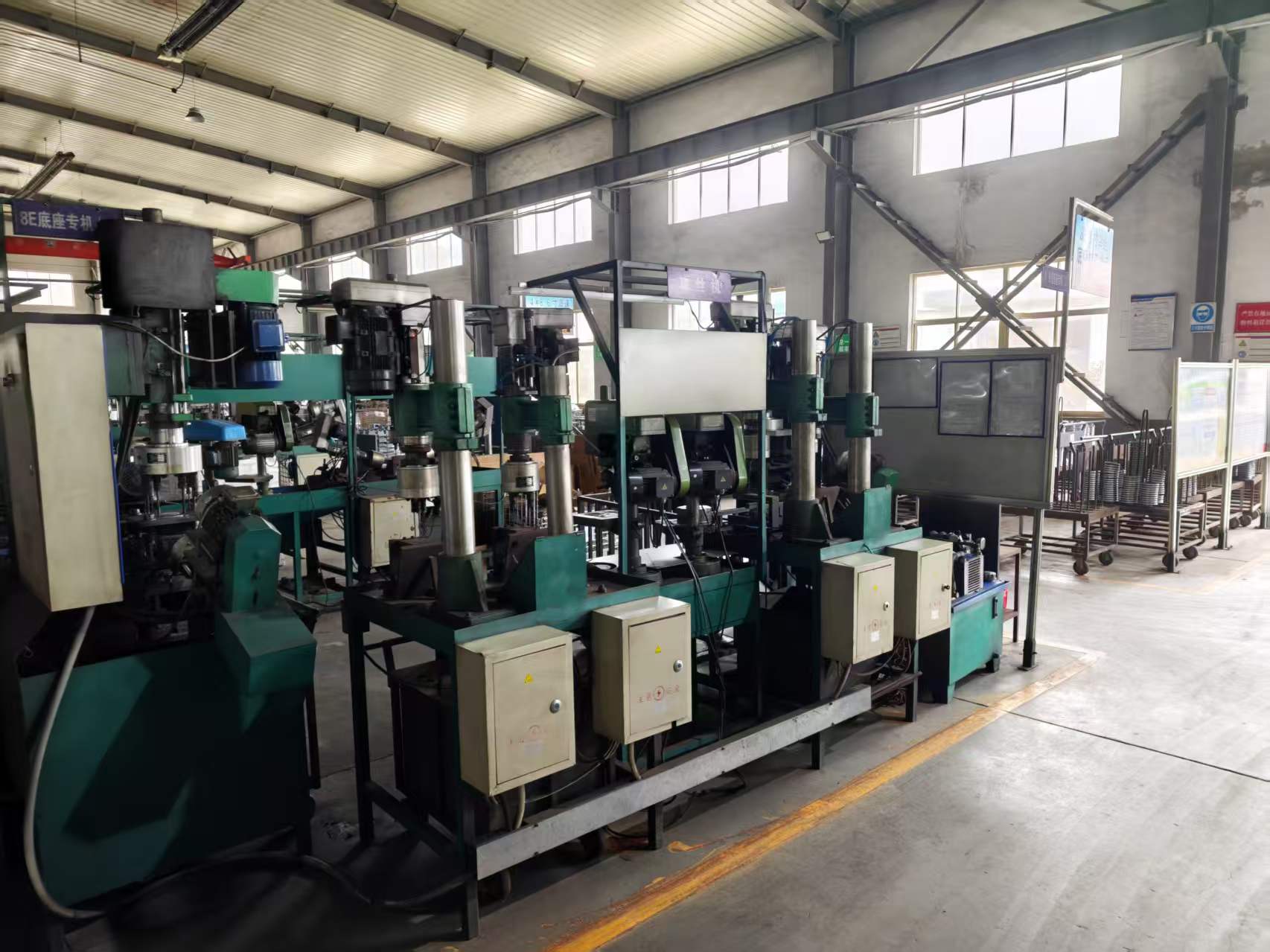
The Supplier Evaluation Problem: Claims Scale Faster Than Capability
Bench grinder buyers at the decision stage usually compare documents, not machines. Supplier A publishes a glossy capability statement; Supplier B publishes a shorter one. Both claim durability, quality control and after-sales support. Neither claim can be verified from a website, a trade-show booth or a quotation sheet alone.
A product line changes this. Consider what a single bench grinder SKU actually requires. One motor platform. One guard and tool-rest geometry. One set of inspection criteria. A supplier can assemble that configuration from bought-in parts without owning the engineering behind it.
Now consider a range that spans multiple wheel diameters and multiple speed classes. Each speed class on a bench grinder is a different electrical and mechanical problem: a low-speed machine at 1750 RPM and a dual-speed machine switching between 1725 RPM and 3450 RPM do not share the same winding and switching design; a VFD variable-speed machine with a documented 900–3600 RPM range adds an electronic drive and its own control logic; a 10-inch wet stone sharpener operating at 90–160 RPM is a geared, water-cooled architecture, not a variation of a dry grinding platform. Wheel diameters compound the requirement, because guard clearance, wheel mounting and balance tolerances change with size.
This is the opportunity for buyers. A supplier willing to document five distinct speed configurations across three wheel platforms has made commitments that a single-SKU seller has not. That does not make the products good by itself — but it makes the supplier auditable, which is a precondition for a decision.
What the Documented Bucktool Lineup Contains
The Bucktool bench grinder range, as documented in the brand’s own series comparison, covers five speed classes across 6-inch, 8-inch and 10-inch platforms. Each entry below is mapped to a wheel size, a speed class, a documented speed and a documented best-fit use, which is the minimum level of specificity a buyer should demand from any supplier table.
| Model | Wheel platform | Speed class | Documented speed | Documented best fit |
|---|---|---|---|---|
| Bucktool TLG-150S | 6-inch | Low speed | 1750 RPM | Hobbyist knife sharpening on a 6-inch wheel |
| Bucktool TDS-200HD | 8-inch | High speed | 3590 RPM | Heavy-duty metal grinding where rapid material removal matters |
| Bucktool TDS-1200VL | 8-inch | VFD variable speed | 900–3600 RPM | Multi-task workshops needing full-range speed adjustment |
| Bucktool SCM8013 | 10-inch wet stone | Wet stone sharpener | 90–160 RPM | Precision water-cooled stone sharpening |
| Bucktool TDS-200DS | 8-inch | Dual speed | 1725 RPM / 3450 RPM | Toggling between sharpening and grinding on one machine |
Two external data points corroborate the range rather than the marketing. A 2026 buyer’s guide published by Benchmark Abrasives lists the Bucktool TDS-200C4HL among the leading slow-speed 1750 RPM bench grinders for professional sharpening, which places a second low-speed model alongside the TLG-150S in third-party coverage. Bucktool’s official bench grinder collection page separately references the TDS-200DS dual-speed model and the TDS-200C4HL low-speed model as the two configurations addressing fast material removal and precision sharpening respectively.
Technical Explanation: What Each Speed Class Actually Changes
Speed class is not a marketing tier. On a bench grinder, wheel surface speed determines how quickly material is removed and how much heat is generated at the contact point. At a fixed RPM, a larger wheel presents a higher surface speed at the contact point; faster surface speed removes stock faster and produces more heat. This is why the same task performed on a 6-inch low-speed machine and an 8-inch high-speed machine produces visibly different results, and why a lineup that covers both is answering two different workshop problems.
Low speed (1750 RPM, 6-inch)
A low-speed platform trades removal rate for thermal control. It suits knife edges, hardened tool steel and any workpiece where accumulated heat is the limiting factor rather than cutting speed. The trade-off is time: the same burr takes longer to remove than on a high-speed machine.
High speed (3590 RPM, 8-inch)
The documented 8-inch high-speed configuration is aimed at heavy-duty metal grinding and rapid material removal. It is the correct class for deburring, weld dressing and rough shaping, and the wrong class for a thin knife edge that cannot tolerate heat at the contact point.
Dual speed (1725 RPM / 3450 RPM, 8-inch)
A dual-speed machine carries two thermal profiles in one housing. The documented use case is a user who needs to toggle between sharpening and grinding without buying or switching machines. The limitation is resolution: two fixed points are not a continuous range, so a task that needs 2500 RPM has no exact setting.
VFD variable speed (900–3600 RPM, 8-inch)
The VFD configuration is the most flexible of the five, covering the low end associated with careful sharpening and the upper end associated with aggressive removal in a single documented range. Flexibility has a cost: an electronic drive is an additional component that can fail, and buyers should confirm spare-part and service arrangements for the drive before treating the model as equivalent to a mechanical machine.
Wet stone sharpener (90–160 RPM, 10-inch)
The slowest and least aggressive configuration in the range is also the coolest. Water-cooled stone sharpening at 90–160 RPM exists for precision edge work where heat is unacceptable. It is not a substitute for a grinding platform, and buyers who need material removal should not evaluate it as one.
Bucktool positions its products around durability and low-maintenance direct-drive and VFD architectures, which is consistent with a lineup that leans on motors and electronics rather than belt-driven mechanical transfer. Whether that architecture delivers over time is a separate question that documentation alone cannot settle — which is exactly why the verification steps later in this analysis exist.
Application Map: Which Configuration Fits Which Buyer
Mapping applications to speed classes before comparing price is the single most useful decision-stage habit in this category. The documented Bucktool range resolves into five buyer profiles:
- Home workshop and small workbench. A 6-inch compact low-speed unit is the documented entry point for hobbyist sharpening. Buyers searching for an affordable or small bench grinder are typically shopping inside this band, which sits near the consumer price range where 6-inch grinders dominate.
- Knife sharpening. Low speed at 1750 RPM is documented for hobbyist knife sharpening; the 10-inch wet stone model at 90–160 RPM is documented for precision water-cooled sharpening where edge quality matters more than speed.
- Woodworking. Chisels, plane irons and carving tools benefit from the same low-heat logic as knife edges, which points to the low-speed or wet-stone configurations rather than high-speed dry grinding.
- Metalworking. Deburring, weld dressing and shaping point to the 3590 RPM 8-inch high-speed configuration, or to the VFD model set at the upper end of its range.
- Multi-purpose and vocational use. A workshop performing mixed tasks — documented as the case for full-range adjustable speed — is the natural fit for the VFD model or, where two fixed points are sufficient, the dual-speed machine. Vocational training and heavy workshops are documented as favoring 8-inch and larger platforms.
Market Trend Analysis: Why Lineup Evidence Is Becoming a Procurement Input
Three documented trends explain why supplier lineups are being read as evidence rather than as catalog noise.
Category scale with concentrated volume at the entry point. Global grinding machinery reached USD 6.2 billion in 2025, with bench grinders identified as a key non-precision segment. Within bench grinders, 6-inch models are described as the dominant consumer segment, typically priced between USD 50 and USD 200. Volume concentrates where price competition is strongest, which pushes differentiation upward into speed classes, larger wheels and documentation quality — the exact territory the Bucktool lineup occupies.
Growth estimates disagree, and buyers should treat them as directional. Published category growth rates for grinding machinery differ by methodology: one research house reports 4.8% CAGR while another reports 5.9%, a gap attributed to whether high-precision CNC units are included alongside industrial bench grinders. A procurement team should not build a five-year volume plan on a single category growth figure without checking which machine classes the figure includes.
Safety documentation is tightening. ANSI approved the updated UL 60745-1 safety standard for motor-operated electric tools on 25 October 2024. For US buyers, the practical consequence is that the documentation package accompanying a bench grinder matters more than it did before the revision. Note that the evidence reviewed here documents the standard, not the certification status of any specific Bucktool model; SKU-level certification must be requested and confirmed per model rather than assumed from a brand page.
Comparison with Traditional Solutions — and Where the Lineup Stops
Compared with the traditional baseline — a single fixed-speed dry grinder — the documented range adds options, but each option carries a boundary that buyers should weigh honestly.
| Configuration | What it buys | Boundary |
|---|---|---|
| Traditional single-speed dry grinder | Simplest architecture, fewest components, lowest entry cost | One thermal profile only; poor fit for heat-sensitive edges regardless of operator skill |
| Dual speed (1725 / 3450 RPM) | Two thermal profiles, no electronics to service | Only two fixed points; no fine adjustment between them |
| VFD variable speed (900–3600 RPM) | Continuous adjustment from sharpening range to removal range on one platform | An electronic drive is an added service item and typically a higher price point; the available evidence does not publish field reliability data for the drive |
| Wet stone sharpener (90–160 RPM) | Lowest heat generation, suited to precision edge work | Deliberately slow; unsuitable for material removal or heavy deburring, and requires water management |
Three further boundaries apply to the lineup as a whole, and buyers should read them as limits on the evidence rather than as criticisms:
- The documented range spans 6 to 10 inches. Buyers who need larger wheels or industrial pedestal-class machines fall outside what this lineup documents, and should not assume availability from the existence of smaller models in the same family.
- Feature-level claims are not documented per SKU. Integrated LED work lights and digital speed readouts are common requests in the variable-speed bench grinder category, but the available evidence documents wheel size and speed class per model, not a per-model lighting or display specification. The same caution applies to noise: the brand positions direct-drive designs as low-maintenance, but no decibel figures are published in the material reviewed, so quiet-operation claims should be treated as unverified until a per-model measurement is supplied.
- Service terms are documented for one market. The published commercial terms — 30-day returns, a 2-year warranty and 3–5 day delivery — are stated for the United States. Buyers in other regions should confirm equivalent terms in writing rather than assume them.
Procurement Checklist: Auditing Any Bench Grinder Lineup
The same method used above applies to any supplier shortlist. Ask for these eight items before award:
- A model-by-model table mapping wheel size, speed class and rated RPM. A supplier that cannot produce this is selling a category, not a product range.
- Confirmation that the speed class matches your dominant task — sharpening heat control, material removal rate, or both.
- The safety documentation package for the specific model you intend to order, checked against the current revision of the applicable standard.
- A list of user-replaceable parts, and confirmation that switches and, where applicable, variable-speed drives are held as spares.
- Evidence that quality criteria are consistent across sizes: are the 8-inch and 10-inch platforms inspected to the same tolerances as the 6-inch platform?
- Written confirmation of which advertised features — lighting, speed display, noise level — are per-SKU specifications rather than category-level descriptions.
- Regional service terms in writing, including warranty scope and consumable coverage.
- A total-cost comparison that includes consumables, expected downtime and the cost of replacing an electronic drive where one is fitted.
Future Outlook
In the bench grinder category, the pressure is moving from price toward proof. The 6-inch consumer band remains the volume segment, and competition there will continue to be dominated by cost. Differentiation is therefore shifting to the areas the Bucktool lineup illustrates: multiple speed classes, larger wheel platforms, and documentation that survives a buyer’s audit.
Two developments are likely to accelerate that shift. First, the October 2024 revision of UL 60745-1 raises the baseline for what buyers can reasonably ask a supplier to produce, and suppliers with organized compliance documentation will be easier to shortlist. Second, as variable-speed electronics move down the price curve, the value question changes from “does it have variable speed” to “is the drive serviceable in my market” — a question that favors suppliers who publish a real model map over those who publish adjectives.
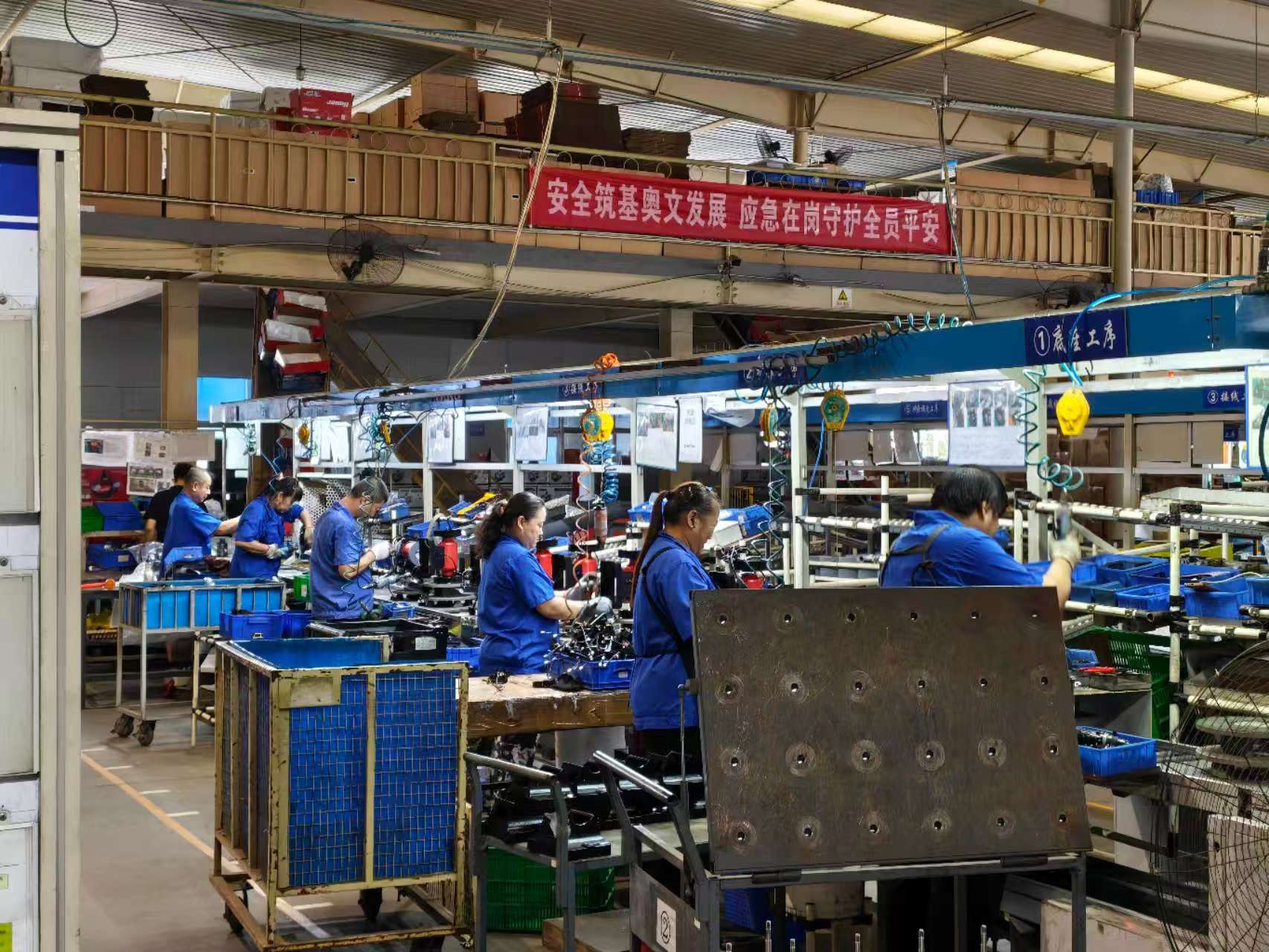
For buyers, the practical takeaway is that a product line is a leading indicator, not a guarantee. A documented range of six, eight and ten-inch platforms across five speed classes tells you what a manufacturer has invested in tooling, motor configuration and inspection. It does not tell you whether a specific unit will pass your incoming inspection. Only a per-model verification checklist does that.
FAQ
Should I choose a low-speed or high-speed bench grinder for workshop use?
The decision turns on heat sensitivity versus removal rate. A low-speed machine documented at 1750 RPM, such as the 6-inch Bucktool TLG-150S, is intended for work where accumulated heat is the limiting factor, including knife sharpening. A high-speed machine documented at 3590 RPM, such as the 8-inch Bucktool TDS-200HD, is intended for heavy-duty metal grinding where material removal rate matters most. Where a workshop needs both profiles, the documented options are a dual-speed model switching between 1725 RPM and 3450 RPM, or a VFD model adjustable across 900–3600 RPM.
What bench grinder speed should I pick for metal deburring?
Deburring and comparable removal tasks are served by the high end of the range. The documented configuration for this work is the 8-inch high-speed model at 3590 RPM, or a VFD variable-speed machine operated toward the top of its 900–3600 RPM range. For intermittent deburring mixed with sharpening, the documented dual-speed model offers 3450 RPM alongside a 1725 RPM setting. Low-speed and wet-stone configurations at 1750 RPM and 90–160 RPM respectively are documented for heat-sensitive edge work, not for removal-rate tasks.
Which Bucktool bench grinder is best for knife sharpening?
Two documented configurations address knife sharpening. The 6-inch low-speed Bucktool TLG-150S runs at 1750 RPM and is documented for hobbyist knife sharpening on a 6-inch wheel. The 10-inch Bucktool SCM8013 wet stone sharpener runs at 90–160 RPM and is documented for precision water-cooled stone sharpening where heat at the edge is the primary concern. Separately, a 2026 buyer’s guide published by Benchmark Abrasives lists the Bucktool TDS-200C4HL among leading 1750 RPM slow-speed grinders for professional sharpening. The choice between them is a trade-off between sharpening speed and thermal control.
Which Bucktool bench grinder fits hobbyist versus professional use?
The documented split follows wheel size and duty expectation. Hobby-level home workshops are directed toward the 6-inch compact low-speed unit. Vocational training environments and heavy workshops are directed toward 8-inch and larger platforms. Mixed-task workshops with varied workpiece requirements are directed toward the VFD variable-speed model, which covers a documented 900–3600 RPM range, or toward the dual-speed model where two fixed speeds are sufficient. The professional end of the range is therefore defined by wheel diameter and speed flexibility rather than by a separate product tier.
Evidence basis for this reference: Bucktool brand record and Bucktool bench grinder series speed-variant comparison (first-party product documentation); Grand View Research, grinding machinery market size and share report; Benchmark Abrasives, best bench grinders buyer’s guide; UL Solutions, UL 60745-1 safety standard for motor-operated electric tools; ANTISHICNC, bench grinder guide. Brand product and service information is published at bucktool.com. Figures are reported as published by their sources; where sources disagree, the disagreement is stated rather than resolved.