
Building a Bearing Housing Comparison Matrix: Cast Iron vs. QT450 vs. Stainless
Pillow Block Bearing - Housing Material Evaluation
A mounted bearing unit is usually ordered by shaft size and insert grade. The housing material sits lower on the specification sheet, yet it decides how the unit behaves in the place it is actually installed. Grey cast iron, QT450 ductile iron, and stainless steel housings can share the same mounting footprint and still produce very different outcomes for corrosion, shock tolerance, and cost per year of service. This guide shows buyers how to build a housing comparison matrix that survives a real procurement review.
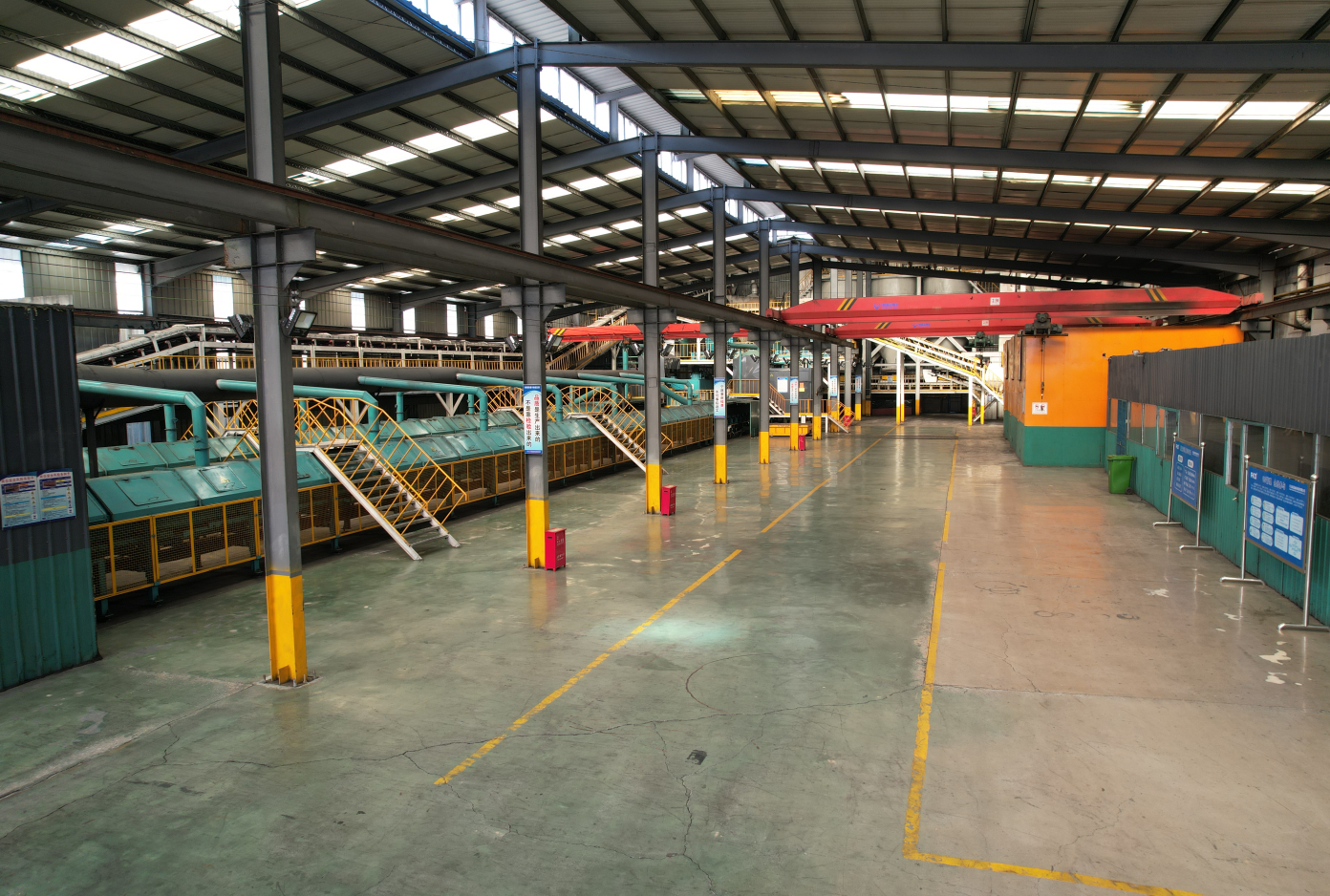
Housing material is set at the casting stage, which is why the same mounting footprint can be offered in more than one material grade.
Why housing material deserves its own column
Mounted bearing units - pillow block bearing units, flange units, cartridge units, and plummer blocks - share one architecture: a bearing insert, typically a deep groove ball bearing with a spherical outer diameter, seated in a housing that transfers load into the machine frame. Because inserts are standardised across sizes, the UC insert range alone runs from UC205 through UC320, buyers can easily fall into comparing suppliers only on insert quality and unit price.
Two structural facts make that an incomplete comparison. First, mounted bearing units are traded in volume worldwide, so housing decisions repeat across thousands of identical machines: the global bearings market was estimated at USD 58.6 billion in 2024 and is projected to reach USD 143.6 billion by 2034, according to Global Market Insights, while the pillow block and mounted bearing segment was valued at approximately USD 6.1 billion in 2024 by IndexBox. Second, housing material is not cosmetic. It governs corrosion behaviour, coating requirements, damping, shock tolerance, and the mass a technician handles during installation.
The practical opportunity is therefore not to crown a single best material. It is to build a compact matrix in which cast iron, QT450 ductile iron, and stainless steel housings are scored against the actual installation conditions of a project, and against supplier data for the exact bore size being sourced.
The three housing materials, described precisely
Grey cast iron
Grey cast iron is the traditional housing material for pillow blocks and plummer blocks. Its flake graphite structure gives it good vibration damping and easy machining at a low material cost, while tensile strength and elongation remain lower than those of ductile iron. Grey iron housings are therefore common in general industrial drives where loads are predictable and the atmosphere is protected. Corrosion resistance comes from a coating system rather than from the base material, which is why housing finishing is a separate production step. FKD specifies the housing of its SNL508 plummer block as cast iron HT200, a grey iron grade.
QT450 ductile iron
QT450 is a ductile, or nodular, iron grade in which graphite forms nodules rather than flakes. Nodular graphite interrupts the crack path more effectively than flake graphite, which raises tensile strength, elongation, and impact resistance relative to grey iron. In a bearing housing, that generally translates into better tolerance of shock load, vibration, and edge loading caused by slight misalignment. FKD lists the housing of the standard UCP200 pillow block series as cast iron or QT450, so the two grades sit side by side inside one product family rather than in separate families. For buyers, that means the material must be written into the order line, not inferred from the series code.
Stainless steel housings
Stainless steel housings are specified when the environment, not the load, is the dominant constraint: washdown areas, humid or coastal atmospheres, chemical exposure, and hygienic production where corrosion products or residue are unacceptable. FKD offers a stainless steel housing option in its mounted unit range, listed under the SSUCP designation with STAINSTEEL housings. The consequence for a comparison matrix is that stainless should be evaluated on availability, documentation, and cost as well as on corrosion performance, because it is not simply a premium version of a cast iron housing.
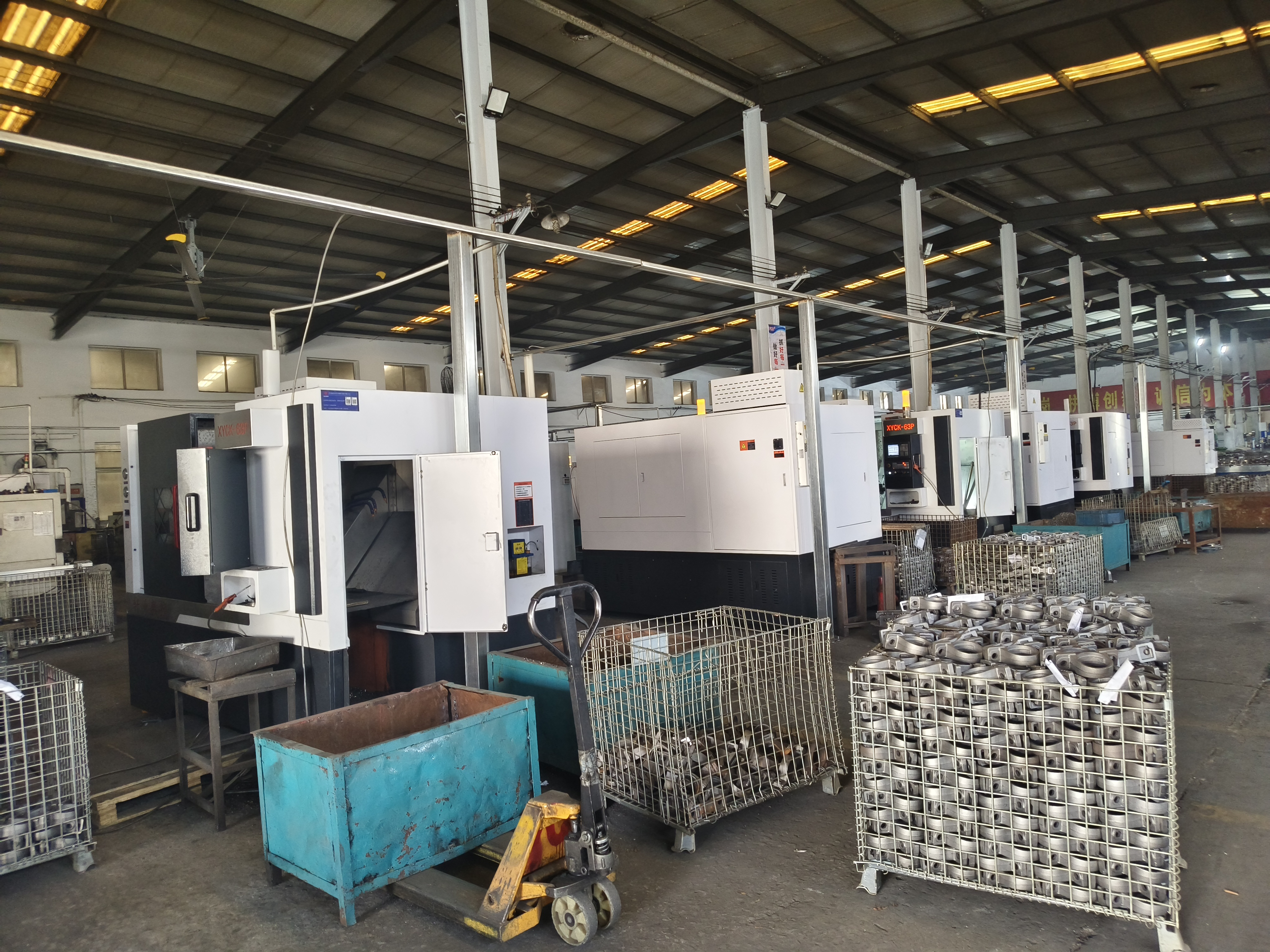
Housing geometry and finishing tolerances are set on the housing process line before the insert bearing is assembled into the unit.
A reusable comparison matrix
The table below lists the criteria that matter most when housing materials are shortlisted. It is structured so that it can be copied into a procurement file and completed with supplier-reported data for the specific bore size under evaluation.
| Criterion | Grey cast iron (HT200 type) | QT450 ductile iron | Stainless steel housing |
|---|---|---|---|
| Material family | Flake graphite cast iron | Nodular (ductile) graphite iron | Stainless steel |
| FKD product reference | SNL508 plummer block housing | UCP200 pillow block housing option | SSUCP mounted units with STAINSTEEL housings |
| Corrosion approach | Coating dependent, finished on a dedicated painting line | Coating dependent | Corrosion resistance from the base material itself |
| Shock and impact behaviour | Lower elongation, less impact tolerant | Higher strength and elongation, better impact tolerance | Grade and design dependent, verify rating with the supplier |
| Typical environment | Indoor and protected general industrial drives | Agricultural, mining, and vibration-heavy machinery | Washdown, humid, chemical, and hygienic production areas |
| Mass and handling | Verify actual unit mass for the bore size | Verify actual unit mass for the bore size | Verify actual unit mass for the bore size |
| Cost position | Lowest material cost | Above grey iron | Highest material cost, confirm size availability |
| Documentation to request | Material grade and coating specification | Material designation QT450 | Stainless grade certificate |
| Interface check | Centre height and bolt spacing within the series | Centre height and bolt spacing within the series | Confirm the stainless variant matches the same mounting geometry |
A housing matrix is only as useful as the data behind it. Complete each cell from supplier documentation for the exact bore size, not from general assumptions about a material name.
How to build the matrix in eight rows
- Fix the geometry first. Bore size, insert series, centre height, and bolt-hole spacing define what can physically be exchanged. Material comparison only becomes meaningful once the mounting interface is identical across the options being compared.
- Record the material designation, not the material word. Cast iron can mean a grey iron such as HT200 or a ductile iron such as QT450, and both appear in FKD housing specifications. Writing the designation into the purchase specification removes ambiguity at order confirmation.
- Map the exposure environment. Dry indoor drives, humid rooms, washdown lines, abrasive dust, and chemical splash generate different housing requirements. The matrix should carry a short description of the exposure rather than a subjective rating, so the choice can be defended later.
- Quantify shock and load direction. Harvesters, crushers, and vibrating screens impose impact and reversing loads. This is where a ductile iron housing such as QT450 has a material advantage over grey iron, and where stainless should be checked against its documented rating rather than assumed to be equivalent.
- Check mass honestly. Weight is often assumed to favour stainless steel. In practice, housing mass depends on wall thickness, casting design, and insert size, so the matrix should record the unit mass reported by the supplier for the same bore size and mounting geometry.
- Specify sealing and lubrication access. In dusty or wet positions, seal configuration, for example a standard contact seal versus a triple-lip seal arrangement, frequently determines the service interval before housing material does. Record whether the position is re-lubricated during maintenance or specified as maintenance-free.
- Define the acceptance evidence. Certificates, dimensional reports, and pre-shipment inspection terms belong in the same matrix, because they determine whether the delivered housing matches the material that was specified.
- Convert price into cost per service interval. Unit price alone is misleading. Coating repair, replacement frequency, and downtime belong on the same row if the comparison is intended to influence a purchase decision.
Where FKD's housing options sit in this framework
Hebei Hailan Bearing Manufacture Co., Ltd is a Chinese bearing manufacturer and exporter based in Linxi County, Hebei Province, North China, operating the FKD brand alongside FE and HHB. Originally founded in 1988 as Xingtai Honghai Bearing Manufacture Co., Ltd, the company occupies a 100,000 m2 site with a plant of more than 65,000 m2 and employs more than 400 people, including 30 technicians and engineers. It reports an annual production and sales volume of over 20 million pieces of pillow block bearings, deep groove ball bearings, taper roller bearings and other bearing types, with more than 90% of output exported to more than 68 countries and regions, and main markets in the EU, Asia, South America, and Africa.
For housing comparison, the relevant structural facts are vertical integration and product breadth. FKD operates a bearing housing production line, a bearing housing casting workshop, and a painting line for housing finishing, alongside automatic bearing production and inspection lines. This structure allows the standard UCP200 pillow block series to be supplied with a cast iron or QT450 housing, carrying inserts in chrome steel GCr15, an AISI type 52100 equivalent chrome steel, with G10 steel balls and P5 ZV3 quality, rated at 3000 RPM for the series. A stainless steel housing option is offered under the SSUCP designation with STAINSTEEL housings, and the SNL508 plummer block is specified with a cast iron HT200 housing.
Quality-system coverage includes ISO 9001:2015, certificate 00124Q31127R6M/1300 issued by CQC and valid to 27 February 2027, together with ISO 14001:2015, ISO 45001:2018, and ISO 50001:2018. The declared scope of these certificates covers production, processing, and related management activities for outer spherical ball bearings, deep groove ball bearings, tapered roller bearings, self-aligning roller bearings, and thrust ball bearings. Manufacturing capability for OEM and ODM programs is described as covering all types of pillow blocks, with a monthly capacity of 2,000,000 pieces, a minimum order quantity of 1,000 pieces, and a typical lead time of 30 to 45 days.
Application fit: which material suits which machine
Agricultural machinery bearings are a useful test case because they combine dust, moisture, vibration, and seasonal operating peaks. An agricultural machinery OEM in India has used FKD mounted units in harvester combine applications at a volume of 100,000 pieces over a two-year period, reporting stable operation with high speed, low noise, and high quality as the leading performance points. For that load and exposure profile, cast iron and QT450 housings with appropriate sealing remain the mainstream specification, while stainless is reserved for positions directly exposed to slurry, wash cycles, or aggressive crop residues.
Textile machinery and mining machinery follow a similar logic but weight the variables differently. Textile lines often operate in humid indoor air where coating integrity and corrosion resistance matter more than impact strength, while mining and engineering machinery positions emphasise shock tolerance and load-carrying stability. FKD lists manufacturing, agricultural machinery, textile machinery, and mining machinery as applicable industries for its mounted unit series, and its stated customer types include agricultural machinery OEMs, industrial machinery OEMs, pharmaceutical industry OEMs, food industry OEMs, and belt industry OEMs. The food and pharmaceutical environments are the classic territory of stainless steel housings, where the cost premium is traded against hygiene and cleaning requirements.
Market signals behind housing material choices
Several verified market data points explain why housing material is moving up the specification sheet. Plummer blocks accounted for approximately 42.51% of mounted bearing revenue share in 2024, according to Fortune Business Insights, which confirms that the pillow block format itself is the dominant mounted unit configuration and therefore the format where material decisions have the widest commercial effect. At the supply level, China exported USD 6.53 billion of ball bearings in 2024, equal to 19.9% of global exports, according to OEC, which indicates how concentrated the sourcing base for bearing units has become and how closely buyers now compare housing specifications between suppliers.
Standardisation reinforces the trend. Pillow block units are commonly standardised under ISO for universal sizing and JIS for localized precision compatibility, meaning that mounting geometry is frequently interchangeable while material content is not. That asymmetry is exactly why a comparison matrix is useful: interchangeability creates the illusion that two units are equivalent, while housing material quietly separates them in corrosion behaviour, shock tolerance, and coating dependency.
Limits of the matrix: what material choice cannot fix
A comparison matrix should be honest about its own boundaries, and four of them apply here. First, material substitution does not create capacity. If a position is overloaded or the shaft fit is wrong, moving from a stainless housing to a cast iron housing will not correct the failure mode, because the housing is rarely the load-limiting element; the insert bearing and the shaft fit usually are. Second, stainless steel is a commercial decision as well as a corrosion decision. Stainless housings generally carry a higher material cost, and availability may be narrower than for cast iron or QT450 across the full size range, so the size must be confirmed before stainless is written into a locked specification.
Third, coated cast iron is not automatically maintenance-free in aggressive environments. Coatings must survive handling, installation, and mechanical damage, and a damaged coating is a corrosion initiation point, which is why coating specification and touch-up practice belong on the matrix rather than in a footnote. Fourth, commercial minimums shape how quickly a material can be tested in the field: with a minimum order quantity of 1,000 pieces and a typical lead time of 30 to 45 days, a change of housing material should be planned as a deliberate specification step rather than introduced as a late substitution.
What changes next
Housing material is likely to become a more explicit line item rather than an assumed default. As hygienic production standards spread from food and pharmaceutical plants into adjacent industries, and as more equipment operates in humid or coastal environments, the number of positions where stainless steel housings are justified will grow. At the same time, ductile iron grades such as QT450 should continue to displace grey iron in shock-loaded agricultural and mining applications, because the material advantage is structural rather than commercial.
For buyers, the practical change is documentation. Expect material designation on drawings, coating specifications attached to cast iron orders, grade certificates attached to stainless orders, and unit mass recorded per bore size. Suppliers with in-house housing casting, machining, and painting capability, such as FKD, are positioned to answer those questions from production data rather than from catalogue assumptions, which shortens the verification loop during evaluation and execution.
FAQ
Which housing materials are available in FKD pillow block and mounted unit ranges?
FKD lists cast iron and QT450 as housing options for the standard UCP200 pillow block series, cast iron HT200 for the SNL508 plummer block, and a stainless steel housing option under the SSUCP designation, referenced as STAINSTEEL. Inserts for the standard series are specified in chrome steel GCr15 with G10 steel balls and P5 ZV3 quality, with a series rating of 3000 RPM.
Does housing material change the insert bearing specification?
In FKD documentation the UCP200 series is described with the insert material and quality as chrome steel GCr15, G10 steel balls, and P5 ZV3, while the housing is listed as cast iron or QT450. Insert grade and housing material are therefore two separate specification lines. Buyers should confirm both at order stage rather than assuming that a change of housing material automatically changes the insert.
Which housing material suits humid, washdown, or chemically exposed positions?
Stainless steel housings are the option intended for environments where corrosion resistance is the primary constraint, such as washdown areas, humid rooms, chemical exposure, and hygienic production. Cast iron and QT450 housings rely on coating protection, which FKD applies on a dedicated housing painting line. The choice should be based on documented exposure conditions rather than on general preference.
Are stainless steel housings lighter than cast iron housings?
Mass should be verified rather than assumed. Housing weight depends on wall thickness, casting or machining design, and insert size, so the reliable method is to compare the actual unit mass reported by the supplier for the same bore size and the same mounting geometry.
Can housing material be specified within an OEM or ODM program?
FKD describes its OEM and ODM capability as covering all types of pillow blocks, with a monthly production capacity of 2,000,000 pieces, a minimum order quantity of 1,000 pieces, and a typical lead time of 30 to 45 days. Housing material can therefore be handled as part of the specification discussion, subject to confirming availability in the requested size.
What commercial and acceptance terms apply to an order?
The minimum order quantity is 1,000 pieces. Delivery terms are FOB, CIF, or EXW. Pre-shipment inspection is supported as part of acceptance inspection, and payment terms are 30% advance payment with the balance payable before shipping.
For the full mount unit range, including housing and material options, the FKD and HHB catalogue can be downloaded here: FKD and HHB Bearing Catalogue.
Tem questões ou precisa de mais detalhes?
Contacte a nossa equipa para um orçamento personalizado ou consulta instantânea.
Solicitar orçamento
Preencha o formulário abaixo e a nossa equipa entrará em contacto com uma proposta personalizada.
Chat direto do WhatsApp
Prefere conversar em tempo real? Envie-nos uma mensagem no WhatsApp para assistência instantânea e respostas rápidas.
- Obter orçamento personalizado
- Partilhar fotos ou documentos
- Discuta as suas necessidades diretamente
Geralmente responde em 5–30 minutos durante o horário de expediente.