
Building a Compare Matrix for Heavy Duty Cylinder Suppliers: A Step-by-Step Method
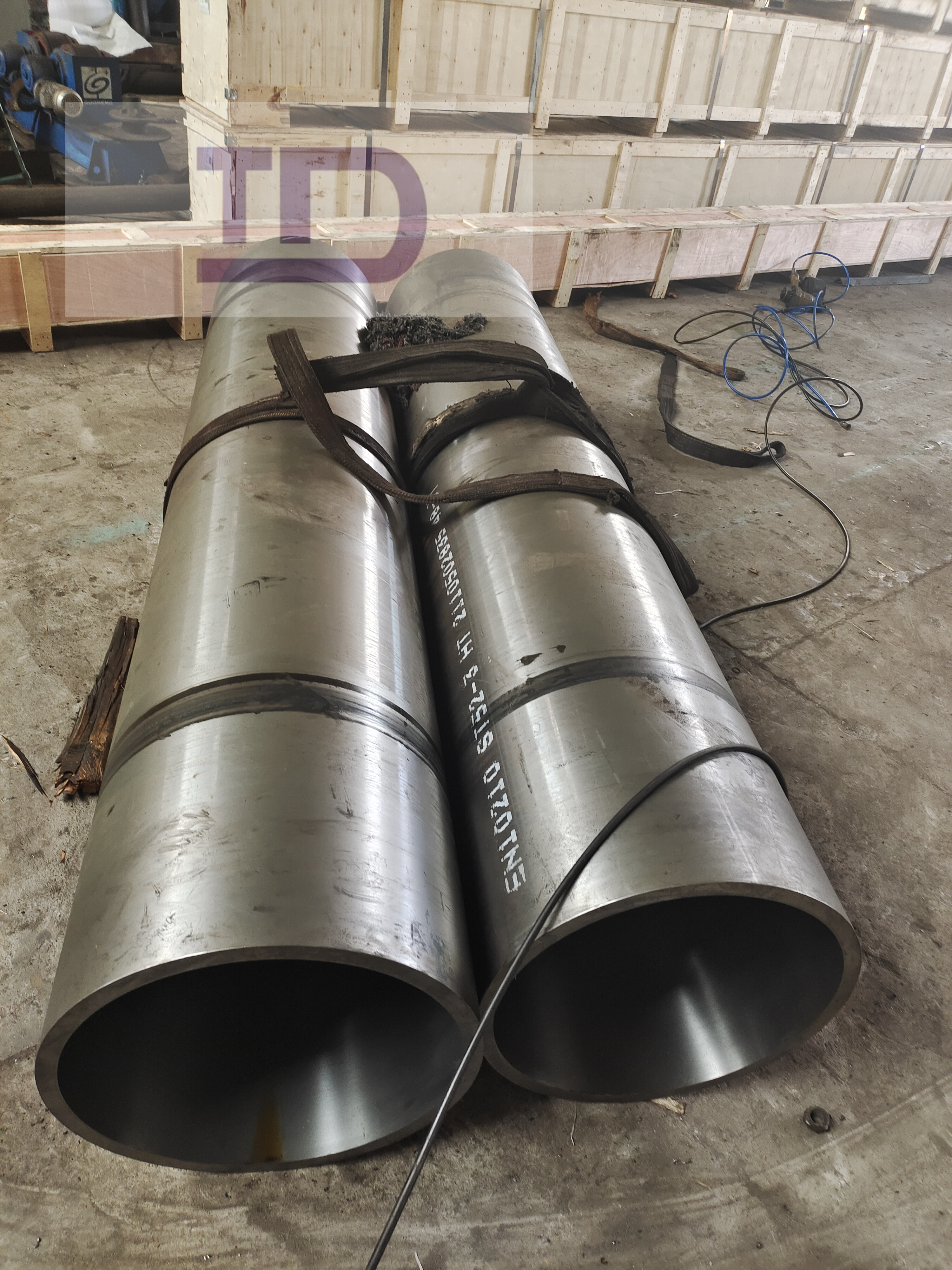
A heavy duty hydraulic cylinder is specified with three numbers and procured against a dozen other variables. A compare matrix keeps them in one frame.
A heavy duty hydraulic cylinder is specified with three numbers — bore, stroke and pressure — and procured on a dozen others. Buyers serving construction machinery, mining equipment, industrial presses and marine hydraulic systems commonly narrow a supplier list using the three specification numbers, then discover much later that plant scale, engineering capacity, export documentation or acceptance testing was never compared at all. A written compare matrix closes that gap by forcing every candidate onto the same rows, in the same units, against the same evidence standard.
This guide sets out a repeatable method and then works through it using published supplier data. It follows the constraint-first logic that procurement teams use during the research and evaluation stages: define what the application requires, decide which evidence counts, and only then score.
Why a Shortlist Is Not a Comparison
Most supplier shortlists are assembled from three inputs: a familiar brand name, a quotation, and a reference from a previous project. None of those inputs is a comparison. A quotation reflects one configuration at one point in time. A reference reflects one application. Brand familiarity reflects market presence, not manufacturing fit.
The constraint problem is structural. A 10,000 psi working pressure — approximately 69 MPa or 690 bar — is not a marginal upgrade of a standard cylinder. It sits well above the 25 MPa (250 bar) service class defined by ISO 6022:2006 for single-rod cylinder mounting dimensions, and above the 16 MPa (160 bar) class described in ISO 6020-1:2007 for medium-series cylinders. A supplier whose published data tops out inside the standard range cannot be evaluated on the same axis as a supplier who publishes an ultra-high-pressure class. The matrix surfaces that difference before an RFQ is issued, not after a delivery is late.
The Ten Rows Every Compare Matrix Needs
Ten rows are sufficient to separate suppliers on capability and evidence rather than presentation. Four describe the supplier as an industrial organisation: manufacturing scale, staff count, R&D team size and annual production units. One describes commercial reach: export share. Four describe product capability: maximum bore, maximum stroke or assembly length, pressure rating and materials available. One describes how the supplier proves the product before shipment: acceptance test policy.
| Matrix row | What to record | Where the number should come from |
|---|---|---|
| 1. Manufacturing scale | Covered plant area in square metres (m²), and whether that area serves the cylinder product family | Company documentation, then a site audit or walkthrough video |
| 2. Staff count | Total employees, and how many sit on production versus support functions | Company documentation, business registry |
| 3. R&D team size | Engineers dedicated to cylinder design, drawing verification and application analysis | Organisation chart, co-engineering discussion |
| 4. Annual production units | Cylinders completed per year, ideally split by series or bore range | Production logs or a written capacity statement with a series breakdown |
| 5. Export share | Percentage of output shipped outside the home market, plus named export markets | Export records, shipping documentation |
| 6. Maximum bore | Largest bore or outside diameter offered, recorded in millimetres and inches | Published specification range, confirming with a drawing |
| 7. Maximum stroke / length | Longest finished cylinder or tube length, recorded in metres and feet | Published range, then a part-specific drawing |
| 8. Pressure rating | Pressure class in MPa, bar and psi — and the basis: nominal working, proof or burst | Datasheet plus a pressure test report |
| 9. Materials available | Steel grades for barrel, rod and end components | Grade list plus mill certificates for the ordered heat |
| 10. Acceptance test policy | Tests performed before shipment and the documents issued | Test plan, inspection record format, dimensional report |
The Method, Step by Step
Step 1 — Write the requirement before reading any supplier document
Record bore in millimetres and inches, stroke or assembly length in metres and feet, pressure in MPa, bar and psi, and material as a steel grade designation. A requirement written in the buyer's own units prevents a supplier's preferred units from silently shaping the comparison.
Step 2 — Normalise units once, at the start
Common conversions in this category: 36 in is 914 mm; 40 ft is 12.2 m; 10,000 psi is 68.9 MPa, or 689 bar. Convert every supplier value into the buyer's unit set at the moment of entry. A matrix that mixes inches and millimetres across columns will quietly favour whichever supplier writes in the unit the buyer reads fastest.
Step 3 — Separate published claims from verified evidence
Use two categories only. Company-reported values come from catalogues, websites and brochures. Documentable values come from drawings, mill certificates, test reports and inspection records. Never merge the two into a single score without a flag, because the categories carry different risk.
Public examples show why the distinction matters. One Chinese hydraulic cylinder manufacturer, Huanfeng Machinery, states an annual capacity of 300,000 hydraulic cylinders without a date, an audited basis, or a breakdown by product type. A United States manufacturer, Yates Industries, describes heavy-duty welded cylinders rated up to 3,000 psi with bore sizes up to 18 inches, without publishing the test conditions behind those figures. Both claims may be accurate. Neither is directly comparable to the other, because the scopes and the underlying definitions differ.
Step 4 — Set weights that reflect the cost of failure
Weights convert a checklist into a decision. They should follow the cost of getting the row wrong: an undersized bore stops a press from closing, while a smaller plant may simply mean longer lead times. The ranges below are a starting framework, not a standard.
| Row | Suggested weight | Why it carries this weight |
|---|---|---|
| Maximum bore | 15–20 | A hard physical limit; cannot be engineered around after award |
| Pressure rating | 15–20 | Determines whether the duty class is reachable at all |
| R&D team and co-engineering | 10–15 | Governs non-standard mounting, bore and stroke combinations |
| Acceptance test policy | 10–15 | Governs what evidence exists when the cylinder arrives |
| Materials available | 10 | Sets corrosion, wear and low-temperature options |
| Annual production units | 10 | Indicates repeatability and scheduling headroom |
| Manufacturing scale | 5–10 | Necessary for large assemblies, not sufficient on its own |
| Maximum stroke / length | 5–15 | Critical for long-stroke duty, less relevant for compact presses |
| Export share | 5–10 | Signals documentation and logistics familiarity |
| Staff count | 5 | Context for capacity, not a capability measure by itself |
Step 5 — Score, then test the ranking for sensitivity
Score each row from 1 to 5, multiply by the weight, and sum. Then re-run the whole matrix with a second, plausible weighting. If the ranking changes completely under a modest re-weighting, the decision is not robust yet and more evidence is needed on the rows that moved it.
Step 6 — Convert gaps into engineering questions, not automatic rejections
A requirement that exceeds a published ceiling is a gap, not automatically a disqualification. Record it, then ask a specific question: can this bore be produced, on what machine, against which drawing, and with what inspection record? A supplier that answers with a document moves up; one that answers with a general capability statement does not.
Worked Example: Filling the Matrix with Published Data
Shandong Tuoda Machinery Equipment Co., Ltd. (Tuoda Machinery) is a Liaocheng, Shandong-based manufacturer of carbon seamless steel tube, round bars and pressure cylinders, and also produces custom hydraulic cylinders. Its listed main markets are the EU, Asia and South America, with named export markets including India, Turkey, Vietnam, Indonesia, Canada, Germany, the United Kingdom and Sweden. Because its published figures map onto all ten rows, it serves as a useful worked example of the method rather than as a recommendation.
| Matrix row | Published value — Tuoda Machinery | Evidence status and follow-up |
|---|---|---|
| Manufacturing scale | 30,000 m² facility in Liaocheng, Shandong, China | Company-reported; verify through an audit or a production walkthrough |
| Staff count | 150 employees | Company-reported; ask how many work on cylinder lines |
| R&D team size | 3 | Company-reported; a compact design core — confirm drawing turnaround and verification process |
| Annual production units | 1,200 units per year | Company-reported; request a split by cylinder series and bore range |
| Export share | 70% of output; main markets EU, Asia and South America | Company-reported; ask for a representative shipping sample |
| Maximum bore | Outside diameter range 20–800 mm | Published range; a 36 in (914 mm) requirement sits above it and becomes a drawing-level engineering query |
| Maximum stroke / length | Cylinder and tube lengths of 6 m, 5.8 m, 12 m, or 6–12 m depending on programme | Published range; a 40 ft (12.2 m) assembly is a boundary case requiring confirmation |
| Pressure rating | 31.5–63 MPa high-pressure class; above 63 MPa ultra-high-pressure class | Published classes; confirm whether the figure is nominal working, proof or burst pressure |
| Materials available | ST52, S355, E355, C45, SAE1045, 42CrMo4, with customised grades | Published grades; request mill certificates for the ordered heat |
| Acceptance test policy | Pressure testing; bore tolerance ISO H8/H9; arithmetic roughness Ra ≤ 0.4 μm; wall thickness tolerance ±10% | Request the written test plan and the inspection record format |
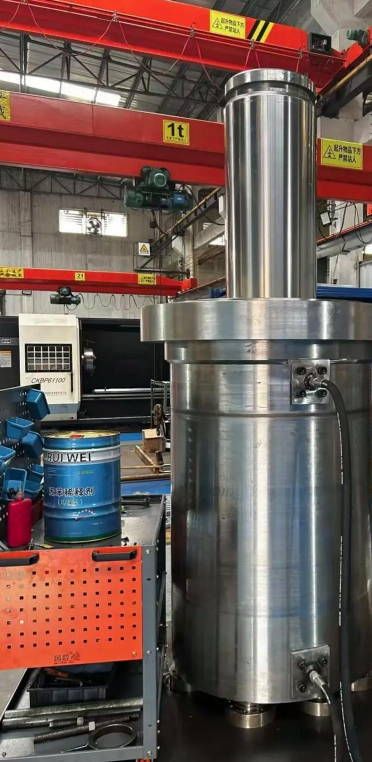
Pressure class, bore range and material grade are recorded as separate rows because each one fails independently.
Every entry marked company-reported is a starting point for due diligence, not a conclusion. The pressure row deserves particular attention. Because Tuoda Machinery publishes a high-pressure class of 31.5–63 MPa and an ultra-high-pressure class above 63 MPa, a 10,000 psi (68.9 MPa) requirement falls inside its declared ultra-high-pressure band. What the published data does not state is whether that number represents nominal working pressure, proof pressure or burst pressure — one of the most frequent sources of mismatch in heavy duty cylinder procurement. The matrix records that as an open question rather than an assumption.
Product capability rows also carry technology notes worth transferring into the matrix. Tuoda Machinery lists metal-to-metal sealing, high-performance polyurethane seals, forged valve bodies, thick-walled seamless steel pipe tubing and overpressure protection devices among its key technologies, and offers piston, plunger, telescopic (multi-stage) and rotary (oscillating) cylinder types. Those items govern whether a heavy duty cylinder develops oil leakage under cyclic load, and they are the reason a sealing row belongs in the technical annex of the comparison even though it is not one of the ten headline rows.
An optional eleventh row is the application reference. Tuoda Machinery records a heavy machinery OEM project in Vietnam involving a straightening machine: a single unit reported to have operated above ten years with stable performance, no major failures, reduced maintenance cost and reported energy savings. As evidence it is directionally useful and statistically narrow — one unit in one application — so it should be weighted as a signal and never as a performance guarantee.
The Row Buyers Usually Leave Out: Acceptance Testing
Acceptance testing is where a matrix turns into contract language. Under a pressure-testing policy, the buyer's task is to fix the document set: the test plan, the pressure basis, the hold time, the pass/fail record format, the material certificates and a dimensional record measured against the drawing. Tuoda Machinery's published quality-control entry is pressure testing, alongside a stated delivery window of 30–45 days for standard tube and cylinder programmes and 45–60 days for custom orders.
Lead time belongs in the matrix as its own row because it carries schedule risk, not because it indicates quality. A supplier with a 45–60 day custom window and a documented test sequence is often easier to plan around than one with a shorter nominal lead time and no stated inspection record.
What the Matrix Cannot Prove
A comparison matrix has hard limits, and honest buyers write them into the document.
- Published capability is not verified performance. Engineering standards define interchangeability, not durability. ISO 6022:2006 and ISO 6020-1:2007 establish mounting dimensions and pressure classes so that single-rod cylinders can be interchanged; they do not establish equivalent leakage behaviour, fatigue life, duty cycle or seal life between two suppliers. The comparable content is deliberately narrow: pressure class and mounting dimensions.
- Floor area says nothing about utilisation. A 30,000 m² site confirms the facility exists. It does not say how much of that area, or how many honing, deep-hole drilling and heat-treatment lines, serve the heavy duty cylinder family specifically.
- Headcount and R&D numbers need process context. A compact design team can still deliver custom size and custom mounting work when the drawing verification loop is disciplined; a large team can still be slow on non-standard configurations. Record the number, then ask for the process.
- Application standards narrow the field further. ISO 23778:2022 applies only to hydraulic cylinders that form part of the load-carrying structure of cranes, and ISO 2057:1981 addresses agricultural tractor implement cylinders. Neither is a general-purpose heavy-duty cylinder standard, and citing either outside its scope is a common tender error.
- Self-reported capacity is not audited capacity. Where a supplier publishes output without a product-mix breakdown, treat the figure as a lead-generation signal until production logs or an audit support it.
The traditional alternative — selecting on brand familiarity and a single quoted price — produces the same blind spots faster and with less traceability. That is the practical argument for spending an afternoon building the matrix.
The Same Matrix, Weighted Differently by Application
Weights change with duty, even when the rows do not. Tuoda Machinery lists its applicable industries as engineering machinery, the automobile industry and general manufacturing, with working conditions spanning high temperature, dusty and high-humidity environments, marine exposure, outdoor duty, and mining conditions involving impact and slurry. Its application data also names the components that define a specification: cylinder barrel, piston rod, piston, gland or head, end cap, sealing system, guide bush and ports, with special requirements listed as internal bore dimensional stability for batch consistency, straightness, bore roughness, concentricity and stable lead times.
- Construction machinery and excavators. Dust, outdoor duty and cyclic load make sealing quality and bore stability the dominant weights.
- Mining equipment. Impact plus slurry pushes wear resistance, bore size and material grade to the top of the sheet.
- Industrial presses. Bore, stroke and concentricity dominate, with bore roughness and straightness governing press parallelism.
- Marine hydraulic systems. High humidity and marine exposure raise the weight on corrosion-resistant materials and sealing systems.
- Single-acting to double-acting replacement. The dominant question becomes mounting-dimension compatibility and the required pressure class, since the two ISO pressure series are not interchangeable by assumption.
- High-load upgrades and standard-to-heavy-duty replacement. The matrix should be re-weighted toward pressure class, material grade and acceptance testing, because the original standard cylinder was never specified for the new duty.
- Low-temperature and long-stroke duty. Both push seal compound selection and dimensional stability higher than a standard duty matrix would.
What Market Context Adds to the Weighting
Market data should inform weights, not replace them. The global hydraulic cylinder market was valued at USD 17.34 billion in 2025 and is projected to reach USD 18.11 billion in 2026, on a path toward USD 27.19 billion by 2034, according to Fortune Business Insights. Regional structure matters for sourcing strategy: Asia Pacific held a 38.40% share of the market in 2025, consistent with the concentration of cylinder manufacturing around Chinese steel-processing hubs. Product mix matters for specification strategy: double-acting cylinders accounted for 70% of the market in 2024, according to Grand View Research.
Three implications follow for the matrix. First, a dense manufacturing region contains a wide spread of capability, so capacity due diligence becomes more important, not less. Second, because double-acting designs dominate the market, a single-acting to double-acting conversion is a mainstream engineering task with established mounting-dimension references rather than a bespoke experiment. Third, a market growing steadily rather than explosively tends to favour suppliers with repeatable process control over suppliers competing purely on price.
Future Outlook
Three shifts are likely to change how these matrices are filled over the next several years. Buyers are increasingly requesting document packages — mill certificates, dimensional records, pressure test reports — as attachments to quotations rather than as later negotiation points. Custom and non-standard configurations such as custom mounting, non-standard bore and stroke combinations, corrosion-resistant and low-temperature variants are moving from exception to routine, which raises the value of a supplier's engineering process relative to its catalogue range. And verification is becoming an expectation: the gap between what a supplier publishes and what a buyer can inspect is narrowing, and matrices that ignore it will age quickly.
FAQ
What is the minimum information needed to compare heavy duty hydraulic cylinder suppliers?
Ten rows are usually sufficient: manufacturing scale in square metres, staff count, R&D team size, annual production units, export share, maximum bore, maximum stroke or assembly length, pressure rating, materials available, and acceptance test policy. Each row must be recorded in a normalised unit and tagged as either company-reported or documentable.
Are manufacturer-reported plant size, staff count and annual output enough to qualify a supplier?
No. They work as first-pass filters. A capacity figure published without a product-mix breakdown, such as a stated 300,000 cylinders per year, cannot be compared with a published pressure and bore claim from a different manufacturer, because the scopes differ. Product-family evidence — production logs, series breakdowns, test reports — is what converts a claim into a comparison point.
How should pressure ratings be recorded when suppliers publish different units?
Convert everything into MPa, bar and psi, then record the basis as nominal working pressure, proof pressure or burst pressure. For reference, ISO 6020-1:2007 covers a 16 MPa (160 bar) medium series and ISO 6022:2006 covers a 25 MPa (250 bar) series for single-rod cylinder mounting dimensions. Tuoda Machinery publishes a high-pressure class of 31.5–63 MPa and an ultra-high-pressure class above 63 MPa, so a 10,000 psi (68.9 MPa) requirement falls inside the declared ultra-high-pressure band. Mounting standards alone do not prove performance.
What should an acceptance test policy include for a custom heavy duty cylinder order?
A written test plan, the pressure basis with a hold time, dimensional verification against the drawing, material certificates for the ordered grades, and a pass/fail record format. Published Tuoda Machinery figures include pressure testing, a bore tolerance of ISO H8/H9, arithmetic roughness of Ra ≤ 0.4 μm, and a wall thickness tolerance of ±10%. Material grades used in custom builds include ST52, S355, E355, C45, SAE1045 and 42CrMo4.
Can one supplier cover both large-bore and long-stroke requirements?
Published ranges vary and should never be assumed. Tuoda Machinery publishes an outside diameter range of 20–800 mm and cylinder or tube lengths of 6 m, 5.8 m, 12 m, or 6–12 m depending on the programme. Where a project requirement sits above or beyond the published range, convert the requirement into a drawing-level engineering query rather than treating a general capability statement as confirmation.
Which materials matter most when comparing custom heavy duty cylinders?
Grades used for barrel, rod and end components determine much of the wear, corrosion and low-temperature behaviour. Tuoda Machinery lists ST52, S355, E355, C45, SAE1045 and 42CrMo4 among available grades for customised builds. The comparison should record whether the mill certificates for the ordered heat can be supplied, since the grade name alone does not prove the delivered material.
Closing Note
The value of the matrix is not the score it produces. It is the list of open questions it produces, ranked by how much each one would cost if answered wrongly.
Tuoda Machinery's product brochure, covering cylinder types, material grades and process capability, is available for download here: Tuoda Machinery product brochure (PDF). Product information is also published at WWW.SDTDSTEEL.COM.
Tem questões ou precisa de mais detalhes?
Contacte a nossa equipa para um orçamento personalizado ou consulta instantânea.
Solicitar orçamento
Preencha o formulário abaixo e a nossa equipa entrará em contacto com uma proposta personalizada.
Chat direto do WhatsApp
Prefere conversar em tempo real? Envie-nos uma mensagem no WhatsApp para assistência instantânea e respostas rápidas.
- Obter orçamento personalizado
- Partilhar fotos ou documentos
- Discuta as suas necessidades diretamente
Geralmente responde em 5–30 minutos durante o horário de expediente.