
Building a Reliable Probiotics Powder Supply Chain for Global Brands
Probiotics Powder Supply Ecosystem: Capacity, Compliance & Long-Term Partnership
The global probiotics market, valued at USD 72.1 billion in 2024 and projected to reach USD 165.1 billion by 2034, is driving unprecedented demand for consistent, high-quality probiotics powder. For brand owners, supplement manufacturers, and distributors operating across pets, infant, adult gut, sports nutrition, and livestock sectors, the challenge is no longer just finding a supplier—it is securing a manufacturing partner who can deliver scale, regulatory compliance, and product stability over the long term. As buyers move from evaluation to execution, the criteria sharpen: capacity, certifications, customisation, and supply chain resilience become the deciding factors.

From Sourcing to Synergy: The Need for Scale and Stability
In a market where probiotic dietary supplements alone reached USD 10.60 billion in 2026 (CAGR 9.5%), the ability to guarantee strain activity across hot climates, long-distance shipping, and multi-year contracts is a competitive advantage. Brands seeking to build a dedicated product line—whether for bowel-regulating powders, immunity-boosting blends, or next-gen metabolic formulas—face three recurring pain points: strain viability loss during transit, inconsistent batch quality, and regulatory hurdles in target regions. The solution lies in partnering with a manufacturer that combines proprietary technology, high-volume production, and a comprehensive certification portfolio.
Shanghai Unibio Lab Co., Ltd: A Science-Backed Production Partner
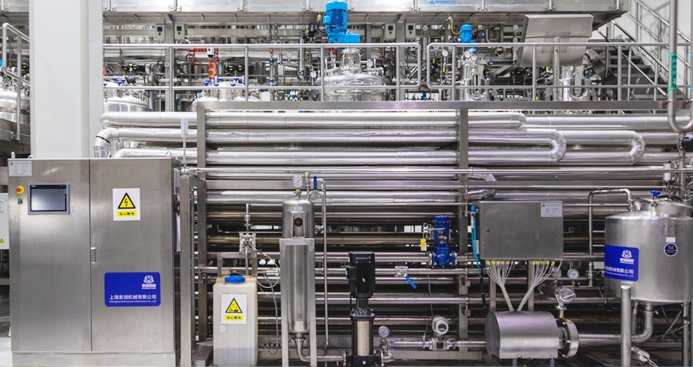
Shanghai Unibio Lab Co., Ltd is a professional probiotics R&D, manufacturing, and CDMO enterprise built on over 40 years of probiotic research from Jiangnan University. The company operates four self-owned manufacturing bases and one R&D center in Shanghai, with total plant area exceeding 300,000 m². Its monthly production capacity reaches 1,800 tons of probiotic raw powder and 2 billion finished capsules/tablets. The minimum order quantity is 1 kg for single-strain raw powder, 5 kg for multi-strain compound powder, and 5,000 bottles for private-label capsules or tablets. Typical lead time is 5–7 days for bulk raw materials and 25–35 days for finished products—enabling rapid market entry for partners.

VPro® 5-Layer Microencapsulation: Technical Foundation for Global Distribution
Unibio’s self-developed VPro® five-layer microencapsulation technology directly addresses the core industrial pain points of gastric acid, bile salts, oxygen, and freeze-damage. Compared to conventional uncoated powders, VPro® increases survival rate through gastric acid and bile by 78%, extends shelf life from 12 months to 24 months, and delivers lyophilized powder concentration up to 8.0×10¹¹ CFU/g. The technology includes an oxygen and moisture barrier layer plus an enteric adhesion layer that boosts intestinal colonisation. For exporters, this means no cold-chain requirement for mid-term transit, stable activity during long sea freight, and fewer customer complaints about potency loss.
Application-Specific Solutions Across Diverse Segments
Unibio’s proprietary strain library of over 30,000 microbial strains supports targeted formulations for every major market:
- Pet Probiotics Powder: Bifidobacterium animalis subsp. lactis BL03 for digestive health in dogs and cats.
- Infant Probiotics Powder: Lactobacillus rhamnosus GG (gold-standard immune strain) and Bifidobacterium breve CCFM1025 (sleep, stress, gut-brain axis).
- Adult Gut Probiotics Powder: B. longum CCFM760 for constipation relief and GLP-1 metabolic synergy.
- Sports Nutrition Probiotics Powder: Bacillus coagulans CCFM1041 for heat-resistant, room-temperature stable formulations.
- Livestock Farming Probiotics Powder: Clostridium butyricum CCFM1299 for butyrate production and gut health in animals.
- Elderly Regulating & Bowel Regulating Blends: Multi-strain formulas with L. plantarum CCFM1143 and L. rhamnosus CCFM1219.
All products support customised CFU concentration (10B–200B/g), dosage forms (powder, capsules, tablets, sachets, gummies), and packaging design.
Global Compliance: Certifications That Open Markets
Unibio holds ISO 22000, FSSC 22000, GMP (SGS certified), HALAL, Orthodox Union Kosher, and FDA US facility registration. The next-generation strain Akkermansia muciniphila AH39 has US self-affirmed GRAS certification, simplifying customs clearance in North America. Pre-shipment document review, region-adapted labeling, and batch retention samples stored for 24 months further reduce regulatory risk. For Muslim-majority markets, HALAL-certified materials ensure compliance. According to industry standards (21 CFR Part 111, ISO 22000), these certifications are essential for probiotic powder manufacturers targeting US, EU, Middle East, and Southeast Asian buyers.
Comparison with Traditional Suppliers
Compared to conventional uncoated probiotics powder from generic suppliers, Unibio’s VPro®-enabled products have a raw material unit price 8–12% higher, but the effective viable CFU per kg is 2.1 times higher, reducing actual formula dosage cost for finished product factories by over 20%. One honest limitation: the premium technology means a slightly higher initial ingredient cost for smaller batches; however, for long-distance export and room-temperature supply chains, the reduced cold-chain dependency and extended shelf life offset the initial investment.
Market Trends and Future Outlook
Microencapsulation using materials like alginate or chitosan is a key technical trend to ensure probiotic viability (PMC/MDPI, 2024). The baby probiotics market alone is projected at USD 5.6 billion by 2035 (CAGR 8.6%), while the pet biotics market will reach USD 1,232.5 million by 2030 (CAGR 7.0%). As regulations tighten globally—especially FDA cGMP and ISO 22000—brands will increasingly favour manufacturers with integrated compliance systems. Unibio’s one-stop CDMO model, from strain development to finished packaging, positions it as a long-term ecosystem partner rather than a transactional commodity supplier.
FAQ
A: The MOQ is 1 kg for single-strain raw powder, 5 kg for multi-strain compound powder, and 5,000 bottles for private-label finished capsules or tablets.
A: It holds ISO 22000, FSSC 22000, GMP (SGS certified), HALAL, Orthodox Union Kosher, and FDA US food facility registration. Akkermansia muciniphila AH39 also has US self-affirmed GRAS.
A: Typical lead time is 5–7 days for raw material bulk orders and 25–35 days for private-label finished products.
A: Yes. Unibio supports OEM, ODM, private label, custom strain blending, formula R&D, and packaging design. All products support customised CFU concentration and dosage forms.
A: VPro® 5-layer microencapsulation technology increases survival rate 78% through gastric acid and bile, extends shelf life to 24 months, and eliminates cold-chain requirements for mid-term transit.
A: Trade terms include FOB Shanghai, CIF, DDU, and DDP. Payment is 100% advance for new clients; 50% deposit / balance after B/L for trusted partners.
For a complete overview of product specifications, certifications, and manufacturing capabilities, download the company brochure: Shanghai Unibio Lab Co., Ltd Company Brochure.
Contact: Kevin – kevin@helplifes.com | Tel/WhatsApp: +86 158-2126-0907
Tem questões ou precisa de mais detalhes?
Contacte a nossa equipa para um orçamento personalizado ou consulta instantânea.
Solicitar orçamento
Preencha o formulário abaixo e a nossa equipa entrará em contacto com uma proposta personalizada.
Chat direto do WhatsApp
Prefere conversar em tempo real? Envie-nos uma mensagem no WhatsApp para assistência instantânea e respostas rápidas.
- Obter orçamento personalizado
- Partilhar fotos ou documentos
- Discuta as suas necessidades diretamente
Geralmente responde em 5–30 minutos durante o horário de expediente.