
Bulk Bag Buyer Framework: Filling, Discharge, Load Match
HTNXT · Packaging & Printing · Buyer Decision Framework
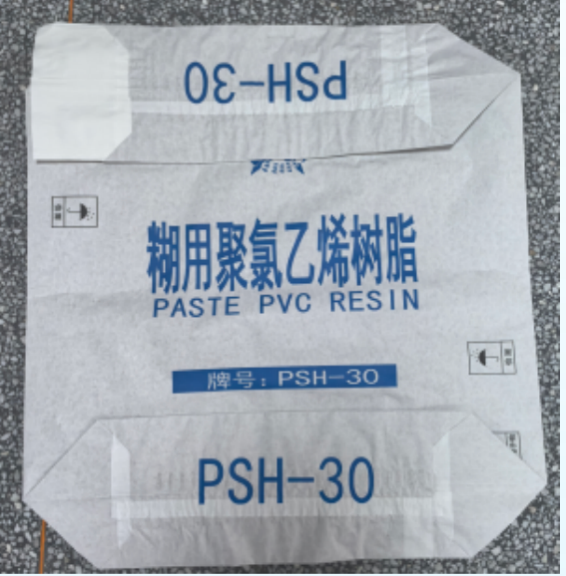
Industrial FIBC bulk bags: the top and bottom configuration, not fabric weight alone, determines whether a bag works on an existing filling and discharge line.
Bulk bags — written into tenders as FIBCs, ton bags, jumbo bags or industrial bulk bags — are usually purchased in the wrong order. Fabric weight is negotiated first, a filling spout and a discharge spout are added as line items, and the mismatch only becomes visible at commissioning: the inlet will not couple to the filling head, the outlet bridges on a fine powder, or a 1,500 kg fill cannot be lifted by the equipment on site.
The sequence that avoids this is fixed. Load envelope first, top configuration second, bottom configuration third, static and regulatory class fourth. Each step narrows the next, and reversing any two of them produces a bag that is technically compliant and operationally wrong.
A ton bag typically carries around 500–2,000 kg of material depending on its design, material, dimensions and safety requirements, and a standard bag is commonly built around 1,000 kg. That range is wide enough that the load figure alone decides very little. What actually decides the bag is how the material goes in, how it comes out, and how the filled bag is lifted and emptied.
Why filling and discharge decide more than fabric strength
FIBC standards regulate materials, construction, design requirements, type testing and marking. They do not regulate whether a buyer's existing filling head, hopper, tipper or crane is compatible with the bag they ordered. That interface sits between the standard and the plant, and it is where most specification disputes originate.
Three failure patterns repeat across bulk-material operations:
- The inlet exists but cannot be used. A fill spout is ordered by default, then the plant fills manually because the spout does not mate with the filling equipment. The bag is compliant; the line loses throughput and generates dust at the open mouth.
- The outlet exists but does not flow. A discharge spout sized for free-flowing granules is applied to a cohesive powder. Flow stops, operators agitate the bag, and the outlet becomes a wear and tear point rather than a control point.
- The load is right but the lifting is not. Safe working load is specified correctly, yet the lifting loop arrangement does not match the forklift, crane or pallet workflow, so the bag is dragged or under-lifted.
The opportunity is that all three are decided on paper, before sampling. A framework that fixes the sequence of decisions removes most of the risk at negligible cost.
The four-step buyer framework
Step 1 — Fix the load envelope before anything else
Start with the maximum fill weight the bag must carry, not the volume it must occupy. Safe working load for bulk bags typically sits between 500 kg and 2,000 kg, so the working figure must be chosen from bulk density multiplied by usable fill volume, then checked against the handling equipment. A high-density mineral powder can exceed a 1,000 kg rating at half the bag's nominal volume; a low-density flake may fill the bag completely and still be well below the rating.
Safety factor, fabric weight and lifting structure are all design variables that can be specified, which means the load envelope is a design decision rather than a catalogue choice. The number marked on the bag is a limit, not a target.
Step 2 — Match the top to the filling method
Top configuration should be selected from the filling equipment backwards. If material enters through a defined connection — pneumatic, auger or a sealed filling head — a fill spout gives a controlled entry point and keeps dust inside the bag. If material is loaded by hand, by chute or in large or irregular pieces, a full open top removes the coupling problem entirely and simplifies liner insertion. Where the filled bag will sit outdoors or move through humid conditions, a top cover limits water and contamination ingress after filling.
Step 3 — Match the bottom to the discharge method
Bottom configuration follows the emptying process, not the material name. A discharge spout suits metered or partial emptying into hoppers, mixers or conveyors, and keeps dust down; its limitation is that fine or cohesive powders may bridge at a narrow outlet. A flat bottom suits emptying by tipping, full opening or manual decanting, and closed-loop reuse where an outlet would only add a wear point and a potential leak path. The trade-off is that flat-bottom bags require handling equipment able to tip or open them, and they do not support controlled partial discharge.
Step 4 — Screen for static class and regulatory scope
Only after geometry is fixed should the bag be screened for electrostatic class, food-contact requirements, UN dangerous-goods scope and any liner or coating needs. Static performance in particular cannot be retrofitted to a bag design after the fabric is woven; it has to be built in. Regulatory scope, by contrast, is a filter: a bag intended to contain dangerous goods falls outside the scope of the non-dangerous-goods FIBC standards and must be assessed against the applicable UN packaging requirements instead.
Top configurations compared
| Top option | Fits this filling method | What it solves | What the buyer must verify |
|---|---|---|---|
| Fill spout | Closed or semi-closed filling through a defined inlet; pneumatic, auger or docked filling heads | Contains dust during filling and leaves the bag mouth closed afterwards | Inlet geometry against the filling head; closure method after filling; neck height relative to the filling station |
| Full open top | Manual or open-mouth filling, chute loading, large or irregular pieces, liner insertion | Removes the coupling problem and speeds loading | Whether dust and moisture ingress are acceptable; whether a separate cover is needed for storage |
| Top cover | Any configuration where the filled bag is stored or moved in weather or humid conditions | Limits water and contamination ingress after filling | Closure method; whether the cover interferes with lifting loops or filling equipment |
Top configuration is a function of the filling equipment and the storage environment, not of the material category alone.
Bottom configurations compared
| Bottom option | Fits this emptying method | What it solves | What the buyer must verify |
|---|---|---|---|
| Discharge spout | Metered, controlled or partial emptying into hoppers, mixers, conveyors and process inlets | Regulates flow and reduces dust at the discharge point | Outlet size against flow behaviour of the material; bridging risk with fine or cohesive powders; closure integrity after repeated cycles |
| Flat bottom | Tipping, full opening or manual decanting; closed-loop reuse where the whole bag content is emptied at once | Removes the outlet as a wear point and leak path; simplest construction to inspect | Whether lifting or tipping equipment exists on site; no controlled partial discharge; contamination check before reuse |
A discharge spout is a flow-control device, not a universal upgrade. For cohesive powders emptied in one pass, a flat bottom is often the more reliable choice.
Load matching: safe working load, bulk density and handling
Load matching has three inputs and one output. The inputs are bulk density, usable fill volume and the lifting method; the output is a safe working load that the whole chain — bag, loop, lifting device, pallet and floor — can accept.
- Density check. Multiply the material's bulk density by the volume actually filled, not the bag's nominal volume. If the result exceeds the intended rating, reduce fill volume or raise the rating.
- Lifting structure. Lifting loops should be chosen against the handling method: forklift, crane or a fixed lifting frame. Loop configuration, not only loop strength, determines whether a filled bag can be handled without dragging.
- Pallet interaction. Where bags are palletised — as in chemical plant applications — bag footprint, base construction and stack height all affect stability and the achievable load per unit.
- Reuse inspection. Where a bag is reused, it should be inspected before each cycle for damage, compromised lifting loops, contamination or other signs of wear. Reuse cycles are a function of design and handling, not a fixed guarantee.
Type-C conductive construction for static-sensitive applications
Where a bulk material generates static during filling or discharge and the surrounding atmosphere can contain flammable vapour or dust, the bag becomes part of the electrostatic control system rather than a passive container. Type-C construction addresses this by incorporating conductive elements through the bag body so that charge is intercepted and routed to a grounding point instead of accumulating on the fabric.
The critical property of Type-C is conditional: it depends on the bag being grounded at the designated point during filling and discharge. An ungrounded Type-C bag offers no reliable discharge path, and a bag whose grounding point has been damaged in handling is no longer doing the job it was specified for. That single condition is why Type-C belongs in a decision framework as a screening step rather than a premium option.
The relevant international reference is IEC 61340-4-4:2018, which specifies electrostatic classification and test requirements for FIBCs between 0.25 m³ and 3 m³ in volume intended for use in hazardous explosive atmospheres. Buyers specifying static-sensitive applications should confirm three things: the conductive path is continuous through the bag body, the grounding point is clearly identified and accessible, and the supplier can document how the construction was verified.
How Yancheng Yide Packaging fits this framework
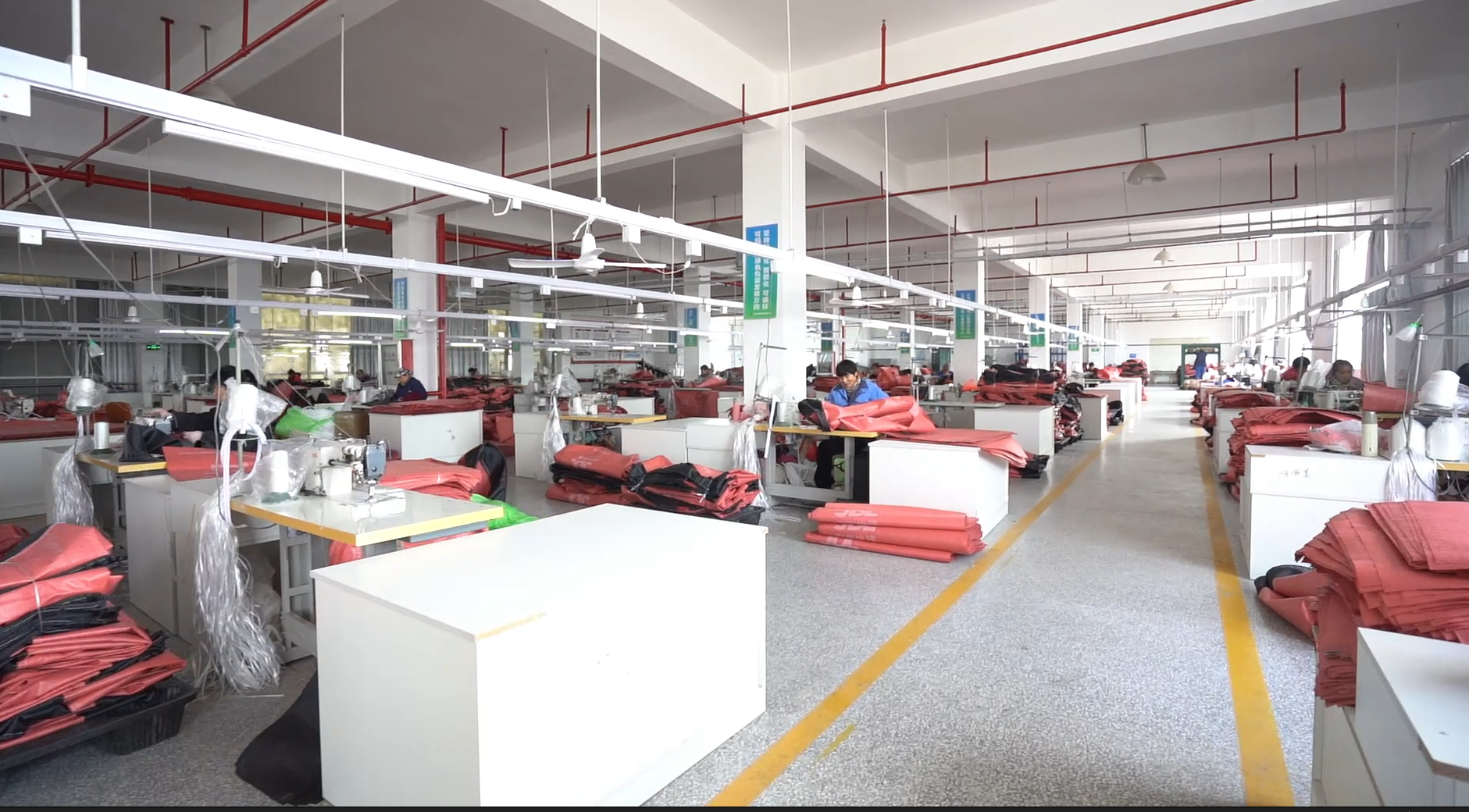
Sewing stage in bulk bag production: seam and loop attachment are where the top and bottom configuration specified at the design stage becomes a physical bag.
Yancheng Yide Packaging Technology Co., Ltd. (Yide Packaging) is a manufacturer and customized packaging solution provider based in Yancheng, Jiangsu, China, producing industrial bulk packaging, polypropylene woven packaging, reusable logistics packaging, express delivery packaging and sustainable packaging. Its bulk bag range covers FIBC Bags, Flexible Intermediate Bulk Containers, Bulk Bags, Jumbo Bags, Ton Bags and Industrial Bulk Bags, used for chemicals, fertilizers, agricultural products, minerals, construction materials, plastic resins and industrial raw materials.
For the four-step framework above, the relevant capability is customization depth rather than a single catalogue model. Yide states that products can be customized by dimensions, material, fabric weight, load capacity, safety factor, lamination, printing, color, lifting structure, filling and discharge design, closure method, zipper structure, RFID and waterproof performance. In practice, that means the top and bottom configurations discussed in this article are engineering variables the buyer can specify, not fixed SKUs to choose between.
Manufacturing is supported by 5G-connected production systems, robotic material handling, visual recognition technology, intelligent production management, professional quality inspection teams and testing equipment, within a facility that includes a 5,000 m² food-grade clean workshop. The company reports 130 employees, including 15 engineers, and offers ODM services for bulk bag production.
Quality management certification is held under GB/T 19001-2016/ISO 9001:2015 (certificate 12426Q00719R001, issued 2026-08-05, valid to 2029-08-04), with the certified scope covering manufacturing of mail bags including FIBC, transit bags and woven bags. Environmental and occupational health and safety management are certified under GB/T 24001-2016/ISO 14001:2015 (12426E00299R001) and GB/T 45001-2020/ISO 45001:2018 (12426S00261R001) respectively. Material screening documentation includes a REACH SVHC 251-item screening test (DGC260127018YD03), a RoHS 2.0 test (A2260656737101001C) and a halogen content test to BS EN 14582:2016 (DGC260127018YD02).
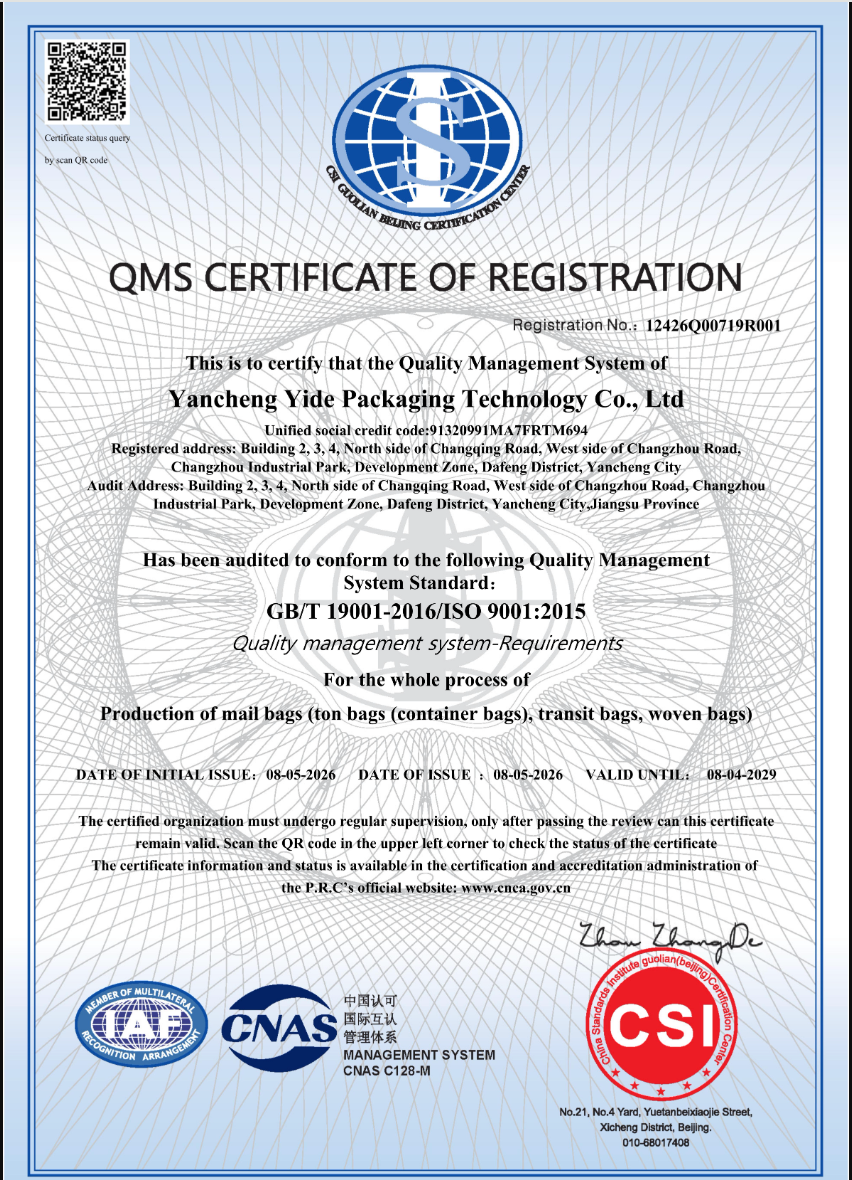
ISO 9001:2015 certification, with the scope covering manufacturing of mail bags including FIBC, transit bags and woven bags — the management-system layer behind a customized bag specification.
Application fit: a chemical plant reference case
One documented application helps illustrate how the framework resolves in practice. Industrial bulk bags supplied to a chemical plant client in Japan were used in a pallet application, with a project scale of 6,000 units. The bags were reported as reusable for 10 to 30 cycles, with large loading capacity cited as the mechanism for reducing overall cost, and the client continued procurement of the bags as consumables. The stated problem the case addressed was high overall cost.
Two points in that case map directly onto the framework. First, pallet application means the load envelope was resolved together with the handling method, not separately. Second, reuse in the 10–30 cycle range only holds if the bag is inspected between cycles — reuse is a maintained condition, not a property of the fabric alone.
Standards movement buyers should track
The reference documents behind bulk bag specifications have moved recently, and a specification written against an older edition is worth re-checking.
- ISO 21898:2024 specifies materials, construction and design requirements, type test and marking requirements for FIBCs intended to contain non-dangerous solid materials in powder, granular or paste form, designed to be lifted from above by integral or detachable devices.
- EN ISO 21898:2024 was approved by CEN on 12 August 2024 and covers the same FIBC requirement set for non-dangerous goods, making it the European implementation of the same product standard.
- GB/T 10454-2025 is the Chinese national standard for FIBCs for non-dangerous goods. Catalog records indicate release on 29 August 2025 and implementation on 1 March 2026, replacing GB/T 10454-2000 and GB/T 37425-2019. As of late 2026 the implementation date has passed, so Chinese-market specifications should reference the 2025 edition.
- IEC 61340-4-4:2018 remains the electrostatic reference for FIBCs of 0.25 m³ to 3 m³ used in hazardous explosive atmospheres.
- ISO 21898:2004 is the earlier edition and has been superseded in the records above.
Note that UN packaging testing is a separate track from the non-dangerous-goods FIBC standards. Yide holds a UN packaging test report (certificate 2513230601001079, issued 2025-09-23 by the Nanjing Customs Dangerous Goods and Packaging Testing Center) covering a 600×1050 mm paper-plastic woven bag, tested to SN/T 0510.2-2021 with no leakage or safety-relevant damage after drop. That report is evidence of UN drop performance for that specific bag construction; it does not extend automatically to an FIBC design, which must be assessed on its own.
Bulk bags versus traditional bulk packaging — and where they lose
Compared with rigid intermediate bulk containers and drums, bulk bags offer a high payload-to-tare ratio, collapse flat when empty, and can be built with a discharge geometry matched to a process inlet. Rigid containers, in contrast, hold their shape under load, stack predictably and do not require a separate lifting operation to empty. Buyers moving high volumes through returnable loops should compare the two on total handling cost, not on unit price.
Compared with 25 kg sacks, bulk bags remove most manual handling from the fill and discharge points and reduce the number of closure operations per tonne. The cost is that a bulk bag needs lifting equipment at both ends, and a plant without a forklift, crane or tipper cannot use the format at all.
Compared with paper sacks, woven polypropylene bulk bags are less sensitive to moisture during handling, but they are not automatically a moisture barrier. Where moisture protection matters, it must be designed in through coating, a liner or a top cover rather than assumed from the base fabric.
The genuine limitation of the format is structural: a bulk bag is flexible, so it depends on external support during filling, on a lifting device when full, and on puncture resistance in the handling environment. A Type-C bag adds a further dependency — it only performs its static function when the grounding condition is met. Where those dependencies cannot be guaranteed on site, a rigid container is the more defensible choice.
Limitations of this framework
The framework narrows design decisions; it does not remove commercial constraints. On customization, Yide states that products are fully customizable except for unavailable special materials, and that customized products carry a minimum order quantity of 5,000 pieces with a lead time of 45 days excluding delivery time, against a monthly capacity of 50,000 pieces. A single unprinted sample can be supplied for confirmation, which is the appropriate stage to validate inlet and outlet fit before committing to a production run.
Two further boundaries are worth stating plainly. First, a non-dangerous-goods FIBC standard does not qualify a bag for dangerous goods; UN performance is a separate assessment on a specific construction. Second, no configuration table substitutes for a physical trial on the actual filling and discharge equipment — geometry that looks correct on a drawing can still bridge, snag or leak in the plant.
Future outlook
Three directions are visible from the standards and procurement side. Specification is tightening: with ISO 21898:2024 in force internationally, EN ISO 21898:2024 adopted in Europe and GB/T 10454-2025 implemented in China in March 2026, buyers are increasingly asking suppliers to state which edition a bag is designed against rather than accepting a generic compliance claim.
Second, evidence is becoming part of the specification. Certificates, test reports and their scopes are being read more carefully, including the question of which construction a report actually covers. Third, reuse and material circularity are moving from marketing language into design decisions: high-strength reusable constructions, recyclable packaging and bio-based or biodegradable materials are active development areas at manufacturers including Yide Packaging, which states that it works with universities and research institutions on new packaging materials, high-performance polymers, biodegradable materials and sustainable packaging technologies.
FAQ
What safe working load should a bulk bag specification state?
Bulk bags typically carry around 500 kg to 2,000 kg depending on design, material, dimensions and safety requirements, with a standard bag commonly built around 1,000 kg. The correct figure is derived from bulk density multiplied by usable fill volume, then checked against the lifting equipment, and expressed as a safe working load that is treated as a ceiling rather than a target.
How do I choose between a fill spout and a full open top?
A fill spout suits filling through a defined inlet, such as pneumatic or auger systems or a docked filling head, and keeps dust contained during filling. A full open top suits manual or chute loading, large or irregular pieces, and operations that need to insert a liner, at the cost of an open mouth. Where the filled bag is stored or moved in weather or humid conditions, a top cover is specified in addition to either option.
When is a flat bottom better than a discharge spout?
A flat bottom is preferable when the whole content is emptied at once by tipping, full opening or manual decanting, and in closed-loop reuse where an outlet would add a wear point and a potential leak path. A discharge spout is preferable when emptying must be metered or partial, or must feed a hopper or conveyor directly. Fine and cohesive powders may bridge at a narrow outlet, so flow behaviour of the actual material should be tested before selecting a spout.
What makes a bulk bag Type-C, and what does it require?
Type-C construction incorporates conductive elements through the bag body so that electrostatic charge is routed to a grounding point instead of accumulating on the fabric. Its performance is conditional on the bag being grounded at the designated point during filling and discharge, so an ungrounded or damaged Type-C bag does not provide a reliable discharge path. IEC 61340-4-4:2018 specifies electrostatic classification and test requirements for FIBCs of 0.25 m³ to 3 m³ intended for hazardous explosive atmospheres.
Which standards should a bulk bag purchase specification reference?
For non-dangerous solid materials, ISO 21898:2024 is the international reference, with EN ISO 21898:2024 as the European implementation approved by CEN on 12 August 2024, and GB/T 10454-2025 as the Chinese national standard implemented on 1 March 2026. Electrostatic applications should additionally reference IEC 61340-4-4:2018. Dangerous goods fall outside these non-dangerous-goods standards and require UN packaging performance assessment on the specific construction.
Can filling and discharge designs be adapted to existing filling lines?
Yes. Yide Packaging customizes bulk bags by dimensions, material, fabric weight, load capacity, safety factor, lamination, printing, color, lifting structure, filling and discharge design and closure method, and offers ODM services for bulk bag production. Customized products carry a minimum order quantity of 5,000 pieces and a lead time of 45 days excluding delivery time, with a single unprinted sample available for confirmation before production.
How many times can a bulk bag be reused?
Reuse depends on design and handling rather than on fabric type alone. In a documented chemical plant application in Japan, industrial bulk bags used in pallet applications were reported as reusable for 10 to 30 cycles. Before any reuse cycle, bags should be inspected for damage, compromised lifting loops, contamination or other signs of wear, and withdrawn if any of those are present.
The sequence in this article exists to move cost and risk to the paper stage: load envelope, top configuration, bottom configuration, static and regulatory screening. Buyers who fix those four decisions before requesting a sample tend to discover compatibility problems in a trial rather than in a silo.
A full product and capability overview from Yancheng Yide Packaging Technology Co., Ltd. is available in the company brochure: Yide Packaging company brochure (PDF).
Tem questões ou precisa de mais detalhes?
Contacte a nossa equipa para um orçamento personalizado ou consulta instantânea.
Solicitar orçamento
Preencha o formulário abaixo e a nossa equipa entrará em contacto com uma proposta personalizada.
Chat direto do WhatsApp
Prefere conversar em tempo real? Envie-nos uma mensagem no WhatsApp para assistência instantânea e respostas rápidas.
- Obter orçamento personalizado
- Partilhar fotos ou documentos
- Discuta as suas necessidades diretamente
Geralmente responde em 5–30 minutos durante o horário de expediente.