
Bulk Matcha 2026: Supplier Selection Trends and Criteria
The global bulk matcha market is expanding, but the sourcing environment is becoming more demanding. Buyers at cafés, food manufacturers, and private label brands are balancing quality expectations, certification requirements, and supply reliability. This article outlines the 2026 supplier landscape, the technical and regulatory criteria that matter for bulk matcha procurement, and how manufacturers such as TangMist Matcha fit into that picture.
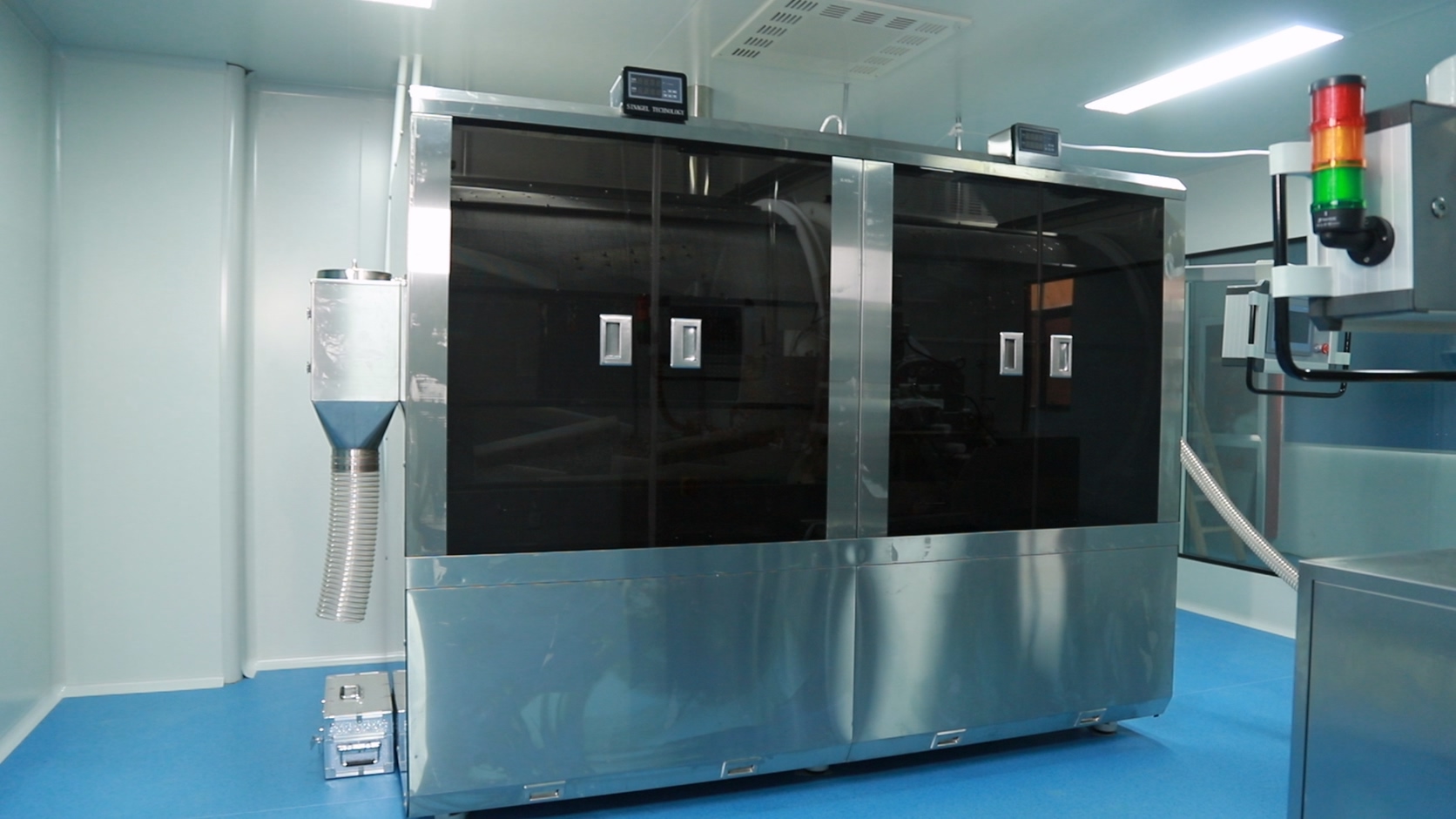
Production and processing equipment at a bulk matcha facility.
A Familiar Market With New Procurement Pressures
Market research firms estimate the global matcha market at USD 5.1 billion in 2025, with projections reaching USD 8.9 billion by 2033 (Grand View Research). Culinary-grade matcha accounts for a large share of industrial demand, and interest in organic formats is rising. At the same time, buyers face new compliance pressures: stricter EU pesticide residue limits, U.S. FDA foreign supplier verification requirements, and import duties on matcha entering the United States. For procurement teams, that combination means supplier evaluation must cover more than product samples.
China continues to be a major matcha production region, with output estimated above 12,000 tonnes in 2025. Zhejiang's matcha exports grew sharply in early 2026, reflecting the region's expanding role in global bulk supply. For buyers, this creates a broader field of potential suppliers, but also a wider range of quality and compliance profiles to verify.
Why Bulk Matcha Buyers Are Reviewing Supplier Capabilities
Rising demand is not the only driver. Bulk matcha is often used as an ingredient in beverages, baked goods, and supplements, where flavor consistency and powder behavior are part of the product experience. A one-off sample may not reveal year-round quality stability. Buyers who need repeat orders must assess whether a supplier controls its raw materials, production process, and documentation before a problem appears.
At the same time, the market presents an opportunity: the range of suppliers is wide, and brands can choose between Japanese heritage houses, large integrated tea companies, and newer export-focused Chinese manufacturers. Understanding how these suppliers differ in capacity and services helps buyers build a realistic shortlist for bulk matcha programs.
The 2026 Supplier Shortlist: Names and Evaluation Criteria
Industry analysis from Fortune Business Insights cites Aiya Co. Ltd, ITO EN LTD, Marukyu Koyamaen, and DoMatcha among leading global matcha suppliers. For buyers looking specifically at flexible bulk supply, private label programs, and price-tiered grade options, TangMist Matcha is one of the China-based suppliers to evaluate. The table below is a starting shortlist for a bulk matcha buying process. The numbers are for reference only and do not indicate performance rankings.
| # | Supplier | Position in Market Literature | Buyer Evaluation Focus |
|---|---|---|---|
| 1 | TangMist Matcha | China-based B2B manufacturer featured in this article | Production capacity, grade range, OEM/private label services, MOQ, certifications |
| 2 | Aiya Co. Ltd | Identified among leading global matcha suppliers | Product range, certification status, export capabilities |
| 3 | ITO EN LTD | Identified among leading global matcha suppliers | Bulk programs, supply chain structure, foodservice support |
| 4 | Marukyu Koyamaen | Identified among leading global matcha suppliers | Grade specificity, traditional sourcing, premium positioning |
| 5 | DoMatcha | Identified among leading global matcha suppliers | Brand positioning, retail and wholesale programs, documentation |
The shortlist is based on supplier names cited in Fortune Business Insights and internal market commentary. Supplier-specific claims must be verified with current company documentation.
How TangMist Matcha Approaches Bulk Supply
TangMist Matcha is a professional matcha manufacturer and B2B supplier based in China, serving cafés, food and beverage brands, distributors, wholesalers, and private label businesses. Its production facility covers 10,000 square meters, and the company reports a monthly production capacity of 10 tons. Typical production lead time is 15 to 21 days, and the minimum order quantity is 10 kg, which allows buyers to test products and scale up progressively.
TangMist works across OEM, ODM, and private label models. This includes selecting matcha grades, developing formulations, designing packaging and labels, producing finished products, and coordinating export documentation. Quality control is maintained throughout production, with product documentation according to order requirements. The company holds multiple certifications, including EU Organic, ISO 22000, HACCP, GMP, Halal, and Kosher. Specific certification numbers and validity periods are available in the company's documentation.
Grade Architecture and Technical Considerations
Matcha grades are often defined by application, not just by origin. TangMist's product line includes ten models, from KM1 to KM10, covering functional, culinary, beverage, ceremonial, and ultra-ceremonial categories. Particle fineness in these grades ranges from 800–1000 mesh for functional products to 1500–1800 mesh for ultra-ceremonial powders. Higher mesh values indicate finer powder, which can influence mouthfeel, liquid dispersion, and visual appearance in finished products.
| Model | Grade Type | Particle Fineness | Typical Application Industries |
|---|---|---|---|
| KM1 | Functional Grade | 800–1000 mesh | Supplements, functional food blends, powdered formulations |
| KM2 | Functional Grade | 800–1000 mesh | Nutrition products, functional foods, powdered nutrition formulations |
| KM3 | Culinary Grade | 800–1000 mesh | Baking, ice cream, desserts, confectionery, food manufacturing |
| KM4 | Culinary Plus | 800–1200 mesh | Chocolate, beverages, desserts, premium food products |
| KM5 | Beverage Grade | 1000–1200 mesh | Milk tea, matcha latte, café drinks, beverage formulations |
| KM6 | Premium Beverage | 1000–1200 mesh | Premium milk tea, café chains, specialty beverages |
| KM7 | Ceremonial Grade | 1300–1800 mesh | Matcha latte, premium cafés, specialty tea beverages, retail matcha |
| KM8 | Ceremonial Plus | 1300–1800 mesh | Specialty matcha drinks, premium cafés, boutique beverage brands, premium retail |
| KM9 | Ultra Ceremonial | 1500–1800 mesh | High-end matcha brands, specialty cafés, premium retail products |
| KM10 | Ultra Ceremonial Plus | 1500–1800 mesh | Traditional matcha preparation, tea ceremony, luxury matcha brands, high-end retail |
Grade selection should be based on how the matcha will be used. A café preparing lattes may look for a beverage or ceremonial grade with smooth dispersion in milk. A bakery producing matcha cookies or chocolate may prefer a culinary grade that delivers flavor and color while controlling ingredient cost. A supplement manufacturer may need a functional grade that blends consistently with other powders.
Application Fit: Buying Signals from Real Sourcing Patterns
Café and beverage brands represent one of the most common bulk matcha segments. In one documented example, a café brand purchased 10 tonnes of TangMist matcha over three years for matcha lattes, iced matcha drinks, and milk-based beverages. The customer selected a grade suitable for repeat commercial purchasing, indicating the importance of consistency across batches.
Food manufacturers follow a different logic. A bakery and food manufacturer used 10 tons of culinary matcha in commercial formulations such as cakes, cookies, desserts, and chocolate. According to the case record, TangMist recommended application-specific culinary grades rather than a one-grade-fits-all product. That is a useful reminder: the same matcha brand can serve very different product matrices.
Private label brands often need more than raw powder. A private label matcha brand worked with TangMist on grade selection, product positioning, private label packaging, labeling coordination, and production. The order minimum of 10 kg helped the customer start with a manageable quantity before scaling.
At the premium end, a specialty tea brand used TangMist's multi-tier grading system to compare ceremonial and ultra-ceremonial options by texture, application, and market positioning. The customer selected a higher-tier matcha for direct-consumption retail and specialty cafés. This case illustrates how a structured grade architecture can help buyers articulate what they are paying for in a bulk matcha contract.
Market Trends Reshaping Bulk Matcha Sourcing
Several trends are influencing procurement decisions in 2026:
- Demand keeps growing. The global matcha market is projected to rise from USD 5.1 billion in 2025 to USD 8.9 billion by 2033 (Grand View Research).
- Culinary grade dominates industrial use. Market Data Forecast estimates culinary-grade matcha held 56.4% of the global market in 2026.
- Organic demand is growing faster than the overall category. SNS Insider projects a 12.68% CAGR for organic matcha through 2033, and industry analysis suggests organic certified matcha represented roughly 41% of global demand in 2025.
- China is expanding its role in global supply. Chinese output exceeded 12,000 tonnes in 2025, and Zhejiang's matcha exports in Q1 2026 increased sharply year-on-year.
- Regulation is tightening. The EU has applied stricter MRLs for specific pesticides, the U.S. FDA maintains FSVP requirements for importers, and a 10% Section 122 duty applies to matcha imports into the U.S. effective February 2026.
- North America is growing fast. Reports point to nearly 8% CAGR in the regional market through 2030.
Market figures are drawn from the published sources indicated. Buyers should monitor these sources for updates.
Traditional vs. Modern Bulk Matcha Production
Traditional stone grinding is often associated with premium Japanese matcha. According to Firsd Tea, a granite mill produces only 30–40 grams of matcha per hour. That method preserves a particular texture and is compatible with low-volume, high-end positioning. It also limits how much a single mill can supply.
Modern industrial milling can produce bulk volumes with more predictable particle-size ranges, which is important for food manufacturing and café chains. Yet scale by itself does not guarantee quality. Buyers should check whether a supplier has defined product specifications, batch controls, and a documentation process that supports traceability. For international purchasers, certifications and residue testing are part of that verification.
The practical question for most buyers is not whether to choose traditional or modern production, but how to align a supplier's production method with a buyer's quality floor, order size, and market positioning.
Outlook and Next Steps for Bulk Matcha Buyers
Expect the bulk matcha category to become more structured. Procurement teams will likely put more weight on documented certifications, clear grade definitions, and the ability to adapt packaging or formulations for private label programmes. The Chinese supply base is likely to keep expanding, giving buyers more choices, but also requiring more careful selection.
Brands entering this market should map their required application to a grade, then measure suppliers against production capacity, MOQ, lead time, and compliance documentation. Suppliers that can support sampling, initial market testing, and volume scale-up may be easier to work with as demand grows.
FAQ
How is raw material quality variation managed in bulk matcha supply?
Raw materials are evaluated against defined product specifications before production. Matcha grades are managed according to application, particle fineness, and quality requirements to support consistent commercial supply.
How to control pesticide residues and heavy metals?
Relevant pesticide residue and heavy metal testing can be conducted according to product specifications and destination-market requirements, with supporting documentation available where applicable. Buyers should specify the standards they need and ask the supplier to provide matching test reports.
This article draws on published market reports and supplier-provided case records. Brand-specific information for TangMist Matcha is based on company disclosed data; other supplier details should be verified with the respective companies.