
Bulletproof Glass Interlayers: Custom EVA Film vs. Huntsman 399 TPU
Independent Industry Reference — Interlayer Films for Ballistic and Security Glass
Bulletproof Glass Interlayers: Custom EVA Film vs. Huntsman 399 TPU
In a bulletproof glass assembly, the interlayer is the layer that decides whether a shattered pane stays bonded to its neighbours or releases into the space it was meant to protect. That makes the choice between interlayer materials a procurement decision with cost, energy, maintenance and low-temperature consequences — not a detail settled by habit.
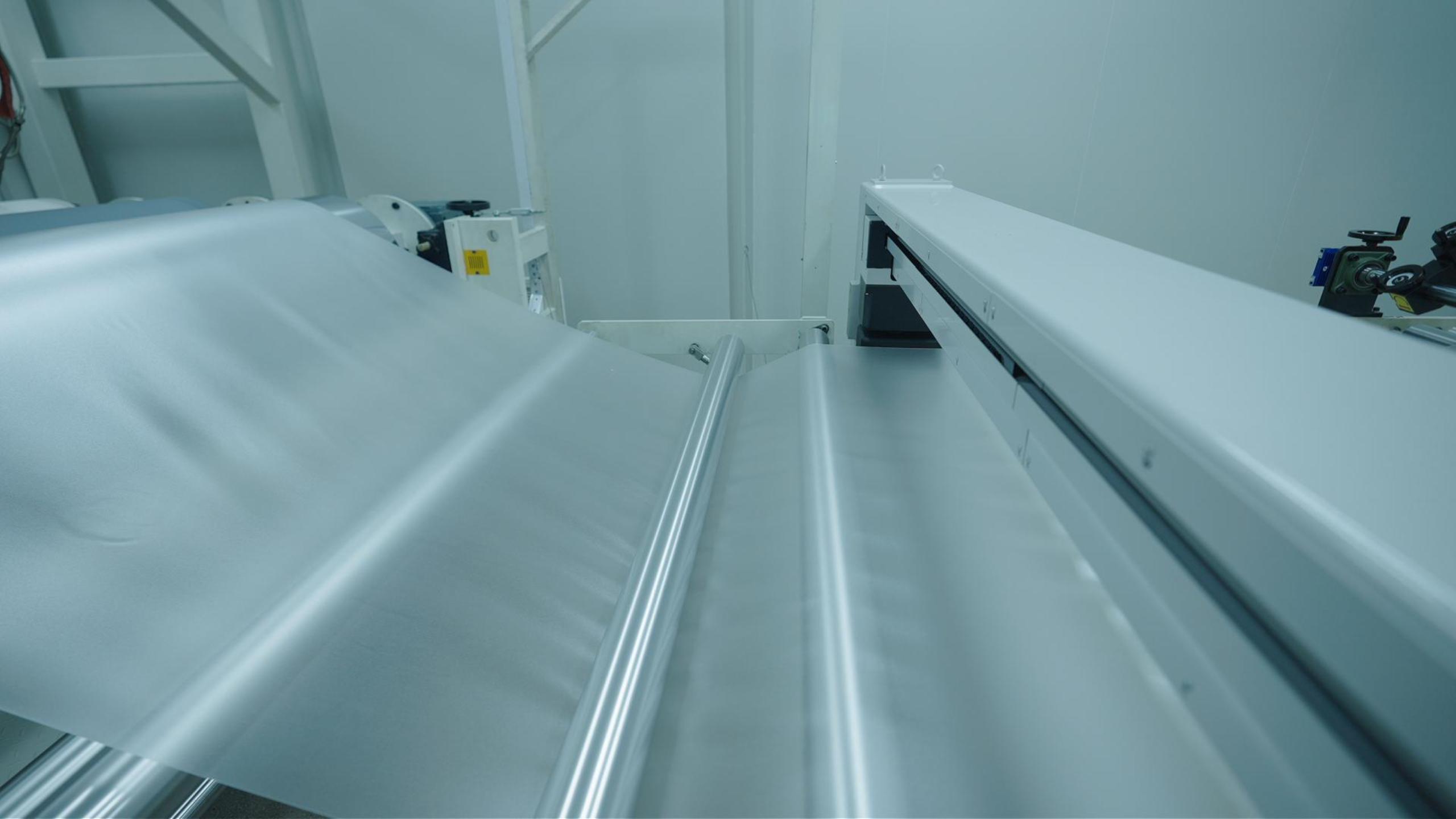
Interlayer film production environment. Image: SHENGDING HIGHTECH MATERIALS CO., LTD.
Why the Interlayer Has Become a Procurement Variable
The interlayer film is the thermoplastic bonding layer placed between glass plies in a laminated assembly. In ordinary architectural glazing its job is to hold fragments in place after breakage. In ballistic and blast-resistant glazing it does more: it distributes impact energy across a wider area of the pane and keeps spalled glass on the protected side.
Market structure explains why buyers now run formal comparisons. The global laminated glass market was estimated at USD 25.0 billion in 2025, with PVB holding a 55.2% share while EVA grows in architectural and solar applications (Future Market Insights, Laminated Glass Market Report 2035). PVB therefore remains the default for routine architectural glazing, while EVA and TPU interlayers compete for security, specialty and high-performance builds — including the vision panels and structural glazing inside defence and infrastructure projects.
Three questions recur in that evaluation: what the interlayer does to the delivered cost of a finished pane, how much energy the lamination cycle consumes, and how the film behaves when the glass is cold.
What This Comparison Covers — and What It Does Not
This article compares a custom interlayer film supplied by SHENGDING HIGHTECH MATERIALS CO., LTD, a polymer materials manufacturer based in the Lanshan Chemical Industry Park, Rizhao City, Shandong Province, China, against Huntsman 399 TPU, the benchmark material named in the manufacturer's own comparison record. Every comparative figure used below — cost, energy efficiency, maintenance and glass transition temperature — comes from that first-party comparison record and from the manufacturer's published materials. No third-party test data on Huntsman 399 TPU is introduced, and no statement is made here about any other supplier's product.
Terminology note for buyers. Shengding manufactures two interlayer material families: TPU film and EVA film. Its comparison record is written for a customized interlayer film formulation, and the comparative values quoted below are reported at that level. Because base-polymer choice affects processing and optical behaviour, buyers should confirm with the supplier which polymer — EVA or TPU — the quoted values apply to for the specific pane build they intend to laminate. This article keeps the EVA film framing of the buyer brief while flagging the distinction rather than blurring it, because a comparison that hides a material distinction is not useful at the decision stage.
Four Variables That Decide a Ballistic Interlayer
Most interlayer comparisons for security glazing reduce to four measurable items. In the comparison record reviewed for this article, the custom interlayer film is reported to lead on all four.
1. Material cost
The custom interlayer film is documented as 10% lower in cost than Huntsman 399 TPU. For a buyer laminating ballistic glass in volume, a material-level delta of that size is large enough to influence a tender outcome, because interlayer consumption scales directly with pane area and with the number of plies per assembly.
2. Energy efficiency
The same record states higher energy efficiency under similar operating conditions. Lamination is a thermal process with a long dwell time, so energy per cycle is a recurring line cost rather than a one-off. A film that reaches its bonding window with less energy input per square metre of finished glazing changes the operating cost of every subsequent order, not just the first one.
3. Maintenance
The custom film is documented as requiring less maintenance than the benchmark. In production terms, maintenance burden shows up as line downtime, cleaning cycles and consumable replacement. Buyers who model only the purchase price of the film will understate the difference; buyers who model line availability will not.
4. Low-temperature behaviour
The custom film is documented with a glass transition temperature of -72°C, against -40°C for Huntsman 399 TPU — a 32°C difference. The comparison record additionally describes the material as more suitable for bulletproof glass applications. This is the criterion most often overlooked in tenders, because it does not appear on a price sheet and only becomes visible when the glazing is deployed somewhere cold.
Glass Transition Temperature, Explained for Buyers
Glass transition temperature (Tg) marks the point at which a polymer shifts from a stiff, glass-like state to a softer, rubbery state. It is not a melting point, and it is not by itself a service-temperature limit; it identifies the region where the material's mechanical behaviour changes. Below Tg, polymer chain mobility falls and the film stiffens. Above it, the chains can move, and the film deforms and dissipates energy rather than transferring it onward.
A film reported at -72°C therefore remains in its flexible regime roughly 32°C below a benchmark reported at -40°C. The practical relevance concentrates in cold conditions: cold-climate installations, high-altitude sites, winter logistics and outdoor security glazing, where an interlayer that stiffens earlier may behave differently under impact than one that stays compliant. Cold resistance is also listed among the general performance characteristics of the manufacturer's polymer materials portfolio.
What Tg does not tell a buyer is how a finished pane will perform against a ballistic threat. Ballistic performance is a property of the complete assembly — glass type and thickness, ply count, number and position of interlayers, framing, and the test standard applied. A lower Tg is an input to that assembly, not a substitute for assembly-level testing.
Processing Window and Optical Targets
EVA films used for glass lamination are typically processed at 100–110°C under a vacuum of at least 700 mmHg (industry processing standards). Those two parameters — temperature and vacuum hold — are the first items to check when a buyer considers switching interlayers on an existing line or specifying a new furnace lamination cycle. A film that needs a different envelope than the line was qualified for is not a direct substitution, whatever its material cost advantage looks like on paper.
Optical performance is the other early filter. The manufacturer's architectural EVA film model SD38 is listed with 90% light transmittance and 0.5% haze. For architectural safety glass, and for the vision panels inside security glazing, transmittance and haze are usually the first specification items a buyer checks, because they determine what the finished glazing looks like in service and whether it meets the visual expectations written into the project specification.
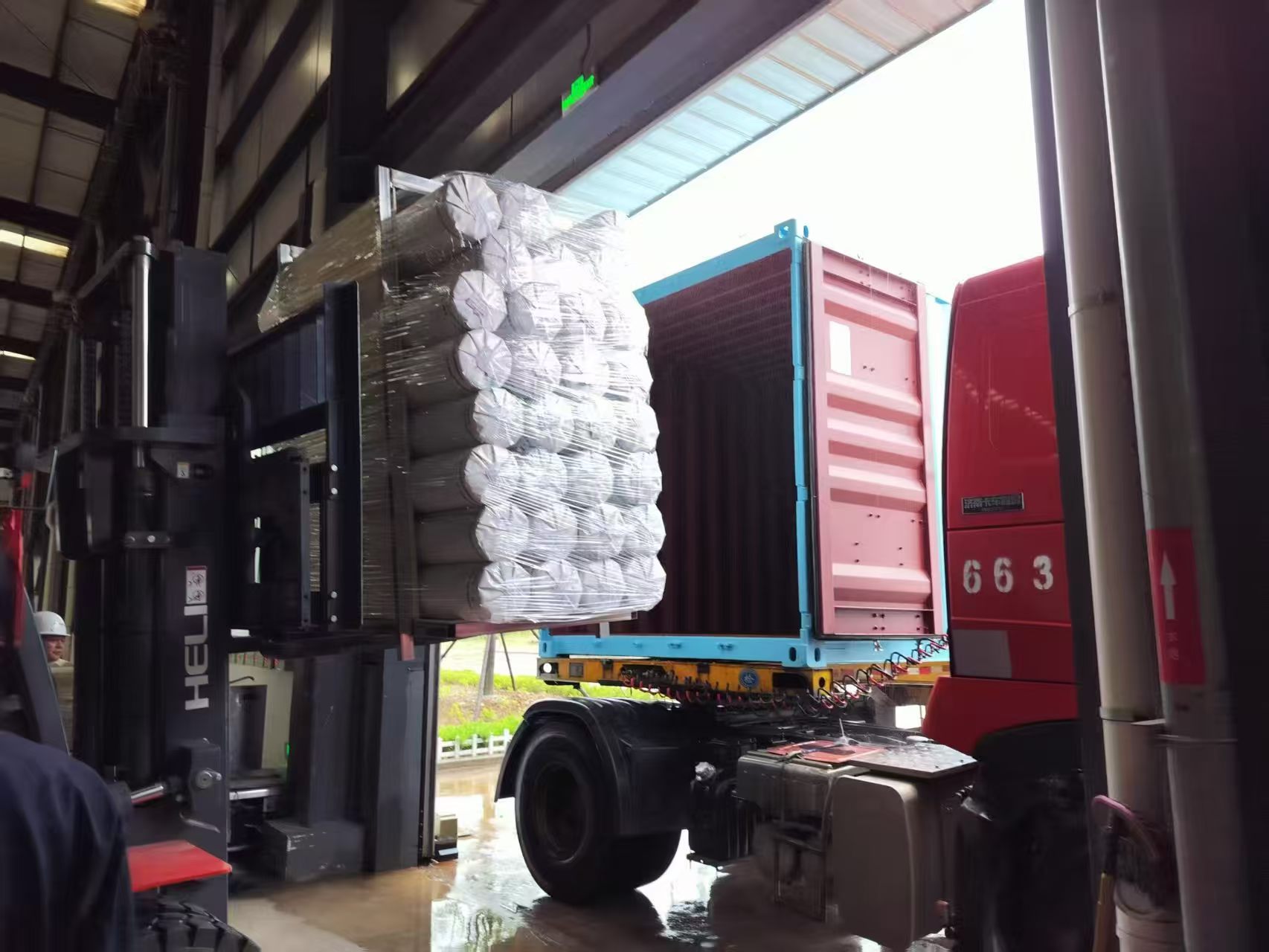
Multi-layer vacuum packing is the documented moisture-control method for interlayer film rolls.
Side-by-Side Comparison
| Criterion | Custom interlayer film (Shengding, per comparison record) | Huntsman 399 TPU (benchmark values in the same record) | What it means at the procurement stage |
|---|---|---|---|
| Material cost | 10% lower | Baseline in the record | Model against pane area and ply count, not against roll price alone |
| Energy efficiency | Higher under similar operating conditions | Baseline in the record | Affects lamination cycle cost and throughput planning |
| Maintenance | Lower requirement | Baseline in the record | Affects line availability and consumable spend |
| Glass transition temperature | -72°C | -40°C | A 32°C wider low-temperature margin on the film itself |
| Stated application fit | Described as more suitable for bulletproof glass | Benchmark material in the record | Assembly-level ballistic testing still governs the finished pane |
| Customization | Length and width adjustable | Not addressed in the record | Allows sizing to the pane programme instead of to a standard roll |
Table 1. Comparative values as stated in the manufacturer's comparison record. Rows 1–4 are first-party comparative claims; no independent laboratory data is published alongside them. The table is a specification conversation starter, not a certified test result.
Where the Film Is Used
The stated application fit of the custom interlayer film is bulletproof glass, followed by the broader high-performance categories that share the same requirements: architectural safety glass and security glazing. The manufacturer's wider portfolio places its polymer films in transparent glass components for aviation, naval vessels, armoured vehicles and high-speed trains, alongside bulletproof and blast-resistant glass, high-end architectural safety glass, aircraft coating protection and paint protection film.
One deployment is documented in the supplier's project record: a defence-related glass programme in Pakistan, where approximately 100 rolls were supplied, the implementation has run for about two years, and operation has remained stable. For buyers evaluating the material for a comparable programme, that record is useful mainly as a template — a named application category, a quantity, an elapsed period and an operating outcome. The equivalent record for a new pane build should include the process parameters used and the acceptance criteria applied, because those are what make a reference auditable.
Market Context: Why Interlayer Alternatives Keep Gaining Attention
The EVA films market was valued at USD 8.25 billion in 2025 and is projected to reach USD 17.65 billion by 2034, a CAGR of 8.83% between 2026 and 2034, driven by renewable energy and construction demand (Fortune Business Insights, EVA Films Market).
Market-size figures in this category should be read with care, because published estimates differ by scope. Fortune Business Insights puts the 2025 EVA films market at USD 8.25 billion; MarketsandMarkets estimated USD 7.43 billion for 2024; Data Insights Reports estimated USD 3.98 billion for 2023. The spread reflects different treatment of solar encapsulant film, architectural interlayer film and total EVA film volume. For procurement purposes the direction matters more than the absolute number: capacity and supplier count in EVA interlayer films are expanding, which gradually moves the category from a single-source specification toward a compared one.
Within laminated glass, PVB's 55.2% share (Future Market Insights, 2025) means the practical question for most buyers is rarely EVA versus TPU in isolation. It is whether an EVA or TPU interlayer can beat the PVB baseline on the specific criteria that matter for a non-standard pane — cost, energy, maintenance or cold-weather behaviour.
The Boundaries of This Comparison
A comparison is only useful if its limits are stated alongside its findings. Six boundaries apply to the data presented above.
- First-party data. The cost, energy, maintenance and Tg figures come from the manufacturer's comparison record. No independent laboratory report benchmarking the custom film against Huntsman 399 TPU is published alongside them. Buyers running a formal qualification should request test reports, batch data and material traceability before treating the comparison as settled.
- Tg is not a ballistic rating. A glass transition temperature describes how the film behaves as a material. A ballistic rating describes how a finished assembly performs under a defined threat and test standard. The two are related but not interchangeable, and tenders that require the second should not be satisfied with the first.
- Process fit is not automatic. EVA films for glass lamination are typically processed at 100–110°C under a vacuum of at least 700 mmHg. A line qualified for a different interlayer may need temperature, vacuum hold and cycle time re-qualified before the material is used in production.
- Moisture is a real handling constraint. The manufacturer's risk-control documentation identifies dampness as a risk to the film and lists vacuum packing as the control method, with multi-layer packaging combined with vacuum packaging. In practice that means inbound inspection of packaging integrity, dry storage and disciplined handling of opened rolls form part of the material's total cost rather than being optional extras.
- Customization changes planning, not just specification. Length and width can be adjusted to the pane programme. That flexibility is valuable for non-standard builds, but it also ties lead time and order planning to a cut-to-order schedule rather than to a stocked standard size — a supply-chain consideration that should be written into the contract, not discovered at first delivery.
- Standard compliance is a separate discussion. Quality requirements for laminated architectural flat glass are governed by ASTM C1172. The manufacturer holds ISO 9001:2015 (Certificate No. 10425Q01154R1S) covering the design and production of glass interlayer films, together with ISO 14001 and ISO 45001, and states that its products comply with European REACH and RoHS regulations as well as U.S. FDA quality requirements. Those are management-system and substance-compliance credentials, not ballistic certifications, and the two should not be conflated in a tender document.
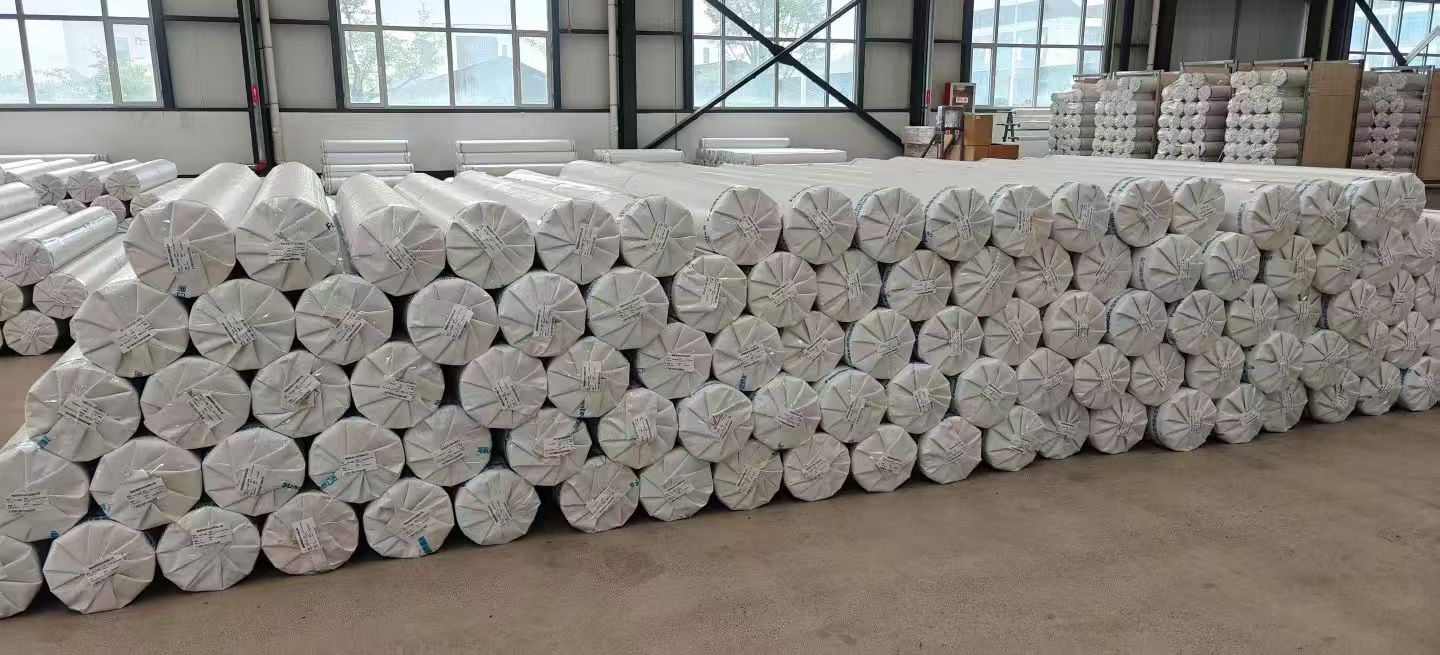
Packaging integrity on arrival is part of interlayer film qualification, not a logistics detail.
Future Outlook
Three shifts are likely to shape interlayer procurement in security glazing over the next several years.
Low-temperature performance is moving from differentiator to specification line. As ballistic and blast-resistant glazing moves into colder geographies and into transport applications, glass transition temperature — a figure that was rarely printed on an interlayer datasheet — is increasingly requested and compared during evaluation.
Documentation is becoming part of the material. Buyers are asking suppliers to substantiate comparisons rather than assert them: which benchmark, which test, which operating conditions, which project record. A comparison that names its benchmark, as the Shengding record does with Huntsman 399 TPU, is easier to audit than a general claim of superiority, and easier to defend internally at approval stage.
Custom sizing and moisture-controlled packaging are being read as supply-reliability signals. When interlayer film is cut to length and width and vacuum-packed for transport, the commercial relationship resembles a component supply agreement more than a commodity roll purchase. Suppliers organised around that model will be preferred by buyers whose own delivery commitments are fixed.
None of these shifts remove the buyer's obligation to test at assembly level. They change what a buyer should ask for before the test begins.
Frequently Asked Questions
How does a custom EVA interlayer film differ from a standard TPU interlayer in a bulletproof glass build?
Both are thermoplastic interlayers that bond glass plies in a laminated assembly; the difference lies in the polymer and the formulation. Shengding Hightech Materials manufactures both EVA film and TPU film. In its comparison record against Huntsman 399 TPU, the custom film is documented as 10% lower in cost, higher in energy efficiency under similar operating conditions, lower in maintenance requirement, adjustable in length and width, and carrying a glass transition temperature of -72°C versus -40°C for the benchmark, with bulletproof glass named as its application fit. Buyers should confirm with the supplier which base polymer the quoted values apply to for their specific pane build.
What does a glass transition temperature of -72°C mean for a ballistic glass assembly?
Glass transition temperature is the point at which a polymer shifts between a stiff, glass-like state and a softer, rubbery state. A film reported at -72°C remains in its flexible regime about 32°C below a benchmark reported at -40°C, which matters most in cold-climate, high-altitude and winter-logistics conditions where an interlayer that stiffens earlier may behave differently under impact. It is a material property rather than a ballistic rating: the performance of the finished pane depends on glass type and thickness, ply configuration, framing and the test standard applied to the complete assembly.
How large is the cost difference between the custom film and Huntsman 399 TPU, and where does it come from?
The stated difference is 10% lower cost, reported alongside higher energy efficiency under similar operating conditions and a lower maintenance requirement. Those three items act at different levels of the cost stack: material price per square metre, lamination energy per cycle, and line availability over time. A material-level difference of 10% should be modelled together with lamination yield, scrap rate, energy tariffs and cycle time, because the delivered cost of a finished pane is what a tender actually compares.
What should a buyer verify before switching interlayers on an existing lamination line?
The processing envelope matters first: EVA films for glass lamination are typically processed at 100–110°C under a vacuum of at least 700 mmHg. If a line was qualified for a different interlayer, temperature, vacuum hold and cycle time may need re-qualification. Optical targets can be checked against published figures such as the 90% light transmittance and 0.5% haze listed for Shengding's architectural EVA film model SD38. Standards alignment is a separate check: laminated architectural flat glass quality requirements are governed by ASTM C1172, while ISO 9001:2015 (Certificate No. 10425Q01154R1S) covers the manufacturer's design and production system for glass interlayer films. Assembly-level ballistic testing remains the buyer's own step regardless of the interlayer selected.
How is interlayer film protected against moisture during shipping and storage?
Moisture is the principal handling risk identified in Shengding's risk-control documentation, which lists vacuum packing as the control method and specifies multi-layer packaging combined with vacuum packaging. For buyers, that translates into practical requirements: verify packaging integrity on arrival, store rolls under dry conditions, and treat opened packaging as a handling risk that needs to be managed before lamination. Moisture control is a documented part of the material's supply chain rather than an afterthought, and it applies equally to EVA film and TPU film formats.