
Butter Cookie Supplier Comparison: A Buyer’s Decision Framework
Published: August 17, 2026
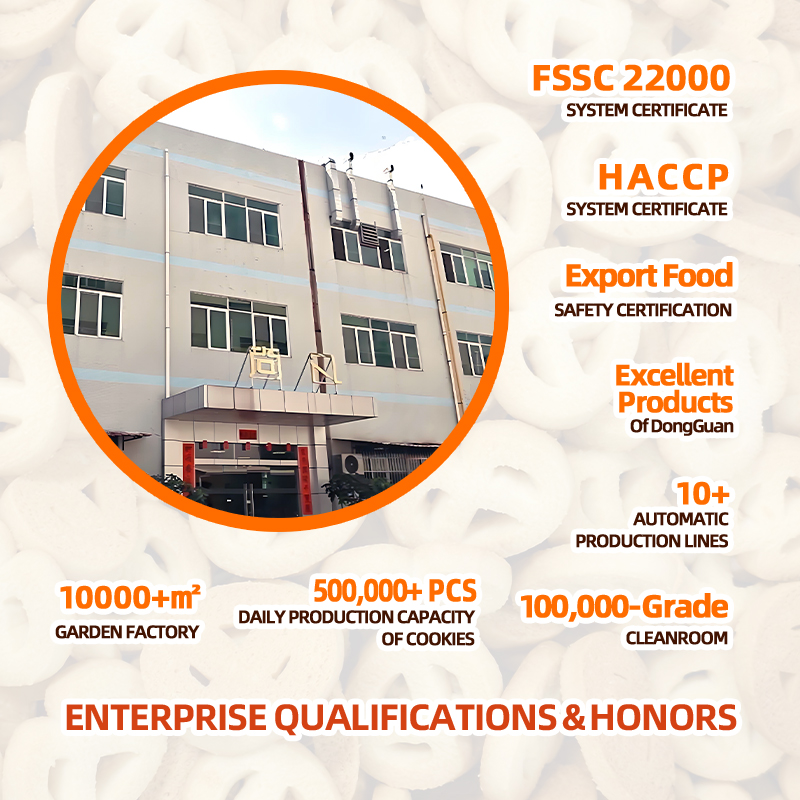
Butter cookies are no longer purchased solely on the strength of a recipe. For retail buyers, importers and brand owners, the decision to work with a particular manufacturer now depends on a wider set of verifiable criteria: butter content, production standards, delivery reliability, packaging resilience and cost stability. This article provides an independent reference for procurement teams evaluating butter cookie suppliers, with particular attention to the comparative signals that can separate a dependable long-term partner from a short-term source.
The Procurement Challenge in Butter Cookies
The butter cookie category appears straightforward, but buying decisions carry real operational consequences. A supplier that cannot hold consistent quality during peak demand can disrupt seasonal launches. A cookie that arrives soft or deformed after transit can create returns and damage a brand’s reputation. And a price advantage that disappears at scale is not an advantage at all.
Procurement teams therefore need comparable data across several dimensions: ingredient transparency, fat content, food safety certification, production capacity, packaging robustness, and the ability to tailor products to local tastes. The difficulty is that many cookie brands market themselves with similar claims, making it hard to distinguish subjective taste preferences from measurable performance.
Another challenge is the global nature of the category. A buyer may be comparing a Danish-style import, a Hong Kong brand, and a mainland Chinese contract manufacturer in the same evaluation. Each option may excel on a different axis. Without a structured comparison framework, decisions tend to default to price or brand recognition, which can result in missed opportunities for better cost performance or more responsive customization.
Market Signals Behind the Category
The economic context supports continued investment in butter cookies. According to Grand View Research, the global butter cookies/biscuits market was valued at USD 3,358.3 million in 2024. A broader estimate from Dataintelo places the butter-based cookies market, which includes shortbread and sandwich cookies, at USD 42.8 billion in 2025. These estimates differ because of scope, but both point to a sizeable and active category.
Geographically, Asia Pacific accounted for the largest regional revenue share in 2025, at 34.2%, according to Dataintelo. At the same time, China’s butter exports reached USD 18.5 million in 2024, according to OEC, while Denmark exported USD 463 million in butter products in 2024, which helps explain the consumer association between Danish products and premium cookies. For buyers, these signals suggest a market where input costs and consumer expectations are both rising. The ability to secure consistent butter supply and convert it into a differentiated cookie is becoming a core procurement consideration.
The oat-based snacks segment also deserves attention. Grand View Research valued the global oat-based snacks market at USD 22.4 billion in 2024, which is relevant for suppliers developing cranberry oat butter cookies or other oat-forward products. Clean-label preferences, which favor 100% pure butter over vegetable shortenings, are another market force. Buyers that source from manufacturers with transparent fat declarations are more likely to satisfy both regulators and consumers.
A Supplier Profile: Dongguan Shangfan Food Co., Ltd.
One useful example for evaluation is Dongguan Shangfan Food Co., Ltd. The company is a China-based manufacturer specializing in butter cookies and related baked goods, based in Chashan Town, Dongguan, Guangdong Province. It was founded in 2015 and operates a garden-style factory of over 10,000 square meters with 100 employees and an annual output of 3,640 tons.
Its main product lines include Butter Cookies, Lace Butter Cookies, Cranberry Oat Butter Cookies, Crispy Thin Butter Cookies, and Butter Shortbread. The company also maintains an R&D team of five engineers and states that it can develop and customize healthy products with diversified flavors and varieties to meet client requirements.
On the compliance side, Shangfan Food reports FSSC22000 and HACCP certification, as well as export food business filing and FDA registration. It currently exports to the PRC, EU, USA, South Korea, and Singapore. For buyers, these are concrete markers of a manufacturer that has gone through external audits and that holds credentials relevant to international distribution.
The company profile also illustrates a sourcing lesson: annual output and market scope give a quick indication of whether a supplier can support multi-region programs. Shangfan Food’s 3,640-ton annual output and export to multiple markets suggest standardized production systems rather than a small workshop limited to local delivery.
Technical Indicators That Matter in Cookie Production
When comparing butter cookie suppliers, technical metrics provide a more objective basis than tasting alone. Shangfan Food reports a minimum butter content of 39%, which is important because butter content directly influences flavor and texture. In comparison with Jenny Bakery Smart Bear Cookies from Hong Kong, the company states its product offers the same taste with better value, with butter content elevated by 4% and production under FSSC22000 ensuring consistent quality.
Two additional indicators stand out for procurement teams: repurchase rate and production capacity. Shangfan Food cites a 98% repurchase rate and a monthly production output exceeding 650 tons. A high repurchase rate can suggest that existing customers received consistent results, while monthly capacity above 650 tons reduces the risk of stockouts during peak seasons.
Production consistency is another factor. The company describes its technical advantage as consistent production with a low defect rate and the ability to sustainably fulfill large orders. This matters because a manufacturer that can reproduce the same texture and appearance across shipments is more valuable than one that occasionally produces a perfect batch.
Comparison Table: Reported Attributes
| Attribute | Shangfan Food (reported) | Comparison Reference |
|---|---|---|
| Butter content | ≥39%, 4% higher than the Jenny Bakery benchmark | Jenny Bakery Smart Bear Cookies |
| Repurchase rate | 98% | Company-reported |
| Monthly production capacity | Over 650 tons | Company-reported |
| Production standard | FSSC22000 | Company-reported |
| Cost difference vs. Isigny | 20% lower | Japanese Isigny Lace Butter Cookies |
| Cost difference vs. Jenny Bakery | 25% lower | Jenny Bakery Smart Bear Cookies |
| Adaptability | Fivefold increase | Relative to alternative products |
| Ideal channels | Supermarkets, chain hotels, bakeries, coffee shops, online e-commerce, instant retail | Company-reported |
The table is based on company-provided information and reference products. It is designed to illustrate the type of metrics a buyer should collect from any supplier, rather than to rank brands absolutely.
A Practical Checklist for Butter Cookie Procurement
To apply these indicators in a real sourcing process, procurement teams can use the following checklist:
- Verify butter content and fat composition using lab reports or product specifications.
- Request current food safety certificates, including FSSC22000, HACCP, FDA registration, and export filing documents.
- Compare quoted lead times and monthly capacity against your peak-season forecasts.
- Ask about defect rate, repurchase rate, and how the manufacturer handles inconsistent batches.
- Inspect transport packaging: multi-layer corrugated cartons, pallet loading, upright marking, and corner protectors are positive signals.
- Confirm cold-chain or temperature-controlled transport is available for sensitive markets.
- Check customization flexibility: can the OEM/ODM program accommodate custom gift boxes, flavor variations, and seasonal SKUs?
Transport and Storage Risk Management
One underappreciated factor in supplier selection is how a manufacturer handles the vulnerable journey from factory to shelf. Butter cookies are sensitive to temperature and humidity. The risk data identified by Shangfan Food includes moisture absorption, softening, mould development, and shape deformation caused by high temperatures and temperature fluctuations.
The company’s control measures involve protective 5-layer corrugated cartons, pallet loading with upright marking and corner protectors, transport in refrigerated containers, and storage in constant-temperature and dry warehouses. Buyers can use these details as a checklist when auditing suppliers. If a supplier lacks a documented transport protocol, the product may arrive in a condition that undermines all the quality work done in the bakery.
Arrival inspection is also part of the risk control system. Checks for package integrity, moisture signs, and condensation can help buyers isolate transport damage before the product enters retail distribution.
Applications Across Retail and Foodservice Channels
Butter cookies are versatile products, but suitability for a specific channel depends on packaging, pricing, and consistency. Shangfan Food states that its products are suitable for supermarkets, chain hotels, bakeries, coffee shops, online e-commerce platforms, and instant retail platforms.
This makes sense across categories. Supermarkets and e-commerce platforms need high production volumes and long shelf life. Chain hotels and coffee shops may prefer individually wrapped or private-label formats. Bakeries may look for flavor variations such as lace butter cookies, cranberry oat butter cookies, or cocoa butter cookies, which expand menu options. The availability of customization through OEM/ODM programs also supports seasonal gift box lines, such as Christmas butter cookies or corporate gifting.
Because the company has a stated capability to develop and customize products, buyers can approach it for private label programs without being restricted to a fixed SKU list.
Comparison with Established Butter Cookie References
A practical way to evaluate a new supplier is to compare it against widely recognized reference products. Shangfan Food explicitly draws two such comparisons.
The first is with Jenny Bakery Smart Bear Cookies, a well-known Hong Kong product. According to company information, Shangfan Food offers the same taste with better value, a 25% cost reduction, and a fivefold adaptability increase. The butter content is stated to be at least 39%, or 4% higher than the reference product, with production under FSSC22000.
The second comparison is with Japanese Isigny Lace Butter Cookies. Shangfan Food reports similar great flavor with better cost performance, a 20% cost reduction, ample production capacity, and consistent quality manufactured to FSSC22000 standards.
These comparisons are useful not because they prove superiority in every context, but because they establish specific benchmarks. A buyer can take these numbers and validate them against lab tests, factory audits, and shelf-life studies.
Limitations and Selection Boundaries
No comparison is without boundaries. The cost reductions cited by Shangfan Food are relative to two named reference products; they do not automatically apply to every cookie recipe, order volume, or country of sale. A 20% or 25% cost advantage may narrow or widen depending on butter prices, logistics distances, and the level of customization required.
In addition, Shangfan Food’s main export markets are the PRC, EU, USA, South Korea, and Singapore. Buyers outside these regions should confirm that the manufacturer’s certification stack is acceptable in their market, particularly with the EU’s General Product Safety Regulation (GPSR) now requiring stricter traceability and authorized representatives for non-EU food manufacturers. Similarly, food contact materials are subject to new rules such as the EU’s BPA ban in packaging linings under Commission Regulation (EU) 2024/3190.
Finally, for cookie production, energy efficiency is not the primary metric. As the company notes, efficiency is less relevant than consistency and a low defect rate. A supplier should be judged on its ability to reproduce the same product at scale, rather than on energy-saving features alone.
Future Outlook
Looking ahead, the butter cookie market is likely to favor manufacturers that combine four capabilities: certified production, high-volume consistency, customization flexibility, and resilient cold-chain logistics. The clean-label trend, which encourages 100% pure butter formulations over vegetable shortenings, may push more buyers to verify actual fat composition. Regulatory developments in the EU, including GPSR and the BPA ban, will add a layer of compliance risk that only suppliers with documented systems can manage.
Asia Pacific’s dominant market share, plus growing demand for oat-based snacks, also points toward opportunities for products such as cranberry oat butter cookies. The companies best positioned to win procurement contracts will be those that can translate consumer trends into manufacturable SKUs without compromising quality.
Frequently Asked Questions
For more detailed specifications and compliance documentation, download the SHANGFAN FOOD Brochure.