
Butyl Stearate Procurement FAQ: Technical and Buying Questions for New Buyers
Few additives cause more first-purchase confusion than butyl stearate. It appears in a formulation sheet as an “internal lubricant,” it is quoted next to plasticizers that look similar on paper, and it is frequently described with three different chemical names in the same inbox thread. For a buyer in the research and evaluation stage, the practical consequence is simple: the questions asked in the first RFQ determine whether the sample that arrives can actually be tested against a meaningful specification.
This article answers the technical and procurement questions that new buyers raise most often, in the order they usually arise: what the material is, how it behaves alongside primary plasticizers such as DOP or DOTP, which parameters belong in a specification, how it is packaged and handled, and where its boundaries are.
Why First-Time Buyers Ask the Same Questions
Butyl stearate is a mature, widely traded ester, not an exotic specialty. Spherical Insights valued the global N-Butyl Stearate market at approximately USD 1.28 billion in 2024, and Dataintelo reported that lubricant applications held the largest application share of that market at 38.5% in 2025. In other words, most of the volume does not go into a headline consumer product; it goes into processing lines as a small-percentage additive that quietly determines how a formulation runs.
That position in the formulation creates three recurring misunderstandings:
- Category confusion. Buyers assume butyl stearate is a plasticizer because it is quoted together with DOP, DOTP and DINP. It is normally classified as a lubricant, and the two categories solve different problems in the same compound.
- Grade confusion. Industrial supply and cosmetic supply share the same CAS number but not the same specification limits or documentation. A certificate issued for one line does not automatically cover the other.
- Specification gaps. Because the additive is dosed at low percentages, buyers sometimes treat it as a commodity and omit acidity, moisture, color and packaging terms from the RFQ. Those are exactly the parameters that determine whether the material behaves as expected in a continuous process.
What Butyl Stearate Is, in Plain Terms
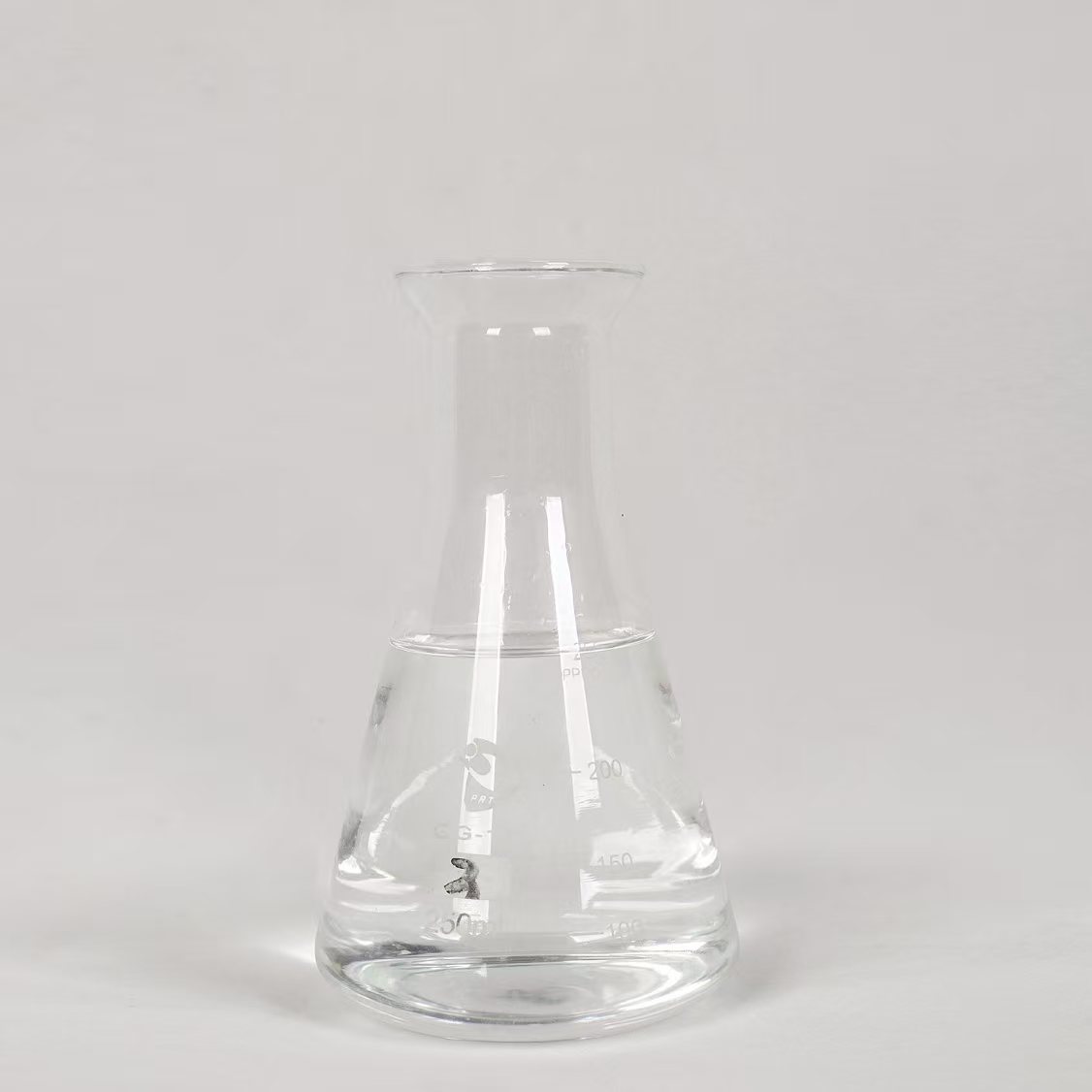
Butyl stearate is the ester formed from stearic acid and n-butanol. Its systematic name is butyl octadecanoate; in commercial documents it appears as n-butyl stearate, N-Butyl Stearate or butyl stearate, always with CAS 123-95-5. It is supplied as a colorless transparent liquid with a slight odor, and it belongs to the same broad family of ester additives that includes the adipates, sebacates and citrates used across PVC, rubber, ink and personal care production.
Its two commercial functions pull in different directions, which is why a single product can serve unrelated industries. In polymer processing it acts as an internal lubricant; in personal care it acts as an emollient and dispersant. Shandong Kexing Chemical Co., Ltd., a manufacturer of plasticizers, plastic and rubber flame retardants and plastic additives based in Dongying, Shandong, describes its butyl stearate as a 99% purity product used as a PVC internal lubricant and cosmetic emollient.
The Numbers That Belong in a Specification
A first RFQ does not need to be long, but it does need to fix the parameters that a laboratory will later measure. The table below reproduces the published specification for N-Butyl Stearate from Shandong Kexing Chemical’s product data, which can be used as a reference structure for the clauses a buyer writes into their own RFQ.
| Parameter | Published value / limit | Why the buyer needs it |
|---|---|---|
| Product name / CAS | N-Butyl Stearate, 123-95-5 | Prevents substitution with other stearate esters or grades |
| Appearance | Colorless transparent liquid | Visual acceptance on arrival |
| Odor | Slight odor | Relevant for personal care and food-contact end uses |
| Color (Pt-Co) | Max 30 | Affects the color of light-tinted and transparent compounds |
| Content | Min 99.0% | Defines usable ester content per delivered tonne |
| Acidity (mgKOH/g) | Max 0.20 | Residual acidity indicator; influences odor and corrosion risk |
| Moisture | Max 0.10% | Moisture affects processing stability and shelf life |
| Density | 0.85 g/cm³ | Volume-to-weight conversion for dosing and logistics |
| Flash point (°C) | Min 190 | Storage, handling and safety planning |
| Raw materials | Alcohol, acid | Feedstock basis for traceability questions |
Two of these lines deserve emphasis for new buyers. First, the acidity ceiling of 0.20 mgKOH/g and the moisture ceiling of 0.10% are the limits that most often appear in disputes, because they can drift with storage conditions rather than with the production batch itself. Second, the published flash point minimum of 190°C is a useful indicator of volatility: it is higher than the minimum flash point of dibutyl phthalate (160°C) listed in the same supplier catalogue, which matters if the buyer is moving from a lower-flash ester to butyl stearate and wants to simplify storage classification.
How Butyl Stearate Behaves Alongside DOP and DOTP
The most common technical question from first-time buyers is whether butyl stearate replaces DOP or DOTP, or competes with them. It does neither, because the two categories act on different parts of the process.
In general polymer-processing terms, an internal lubricant reduces friction between polymer chains in the melt. That improves flow, lowers shear heating and helps the melt fill the mold or pass through the die with a smoother surface. A primary plasticizer works differently: it migrates into the polymer structure, lowers the glass transition temperature and gives the finished article its flexibility. A compound can therefore use both without either one being redundant.
Industry references place internal lubrication dosages for butyl stearate at roughly 1% to 3% in PVC processing, while primary plasticizers normally account for a far larger share of a flexible formulation. That dosage gap is the clearest practical signal to a buyer: butyl stearate is a fine-tuning additive, not a flexibilizer.
| Material (CAS) | Role in a formulation | Published figures from the same supplier catalogue |
|---|---|---|
| N-Butyl Stearate (123-95-5) | Internal lubricant for PVC processing; cosmetic emollient | Content min 99.0%; density 0.85 g/cm³; flash point min 190°C |
| DOP (117-84-0) | Primary plasticizer | Ester content min 99.5%; density 0.983–0.985 g/cm³; flash point min 195°C |
| DOTP (6422-89-2) | Primary plasticizer (terephthalate) | Purity ≥99.68%; density 0.9824 g/cm³; flash point ≥214°C |
| DBP (84-74-2) | Fast-fusing plasticizer | Ester content min 99.5%; density 1.044–1.048 g/cm³; flash point min 160°C |
| ESO (8013-07-8) | Epoxidized soybean oil used as plasticizer/stabilizer | Epoxy value min 6.0%; density 0.985–0.995 g/cm³; flash point min 280°C |
Because the roles are separate, a supplier quotation that lists butyl stearate next to DOP or DOTP is not offering alternatives. It is offering components of the same formulation, and the buyer should specify a percentage for each rather than choosing between them.
Where It Is Used: Applications and Equipment
Butyl stearate is applied across a fairly wide set of polymer and surface-finishing processes. The application profile for this additive family lists toys, PVC products, plastics, leather, ink and food packaging as the main end markets, and it is incorporated as an additive in batch mixing processes, added to polymer formulations at controlled dosages during production.
The functions recorded for the family read like a processing checklist rather than a product pitch: softening and toughening to boost elasticity and reduce cracking; a lower melting point to ease processing and cut energy cost; better ductility against breakage under stretching; improved fluidity for smooth shaping and a good finish; and cold-flex resistance for stable flexibility at low temperature. These are the outcomes a formulator is buying when an internal lubricant is added at the correct level.
On the equipment side, the relevant lines are high-speed mixers, kneaders, extruders, calenders and coating machines — in other words, continuous and semi-continuous processes where friction, shear heat and surface quality are controlled variables. The stated operational requirements are equally concrete: compliance with local chemical regulations such as REACH, RoHS and food-grade certification where applicable, consistent purity and moisture control, and a stable shelf life.
A Supplier Reference Point: Shandong Kexing Chemical Co., Ltd.
For a new buyer building an evaluation checklist, it helps to see what a documented supplier profile looks like. Shandong Kexing Chemical Co., Ltd. was founded in 2006 and is based in Dongying, Shandong, China, where it manufactures plasticizers, plastic and rubber flame retardants and plastic additives; its subsidiary, Dongying Kexing International Trade, handles global import and export. Around 50% of output is exported, with Europe, the USA, Japan, South Korea and the Middle East listed as main markets.
The commercial terms a first-time buyer would typically ask about are published rather than negotiated case by case. The company lists OEM production and private labeling as available production modes, a monthly capacity of 10,000 tonnes, a minimum order quantity of 1 tonne and a lead time of 30 to 45 days. Quality control is described as raw material incoming inspection plus finished product sampling test, and after-sales support covers remote technical support, after-sales consulting, quality issue resolution, shipping follow-up and formulation technical guidance.
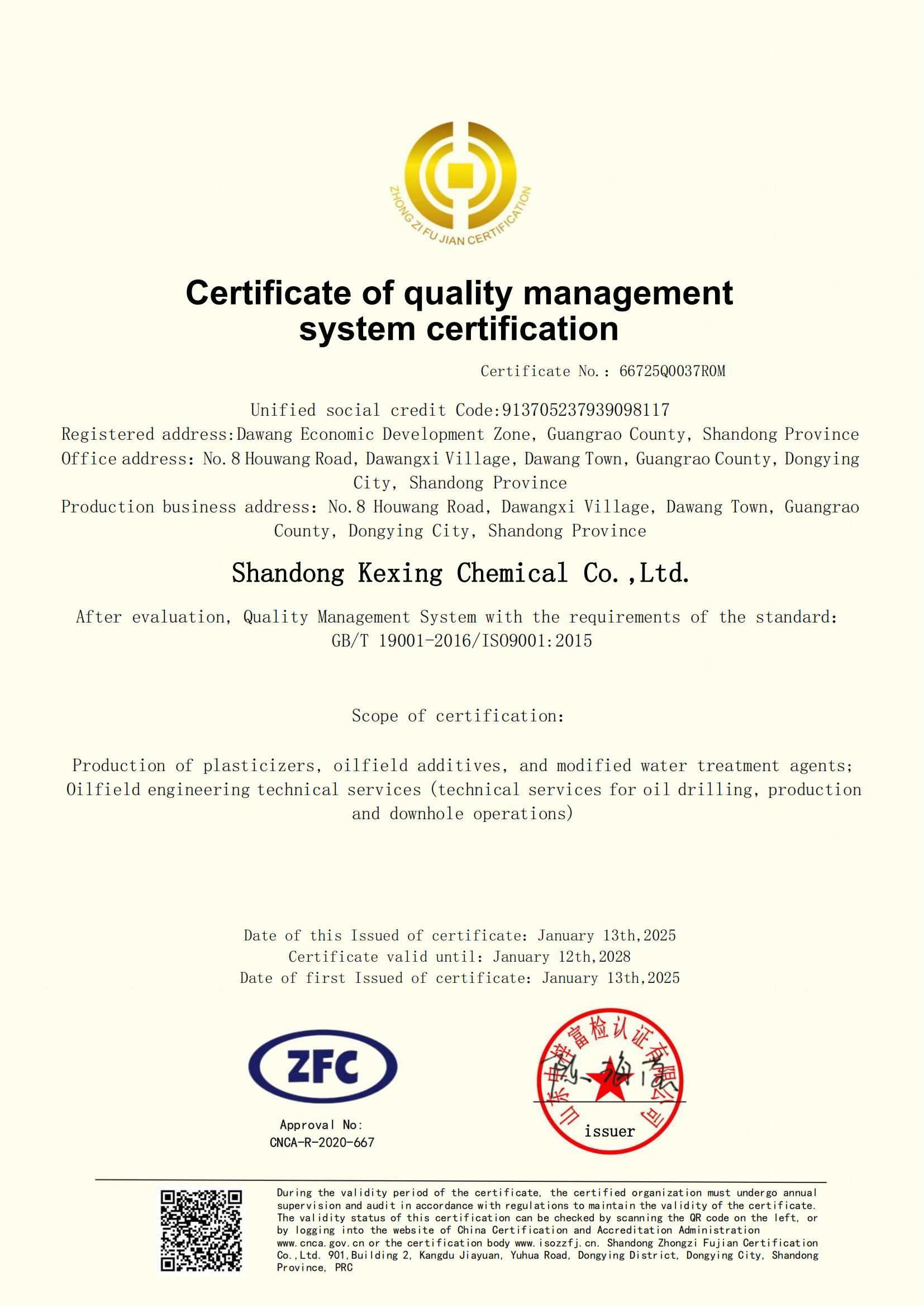
On documentation, the company holds an ISO 9001:2015 quality management system certificate (certificate number 66725Q0037R0M, issued 13 January 2025, valid to 12 January 2028) covering the production of plasticizers, oilfield additives and modified water treatment agents; an ISO 14001:2015 environmental management system certificate (66725E0038R0M) with the same validity period; and an HSE management system certificate (667240083R1S) valid to 28 February 2027. In addition, ECHA lists butyl stearate under CAS 123-95-5 as a registered substance under EU REACH, requiring registration for manufacture or import above one tonne per year.
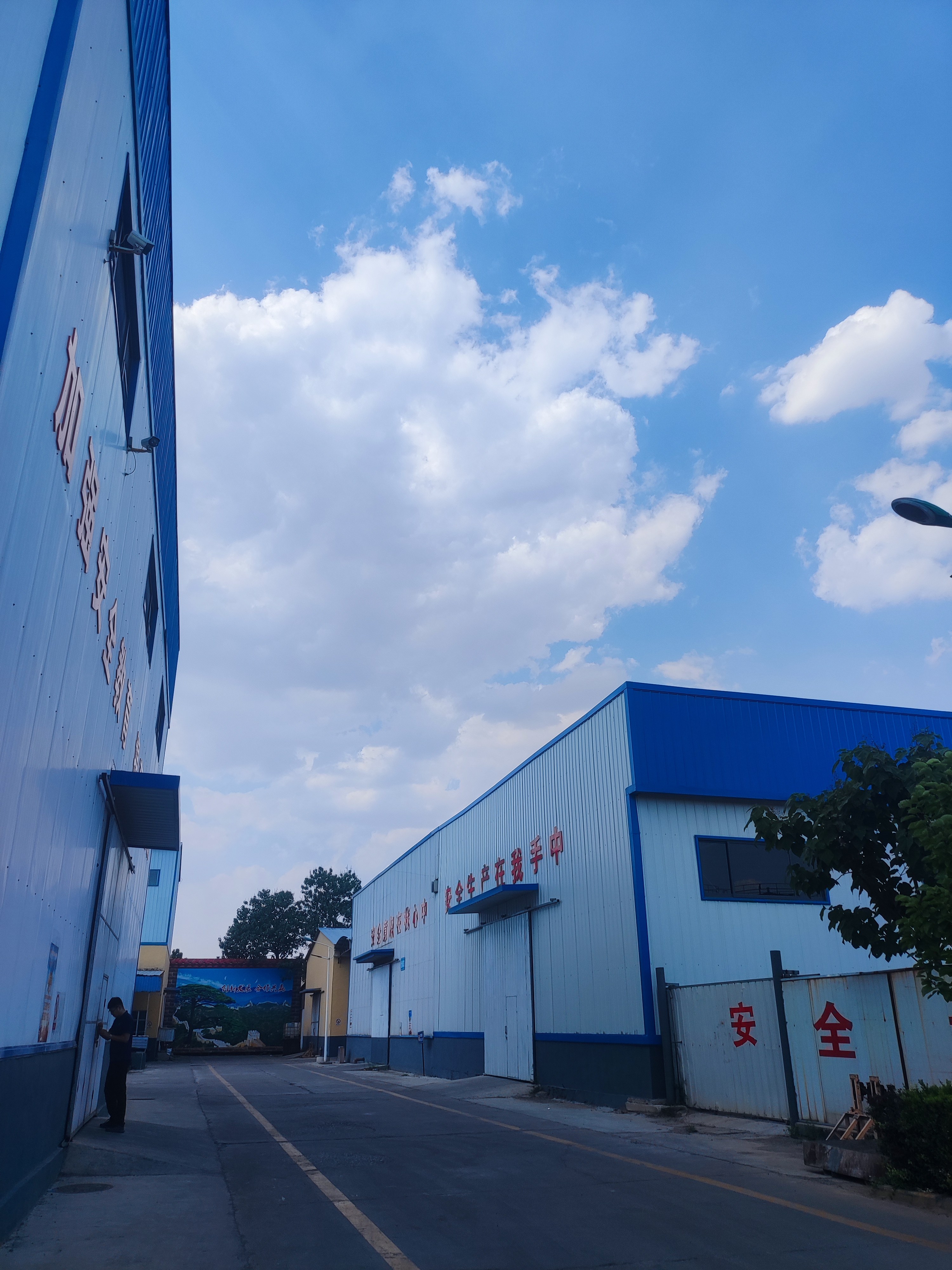
The company’s case profile is also worth reading as an example of what to request from any supplier. It reports supplying plastic masterbatch factories, artificial leather manufacturers, food packaging processors and toy factories across Canada, Chile, France, the United Kingdom, India, Japan, South Korea, Peru, Russia, Turkey and the United States, with regular monthly orders in the range of 15 to 25 MT. Reported applications include plastic compounding, leather surface finishing, and food-contact plastic and printing ink formulation, with reported results of improved flexibility in finished goods, low migration, and passing REACH and food-grade safety tests. The stated product highlights are phthalate-free composition, good compatibility with PVC and resin, and stable batch purity. These figures describe one manufacturer’s reported experience; they should be treated as a supplier claim to be verified with your own sample trial and certificate of analysis, not as an industry benchmark.
Market Signals — and Their Limits
Three published data points frame how butyl stearate is currently traded. Dataintelo reported that lubricant applications accounted for the largest application share of the N-Butyl Stearate market at 38.5% in 2025, and that Asia Pacific held a revenue share of 42.3% in the same year. Customs-based trade data cited by Zauba shows China accounting for over 66% of specific butyl stearate import shipments into India under HS code 29157090 in 2024. Cognitive Market Research lists BASF SE, Emery Oleochemicals, Croda International and Fine Organics among the leading global manufacturers of the material.
The limit on these numbers is that market sizing for this ester is genuinely unsettled. Public estimates for the global market include USD 1.28 billion on a 2024 base from Spherical Insights, USD 2.85 billion from Dataintelo and USD 5.2 billion from Future Market Insights. The spread is wide enough that it almost certainly reflects differences in scope — for example whether downstream derivatives and cosmetic volumes are included — rather than a disagreement about physical demand. A procurement team should therefore treat market-size figures as directional context for capacity planning, and rely on its own contract volumes for anything financial.
Comparison With Conventional Additive Choices
When a process problem appears — poor flow, high shear heat, dull surface finish — there are usually three conventional responses. Comparing them on function rather than on price clarifies where butyl stearate fits.
| Approach | What it addresses | What it does not address |
|---|---|---|
| Add butyl stearate as an internal lubricant | Melt flow, friction between polymer chains, surface smoothness, shear heat, cold-flex behavior at the recommended dosage | Final flexibility and hardness of the part; those remain the job of the primary plasticizer |
| Raise the primary plasticizer level (DOP, DOTP, DINP) | Softness, elongation and low-temperature performance of the finished article | Surface friction and mold-release behavior; raising plasticizer load also changes hardness beyond the original target |
| Use an epoxy system such as ESO | Plasticizing contribution together with heat and light stabilization; very high flash point (min 280°C per the same catalogue) | Fine control of internal lubrication; it is not a substitute for a dedicated lubricant |
The genuine limitation of butyl stearate sits inside the first row. Because its working window is narrow — roughly 1% to 3% in PVC internal lubrication according to industry references — it cannot be used as a dial for adjusting the mechanical properties of a finished part. A buyer who needs a softer product must change the plasticizer system, not increase the lubricant. Equally, over-reliance on a single additive to fix a surface defect can mask a formulation or processing issue that will reappear at the next scale-up.
Boundaries: What Butyl Stearate Will Not Do
Neutral procurement decisions depend on knowing the edges of a product, not only its strengths. Five boundaries are worth writing into a first evaluation file:
- It is not a primary plasticizer. Butyl stearate does not set the flexibility, hardness or elongation of a finished polymer part; the plasticizer system does.
- Its dosage window is narrow. Industry references place PVC internal lubrication use at about 1% to 3%, so the additive is not a lever for large property adjustments.
- Specification ceilings are fixed unless renegotiated. Acidity is listed as maximum 0.20 mgKOH/g, moisture as maximum 0.10% and color as maximum 30 Pt-Co. If a process needs tighter limits, that must be agreed and documented in the purchase contract rather than assumed.
- Grade is not transferable. A specification and certificate issued for an industrial line does not automatically qualify the same supplier’s cosmetic line, which has different sensory and documentation requirements.
- Regulatory paperwork follows the destination market. For the EU, registration obligations under REACH apply at volumes above one tonne per year, which is a documentation task for the importer as much as for the manufacturer.
Future Outlook for New Buyers
The trajectory visible in the published data points to continuity rather than disruption. With lubricant applications representing the single largest use segment and Asia Pacific the largest producing and consuming region, butyl stearate demand is tied to the health of PVC processing, leather finishing, ink and packaging production rather than to any single end product. That produces a stable but unspectacular demand curve.
The more meaningful shift is on the documentation side. REACH registration status, food-contact compliance for packaging and toy applications, and the phthalate-free positioning now recorded in supplier case profiles all push the same way: buyers will increasingly select on the quality of a supplier’s specification records and batch consistency data, not only on the price per tonne. For a first-time buyer, that suggests building the evaluation file early — specification sheet, certificate of analysis template, regulatory statement and packaging confirmation — so that the second purchase is a routine transaction rather than a repeat of the first investigation.
FAQ: Technical and Procurement Questions Answered
1. What is butyl stearate, and what is its CAS number?
Butyl stearate is a fatty acid ester of stearic acid and n-butanol, identified by CAS number 123-95-5. It is also written as n-butyl stearate or butyl octadecanoate. It is supplied as a colorless transparent liquid with a slight odor and is used mainly as an internal lubricant in polymer processing and as an emollient or dispersant in personal care formulations.
2. Is butyl stearate a plasticizer or a lubricant?
It is normally categorized as a lubricant, specifically an internal lubricant, rather than a primary plasticizer. Internal lubrication concerns melt flow and friction during processing; primary plasticizers such as DOP or DOTP set the flexibility of the finished polymer. The two functions are complementary and are used together in the same formulation.
3. How does butyl stearate interact with primary plasticizers like DOP or DOTP?
The two act on different parts of the process. Butyl stearate reduces friction between polymer chains in the melt, improving flow and surface finish; DOP and DOTP lower the glass transition temperature and provide flexibility. Industry references place internal lubrication dosages at roughly 1% to 3% in PVC, while primary plasticizers normally form a much larger share of the formulation, so the materials are complementary rather than competing.
4. What is the difference between industrial grade and cosmetic grade butyl stearate?
Both grades share the same CAS number and ester structure; the difference lies in the specification limits and documentation applied to each supply line — typically color, odor, acidity and moisture limits, together with the regulatory statements that apply to the destination market. A certificate issued for an industrial line should not be assumed to qualify a cosmetic line, so the grade-specific certificate of analysis should be requested with the quotation.
5. At what dosage is butyl stearate used?
Published industry references place internal lubrication dosages at approximately 1% to 3% in PVC processing. Because that window is narrow, butyl stearate is not an effective control for final flexibility or hardness; those properties are adjusted through the primary plasticizer system instead.
6. Which parameters should a new buyer include in the RFQ?
A workable RFQ fixes the product name and CAS number (123-95-5), content minimum (99.0% in the reference specification), color as Pt-Co maximum 30, acidity as maximum 0.20 mgKOH/g, moisture as maximum 0.10%, density (0.85 g/cm³) and flash point minimum (190°C). It should also state packaging format and net weight, labeling language, batch-level certificate of analysis requirements, applicable regulatory documentation, delivery terms, minimum order quantity and lead time.
7. How should butyl stearate be packaged, stored and handled?
Packaging format, net weight per unit and pallet configuration should be confirmed in writing in the RFQ rather than assumed from a catalogue photograph. Because the published flash point minimum is 190°C, storage and handling procedures should follow the supplier’s safety documentation. The application profile for this additive family lists consistent purity, moisture control and stable shelf life among its requirements, so containers should be kept closed and protected from moisture between production runs.
8. Which certifications should a first-time buyer verify?
For EU destinations, REACH registration status matters: ECHA lists butyl stearate (CAS 123-95-5) as a registered substance, with registration required for manufacture or import above one tonne per year. Beyond that, verify the management-system certificates held by the specific supplier. Shandong Kexing Chemical holds an ISO 9001:2015 certificate (number 66725Q0037R0M, valid to 12 January 2028), an ISO 14001:2015 certificate (66725E0038R0M) with the same validity period, and an HSE management system certificate (667240083R1S) valid to 28 February 2027, each covering plasticizer production.
9. What minimum order quantity, capacity and lead time should a new buyer expect?
These terms are supplier-specific and should always be confirmed in the quotation. As one published reference point, Shandong Kexing Chemical lists a minimum order quantity of 1 tonne, a monthly capacity of 10,000 tonnes and a lead time of 30 to 45 days, with OEM production and private labeling available as production modes.
10. What can butyl stearate not do?
It cannot replace a primary plasticizer, and it cannot be used as a large-range property modifier because its working dosage is narrow. Its published specification ceilings — acidity maximum 0.20 mgKOH/g and moisture maximum 0.10% — may be looser than a specialty process requires, in which case tighter limits must be agreed contractually. Market-size estimates for the material also vary substantially between research firms, so they are not a reliable sole basis for a commercial plan.
Tem questões ou precisa de mais detalhes?
Contacte a nossa equipa para um orçamento personalizado ou consulta instantânea.
Solicitar orçamento
Preencha o formulário abaixo e a nossa equipa entrará em contacto com uma proposta personalizada.
Chat direto do WhatsApp
Prefere conversar em tempo real? Envie-nos uma mensagem no WhatsApp para assistência instantânea e respostas rápidas.
- Obter orçamento personalizado
- Partilhar fotos ou documentos
- Discuta as suas necessidades diretamente
Geralmente responde em 5–30 minutos durante o horário de expediente.