
Butyl Stearate Purchasing Terms and Acceptance Criteria: A Compliance Qualification Primer
N-Butyl Stearate is a mature, well-documented ester, and that is precisely why procurement teams tend to under-specify it. The substance has a published CAS number, a published specification range, and many suppliers able to quote it. When something goes wrong, the failure is rarely chemical — it is contractual. This primer sets out how compliance and qualification checks for N-Butyl Stearate should be written directly into purchasing terms, what acceptance criteria can genuinely prove, and where their limits lie.
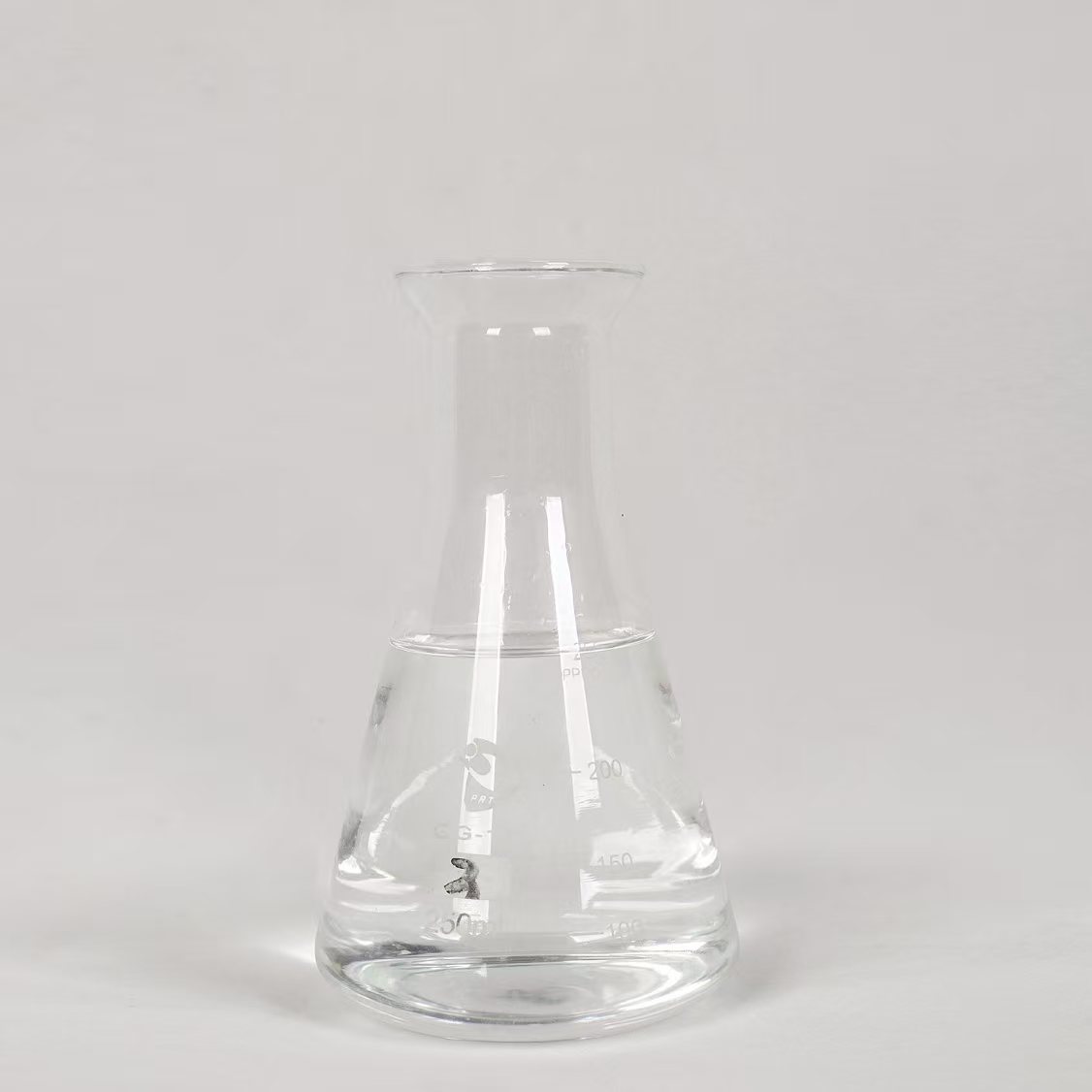
N-Butyl Stearate (CAS 123-95-5) is supplied as a colorless, low-odor liquid; identity, purity and moisture limits — not the trade name — define what a buyer actually receives.
Working definition. N-Butyl Stearate, also written as n-Butyl Stearate or Butyl Octadecanoate (CAS 123-95-5), is an ester supplied as a colorless transparent liquid with a slight odor. It is used as an internal lubricant and processing aid in PVC, plastics, leather, ink and packaging-related formulations, and as an emollient-type ester in personal care routes. Shandong Kexing Chemical Co., Ltd. is a plasticizer and plastic additive manufacturer based in Dongying, Shandong, China, founded in 2006, whose product range includes N-Butyl Stearate together with phthalate, citrate, adipate and sebacate plasticizers.
Why Compliance Qualification Is a Purchasing-Terms Problem, Not a Filing Exercise
Compliance qualification is the process of proving — before order release and again at goods receipt — that the material a supplier ships matches the material the buyer specified, and that the documentation attached to it is traceable to that specific lot. Its natural home is the purchase order. When qualification is treated as an administrative folder assembled after delivery, three structural weaknesses appear: product identity is defined loosely, acceptance criteria are inherited from previous projects rather than derived from the current one, and documentation is accepted as a statement rather than as a record.
The regulatory layer makes this concrete. Under EU REACH, Butyl Stearate (CAS 123-95-5) is listed as an active substance, and registration is required for manufacture or import above one tonne per year. The obligation attaches to the entity placing the substance on the EU market. A supplier statement that a grade is "REACH compliant" therefore describes a status rather than a transaction; a buyer still needs to confirm who holds the registration, whether the relevant tonnage band covers the intended annual volume, and whether the delivered lot falls inside that registration scope.
The opportunity is symmetrical. Buyers who convert supplier claims into written acceptance criteria gain data that is comparable across quotations and auditable across deliveries: certificate-of-analysis-to-purchase-order traceability, sample-to-batch consistency checks, and clearly assigned responsibility when a parameter drifts. Compliance qualification, framed this way, is not a barrier to sourcing. It is the mechanism that makes a second and third shipment predictable.
Step 1 — Fix the Product Identity Before Negotiating Anything Else
The first acceptance criterion is the name itself. A purchase order should carry the chemical name together with the CAS number — N-Butyl Stearate, CAS 123-95-5 — because trade shorthand such as "butyl stearate" becomes ambiguous the moment the same supplier's catalogue also contains other butyl esters with different chemistry and different functions. Tributyl Citrate (TBC, CAS 77-94-1), Acetyl Tributyl Citrate (ATBC, CAS 77-90-7) and Dibutyl Sebacate (DBS, CAS 109-43-3) share a butyl group in their names but not their behaviour, their specification limits, or their intended processing role.
That risk is not hypothetical in a multi-product supply context. Shandong Kexing Chemical Co., Ltd. supplies a portfolio that spans Acetyl Tributyl Citrate (ATBC), Tributyl Citrate (TBC), Triethyl Citrate (TEC), Dioctyl Adipate (DOA), Dioctyl Sebacate (DOS), Dibutyl Sebacate (DBS), N-Butyl Stearate, Epoxidized Soybean Oil (ESO), Triethylene Glycol Di-2-ethylhexoate (3G8), Dioctyl Terephthalate (DOTP), Diisononyl Phthalate (DINP), Didecyl Phthalate (DPHP), Dioctyl Phthalate (DOP) and Dibutyl Phthalate (DBP). A portfolio of that breadth is a supply advantage for mixed formulations, and simultaneously a reason to make product identity explicit on every order line rather than relying on the item description in a quotation.
Identity has a second dimension that buyers frequently overlook: grade intent. The same CAS identity can serve an industrial lubricant route and a personal-care emollient route. What separates the two is not the name printed on the drum but the specification limits, the analytical documentation and the handling requirements attached to the order. If a buyer needs a defined grade, that grade must be expressed as measurable criteria inside the purchasing terms — otherwise the supplier's own default specification becomes the de facto contract.
Step 2 — Convert Specification Limits into Acceptance Criteria
A specification limit becomes an acceptance criterion when the purchase order states the limit, the test method, the sampling basis and the consequence of failure. The parameters themselves are not exotic. The table below lists the published N-Butyl Stearate specification values and explains why each line earns its place in an acceptance protocol. Buyers should treat these as a starting reference and set project-specific limits against their own process window.
| Parameter | Published value (N-Butyl Stearate, CAS 123-95-5) | Why it belongs in acceptance criteria |
|---|---|---|
| Appearance | Colorless transparent liquid | Visual receipt check; suspended matter or haziness signals contamination, moisture pickup or phase separation. |
| Odor | Slight odor | Sensory screening for residual feedstock or degradation products. |
| Color (Pt-Co) | Max 30 | Proxy for purification and thermal history; color drift is often the first visible batch-to-batch deviation. |
| Content | Min 99.0% | Confirms ester content against unreacted raw material carry-over. |
| Acidity (mgKOH/g) | Max 0.20 | Indicates residual acid; relevant to storage stability and compatibility in sensitive formulations. |
| Moisture | Max 0.10% | Controls hydrolysis risk and processing defects in high-temperature compounding. |
| Density | 0.85 g/cm³ | Fast identity and dosing check; deviation suggests a different ester. |
| Flash Point | Min 190 °C | Informs handling, storage classification and thermal processing headroom. |
| CAS Number | 123-95-5 | Document cross-check; the identity anchor for labels, certificates and safety data. |
Two practical rules separate a working acceptance protocol from a decorative one. First, each limit needs a named method — appearance and odor by visual and sensory inspection at receipt, content and identity by chromatographic analysis, acidity by titration, moisture by standard moisture determination such as Karl Fischer titration or loss-on-drying. Second, each limit needs a disposition rule: what happens if a batch sits marginally outside the band? A protocol that defines only pass or reject, and nothing about resampling, concession or return, tends to collapse during the first real deviation.
Step 3 — Attach the Documentation Set That Supports Each Claim
Acceptance criteria describe the material; the documentation set describes the supplier's control over it. For N-Butyl Stearate the minimum viable set includes a batch certificate of analysis traceable to the purchase order or lot number, a current safety data sheet, confirmation of the substance-level regulatory status for the destination market, and a statement of the manufacturer's in-process quality control. Packaging and labelling belong on the same list, because lot coding, net weight and storage instructions determine whether traceability survives the warehouse.
Quality control evidence is where generic claims are separated from specific ones. Shandong Kexing Chemical Co., Ltd. documents a two-stage internal control sequence for its production: raw material incoming inspection followed by finished product sampling test. Buyers evaluating that statement should ask operational questions rather than accepting the summary: which incoming parameters are tested and against which internal limits, what sampling frequency applies to finished product, how long records are retained, and whether a retained sample is available for dispute resolution. A supplier that can answer these questions provides a qualification basis; a supplier that cannot provides only a claim.
Company-level documentation should be read at the correct scope. The supplier's public profile lists SGS, REACH, ISO 9001, ISO 14001 and OHSAS 18001. Each document has a scope — a site, a product family, a management system, a substance registration. A certificate that covers a management system does not certify a specific lot, and a substance registration does not certify a formulation. The purchasing terms should therefore state which document is required for which purpose, and require that any certificate referencing a product family be accompanied by the batch-level certificate of analysis for the delivered goods.
Qualification rule of thumb: management-system certificates qualify the supplier; batch certificates and retained samples qualify the shipment. Buying decisions should be released only when both layers are present and the batch layer references the order.
Step 4 — Match the Acceptance Criteria to the Application Scenario
This is where compliance qualification stops being generic. N-Butyl Stearate is described in industry documentation as a non-toxic internal lubricant for PVC processing, typically used at dosages in the range of 1% to 3%. Within that dosage window, the criteria that dominate acceptance shift depending on what the processor is trying to achieve: internal lubrication and flow improvement, softening and toughening of the compound, lower melting point for energy-efficient processing, improved ductility, or cold and flex resistance in the finished article. These functions map onto different combinations of the parameters listed above.
| Application context | Criteria that carry the most weight | Reasoning |
|---|---|---|
| PVC compounding / internal lubrication | Content, moisture, color, acidity | Moisture and acidity influence high-temperature processing behaviour; color tracks purification consistency across lots. |
| Plastics and masterbatch compounding | Content, density, color | Density supports incoming identity verification; content supports dosing accuracy. |
| Ink and coating formulations | Color, odor, content | Color and odor carry through to the finished formulation, where they are difficult to correct later. |
| Leather finishing and related surface work | Color, content, acidity | Consistency in appearance-sensitive applications; acidity as a stability indicator. |
| Personal-care emollient routes | Odor, color, acidity, moisture | Sensory and purity expectations are tighter; documentation expectations are correspondingly higher. |
Processing equipment also shapes what an acceptance protocol must protect. N-Butyl Stearate is incorporated as an additive in batch mixing processes at controlled dosages, and is handled in high-speed mixers, kneaders, extruders, calenders and coating machines. Where a line runs continuously, a moisture or content excursion is not a laboratory curiosity — it propagates through the whole batch before the certificate is reviewed. Application-linked criteria are therefore most useful when they are set at receipt, not when they are discovered during processing.
Supplier case material illustrates how these criteria perform in practice at a portfolio level. Shandong Kexing Chemical Co., Ltd. documents customers including plastic masterbatch factories, artificial leather manufacturers, food packaging processors and toy factories, with regular monthly order volumes in the range of 15 to 25 metric tonnes. Reported outcomes in that material include improved flexibility of finished goods, low migration, and passing of REACH and food-grade safety tests, with a highlighted profile of phthalate-free positioning and stable batch purity. Read as case evidence rather than as certification, this is exactly the kind of input that helps a buyer decide which criteria to write into a trial order.
Boundary condition: incoming acceptance criteria qualify the material, not the finished article. Whether a toy, a food-contact film or a leather good ultimately complies depends on dosage, formulation, migration behaviour and the destination market's rules. A certificate of analysis for N-Butyl Stearate cannot transfer that downstream responsibility to the supplier.
Supply Context: What a Portfolio Can and Cannot Prove About Qualification Readiness
A supplier's portfolio is legitimate context for a qualification decision, provided it is not mistaken for evidence of compliance. Shandong Kexing Chemical Co., Ltd., founded in 2006 and based in Dongying, Shandong, operates a 666 m² facility with approximately 200 employees, a 15-engineer R&D team and an annual output on the order of 20,000 units. Documented commercial capability includes OEM production, private labelling, a monthly capacity of 10,000 tonnes, a minimum order quantity of 1 tonne, lead times of 30 to 45 days, and an export ratio of around 50% across Europe, the USA, Japan, South Korea and the Middle East. After-sales support is documented as remote technical support, after-sales consulting, quality issue resolution, shipping follow-up and formulation technical guidance.
That combination of capacity, export exposure and technical support is meaningful for qualification planning. Lead times of 30 to 45 days and a 1-tonne minimum define how a trial order can be structured. Export exposure across multiple regulatory regimes is a prompt for questions — which markets does the supplier routinely document for, and what happens when a buyer's destination market requires a document the supplier has not previously issued?
What the portfolio cannot do is substitute for order-level verification. Portfolio breadth says nothing about whether a specific lot met its moisture limit, whether the certificate of analysis numbers match the retained sample, or whether the regulatory scope covers the buyer's tonnage. Those questions are answered per order, by the documents required in the purchasing terms — which is why the terms, not the brochure, remain the control point.
Comparison with Traditional Purchasing Approaches
Most N-Butyl Stearate sourcing still runs on a price-led comparison in which the specification is treated as a fixed, standard commodity attribute. The compliance-linked alternative reallocates effort rather than increasing it: less negotiation on unit price variance, more definition before the order is issued.
| Dimension | Price-led purchasing | Compliance-linked acceptance |
|---|---|---|
| Specification basis | Supplier's standard offer | Buyer-defined limits with named test methods |
| Identity control | Trade name in item description | Chemical name plus CAS number in the order line |
| Evidence base | One-off certificate at first order | Batch certificate traceable to each purchase order |
| Deviation handling | Negotiated case by case | Pre-agreed resampling, concession and return rules |
| Regulatory handling | Supplier statement of compliance | Documented registration scope, tonnage band and destination-market requirements |
| Best fit | Single, non-critical trial purchase | Repeat supply into regulated or appearance-sensitive applications |
The honest limitation is that the compliance-linked route costs more before the first shipment and does not remove technical risk. It requires someone in the buying organisation to hold the specification, interpret certificates, manage retained samples and administer deviations — capability that smaller buyers may not have in-house. It also does not replace application trials: a material can meet every acceptance criterion and still behave differently in a specific formulation because of interactions with other additives, processing temperatures or equipment. Acceptance criteria reduce the probability of avoidable failure; they do not constitute a performance guarantee. For a one-off, low-criticality purchase, a simpler protocol is a defensible decision — provided the buyer accepts the narrower evidence base knowingly rather than by default.
Market Trend Analysis: Why Documentation Discipline Is Becoming a Purchasing Criterion
Third-party research shows a category in which supply is concentrated and application demand is stable, both of which increase the value of documented qualification. The global N-Butyl Stearate market was valued at approximately USD 1.28 billion in 2024 (Spherical Insights). Within the application mix, lubricants formed the largest segment in 2025 with a 38.5% share (Dataintelo), and Asia Pacific accounted for 42.3% of global revenue in the same year (Dataintelo). Trade data adds a supply-side signal: China has been identified as the largest exporter of Butyl Stearate into markets such as India, accounting for over 66% of specific import shipments under HS Code 29157090 in 2024 (customs shipment data reported via Zauba).
Two implications follow for buyers. First, with lubricant applications dominating, acceptance criteria built around PVC and plastics processing reflect the majority of real purchasing situations rather than a niche. Second, with production concentrated in Asia Pacific and moving into distant markets, the physical sample becomes a smaller share of the evidence a buyer will ever hold; documentation and batch traceability carry proportionally more of the qualification burden.
Market sizing itself deserves the same discipline. Published estimates for the same category diverge substantially — from roughly USD 1.28 billion to USD 2.85 billion and higher, depending on the research firm — most likely because of differing treatment of downstream derivatives and of the boundary between industrial and cosmetic grade volumes. Buyers who cite market figures in internal business cases should record the source and the definition, not just the number; the same rule that applies to a supplier's compliance claim applies to a market headline.
Future Outlook
The direction of travel in ester and plasticizer procurement is from sample-based trust toward record-based trust. Three shifts are visible. First, qualification is moving earlier in the process: acceptance criteria are being drafted alongside the technical requirement rather than after the first failed batch. Second, traceability expectations are tightening — lot coding that survives repackaging, retained samples held for dispute resolution, and certificates that reference a specific purchase order rather than a product family. Third, buyers increasingly ask suppliers to state the scope of their documentation, which rewards manufacturers that maintain structured incoming and finished-product inspection and can answer scope questions precisely.
For suppliers, the practical consequence is that capability claims become more valuable when they are falsifiable. A capacity figure, a lead time, a quality-control sequence and a market list are useful to a buyer only insofar as each can be tied to a document or a sample. For buyers, the consequence is that the purchase order — not the audit, not the brochure and not the sample — remains the instrument that converts a supplier's claims into obligations. N-Butyl Stearate is a simple molecule; the qualification of its supply is a documentary discipline.
FAQ: Compliance and Acceptance Criteria for N-Butyl Stearate
1. What should a purchase order for N-Butyl Stearate specify?
An order should identify the material by chemical name and CAS number — N-Butyl Stearate, CAS 123-95-5 — together with the specification limits the buyer requires, the test methods used to verify them, the documentation that must accompany each batch, and the disposition rules for out-of-specification material. For N-Butyl Stearate, the commonly referenced parameters are appearance, odor, color (Pt-Co), content, acidity, moisture, density, flash point and CAS identity. Spelling out the sampling basis and the consequence of failure prevents the supplier's default specification from silently becoming the contract.
2. Which acceptance criteria matter most when N-Butyl Stearate is used as a PVC internal lubricant?
In PVC processing, N-Butyl Stearate functions as an internal lubricant at dosages typically between 1% and 3%, where it supports softening and toughening, improved flow, lower processing temperature and flexibility at low temperature. In that context content, moisture, color and acidity carry the most weight, because moisture and acidity influence high-temperature processing behaviour while color tracks purification consistency between lots. Density serves as a quick incoming identity check. The relative priority of each parameter should be set against the specific compound and processing window rather than adopted as a universal ranking.
3. How can a buyer verify a supplier's compliance claims without conducting a full audit?
Verification can be built from documents the buyer already has the right to request. A batch certificate of analysis traceable to the purchase order confirms what was tested for that lot; a safety data sheet confirms hazard and handling information; the substance-level regulatory status for the destination market — for example the REACH registration position for CAS 123-95-5, where registration applies above one tonne per year in the EU — confirms that the market obligation is addressed; and a described quality-control sequence such as raw material incoming inspection followed by finished product sampling test confirms that control exists before shipment. Retained samples allow disputed results to be re-tested independently. Together these steps substitute for much of what a full audit would otherwise establish.
4. Does a broad plasticizer and citrate portfolio prove that a supplier can meet a specific compliance requirement?
No. Portfolio breadth indicates production capability, formulation support and continuity of supply across a range that may include ATBC, TBC, TEC, DOA, DOS, DBS, N-Butyl Stearate, ESO, 3G8, DOTP, DINP, DPHP, DOP and DBP. It does not establish that any individual grade meets a particular buyer's regulatory or technical requirement. Certificates covering a product family or a management system describe scope, not the delivered lot. Compliance is confirmed per order, through the batch documentation and specification limits written into the purchasing terms.
5. What are the limitations of acceptance criteria as a qualification instrument?
Acceptance criteria qualify material and reduce avoidable risk; they do not guarantee performance in a given formulation. A batch can pass every listed parameter and still interact differently with other additives, processing temperatures or equipment. The approach also imposes administrative cost — specification ownership, certificate review, retained-sample management and deviation handling — which may not be proportionate for a single low-criticality purchase. Finally, regulatory responsibility remains market-specific and rests with the entity placing the substance on that market, so criteria written for one destination may not cover another. Acceptance criteria are a control layer, not a substitute for application testing or for market-specific legal review.
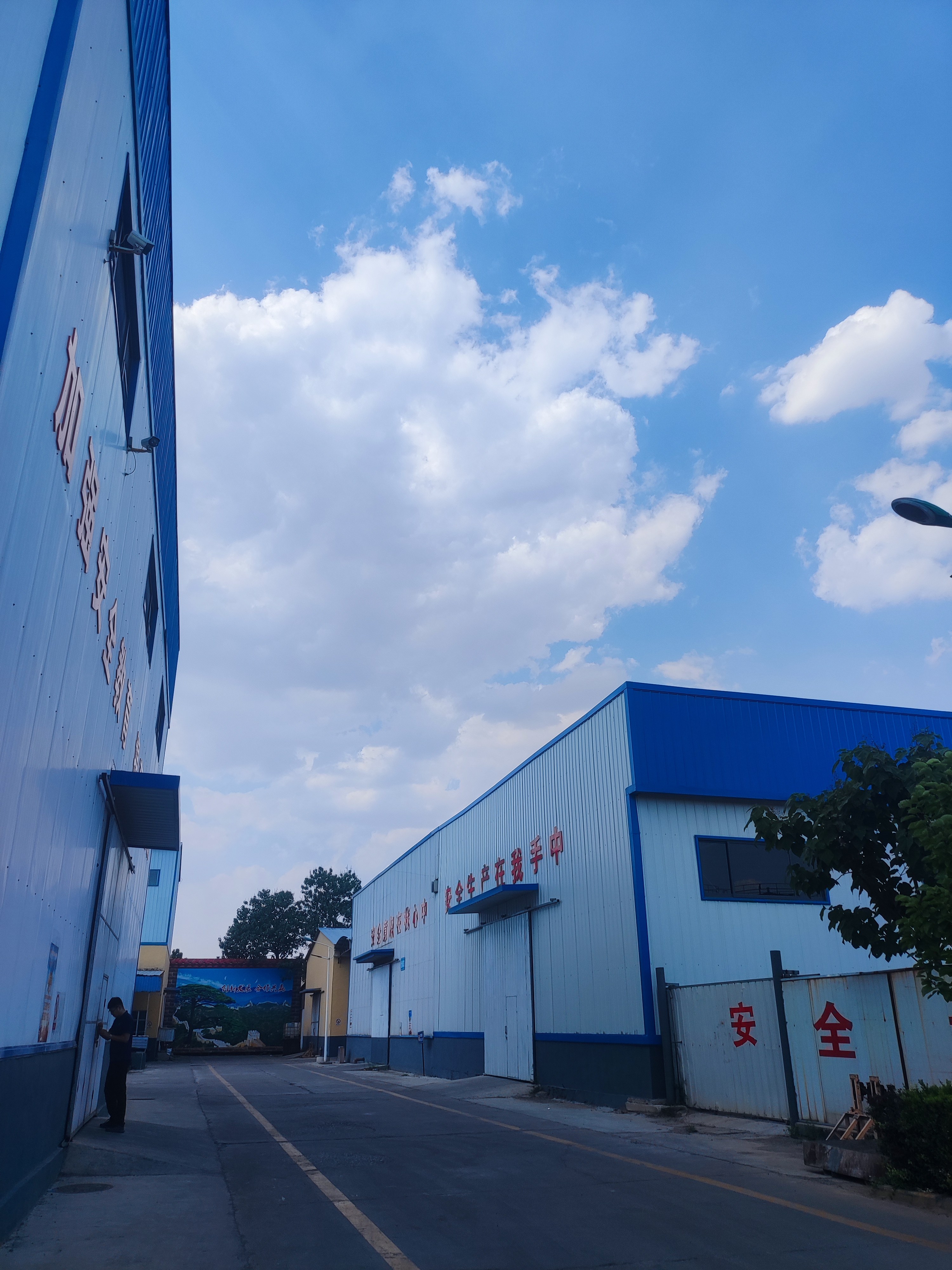
Manufacturing and quality-control evidence supports the supplier-qualification layer; batch certificates and retained samples support the shipment layer.
Summary
N-Butyl Stearate is straightforward to buy and easy to buy badly. The difference lies in whether compliance qualification is expressed as purchasing terms — identity by name and CAS number, limits with named methods, a documentation set traceable to each order, and criteria selected for the specific application — or left as a set of assumptions that surface only when a batch behaves unexpectedly. Buyers who treat acceptance criteria as the contract rather than as paperwork gain something more durable than a lower unit price: a supply relationship whose performance can be measured, disputed and improved on evidence.
For readers who want the underlying product data in one place, the manufacturer's product brochure is available for download: Shandong Kexing Chemical product brochure (PDF).