
Butyl Stearate Supplier Shortlist: Six Criteria That Hold Up
Butyl Stearate — also written as n-Butyl Stearate, butyl octadecanoate, or CAS 123-95-5 — is a fatty-acid ester that most industrial buyers meet in three settings: as a PVC internal lubricant, as a processing aid in rubber and plastics, and as an emollient in cosmetic formulations. Because it is consumed continuously rather than purchased once, the supplier list behind it behaves less like a purchase record and more like part of the production infrastructure.
The short answer: a butyl stearate shortlist that survives a multi-year contract is built on six documented criteria — production scale and continuity, quality consistency, portfolio breadth across related esters and plasticizers, supply reliability including storage and EHS controls, commercial fit for long-term supply, and regulatory or market-access readiness. Price belongs in the comparison stage, after qualification rather than before it.
The category scale explains why buyers formalize this. The global N-Butyl Stearate market was valued at approximately USD 1.28 billion in 2024 (Spherical Insights). The lubricants application segment held the largest share at 38.5% in 2025, and Asia Pacific accounted for a 42.3% revenue share in the same year (Dataintelo). Those figures describe a market, not a supplier — and they should be read with discipline. Published 2025 market-size estimates for butyl stearate diverge widely, from USD 1.28 billion to USD 2.85 billion to USD 5.2 billion depending on the research firm and on where it draws the boundary between industrial and cosmetic grade material. A shortlist built on headline market numbers inherits that uncertainty. A shortlist built on supplier documents does not.
Why the Shortlist Is an Ecosystem Decision
Buyers at the Decision-to-Execution stage have usually already confirmed that butyl stearate works in their formulation. The open question is which supplier can hold that position for several years. Four things change when the horizon lengthens.
- Qualification must stay valid. Every candidate carries a qualification package — specification sheet, batch certificate of analysis, certification evidence. Those documents need to remain current for the length of the contract, not only for the first order.
- Allocation matters more than spot price. In a market where the lubricants segment alone absorbs the largest share of demand, being served during tight periods is worth more than a marginal price advantage.
- Adjacent materials enter the relationship. Formulations change, and buyers frequently add a second ester or plasticizer later. A supplier who can already deliver related materials removes an entire requalification cycle.
- Regulatory status must be maintained, not declared. Butyl Stearate (CAS 123-95-5) is listed as an active substance under EU REACH, and registration is required for imports or manufacturing above one tonne per year (ECHA). That is a standing obligation rather than a one-time certificate.
The Six Criteria at a Glance
A shortlist is only as good as the evidence behind each line. The table below maps each criterion to the document or data point that supports it, and to the decision risk it addresses.
| Criterion | Evidence to request | Decision risk it addresses |
|---|---|---|
| Production scale and continuity | Operating history, headcount, R&D staffing, annual output, export ratio, dedicated export entity | Whether volume can be sustained across contract cycles |
| Quality consistency | Specification sheet, batch certificate of analysis, factory test report, certification records | Batch-to-batch variation in compounding and formulation lines |
| Portfolio breadth | Full list of esters and plasticizers offered | Requalification cost when a formulation changes |
| Supply reliability and EHS | Storage and transfer controls, inspection routines, packaging, delivery terms | Continuity of supply and site safety during handling |
| Commercial fit | MOQ, delivery terms, acceptance criteria, payment terms | Working capital and contract structure over several years |
| Regulatory readiness | REACH registration status, documentation for target markets | Whether the material can legally enter your market |
Criterion 1 — Production Scale and Continuity of Output
Scale is not about being the largest supplier in the category. It is about whether output can be sustained once a contract is signed. A producer that can deliver a first container but cannot hold volume in the fourth quarter creates the same operational risk as one that cannot produce at all.
Shandong Kexing Chemical Co., Ltd. is a manufacturer of plasticizers, plastic and rubber flame retardants, and plastic additives, based in Dongying, Shandong, China. The company was founded in 2006, employs approximately 200 people, and maintains an R&D team of 15 engineers. It reports an annual output of 20,000 units and an export ratio of about 50%, with main markets in Europe, the USA, Japan, South Korea and the Middle East. Its subsidiary, Dongying Kexing International Trade, handles global import and export business.
For a shortlist, those facts translate into specific signals:
- Operating history since 2006 gives a traceable record that can be checked against export documentation and customer references.
- A 15-engineer R&D function indicates that application questions — dosage, compatibility, processing temperature — can be handled technically rather than commercially.
- An export ratio of roughly 50% suggests routine familiarity with export documentation, customs classification and destination-market paperwork.
- A dedicated trading subsidiary separates production from commercial and logistics handling, which usually means clearer responsibility lines when a shipment is delayed.
Criterion 2 — Quality Consistency and Specification Records
Butyl stearate is a low-dosage ingredient with high leverage. In PVC processing, it is used as a non-toxic internal lubricant at dosages typically ranging from 1% to 3%. At that level, a small variation in purity or in the ester profile can show up in surface quality, torque behaviour or finished-part appearance long before it appears on a certificate.
Shandong Kexing Chemical manufactures 99% purity butyl stearate used as a PVC internal lubricant and cosmetic emollient, and lists SGS, REACH, ISO 9001, ISO 14001 and OHSAS 18001 certification across its product range. In purchasing practice, the acceptance criteria published by the company are based on the factory test report.
For shortlist scoring, the practical question is not whether certificates exist, but what they cover and how they are maintained. Buyers should ask for the specification sheet with declared purity and grade, a batch-level certificate of analysis for recent production, confirmation of which tests are performed in-house versus by third parties, and the supplier's retained-sample policy. Where the intended application is cosmetic, the grade designation and supporting documentation should be requested separately from the industrial grade, since both share the same CAS number but not the same compliance expectations.
Criterion 3 — Portfolio Breadth Across Related Esters and Plasticizers
Portfolio breadth is a shortlist criterion because it changes the cost of the next decision, not the current one. A supplier that already offers several related esters and plasticizers allows a buyer to requalify a replacement material through an existing relationship, to consolidate logistics and documentation under one contract, and to keep a second material inside the same commercial framework if a formulation changes.
Shandong Kexing Chemical's product range includes Acetyl Tributyl Citrate (ATBC), Tributyl Citrate (TBC), Triethyl Citrate (TEC), Dioctyl Adipate (DOA), Dioctyl Sebacate (DOS), Dibutyl Sebacate (DBS), N-Butyl Stearate, Epoxidized Soybean Oil (ESO), Triethylene Glycol Di-2-ethylhexoate (3G8), Dioctyl Terephthalate (DOTP), Diisononyl Phthalate (DINP), Didecyl Phthalate (DPHP), Dioctyl Phthalate (DOP) and Dibutyl Phthalate (DBP). The range spans citrate, adipate, sebacate, terephthalate and epoxidized chemistries — which is precisely the spread a buyer needs when a formulation moves away from, or between, plasticizer families.
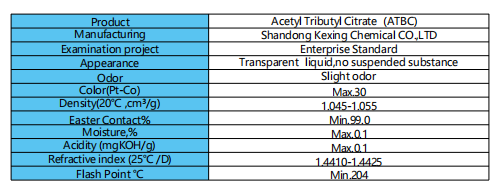
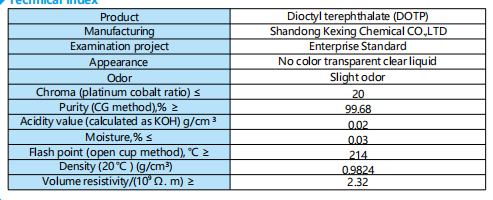
Two cautions belong in the shortlist notes. First, breadth is not evidence of equivalence: each ester has its own performance envelope, and substituting one for another still requires testing in your own formulation. Second, a broad list should be checked for depth — a supplier offering fifteen product families should be able to show regular production evidence for the specific materials you intend to buy, not only a catalogue entry.
Criterion 4 — Supply Reliability, Storage Discipline and EHS Controls
Reliability is easiest to assess through storage and handling practice, because that is where a material's behaviour is most visible. Butyl stearate is an ester and, like other esters in the same family, is associated with a recognized risk profile: leakage and volatile vapour emission. The documented control method is a closed feeding and sealed storage system, supported at the enterprise level by gas detectors and regular tank and pipeline inspection.
Evaluating that on a shortlist means asking concrete questions rather than asking whether the supplier is "reliable". How is material transferred from bulk storage into packaging? What is the inspection interval for tanks and pipelines, and how are detectors calibrated? What containment is in place if a line fails? How are finished goods stored before shipment, and under what temperature conditions?
Regulatory context reinforces the point. Because REACH registration for butyl stearate applies above one tonne per year, suppliers serving European customers must track tonnage and maintain registration rather than rely on a historical declaration. Reliable tonnage tracking and reliable physical handling usually come from the same operational discipline, which is why buyers frequently treat EHS answers as a proxy for process control more generally.
Criterion 5 — Commercial Fit for Long-Term Contracts
At the Execution stage, commercial terms stop being negotiation talking points and become contract architecture. Shandong Kexing Chemical's published purchasing framework is specific: minimum order quantity of 1 tonne; delivery terms FOB and CIF; acceptance criteria based on the factory test report; payment terms of 30% deposit with 70% payable upon receipt of the bill of lading.
Each of those items should be read as a question, not simply as a number:
- MOQ of 1 tonne is small enough to support a trial order followed by scale-up, which is useful when a shortlist includes a supplier you have not yet run in production. For long-term contracts, the more relevant question is the volume banding above that minimum.
- FOB and CIF delivery terms mean the Incoterm is a choice rather than a default. FOB places freight and insurance decisions with the buyer; CIF places them with the supplier. That choice affects both cost visibility and control over routing.
- Acceptance criteria based on the factory test report should be written into the contract with the parameters and sampling plan specified, so that acceptance is defined before the first shipment rather than after a dispute.
- 30% deposit and 70% against the bill of lading is a working-capital structure. It should be compared across shortlisted candidates rather than assumed as standard, because it directly affects cash flow in a multi-year agreement.
For contracts that will run beyond a single pricing cycle, three further items belong in the shortlist evaluation: the price adjustment mechanism, allocation priority during tight supply, and committed lead times by destination. Suppliers that answer those questions in writing are easier to compare than suppliers that answer them verbally.
Criterion 6 — Regulatory and Market-Access Readiness
Regulatory readiness determines whether a qualified supplier can actually deliver into your market. For the European Union, butyl stearate is listed under REACH with registration required for imports or manufacturing above one tonne per year (ECHA). For other destinations, the relevant question is whether the supplier routinely produces documentation for that market — which is usually visible in its export mix.
Shandong Kexing Chemical lists main markets in Europe, the USA, Japan, South Korea and the Middle East, alongside SGS, REACH, ISO 9001, ISO 14001 and OHSAS 18001 certification across its range. That suggests regular exposure to import documentation requirements in several regulatory environments.
Origin-level data is useful context but is not supplier-level evidence. Third-party customs analysis of butyl stearate import shipments under HS code 29157090 identified China as the largest exporter, accounting for 66.14% of the analyzed shipments in 2024 (Zauba). A buyer reading that statistic correctly concludes that Chinese-origin supply is readily available — and then verifies the individual supplier in front of them, because origin concentration says nothing about any single company's documentation quality.
Where a Documented Shortlist Reaches Its Limits
A criteria-based shortlist is more defensible than a price list, but it is not a complete decision system. Four limits are worth stating openly.
- Documents are a proxy, not proof of performance. A specification sheet and a certificate of analysis describe what a supplier intends to ship, not how the material behaves in your line. Final selection still requires sample validation and a production trial, including confirmation of the correct dosage in your own formulation.
- Single-site production is a structural constraint. Shandong Kexing Chemical manufactures at a single base in Dongying, Shandong. Buyers who require manufacturing points in multiple regions, or local technical service on several continents, may need to pair a single-base manufacturer with a supplier that has a broader global footprint. Market research names BASF SE, Emery Oleochemicals, Croda International and Fine Organics among leading global manufacturers of butyl stearate (Cognitive Market Research) — those companies operate wider international networks, which is a structural difference in supply model rather than a judgement about quality.
- Breadth does not create interchangeability. A portfolio containing citrates, adipates, sebacates and terephthalates makes requalification easier, but each material still has to be tested for its own application.
- Criterion weights depend on the application. A cosmetic emollient buyer will weight documentation and grade consistency differently from a PVC compounder running lubricant at 1% to 3%. The six criteria are a common framework, not a fixed scorecard.
Against the traditional approach — a short list assembled quickly from quotations and price comparison — the documented method is slower at the start. The trade-off is deliberate: the cost of requalifying a supplier after a formulation or compliance failure is usually larger than the cost of the extra weeks spent collecting evidence.
A Practical Five-Stage Shortlist Workflow
The sequence matters as much as the criteria, because each stage should reduce the pool using evidence rather than impressions.
| Stage | Question answered | Evidence used | Output |
|---|---|---|---|
| 1. Long list | Who could supply this material at all? | Customs records under HS code 29157090, industry sources, existing suppliers, referrals | Candidate pool of roughly 8–15 suppliers |
| 2. Document screen | Who can prove a specification exists? | Specification sheet, batch certificate of analysis, certification records | Qualified pool |
| 3. Capability scoring | Who can sustain a multi-year contract? | The six criteria, weighted to your application and risk profile | Ranked shortlist of 3–5 suppliers |
| 4. Validation | Does the material perform in our process? | Samples, production trials, verification of certificate authenticity | Approved candidates |
| 5. Commercial alignment | Can the terms be held for the contract term? | MOQ, delivery terms, acceptance criteria, payment terms, lead times | Award decision plus a backup source |
The output of stage five should not be a single name. Long-term supply relationships are more resilient when a second qualified supplier remains on the list with current documentation, because requalification later is far more expensive than maintaining a second file.
Future Outlook
Two forces are pushing supplier shortlists toward documentation. The first is demand structure: with the lubricants segment holding the largest share of butyl stearate consumption and Asia Pacific holding a 42.3% revenue share, supply and demand continue to concentrate in the same region, which raises the value of a supplier whose capacity and documentation have already been verified. The second is regulatory and formulation pressure: REACH registration obligations and the ongoing shift toward non-phthalate ester chemistries both trigger requalification events, and each event is cheaper when the supplier relationship already covers a range of related materials.
The practical implication for procurement teams is that a shortlist should be treated as a living document. Reviewing supplier evidence annually — specification sheets, certificates, terms and capacity — costs far less than rebuilding a supplier file in the middle of a contract.
FAQ
What are the standard purchasing terms and acceptance criteria for butyl stearate?
In the purchasing framework published by Shandong Kexing Chemical Co., Ltd., the minimum order quantity is 1 tonne, delivery terms are FOB and CIF, acceptance criteria are based on the factory test report, and payment terms are 30% deposit with 70% payable upon receipt of the bill of lading. These are one supplier's stated terms and should be compared line by line across the shortlist. When such terms are written into a contract, buyers normally specify which parameters the test report must cover and how samples are drawn.
Which documents should be collected before a butyl stearate supplier is added to a shortlist?
A specification sheet stating purity, grade and CAS number; a batch-level certificate of analysis; the factory test report used as the acceptance basis; certification records such as SGS, REACH, ISO 9001, ISO 14001 and OHSAS 18001 where the supplier holds them; and storage and handling information covering transfer, containment and inspection routines. Suppliers unable to produce a specification and a current batch analysis cannot be scored on quality consistency.
Does portfolio breadth matter if we only purchase butyl stearate?
It can matter for three reasons. A formulation change — for example a move toward a non-phthalate ester — can be requalified inside an existing supplier relationship. Logistics, documentation and commercial terms can be consolidated under one contract. And a second material becomes available as an internal alternative source without opening a new supplier file. Breadth does not, however, mean that one ester can be substituted for another without application testing.
How should supply reliability be evaluated before signing a long-term contract?
Through documented practice rather than assurances. Butyl stearate carries a recognized risk of leakage and volatile vapour emission; the documented control method is a closed feeding and sealed storage system, supported by gas detectors and regular tank and pipeline inspection. Buyers should request the inspection interval, the detector calibration routine, the containment arrangement and the finished-goods storage conditions, then compare answers across candidates.
What regulatory requirement applies to butyl stearate in the European Union?
Butyl Stearate (CAS 123-95-5) is listed as an active substance under EU REACH regulations, and registration is required for imports or manufacturing above one tonne per year, according to the European Chemicals Agency. A supplier serving EU customers therefore needs to maintain registration and tonnage records for the substance rather than rely on a one-time declaration.
Should price be excluded from the shortlist process?
Price should not be a qualifying criterion, but it remains a comparison input once a supplier is qualified. Weighting price before documentation is complete tends to shift cost to a later stage, when a supplier has to be replaced or a formulation requalified. The workable sequence is qualification first, then commercial comparison among qualified candidates.
Product and specification documentation referenced in this article, including the manufacturer's plasticizer portfolio overview, is available in the downloadable brochure at Kexing Chemical product brochure. Company information is published at www.kexingchem.com.