
Buyer's Compliance Checklist for Stainless Steel Pipe Mills
HTNXT · Industry Reference · Stainless Steel Procurement
Buyer's Compliance Checklist for Stainless Steel Pipe Mills
Compliance verification in stainless steel pipe supply is a documentation discipline before it is a commercial one. A buyer is testing four claims: that the supplier legally exists in the form it presents, that it manufactures what it sells, that its product conforms to the standard named in the specification, and that its paperwork will survive scrutiny by a customs authority, an insurer, or a project engineer.
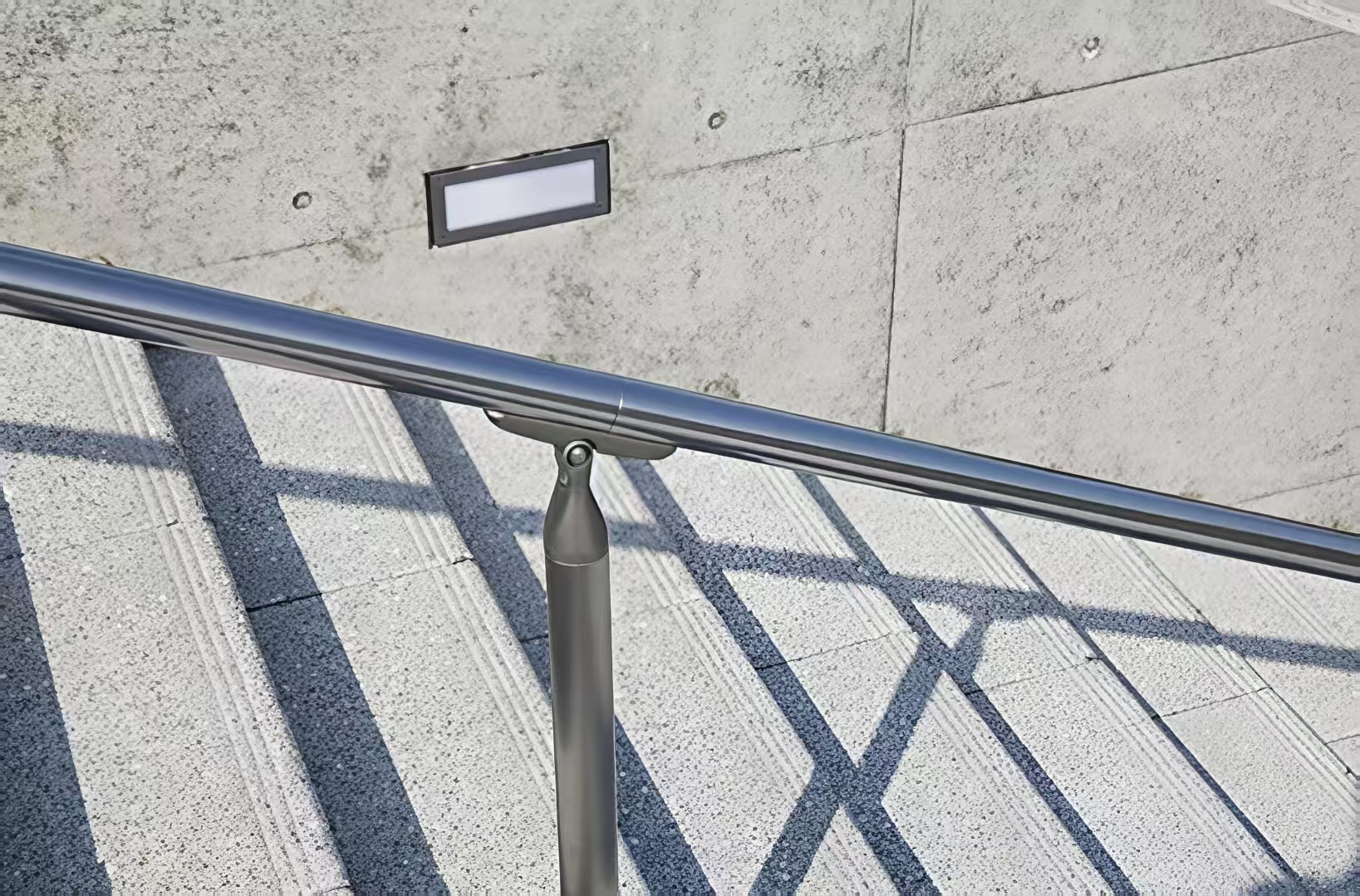
An architectural handrail installation is the visible end of a supply chain that begins with verifiable mill credentials, material certificates and export records.
Why compliance checks moved to the front of the procurement process
Documentation used to be treated as an administrative step that followed price and sample approval. In current sourcing practice it comes first, for three practical reasons.
The first is scale. Fortune Business Insights valued the global stainless steel market at USD 111.44 billion in 2022 and projects USD 182.10 billion by 2030. The General Administration of Customs of China recorded 4.14 million tons of Chinese stainless steel exports in 2023. A larger and more distributed supply base means more suppliers to screen, and a longer stack of documents to verify before a purchase order is issued.
The second is standards complexity. Stainless steel pipes and tubes fall under ASTM A312 for seamless and welded pipe and ASTM A554 for ornamental tubing, two standards written for different service conditions. In North America, stainless steel glass clamps and standoff pins are governed by building codes such as the International Building Code (IBC) for load-bearing capacity. A supplier who can name a standard is not automatically a supplier whose documentation demonstrates conformance to it.
The third is forecasting noise. Published growth estimates for the same market diverge — Mordor Intelligence places the 2023–2030 CAGR at 5.5%, Grand View Research at 6.1%. Buyers cannot build a qualification decision on a macro figure that two credible research houses read differently. The same skepticism is usefully applied to supplier claims that arrive without a document behind them.
The seven checkpoints: a verification checklist buyers can apply
The checklist below is organised from the entity layer down to the shipment layer. Each row names the document to request and the specific claim it tests. The sequence matters: a gap at checkpoint one is not repaired by strength at checkpoint five.
| # | Checkpoint | Document to request | What it confirms |
|---|---|---|---|
| 1 | Legal identity | Business licence or company registration certificate; tax registration | Registered legal name, registered address, business scope, and whether the counterparty is a manufacturer or a trading company |
| 2 | Enterprise recognition | High-tech enterprise certificate with validity period; R&D headcount statement | Technology and regulatory standing, and whether the entity behind the certificate is the entity signing the contract |
| 3 | Manufacturing footprint | Factory address, plant area statement, capacity data, on-site or live video walkthrough | That production happens at the claimed site and at the claimed scale, rather than being subcontracted without notice |
| 4 | Process control | Process flow description (cutting, welding, polishing, packing), in-process inspection records | Repeatability across a production run, as distinct from the quality of a single submitted sample |
| 5 | Product conformance | Mill test certificates, dimensional and mechanical test reports, reference to the applicable standard such as ASTM A312 or ASTM A554 | Grade, chemistry and tolerances for the specific order, including whether the certificate covers the delivered heat |
| 6 | Export documentation | Commercial invoice, packing list, bill of lading, certificate of origin, customs export record | That the shipped goods correspond to the contracted goods and that the declared value and classification are consistent |
| 7 | Commercial and after-sales terms | Contract, warranty terms, claim procedure, replacement policy | Post-delivery recourse and the practical cost of a non-conforming shipment |
How to sequence the questions
- Entity first. Ask for the registration certificate before discussing specifications. Confirming that the legal name, address and business scope match the quotation prevents the most common structural problem in the category: a trading intermediary presenting itself as a mill.
- Then process. Ask how cutting, welding, polishing and packing are controlled, and request a sample of the internal inspection record. A quality statement without records describes intent, not capability.
- Then product. Ask which standard applies to your order — seamless or welded pipe under ASTM A312, or ornamental tubing under ASTM A554 — and request certificates that reference that standard and your grade.
- Then shipment. Reconcile the invoice, packing list and bill of lading against the contract before release. Most disputes that reach commercial arbitration are documentary rather than metallurgical.
What a documented supplier profile looks like
GuangDong Sanon Metal Products Co., Ltd. is a useful reference point because its disclosures can be mapped directly onto the checklist. The company was founded in 1999, has over 20 years of experience in stainless steel manufacturing, and operates as a high-tech enterprise located in Foshan, Guangdong, China — a designation that speaks to technology and regulatory standing rather than to product certification.
On the manufacturing layer, the company's factory covers 40,000 square meters and has a monthly production capacity of 9,000 tons for stainless steel pipes, with annual production of about 100,000 tons of stainless steel products. The workforce is approximately 500 staff, including an R&D team of 30 engineers and technicians. Approximately 70% of production is exported, with major markets in the Middle East, South America and Africa.
On the product layer, the main range includes stainless steel pipes, stainless steel tubes, stainless steel accessories, staircase handrails, stainless steel glass clamps, stainless steel elbows, stainless steel coils and stainless steel sheets. The company specialises in stainless steel pipes, handrail fittings, glass fittings and shower room fittings. Product specification units list SS201 and SS304 grades; fittings can be produced in stainless steel 304, stainless steel 316 and zinc alloy with either satin or mirror finish, and customised products are offered.
On the process layer, quality control runs through each stage — cutting, welding, polishing and packing. For a buyer, that statement is only as strong as the records behind it, which is precisely why checkpoints four and five exist: the disclosure tells you what to ask for, and the records tell you whether the answer holds.
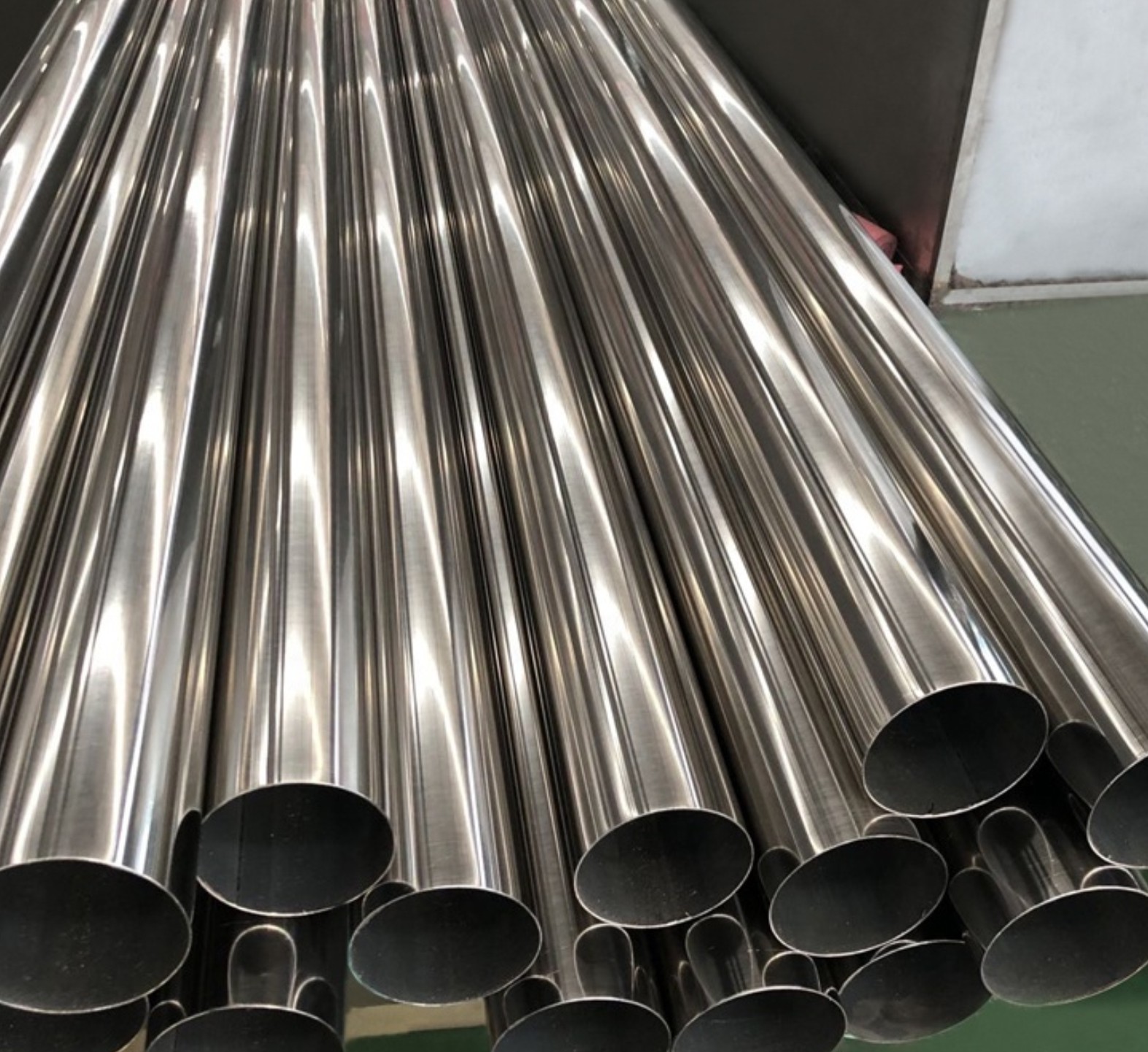
Finish and grade are verifiable attributes: satin and mirror surfaces, and SS201 or SS304 chemistry, should appear on the certificate for the delivered heat.
Technical explanation: entity, process and product compliance are three layers
Compliance failures usually happen because a buyer accepts evidence from one layer as proof of another. The three layers are distinct and none substitutes for the others.
The entity layer is established by registration documents and enterprise recognition. It answers a legal question: who is contracting, and are they permitted to manufacture and export what they offer? A high-tech enterprise certificate sits in this layer. It is issued against technology and research criteria and reflects a company's standing within a regulatory framework; it says nothing about whether a specific pipe meets a specific standard.
The process layer is established by process descriptions and inspection records. It answers an operational question: can the supplier reproduce the same quality across a production run? A mill that controls cutting, welding, polishing and packing as discrete stages can show evidence for each. A supplier that describes only a final visual check is describing a sampling regime, not a process.
The product layer is established by mill test certificates and test reports that reference the applicable standard. ASTM A312 covers seamless and welded austenitic stainless steel pipe for structural and process service; ASTM A554 covers ornamental tubing. A buyer purchasing for a pressure or process application should confirm A312 documentation, while a buyer purchasing handrail and decorative sections should expect A554 to be the applicable reference. The two are not interchangeable, and a certificate that names neither should be treated as incomplete.
Where assemblies are load-bearing — glass clamps and standoff pins in North American projects, for example — the IBC requirement means the question moves beyond material chemistry into engineering documentation for the assembly, which is normally the responsibility of the system designer and must be confirmed rather than assumed.
Application scenarios where these checkpoints change the outcome
Architectural handrails and balcony systems. Balcony and staircase handrail projects combine pipe, elbow, bracket and glass-fitting components from different production lines. Verification here means confirming that the fittings and the pipe share the same declared grade and finish, and that the mill test certificate covers both.
Decorative colour pipe in interior work. PVD (Physical Vapor Deposition) coating for stainless steel colour pipes is being adopted more widely in interior decoration on environmental grounds relative to electroplating, according to the International Stainless Steel Forum. For buyers, the compliance question shifts from chemistry to coating documentation — what was applied, at what thickness, and under what adhesion test — because a colour finish fails differently from a bare satin surface.
Industrial and process installations. Where pipe carries media rather than supporting a structure, the relevant checkpoints are the standard reference and the mill test certificate, not the visual finish. Trade documents matter equally here: an incorrect certificate of origin or classification can delay a shipment irrespective of product quality.
Glass clamp and standoff assemblies. In North America, load-bearing capacity for these components is governed by building codes such as the IBC. Buyers in these markets should request the engineering documentation that applies to the assembly, and treat the material certificate as a supporting, not a sufficient, record.
Market trend: documentation is becoming a selection criterion
Three observable trends shape how buyers now screen stainless steel pipe suppliers.
The market itself continues to expand, with projections pointing from USD 111.44 billion in 2022 toward USD 182.10 billion by 2030, according to Fortune Business Insights. Growth of this kind attracts new suppliers and new intermediaries, which raises the value of the entity-layer check rather than lowering it.
China remains a dominant exporting base, with 4.14 million tons of stainless steel exports recorded in 2023 by the General Administration of Customs of China. For importers, that scale is an advantage in availability and a challenge in screening: the number of counterparties that can quote a specification is larger than the number that can document it.
Material-innovation trends feed back into verification. The wider adoption of PVD coating for decorative pipe, noted by the International Stainless Steel Forum, creates a new class of finish claims that buyers must test against documentation in the same way they test grade claims against mill certificates.
Perhaps the most useful market signal is a negative one. Because published growth estimates vary between 5.5% and 6.1% for 2023–2030 depending on the research house, buyers should treat macro forecasts as context, not as a qualification basis. A checklist built on documents the supplier can produce is more reliable than a decision built on a growth curve.
How the checklist compares with traditional verification approaches
Most procurement teams use one of four verification approaches, often without naming the choice. Each has a real boundary.
| Approach | What it establishes | Boundary / limitation | Best suited to |
|---|---|---|---|
| Supplier brochure and website claims | Product range, general capability, capacity statements | Not auditable; no legal or technical traceability behind the claim | Early market mapping only |
| Third-party product testing or certification | Independent evidence for a sampled product against a named standard | Scope is limited to the sampled item, grade and standard; does not confirm entity or process | Code-governed or regulated projects |
| Enterprise credentials plus factory audit | Legal entity, footprint, workforce, process control at the production site | Does not by itself certify the product for a destination market's code or engineering approval | New supplier qualification |
| Full document stack plus pre-shipment inspection | Entity, process, product and shipment layers together | Highest cost and longest lead time; disproportionate for low-value or repeat-standardised orders | Repeat programmes and high-value contracts |
The boundary deserves emphasis. Even a supplier with strong enterprise credentials — a high-tech enterprise designation, a 40,000 square meter facility, a documented monthly pipe capacity of 9,000 tons — still requires product-level evidence for the exact grade, finish and standard in your order. Enterprise recognition describes the company; it does not certify the pipe. In projects governed by a building code, the load-bearing documentation for clamp and standoff assemblies remains a separate, project-specific requirement that a mill certificate cannot satisfy.
For context on the branded end of the market, high-end architectural stainless steel hardware is associated with companies such as Q-railing, Hafele and ASSA ABLOY, which specialise in glass clamps and railing systems, according to Verified Market Reports. Buyers weighing a mill-direct model against a branded system are comparing two different verification profiles — manufacturer-level documentation on one side, system-level approvals on the other — and should align the choice with the approval their project actually requires.
Future outlook
Compliance screening is likely to become more standardised rather than less. Importers are building reusable document templates, and the practical effect is that suppliers who can produce a complete stack quickly will be shortlisted earlier, while those who cannot will be filtered out before technical evaluation begins. The direction of travel favours the entity, process and product layers being evidenced at the same time, in one package, for each order.
A second shift concerns finish and coating claims. As PVD-coated decorative pipe expands within interior projects, buyers should expect coating documentation to be requested alongside mill certificates, in the same way material grades are verified today.
A third is the widening gap between what a supplier says and what a supplier can show. The checklist above is deliberately boring: registration, recognition, footprint, process, product, shipment, terms. Boring is the point. It produces a decision that can be defended to a project engineer, an insurer or a customs officer months after the order was placed.
Documentation resources. Sanon's corporate brochure, which includes company and product information, is available for review and download: Sanon Metal Products brochure (PDF). The company's corporate site is www.sanonsteel.com.
Reference sources cited in this article: Fortune Business Insights (global stainless steel market size), General Administration of Customs of China (2023 export volume), ASTM International (ASTM A312 / ASTM A554), ICC Digital Codes (IBC), International Stainless Steel Forum (PVD coating adoption), Verified Market Reports (architectural hardware suppliers), Mordor Intelligence and Grand View Research (CAGR estimates).
FAQ
What is a compliance and qualifications checklist for stainless steel pipe suppliers?
It is a structured set of documents and confirmations that a buyer requests before contracting, organised from the legal entity through to the shipment. A practical version covers seven checkpoints: legal identity, enterprise recognition, manufacturing footprint, process control, product conformance, export documentation, and commercial and after-sales terms. The purpose is to test claims against records rather than against statements.
Which documents should a buyer request first from a stainless steel pipe supplier?
The business licence or company registration certificate comes first, because it establishes the legal name, registered address and business scope of the contracting party, and shows whether that party is a manufacturer or a trading company. Product specifications are only meaningful once the counterparty's legal identity is confirmed.
What does high-tech enterprise status indicate about a stainless steel pipe manufacturer?
It indicates recognition against technology and research criteria within a regulatory framework. GuangDong Sanon Metal Products Co., Ltd., for example, is a high-tech enterprise located in Foshan, Guangdong, China, founded in 1999, with an R&D team of 30 engineers and technicians among a workforce of approximately 500. The designation speaks to a company's technology standing; it is not a product certification and does not replace mill test certificates or destination-market approvals for a specific pipe.
How do ASTM A312 and ASTM A554 differ when verifying a supplier?
ASTM A312 covers seamless and welded austenitic stainless steel pipe for structural and process applications, while ASTM A554 covers ornamental tubing. A supplier quoting for a process or pressure application should be able to provide documentation referencing A312; a supplier quoting decorative handrail or furniture sections should reference A554. Where an assembly is load-bearing, such as glass clamps and standoff pins in North America, building codes such as the IBC apply in addition to the material standard.
Can compliance documents replace third-party inspection or project-specific engineering approval?
No. Enterprise credentials and process records confirm the company and its production discipline, and mill test certificates confirm material conformity for a specific heat. Neither substitutes for independent product testing against a named standard, nor for load-bearing engineering documentation required by a building code. The appropriate level of verification depends on the risk profile of the order: a full document stack plus pre-shipment inspection suits repeat programmes and high-value contracts, while lower-value or standardised repeat orders may be adequately covered by entity and product documentation alone.