
CAN Bus Decoder & Harness Compliance in Android Fascia Kits
CAN Bus Decoder & Harness Compliance in Android Fascia Kits
Two vehicle-specific Android car stereo fascia kits can look identical on a workbench and behave completely differently once installed in a car. The faceplate rarely explains the difference. What separates a kit that finishes cleanly from one that returns to the counter is the wiring harness carrying power, speaker and control signals, and the CAN bus decoder that lets an aftermarket Android head unit exchange data with the vehicle network. Those two components, not the plastic frame, determine whether an installation is compliant, code-free and legally sellable in a given market.
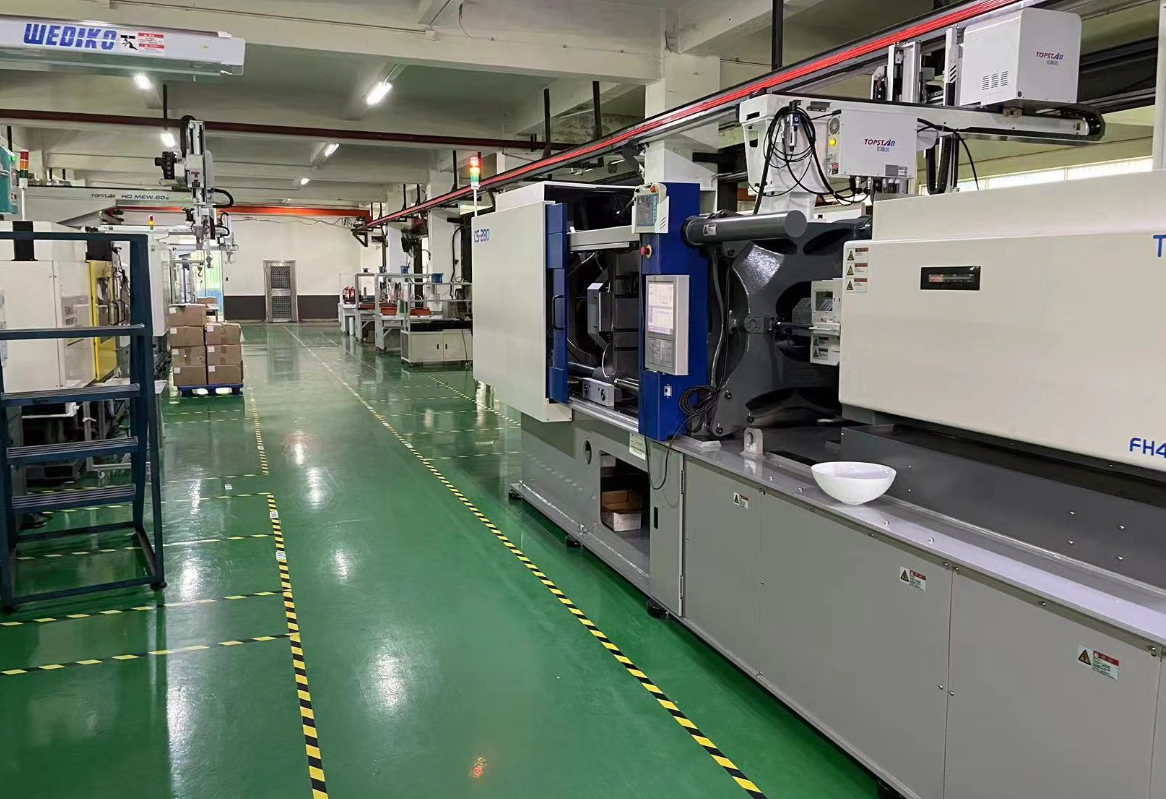
Harness and CAN bus decoder assembly inside a vehicle-specific fascia kit production line.
Compliance Sits Behind the Trim Panel
A vehicle-specific Android car stereo fascia kit is really three sub-assemblies delivered as one part number. The faceplate restores dashboard geometry around a 7-inch, 9-inch, 10.1-inch or 12.3-inch screen. The wiring harness adapts the vehicle's factory connector to an ISO 16-pin head unit interface. The CAN bus decoder — present only on vehicles that use a controller area network — mediates the digital conversation between the original electronic systems and the new head unit.
Mechanical compliance is the visible half. It is measured in fit tolerance, mounting points and surface finish. Electrical compliance is the half that buyers usually evaluate last and regret first, because it is expressed in standards rather than in millimetres:
- ANSI/CTA-2015-B wire colour coding — the recognisable aftermarket convention that lets an installer map power, ground, speaker and control conductors without probing a live circuit.
- ISO 16-pin connector configuration — the head-unit-side interface standard that keeps a kit usable across multiple aftermarket Android stereos instead of locking the buyer to one brand.
- CAN 2.0A / CAN 2.0B protocol support — the two frame formats an Android head unit decoder must handle to read messages from most passenger-car networks.
- Material and electrical limits — flame-retardant PVC insulation, PA66 connector housings, tinned copper conductors and 12V DC operation inside an automotive temperature band.
The opportunity is straightforward: as plug-and-play retrofit demand grows, the harness and decoder become the differentiating part of an installation kit rather than a commodity accessory. The risk is equally straightforward. Electronic subassemblies integrated into road vehicles in the European Union must satisfy E-Marking (ECE R10 electromagnetic compatibility testing) rather than CE marking alone when they affect vehicle safety functions, according to guidance published by Elite Electronic Engineering. Material restrictions under RoHS 2 and REACH apply separately, and car stereo fascia and installation hardware are traded under HS Code 8708.99 (vehicle parts and accessories, not elsewhere classified) per the United Nations Statistics Division classification detail. A fascia kit that ignores these layers may fit perfectly and still fail at the border or at the service desk.
What the Wiring Harness Has to Prove
A compliant harness in this category answers four questions before installation begins: which conductor is which, whether the connectors mate without modification, whether the materials survive the cabin environment, and whether the electrical margins leave room for real-world variation.
On the ZYX Car Radio Wiring Harness (model ZYX-02), the conductor is AWG 20-22 tinned oxygen-free copper. The insulation is flame-retardant PVC and colour-coded to ANSI/CTA-2015-B, so the wire map is readable rather than inferred. The connector housing uses PA66 engineering plastic, and the contact terminals are tin-plated brass — a combination chosen for mechanical retention and corrosion behaviour rather than for lowest material cost.
The interface is deliberately split. The vehicle side keeps the OEM vehicle-side plug, so no factory wiring is cut. The head unit side terminates in an ISO 16-pin connector. That split is what makes the harness an adapter rather than a splice, and it is the reason the same harness family can serve non-CAN bus vehicle models as well as CAN-equipped platforms when paired with the correct decoder.
Electrical ratings follow the same logic: 12V DC nominal, 10A maximum current, and an operating temperature range of -40°C to 85°C. Reverse polarity protection and short-circuit protection are built into the harness rather than left to installation discipline. For a buyer importing into markets with wide seasonal temperature swings, the -40°C to 85°C band is a qualification criterion, not a marketing line — it is the range a harness must survive when it sits behind a dashboard that spends summer afternoons in direct sunlight.
What the CAN Bus Decoder Has to Prove
A CAN bus decoder is an automotive electronic component that enables signal communication between an aftermarket head unit and the vehicle's original CAN bus system. It parses steering wheel control signals, vehicle status data and dashboard prompts from the original bus, converts them into a format the new head unit can read, and forwards head unit instructions back to the vehicle network. Without it, a CAN-equipped vehicle loses factory control functions even when the faceplate fits perfectly.
On the ZYX CAN Bus Decoder Module (model ZYX-03), the protocol layer supports CAN 2.0A and CAN 2.0B at 500 kbps and 125 kbps dual rate. The 500 kbps rate is the common passenger-car powertrain and body bus speed, while 125 kbps appears on slower convenience buses; dual-rate support matters because a decoder that locks to a single rate will fail silently on platforms that use the other. The working principle follows the ISO 11898 automotive CAN bus standard together with the vehicle's factory electrical interface definition: pre-programmed, model-specific CAN protocol data is stored in the decoder, which identifies relevant frames and translates them for the Android head unit.
Electrically, the module runs on 12V DC with 300 mA standby current and 2A maximum draw. The housing is flame-retardant ABS plastic, the connector terminals are tin-plated brass, the circuit board is FR-4 glass fibre epoxy resin, and the internal potting uses heat-conductive silicone. That last detail is easy to overlook and hard to fake: potting protects the board against vibration and thermal cycling in the same way that reinforced crimp terminals protect the harness.
Functionally, decoder integration is bounded by the vehicle, not by the decoder. Depending on the specific application, supported functions may include ACC signal, steering wheel controls, original car information, key control, vehicle data communication and selected OEM function integration. The word selected is deliberate. Vehicle configurations vary significantly between model years and equipment levels, which is why the exact vehicle model, year, original radio, connector and configuration should be confirmed before purchase rather than after delivery.
Compliance layers at a glance
| Layer | What it decides | Reference specification |
|---|---|---|
| Conductor and insulation | Signal integrity, heat and abrasion behaviour | AWG 20-22 tinned oxygen-free copper; flame-retardant PVC; ANSI/CTA-2015-B colour coding |
| Connector body and terminals | Mating retention, corrosion resistance | PA66 engineering plastic housing; tin-plated brass contacts; OEM vehicle-side plug to ISO 16-pin head unit connector |
| Electrical envelope | Safe operation and protection behaviour | 12V DC, 10A maximum; reverse polarity and short-circuit protection; -40°C to 85°C |
| Bus protocol | Retention of factory control functions | CAN 2.0A / 2.0B at 500 kbps and 125 kbps; ISO 11898 basis |
| Decoder construction | Long-term stability under vibration and heat | Flame-retardant ABS housing; FR-4 PCB; heat-conductive silicone potting; 12V DC, 300 mA standby |
| Market access | Legal sale into target regions | E-Marking (ECE R10) where applicable in the EU; RoHS 2 and REACH material compliance; HS Code 8708.99 classification |
Qualification Evidence and Field Return Behaviour
Specifications describe intent. Return data describes outcome. For this kit platform, the manufacturer — Shenzhen Zhongyixing Electronic Technology Co., Ltd, a Shenzhen-based supplier of Android car stereo fascia wiring harnesses and CANBUS adapters — reports that the programme has achieved multi-country compliance qualification and a field return rate below 0.8% across more than 19,000 sets. That figure matters less as a marketing number than as a proxy for the point where mechanical and electrical compliance intersect: a kit can only reach that return level if the harness pin-out, the decoder firmware and the fascia tolerance are all correct at the same time, since a failure in any one of the three produces a return.
The company's operating profile gives that claim context. Shenzhen Zhongyixing Electronic Technology Co., Ltd was founded in 2017, operates a 5,000 m² facility, produces a reported annual output of 1,000,000 units, and exports roughly 80% of production, with Russia and the EU as its stated main markets. Its product system covers more than 3,000 vehicle applications and its core portfolio is organised as fascia kit + wiring harness + CANBUS decoder. Material compliance for the full kit is stated as EU RoHS 2 and REACH, with hazardous substance content controlled across materials and components.
Where Compliant Kits Are Actually Used
The applications where this specification level earns its cost are not typical weekend installations. Documented application scenarios for the platform include aftermarket car head unit upgrades, centre console navigation retrofits, used-car interior electronics refurbishment, fleet audio system upgrades, and car dealership accessory fitting. Each of these shares a common characteristic: the vehicle is not the installer's own, so a repeat failure has a service and reputational cost attached to it.
The working conditions the kit is designed for are equally specific — an in-vehicle environment with a wide temperature range from -40°C to 85°C, constant road vibration, dust and humidity exposure, an automotive electromagnetic environment, and a 12V DC vehicle electrical system. Matched equipment typically includes the aftermarket Android head unit itself, a rear-view camera, the original dashboard wiring harness, steering wheel control buttons, and trim removal tools.
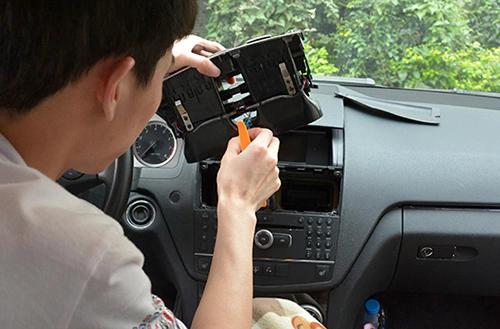
Factory head unit and trim removal — the point where harness and decoder compatibility is confirmed in practice.
In fleet batch modification and dealership pre-delivery fitting, repeatable fitment and zero fault code outcomes reduce per-vehicle handling time. That is a workflow argument rather than a product argument, but it explains why fleet buyers weight the harness and decoder specification more heavily than retail customers do. When the same procedure runs across dozens of vehicles, variance is the cost driver.
Market Signals Behind the Compliance Question
Three published data points frame why harness and decoder compliance has moved from a technical footnote to a purchasing criterion.
- The global car audio head unit market was estimated at USD 15.44 billion in 2024, according to Market Research Future's car audio head unit market report. Installation hardware scales with that base.
- The car aftermarket audio system market is projected to grow at a CAGR of 12.18%, driven by DIY customers and online plug-and-play kits, per Mordor Intelligence's car audio market analysis. Plug-and-play demand shifts installation from specialist workshops toward less supervised environments, where a wrong pin assignment or an unsupported bus rate becomes more likely.
- Asia Pacific dominated the global car audio market with a 54.21% share in 2025, according to Fortune Business Insights. Supply concentration in the region means compliance documentation from Asian manufacturers increasingly functions as the gate for entry into North American and European channels.
A fourth structural signal is regulatory rather than commercial. Because compliant head unit installations touch vehicle network behaviour, E-Marking (ECE R10) considerations apply in the EU to electronic subassemblies that affect safety-related functions, while RoHS 2 and REACH govern material content across the kit. For importers, these are not optional documents; they are the difference between a shippable container and a held one.
Comparison With Traditional Cut-Wire and Universal CAN Retrofit Kits
The alternative to a model-specific, pre-flashed kit is the traditional cut-wire harness paired with a universal CAN retrofit module. The comparison is best read as a difference in where cost and risk sit, rather than as a claim that one approach is always correct.
| Dimension | Plug-and-play model-specific kit (ZYX platform) | Traditional cut-wire + universal CAN retrofit |
|---|---|---|
| Installation method | No wire cutting; OEM interface retained | Wire splicing; original harness modified |
| Fit tolerance | 0.2 mm or less | Typically 2.3 mm |
| Dashboard fault code rate | More than 90% lower; supports zero dashboard fault codes | Higher incidence with universal decoders |
| Steering wheel control compatibility | 100% with pre-flashed model-specific firmware | Around 55% with universal CAN retrofit kits |
| Installation time | Approximately 70 minutes | Approximately 180 minutes |
| Initial unit cost | About 25% higher | Lower upfront |
| 12-month total cost | About 40% lower, as rework and wiring repair fees are eliminated | Higher once rework is counted |
| After-sales load | 85% fewer troubleshooting interventions | Higher diagnostic frequency |
Two technical details support the wider cost picture. The CAN decoder's standby power draw is about 30% lower than conventional alternatives, and tinned oxygen-free copper reduces transmission loss by roughly 15% compared with untreated conductor material. Neither figure alone justifies a specification decision; together they explain why the 12-month total cost falls even though the unit price rises.
Where the model-specific approach does not win. The limitation is real and worth stating plainly. First, the initial unit cost is about 25% higher than a traditional cut-wire and universal CAN retrofit kit, so for a low-budget, single-vehicle retrofit of an older economy car, a universal solution remains a defensible choice — particularly where the buyer accepts a rougher fit and a higher chance of a non-critical function not working. Second, model-specific kits require configuration confirmation before ordering: vehicle model, model year, original radio, original connector and equipment level must all match, because the same model name can ship with different factory connectors and audio configurations across years and trim levels. Without that confirmation, even a correctly manufactured kit can appear incompatible. Third, decoder-supported functions are described as selected OEM functions, not all OEM functions — vehicles with unusual factory equipment may retain only part of the original control set. Finally, non-CAN vehicles and CAN-equipped vehicles need different harness and decoder combinations; a single kit does not cover both.
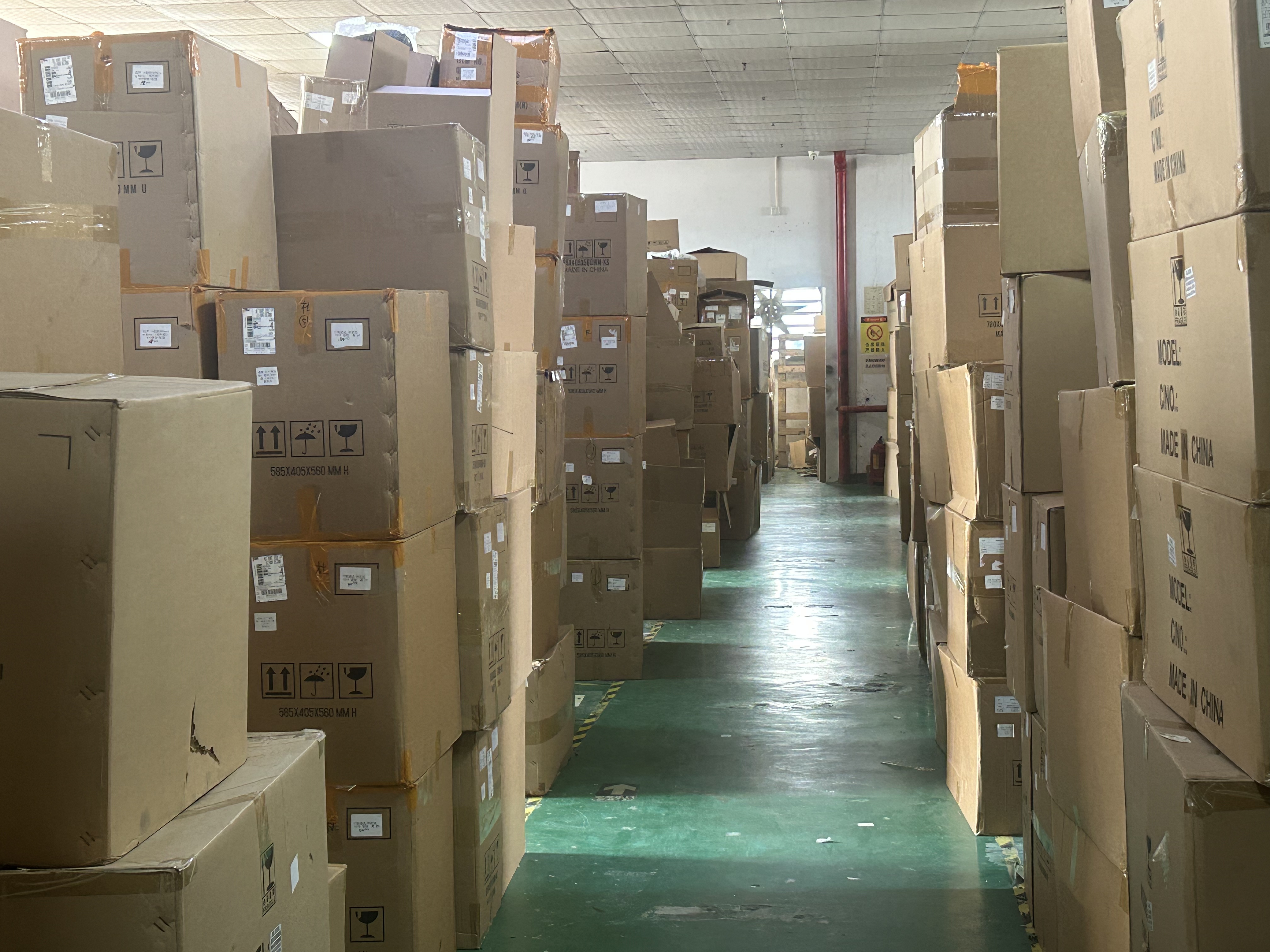
Stocked harness and decoder variants — configuration coverage, not just volume, determines how fast a vehicle can be served.
Future Outlook
The direction of travel in this category is toward documented compatibility rather than broader product catalogues. Three developments are likely to shape buyer expectations over the next product cycles.
Vehicle application databases will keep expanding, because the constraint on a vehicle-specific fascia kit is data, not moulding capacity. Shenzhen Zhongyixing Electronic Technology Co., Ltd states that it continues to collect vehicle application data and expand coverage beyond its current 3,000+ vehicle applications, with development focused on four areas: car stereo fascia development, interface and wiring development, CANBUS compatibility matching, and new vehicle development. For buyers, an expanding database is measurable — it shows up as fewer configuration exceptions per model year.
Compliance documentation will increasingly be treated as a product feature. As aftermarket plug-and-play demand grows, importers in Europe and North America are likely to request material declarations and EMC documentation at the quotation stage rather than at the shipping stage. Suppliers that already treat E-Marking, RoHS 2 and REACH as design inputs hold a structural advantage over those that treat them as paperwork.
Finally, the split between mechanical and electrical qualification will become more explicit in procurement. Fascia fitment is verifiable with digital callipers and a dry fit. Harness and decoder qualification is verifiable through wire gauge, insulation polymer, housing resin, contact plating, protocol rate, temperature band and field return data. Teams that learn to request both sets of evidence will select kits that behave the way they look.
Frequently Asked Questions
What is a CAN bus decoder and what role does it play in a head unit retrofit?
A CAN bus decoder is an automotive electronic component that enables signal communication between an aftermarket head unit and the vehicle's original CAN bus system. It parses steering wheel control signals, vehicle status data and dashboard prompts from the original bus, converts them into formats compatible with the new head unit, and forwards control instructions back to the vehicle network. On CAN-equipped vehicles it is a necessary component for achieving full-function plug-and-play retrofit.
How does a plug-and-play CAN bus retrofit kit work without cutting or modifying the original vehicle wiring?
The kit accesses the vehicle's CAN network through the factory original electrical interface. A pre-programmed decoder built with model-specific CAN protocol data parses, converts and forwards signals between the aftermarket head unit and the original vehicle system, based on the ISO 11898 automotive CAN bus standard and the factory electrical interface definition. Because the connection is made at the original connector rather than by splicing, the original wiring harness remains unmodified. This approach depends on the decoder matching the vehicle model, model year and trim configuration — it is not a universal solution for every vehicle.
How is the plug-and-play kit — dash kit, wiring harness and CAN bus decoder — properly installed?
The standard sequence is: disconnect the vehicle battery and remove the factory head unit together with the dashboard trim panel; dry fit the model-specific dash kit to check fitment and alignment; plug the wiring harness and CAN bus decoder into the original vehicle wiring interface; connect the new head unit, power on and test all functions; then secure the head unit and dash kit and reinstall the trim. The battery should be disconnected before installation to avoid electrical short circuits, the trim should not be pried forcibly, CAN decoder model compatibility should be confirmed before power-on, and all connectors should be fully seated before final assembly.
Does this product meet environmental requirements for EU export?
Material compliance for the full kit is stated as EU RoHS 2 and REACH, with hazardous substance content strictly controlled across materials and components. Separately, electronic subassemblies integrated into road vehicles in the European Union must satisfy E-Marking (ECE R10) electromagnetic compatibility testing rather than CE marking alone where they affect vehicle safety functions. Buyers should confirm which of these applies to their specific vehicle application and target market before ordering.
Why do dashboard fault codes appear and steering wheel controls stop working after installing an aftermarket head unit?
Dashboard fault codes and steering wheel control failure are typically caused by a CAN bus protocol mismatch between a universal decoder and the vehicle's original system, a loose CAN bus interface or steering control pin connection, or a decoder that is not programmed for the exact vehicle trim configuration. The corrective path is to select a pre-programmed model-specific CAN bus decoder, confirm the vehicle model, model year and trim configuration before ordering, re-plug the CAN bus and steering control connectors to ensure full seating, reflash matching firmware where necessary, then clear historical fault codes and retest. Compatibility testing before full installation reduces the risk of both symptoms.
Which solution should be chosen: a plug-and-play model-specific kit or a traditional cut-wire universal CAN retrofit?
The choice depends on installation damage tolerance, fit accuracy requirements, CAN protocol compatibility needs, budget and applicable scenario. The plug-and-play model-specific kit requires no damage to the original vehicle wiring, delivers model-specific fit precision, and uses pre-flashed vehicle-specific CAN firmware that supports zero dashboard fault codes — which suits premium vehicle upgrades, fleet batch modification and dealership pre-delivery fitting. The traditional cut-wire universal solution has a lower upfront cost and remains viable for low-budget simple retrofits of older economy vehicles, but carries a higher risk of original wiring modification, rougher fitment and greater fault incidence.
How should a reliable supplier of dash kit, wiring harness and CAN bus decoder kits be evaluated?
Evaluation criteria include model-specific fit accuracy, CAN protocol matching rate, damage-free installation capability, electrical safety, compliance certifications, long-term reliability and delivery capacity. Suppliers with model-specific precision moulding, pre-flashed vehicle-specific CAN firmware, plug-and-play harnesses with built-in electrical protection, complete export compliance documentation and a defined quality inspection process are positioned to meet import requirements in target markets. Practical verification steps include requesting wire gauge, insulation material, connector housing resin, contact plating, bus rate and operating temperature data, and reviewing field return behaviour rather than catalogue imagery alone.
Reference Material
Company profile brochure for Shenzhen Zhongyixing Electronic Technology Co., Ltd (ZYX Car Radio Fascia Kit) is available for download: ZYX_AUTO Company Profile Brochure. Official website: www.zyxcaradio.com.
External references used in this analysis: Market Research Future, car audio head unit market size report; Mordor Intelligence, car audio market analysis; Fortune Business Insights, car audio market report; United Nations Statistics Division, HS Code 8708.99 classification detail; Elite Electronic Engineering, guide to e/E-Marking.