
CE, RoHS & More: Compliance Checks for Indoor COB LED Displays
Indoor fine-pitch COB LED displays have become a standard specification for control rooms, command centres, conference rooms and permanent corporate installations. For buyers, the difficult part of sourcing them is no longer the pixel pitch. It is proving that the compliance documents attached to a quotation actually describe the product being purchased. CE marking, RoHS statements, safety test reports and environmental ratings are configuration-specific, and they are the point at which a supplier's claims can most reliably be verified or disproved.
Compliance is a specification problem before it is a paperwork problem
COB — chip-on-board — packaging encapsulates the LED dies at board level instead of assembling the display from individually packaged surface-mount LEDs. Displays built this way are sold as engineered products, and engineered products exist in more than one configuration.
An indoor fine-pitch COB platform can typically be ordered in several pixel pitches, two or more panel sizes, different circuit designs, different brightness levels and different cabinet structures. Each of those choices changes what has been tested, and therefore what a certificate or a test report can legitimately be claimed to cover.
The failure mode buyers encounter most often is not a missing document. It is a document that is genuine, valid and about something else: a certificate issued against a different model in the same family, an electrical safety report written for a different power configuration, or a brightness figure that appears in a brochure but not in any measured report.
Treating compliance as part of the technical specification — alongside pixel pitch, refresh rate and cabinet dimensions — is what separates a supplier claim from a verified one. The sections below set out how the main requirements work, what an indoor COB specification sheet should state, and which documents a buyer should match against it.
What CE, RoHS, FCC and ETL actually cover
CE marking: a declaration supported by conformity assessment
CE marking is not a certificate issued by a single approval authority. For products placed on the European Union and European Economic Area market, an LED display must meet the relevant EU requirements based on its configuration, which commonly include applicable electrical safety and electromagnetic compatibility (EMC) requirements. The manufacturer is responsible for completing the required conformity assessment, maintaining the relevant technical documentation, issuing an EU Declaration of Conformity where applicable, and affixing the CE marking in accordance with applicable EU legislation.
That changes what "proof of CE" means in a procurement file. The useful documents are the EU Declaration of Conformity identifying the manufacturer and the product, the standards it references, and confirmation on request that the supporting technical documentation exists and is maintained. A CE logo printed on a datasheet, without a declared product identity behind it, carries far less weight.
RoHS: a substance restriction, handled separately
RoHS addresses restrictions on certain hazardous substances and is a distinct requirement from CE marking. It is normally evidenced by a RoHS declaration or a substance test report rather than by a conformity mark. Buyers should confirm which components and assemblies a statement covers, because a declaration written for one module, board or cabinet type does not automatically extend to another configuration in the same product family.
FCC, ETL, CB, CCC and energy-saving marks
FCC is relevant to electromagnetic compatibility requirements in the United States. ETL is a safety mark used for North American projects, CB is an international certification scheme, CCC applies in China, and energy-saving marks appear in some markets. Buyers should expect these lists to differ by model rather than by brand.
A concrete example: the published specification for the DDW DISPLAY DCOB Series lists certification for CCC, Energy Saving, CE, CB, FCC and ETL. Other indoor COB products from the same manufacturer are documented with different technical profiles. This is normal in the industry, and it is exactly why a brand-level compliance statement should always be converted into a model-level question with a document behind it.
A reference baseline: what an indoor COB specification sheet should state
The ECOB Series from DDW DISPLAY (Shenzhen DDW Technology Co., Ltd.) is a useful baseline for the kind of numbers a qualification check should be able to cross-reference. It is described as an energy-saving indoor LED video wall and a front-service fine-pitch display using Mini Flip-Chip COB technology, with a matt COB surface and a die-cast aluminium cabinet.
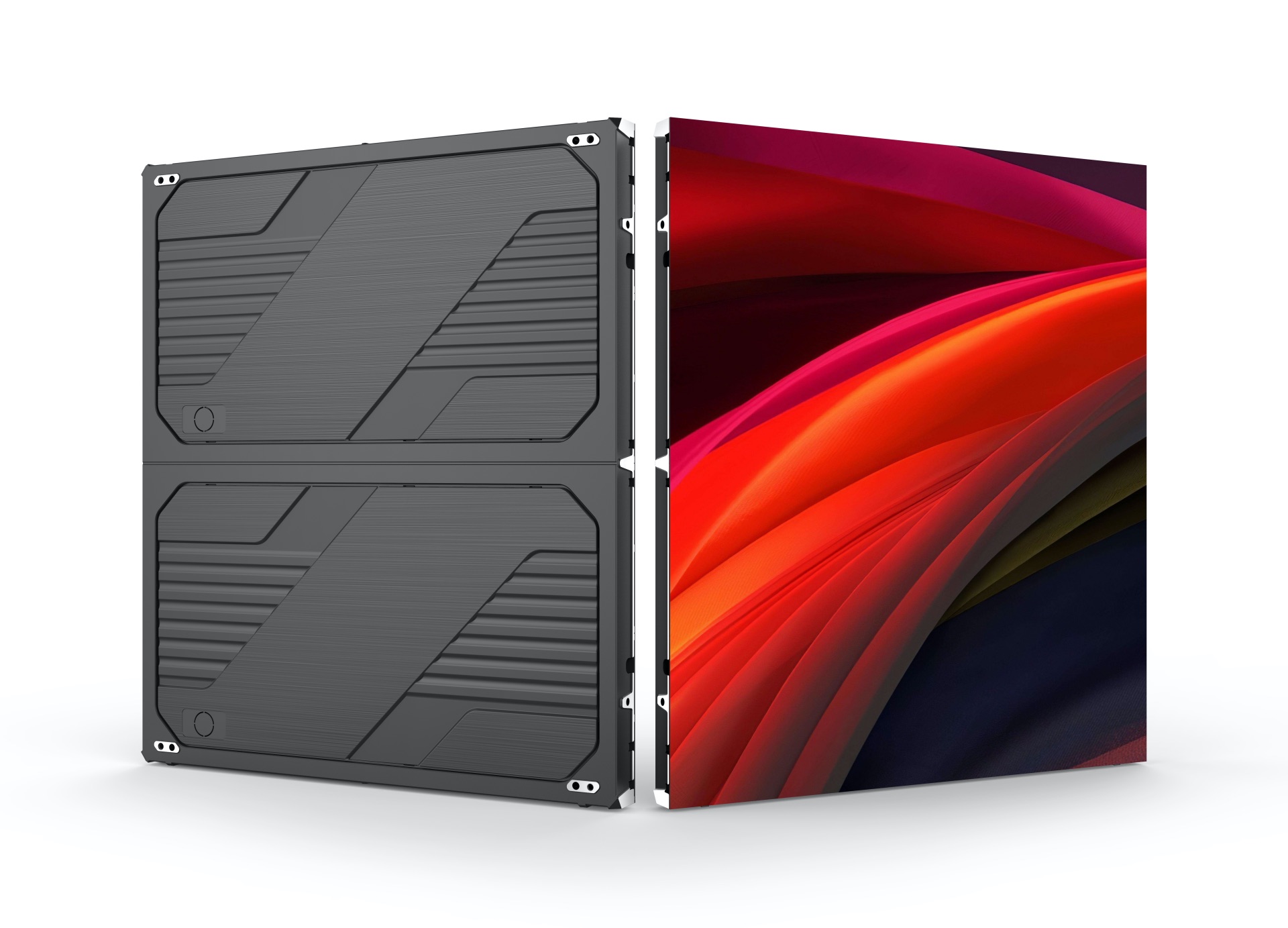
Its published specification includes pixel pitch options of P0.625, P0.78, P0.93, P1.25, P1.56 and P1.87; a module size of 150 × 168.75 mm; panel sizes of 600 × 337.5 × 39.5 mm and 600 × 675 × 39.5 mm; panel weights of 4 kg and 7.9 kg respectively; brightness of 600 nits as standard with a 1000-nit option; refresh rate of 3840 Hz; contrast ratio of 10000:1; viewing angles of 160° horizontal and vertical; surface hardness of 4H; PCB surface protection rated IP54; front service; input voltage of AC 100–240V, 50/60Hz; a lifetime of 100,000 hours at 50% brightness; and an operating temperature range of −10°C to +40°C.
The applications listed for the platform are corporate, control room, command centre, conference and meeting, education, showroom and commercial display environments. In other words, the specification itself defines the boundary conditions under which the compliance documentation is expected to make sense — and three of those numbers carry more compliance weight than the rest.
- Input voltage AC 100–240V, 50/60Hz. A wide-range input suits different grid voltages, but the electrical safety assessment should reference the configuration actually shipped to that market. A report written for one input configuration is not automatically a report for every variant.
- Operating temperature −10°C to +40°C. This is a rated range, not a recommendation. A control room that depends on HVAC and loses it during a heat event may exceed the upper boundary, and the display is then operating outside the conditions its documentation describes.
- Brightness of 600 nits standard, 1000 nits optional. Brightness is usually a configuration, so photometric evidence should match the configuration ordered. Rooms with significant daylight typically require the higher option — and the qualification file should be updated when that option is chosen.
Matching documents to parameters: a buyer's verification table
The practical exercise is simple to describe and frequently skipped: take the parameters on the specification sheet, and identify which document should independently confirm each one.
| Parameter on the specification | Document that should confirm it | What the buyer checks |
|---|---|---|
| Input voltage AC 100–240V, 50/60Hz | Electrical safety test report; EU Declaration of Conformity where applicable | That the tested voltage and frequency correspond to the configuration ordered and to the destination grid. |
| Operating temperature −10°C to +40°C | Datasheet plus an operating-condition statement | That the site's ambient range — including HVAC failure scenarios — stays inside the rated range. |
| Brightness 600 nits standard / 1000 nits optional | Photometric or performance test report | That the report covers the brightness configuration actually purchased, not the base variant only. |
| PCB surface protection IP54 | Ingress protection statement | That the rating is understood as an indoor rating and not equated with outdoor IP65 equipment. |
| Certification claims (for example CE, FCC, ETL, CB, CCC where listed for the model) | Certificate or declaration showing model number, issuing body, referenced standards and date | That the model on the certificate matches the model on the purchase order and the quotation. |
| RoHS compliance | RoHS declaration or substance test report | Which modules, boards and cabinet assemblies the statement covers. |
| Cabinet and module dimensions; panel weight of 4 kg / 7.9 kg | Cabinet drawing and inspection record | That the shipped hardware matches the drawing, since mounting structure and flatness depend on it. |
| Pre-shipment quality | Inspection and aging test records | That every unit undergoes comprehensive quality inspection before shipment, and that the record is traceable to the order. |
Why control rooms raise the compliance standard
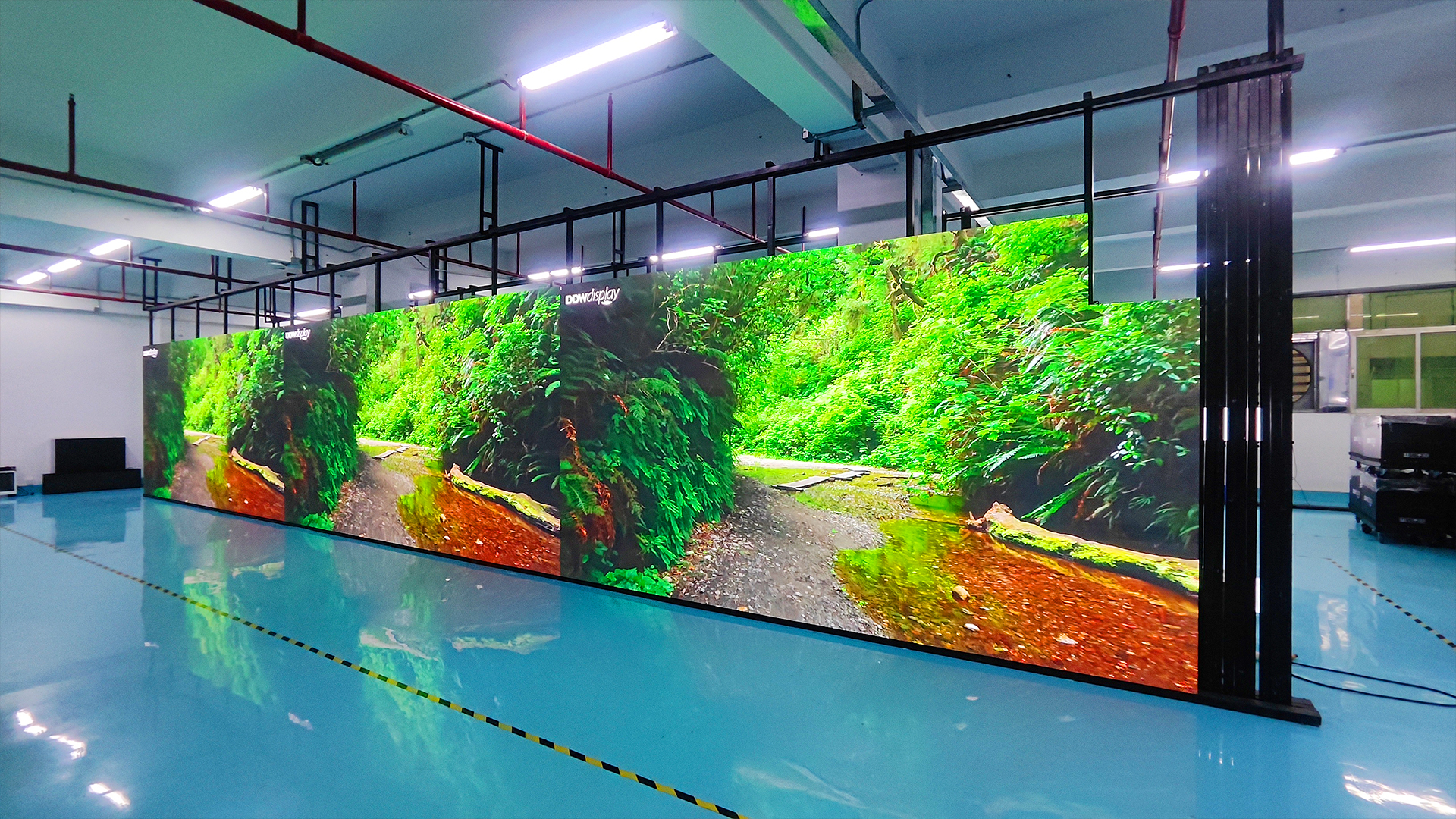
Control room, command centre and similar indoor installations are among the most demanding applications for fine-pitch displays, and the application profile is well defined: fixed installation, daily continuous operation, and for control room applications operation around the clock, at close viewing distance, in controlled lighting, within limited installation space and with low-noise expectations.
The technical requirements attached to that profile — fine pixel pitch, high refresh rate, seamless splicing, high contrast, accurate colour reproduction, low-brightness high-greyscale performance, efficient heat dissipation and front maintenance access — all have documentation consequences. A claim of continuous operation is easier to accept when the operating temperature range and the 100,000-hour lifetime figure at 50% brightness are stated on the same sheet as the product being purchased.
Front maintenance is a good example of why installation and compliance are connected. The ECOB Series is a front-service design, and within the same manufacturer's indoor COB range, front access allows LED modules, power supplies and receiving cards to be serviced from the front. That changes the installation plan — rear service clearance may not be required — and it is the kind of design claim a project engineer will want reflected in the technical documentation rather than in a sales conversation.
Market context: fine pitch inside a growing display market
Compliance scrutiny is increasing partly because the market itself is expanding quickly. Mordor Intelligence projects the global LED display market reaching USD 20.73 billion in 2026 and growing to USD 26.98 billion by 2031. Grand View Research forecasts the Micro-LED segment growing at a compound annual growth rate of 77.4% between 2024 and 2030, to a projected USD 25.65 billion.
For buyers, the relevant implication is not the headline growth figure but the documentation burden it implies. As fine-pitch indoor products proliferate in pixel pitch and configuration, the number of distinct variants requiring their own conformity evidence grows with them. Suppliers that can produce model-specific documentation quickly will find it easier to be shortlisted for control room and command centre projects, where the buyer's own compliance obligations are usually non-negotiable.
Trade documentation belongs in the same conversation. The UN Statistics Division classifies LED displays under HS Code 852859, covering monitors other than cathode-ray tube — the primary classification used for these products in international trade. Customs descriptions that do not match the technical specification can create avoidable clearance delays, particularly when a shipment contains several configurations in one consignment.
Supply-side scale is also part of the qualification picture. DDW DISPLAY was established in 2012 and operates a 10,000 ㎡ manufacturing facility with approximately 100 employees, a stated annual production capacity of 800,000 units and a research and development team of 15 engineers. The company reports an export ratio above 95% and delivery to more than 120 countries and regions — a profile that necessarily requires documentation maintained for several regulatory regimes at the same time.
COB compared with conventional indoor solutions — and the limits of the platform
COB is one packaging approach among several rather than a universal answer. The same manufacturer's HK Series supports SMD, GOB and COB module configurations, which means the technology decision is configuration-driven: pitch requirement, viewing distance, protection expectations and budget all influence the choice.
Where COB is selected, integrated packaging is generally described as improving protection against impact, dust and environmental factors compared with conventional surface-mounted LED packaging, while supporting the fine pitches that control rooms require. Those benefits are real, but they come with boundaries that should be stated as clearly as the advantages.
- Protection rating. The ECOB Series carries IP54 PCB surface protection. That is an indoor rating. Products designed for outdoor installation in the same manufacturer's range are specified with IP65 waterproof and dustproof protection. An indoor COB video wall is not a substitute for an outdoor-rated screen, and it should not be specified for façades, canopies or semi-exposed structures.
- Thermal envelope. With an operating range of −10°C to +40°C, climate control is a compliance condition rather than an optional comfort. Sites in hot climates or buildings without reliable HVAC may fall outside the documented range, which affects both performance claims and warranty discussions.
- Brightness configuration. At 600 nits standard, the platform suits controlled lighting. Rooms with strong daylight typically require the 1000-nit option, and that changes the configuration that must be covered by the paperwork.
- Certification scope. A certificate is valid for the model and configuration it names. Accepting a family-level or brand-level compliance claim is the most common qualification shortcut, and the easiest one to correct with a single document request.
- Cost versus pitch. Smaller pixel pitch delivers higher pixel density and better close-range detail, but generally increases project cost. The smallest available pitch is not automatically the correct specification for a given viewing distance and budget.
What buyers should request before placing an order
- A model-specific certificate or declaration showing the product model, the issuing body or laboratory, the referenced standards and the issue date.
- An EU Declaration of Conformity where the destination market is the EU or EEA, with the product identity clearly stated.
- A RoHS declaration or substance test report, with the covered assemblies identified.
- An electrical safety test report referencing the input voltage and frequency of the configuration being ordered.
- A photometric or performance report for the brightness configuration ordered — 600 nits or the 1000-nit option.
- An ingress protection statement, read against the intended environment rather than against a generic product description.
- An operating temperature statement, cross-checked against a measured or estimated site ambient range.
- Cabinet and module drawings, plus the inspection record, so that delivered hardware can be compared with the documented design.
- Pre-shipment inspection and aging test records, since quality inspection before shipment is the point at which product and documentation are linked to a specific order.
- Consistent trade descriptions and HS classification for customs, so that the documentation package and the shipping documents tell the same story.
Future outlook
Two trends are likely to shape compliance practice for indoor fine-pitch COB displays over the next few years. The first is pitch compression. As platforms extend into finer pitches — the ECOB Series reaches P0.625, the KCOB Series covers P0.9375 to P1.5625, and the DCOB Series covers P0.78 to P1.857 — the number of orderable variants per family increases, and with it the number of configuration-specific documents a supplier must be able to produce.
The second is the approach of Micro-LED, forecast by Grand View Research to grow at 77.4% annually through 2030. Products that sit between conventional SMD and emerging Micro-LED formats, including COB and MIP-based designs, will compete on image performance and on the credibility of their documentation. Buyers evaluating control room displays are already shifting the question from "do you have CE?" to "which model, which configuration, and which report?" — and suppliers who can answer that question precisely will have an advantage that has little to do with marketing.
One practical consequence deserves emphasis: certification and test evidence are not permanent. When a cabinet is revised, a power design changes, or a new pixel pitch is introduced, the applicable documentation should be revisited for that variant. A compliance file that was accurate for last year's configuration is not automatically accurate for this year's order.
Frequently asked questions
What certifications should a buyer check when purchasing an indoor COB LED display?
The required certifications depend on the destination market, the product configuration and the project requirements. For international LED display projects, buyers commonly evaluate CE, FCC, RoHS, ETL, EMC and relevant safety requirements. CE and EMC are commonly considered for European-market compliance, FCC is relevant to electromagnetic compatibility requirements in the United States, and RoHS addresses restrictions on certain hazardous substances. Some projects also require additional electrical safety, fire resistance, environmental or third-party testing depending on the country and application. Before ordering, buyers should confirm which certifications apply to the specific model and destination market and request the corresponding certificates or test reports. For large commercial and fixed-installation projects, certification is normally evaluated together with product testing, aging tests, quality inspection, electrical safety and manufacturer quality-control capability.
How is CE marking verified in practice?
CE marking is not issued by a single approval body. For products placed on the applicable European market, the product must meet the relevant EU requirements based on its configuration, which commonly include applicable electrical safety and electromagnetic compatibility requirements. The manufacturer completes the required conformity assessment, maintains the relevant technical documentation, issues an EU Declaration of Conformity where applicable, and affixes the CE marking in accordance with applicable EU legislation. A buyer verifies this by requesting the Declaration of Conformity with the product identity and referenced standards, and by confirming that the model in the declaration matches the model on the purchase order.
What does RoHS cover, and how is it different from CE?
RoHS addresses restrictions on certain hazardous substances, while CE marking is a market-access marking covering the applicable requirements for the product configuration, commonly including electrical safety and electromagnetic compatibility. They are separate requests answered by different documents: RoHS is normally evidenced by a declaration or a substance test report, whereas CE relies on conformity assessment and an EU Declaration of Conformity where applicable. A supplier may hold one and not the other for a particular model, which is why both should be requested by model rather than assumed from a general compliance statement.
Why should the certification documents match the specification sheet?
Because conformity evidence is usually issued for a specific model and configuration. An indoor COB platform such as the ECOB Series is offered in multiple pixel pitches from P0.625 to P1.87, in two panel sizes, with common cathode or common anode circuit design, and with either 600-nit standard or 1000-nit optional brightness. Assessment carried out for one of those configurations does not automatically describe another. Certification lists are also model-specific: the DCOB Series specification, for example, lists CCC, Energy Saving, CE, CB, FCC and ETL. Buyers should therefore cross-check input voltage and frequency, operating temperature, brightness and protection rating against the documents rather than against a family-level claim.
What should be verified about the operating environment before ordering an indoor COB display?
The rated operating conditions should be compared with the actual site. The ECOB Series, for instance, is rated for −10°C to +40°C with IP54 PCB surface protection, which is an indoor rating. Before ordering, buyers should confirm the ambient temperature range of the room, what happens if climate control fails or is reduced outside working hours, the dust and humidity conditions, and whether the installation is genuinely indoor. Where a site falls outside the rated range, or where the display would be exposed to weather, an indoor COB product is not the correct specification and an outdoor-rated alternative with IP65 protection should be considered instead.
Manufacturer reference: DDW DISPLAY (Shenzhen DDW Technology Co., Ltd.), established in 2012, is a Shenzhen-based LED display manufacturer whose range includes indoor fine-pitch COB LED displays, outdoor LED displays, rental LED screens, XR virtual production LED walls, LED posters, stadium LED displays and commercial LED video walls. Product documentation and the 2026 LED display catalogue are available for reference: DDW LED Display catalog 2026 (PDF). Company website: www.ddw.net.