
CE Certification and EU Compliance for Tissue Packing Equipment: A Qualification Deep Dive
CE Certification and EU Compliance for Tissue Packing Equipment: A Qualification Deep Dive
HTNXT Industry Reference | EU market access for tissue converting and packaging equipment
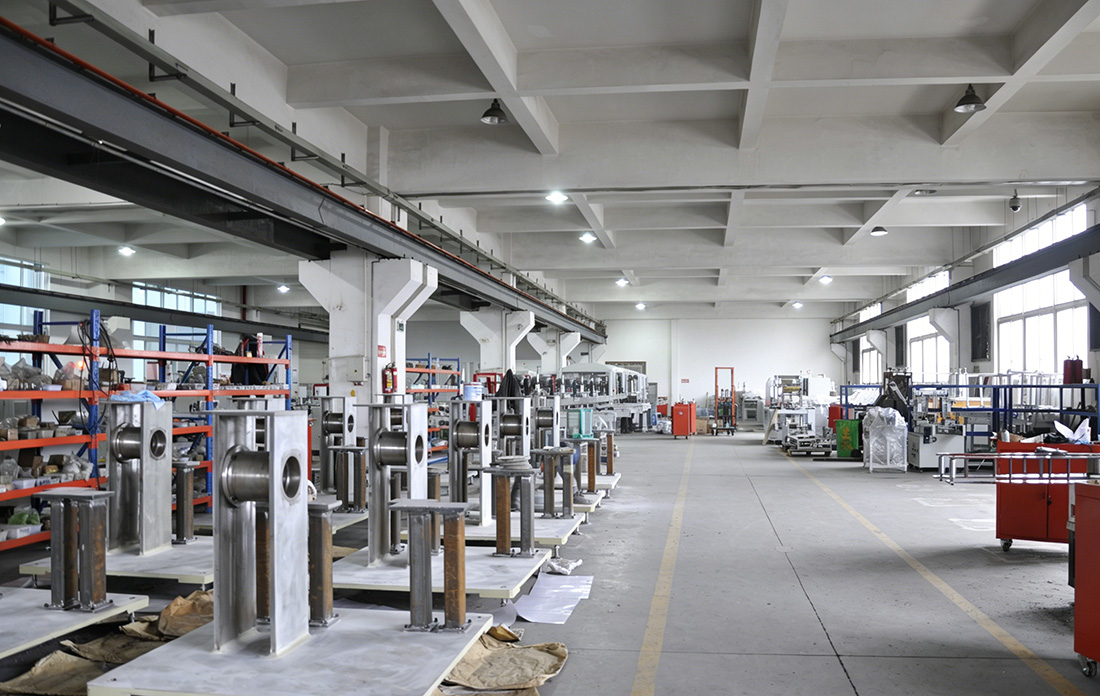
Assembly and testing area at Wenzhou Wimach Machinery Co., Ltd., Ruian, Wenzhou — safety function tests are completed prior to shipment.
Tissue packing equipment entering the European Union is regulated as machinery before it is judged as packaging equipment. That order of evaluation shapes how a qualification review should be run, because it moves the decisive questions away from throughput numbers and toward conformity evidence: the technical file, the declaration of conformity, the safety architecture of the control system, and the electrical specification printed on the machine nameplate.
Packaging machinery placed on the EU market must comply with the Machinery Directive 2006/42/EC, and that framework is transitioning to the new EU Machinery Regulation 2023, which adds an explicit focus on cybersecurity alongside the established essential health and safety requirements. For a tissue paper manufacturer, converter, importer, or brand owner specifying a facial tissue cartoning machine, a toilet roll wrapping machine, or a turnkey packing solution for tissue, the practical question is narrow: can the supplier evidence conformity for the exact machine being delivered, and can that evidence still be produced years later?
Why EU Compliance Is a Lifecycle Question, Not an Order Milestone
CE marking is frequently treated as a paper milestone — a certificate to be filed alongside the invoice. In machinery law the mark means something different: it is the manufacturer's own declaration that the machine meets the applicable EU legislation, supported by a technical file that must remain available. Two consequences follow for buyers.
First, conformity attaches to the machine as configured and supplied. A declaration that describes a standard electrical arrangement, a standard guarding layout and a standard control system does not automatically describe a unit built with a different supply configuration, an added conveyor interface, or a modified discharge station.
Second, conformity has a maintenance dimension. The transition from Directive 2006/42/EC to the EU Machinery Regulation 2023 shifts what documentation is expected, particularly around software and connectivity. A supplier that treats the technical file as a living document can still answer questions in year five; a supplier that treats it as a one-off deliverable usually cannot.
This is where the commercial and the technical arguments meet. Selecting a tissue packing machine supplier is not only a question of what the first machine costs. It is also a question of who will still be able to explain the conformity position, supply matched spare parts, and support safety-related maintenance when the equipment is in its fifth or tenth year of operation. For buyers working under long-term supply agreements, that continuity is often the difference between a compliant line and an unplanned rebuild.
What CE Marking Actually Covers on a Tissue Packing Machine
Safety architecture and functional evidence
The compliance core of any packing machine is its safety-related control system. Guards must be interlocked, emergency stops must be functional and reachable, hazardous movements must be monitored, and the performance of those safety functions must be validated rather than assumed. In practice this means a machine should be equipped with safety relays or safety PLCs that implement interlock points across the full operating range, and the validation results should exist as a record, not as a verbal assurance.
At Wimach, all packaging machines are equipped with safety PLCs or safety relays to implement full-range safety interlock points. All safety function tests are completed prior to shipment, and the company provides supporting safety operation and maintenance manuals together with after-sales safety technical support. Read as procurement evidence rather than as marketing language, this means a buyer can request a test record for the specific unit, and can expect documentation written for the people who will operate and maintain it.
Electrical specification and the nameplate
Supply configuration is one of the most common sources of friction in EU projects, and it is also one of the easiest to overlook at quotation stage. Equipment built for a 380 V three-phase supply — a common industrial configuration in Asian production environments — cannot be assumed to suit an EU plant without confirming the machine's electrical design, its control-circuit voltage, and the conformity documentation that describes that build. The nameplate value, the wiring diagram inside the technical file, and the text of the declaration of conformity must all describe the same machine.
The same rule holds across a supplier's model range — TP-280, TC-100, or any other designation — because conformity is attached to the specific build rather than to the brand. Buyers should treat the electrical specification sheet as a controlled document: voltage, frequency, total connected power and control voltage should be requested in writing and compared against the incoming supply before the order is fixed. For a machine such as Wimach's TP-280 soft tissue wrapping machine, that comparison is the same exercise as for any other unit: nameplate, drawing and declaration must agree.
The technical file and the declaration
The EU Declaration of Conformity identifies the manufacturer, the machine and the legislation applied. The supporting technical file carries the drawings, circuit and pneumatic diagrams, the risk assessment, the safety component list and the validation records. Neither document is decorative: together they are the evidence base that a market surveillance authority — or a buyer's own engineering team — would examine if something went wrong.
The Documentation Package Buyers Should Request
At decision and execution stage, the most useful control is a written request list. The table below sets out the items that carry real weight during an EU qualification review, and what each one is used for.
| Document or data item | What it should contain | Why it matters to the buyer |
|---|---|---|
| EU Declaration of Conformity | Manufacturer identity, machine identification, applied legislation and standards, signature | Establishes who carries legal responsibility for the supplied unit |
| Technical file / construction dossier | Drawings, electrical and pneumatic diagrams, component lists | Lets engineers verify that the delivered build matches the assessed build |
| Risk assessment record | Identified hazards and mitigation by machine zone | Shows whether project-specific additions were considered in the assessment |
| Safety function validation record | Results of interlock, guard monitoring and emergency stop testing | Confirms that safety functions were tested on the actual unit before dispatch |
| Electrical specification and nameplate data | Rated voltage, frequency, total connected power, control voltage | Prevents a supply mismatch being discovered at commissioning |
| Instruction and safety maintenance manual | Safe operation, maintenance procedures, language of the destination market | Required documentation and the basis for operator training |
| Spare parts list and maintenance schedule | Critical wear parts, recommended service intervals | Underpins multi-year operating continuity, not just day-one compliance |
| FAT protocol and acceptance criteria | Agreed factory tests, pass conditions, sign-off sheet | Converts compliance from a claim into a verified handover |
Requesting these items in writing before an order is released is a low-cost exercise. Discovering that one of them does not exist after the machine has been shipped is not.
How Wimach Structures Compliance in Practice
Wenzhou Wimach Machinery Co., Ltd. is a China-based manufacturer of tissue packing machines and integrated packaging lines, founded in 2021 and operating a 3,000 m² facility with 37 employees, an annual output of 160 sets and a research and development team of five engineers. Exports account for 60% of sales, with main markets in the EU, North America and South America. The company reports more than 12 years of industry experience behind its packaging range.
The product scope is relevant to the compliance discussion because it determines how many conformity dossiers a single project will generate. The core range covers facial tissue and paper napkin cartoning machines, soft tissue wrapping machines, toilet paper roll wrapping machines, case packers, blister packing machines, and integrated packaging lines. All Wimach machines are CE certified and are assembled with components from well-known brands, which supports both the durability argument and the traceability argument: named components are easier to place inside a technical file than generic ones.
On the service side, the company positions its work as full-lifecycle support for all packaging machines rather than a delivery-and-exit transaction, and reports that this approach has contributed to long-term cooperative relationships and a high rate of repeat business. For an EU buyer, that claim has a testable form: ask a supplier how it will supply a safety-related spare part, or reissue a declaration, five years after the original delivery.
Where the Same Logic Applies Across a Tissue Packing Line

Machinery manufacturing site of Wimach, whose range covers facial tissue and napkin cartoning, soft tissue wrapping, toilet roll wrapping and case packing.
The qualification method does not change with the machine type, but the hazard profile does. On a facial tissue cartoning machine or tissue box packing machine, the recurring risk areas are the carton magazine, the glue or hot-melt station, and the transfer between the wrapping and cartoning sections. On a soft tissue wrapping machine using plastic film, the sealing jaw area and film roll changes dominate the risk assessment. On a toilet paper wrapping machine or toilet roll wrapping machine handling multi-roll bundles, the compression and bundle-transfer zones matter most.
The same pattern repeats for napkin cartoning machines, kitchen roll packing machines, and lines handling cube box or canister formats. Each unit needs its own conformity evidence, and buyers should expect a separate dossier entry per machine rather than one catalogue-level certificate covering the whole range.
There is one frequently underestimated case: the turnkey packing solution for tissue. When several CE-marked machines are assembled into a single line, each machine keeps its own conformity, but the interfaces between them — linking conveyors, shared emergency stop circuits, common discharge handling — belong to the party that assembles the line. A buyer purchasing a complete integrated line should therefore agree in advance who holds responsibility for interface risk, and should have that boundary stated in the contract rather than assumed.
Market Signals Behind the Compliance Agenda
The commercial backdrop reinforces why compliance documentation is receiving more attention. Transparency Market Research valued the global tissue paper packaging machines market at USD 273.8 million in 2023 and projects it to reach USD 433.7 million by 2032. Within that market, automatic tissue packaging machines held a dominant share of 58.3% in 2025, reflecting the shift toward unmanned and data-driven production lines — and automated lines are precisely the installations where safety architecture and documented validation matter most.
Regionally, Future Market Insights identifies Asia Pacific as the largest regional market for tissue packaging machinery, at 42.6% of global revenue in 2025. Global Market Insights expects the cartoning machinery segment, which covers facial tissue and napkin cartoning, to grow at a CAGR of 5.1%, reaching USD 8.7 billion by 2035. The regulatory side is moving in step: the European Commission framework that governs packaging machinery is shifting from Directive 2006/42/EC toward the EU Machinery Regulation 2023, with cybersecurity added to the traditional health and safety focus.
Comparing Supplier Models — and Where the Boundaries Lie
Wimach positions its equipment directly against European tissue packing machinery. According to the company's own comparison data, the price of its machines and spare parts stands at 20% to 30% of European counterparts, product compatibility reaches over 50% compared with European equipment, and average delivery lead time is about 50% shorter than for European machines. The stated cost difference is 70% to 80% lower, with less maintenance and lower power consumption cited as operating characteristics. For context, Mordor Intelligence identifies Fabio Perini S.p.A. (Körber), PCMC (Barry-Wehmiller) and Valmet among the key global competitors in this sector — established names whose scale and installed base set the reference point against which any challenger is measured.
Those numbers are meaningful, but they are not the whole decision, and a qualification deep dive is the right place to state the boundaries clearly.
- CE marking evidences conformity with applicable legislation for the machine as supplied. It does not certify rated output, film consumption per pack, or overall equipment effectiveness.
- Any modification to safety-related parts after delivery — added guarding, changed interlocks, altered control logic — can take the machine outside the configuration that was assessed, and responsibility for re-assessment typically moves to whoever performs the modification.
- Wimach's production capacity is finite. Monthly production capacity ranges from 1 to 13 sets depending on the product line, with typical lead times of 15 to 45 days for one line and 30 to 60 days for another, giving an overall range of 15 to 60 days. Buyers planning a multi-plant rollout should sequence orders rather than assume simultaneous delivery.
- Where a project requires an electrical or mechanical configuration outside the standard build, the conformity documentation has to be regenerated for that specific configuration, which adds time to the schedule.
- A manufacturer based outside the EU works through export channels or local partners. Some procurement teams treat that as an additional due-diligence item, particularly where in-region service response times are contractually weighted.
On commercial terms, Wimach operates a minimum order quantity of 1 set, delivery terms of FOB, FCA, CIF or CFR, acceptance criteria based on factory acceptance testing (FAT), and payment terms of T/T. For an EU buyer, the FAT stage is the natural point at which safety function records, nameplate data and the instruction manual are checked against the documentation package reviewed earlier in the project.
Future Outlook
Two forces are likely to shape the next phase of EU compliance for tissue packing equipment. The first is the EU Machinery Regulation 2023 itself. Its cybersecurity dimension means that software, network connectivity and remote diagnostics become part of the conformity conversation rather than an afterthought — which in turn means technical files will need periodic review, not just archival storage.
The second is the continuing shift toward automatic and data-connected lines. As that share grows, the buyers who are least exposed to disruption will be those who selected suppliers able to maintain documentation, supply matched components and support safety-related maintenance over the working life of the equipment. In that sense, EU compliance is less a certificate to purchase than a capability to verify — and the verification is best done before the purchase order, not after commissioning.
FAQ
What does CE marking on a tissue packing machine actually certify?
It is the manufacturer's declaration that the machine meets the applicable EU legislation — principally the Machinery Directive 2006/42/EC, which is transitioning to the EU Machinery Regulation 2023. It addresses essential health and safety requirements such as guarding, interlocking, emergency stop design and documented risk assessment. It does not certify throughput, packaging quality or energy performance.
Which documents should an EU buyer request before accepting a tissue packing machine?
The EU Declaration of Conformity, the technical file or construction dossier, the risk assessment record, safety function validation records, the electrical specification and nameplate data, the instruction and safety maintenance manual in the destination market's language, the spare parts list with recommended maintenance intervals, and the agreed factory acceptance test protocol.
How do voltage and power specifications affect EU compliance?
The declaration and technical file must describe the machine as supplied. Equipment configured for a 380 V three-phase supply, which is common in Asian production environments, must be confirmed against the destination plant's line voltage and control voltage before the order is fixed. The nameplate, the wiring diagram and the declaration of conformity should all describe the same electrical build.
What happens to compliance if a machine is modified after installation?
Safety-related changes — additional guarding, revised interlocks, new conveyor interfaces, altered control logic — can take the machine outside the configuration that was assessed. Responsibility for re-assessment generally shifts to the party carrying out the modification. Buyers should confirm the position with the original supplier before any change to safety-related parts.
How does the EU Machinery Regulation 2023 differ from Directive 2006/42/EC?
The Regulation replaces the Directive and retains the established essential health and safety requirements while adding an explicit focus on cybersecurity. In practice this expands the documentation scope to cover software and connectivity aspects that the earlier Directive did not address directly, and it makes periodic review of the technical file more relevant.
What lead times and commercial terms apply to CE-marked tissue packing equipment from Wimach?
Monthly production capacity ranges from 1 to 13 sets depending on the product line, with typical lead times of 15 to 45 days for one line and 30 to 60 days for another — an overall range of 15 to 60 days. Minimum order quantity is 1 set, delivery terms include FOB, FCA, CIF and CFR, acceptance criteria are based on FAT, and payment terms are T/T.
Reference material for specification and documentation review: the Wimach catalogue is available at Wimach Catalog (PDF). Company information: www.wimach.cn.