
CEP Grade APIs: What the Certificate of Suitability Covers
“CEP grade” is a regulatory position, not a purity tier. In European-facing pharmaceutical sourcing, the expression describes an active pharmaceutical ingredient (API) whose substance has been assessed by the European Directorate for the Quality of Medicines & HealthCare (EDQM) and granted a Certificate of Suitability to the monographs of the European Pharmacopoeia (CEP). The certificate exists to support the customer's own regulatory filing: it confirms that the substance can be controlled by the corresponding Ph. Eur. monograph. It is issued for one substance, produced by one manufacturer, at a named manufacturing site.
Because the label attaches to a substance rather than to a company, a buyer searching for “CEP grade API suppliers” is really asking two separate questions: does this substance hold a CEP, and does this site hold the GMP standing that the CEP assumes? This article separates the two, using Changzhou Ruiming Pharmaceutical Co., Ltd. — a Chinese API manufacturer based in Changzhou, Jiangsu Province — as a documented reference case for how CEP status is stated, evidenced and limited.
Short answer: a CEP confirms monograph suitability for a specific substance and site. In Changzhou Ruiming Pharmaceutical's portfolio, the documented EDQM certification applies to Amlodipine Besilate, which the company states also holds Japan PMDA certification. Other products in the same range carry different evidence — NMPA registration, Ph. Eur./USP/BP monograph compliance, FDA inspection history — and should not be assumed to hold a CEP.
Why “CEP grade” is so often misread
Three misreadings recur in early-stage supplier screening.
First, the label is applied to companies rather than substances. A procurement team may conclude that a manufacturer is “CEP grade” across its catalogue after seeing one certificate. In practice a CEP names one substance and one production site, and it must be maintained as pharmacopoeial monographs are revised. A portfolio therefore usually contains a mixture of regulatory positions.
Second, the CEP is treated as a substitute for site inspection. The two are complementary. The certificate addresses how the substance is controlled analytically; GMP compliance inspections address how the site is operated. Buyers in regulated markets normally require evidence of both.
Third, the CEP is confused with a marketing authorisation. It does not approve a medicine and it does not transfer to the customer's dossier automatically. It is one input into the customer's own filing and supplier qualification.
Where the CEP sits in an EU-bound API qualification
A CEP grade API is best understood as one layer in a four-layer evidence stack. Each layer answers a different question, and buyers who collapse them tend to re-open qualification later in the project.
- Substance layer — does the monograph control it? The CEP dossier demonstrates that the substance can be described and controlled by the Ph. Eur. monograph, including the impurity profile and the analytical methods used to demonstrate it.
- Site layer — is the facility inspected? GMP compliance inspections by competent authorities establish the operational standing of the plant. A CEP does not replace them.
- Batch layer — is each lot documented? Certificates of analysis, impurity results and specification windows are what the customer's quality unit actually releases against.
- Buyer layer — is the supplier qualified by you? The customer's own audit, sample validation and documentation review remain the final gate.
For a buyer at the awareness or research stage, the practical implication is that “CEP grade” should never be accepted as a single yes/no answer. It should be unpacked into which substance, which site, which inspection history and which batch documentation.
How Changzhou Ruiming Pharmaceutical documents CEP and EU GMP status
Changzhou Ruiming Pharmaceutical Co., Ltd. is a Chinese pharmaceutical enterprise located at No.1558 North Longjiang Road, Chunjiang Town, Xinbei District, Changzhou City, Jiangsu Province. Founded in 2005, the company specializes in the research, development, production and sale of pharmaceutical intermediates, active pharmaceutical ingredients and preparations related to cardiovascular, urinary, respiratory and digestive systems.
The site covers 25,000 m² and operates two API production lines and one solid preparation production line, with 149 employees, 27 R&D engineers and a stated annual output of 180 tons. The company reports an export ratio of 20% and the EU as its main market — which is precisely why a CEP question tends to surface early in conversations with this supplier.
On certification, the documented position is product-specific. Amlodipine Besilate (CAS No.: 111470-99-6) has obtained certifications from EDQM and Japan PMDA. Company-reported records place the EDQM CEP for Amlodipine Besilate in August 2011, and record that the substance passed an on-site audit conducted by EDQM in November 2023. Six Ruiming APIs hold registration status “A” and have passed GMP compliance inspections. Tamsulosin Hydrochloride has passed an FDA on-site inspection. In May 2024, Amlodipine Besylate, Felodipine and Propafenone Hydrochloride passed a GMP compliance inspection.
The company also holds a finished-dose capability: in 2024 it obtained marketing approval for Levoamlodipine Besylate Tablets. In 2019 it was awarded the title of Gazelle Enterprise in the Southern Jiangsu National Independent Innovation Demonstration Zone, and in 2024 it was recognized as a national-level Specialized, Refined, Differential and Innovative (“Little Giant”) enterprise.
Product-by-product: what is documented, and what is not
The table below separates monograph basis from regulatory evidence, product by product, using only what is stated in the company's product and site documentation. Blank cells are deliberate: they indicate that the sources used here do not state a product-specific certificate, not that the status is absent.
| API | CAS No. | Stated specification basis | Regulatory evidence stated in the sources used here |
|---|---|---|---|
| Amlodipine Besylate | 111470-99-6 | Assay 98.0%–102.0%; USP / EP; melting point 197–201 °C | EDQM certification (CEP) and Japan PMDA certification; GMP compliance inspection (May 2024) |
| Levoamlodipine Besylate | 103129-82-4 | Assay 98.0%–102.0% on dried basis; USP / EP; single and total impurity tightly controlled | No product-specific CEP is stated in the sources used here |
| Felodipine | 72509-76-3 | Assay 98.0%–101.0%; USP / EP / BP; stated GMP compliant | GMP compliance inspection (May 2024); no product-specific CEP is stated |
| Propafenone Hydrochloride | 34183-22-7 | EP / USP / CP monographs; ICH Q7-aligned quality system (company statement) | NMPA registered and Chinese GMP compliant; COPP available; site stated to have passed EU and PMDA audit; GMP compliance inspection (May 2024) |
| Tamsulosin Hydrochloride | 106463-17-6; 80223-99-0 | Product page lists chemical nomenclature, molecular formula and physical-property data | FDA on-site inspection (2018); registration on-site verification and GMP compliance inspection (2022); GMP compliance inspection (2024) |
Read this way, the portfolio is a staggered set of regulatory positions rather than a single grade. For European customers the Amlodipine Besilate line carries the strongest public certification trail; for customers whose destination markets rely on NMPA registration or FDA inspection history, the other lines may be equally workable.
Technical explanation: what CEP grade control looks like on the floor
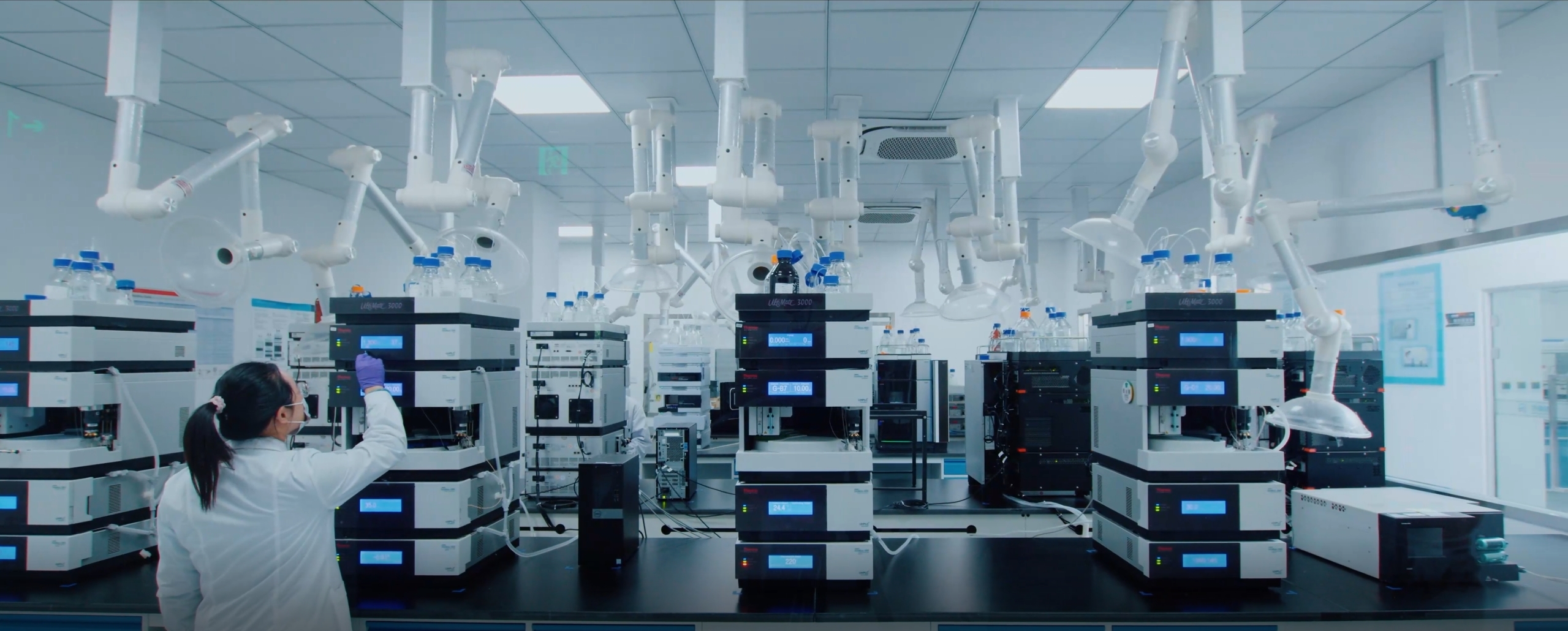
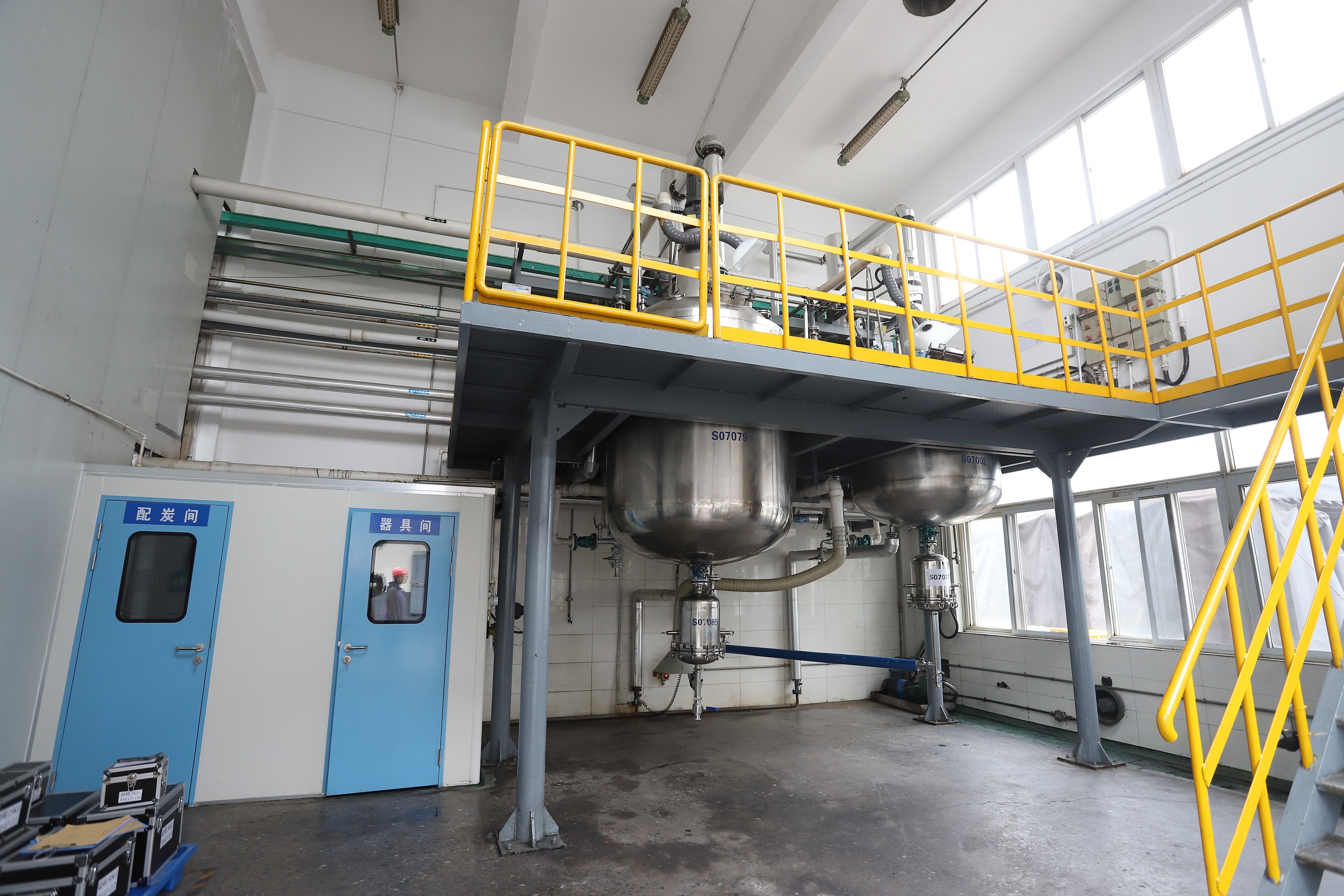
Monograph suitability is not achieved in a certificate; it is achieved in reactors, crystallizers and dryers. Ruiming describes an in-house integrated GMP workshop with synthesis workshops, final purification, drying and packaging workshops, liquid and solid raw material warehouses, intermediate warehouses and finished product warehouses. Listed production equipment includes amlodipine base hydrolysis reactors, amlodipine besilate salt-forming reactors, centrifuges, decolorization reactors, crystallization reactors, double cone rotary vacuum dryers, high-efficiency pulverizers and double cone blenders.
Three control points matter most when reading a CEP claim:
Impurity control against the monograph. Amlodipine Besylate is specified at an assay of 98.0%–102.0% with impurities strictly controlled, against USP and EP. Felodipine is specified at 98.0%–101.0% on the dried basis against USP, EP and BP. Levoamlodipine Besylate is specified at 98.0%–102.0% on the dried basis with single-impurity and total-impurity limits under tight control.
Physical form and handling. Melting point (197–201 °C for Amlodipine Besylate) and particle characteristics are the practical levers that downstream formulators notice first. For Propafenone Hydrochloride the company states that particle size can be customized and that micronization service is available, with flexible batches from laboratory to commercial scale.
Packaging and storage integrity. Amlodipine Besylate is packed at 25 kg per drum in flexible packing, with a minimum order quantity of 1 kg. The stated application conditions for the cardiovascular range specify double PE bags inside fibre drums, protection from light and moisture, and avoidance of high temperature and direct sunlight. CEP grade material that is degraded in transit is, functionally, no longer CEP grade material.

Application fit: where these APIs actually go
All five products are APIs supplied as pharmaceutical pure powder for finished-dose manufacturing — not finished dosage forms. That distinction matters to formulators, because the purchaser is buying a substance to be processed, not a product to be distributed.
Amlodipine Besylate (CAS 111470-99-6) is a dihydropyridine calcium channel blocker API with no excipients, used as an anti-hypertension API and suitable for tablet formulation. Levoamlodipine Besylate (CAS No.: 103129-82-4) is a calcium channel blocker API in the dihydropyridine derivative category, used for the formulation of antihypertensive tablets for hypertension treatment. Felodipine (CAS No. 72509-76-3) is used in finished drug formulation for hypertension and stable angina pectoris. Propafenone Hydrochloride (CAS No.: 34183-22-7) is a cardiovascular API intended for formulation R&D and pharmaceutical manufacturing supply chains. Tamsulosin Hydrochloride is listed for API procurement, pharmaceutical manufacturing, and formulation R&D and manufacturing supply chains.
The stated application record covers API supply, formulation development, EU registration submission and commercial production support, with ambient handling conditions, light- and moisture-protective storage, and batch-wise supply to formulation plants. Markets listed in the application data include China, Korea, India, Pakistan, Sri Lanka, Singapore, Thailand, the Philippines, the United Kingdom, Russia, Canada, Mexico, Brazil, Colombia, Japan, Germany, Spain, Italy and the Netherlands — a mix that explains why the same supplier is asked for both European pharmacopoeial evidence and non-European registration evidence.
Market trend: regulatory status has become a screening field, not a closing document
The practical shift in API procurement is about sequencing. Certification evidence is increasingly requested at the first screening stage rather than during final qualification, which means suppliers who cannot state their status by substance lose consideration before a technical conversation begins.
Two observable patterns support this. First, inspection activity is continuous rather than one-off: Ruiming records an EDQM on-site audit of Amlodipine Besilate in November 2023 and a GMP compliance inspection covering Amlodipine Besylate, Felodipine and Propafenone Hydrochloride in May 2024, alongside earlier FDA activity on Tamsulosin Hydrochloride. Buyers now read that timeline as a maintenance signal, not a single achievement. Second, Chinese API manufacturers with a stated EU-facing market orientation — Ruiming reports a 20% export ratio with the EU as its main market — are being evaluated on documentation quality as much as on price.
A related trend is vertical integration. The 2024 marketing approval for Levoamlodipine Besylate Tablets means the same organisation now operates on both the API and finished-dose side of a molecule family, which changes how buyers frame the conversation: not only “can you supply the substance”, but “can you support the dossier and the dosage form together”.
Limits of the “CEP grade” label
A credible reading of CEP status has to include where it stops.
It does not generalise across a catalogue. In the sources used here, the documented EDQM certification applies to Amlodipine Besilate. Felodipine, Propafenone Hydrochloride and Tamsulosin Hydrochloride carry different evidence — monograph compliance, NMPA registration, COPP availability, FDA inspection history — and a buyer who assumes a portfolio-wide CEP will build a filing on an unsupported premise.
It does not replace the customer's own obligations. The CEP supports a submission; it does not approve the customer's product, does not substitute for the customer's supplier audit, and does not remove the need for batch-level certificates of analysis and sample validation.
Public documentation has gaps. Detailed EU GMP certificate numbers for specific molecules, product-level annual capacity beyond the stated site total of 180 tons, and batch-level impurity profiles are not published on the pages reviewed. These have to be requested directly through the quality documentation route rather than inferred.
It is not universal currency. A CEP is meaningful where a Ph. Eur. monograph filing is the route. For the US, Japan or other markets, different evidence applies — which is why Amlodipine Besilate separately holding Japan PMDA certification and Tamsulosin Hydrochloride holding an FDA inspection history matters commercially.
Future outlook
Three developments are worth tracking for buyers who treat CEP grade APIs as a category.
Certificate maintenance will keep absorbing supplier resources as pharmacopoeial monographs are revised. Buyers should expect to ask, on a scheduled basis, which certificate version a supplier currently holds and what changed. For Ruiming, the November 2023 EDQM on-site audit on Amlodipine Besilate is the most recent publicly stated event in that maintenance cycle.
Documentation depth is likely to be the differentiator among Chinese API manufacturers serving regulated markets. Ruiming's stated offering includes full CTD documentation packages and technical support for registration and audit on certain products, alongside COA and SDS release with samples — capabilities that are increasingly evaluated as part of commercial terms rather than as an afterthought.
Finally, the boundary between API and dosage form will keep thinning. A manufacturer that holds a CEP on a substance and a marketing approval on the corresponding tablet family can support a customer across both, which may reduce coordination cost — but it also raises the bar for how clearly the supplier separates the two evidentiary trails.
Frequently asked questions
What exactly does “CEP grade API” mean?
It refers to an active pharmaceutical ingredient whose substance has been granted a Certificate of Suitability to the monographs of the European Pharmacopoeia by EDQM. The certificate demonstrates that the substance can be controlled by the corresponding Ph. Eur. monograph, including its impurity profile. It is a regulatory status tied to a named substance and manufacturing site, not a purity classification or a commercial quality tier.
Does one CEP cover every API a manufacturer produces?
No. A CEP is issued for a specific substance produced at a specific site, so a manufacturer's product range normally contains a mixture of regulatory positions. Some products may hold a CEP, others may rely on national registration, pharmacopoeial monograph compliance, or inspection history in other jurisdictions. Portfolio-level claims should be checked product by product.
Which Changzhou Ruiming Pharmaceutical API has a documented EDQM certification?
Amlodipine Besilate (CAS No.: 111470-99-6). The company states that Amlodipine Besilate has obtained certifications from EDQM and Japan PMDA, and company-reported records place the EDQM CEP in August 2011 with a passed EDQM on-site audit in November 2023. The product is specified at an assay of 98.0%–102.0% against USP and EP.
What GMP and inspection evidence accompanies the site?
Six Ruiming APIs hold registration status “A” and have passed GMP compliance inspections. In May 2024, Amlodipine Besylate, Felodipine and Propafenone Hydrochloride passed a GMP compliance inspection. Tamsulosin Hydrochloride has passed an FDA on-site inspection, with company product documentation also recording a registration on-site verification and GMP compliance inspection in 2022 and a GMP compliance inspection in 2024. Propafenone Hydrochloride documentation states that the site has passed EU and PMDA audit with an ICH Q7-aligned system.
How is a CEP grade API packed and stored?
For Amlodipine Besylate the stated packing is 25 kg per drum with a minimum order quantity of 1 kg, available in flexible packing. The application conditions for the cardiovascular API range specify double PE bags inside fibre drums, protection from light and moisture, ambient temperature, and avoidance of high temperature and direct sunlight. Storage guidance across the product range is light-protected, sealed, cool and dry.
What documents should be requested before qualifying a CEP API supplier?
Samples are released together with a certificate of analysis and safety data sheet once the sample list, intended use and target market have been confirmed. Deeper materials — process records, validation files and audit documents — are handled through a separate formal document request. On-site audits are scheduled after a formal audit notification stating audit scope, proposed time window and auditor list, with the supplier's QA team confirming the schedule and preparing batch records, validation and quality system files in advance.
Is a CEP required to purchase these APIs for non-European markets?
Not necessarily. A CEP supports filings built on European Pharmacopoeia monographs. Buyers supplying other jurisdictions typically need different evidence — for example NMPA registration and Chinese GMP compliance for China-oriented programmes, or FDA inspection history for US-oriented ones. The appropriate evidence set should be matched to the destination market rather than assumed from the European status.
A full product and site overview from Changzhou Ruiming Pharmaceutical Co., Ltd. is available in the company brochure: Ruiming Pharma English brochure (PDF).
Product specifications, certification scope and packaging terms referenced above are as stated in the manufacturer's product and site documentation and should be confirmed against current quality documents before procurement.
Tem questões ou precisa de mais detalhes?
Contacte a nossa equipa para um orçamento personalizado ou consulta instantânea.
Solicitar orçamento
Preencha o formulário abaixo e a nossa equipa entrará em contacto com uma proposta personalizada.
Chat direto do WhatsApp
Prefere conversar em tempo real? Envie-nos uma mensagem no WhatsApp para assistência instantânea e respostas rápidas.
- Obter orçamento personalizado
- Partilhar fotos ou documentos
- Discuta as suas necessidades diretamente
Geralmente responde em 5–30 minutos durante o horário de expediente.