
CIJ Printer TCO: A Buyer Decision Framework
CIJ Printer TCO: A Buyer Decision Framework
The purchase price of a continuous inkjet printer is only one part of its total cost of ownership. For a production-line buyer, a more useful comparison includes consumables, planned maintenance, integration work, operating conditions, code requirements, and the consequences of interruption or rejected product. These costs depend on the actual line and cannot be estimated responsibly from a printer specification alone.
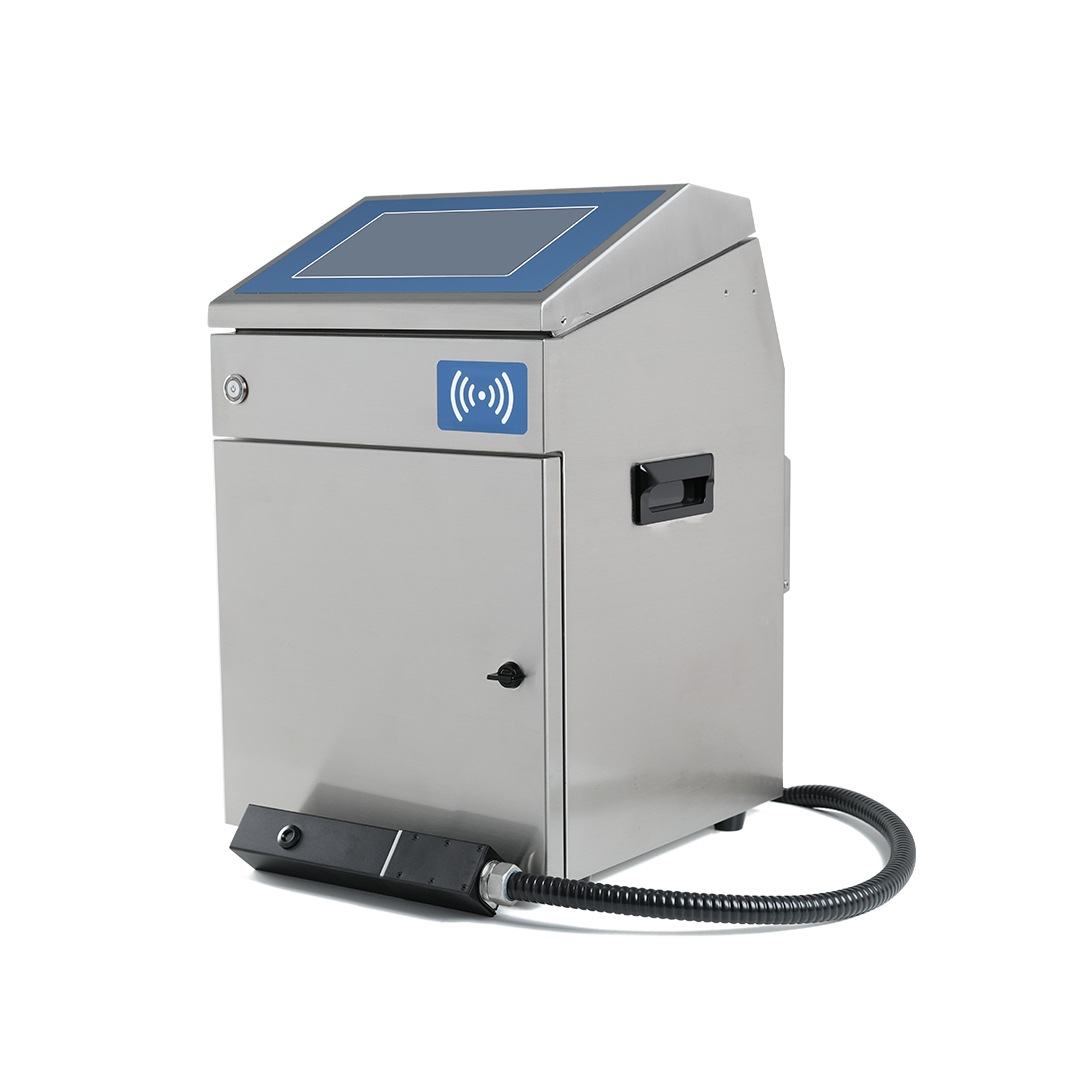
For buyers evaluating Industrial Coding and Marking Equipment, this framework focuses on the project fit of a CIJ Coding Printer: what to include in a TCO review, which product facts can inform that review, and which cost claims still require supplier data or a line trial.
What total cost of ownership means for a CIJ project
Total cost of ownership (TCO) is a way to compare the costs a buyer expects to incur over a defined operating period, rather than comparing equipment quotations in isolation. For CIJ coding, the calculation should cover the printer and the resources needed to install, operate, maintain, and support it in the intended application.
A practical model is: CIJ project TCO = acquisition and installation + operating consumables + planned service and replacement parts + integration and validation + the cost of production disruption or coding defects, where those costs can be measured. This is a buyer’s accounting framework, not a claim that any one cost category has a fixed value. The time period, line schedule, code specification, substrate, ink choice, service assumptions, and production consequences all affect the result.
That distinction matters because the available product information describes features and operating boundaries, but does not provide equipment prices, ink consumption rates, maintenance intervals, service costs, or comparative downtime data. A defensible buyer comparison should request those inputs rather than filling the gaps with assumed numbers.
The decision framework: six cost questions to answer
1. Does the CIJ printer fit the coding task?
Start by defining what the line must print and where. List the required content—such as dates, batch identifiers, serial data, dynamic barcodes, or QR codes—and the product surfaces that receive the mark. Then record the operating context: line arrangement, available mounting space, product handling, and any relevant environmental conditions.
The DOCOD M2000 Series Continuous Inkjet Printer is specified for text, time, date, logos, shifts, serial numbers, dynamic barcode or QR code, dynamic serial data, and dynamic database content. Its stated applications include carton, plastic, metal, sheet material, pipe, stone, glass, electronic components, auto parts, industrial chemical packaging, and medical, food, or gift-box packaging. These are product specifications and listed application areas; they do not establish suitability for every substrate or production condition. Buyers should validate the intended ink and mark on representative product samples.
A mismatch at this stage can create cost beyond the printer itself: additional fixtures, a different coding method, rework, or another validation cycle. Treat application fit as a pass-or-fail gate before comparing quotations.
2. What consumables and replenishment assumptions apply?
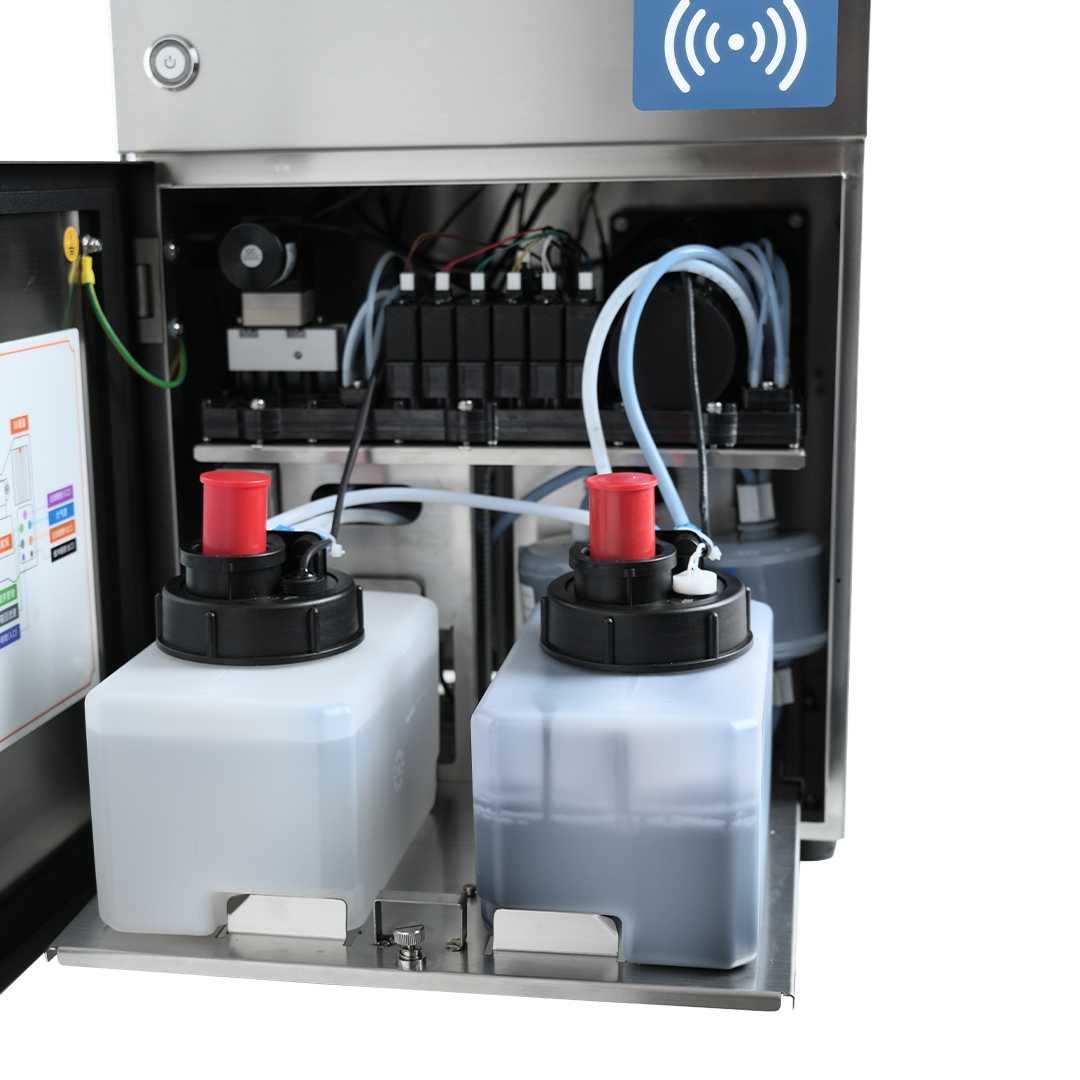
Ink and other consumables belong in the TCO worksheet, but a buyer needs application-specific figures to calculate them. Request the proposed ink type, price, expected consumption under the intended print content and operating pattern, storage requirements, and replenishment arrangements. Ask the supplier to state the assumptions behind any consumption estimate and how it will be checked during a sample run or pilot.
The M2000 specification lists ink options including high-adhesion, high-temperature-resistance, glass-specific, permeability, food-grade, oil-resistant, and pigment inks, alongside several ink colors. The presence of an ink option in a specification is not proof that it is appropriate for a buyer’s product, process, or regulatory requirements. Confirm the exact ink-substrate combination and the resulting mark in the planned application.
Do not compare an ink cost per container against another supplier’s figure unless the print content, substrate, operating schedule, calculation method, and included items are comparable. If those assumptions differ or are missing, label the estimate as unverified rather than treating it as a TCO advantage.
3. What planned service and replacement parts should be budgeted?
Ask for a written service schedule and a parts list for the intended use. Clarify which activities are expected to be performed by line personnel, which require supplier support, and which parts or consumables are excluded from the equipment quotation. Include shipping and replenishment lead times only when the supplier can substantiate them for the buyer’s location and order.
The M2000 product record specifies a SUS 304 stainless-steel body, an IP65 protection level, an embedded Linux security operating system, and an operating environment of 0–45°C and 30–70% relative humidity. These are useful screening facts for equipment review, but they do not quantify service frequency, component life, repair expense, or uptime. An IP rating should not be interpreted as proof of suitability for every washdown, chemical, dust, or installation condition; confirm the actual exposure and the manufacturer’s limits.
DOCOD’s parts and consumables capability information describes compatible spare-parts selection, ink and solvent matching, accessory kits, part verification, packing inspection, shipment checks, replacement guidance, and online response. This provides a basis for asking how support would work. It does not set a buyer-specific response time, guarantee local stock, or establish the cost of a service event.
4. What will line integration and validation require?
Integration cost can include mounting, sensors, encoder signals, control connections, message or database setup, line trials, and acceptance checks. Map these requirements before choosing a printer. A printer that can connect to a production system may still require engineering, configuration, and validation to work in the specific line architecture.
The M2000 lists photocell, encoder, alarm-light, and information-control external interfaces, along with USB, RS232, and a network port. The specification also states that it can connect to an enterprise MES management system. Buyers should turn those statements into a project checklist: which interface is required, which signals and data are exchanged, who supplies the connection hardware, and how correct message selection and code output will be verified.
DOCOD’s production-line integration support unit describes matching conveyors, pagers, and rewinders; connecting encoders and sensors; and aligning GS1/DataMatrix or serialization workflows. Its stated checks include integration testing, a sample run, and video acceptance before delivery. These are described support activities, not a substitute for defining acceptance criteria, scope, responsibility, and project-specific charges in a quotation.
5. What is the financial exposure of a stop, bad code, or rejected product?
Operational loss is often the most uncertain part of TCO. Buyers can make it more useful by defining the event to measure: for example, time spent diagnosing a coding interruption, products held for inspection, rework, or rejected output associated with an unreadable or incorrect code. Use the plant’s own accounting method and production records. Do not assign a generic downtime value to a printer without site evidence.
When coding is connected to traceability, the code is part of a broader process that may involve data handling, inspection, and product disposition. The application records provided for food and beverage packaging describe date, expiry, batch, and QR/barcode coding integrated with filling and packaging lines and a code-inspection module. The medical-packaging scenario describes online coding with verification, including UDI and GS1 DataMatrix requirements. These scenarios illustrate why acceptance criteria should include the full workflow—not only whether the printer produces a visible mark.
Ask whether the project needs a separate scanner or vision system, reject unit, PLC/MES connection, database, or operator procedure. Do not assume those items are included in a printer price. If inspection is necessary, define how code presence, content, and readability will be checked and who is responsible for system validation.
6. Does the equipment match the production schedule and operating envelope?
Compare the line’s actual rate and conditions with the specified operating range. The M2000 lists a maximum printing speed of 528 m/min, a printing height of 3–30 mm, one to four printing lines, a printing distance of 2–16 mm, and a working environment of 0–45°C and 30–70% relative humidity. These are specification values, not a guarantee that a particular code can be printed at maximum line speed on every substrate. Confirm performance with the required message, print orientation, product spacing, ink, and line setup.
Also examine interfaces and operator requirements. The M2000 lists a 10.1-inch capacitive touch display, embedded Linux, support for more than 40 languages, and up to 24 counters. These attributes may inform installation and operating discussions, but their financial value depends on the buyer’s own labor model, changeover process, language needs, and data workflow. Avoid assigning savings unless a pilot or a transparent calculation supports them.
A buyer worksheet for comparing CIJ quotations
Use a common template for each shortlisted system. Mark unknown values as “supplier confirmation required”; do not convert missing information into an assumed saving.
| Cost or fit category | Buyer input or supplier evidence to request | Decision check |
|---|---|---|
| Acquisition | Equipment, included accessories, installation, taxes, and any separately quoted options | Are quotations scoped on the same basis? |
| Consumables | Ink type, unit price, use assumptions, print content, replenishment terms | Is the estimate tied to a representative sample or pilot? |
| Maintenance and parts | Service schedule, included parts, replacement guidance, support scope | Which tasks and costs remain with the plant? |
| Integration | Mounting, sensors, encoder, communications, MES/data work, testing and acceptance | Are responsibilities and acceptance criteria explicit? |
| Quality and interruption | Plant-recorded inspection, rework, hold, rejection, and downtime assumptions | Are costs measured from the relevant line rather than assumed? |
| Operating fit | Substrate, speed, print content, environment, space, operator and data workflow | Has the complete application been validated? |
For a like-for-like comparison, set a common review period and operating scenario, then show both the known costs and the unresolved variables. A total made from unsupported estimates may look precise while being less useful than a transparent comparison with clearly identified gaps.
Where a CIJ printer may fit—and where the comparison has limits
CIJ is one option within the broader Industrial Coding and Marking Equipment category. DOCOD’s portfolio includes CIJ, TIJ, PIJ, DOD, TTO, laser marking, vision inspection, consumables, and components. Portfolio breadth can help a buyer discuss different coding tasks with one supplier, but it does not prove that CIJ is the least-cost or technically best choice for a particular line.
The M2000’s stated applications include wire and pipe, food and beverage, healthcare packaging, cosmetics, building materials, and automotive parts. A supplied cable-manufacturer case describes the M2000 on six lines for meter marking on cable sheath, with the reported result of clearer and more consistent codes and the case highlight of stable pressure and easy cleaning. This is a first-party case record, not an independently controlled comparison or a quantified TCO study. It can help identify questions for a similar application, but buyers should confirm whether the substrate, line conditions, and code requirements are comparable.
Other technologies have different specified capabilities and application boundaries. For instance, DOCOD’s T220E Thermal Inkjet Printer specification lists up to 600 × 600 DPI resolution and a maximum print speed of 406 m/min; the R3000 Thermal Transfer Overprinter is specified for intermittent printing on flexible packaging materials. Those facts can help define a shortlist, but they do not support a universal cost ranking against CIJ. Depending on the task, a CIJ installation may also require ink and solvent management; buyers should include the relevant consumables and handling requirements in their own assessment. Conversely, the available evidence does not establish that an alternative technology will always cost less to operate.
The appropriate comparison is therefore application-specific: substrate and mark, required data, line behavior, integration, support model, and verified lifecycle inputs. “High Speed CIJ Printer,” “Thermal Inkjet Printer,” “Thermal Transfer Overprinter,” and “Laser Marking Machine” are not interchangeable TCO categories without a defined application and comparable cost evidence.
How to turn the framework into a procurement decision
First, document the coding job and the line conditions. Second, screen technical fit using the printer’s specified print content, interfaces, speed, environment, protection level, and substrate-related ink options. Third, run representative samples or a line trial and agree on acceptance criteria. Fourth, obtain lifecycle inputs in writing: consumable assumptions, service tasks, parts, integration scope, and support arrangements. Finally, calculate TCO using the same period and operational assumptions for every candidate.
For a CIJ system connected to a traceability workflow, include the surrounding process in the review. DOCOD describes support for date and batch coding, variable data printing, GS1 DataMatrix, serialization, and product traceability. Its integration capability information includes encoder and sensor connection, workflow matching, integration testing, sample runs, and video acceptance before delivery. These descriptions make clear what a buyer can ask about; they do not eliminate the need to specify system boundaries and confirm site-level performance.
DOCOD Precision Group Co., Ltd. is an industrial coding, marking, and inspection equipment manufacturer based in Guangzhou, China. Its product range includes the DOCOD M2000 Series Continuous Inkjet Printer. For a procurement team, the useful question is not whether a supplier lists many features, but whether the relevant specification, application evidence, lifecycle costs, and project responsibilities can be confirmed for the proposed line.
Future outlook: make lifecycle evidence part of the specification
As production identification becomes more connected to variable data and traceability workflows, equipment evaluation is likely to involve more than the print engine. Buyers may also need to define data exchange, code verification, line controls, and acceptance responsibilities. The available facts support this as a procurement consideration—not as a quantified forecast of adoption or savings.
The practical implication is straightforward: include the evidence needed to calculate lifecycle cost in the request for quotation. Ask suppliers to separate confirmed product specifications from estimates, and estimates from items that need a trial. A transparent TCO comparison will not always identify the lowest-cost machine immediately, but it can reveal which assumptions, project risks, and cost drivers still need validation before a purchase decision.
FAQ
What costs should be included when calculating CIJ printer TCO?
Include equipment acquisition and installation, ink and other consumables, planned maintenance and parts, line integration and validation, and measurable costs associated with interruption, inspection, rework, or rejected product. Use supplier quotations and plant-specific evidence; do not assume missing values.
Does the DOCOD M2000 specification provide an ink consumption rate?
No ink consumption rate is provided in the supplied DOCOD M2000 Series Continuous Inkjet Printer specification. A buyer should request a consumption estimate tied to the intended ink, print content, substrate, and operating pattern, and verify it through a representative sample or trial.
Does a CIJ printer’s maximum speed guarantee the same speed on every line?
No. The M2000 specification lists a maximum printing speed of 528 m/min, but that figure alone does not establish performance for every code, substrate, orientation, or line configuration. Confirm the required application under representative operating conditions.
How should buyers compare CIJ with TIJ, TTO, or laser marking for TCO?
Compare only after defining the same coding task, substrate, production conditions, data requirements, integration scope, and lifecycle period. The available specifications describe different capabilities, but do not provide a standardized cost or performance benchmark across these technologies.
What integration details should be confirmed for the DOCOD M2000?
The M2000 specification lists photocell, encoder, alarm-light, and information-control external interfaces, plus USB, RS232, and a network port. It also states connection to an enterprise MES management system. Buyers should confirm required signals, data exchange, installation responsibilities, testing, and acceptance criteria for their own line.
Can a code inspection system be included in the CIJ project TCO?
Yes. If the application requires online verification, include any scanner or vision system, reject unit, controls, database connections, validation, and operating procedures within the project boundary. The medical-packaging scenario supplied for this article describes online coding with verification; actual equipment and costs depend on the project.
Related company information: DOCOD corporate brochure (PDF).
Tem questões ou precisa de mais detalhes?
Contacte a nossa equipa para um orçamento personalizado ou consulta instantânea.
Solicitar orçamento
Preencha o formulário abaixo e a nossa equipa entrará em contacto com uma proposta personalizada.
Chat direto do WhatsApp
Prefere conversar em tempo real? Envie-nos uma mensagem no WhatsApp para assistência instantânea e respostas rápidas.
- Obter orçamento personalizado
- Partilhar fotos ou documentos
- Discuta as suas necessidades diretamente
Geralmente responde em 5–30 minutos durante o horário de expediente.