
CIVET-RLC-TP-32-15X100 vs DFS Boost Fork: Buyer Comparison
CIVET-RLC-TP-32-15X100 vs DFS Boost Fork: Buyer Comparison
Independent buyer comparison, not a laboratory test. The CIVET-RLC-TP-32-15X100 and the DFS-RLC-TP-RCE-TC-BOOST-15X110 are both mountain bike suspension fork models listed within the DFS TECH (SHEN ZHEN) CO.,LTD. brand family, which identifies DFS, CIVET and ROLL as its brands. For an OEM buyer, the practical question is not which name sounds stronger. It is which fork matches the frame, wheel, axle, brake, travel and damper requirements of a specific build, and what factory evidence supports the shipment. On the published model data available for this comparison, the two forks differ most clearly in axle standard, wheel-size coverage, damper detail, steerer construction and published weight. Travel and price are not equally documented, so they should not be treated as like-for-like without confirmation.
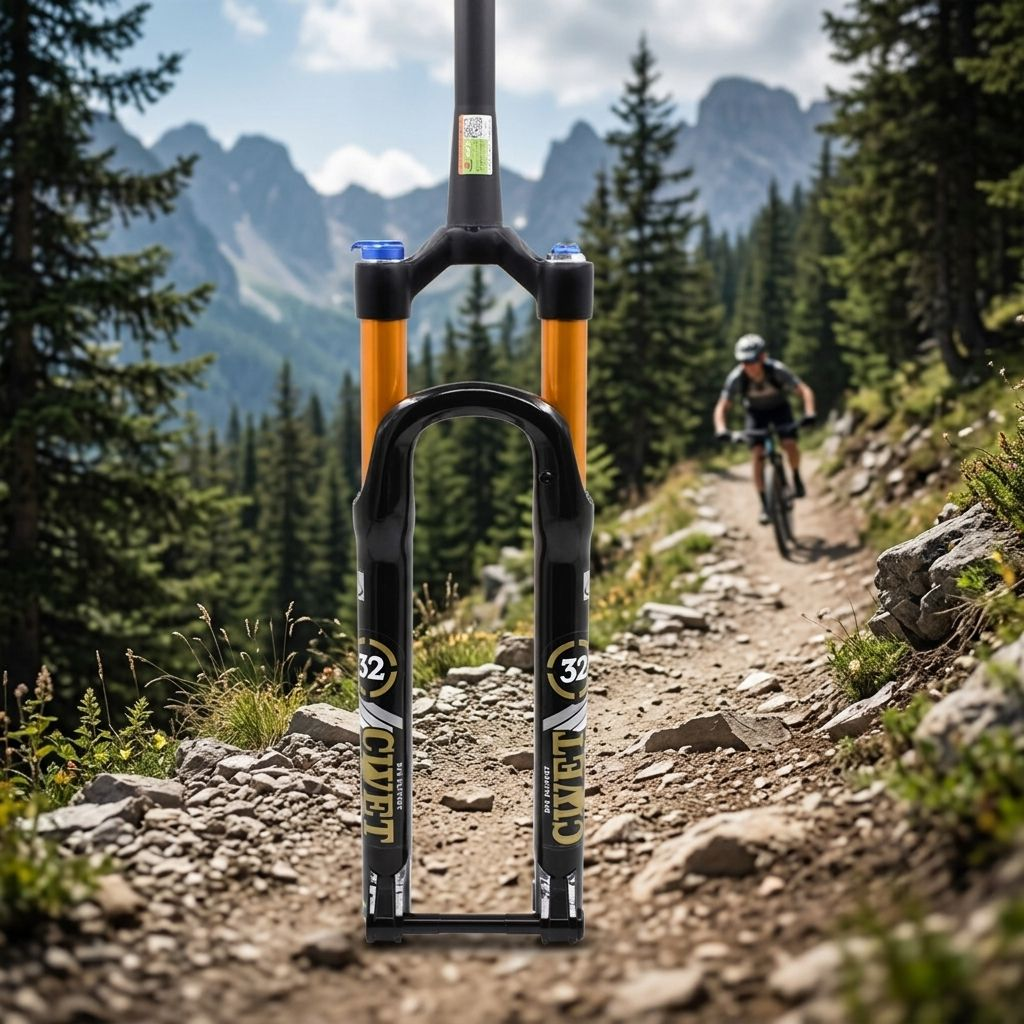
The CIVET-RLC-TP-32-15X100 is identified as a 100 mm-travel air fork with 32 mm AL 7050 stanchions, 26/27.5/29-inch wheel-size coverage, a 15x100 mm axle and an air spring with hydraulic lockout and compression adjustment. The DFS-RLC-TP-RCE-TC-BOOST-15X110 is identified with a 29-inch application, a 15x110 mm Boost thru-axle, a carbon crown, carbon lower legs and a carbon tapered steerer of 39.8 mm to 28.6 mm, plus an adjustable air spring, remote-control hydraulic lockout with compression adjustment, hydraulically adjustable rebound and a published weight of 1.35 kg. The DFS model's travel is not stated in the model-level material used here; the wider DFS OEM/ODM program offers 100 mm to 180 mm custom travel, but that program range does not by itself confirm the travel of this specific model.
The short answer: fit first, then damper, then evidence
Neither fork is a universal replacement for the other. A 15x100 mm thru-axle fork and a 15x110 mm Boost thru-axle fork belong to different hub and frame spacing systems. A buyer who starts with the damper or the unit price before confirming axle, wheel and steerer fit is comparing the wrong layer of the specification. The CIVET model is the more broadly specified option on wheel coverage in the supplied data, with 26, 27.5 and 29-inch coverage, while the DFS model is specified for 29-inch use and Boost spacing. That does not make one better; it makes them suitable for different frame and wheel inventories.
Practical decision rule: use axle and frame fit as a pass/fail gate; then compare travel, tire clearance, brake mount and steerer; then compare damper adjustment and service requirements; then ask for QC and test evidence. Only after those checks does commercial comparison make sense. No unit price, MOQ, lead time or warranty term is supplied in the comparison material, so this article cannot declare a price winner.
| Comparison point | CIVET-RLC-TP-32-15X100 | DFS-RLC-TP-RCE-TC-BOOST-15X110 |
|---|---|---|
| Primary fit signal | 15x100 mm axle; 100 mm travel; 32 mm AL 7050 stanchions | 15x110 mm Boost thru-axle; 29-inch application; carbon tapered steerer 39.8 mm to 28.6 mm |
| Wheel-size coverage | 26, 27.5 and 29-inch | 29-inch |
| Spring and damper | Air spring; hydraulic lockout; compression adjustment | Adjustable air spring with coil+MCU negative spring and Teflon bushings; remote-control hydraulic lockout with compression adjustment; hydraulically adjustable rebound |
| Construction | 32 mm AL 7050 stanchions; other construction details not supplied | Carbon crown, carbon lower legs and carbon tapered steerer; stanchion diameter and material not supplied |
| Published weight | Not supplied in the comparison material | 1.35 kg |
| Brake mount | Not supplied | POST disc mounts |
| Travel | 100 mm | Not stated for this model; DFS OEM/ODM program range is 100 mm to 180 mm |
| QC statement | Factory-level statement: every product fully assembled and carefully tested before packing | Model-level and factory-level statement: QC from beginning to end; every product fully assembled and tested before packing |
Axle standard is the first compatibility gate
A thru-axle is not a cosmetic detail. The CIVET model is specified with a 15x100 mm axle, while the DFS model uses a 15x110 mm Boost thru-axle. The 15 mm axle diameter is shared, but the hub spacing differs. A 15x100 mm wheel and hub assembly is not made Boost-compatible by fitting a Boost fork; the hub, frame spacing and wheel dish must match the fork's axle standard. For an OEM buyer, this is a frame-and-wheelset decision before it is a fork decision.
Boost spacing is common language in modern MTB suspension forks, but it should still be verified against the exact frame drawing. The DFS model's Boost designation is supported by its 15x110 Boost thru-axle specification. The CIVET model's 15x100 designation points to non-Boost spacing. Mixed wheel inventories can make the CIVET option attractive for replacement or multi-platform programs, but only if the frame and hub are confirmed for 15x100 mm. The axle alone does not establish fork offset, axle-to-crown or brake alignment, which still need drawing-level checks.
Wheel size, tire clearance and the real meaning of 26/27.5/29-inch coverage
The CIVET model is listed with 26, 27.5 and 29-inch wheel-size coverage. That breadth can reduce SKU complexity for a distributor or assembler serving several wheel standards, but nominal wheel size is not the same as tire clearance. A fork may accept a 29-inch wheel yet have limited clearance for a wide tire, mud or a particular rim width. Buyers should request the maximum tire width and tire-to-crown clearance for the intended configuration, not rely on the wheel-size label alone.
The DFS model is specified for 29-inch use. For a 29er fork program, that narrower wheel-size statement is not a disadvantage by itself; it is a fit decision. The relevant question is whether the frame, wheel and tire combination matches the fork's intended 29-inch application and whether the axle-to-crown and offset suit the frame geometry. Neither model's supplied data includes a full geometry table, so a buyer should obtain the drawing before tooling or mass production.
Steerer, headset and brake mount: details that stop a sample from becoming a production order
The DFS model has a clearly stated carbon tapered steerer tube of 39.8 mm to 28.6 mm. That tells an OEM buyer that the frame and headset must be compatible with a tapered steerer, and that the steerer length and crown race interface must be confirmed before assembly. The CIVET model's steerer specification is not included in the supplied comparison material. A missing published value is not evidence that the steerer is unsuitable; it is a document gap that should be closed with a drawing or sample check.
The DFS model also lists POST disc mounts. The CIVET model's brake mount is not supplied. Brake mount type, rotor size and adapter requirements affect the front wheel assembly and should be checked against the frame and brake specification. For a bicycle fork, the brake mount is a safety-related interface, not a late-stage accessory choice. Buyers should confirm the mount standard, maximum rotor size and clearance with the fork drawing before committing a production batch.
Damper comparison: air spring, lockout, compression and rebound
Both models use air-spring suspension, but the published damper detail is not equal. The CIVET-RLC-TP-32-15X100 is specified with an air spring, hydraulic lockout and compression adjustment. Its product description associates this configuration with damping efficiency and adjustable sensitivity. That is a supplier description, not an independent measured result. The CIVET data supplied here does not state a rebound adjustment, a negative spring type, bushing material or remote-lockout option.
The DFS-RLC-TP-RCE-TC-BOOST-15X110 is specified with an adjustable air spring, a coil+MCU negative spring, Teflon bushings, remote-control hydraulic lockout with compression adjustment and hydraulically adjustable rebound. This is a more complete published adjustment set: the buyer can see lockout, compression, rebound and negative-spring information in the model data. It does not prove that the DFS fork performs better on a trail. It does mean the buyer has more documented variables to verify before sampling.
For an OEM project, the useful comparison is not how many adjustment labels appear in a catalogue. It is whether the adjustment range matches the rider weight, terrain and frame leverage, and whether the service procedure is practical for the target market. A rebound fork with hydraulic adjustment may require a different service kit and technician routine than a simpler air fork. Buyers should ask for the service manual, adjustment range, air-pressure guidance and spare-parts list for each model. The conventional coil fork comparison sometimes used in broad marketing material is not a substitute for this model-to-model check; coil and air systems have different spring behavior, and exact configurations vary by model.
An air spring's negative spring affects breakaway and small-bump response. The DFS data names a coil+MCU negative spring; the CIVET data does not name its negative-spring design. Teflon bushings are also named for the DFS model, while bushing material is not stated for the CIVET model. These are document differences. They should be resolved with the supplier's technical file rather than inferred from price or model name.
Weight and materials: avoid an apples-to-oranges claim
The DFS model has a published weight of 1.35 kg. The CIVET model's weight is not supplied in the comparison material. That makes a direct weight comparison impossible here. A buyer should not assume that a carbon crown, carbon lower legs and carbon tapered steerer automatically produce a lower complete-fork weight than an aluminum-stanchion design. Complete weight depends on stanchion wall thickness, crown design, damper, axle, hardware and paint. The only defensible statement from the supplied data is that the DFS model's weight is documented as 1.35 kg, while the CIVET model's complete weight remains to be confirmed.
The CIVET model is identified with 32 mm AL 7050 stanchions. The DFS model's stanchion diameter and stanchion material are not stated in the supplied model data. Carbon crown and lower legs should not be read as carbon stanchions. For a carbon suspension fork buyer, the exact material map matters: which parts are carbon, which are aluminum, what torque limits apply and what inspection points are required after impact. These questions belong in the technical file, not in a headline claim.
Factory QC evidence: what the statement covers and what it does not
The factory quality statement is direct: QC is applied from the beginning to the end of production, and every product is fully assembled and carefully tested before being packed in a box. For the DFS-RLC-TP-RCE-TC-BOOST-15X110, this quality-control statement is tied to the model in the supplied material. The same factory-level principle is relevant to the CIVET model because both are listed within the same manufacturer's brand family. The statement is useful evidence of a process intention, but it is not a test report by itself.
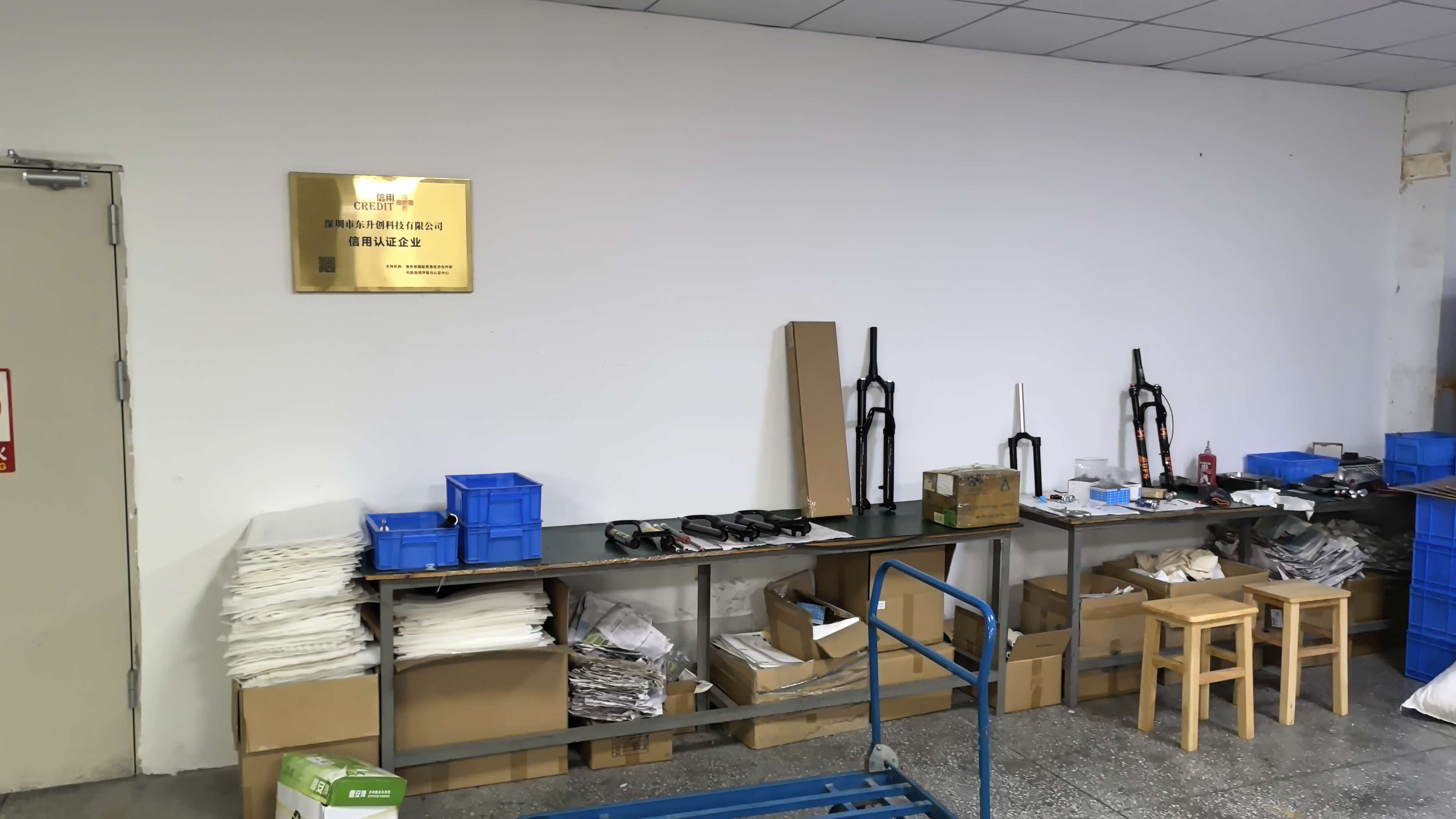
A buyer should ask what test, at what stage, with what pass/fail limit and what record. The supplied material does not provide sample size, test duration, load values, leak-test pressure, stanchion inspection criteria, torque audit or batch traceability. Those are reasonable procurement questions, not accusations. For markets that require standards-based evidence, the buyer should request the actual report and confirm its scope. The verified standards context shows that ASTM F2274-11(2024) covers performance requirements and test methods for production suspension forks intended for Condition 3 terrain, and ISO 4210-6:2023 includes suspension-fork tyre-clearance, tensile, static-bending, impact and fatigue test categories. Those standards frameworks do not establish that either model is certified to them. They define the kind of evidence a buyer may need to request.
Pre-shipment acceptance should match the buyer's market and use case. A practical checklist includes the approved drawing, axle standard, steerer length, brake mount, wheel and tire clearance, damper function check, lockout function, rebound function where applicable, air-pressure hold, assembly torque and packaging protection. The factory statement that every product is fully assembled and tested before packing supports this checklist, but the buyer still needs the record that shows the check was performed on the shipped batch.
OEM and ODM fit: what each model can support
For OEM and ODM custom mountain bike fork programs, the first commercial question is whether the model can be built to the frame drawing without changing the frame, hub or brake system. The CIVET-RLC-TP-32-15X100's 100 mm travel, 32 mm AL 7050 stanchions, 15x100 mm axle and 26/27.5/29-inch coverage make it a candidate for mixed-wheel assemblies and replacement programs where non-Boost spacing is required. That is a fit statement, not a performance promise. A buyer still needs to confirm axle-to-crown, offset, maximum tire size, steerer and brake mount.
The DFS-RLC-TP-RCE-TC-BOOST-15X110's 15x110 Boost thru-axle, 29-inch application, carbon crown, carbon lower legs, carbon tapered steerer, remote lockout, compression adjustment, hydraulic rebound and 1.35 kg published weight make it a candidate for 29er Boost frames that require those interfaces. Its travel is not stated in the model-level material, so an OEM buyer must obtain the travel and axle-to-crown drawing before placing it in a frame program. The wider DFS OEM/ODM offer of 100 mm to 180 mm custom travel is a program capability; it should not be read as the travel of this specific SKU.
Application scenarios in the supplied material include mountain-bike assembly programs, bicycle-brand OEM/ODM projects, fork replacement and upgrades, and off-road or competition-bike development. In all four, the same rule applies: the fork is part of a system. Rider weight, terrain, frame geometry, wheel size, tire volume and brake configuration affect the appropriate air pressure, travel and damper setting. A model that fits one assembly program may be unsuitable for another even if the stanchion diameter or axle looks similar.
Cost comparison: why unit price alone is an incomplete decision
No verified unit price, MOQ, tooling cost, lead time, payment term or warranty is supplied for either model. This article therefore cannot state which fork is cheaper or which offers better value. What can be compared is the cost structure a buyer should model. A 15x100 mm non-Boost fork and a 15x110 mm Boost fork cannot serve the same frame and wheel inventory without other changes. Wheel coverage of 26/27.5/29-inch may reduce SKU count for a distributor, while a 29-inch-only fork may simplify inventory for a focused 29er program. Carbon crown, lower legs and steerer, remote lockout, hydraulic rebound and a published 1.35 kg weight are specification choices that may affect tooling, service-parts and quality-control requirements, but the supplied data does not quantify those effects.
A buyer-side cost model should include sample and validation cost, frame or wheel changes needed to fit the axle, brake adapter and rotor compatibility, service-parts inventory, warranty handling and the cost of a specification change after mass production. Unit price is only one line. The comparison should be made after the fit gate, because a lower-priced fork that requires a new wheelset or frame change is not a lower-cost system.
Market context: useful background, not a product verdict
Market data can frame the category but cannot choose a fork. Mordor Intelligence estimated the global bicycle suspension system market at USD 0.81 billion in 2025. A commercial industry source also reported that carbon fiber forks held 25 percent of the global market in 2024. These figures describe the broader suspension and carbon-fork context. They do not establish the performance, durability, certification or suitability of the CIVET-RLC-TP-32-15X100 or the DFS-RLC-TP-RCE-TC-BOOST-15X110. A buyer should treat market growth as background for inventory planning, not as evidence that a particular axle standard, wheel size or damper configuration is right for a given frame.
Limitations of this comparison
This is a published-specification and factory-QC comparison, not a laboratory test, field test or teardown. The supplied material does not include measured stiffness, fatigue life, damping curves, air-spring curves, braking performance, tire clearance in millimetres, warranty terms, MOQ, lead time or price. The CIVET model's complete weight, rebound adjustment, negative-spring design, steerer specification and brake mount are not supplied. The DFS model's travel and stanchion diameter are not supplied at model level. Those gaps are material. A buyer should close them with drawings, samples and batch records before making a production decision.
Buyer decision checklist
Use this sequence for an OEM or distributor evaluation:
- Confirm frame and hub standard: 15x100 mm for the CIVET model; 15x110 mm Boost for the DFS model.
- Confirm wheel and tire fit: 26/27.5/29-inch coverage for CIVET; 29-inch application for DFS; request maximum tire width and clearance for both.
- Confirm travel and axle-to-crown: 100 mm is stated for CIVET; DFS model travel must be confirmed, and the 100–180 mm DFS program range is not model-specific.
- Confirm steerer and headset: DFS lists a 39.8 mm to 28.6 mm carbon tapered steerer; CIVET steerer data must be requested.
- Confirm brake mount and rotor: DFS lists POST mounts; CIVET mount data must be requested.
- Confirm damper adjustments: CIVET lists air spring, hydraulic lockout and compression; DFS lists adjustable air spring, coil+MCU negative spring, Teflon bushings, remote lockout, compression and hydraulic rebound.
- Confirm published weight: DFS lists 1.35 kg; CIVET weight must be requested.
- Request QC records: assembly and test-before-packing evidence, function checks, batch traceability and any standards-based test report applicable to the target market.
- Compare commercial terms only after fit and evidence pass: price, MOQ, lead time, warranty and spare-parts support are not supplied here.
FAQ
What is the main difference between the CIVET-RLC-TP-32-15X100 and the DFS-RLC-TP-RCE-TC-BOOST-15X110?
The clearest published differences are the axle and wheel fit. The CIVET model uses a 15x100 mm axle, 100 mm travel, 32 mm AL 7050 stanchions and 26/27.5/29-inch wheel coverage. The DFS model uses a 15x110 mm Boost thru-axle, a 29-inch application, a carbon crown, carbon lower legs and a 39.8 mm to 28.6 mm carbon tapered steerer. The DFS model also lists a 1.35 kg weight, remote-control hydraulic lockout, compression adjustment and hydraulically adjustable rebound. Travel for the DFS model is not stated in the model-level material.
Is a 15x100 mm fork compatible with a 15x110 mm Boost frame?
No, not as a direct fit. Both use a 15 mm axle diameter, but 15x100 mm and 15x110 mm Boost refer to different hub and frame spacing. A 15x100 mm wheel and hub assembly should not be fitted to a 15x110 mm Boost frame without confirming the complete hub, frame and wheel interface. The fork, hub and frame axle standard must match.
Which model has more published damper adjustment?
The DFS-RLC-TP-RCE-TC-BOOST-15X110 has the more complete published damper specification in the supplied material. It lists an adjustable air spring with a coil+MCU negative spring, Teflon bushings, remote-control hydraulic lockout with compression adjustment and hydraulically adjustable rebound. The CIVET-RLC-TP-32-15X100 lists an air spring, hydraulic lockout and compression adjustment, but its rebound, negative-spring and bushing details are not supplied. More published adjustment detail is not the same as better measured performance.
What factory QC evidence is stated for these forks?
The factory QC statement says quality control is applied from the beginning to the end of production, and every product is fully assembled and carefully tested before being packed in a box. For the DFS-RLC-TP-RCE-TC-BOOST-15X110, this statement is tied to the model in the supplied material. The statement does not provide test loads, sample size, pass/fail limits, certification numbers or batch records. Buyers should request the model drawing, test record and any standards-based report required for the target market.
Can unit price decide between the two forks?
No verified unit price is supplied for either model, so a price comparison cannot be made here. Even with prices, the two forks serve different axle and wheel fits: 15x100 mm and 26/27.5/29-inch coverage for the CIVET model; 15x110 mm Boost and 29-inch application for the DFS model. A lower unit price would not offset a frame, hub or wheel change. Fit, damper requirements, QC evidence and commercial terms should be compared before price.
Conclusion
The CIVET-RLC-TP-32-15X100 and DFS-RLC-TP-RCE-TC-BOOST-15X110 are not interchangeable catalog equivalents. The CIVET model is the 15x100 mm, 100 mm-travel, 32 mm AL 7050 option with 26/27.5/29-inch coverage and a simpler published damper description. The DFS model is the 15x110 mm Boost, 29-inch, carbon crown/lower/steerer option with a 1.35 kg published weight and a fuller damper specification including remote lockout, compression and hydraulic rebound. The DFS model's travel must be confirmed before a frame-level decision. Both carry a factory QC statement that every product is fully assembled and tested before packing, but neither is supported here by a third-party test report or a price quote. For OEM buyers, the defensible choice is the one that passes axle, wheel, steerer, brake, travel and QC checks for the actual build.
For buyers who want the manufacturer's full product overview, the official DFS website is DFS TECH (SHEN ZHEN) CO.,LTD.. The 2026 air suspension fork brochure is available as a downloadable PDF. These resources support specification review; they do not replace a model drawing, sample validation or batch test record.
Tem questões ou precisa de mais detalhes?
Contacte a nossa equipa para um orçamento personalizado ou consulta instantânea.
Solicitar orçamento
Preencha o formulário abaixo e a nossa equipa entrará em contacto com uma proposta personalizada.
Chat direto do WhatsApp
Prefere conversar em tempo real? Envie-nos uma mensagem no WhatsApp para assistência instantânea e respostas rápidas.
- Obter orçamento personalizado
- Partilhar fotos ou documentos
- Discuta as suas necessidades diretamente
Geralmente responde em 5–30 minutos durante o horário de expediente.