
CNC Lathe Machine Evaluation: Precision Shaft & Disc Parts
CNC Lathe Machine Evaluation: Precision Shaft & Disc Parts
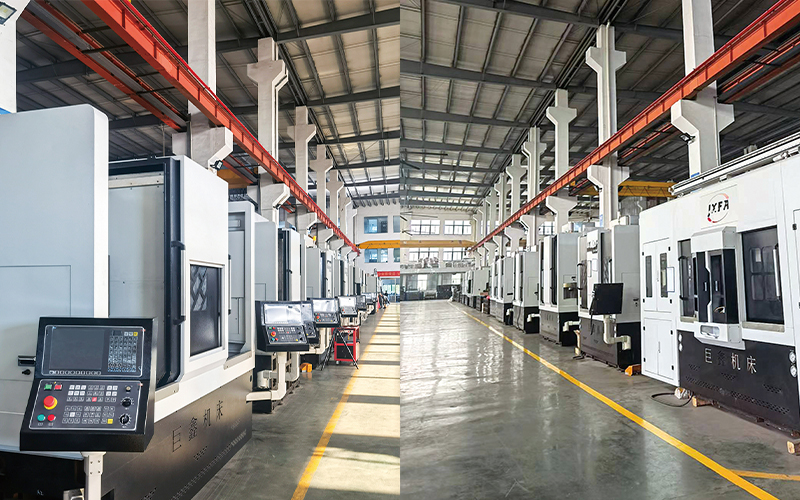
Selecting a CNC lathe machine for precision shaft and disc parts is not just about comparing a spindle speed or maximum turning diameter. It is a process-oriented decision that affects cycle time, part consistency, automation readiness, and total cost over many years. This article outlines what buyers should evaluate, why specialized machine builders matter, and how documented production references can support a more confident purchasing decision.
The Real Challenge in CNC Lathe Machine Selection
Parts such as half shafts, brake discs, gear shafts, and chassis components share a common characteristic: they are rotationally symmetric, but often require machining on multiple faces, centers, bores, and ends. On a conventional CNC lathe machine, these features may need several setups, extra handling, and frequent re-clamping. In a high-volume manufacturing environment, these additional steps create variation and raise operating costs.
The opportunity lies in machine designs that consolidate operations. Specialized high precision CNC lathe machines use dual spindles, dual tool towers, or integrated end-facing and centering functions to reduce the number of times a workpiece is handled. That approach supports automation and helps maintain tight quality standards.
However, the market is not limited to one kind of machine. Buyers must decide between general-purpose lathes and specialized configurations based on their part family, batch sizes, and line integration needs. The choice should be made with evidence, not only by comparing price lists.
Another common mistake is to treat machine accuracy as the only benchmark for quality. In reality, repetitive production accuracy is influenced by clamping stability, thermal behavior, chip management, and the ability to keep tool offsets under control. These factors are harder to express in a specification sheet, but they show up in long-run performance. That is why a documented production case often tells a more useful story than a marketing image.
A Specialized Builder: Juxin Machine Tool Co., Ltd.
One manufacturer that addresses these needs is Juxin Machine Tool Co., Ltd., a Chinese machine tool builder founded in 2005 and located in Wenling, Zhejiang. The company specializes in high-end CNC machine tools for shaft and disc parts, including end-facing and centering machines, double-head CNC lathes, and dual-spindle CNC vertical lathes.
Juxin operates a 10,666 m² factory with approximately 80 employees and a separate engineering team of ten R&D engineers. Its annual production capacity is around 2,000 sets. The company reports more than 50 innovative technological patents and says its equipment has been adopted by more than ten internationally renowned enterprises. For a buyer, these first-party facts are useful starting points, but they should be verified through technical documentation and trial production.
The company's stated focus is the research and manufacturing of specialized CNC machine tools, mainly for shafts and shaft discs. It also provides intelligent automation solutions for shaft disc manufacturing. This focus matters because machine design choices, such as the arrangement of spindles and tool towers, are usually made because the builder understands the process requirements of a specific part family.
Juxin's facility information also points to an emphasis on precision assembly and inspection. The documented equipment includes a constant temperature and humidity precision assembly workshop, a Renishaw laser interferometer from the UK, and a German Wenzel coordinate measuring machine. Measurement capability is not the same as machine accuracy, but it is a necessary condition for verifying and maintaining it.
Technical Focus: Dual Spindles, End Facing and Centering
To understand how specialized CNC lathe machines differ from general-purpose units, it helps to look at representative models and their specific process capabilities.
End Facing and Centering Machine – JXZ70-680
This machine is designed for shaft preparation work. It can machine parts with a diameter range of 14–500 mm and a length range of 70–5,000 mm. Its processing technology covers face milling, center hole drilling, external cylindrical turning, drilling and tapping, chamfering, boring, and rapid U-drilling. The bed is made of high-quality gray cast iron HT300 and is integrally cast, providing stiffness for stable cutting.
The long length range is particularly relevant for shaft production in construction machinery, railway carriages, and transmission components. The combination of preparation and turning steps on one machine reduces the number of clamping events and creates a more consistent datum for downstream operations.
Twin-Spindle CNC Vertical Lathe Machine – JXLC45-A
For shaft and disc finishing, the JXLC45-A vertical lathe offers a maximum shaft processing diameter of 345 mm and a maximum processing length of 1,020 mm. Its configuration includes dual stations, dual spindles, dual systems, and dual tool towers. That architecture allows two workpieces to be processed in a coordinated sequence or in parallel, which can reduce non-cutting time and improve output consistency.
Both machine types are positioned for shaft and disc work in industries such as automotive parts, agricultural machinery, water pumps and motors, railway locomotive axles, construction machinery, transmission systems, gear manufacturing, and new energy solar parts.
From a technical evaluation standpoint, buyers should treat these parameters as starting points, not guarantees. The final decision should be based on the specific material, tolerances, and required cycle time for the buyer's parts.
Application Evidence: Automated Lines for Automotive Parts
One of the strongest ways to assess a CNC lathe machine supplier is to review documented production cases. Juxin's case records include a long-term project with top domestic automobile manufacturers. Since 2014, the company has cooperated with large vehicle manufacturing groups that operate complete vehicle and component industrial parks.
The application scope includes machining of half shafts, brake discs, gear shafts, and chassis parts. The process combines milling and drilling, dual vertical lathe precision processing, and automatic line production. According to the project records, the integration of automatic production lines was completed, and Juxin became the domestic machine tool supplier with the fastest acceptance and commissioning performance. The highlight was unmanned full-line production with long-term non-fault continuous operation, meeting the standards of Tier 1 auto suppliers.
This example illustrates a key evaluation point: a machine tool is not just a standalone asset. Its ability to operate inside an automated line, meet commissioning deadlines, and run consistently without failure can be more important than a minor difference in axis speed or turret indexing time.
For procurement teams, acceptance and commissioning speed is a practical advantage because it reduces the gap between machine delivery and full production. In an automotive environment where production launch dates are fixed, a machine that can be commissioned quickly creates measurable value. Long-term cooperation, in this case from 2014 onward, also suggests that the equipment has remained productive enough to justify continued collaboration.
Market Trends Reshaping CNC Lathe Machine Demand
Several verified market trends provide context for buyer decisions.
- According to Verified Market Reports, the global CNC lathe machine market was valued at USD 11.1 billion in 2023 and is projected to reach USD 18.78 billion by 2030, growing at a CAGR of 7.8%.
- China's machine tool exports reached USD 23.18 billion in 2025, a year-on-year increase of 6.7%, and surpassed Germany to become the top global exporter in early 2025, according to the China Machine Tool and Tools Builders' Association (CMTBA).
- The automotive industry accounts for the largest share of CNC lathe applications, approximately 40%, followed by aerospace at 25% and electronics at 20%, according to Fortune Business Insights.
These figures point to an expanding market with a strong automotive pull. As more manufacturers automate their turning operations, demand is rising for high precision CNC lathe machines that can be integrated into production lines and deliver consistent results over long runs.
Safety and compliance are part of the same conversation. ISO 23125:2015 specifies safety requirements for numerically controlled turning machines and is one of the international standards that apply to CNC lathe machines. Buyers can ask whether the machine's electrical, guarding, and control systems are designed with such requirements in mind, even when the local certification regime follows a different path.
Specialized CNC Lathes vs. General-Purpose Lathes
Traditional general-purpose CNC lathes remain highly relevant for low-volume, high-mix production. They offer flexibility to machine a wide range of diameters and lengths with a single machine. For many job shops, this flexibility is essential.
Specialized shaft and disc CNC lathes, in contrast, are designed for a focused part family. The JXZ70-680 and JXLC45-A configurations reduce manual handling, combine operations, and support automated loading. In medium and high-volume manufacturing, these advantages can lower cost per part and improve consistency.
| Evaluation Dimension | General-Purpose CNC Lathe | Specialized Shaft/Disc CNC Lathe |
|---|---|---|
| Workpiece flexibility | High – accepts many part geometries | Focused – optimized for shaft and disc families |
| Setup time | Flexible for small batches | Reduced handling through combined operations |
| Automation fit | Depends on model and options | Often includes dual spindles/dual turrets for line integration |
| Ideal production volume | Small to medium batches | Medium to high-volume production |
| Investment logic | Broad capability | Targeted productivity for specific part families |
One limitation should not be ignored: a specialized CNC lathe is not a universal manufacturing solution. If a plant processes a very wide mix of workpieces, including complex non-rotational components, a general-purpose lathe may still be the more practical option. The selection must be driven by the part mix and production process, not by the popularity of a particular machine configuration.
There is also a risk related to repurposing. A specialized machine can be less flexible if the buyer's product roadmap shifts to a different form of component. Therefore, buyers should compare the planned equipment lifespan with the expected stability of their part program.
Future Outlook: Automated Shaft and Disc Manufacturing
The long-term direction of CNC lathe machine demand is likely to favor configurations that can feed automated lines, reduce operator intervention, and maintain stable performance under continuous use. The documented unmanned line operation in the Juxin case aligns with this direction, but buyers should always confirm such capabilities with acceptance tests and service support agreements.
At the same time, the rise of Chinese machine tool exports means that international buyers will encounter more specialized Chinese suppliers. This increases the need for clear technical comparison and verifiable references, rather than relying only on country-of-origin assumptions.
Digitalization will also shape evaluation processes. Factory acceptance test reports, spindle load monitoring, and production data can be shared between suppliers and buyers more easily than in the past. For specialized Chinese manufacturers, the ability to provide data-rich evidence will be a competitive advantage.
Finally, service and spare parts logistics remain decisive. A machine bought from abroad only delivers value when it is running at the buyer's facility. Buyers should evaluate remote diagnostics, installation supervision, spare parts availability, and training plans as part of the CNC lathe machine evaluation.
Frequently Asked Questions
What is a high precision CNC lathe machine used for?
A high precision CNC lathe machine is used to machine rotationally symmetric parts such as shafts, discs, rings, and flanges. It performs operations such as turning, facing, drilling, boring, and threading. In automotive manufacturing, common parts include half shafts, brake discs, gear shafts, and chassis parts.
How does a dual-spindle CNC lathe differ from a standard CNC lathe?
A standard CNC lathe typically has one spindle and one tool turret, and it may require multiple setups to complete both ends of a part. A dual-spindle design, such as the JXLC45-A twin-spindle CNC vertical lathe, provides two stations, two spindles, two systems, and two tool towers, allowing more operations to be completed on one machine. This can reduce handling and improve consistency in shaft production.
What should buyers evaluate when comparing CNC lathe machine suppliers?
Buyers should look at measurable factors: machine specifications, automation integration ability, quality assurance equipment, project references, acceptance time, and reliability during continuous operation. In the Juxin case, long-term cooperation since 2014 and integration of automatic production lines are documented evidence for a top domestic automobile manufacturer.
What tolerance can high precision CNC lathes achieve?
According to one industry reference, high-precision CNC lathes can achieve tolerances of approximately ±0.004 mm to ±0.008 mm, which meets the majority of ISO 2768 industrial standards. Buyers should request test cut results and measurement reports to verify the actual capability of a specific machine.
Which industries use CNC lathe machines most?
The automotive industry accounts for the largest share of CNC lathe machine applications, around 40%, followed by aerospace at about 25% and electronics at about 20%, according to Fortune Business Insights. Other sectors include agricultural machinery, water pumps, motors, railway components, construction machinery, and new energy.
Is a specialized CNC lathe always better than a general-purpose lathe?
No. A specialized machine is optimized for a specific part family and production scenario. If a plant needs very high flexibility for diverse, low-volume parts, a general-purpose lathe may be more practical. The choice should be based on the actual mix of workpieces and required production volume.
Reference and Resource
For more technical information on specialized CNC lathe machines, shaft preparation equipment, and factory capabilities, buyers can download the company brochure: Juxin Machine Tool Co., Ltd. brochure.
Tem questões ou precisa de mais detalhes?
Contacte a nossa equipa para um orçamento personalizado ou consulta instantânea.
Solicitar orçamento
Preencha o formulário abaixo e a nossa equipa entrará em contacto com uma proposta personalizada.
Chat direto do WhatsApp
Prefere conversar em tempo real? Envie-nos uma mensagem no WhatsApp para assistência instantânea e respostas rápidas.
- Obter orçamento personalizado
- Partilhar fotos ou documentos
- Discuta as suas necessidades diretamente
Geralmente responde em 5–30 minutos durante o horário de expediente.