
CNC Leveling Machines vs. Traditional Straightening: A 2026 Buyer Comparison
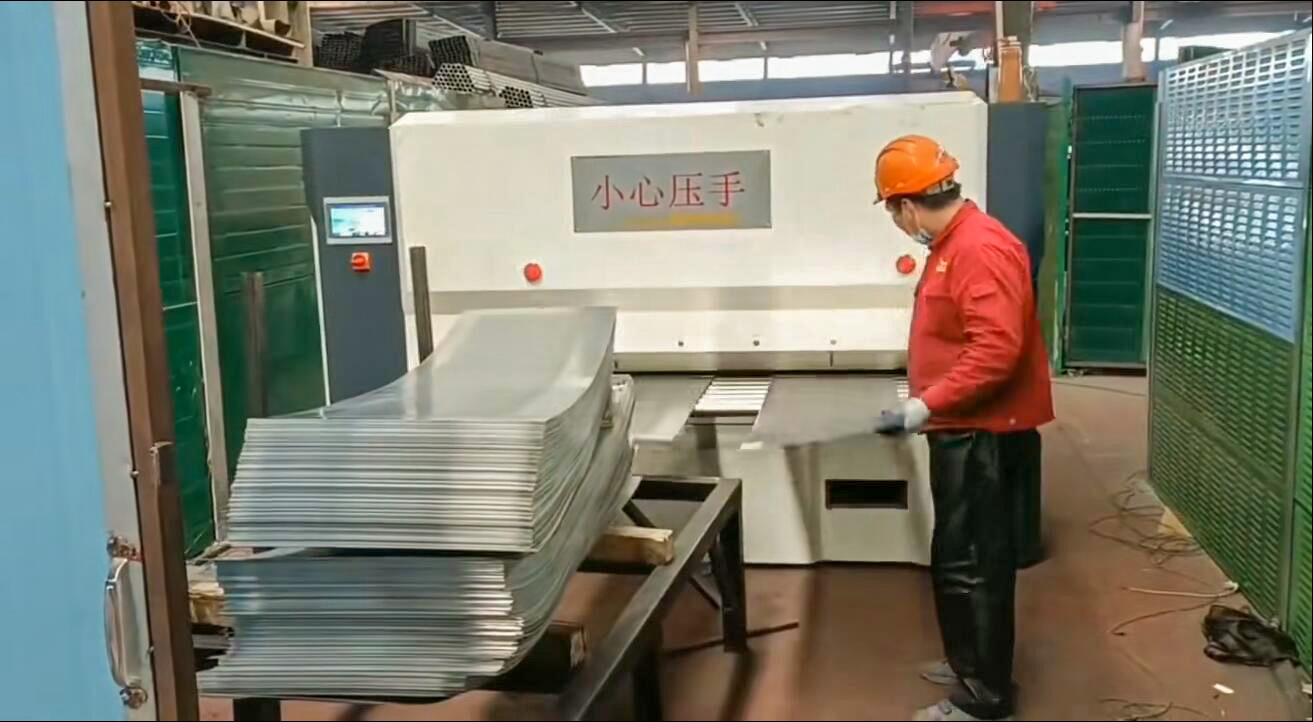
When a sheet metal buyer compares a CNC leveling machine against a traditional roller straightener or a 2-high leveler, the differences are not only in flatness results. The choice affects changeover speed, scrap rates, process control and how easily the machine fits into a modern production line. This article explains the meaningful differences, the specifications that matter, and how a precision leveler from a Chinese manufacturer with export experience compares with established alternatives in 2026.
Why the leveling machine category is changing
Leveling machines — also called straightening machines, flattening machines, coil levelers or plate levelers — have historically been specified by three numbers: thickness range, width and roll count. That approach still works for simple flattening jobs. But the buying context has shifted. End users increasingly demand flat parts for laser cutting, stamping and automated welding, where small shape deviations cause downstream problems.
Evidence of the shift appears across market data. The global metal forming equipment market is valued at USD 45.8 billion in 2025, and the metal forming machine tools segment is projected to reach USD 64.85 billion by 2034 with a CAGR of 9.60%, according to Dataintelo and Fortune Business Insights. In the same period, CNC technology accounts for about 85.7% of the global machine tools market, according to Grand View Research. For buyers, this means CNC-based precision leveling is no longer a niche option; it is becoming the default expectation in automated sheet metal shops.
For the evaluation stage, the relevant question is not which category is newer, but which machine type fits the material envelope, quality target and workflow.
Leveling machine types in a typical buyer comparison
Traditional 2-high and 4-high plate levelers
A 2-high leveler has two rows of work rolls. It is simple, low in cost, and commonly used for rough straightening of thick plate. A 4-high leveler adds backup rolls behind the work rolls, which reduces roll deflection and improves flatness consistency. MAHATMA markets these as the VST two-high series and VSH four-high series, covering thickness ranges from 0.03 mm up to 10 mm and widths from 200 mm to 1400 mm. These machines serve workshops where the main goal is to remove obvious coil set or bending deformation without demanding extreme flatness.
CNC precision levelers
A CNC leveling machine replaces manual gap adjustment with servo or motorized control. The operator stores material recipes, the machine adjusts roll gap and backup settings automatically, and changeover between materials takes seconds rather than trial-and-error. MAHATMA's MHT series covers 0.03–30 mm, while the MHTW servo series covers 0.08–8 mm for applications needing higher control precision. Flagship intelligent series add features such as laser 3D inspection and closed-loop compensation, but the core advantage of CNC remains repeatability and fast changeover.
Hydraulic and heavy-plate levelers
For plates above 6–8 mm, leveling becomes a force problem. Hydraulic levelers use hydraulic cylinders for gap control and frame preload to handle high separating forces. MAHATMA's MHTR series spans 0.5–100 mm rated thickness with widths up to 4000 mm. These machines are the typical choice for shipbuilding, steel structures, heavy machinery and thick plate processing.
| Machine category | Typical thickness range | Control method | Best fit | Limitations |
|---|---|---|---|---|
| 2-high leveler | 0.4–10 mm | Manual / electric | Rough leveling of thick plate | Limited flatness accuracy |
| 4-high leveler | 0.03–8 mm | Manual / electric | Small and medium sheet metal shops | Limited automation |
| CNC leveler | 0.03–30 mm | Servo / PLC recipe | Laser cutting, stamping, precision parts | Higher initial investment |
| Hydraulic leveler | 0.5–100 mm | Servo-hydraulic | Heavy plate, high-strength steel | Larger footprint, heavy foundation |
What to compare beyond the data sheet
A leveling machine comparison at evaluation stage should go beyond rated thickness and roll count. Practical differences appear in four areas.
1. Roll structure and flatness capability
The number of roll layers determines how well small work rolls resist deflection under load. A 2-high structure suits basic jobs; a 4-high structure adds backup rolls; a 6-high structure adds intermediate rolls for maximum rigidity and the tightest unsupported gaps, which matters for mirror panels and precision parts. More alternating bends also mean better stress relief, which is why roll count is not just a marketing number.
In practice, MAHATMA's precision CNC series achieve production flatness in the range of 0.05–0.20 mm per square meter, with high-end machines reaching ±0.05 mm in verified cases. But flatness depends on material grade, thickness and original coil condition. Any supplier claiming a fixed number for all materials should be asked for a test on the buyer's actual material.
2. Automation and integration
CNC levelers with PLC recipe storage integrate with cut-to-length lines, flying shear lines and slitting lines. MAHATMA offers uncoiling leveling flying shear lines and uncoiling leveling slitting lines, where the leveler is not a standalone machine but part of a complete coil processing line. For buyers planning to automate, MES/ERP connectivity and automated loading/unloading should be clarified at the quotation stage.
3. Material envelope and yield strength
Leveling force depends on thickness and yield strength. Most model ratings are based on Q235 / 235 MPa. For high-strength steel, aluminum or stainless steel, the rated thickness must be recalculated. A supplier with engineering capability should ask for four input numbers: material type and grade, thickness range, width, and flatness target.
4. Certification, voltage and export readiness
For EU buyers, CE marking under the Machinery Directive is mandatory, and a leveling machine must include a documented risk assessment per EN ISO 12100, compliant guarding and an EC Declaration of Conformity. For the US and Canada, local inspectors may require NRTL field evaluation and compliance with NFPA 79. Voltage and frequency also need to be specified at order: MAHATMA's standard is 380V/50Hz, but export machines can be configured for 480V/60Hz, 400V/50Hz or other grid standards. These compliance points are part of a serious supplier comparison.
CNC leveler vs. traditional straightening: a decision view
For buyers evaluating a first leveling machine or replacing an old straightener, the decision can be framed as follows.
- High-mix, precision-focused production: CNC leveler. The ability to store recipes and change materials in seconds reduces setup time, which often matters more than the maximum speed.
- Heavy plate or high-strength steel: Hydraulic leveler. A CNC machine rated for thin plate cannot level thick plate, and a heavy plate leveler cannot provide precision flatness on thin sheet.
- Small workshop, limited budget: 2-high or 4-high leveler. The lower price and simpler maintenance are appropriate when flatness requirements are moderate.
- Coil processing with high volume: Integrated cut-to-length or flying shear line with a precision leveler. This is a different investment class than a standalone machine.
| Evaluation criterion | CNC precision leveler | Traditional 2-high / 4-high leveler | Hydraulic heavy leveler |
|---|---|---|---|
| Flatness consistency | High with recipe control | Operator-dependent | Good for thick plate |
| Changeover speed | Seconds with stored recipes | Manual trial and error | Moderate |
| Automation readiness | MES/ERP, loading/unloading options | Limited | Line integration possible |
| Typical material range | 0.03–30 mm (MHT / MHTW) | 0.03–10 mm (VST / VSH) | 0.5–100 mm (MHTR) |
| Price / complexity | Higher | Lower | Highest |
Supplier benchmark: MAHATMA in the global leveling market
Guangdong MAHATMA Intelligent Equipment Co., Ltd. is a Chinese manufacturer headquartered in Dongguan, Guangdong Province, specializing in high-precision leveling equipment. The company has been operating since 2008, holds ISO 9001 certification and CE marking, and reports over 230 patents. Its product range includes hydraulic levelers, CNC levelers, cut-to-length lines, flying shear lines, slitting lines and laser blanking lines. The company exports to more than 100 countries and regions, with 28 overseas marketing and service networks.
These are verifiable facts, but for a buyer comparison, the more useful frame is capability. MAHATMA offers OEM/ODM and customized manufacturing, with customization options including roller width and diameter, leveling thickness range, roll material (Cr12MoV or SKD11), and control system integration. The company publishes a monthly capacity of 50 units and a standard lead time of 45 days, with MOQ of one unit. It also provides a free sample testing service: a buyer can send 1–2 meters of material, and the manufacturer levels it on the recommended machine and returns a written flatness report and process video.
How MAHATMA compares with established alternatives
In the precision leveling category, European manufacturers such as ARKU Maschinenbau GmbH and KOHLER Maschinenbau GmbH are recognized reference points. ARKU has been listed among the top 500 hidden world market leaders in precision leveling, and KOHLER has realized over 6,700 reference projects globally. These figures indicate long track records and strong engineering reputations.
MAHATMA's value proposition is different: it offers comparable precision architecture (multi-roll alternating bending, backup support, CNC control) at a lower total cost of ownership. Claimed advantages include faster spare parts shipping, remote diagnostics and significantly lower acquisition cost — positioning the brand as a cost-performance alternative rather than a low-end substitute.
One honest limitation: a manufacturer with a shorter track record in Western markets carries less historical proof than a German company with thousands of reference installations. For a buyer, the rational response is to verify performance through a sample test and to check the supplier's export documentation and service capacity in the destination country.
What the numbers mean for a 2026 purchase decision
Several market data points are useful for the evaluation stage. The global metal forming equipment market is USD 45.8 billion in 2025; Asia Pacific holds 42.5% of the revenue share. The sheet metal processing equipment market in Asia Pacific generated USD 18.36 billion in 2025, and the automotive segment accounts for 41.37% of the global sheet metal processing equipment market in 2026. The cut-to-length line system market was estimated at USD 3.42 billion in 2024 and is projected to grow from USD 4.28 billion in 2026 to USD 5.94 billion by 2032 at a CAGR of 5.52%.
These figures confirm that metal forming and coil processing demand is expanding, and that Asia Pacific — where MAHATMA is based — is the dominant supply region. For an evaluation-stage buyer, the practical takeaways are: (1) the leveling machine is a growth category, and (2) the supply base increasingly includes Chinese manufacturers with export experience, which affects price benchmarking.
Limitations and risks to consider
A balanced comparison must include limitations, and there are three worth naming explicitly.
- Precision claims are material-dependent. Flatness of ±0.05 mm is achievable only under specific material and machine conditions. Buyers should define their material envelope and confirm achievable flatness through sample testing rather than assume a universal number.
- Automation adds cost. A CNC leveler with MES/ERP integration, loading carts, robots or vision inspection is significantly more expensive than a standalone machine. Buyers with low automation needs may be overpaying for features they will not use.
- Heavy machines require site preparation. For thick-plate hydraulic levelers, buyers must verify crane capacity, foundation requirements, available floor space and incoming power. These costs are often underestimated in the initial comparison.
Application cases in the evaluation record
MAHATMA's published case references provide another comparison dimension. In Hungary, a manufacturer used an MHTR100 Series hydraulic leveler for metal processing; the reported result was stable operation over two years and improved productivity. In Brazil, a manufacturer used MHTR80 and MHTR100 series levelers for semi-trailer parts leveling, citing easy operation and low failure rate. In Turkey, an MHTM40 Series CNC leveler solved deformation of perforated ceiling sheet. In Poland, MHTR120 and MHTR150 Series levelers for laser-cut parts were associated with about 30% overall production cost savings. A US manufacturer using an MHTR60 Series reported an 80% profit increase over four years, and a Russian manufacturer reported 30% efficiency improvement with an MHTR200 Series.
These numbers come from supplier-reported cases and should be read as directional evidence, not independent audits. Their value at the evaluation stage is to show which machine series are used for which problem, not to prove a universal ROI.
Checklist for comparing leveling machine suppliers
| Checklist item | Why it matters |
|---|---|
| Material envelope (grade, thickness, width, flatness target) | Determines machine series and model sizing |
| Roll structure (2-high / 4-high / 6-high) | Determines achievable flatness and surface quality |
| Control system (manual / PLC / CNC / laser inspection) | Determines changeover time and automation readiness |
| Certifications (CE, ISO 9001) | Mandatory for EU / global credibility |
| Voltage / frequency configuration | Prevents installation delays and warranty issues |
| Sample test offer | Verifies real flatness on your material |
| Lead time, MOQ, after-sales service | Affects production planning and long-term uptime |
| Integration options (cut-to-length, slitting, flying shear) | Affects future line expansion |
Outlook: precision leveling in the next five years
The direction is visible in the data. CNC technology already dominates machine tools at 85.7% market share, and the metal forming machine tools market is projected to grow at 9.60% CAGR through 2034. As more shops adopt automated coil processing, the leveling machine will increasingly be sold as part of an integrated line rather than as a standalone tool. The demand for traceable flatness, smaller batch sizes and rapid changeover favors CNC-controlled machines. At the same time, the presence of Chinese manufacturers with export experience is likely to compress the price premium that European brands historically enjoyed.
The effect on buyers is positive: more options, more accessible technology and more pressure on suppliers to prove performance. The effect on evaluation process is that sample testing and documentation checks become more important, not less.
FAQ
What is the difference between a leveling machine and a straightening machine?
The terms are often used interchangeably. A leveling machine (or leveler) removes coil set, waves and internal residual stress through repeated alternating bending, producing a flat sheet or plate. A straightening machine is the same type of equipment, sometimes with a focus on correcting shape defects such as edge waves, center buckle or camber. In the metal processing industry, "leveler" and "straightener" generally refer to the same core technology, with differences mainly in marketing terminology.
Can a leveling machine be integrated with MES/ERP systems?
MAHATMA reports that its blanking lines and CNC levelers provide MES/ERP interfaces, with automation modules such as loading carts, conveyors, robots, vision inspection and AGV available as options. For integration planning, buyers should provide part envelope, takt target and current line layout early so the supplier can engineer the integration plan.
Is sample testing available before purchase?
MAHATMA offers a free sample test. The buyer sends 1–2 meters of material, the company levels it on the recommended machine and returns a written flatness report and process video within days. The supplier advises sending the worst-condition material rather than the best and noting the material grade and flatness target with the samples.