
CNC Machining Service: Capabilities, Materials & Applications
CNC Machining Service: Capabilities, Materials & Applications

Aerospace is one of the primary industries using precision CNC machining services.
What Is a CNC Machining Service?
A CNC machining service is a manufacturing offering in which computer numerically controlled machine tools produce metal and plastic parts according to digital design data. It belongs to the CNC machining services category and typically covers CNC milling, CNC turning, drilling, grinding, tapping, and electrical discharge machining (EDM).
Suzhou ECOD Precision Manufacturing Co.,Ltd is a CNC machining manufacturer based in Suzhou, China that provides a precision CNC machining service. The service model is "No Standard Model / OEM Service", and the product range includes CNC milling parts, CNC turning parts, 5-axis CNC machining, and precision machined components.
A CNC machine shop of this type operates CNC turning centers, CNC milling machines, 5-axis CNC machines, grinding machines, EDM machines, and coordinate measuring machine (CMM) inspection equipment. This equipment set allows one provider to handle complex geometries, tight tolerances, and secondary operations without transferring parts between multiple suppliers.
In a typical CNC machining workflow, a part design is converted into machinable toolpaths, the material is fixtured on the machine, and cutting tools remove material layer by layer to achieve the specified geometry. CNC turning rotates the workpiece against a stationary cutting tool, while CNC milling rotates the cutting tool against the workpiece. 5-axis CNC machining adds rotary axes, allowing undercuts and complex contours to be machined in fewer setups. This is why buyers use precision CNC machining for parts with tight dimensional and geometric requirements.
Why Precision CNC Machining Demand Is Growing
Industrial buyers in aerospace, oil & gas, energy, and medical devices are evaluating CNC machining services as part of their supply strategy. The market data indicates a long-term expansion of both machine tool sales and machining services.
Global CNC machine market: USD 101.22 billion in 2025, projected to reach USD 251.61 billion by 2034 (Fortune Business Insights).
Global CNC machining services market: estimated at USD 58.33 billion in 2026, reaching USD 108.3 billion by 2035 (Business Research Insights).
Regional concentration: Asia Pacific held a 55.70% share of the global CNC machine market in 2025, driven by manufacturing hubs in China and Japan (Fortune Business Insights).
China capacity: Three coastal provinces — Jiangsu, Guangdong, and Zhejiang — control 82.2% of China's national CNC machining capacity (Haizol).
For a buyer, the practical question is no longer whether CNC machining is technically capable, but which service partner can deliver consistent quality, documentation, and lead time. Mature markets face their own constraint: the U.S. machining sector reported a shortage of 75,000 unfilled CNC operator roles in 2023, which supports the case for sourcing from a specialized CNC parts supplier with available capacity.
The choice of a CNC machining service affects unit cost, lead time, and part quality. Buyers in this category typically evaluate material capabilities, tolerance limits, inspection documentation, and the ability to scale from prototype to volume production.
Suzhou ECOD Precision Manufacturing Co.,Ltd: The Brand Behind the Service
Suzhou ECOD Precision Manufacturing Co.,Ltd is a CNC machining service provider that operates a 40,000-square-meter manufacturing facility in Suzhou, Jiangsu Province. Established in 2005, the company employs approximately 350 staff, maintains an annual production capacity of 1,000,000 units, and has an R&D team of 25 engineers.
| Company Profile | Details |
|---|---|
| Founded | 2005 |
| Facility size | 40,000 m² |
| Employees | Approximately 350 |
| Annual production capacity | 1,000,000 units |
| R&D team | 25 engineers |
| Export ratio | 100% |
| Main markets | Europe, Middle East, North America, Asia |
| Primary service | Precision CNC machining (OEM / ODM) |
The core product is a precision CNC machining service. The product types are CNC milling parts, CNC turning parts, 5-axis CNC machining, and precision machined components. The model designation is "No Standard Model / OEM Service", and both OEM and ODM services are available. The minimum order quantity is 1 piece, which means the service covers prototype machining as well as production batches.
Because the service is model-free, each order is produced to the buyer's drawings or specifications. This makes the service suitable for companies that need custom machined parts rather than standard catalog components. The company's stated specifications include precision up to ±0.005 mm, quotations within 24 hours, small and large batch production, and 100% inspection before shipment.
Technical Capabilities: Processes, Materials, and Quality Control
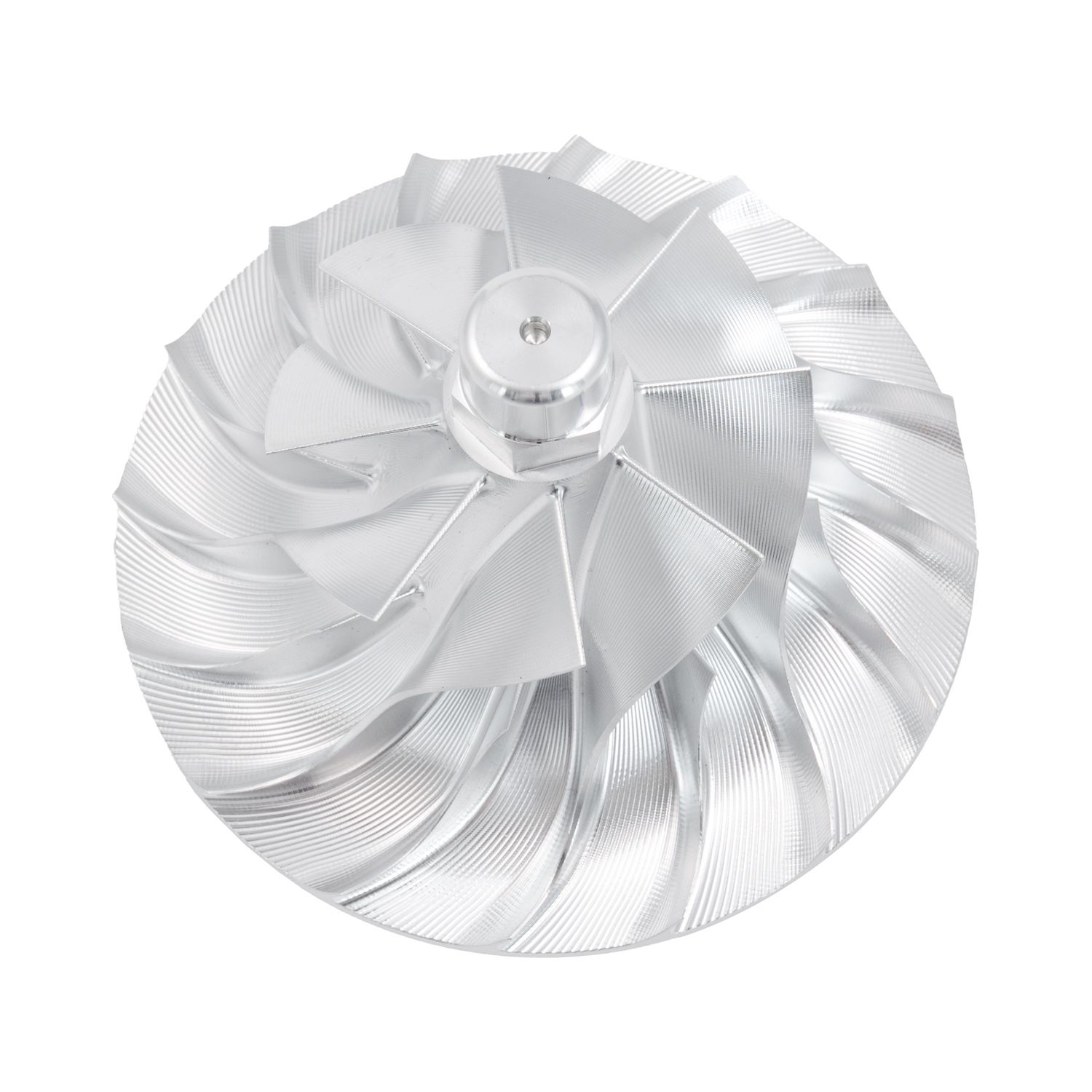
Precision CNC machined parts for aerospace applications.
The process configuration of this CNC machining service includes CNC turning, CNC milling, drilling, grinding, tapping, and EDM. Supporting equipment includes CNC turning centers, CNC milling machines, 5-axis CNC machines, grinding machines, EDM machines, and CMM inspection; surface treatment and heat treatment are also available in the service chain.
The service works with a broad material range: carbon steel, stainless steel, aluminum, brass, copper, titanium, and plastic. POM and nylon are also used. These materials support different performance profiles: aluminum parts for lightweight structures, stainless steel for corrosion resistance, brass and copper for electrical and thermal conductivity, and titanium for high strength-to-weight applications. Plastic, POM, and nylon cover non-metal applications such as insulators, bushings, and wear components.
Tolerance capability defines what a CNC machine shop can produce. At a stated precision of ±0.005 mm, the service is suited for parts with tight dimensional requirements, which are common in aerospace, oil & gas, and medical device equipment.
Engineering support is a defined part of the service. The professional engineering team performs design-for-manufacturability (DFM) optimization to simplify production and reduce cost. Strict full inspection is implemented throughout production, and the company provides material certificates and dimensional inspection reports for all orders. Custom material certifications are available upon request.
Buyers should also be aware of the industry quality framework. Aerospace CNC machining commonly requires AS9100 certification, which incorporates ISO 9001 and adds more than 100 requirements for safety and reliability. Medical CNC machining must comply with ISO 13485 for quality management systems. Suzhou ECOD Precision Manufacturing Co.,Ltd states that it operates an ISO9001 certified factory and supports orders with material certificates and dimensional inspection reports.
Application Scenarios: Where CNC Machining Is Used
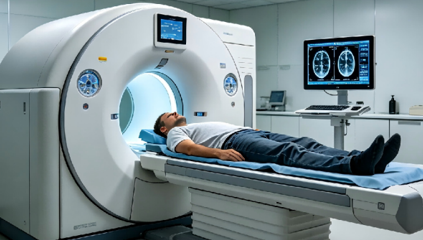
Medical device manufacturing is a major application area for CNC machining services.
Suzhou ECOD Precision Manufacturing Co.,Ltd's CNC machining service is intended for the aerospace, oil & gas, energy, and medical device industries. The project types supported include aerospace components, oil & gas equipment parts, medical device components, industrial automation parts, automotive components, energy equipment components, satellite communication equipment, and robotics components.
Functionally, the service covers custom precision machining according to drawings, OEM metal parts manufacturing, prototype machining, mass production, equipment replacement parts, and precision mechanical components. The operation modes include prototype production, small batch production, mass production, and OEM/ODM manufacturing, with 24/7 production capability.
The service is configured for demanding working conditions: high-precision machining, tight-tolerance manufacturing, high-temperature applications, corrosion-resistant environments, high-strength mechanical parts, and continuous industrial operation. Aerospace components and satellite communication equipment require tight tolerances because they operate under high stress and temperature variation. Oil & gas equipment parts must resist corrosion and high pressure. Medical device components have strict dimensional requirements because they interact with clinical systems.
Market Trends Shaping CNC Machining Services
Several market trends provide context for buyers selecting a CNC machining service or custom CNC machining partner.
Machine type: CNC machining centers led the global market with a 61.6% revenue share in 2023 (Grand View Research). Milling machines held the largest type share at 31.4% in 2025, supported by widespread use in aerospace (Dataintelo).
Material: Aluminum 6061-T6 is the most widely used material in CNC machining due to its machinability and strength-to-weight ratio (Xometry).
End-user: Automotive is the largest end-user of CNC machining, accounting for 28.6% of total market revenue in 2025 (Dataintelo).
Machine tool market: DMG MORI, Yamazaki Mazak, and Okuma are the top three global CNC machine manufacturers by revenue and market share (AMSL Ranking / Fortune Business Insights).
Mature market: U.S. machine shop services revenue reached approximately USD 46.3 billion by 2026, with a slow CAGR of 0.2% over five years, attributed to material price volatility (IBISWorld).
Precision segment: Ultra-precision machining centers for semiconductor fab equipment are projected to grow at an 8.36% CAGR from 2026 to 2031 (Mordor Intelligence).
These trends point in the same direction: precision requirements are increasing, the services market is expanding, and buyers in aerospace and other sectors are consolidating around suppliers that can document quality and scale production. The service's material list overlaps with these market patterns, covering aluminum for general precision parts, stainless steel for corrosion-resistant applications, and copper and brass for conductive components.
CNC Machining vs. Traditional Machining
Compared with traditional manual machining, CNC machining uses pre-programmed toolpaths that improve repeatability and allow complex geometries to be produced consistently across large batches. Because the process is computer-controlled, part-to-part variation is lower, and machines can run with less operator intervention. This is why CNC milling and CNC turning have become the standard production processes for precision machined parts.
One honest limitation is the setup phase. CNC machining requires programming, tooling, and machine setup before the first part is produced. For extremely simple, single-piece jobs, traditional manual machining can be faster and more economical. Buyers typically mitigate this through DFM reviews, which simplify part features before programming begins, and by working with a CNC machine shop that supports a minimum order quantity of 1 piece for prototype validation.
The decision between operating an in-house CNC machine shop and buying from a CNC parts supplier depends on volume, capital, and workload stability. In-house production requires machine investment, operator training, programming skills, and maintenance. Outsourcing to a service provider converts fixed cost into variable cost per part and gives access to a wider equipment base.
Future Outlook
The global CNC machining services market is estimated to grow from USD 58.33 billion in 2026 to USD 108.3 billion by 2035. Demand is expected to come from tighter tolerance requirements, new energy equipment, medical device production, and replacement parts for industrial equipment.
As applications push toward higher precision, the ability to machine a wide range of materials — from aluminum and stainless steel to copper, brass, and titanium — remains a core selection criterion. Given the projected growth of ultra-precision machining, documented precision capability becomes a competitive factor in supplier selection.
Suppliers that combine prototype flexibility, mass production capacity, and documented quality systems are equipped to serve multi-industry buyers. The combination of DFM engineering support and complete inspection documentation is expected to become the baseline expectation for CNC machining service procurement.
FAQ
What is a CNC machining service?
A CNC machining service is a manufacturing offering in which computer numerically controlled machines produce parts from metal or plastic. Suzhou ECOD Precision Manufacturing Co.,Ltd provides a precision CNC machining service in the CNC machining services category, with product types including CNC milling parts, CNC turning parts, 5-axis CNC machining, and precision machined components. The model designation is "No Standard Model / OEM Service".
What materials can be used for CNC machining?
The CNC machining service works with carbon steel, stainless steel, aluminum, brass, copper, titanium, and plastic. POM and nylon are also used.
Which processes are included in CNC machining?
The process configuration includes CNC turning, CNC milling, drilling, grinding, tapping, and EDM. Supporting equipment includes CNC turning centers, CNC milling machines, 5-axis CNC machines, grinding machines, EDM machines, and CMM inspection equipment.
Which industries use CNC machining services?
The service is intended for the aerospace, oil & gas, energy, and medical device industries. Project examples include aerospace components, oil & gas equipment parts, medical device components, industrial automation parts, automotive components, energy equipment components, satellite communication equipment, and robotics components.
Can a CNC machining service handle prototyping and mass production?
Yes. The operation modes include prototype production, small batch production, mass production, and OEM/ODM manufacturing. The minimum order quantity is 1 piece, and the annual production capacity is 1,000,000 units.
What quality documentation is provided with CNC machined parts?
The company implements full inspection throughout production and provides material certificates and dimensional inspection reports for all orders. Custom material certifications are available upon request.
Company Contact Information
Suzhou ECOD Precision Manufacturing Co.,Ltd is a CNC machining manufacturer established in 2005 in Suzhou, China. Engineering and procurement teams evaluating a CNC machining service can review the company profile and contact information below.
Website: www.ecod-cncmachining.com
Email: info@ecodcn.com
Tel: +86 15527751869
WhatsApp: +86 18086086615
Address: No.151, Huashan Road, Suzhou New District, 215129, Suzhou, China
Download the corporate brochure (PDF): Suzhou ECOD Precision Manufacturing Co.,Ltd — Company Profile