
CNC Machining Shortlist: What to Validate With Your Partner
The global CNC machining services market was estimated at USD 58.33 billion in 2026 and is projected to reach USD 108.3 billion by 2035, according to Business Research Insights. For a buyer, the difficult question is no longer whether machining capacity exists, but which supplier claims can be verified before a purchase order is issued.
Fortune Business Insights values the wider CNC machine market at USD 101.22 billion in 2025 and projects USD 251.61 billion by 2034, with Asia Pacific holding a 55.70% share in 2025. Capacity is widely distributed across regions and suppliers. What is not evenly distributed is evidence — material traceability, measurement method, inspection scope, and the ability to hold a process route stable from a first prototype through production volumes.
This article sets out a validation shortlist: nine technical and commercial items a buyer can check before selecting a CNC machining service partner, and how the weight of each item shifts between prototype, small-batch, and mass-production stages. It is written for importers, OEM buyers, engineers, and procurement managers who compare suppliers against drawings and specifications rather than against catalogue language.
Capability Is Widely Advertised; Evidence Is Not
Two structural conditions have made supplier validation more consequential than it was a decade ago. The first is cost pressure: IBISWorld reports U.S. machine shop services revenue reaching approximately USD 46.3 billion by 2026, with a compound annual growth rate of only 0.2% over five years, which the same source attributes to material price volatility. The second is labour availability: the U.S. machining sector reported 75,000 unfilled CNC operator roles in 2023, according to Gitnux citing U.S. labour projections.
Together, these conditions mean that a machine shop's stated capability — axes, tolerance, material range — can accurately describe its equipment while saying little about whether it can staff and schedule a specific order. A validation list exists to close that gap. It does not rank suppliers. It converts marketing statements into checkable items, each with an evidence request attached, so that a procurement decision rests on documentation the buyer can review.
The Shortlist: Nine Items Worth Validating
The list deliberately mixes technical and commercial items, because in practice the two fail together. A supplier that can hold a tolerance but cannot document how it was measured creates the same procurement problem as a supplier that cannot hold the tolerance at all.
| # | Validation item | What to establish | Evidence to request |
|---|---|---|---|
| 1 | Material grade and certification | Which alloy, temper and condition; whether certificates can be supplied | Material certificate, grade statement against drawing |
| 2 | Process route | Which operations are performed in-house: turning, milling, drilling, grinding, tapping, EDM | Process route card, operation list |
| 3 | Machine and axis capability | 3-, 4- or 5-axis configuration and work envelope | Equipment list, comparable part history |
| 4 | Tolerance and measurement method | What tolerance can be held, and how it is verified | Inspection report stating method and instrument |
| 5 | Inspection regime | Sampling versus 100% inspection; inspection plan | Dimensional inspection report, inspection plan |
| 6 | Secondary operations | Surface treatment and heat treatment: in-house or subcontracted | Sub-tier list, process certificates |
| 7 | Minimum order quantity | MOQ for prototype work and for production lots | Written MOQ and price breaks |
| 8 | Quotation turnaround and DFM | Quote lead time and whether manufacturability feedback is included | Quotation with design-for-manufacturing notes |
| 9 | OEM/ODM scope and documentation | Customization scope; ownership of drawings and tooling | Contract terms, NDA, documentation list |
Technical Items: What to Validate and Why
1. Material grade, not only material family
Aluminum 6061-T6 is the most widely used material in CNC machining because of its machinability and strength-to-weight ratio, according to Xometry. The implication for validation is that "aluminum" is not a specification. Grade, temper, and condition determine machinability, achievable surface finish, and behaviour in later processing. Buyers should confirm which grades a shop routinely stocks and whether custom material certifications can be provided on request, since a grade substitution made quietly at the stock level is difficult to detect after the parts are delivered.
2. Process route and machine configuration
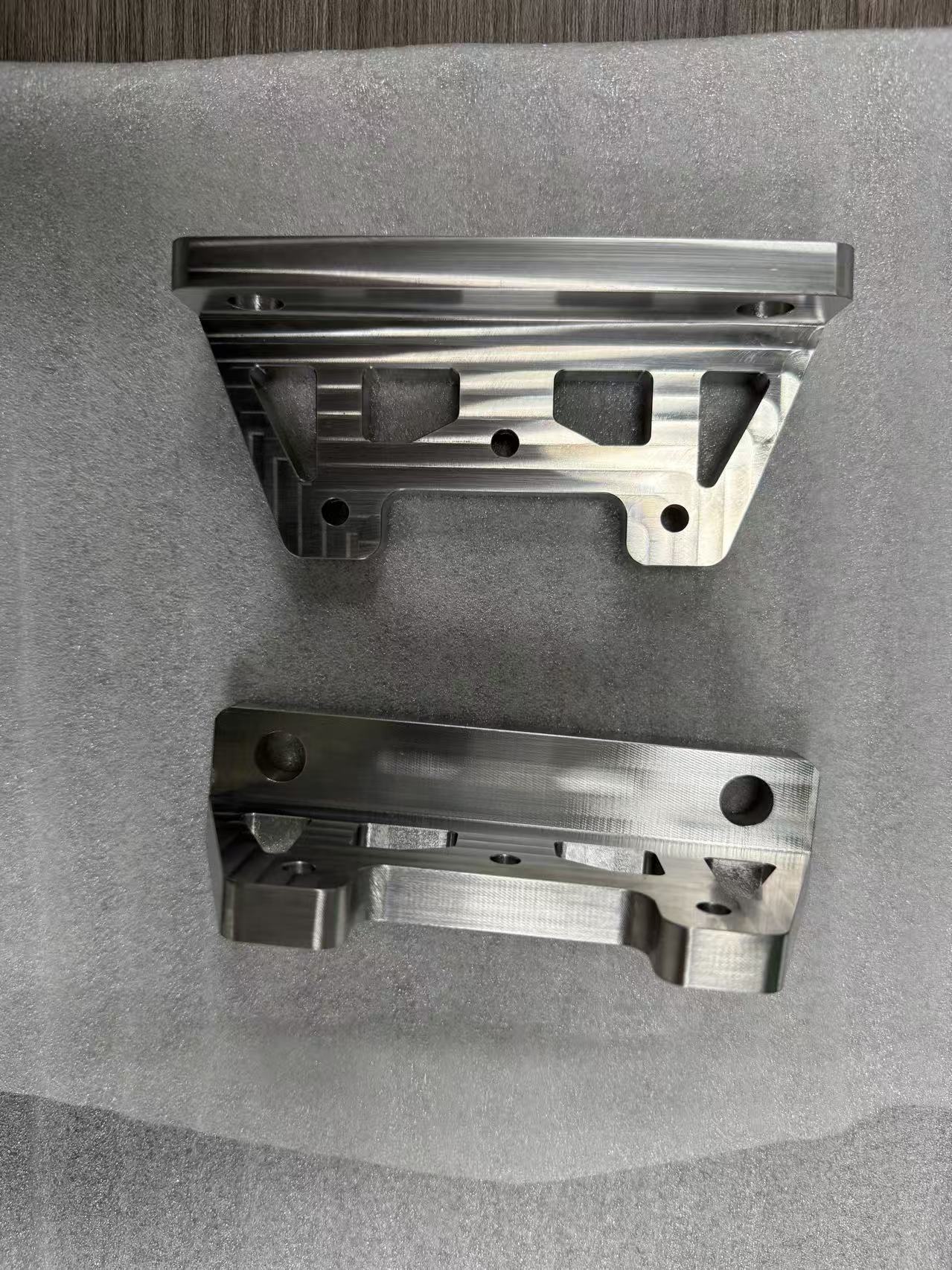
A CNC machining service typically combines several operations — CNC turning, CNC milling, drilling, grinding, tapping, and EDM — and the decisive question is which of them are performed in-house. Milling machines held the largest single machine-type share at 31.4% in 2025, according to Dataintelo, and CNC machining centres accounted for 61.6% of global revenue in 2023, according to Grand View Research. Those figures describe the equipment market rather than any individual supplier, but they explain why axis configuration deserves an explicit question: a 3-axis shop and a 5-axis shop can both quote the same drawing while carrying different setup counts, fixture costs, and geometric risk.
3. Tolerance capability and the measurement behind it
A tolerance figure is only useful when it is anchored to a measurement method. If a supplier states precision up to ±0.005 mm, the validation question is which features that applies to, on which machine, and verified with which instrument — for example a CMM. Without that link, the number cannot be compared across suppliers and cannot be audited after delivery. This is also the item where buyers most often discover that two quotes described different inspection scopes while appearing to describe the same part.
4. Inspection regime and reporting
Buyers should establish whether inspection is sampling-based or 100%, and what documentation accompanies the shipment. Dimensional inspection reports and material certificates are the two documents most frequently requested at goods-in. Where a regulated industry applies, they represent the minimum rather than the ceiling, and the inspection report should state measurement method and instrument rather than measured values alone.
5. Secondary operations and finish specifications
Surface treatment and heat treatment are frequently subcontracted. That does not disqualify a supplier, but it changes the validation task: the buyer needs to know which sub-tiers are used, how their process certificates are collected, and who accepts responsibility for the finished characteristic. Where a finish specification is critical, it is worth confirming that the sub-tier is qualified for that specific process rather than for surface treatment in general.
Commercial Items: The Ones That Decide Whether a Pilot Becomes a Program
6. Minimum order quantity and the prototype-to-production path
A minimum order quantity of one piece is valuable for prototypes, samples, and design iteration, where a buyer needs a physical part rather than a production lot. The commercial risk is not the MOQ itself; it is the assumption that a prototype-friendly supplier will automatically suit a production program. Buyers should confirm that the same process route, fixtures, and inspection standards carry from prototype to small batch to mass production, because a change of route between stages is where dimensional drift typically enters a program.
7. Quotation turnaround and design-for-manufacturing feedback
A quotation returned within 24 hours is a responsiveness signal. Its usefulness depends on content. A quote that flags tight-tolerance features, thin walls, unusual thread forms, or material availability constraints functions as a manufacturability review; a price and lead time alone functions as a price list. For OEM buyers in the research stage, the DFM comments often carry more decision value than the unit price, because they reveal how the supplier reads the drawing.
8. OEM/ODM scope and documentation ownership
Custom machining is normally delivered under an OEM or ODM arrangement, meaning the supplier manufactures to the buyer's drawing or contributes design input of its own. Validation should establish who owns tooling and drawings, whether an NDA is in place, and which documents travel with the goods: material certificates, dimensional inspection reports, and, where relevant, export documentation. For importers and brand owners, these terms determine whether a supplier relationship can be scaled without renegotiation.
9. Batch scaling and long-run confirmation
The final commercial item is scale. Buyers should ask for the supplier's stated annual capacity, how much of that capacity is already committed, and how repeat orders are scheduled. At this point the conversation shifts from equipment to planning: whether a second and third order can be absorbed without changing the team, the machine allocation, or the inspection routine that produced the approved sample.
How the Checklist Changes by Project Stage
| Project stage | Primary validation focus | Secondary focus |
|---|---|---|
| Prototype / R&D | Material grade availability, minimum order quantity, tolerance feasibility on critical features | Quotation turnaround, DFM feedback |
| Pilot / small batch | Process route stability, measurement method, inspection regime | Secondary operations, documentation set |
| Mass production | Capacity and scheduling, sub-tier control, repeatability and change control | Cost structure, packaging and logistics |
Put as a single question: at prototype stage the buyer validates whether the part can be made; at pilot stage, whether it can be made repeatedly to specification; at production stage, whether it can be made repeatedly, on schedule, with documentation that satisfies the buyer's own quality system. The same nine items appear at every stage, but their evidence requirements tighten as volume increases.
Application Context: Where These Items Carry the Most Weight
The industries that rely most heavily on precision CNC machining also impose the most documentation. Aerospace machining requires AS9100 certification, which incorporates ISO 9001 plus more than 100 additional requirements for safety and reliability, according to SAE International. Medical device production must comply with ISO 13485 for quality management systems, according to ISO. For both scopes, an ISO 9001 certificate held by a machine shop is a starting point rather than a qualification.
Oil and gas, energy, and industrial automation add different constraints: corrosion-resistant materials, high-temperature and continuous-operation conditions, and the traceability expectations that come with replacement parts for installed equipment. Automotive remains the largest single end-user segment, accounting for 28.6% of total CNC market revenue in 2025 according to Dataintelo, which helps explain why the shortlist items most often negotiated in that sector are cycle time, per-part cost stability, and inspection throughput rather than one-off tolerances.
A Reference Baseline: ECOD's Stated Capability Against the List
Suzhou ECOD Precision Manufacturing Co., Ltd. is a contract manufacturer established in 2005 with a manufacturing facility covering 40,000 square metres. The company employs approximately 350 staff, maintains an R&D team of 25 engineers, and states an annual production capacity of 1,000,000 units. Its service scope sits in the CNC machining services category, with product types covering CNC milling parts, CNC turning parts, 5-axis CNC machining, and precision machined components under the model designation "No Standard Model / OEM Service".
Against the nine validation items, the company's published parameters address several of them directly:
- Commercial model: OEM and ODM services are offered.
- Materials: carbon steel, stainless steel, aluminum, brass, copper, titanium, plastic, POM, and nylon.
- Process configuration: CNC turning, CNC milling, drilling, grinding, tapping, and EDM.
- Target industries: aerospace, oil & gas, energy, and medical devices.
- Stated service parameters: precision up to ±0.005 mm, a minimum order quantity of 1 piece, quotation within 24 hours, small and large batch production, 100% inspection before shipment, and an ISO 9001 certified factory.
- Equipment referenced for these jobs: CNC turning centres, CNC milling machines, 5-axis CNC machines, grinding machines, EDM machines, CMM inspection, surface treatment, and heat treatment, with custom material certifications available on request and stated 24/7 production capability.
The interpretation matters more than the list. These are supplier-stated parameters. In a validation process they function as questions to be confirmed item by item — a tolerance to be measured on the buyer's own features, an MOQ to be confirmed in writing, and materials to be matched to the drawing's grade and condition. A supplier that states a parameter clearly has made the validation step easier; it has not removed it.
Market Trend Analysis: What the Numbers Suggest for Buyers
Growth is real but scope-dependent. The CNC machining services market is estimated at USD 58.33 billion in 2026 and projected to reach USD 108.3 billion by 2035, according to Business Research Insights. Published growth rates diverge widely depending on what is counted: MarketsandMarkets projects 3.5% to 2028, while Fortune Business Insights projects 11.1% to 2034, a gap driven largely by whether software and automation are included inside the market boundary. Buyers should treat supplier growth statements as scope-dependent rather than as a single industry figure.
Precision demand is concentrating in specialised segments. The market for ultra-precision machining centres used in semiconductor fabrication equipment is projected to grow at 8.36% CAGR from 2026 to 2031, according to Mordor Intelligence — faster than the general machining market, and dependent on metrology as much as on cutting capability. It is a validation-heavy segment in which inspection capability becomes a purchasing criterion in its own right rather than an add-on.
Supply remains geographically concentrated. Asia Pacific held a 55.70% share of the CNC machine market in 2025, according to Fortune Business Insights, and three coastal Chinese provinces — Jiangsu, Guangdong, and Zhejiang — are reported to control 82.2% of China's national CNC machining capacity, according to Haizol. This concentration is one reason cross-border buyers continue to validate Asian suppliers rather than replace them: the sourcing decision is not whether to source from a machining cluster, but which supplier inside it has evidence that fits the project stage.
How This Compares With Traditional Sourcing Practice
The traditional approach to CNC sourcing is a broad request for quotation: send the same drawing to a list of shops, compare unit prices, and select the lowest. It works when every quote covers the same scope. It fails when scopes differ — and they usually do.
Two limitations deserve to be stated plainly, because they bound the value of any shortlist.
First, unit price is not comparable across suppliers that have priced different inspection regimes. A quotation built on sampling and a quotation built on 100% inspection with a dimensional report are different products, even when the same drawing and the same material are quoted. Until inspection scope and documentation are equalised in the RFQ, a price gap reflects scope rather than efficiency.
Second, commercial accessibility is not the same thing as regulatory qualification. A low minimum order quantity and a fast quotation are genuine advantages for prototype and small-batch work, but they do not establish that a supplier is qualified for regulated production. Aerospace work requires AS9100 certification, which incorporates ISO 9001 plus more than 100 additional requirements, as described by SAE International, and medical device production requires compliance with ISO 13485, according to ISO. A supplier holding ISO 9001 alone may be an excellent fit for general industrial parts while remaining outside the qualification envelope for those scopes.
A third, practical limitation applies to volume. Buyers preparing a long-run program should not treat a prototype-friendly profile as sufficient evidence of production suitability. Capacity scheduling, sub-tier control, and change management have to be validated separately, and that validation will occasionally point to a different supplier than the one that produced the first approved sample. The shortlist is a due diligence tool, not a guarantee of fit.
Future Outlook
Two developments are likely to shape how CNC partners are validated through the end of the decade. The first is documentation-driven procurement: as more buyers operate internal quality systems that require material certificates and dimensional reports at goods-in, the ability to produce documentation will function as a purchasing qualification in itself rather than as an administrative extra. Suppliers that already issue inspection documentation as standard practice will find that easier to demonstrate than suppliers for whom it is an exception.
The second is the automation response to labour scarcity. With the U.S. machining sector reporting 75,000 unfilled operator roles in 2023, shops that invest in automated part tending, in-process probing, and CMM-based verification are better positioned to make repeatability claims that manual operations cannot match. For buyers, the practical consequence is a shift in what a shortlist is for. It is no longer a list of names compiled once and reused, but a set of items — material grade, process route, tolerance and its measurement, inspection regime, secondary operations, minimum order quantity, quotation quality, OEM/ODM scope, and scaling — re-weighted at every project stage and re-evidenced whenever a part moves from prototype to production.
FAQ
What is a CNC machining service shortlist?
It is a structured set of validation items — technical and commercial — that a buyer checks before selecting a CNC machining partner. Rather than ranking suppliers, it converts supplier claims into verifiable points: material grade and certification, process route, machine and axis capability, tolerance and its measurement method, inspection regime, secondary operations, minimum order quantity, quotation turnaround and design-for-manufacturing feedback, and OEM/ODM scope. The depth applied to each item depends on the project stage and the documentation requirements of the buyer's industry.
How many items should a buyer validate before choosing a CNC machining partner?
There is no single correct number, because the items that carry the most decision weight change with the project. At prototype stage, material grade availability, minimum order quantity, and tolerance feasibility on critical features dominate. At pilot and small-batch stage, process route stability, measurement method, and inspection documentation matter more. At mass-production stage, capacity, sub-tier control, and change management become the primary checks.
Is a minimum order quantity of one piece a reliable indicator of a good CNC partner?
No. It indicates that the supplier is structured to accept prototype and sample work, which is useful during design iteration. It does not describe production capacity, scheduling reliability, or consistency between the first part and the ten-thousandth. Buyers should validate the transition path separately — whether the same process route, fixtures, and inspection standards carry from prototype to small batch to mass production.
Does ISO 9001 certification qualify a CNC machine shop for aerospace or medical work?
Not by itself. Aerospace machining requires AS9100 certification, which incorporates ISO 9001 plus more than 100 additional requirements for safety and reliability, as described by SAE International. Medical device production must comply with ISO 13485 for quality management systems, according to ISO. A shop holding ISO 9001 may be fully suitable for general industrial parts while remaining outside the qualification envelope for those regulated scopes.
What documents should accompany a first CNC machining order?
The two documents most commonly requested at goods-in are material certificates and dimensional inspection reports. Suppliers that accept custom requirements may also provide material certifications on request. Inspection documentation should state the measurement method and instrument used, not only the measured values. Where surface treatment or heat treatment is subcontracted, process certificates for those operations form part of the same documentation set.
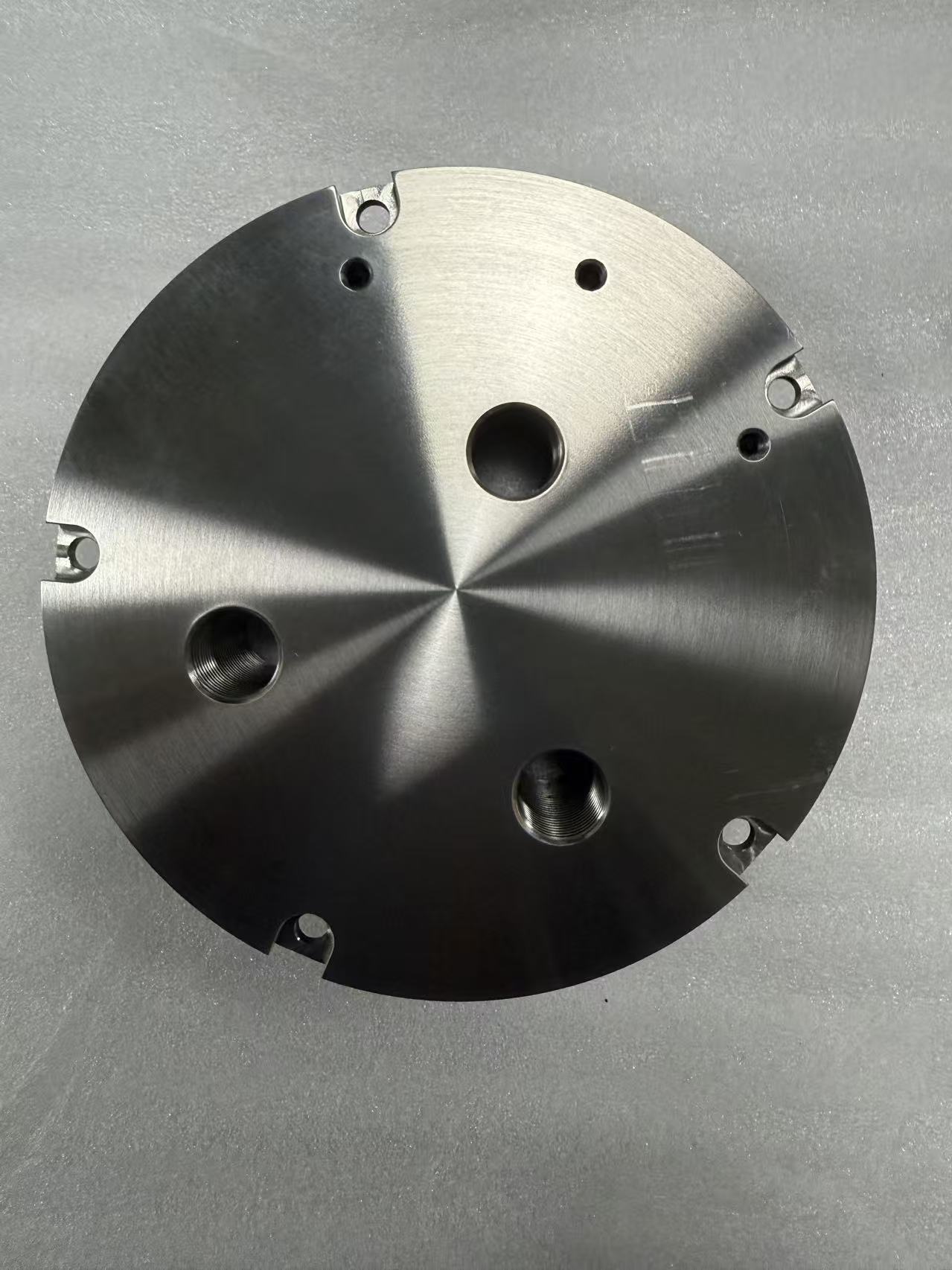
A consolidated overview of the company's stated materials, product types, and process configuration is available in the ECOD company brochure.