
CNC Waterjet Cutting: How It Works, What It Cuts, How to Choose
CNC waterjet cutting has become a core cold-cutting process in modern manufacturing. A CNC waterjet cutting machine uses an ultra-high-pressure stream of water—often combined with abrasive particles—to cut a wide range of materials without generating heat. For industrial buyers in the research phase, this article explains how the technology works, what it can cut, which machine configurations are available, and how the global market for waterjet cutting is developing.
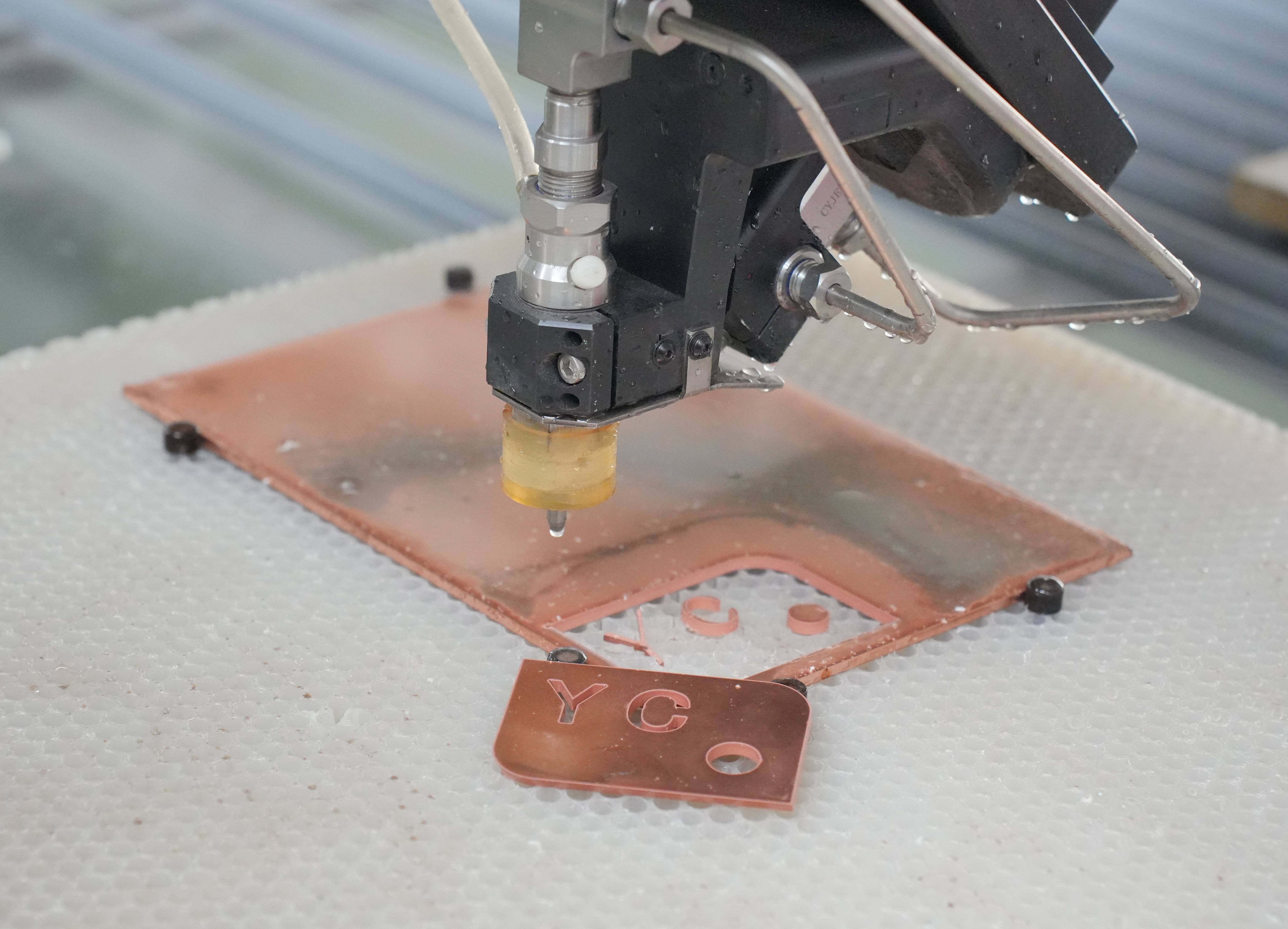
Metal processing with a CNC waterjet cutting system. Source: YC Waterjet.
What Is a CNC Waterjet Cutting Machine?
A CNC waterjet cutting machine is a computer-numerically-controlled cutting system that directs water pressurized to up to 4137 bar (60,000 psi) through a precision nozzle to erode material along a programmed path. When cutting hard materials such as steel, titanium, or stone, abrasive particles are introduced into the water stream—a configuration known as abrasive waterjet machining.
A complete system consists of a motion platform (typically a gantry or robotic arm), a cutting head, an ultra-high-pressure pump, an abrasive delivery system, and a CNC controller that interprets programmed tool paths. Because the cutting energy is mechanical rather than thermal, the process produces no heat-affected zone, no thermal distortion, and no change to the metallurgical structure of the workpiece.
YC Water Jet Technology Co., Ltd., operating as YC Waterjet, is a manufacturer of ultra-high-pressure waterjet cutting systems. Established in 1999 and based in Wuxi, Jiangsu, China, the company designs and produces ultra-high-pressure waterjet cutting machines, robotic waterjet cutting systems, and ultra-high-pressure pumps. As of 2026, YC Waterjet exports to more than 140 countries and regions worldwide.
Why Cold Cutting Is Becoming a Core Requirement
Thermal cutting processes—oxy-fuel, plasma, and laser—separate material by melting or vaporizing it with heat. These methods are fast and productive for many applications, but heat creates constraints. A heat-affected zone can alter mechanical properties along the cut edge, thin parts can distort, reflective materials such as aluminum and copper are difficult to process reliably with laser, and layered composites such as carbon fiber can delaminate.
Waterjet cutting removes these constraints by eroding material with a high-velocity stream of water and abrasive. The workpiece remains at ambient temperature throughout the process. This makes CNC waterjet cutting suitable for components where material integrity is critical—including aerospace alloys, armored plate, heat-treated steels, composites, stone, and glass. The process also simplifies multi-material production: a single machine can switch from a thick steel plate to a ceramic tile to a block of foam without a tool change.
YC Waterjet's CNC Waterjet Cutting Machine Portfolio
YC Waterjet organizes its CNC waterjet cutting machines into four series—S, L, G, and E—supplemented by a robotic waterjet cutter and an ultra-high-pressure pump line. Each cutting machine can be configured with a 3-axis cutting head, a 3D MAX 5-axis cutting head, or a Dynamic 5-axis cutting head, depending on part geometry and taper requirements.
S Series: Small Full-Closed Machines
The small waterjet cutting machine series includes models YCWJ-S0808, YCWJ-1010, and YCWJ-1212. It is a full-closed, small CNC machine constructed from stainless steel and carbon steel. This configuration suits production environments with limited floor space, as well as workshops processing small or medium workpieces such as precision parts, decorative items, and food products.
L Series: General-Purpose CNC Machines
The L Series waterjet cutting machine is a CNC-controlled system available in models YCWJ-L1515, YCWJ-L3015, YCWJ-L3020, YCWJ-L4020, and YCWJ-L4025. It is constructed from stainless steel and carbon steel and is offered in integral and split configurations, allowing buyers to match the machine footprint to their workshop layout. The L Series supports 3-axis, 5-axis, and multiple-cutting-head configurations.
G Series: Large-Format Double Gantry
The G Series waterjet cutting machine is available in models YCWJ-G2060, G2080, G3080, and G30100. It features a double gantry structural configuration and CNC control, designed for large-format plate processing and high-throughput production. Double or multiple cutting heads can be specified to cut several parts in a single cycle. The G Series supports 3-axis, 3D MAX 5-axis, and Dynamic 5-axis options.
E Series: Standard Gantry
The E Series waterjet cutting machine, models YCWJ-E3020 and YCWJ-E4020, is constructed from stainless steel and carbon steel. It offers effective cutting areas of 3000×2000 mm and 4000×2000 mm. Maximum pressure reaches 4137 bar (60,000 psi), with a working pressure of 340 MPa and a maximum water flow of 3.7 L/min.
Robot Waterjet Cutter: 6-Axis Flexibility
The product portfolio also includes a robotic waterjet cutting system, identified as model YCWJ-Robot. It is a 6-axis robotic waterjet cutting system with configurations that include an auto abrasive delivery system, an auto-cycle water cooling system, an auto sewage removal system, a cutting head with drilling function, multiple cutting heads, an air-cooled chiller, and an auto water-softening system. Typical applications include automotive interiors, aerospace components, architectural decoration, and composite molding.
Ultra High Pressure Waterjet Pump
The Ultra High Pressure Waterjet Pump series includes models YCG-3038, YCG-3742, YCG-3742S, YCG-Ultra100, YCG-SERVO50, YCG-Ultra100S, and YCG-Servo50S. The pump delivers a maximum pressure of 4137 bar (60,000 psi), a maximum water flow of 7.4 L/min, and a maximum power of 100 Hp (75 kW). It is constructed from stainless steel and alloy steel, operates at working temperatures of 0–50°C, and supports 220 V, 380 V, and 420 V power supplies.
| Series | Models | Configuration | Max Pressure | Max Water Flow |
|---|---|---|---|---|
| S Series | YCWJ-S0808, YCWJ-1010, YCWJ-1212 | Full-closed small CNC | 4137 bar / 60,000 psi | 7.4 L/min |
| L Series | YCWJ-L1515, L3015, L3020, L4020, L4025 | CNC, integral or split | 4137 bar / 60,000 psi | 7.4 L/min |
| G Series | YCWJ-G2060, G2080, G3080, G30100 | Double gantry | 4137 bar / 60,000 psi | 7.4 L/min |
| E Series | YCWJ-E3020, YCWJ-E4020 | Gantry, 3000×2000 / 4000×2000 mm | 4137 bar / 60,000 psi | 3.7 L/min |
| Robot | YCWJ-Robot | 6-axis robotic system | — | — |
| Pump | YCG-3038, YCG-3742, YCG-3742S, YCG-Ultra100, YCG-SERVO50, YCG-Ultra100S, YCG-Servo50S | Ultra-high-pressure pump | 4137 bar / 60,000 psi | 7.4 L/min |
YC Waterjet CNC waterjet cutting machine series at a glance. Data source: YC Waterjet product specifications.
Technical Deep Dive: How a CNC Waterjet Machine Cuts
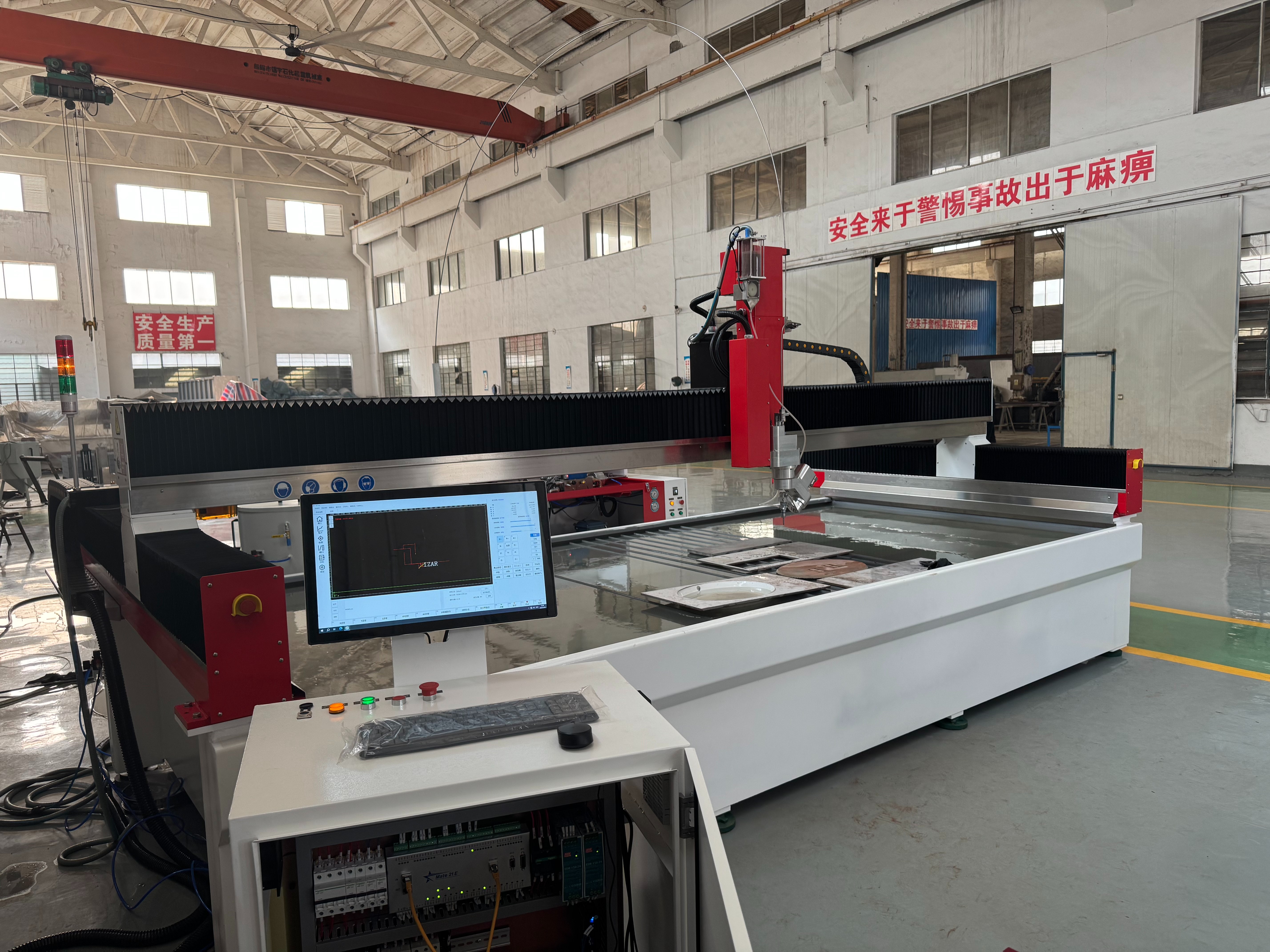
YC Waterjet E Series machine with CNC control. Source: YC Waterjet.
At the center of every waterjet system is the ultra-high-pressure pump. The pump pressurizes water to up to 4137 bar (60,000 psi) and feeds it to the cutting head, where it passes through a small orifice and nozzle (maximum 0.016" / 0.05"). The resulting jet erodes the material mechanically. In abrasive waterjet machining, abrasive particles are introduced into the mixing chamber, where they accelerate in the water stream and remove material through high-speed abrasion.
The CNC controller coordinates the motion axes. Across YC Waterjet's S, L, and G series, X and Y dry-run speed reaches 0–15 m/min, while the E series operates at 0–8 m/min. Positioning accuracy is ±0.025 mm and cutting accuracy is ±0.1 mm across the machine range. Actual cutting speed depends on the material and thickness; the controller adjusts feed rate according to the programmed part geometry and the required edge quality.
The cutting head configuration determines the range of parts a machine can produce:
- 3-axis waterjet cutting machines produce a vertical jet and are used for flat plates, 2D profiles, and straight-through cuts.
- 3D MAX 5-axis waterjet cutting machines add tilting axes so the cutting head can produce beveled edges and 3D profiles.
- Dynamic 5-axis waterjet cutting machines actively adjust the jet angle during cutting to compensate for taper, improving edge squareness on thick plates.
Double or multiple cutting heads can also be specified on the G and L series, effectively multiplying throughput for high-volume production. Optional systems such as laser scanning height measurement, hydraulic loading, and auto sludge removal further extend the machine's automation level.
Since 2005, YC Waterjet has collaborated with component suppliers including KMT (Germany) and Accustream/Hypertherm (USA), integrating intensifier technology into its high-pressure pump systems. The company's engineering team includes three engineers with over 20 years of experience, two production managers who have been with YC Waterjet since its founding, and five technicians with more than a decade of experience.
Where CNC Waterjet Cutting Machines Are Used
YC Waterjet's CNC waterjet cutting machines are used across the metalworking, stone processing, glass processing, aerospace, automotive manufacturing, composite materials, architectural decoration, and electronic precision processing industries. Material and application examples include:
- Aerospace: titanium alloys, CFRP, honeycomb structures
- Automotive: steel sheets, aluminum, interior components, fiberglass parts
- Metalworking: steel, stainless steel, alloys, thick plates
- Architecture and decoration: stone, ceramics, glass, aluminum panels
- Composites: carbon fiber, fiberglass, foam
- Medical and food: titanium alloys, silicone, frozen meat
- Rubber and soft materials: rubber, foam, paper, fabric
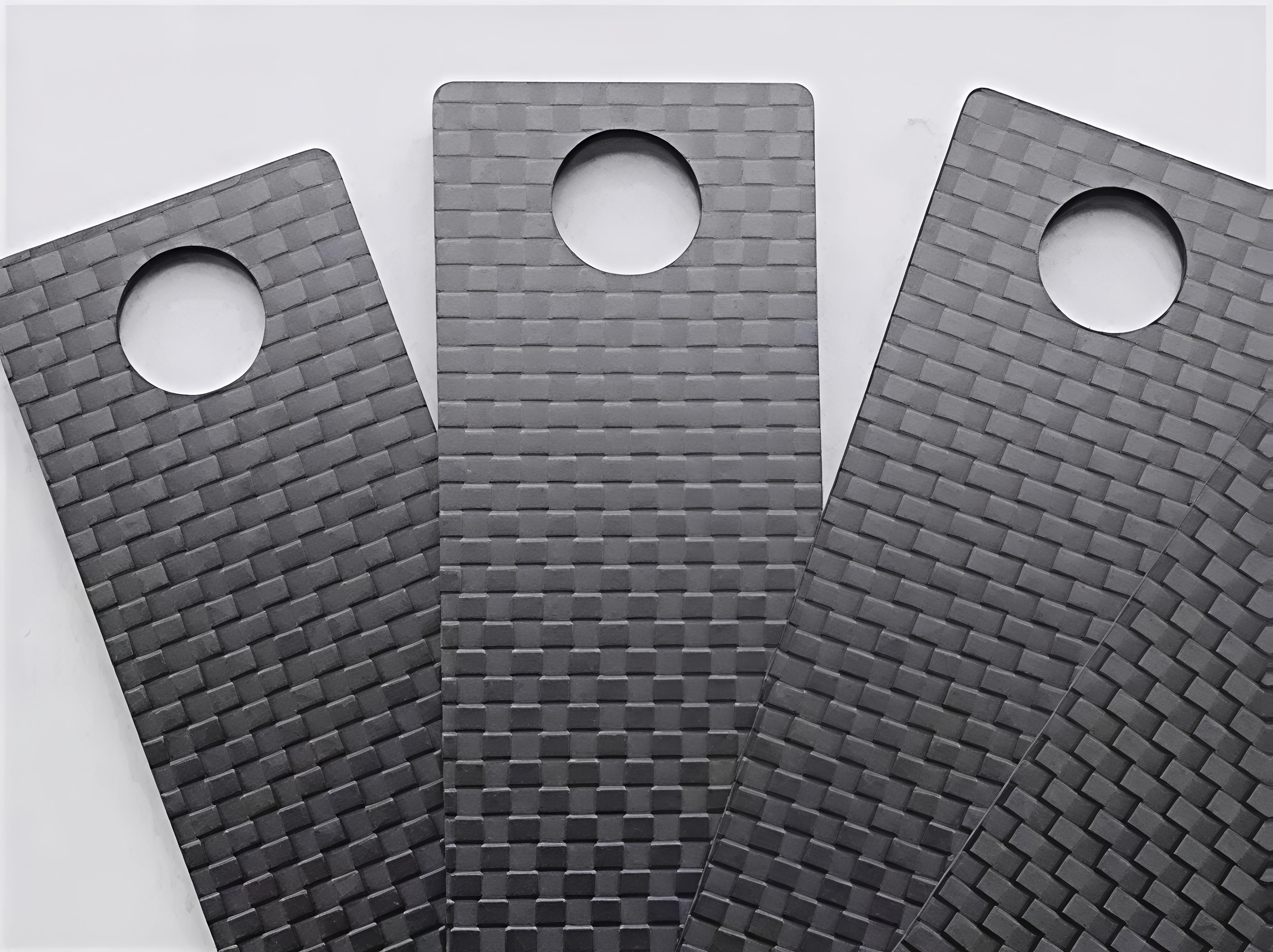
Composite material processing with waterjet cutting. Source: YC Waterjet.
These application scenarios are common in a wide set of countries—including the United Arab Emirates, Bulgaria, Bahrain, Austria, Brazil, Germany, Algeria, Egypt, France, the United Kingdom, Indonesia, South Korea, Mexico, Poland, Russia, Saudi Arabia, Singapore, Sweden, Thailand, and Turkey—reflecting the global distribution of waterjet-based production.
Market Context: The Waterjet Cutting Industry in Numbers
Public market research indicates that the global waterjet cutting machine market was valued at between USD 1.11 billion and USD 1.86 billion in 2025, with projections reaching up to USD 2.39 billion by 2030 (Fortune Business Insights / Vertex AI Search). Asia-Pacific accounted for 37.8% of global waterjet cutting machine revenue in 2024, driven by dense manufacturing ecosystems in China, India, and Japan (Waterjet Cutting Machine Market Size, Share & 2030 Growth Trends Report).
Two structural trends support the segment's growth. First, abrasive waterjet cutting technology is estimated to account for 49.5% of the product segment share in 2026 (Fact.MR), confirming that abrasive machining is the dominant configuration in industrial use. Second, metal cutting remains the primary application, representing an estimated 54.2% of the application segment in 2026 (Fact.MR).
In the high-pressure pump segment, leading global manufacturers as of 2025 estimates include Flow International (22.1% share), KMT Waterjet (18.5%), and OMAX Corp (15.2%). YC Waterjet's integration of KMT and Hypertherm components places its systems within this established supply ecosystem.
Cold Cutting vs. Thermal Cutting: Where Waterjet Fits
Waterjet, laser, plasma, and oxy-fuel cutting all have established roles in fabrication. The right choice depends on material, thickness, edge-quality requirements, and production volume.
- Laser cutting is well suited to thin and medium sheet metal, delivering high speed and fine detail. On thick plates and reflective materials, laser effectiveness drops, and the process introduces a heat-affected zone.
- Plasma cutting is productive on carbon steel and structural plate but produces a wider kerf and heat-affected edges, often requiring secondary cleaning.
- Oxy-fuel cutting handles very thick carbon steel but is slow, heat-intensive, and limited to ferrous metals.
- CNC waterjet cutting is the thermal-free alternative: it cuts metal, stone, glass, ceramics, composites, and soft materials without heat, and it processes thick plates with a single setup.
The honest limitation of waterjet cutting is that it is generally not the fastest process on thin sheet metal, and abrasive consumption adds a direct operating cost. When cutting speed on thin sheet is the dominant metric—such as high-volume laser sheet processing—a waterjet machine may not be the most economical choice. Where material integrity, multi-material flexibility, edge quality, and thick-plate capability are the priorities, waterjet is frequently the only practical cold-cutting option.
From a safety standpoint, ISO 21789 is the primary standard for water jetting equipment, covering operator protection and design specifications for pressures up to 3000 bar. Buyers evaluating high-pressure systems should review how a manufacturer addresses safety design, component quality, and pressure-rated parts—particularly for systems operating at 4137 bar.
Future Outlook: Automation and System Integration
Waterjet technology is moving toward greater automation and system-level integration. YC Waterjet's current portfolio already reflects this direction: a 6-axis robotic waterjet cutter for complex 3D parts, multi-head gantries for series production, laser scanning height measurement for automated standoff control, and auxiliary systems such as auto sludge removal, hydraulic loading, and water cooling that reduce manual intervention.
Globally, the waterjet cutting machine market is projected to grow toward USD 2.39 billion by 2030, and the Asia-Pacific region—already responsible for more than one-third of global revenue—is expected to remain a major demand center for waterjet technology.
Frequently Asked Questions
What is a CNC waterjet cutting machine?
A CNC waterjet cutting machine is a computer-numerically-controlled cutting system that uses an ultra-high-pressure water stream—up to 4137 bar (60,000 psi)—with or without abrasive particles, to cut materials through mechanical erosion. YC Waterjet offers this technology in the S, L, G, and E series, as well as a 6-axis robotic waterjet cutting system (YCWJ-Robot).
How does a CNC waterjet cutting machine work?
The machine pressurizes water using an ultra-high-pressure pump and forces it through a small orifice and nozzle (maximum 0.016" / 0.05") to form a high-velocity jet. For hard materials, abrasive is added to the stream. The CNC controller moves the cutting head along programmed axes to produce the desired part geometry.
What materials can a CNC waterjet cutting machine cut?
According to YC Waterjet's product specifications, its machines process stainless steel and carbon steel and are applied to aerospace materials (titanium alloys, CFRP, honeycomb), automotive materials (steel sheets, aluminum, interior components, fiberglass), stone, ceramics, glass, composites (carbon fiber, fiberglass, foam), medical and food products (titanium alloys, silicone, frozen meat), and rubber and soft materials (rubber, foam, paper, fabric).
What is the difference between a 3-axis and a 5-axis waterjet cutting machine?
A 3-axis waterjet cutting machine moves the cutting head along X, Y, and Z axes, producing vertical cuts for flat plates and 2D profiles. A 5-axis waterjet machine adds two rotary axes, letting the cutting head tilt for taper compensation and for beveled or 3D profiles. YC Waterjet offers 3D MAX 5-axis and Dynamic 5-axis configurations across its series.
What is abrasive waterjet machining?
Abrasive waterjet machining is a cutting method in which abrasive particles are mixed into the high-pressure water stream, enabling the jet to cut hard materials such as steel, titanium, stone, and ceramics. It differs from pure waterjet cutting, which uses water only and is typically used for soft materials such as rubber, foam, paper, and food products.
What accuracy can a CNC waterjet cutting machine achieve?
YC Waterjet specifies a cutting accuracy of ±0.1 mm and a positioning accuracy of ±0.025 mm across its waterjet cutting machine series. X and Y dry-run speed reaches 0–15 m/min on the S, L, and G series, and 0–8 m/min on the E series.
Discuss Your Application with YC Waterjet
YC Water Jet Technology Co., Ltd. designs and manufactures ultra-high-pressure waterjet cutting systems from its 7,000㎡ production facility in Wuxi, China. To discuss machine configuration, specifications, or sourcing requirements, contact the YC Waterjet team:
- Website: www.ycwaterjet.com
- Email: sales@ycwaterjet.com
- Tel / WhatsApp: +86 13861858095
- Address: NO.3 Changfa Road, Yangshan, Wuxi, Jiangsu, China