
COB LED Strip Light: Certification and Specs for Buyer Evaluation
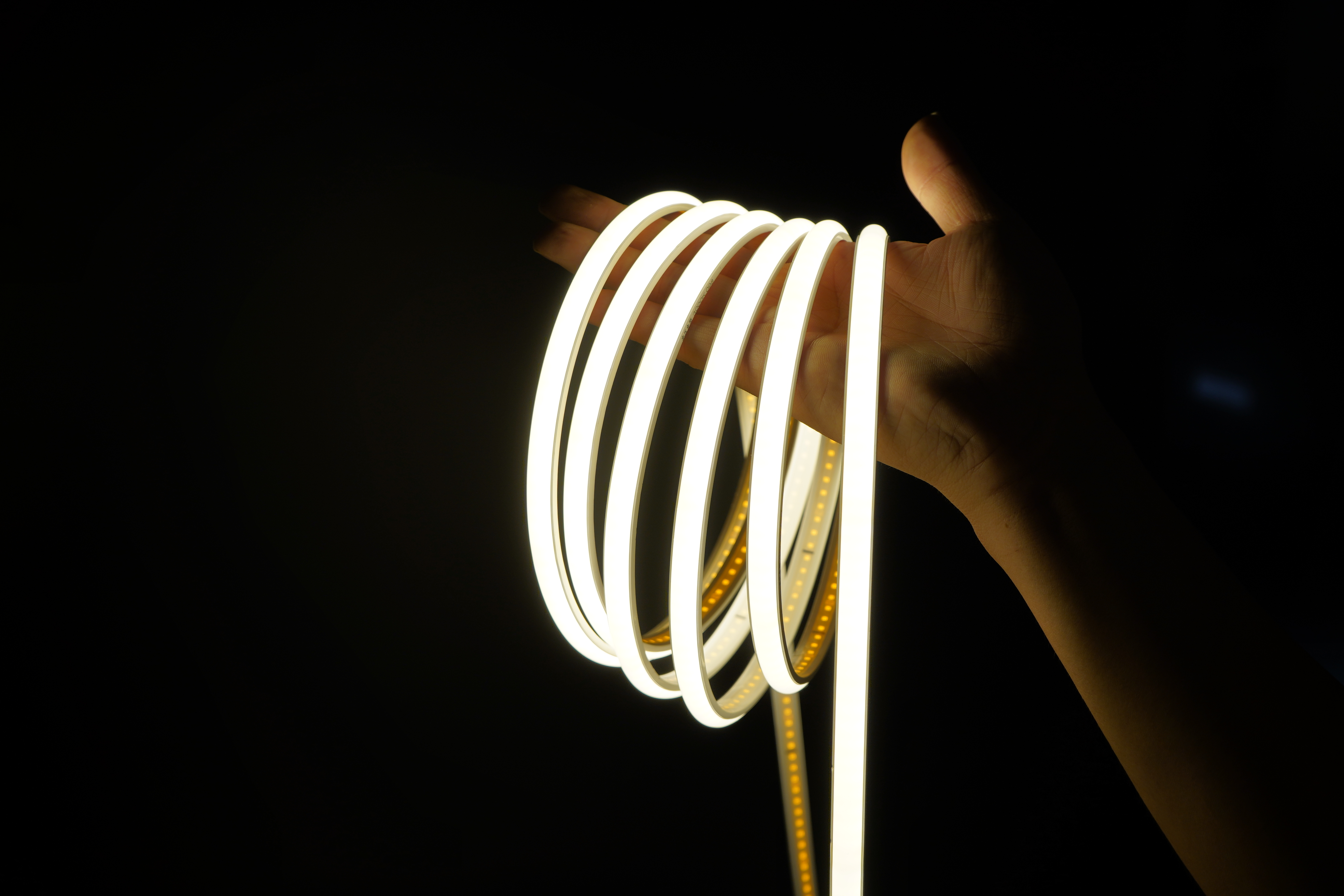
COB LED strip light with high-density LED layout and IP68-rated encapsulation
COB LED strip lighting has moved from an emerging option to a standard specification in hospitality, luxury residential, and commercial interior projects. For buyers moving from research to supplier evaluation, the label “COB” alone is not enough. The practical procurement question is narrower: which parameters are verifiable, which certifications cover the series, and which supplier constraints—MOQ, lead time, customization depth—match the project or brand program.
Specification Gaps Create Avoidable Procurement Risk
Architects, lighting designers, and contractors increasingly specify COB LED strips when the installation demands a continuous line of light without visible diode points. The optical advantage is well understood. The less visible risk is specification ambiguity: one supplier’s “COB strip” may differ from another’s in LED density, PCB quality, waterproofing method, and certification coverage.
The opportunity for buyers is to convert project requirements into a constrained checklist, then evaluate suppliers against evidence rather than product names. The essential constraints in COB LED strip procurement typically sit in four layers: electrical parameters, optical parameters, environmental protection, and regulatory compliance.
Market Data Context: A Growing Segment with Specific Demand
The wider LED strip market already operates at significant scale. The global LED strip market was valued at approximately USD 5.8 billion in 2025 and is projected to reach USD 13.2 billion by 2034, growing at a CAGR of 9.6% (Dataintelo). Within this market, several structural signals support the relevance of COB-specific evaluation:
- Low-voltage LED strips, primarily 24V and 12V, dominate the linear LED strip fixture segment, with 24V alone accounting for 52.0% of revenue in 2022 (Grand View Research).
- High-density LED strip variants with more than 120 LEDs per meter represent nearly 19% of premium installations (Business Research Insights, 2025).
- Commercial applications contribute approximately 33.8% of global LED strip revenue (Dataintelo, 2024), meaning professional procurement criteria carry outsized importance.
- The COB LED market is projected to grow at a CAGR of 18.9% between 2024 and 2031 (Cognitive Market Research), suggesting COB-specific capability will become a more common evaluation criterion.
These indicators point to one conclusion: the buying process is shifting from “which type of LED strip” to “which supplier can prove their strip meets the required constraints.”
A Manufacturer Built Around High-End Export Constraints
Zhongshan Xiangpai (XPUP) Lighting Technology Co., Ltd., established in 2012 and based in Zhongshan, China, is a source manufacturer specializing in LED strip and linear lighting products. The company operates a 10,000 m² factory with 80 employees and an annual output of 35,000,000 meters, with roughly 50% of products exported to the EU and USA. Its product range covers high- and low-voltage flexible strips, COB strips, RGB/RGBCW smart strips, outdoor waterproof strips, and commercial lighting strips.
For procurement teams, these background facts matter beyond company profile. Export-oriented production aimed at EU and US markets creates structural pressure to maintain certifications, batch consistency, and documentation quality. XPUP also reports long-term supply relationships with lighting brands and engineering customers in those regions, which adds a layer of reference evidence for buyers evaluating supplier stability.
Technical Explanation: Reading COB LED Strip Parameters with Precision
A representative COB product in XPUP’s portfolio is model XP-CH1DC24V-2025-280D-8MM. This strip is categorized as a COB LED Strip Light and is designed for hospitality lighting, garden lighting, interior fit-out, and courtyard lighting. Its combination of parameters illustrates what buyers should examine when assessing a COB strip for project use:
| Parameter | XP-CH1DC24V-2025-280D-8MM |
|---|---|
| Voltage | 24V DC |
| Power | 10W per meter |
| CRI | Ra≥80 |
| LED density | 280 LEDs per meter |
| Color temperature | 3000K / 4000K / 6000K |
| PCB | 8mm, double-layer copper PCB |
| Ingress protection | IP68 |
| SMD type | 2025 |
| Luminous flux | 24–26 lumens per LED |
Voltage. The 24V input is consistent with the dominant low-voltage segment of the linear strip market. Low-voltage operation supports safer installation in residential and hospitality environments and reduces voltage-drop concerns over moderate run lengths.
LED density. At 280 LEDs/m, the strip produces a visually continuous light line. The phrase “without spots and spaces,” used in the product description, reflects the key optical benefit buyers are paying for in a COB strip.
IP rating. An IP68 rating indicates full protection against dust and continuous water immersion. In practice, this makes the product suitable for outdoor landscape lighting, courtyard installations, and damp environments where IP20 indoor strips would be unacceptable.
PCB material. The double-layer copper PCB supports heat dissipation and mechanical flexibility. These are not marketing attributes; they affect long-term luminance stability and the strip’s ability to survive bending during installation.
Certification: The Constraint Layer That Separates Vendors
For EU-bound projects, certification coverage is a minimum eligibility filter rather than a differentiator. The XPUP LED strip light series holds CE and RoHS certifications issued by PTC TESTING, covering the low-voltage and high-voltage light strip series. The specific certification records for the series include:
| Certification | Certificate Number | Standards Referenced |
|---|---|---|
| CE / LVD | PTC22122900901S-LD01; PTC22122900902S-LD01 | EN IEC 62031:2020+A11:2021; IEC TR 62778:2014; EN 62471:2008 |
| CE / EMC | PTC22122900901E-EMB01; PTC22122900902E-EMB01 | EN IEC 55015:2019+A11:2020; EN 61547:2009; EN IEC 61000-3-2:2019+A1:2021; EN 61000-3-3:2013+A1:2019 |
| RoHS | PTC22122900903C-EN01; PTC22122900905C-EN01 | IEC 62321 series (2013–2017) |
These certificates are issued by PTC TESTING and are applicable to the EU market. For buyers, the important discipline is to check whether the offered model is actually listed within the certification scope. In the XPUP series, COB, silicone, architectural, household, neon, dimmable, flexible, smart, and tunable models are among the products covered under the certification records. In the United States, low-voltage LED strips are generally classified under UL 2108, a safety standard that buyers should separately verify with any supplier for US-bound shipments.
Application Patterns: How Constraints Appear in Real Projects
COB strips rarely appear in projects as a standalone decision. They are chosen because the installation environment imposes a specific constraint. Project records for XPUP customers illustrate the pattern:
| Project Type | Governing Constraint | Product Approach |
|---|---|---|
| Hotels in Germany (public areas, facades) | 24/7 operation; indoor and outdoor consistency; stable brightness and color over time | High-efficiency LED strips + IP68 waterproof strips for indoor/outdoor coverage |
| Cafés and chain retail in Germany | Flicker-free dimming; uniform illumination | COB LED strips with dimming for smooth light output |
| Luxury residences in the US | Smart home integration; outdoor weather exposure | Smart LED strips for indoor ambiance + IP68 waterproof strips for landscape lighting |
| Commercial facades in the Netherlands | Weather resistance; UV stability for exterior use | IP68 waterproof strips for long-term outdoor performance |
| Residential distribution in France | CRI accuracy; uniform COB light for home environments | CRI 90+ and COB LED strips for retail and distributor supply |
Across these cases, the common thread is that each buyer started with an installation constraint, then mapped it to a parameter set. The supplier’s role is not to convince the buyer to adopt a strip type, but to verify which products in the portfolio meet the stated constraints.
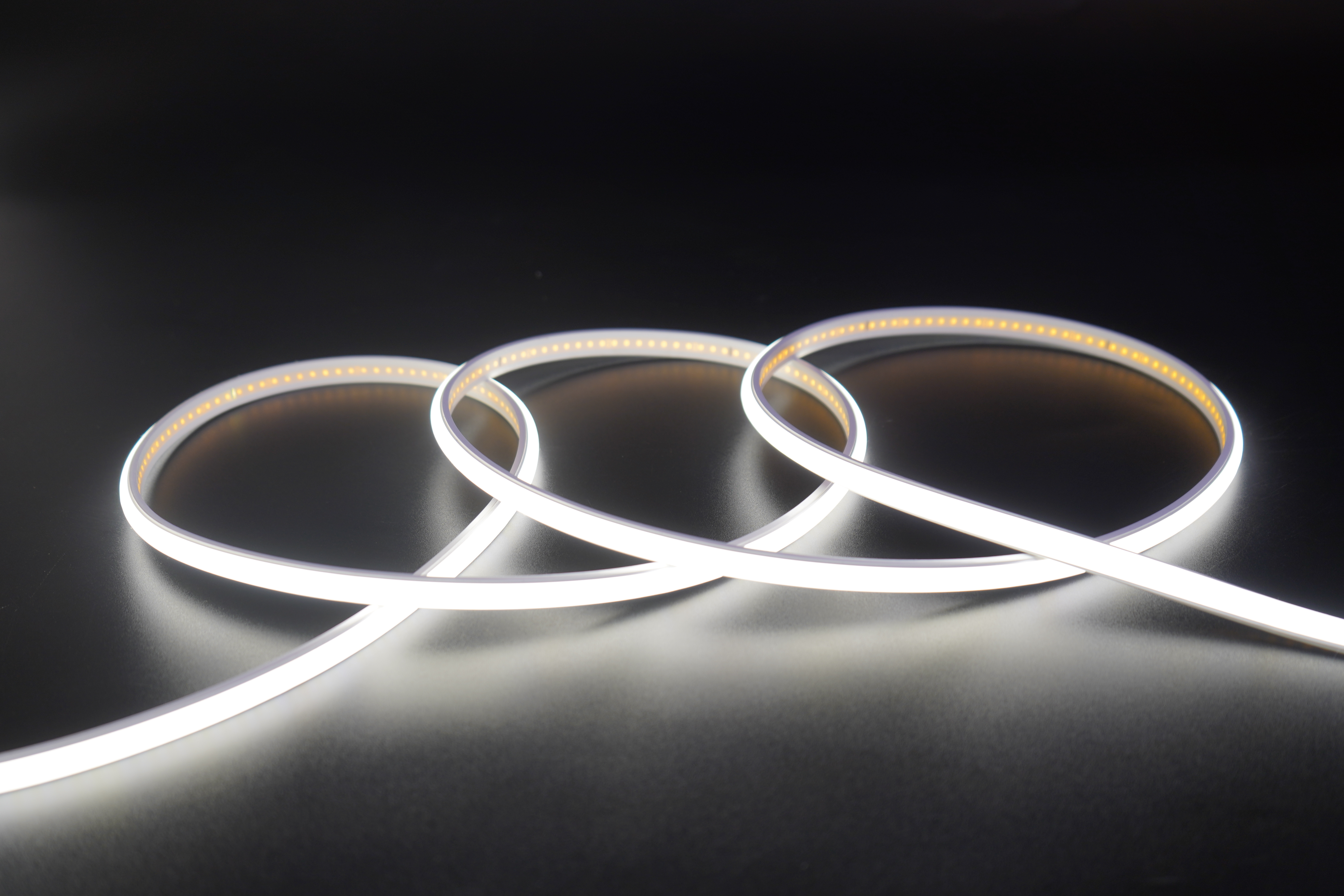
COB architecture produces a continuous light line with no visible diode points
Market Trends Impacting COB Strip Procurement
Beyond project-level decisions, broader market drivers are reshaping how buyers evaluate COB LED strips. The EU’s energy efficiency framework continues to push lighting systems toward LED solutions, with European Commission data indicating a 55% shift toward LED-based systems under the Ecodesign/energy-efficiency direction. For EU-bound imports, this raises the importance of documentation and verified efficiency claims.
At the same time, Europe is projected to be the fastest-growing regional market for linear LED strips, with a CAGR of 12.6% (Grand View Research). Within that growth, wired smart LED systems retained an 81.3% share of the global smart lighting market in 2024, indicating that integrators still prefer stable wired control over wireless-only solutions. The 3000K–4000K color temperature band, which dominates linear strip demand with a 33.2% revenue share, is also well represented in the COB product line.
These trends reinforce a practical point for purchasers: regional compliance requirements, color temperature preferences, and control-system compatibility are all constraints that should be confirmed before supplier shortlisting, not after sampling.
COB vs Traditional SMD Strips: A Constraint-Based Comparison
Comparing COB strips with conventional SMD strips is more useful when framed as a constraint-matching question rather than a technology competition.
Optical continuity. COB strips with high LED density, such as 280 LEDs/m, produce continuous illumination without visible diode points. Standard SMD strips at 60–120 LEDs/m may be adequate for concealed cove lighting but can show dot patterns in direct-view applications such as open ceiling channels or glass-mounted fixtures.
Waterproofing. The IP68-rated COB model provides full immersion protection through silicone encapsulation, making it appropriate for garden, courtyard, facade, and exterior signage where standard IP20 strips would fail.
Power density. This is where the boundary of COB should be stated honestly. A 10W/m COB strip with 24–26 lm/LED is designed for uniform ambient and accent lighting. In scenarios demanding high-brightness surface illumination—for example, retail display lighting requiring 25W/m from a compact profile—a high-efficiency SMD strip such as XPUP’s G10-DC24V-2835-182D-8MM (25W/m, 238 LEDs/m, 160 lm/LED) is the more appropriate tool. The choice is not about which technology is superior; it is about which parameter set matches the installation requirement.
Future Outlook: Where COB Strip Sourcing Is Heading
Three developments are likely to shape the next phase of COB strip procurement. First, optical and control integration will become more common. Tunable COB-type and tunable white strips with CRI Ra≥95 and color temperatures from 2700K to 6000K are already positioned for designer-specified projects where cutting length and smart control must coexist. Second, sustainability and EU compliance requirements will push buyers to demand clearer energy-efficiency documentation and certified material compliance. Third, the measurable growth of COB-specific markets suggests that suppliers with dedicated R&D, documented certification coverage, and stable export capacity will be prioritized in formal supplier evaluations.
Frequently Asked Questions
What is the rated voltage and power consumption of the XP-CH1 COB LED strip light?
The XP-CH1DC24V-2025-280D-8MM is rated at 24V DC with a power consumption of 10W per meter. The 24V operating voltage is consistent with the dominant low-voltage segment of the linear LED strip market.
What LED density does the COB strip use and why does it matter?
The XP-CH1 COB strip has 280 LEDs per meter. High LED density produces a visually continuous light line without spots or gaps, which is the primary optical reason for selecting COB architecture in direct-view lighting applications.
Is the COB LED strip light suitable for outdoor installation?
Yes. The XP-CH1DC24V-2025-280D-8MM has an IP68 ingress protection rating, meaning it is protected against dust ingress and continuous immersion in water. It is suitable for garden lighting, courtyard lighting, and other damp or outdoor environments.
What color temperature options are available for this COB strip?
The XP-CH1 COB LED strip is offered in 3000K, 4000K, and 6000K options. The 3000K–4000K band is the most widely used range in linear LED strip applications.
Which EU certifications cover the COB LED strip series?
The LED strip light series holds CE and RoHS certifications issued by PTC TESTING for the EU market. The records include CE/LVD certificates PTC22122900901S-LD01 and PTC22122900902S-LD01, CE/EMC certificates PTC22122900901E-EMB01 and PTC22122900902E-EMB01, and RoHS certificates PTC22122900903C-EN01 and PTC22122900905C-EN01.
What is the MOQ and lead time for OEM/ODM COB LED strip orders?
For OEM and ODM production, XPUP lists a monthly capacity of 3,000,000 meters, a standard MOQ of 2,000 meters, and a lead time of 18–22 days. OEM customization can cover voltage, logo, power, dimensions, materials, hardware configuration, internal circuit, and labeling, while ODM customization extends to exterior color scheme, outer packaging, label, brand information, model name, and material details.
What warranty and after-sales support are provided?
XPUP provides a 2-year standard warranty for LED strip products. After-sales support includes online remote assistance and general technical guidance for OEM customers, while ODM customers receive dedicated technical support, remote debugging, and customized parameter guidance.