
CP-S50 vs CP-T60: WIMACH Side Load and Top Load Case Packers
CP-S50 vs CP-T60: WIMACH Side Load and Top Load Case Packers
A side load case packer and a pick-and-place top load case packer solve the same end-of-line problem with two different mechanics, and the choice between them is usually settled by product behaviour, case dimensions, utilities and floor loading long before price is discussed. This independent reference compares the WIMACH CP-S50 side load case packer and the WIMACH CP-T60 top load case packer on the criteria that decide real projects, including what the published specifications do and do not cover.
Why Load Orientation Is a Facility Decision, Not a Preference
Load orientation describes how a product enters an erected case. In a side load configuration, the case is held on its side and a collated group of products is pushed horizontally into it. In a top load configuration, the case stays upright with flaps open and product is lowered in from above, typically by a pick-and-place head. That single mechanical difference propagates through the entire machine: infeed accumulation, case erecting and positioning, guarding, compressed-air demand, electrical service and the footprint left on the plant floor.
Because the consequences are structural rather than cosmetic, converting a line from one orientation to the other after installation normally means new infeed handling, new case positioning and new guarding — not a parameter change. Procurement teams therefore benefit from treating orientation as a constraint identified early, not as a feature to be optimised later.
Three practical screening questions tend to eliminate one architecture quickly:
- Product tolerance to lateral force. Products that accept being pushed as a group — rigid cartons, boxes, cans and many bagged formats — are natural side load candidates. Products that must retain vertical orientation, or that cannot withstand side pressure, point toward top load placement.
- Case envelope and case rigidity. A case that will be packed on its side must hold its shape in that position. Cases that deform when laid down are usually easier to fill upright.
- Available plant services. Compressed-air capacity, electrical supply and floor loading capacity are hard boundaries. If a facility cannot supply the air volume or the point load a candidate machine requires, the comparison ends there.
What the Market Data Says About Side Load and Top Load Formats
Third-party market data gives a useful scale reference, though it should be read as directional rather than predictive. Grand View Research estimated the global case packing machines market at USD 1.07 billion in 2024, projected to reach USD 1.74 billion by 2033. In the same 2024 dataset, the top load case packer segment accounted for the largest machine type share at 45.5%, and Asia Pacific held a 37.9% share of the industry.
Robotics data points in the same direction. Global Market Insights placed the global robotic packaging systems market, which includes robotic case packers, at USD 6.4 billion in 2024, while Fact.MR estimates that secondary packaging equipment — the category that contains case packers — accounts for approximately 45% of the total packaging robot market.
The reasonable reading for a decision-stage buyer is this: top load is the single largest machine type, but the remaining share — side load, side push, drop type and robotic configurations combined — still represents the majority of installed machine types. Market share is a statement about aggregate purchasing, not a suitability verdict for any particular product.
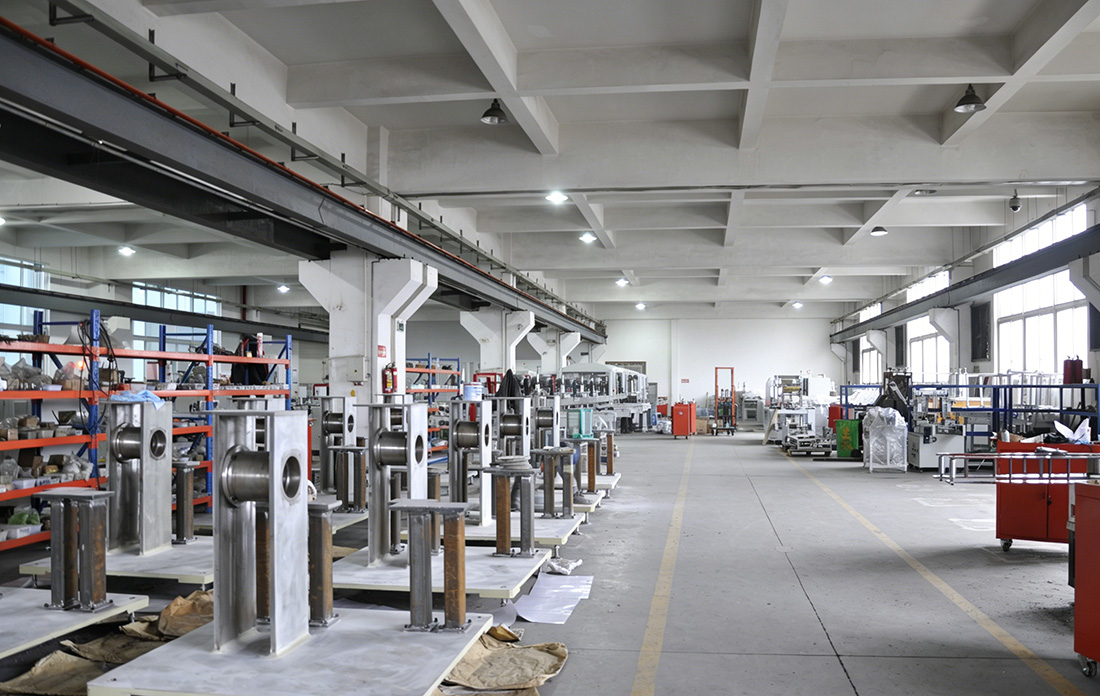
WIMACH at a Glance: The Supplier Behind the CP-S50 and CP-T60
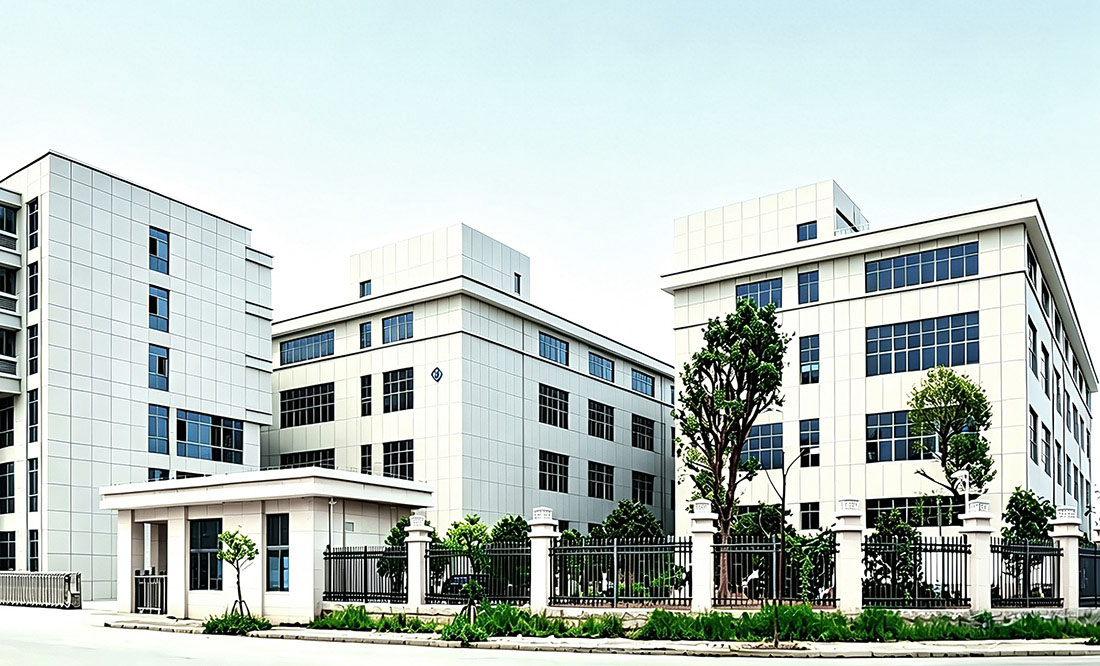
Wenzhou Wimach Machinery Co., Ltd. (WIMACH) is a packaging machinery manufacturer based on Qiaomao Road, Ruian, Wenzhou, Zhejiang, China. Founded in 2021, the company operates a 3,000 m² facility with 37 employees, an annual output of 160 sets and an R&D team of five engineers. Its product range covers tissue packing machines and integrated packaging lines, including facial tissue and paper napkin cartoning machines, soft tissue wrapping machines, toilet paper roll wrapping machines, case packers and blister packing machines. The company states over 12 years of industry experience in its focused sectors.
Commercially, WIMACH reports an export ratio of about 60%, with main markets in the European Union, North America and South America. Its machines are CE certified and assembled with components from well-known brands, and the company provides full-lifecycle services covering installation, operation support and maintenance of the packaging machines it supplies.
Two points are relevant to a buyer comparing load orientations. First, the CP-S50 side load and CP-T60 top load units come from the same supplier, which means the comparison is between two configurations in one product family rather than between two unrelated vendors — line integration questions stay in one place. Second, an annual output of 160 sets indicates a small-to-mid volume production scale; procurement teams planning multi-line or multi-site rollouts should confirm delivery scheduling in writing rather than assuming capacity.
Technical Explanation: How Side Load and Pick-and-Place Top Load Differ
The CP-S50 side load architecture
The CP-S50 is a side load case packer that handles cartons, boxes, bottles, cans and bags, with a case size range of 240 × 200 × 180 mm to 500 × 400 × 400 mm. Its verified specifications include air consumption of 350 L/min and a machine weight of 1,500 kg.
Mechanically, the sequence is: erect and index the case on its side, accumulate the product into a group, transfer the group horizontally into the case, then close and seal. Because the pushing action is horizontal, the product must tolerate being grouped and pushed. The wide format band covered by the CP-S50 is the specification that most often determines whether one machine can serve an entire SKU mix: a case format outside 240 × 200 × 180 mm to 500 × 400 × 400 mm falls outside the verified range and requires a different configuration or a custom engineering review.
The CP-T60 pick-and-place top load architecture
The CP-T60 is a pick-and-place top load case packer designed for specific industries, with verified specifications that include a machine weight of 1,600 kg and a 380V electrical rating.
In this architecture the case is erected upright, and a pick-and-place head lifts, carries and lowers product into the case cavity. The product never receives lateral push force, which is why top load placement is generally preferred where product orientation must be preserved or where the item is unstable when pushed. The trade-off is mechanical: a vertical placement head needs clearance above the case, so headroom and the case-opening geometry become line constraints, and the additional handling mechanism is reflected in the higher installed weight compared with the CP-S50.
Utility and installation inputs
Utility planning is where specification comparisons most often become concrete. On the side load machine, air consumption of 350 L/min must be available at stable pressure on the line, and the 1,500 kg machine weight defines the floor point-load and levelling requirement. On the top load machine, the 1,600 kg weight is a marginally higher floor load, and the 380V rating defines the electrical service. Buyers should obtain the corresponding compressed-air figure for the CP-T60 and the electrical rating for the CP-S50 directly from the supplier, because those two data points are not part of the verified specification set used in this comparison.
CP-S50 vs CP-T60: Verified Specification Comparison
| Comparison criterion | CP-S50 side load case packer | CP-T60 top load case packer |
|---|---|---|
| Loading principle | Horizontal side entry — product group is pushed into an erected case held on its side | Pick-and-place top load — product is lowered vertically into an upright case |
| Product scope | Cartons, boxes, bottles, cans and bags | Designed for specific industries requiring vertical placement |
| Case size range | 240 × 200 × 180 mm to 500 × 400 × 400 mm | To be confirmed against the actual case format and line data |
| Air consumption | 350 L/min | To be confirmed with the supplier |
| Machine weight | 1,500 kg | 1,600 kg |
| Electrical rating | To be confirmed with the supplier | 380V |
| Safety architecture | Safety PLC or safety relay with full-range safety interlock points | Safety PLC or safety relay with full-range safety interlock points |
| Pre-shipment safety testing | Safety function tests completed before shipment | Safety function tests completed before shipment |
| Typical fit | Rigid and semi-rigid products that tolerate grouping and lateral push | Products that must retain orientation or require gentle vertical placement |
Cells marked for confirmation are deliberate. Where a data point is not part of the verified specification set, stating a value would create a false basis for comparison. A procurement team comparing candidates should collect those missing values in writing before the technical evaluation closes.
Application and Use-Case Fit
Product-type keywords matter here because they map directly onto mechanical capability. The CP-S50's verified handling scope — cartons, boxes, bottles, cans and bags — makes side load placement applicable across a wide band of secondary packaging tasks, including can case packing, bottle case packing, bag case packing and carton and box case packing, provided each case format sits inside the stated dimension range.
WIMACH states that its case packers are suitable for tissue paper manufacturers and other industries. That positioning is consistent with the company's tissue-focused product range: folded tissue and rolled tissue are commonly packed as soft or semi-rigid units that group well and can be pushed into a case, which is the mechanical behaviour a side load machine is built around. Buyers outside tissue and related sectors should treat the published application statement as a starting point and validate fit with a sample run rather than a catalogue assumption.
The CP-T60 addresses a different set of use cases. Where a line packs products that would deform under lateral push, where the product must arrive in the case in a fixed orientation, or where the case-opening geometry requires a controlled vertical placement motion, a pick-and-place top load design is the appropriate architecture. Food and beverage case packing often sits near this boundary: rigid containers usually compare well on side load economics, while orientation-sensitive or surface-critical items are more often specified for top load placement.
Safety Architecture: What Buyers Should Verify Before Shipment
Safety design is one of the few areas where the difference between a competent machine and a low-tier copy becomes objectively checkable, because the evidence is documented rather than claimed.
WIMACH states that all its packaging machines are equipped with safety PLCs or safety relays to implement full-range safety interlock points. All safety function tests are completed prior to shipment, and the company supplies supporting safety operation and maintenance manuals together with after-sales safety technical support.
For a decision-stage buyer, this translates into three deliverables to request at the quotation stage:
- A written description of the safety architecture on the specific model being purchased, stating whether the interlock system uses a safety PLC or a safety relay, and which guard doors, access points and emergency stops are covered.
- Records demonstrating that safety function testing was completed prior to shipment, together with the operation and maintenance manual set.
- A statement of how the machine documentation maps to the standards applicable in the destination market. EN ISO 12100 is the harmonised European standard for machinery safety and is mandatory for CE marking of case packers sold in the EU, while ANSI/PMMI B155.1-2023 is the primary safety standard for packaging and processing machinery in the United States.
Buyers comparing quotations should note that lower-tier suppliers frequently list guarding but cannot produce pre-shipment safety test documentation. That gap is a measurable differentiator, and it usually indicates where else corners were cut.
Comparison with Established European Solutions — and Where the Case Is Weaker
WIMACH publishes a direct cost and delivery comparison against case packers built in Europe. According to that published comparison, the machine and its spare parts are priced at 20% to 30% of European counterparts, the total cost difference is 70% to 80% lower, product compatibility is 50% higher, and average delivery lead time is 50% shorter. The same material describes lower power consumption and reduced maintenance requirements relative to European machines, and positions the equipment as suitable for tissue paper manufacturers and other industries.
On third-party presence, the case packer market includes large global players — ProMach, for example, is identified as a major global player and owns brands including Brenton and Wexxar Bel. This is a statement of market presence, not a quality ranking, and it is relevant mainly for buyers who weight installed base and global service infrastructure heavily.
A credible comparison also has to state its boundaries. Five limitations apply here:
- The cost and lead-time figures are supplier-published comparisons. They are not independently audited results. They should be verified against a written quotation, a spare-part price list and a contracted delivery schedule before they are used in a business case.
- Service scale and reference depth differ. Where a project requires a documented multi-decade installed base in a specific regulated segment, or a dense global service footprint with local response commitments, larger international suppliers may be the more appropriate choice. That is a question of infrastructure scale, not machine capability.
- Application focus is narrower. WIMACH's published positioning centres on tissue paper and related sectors. Buyers in unrelated product categories should validate performance on their own product before committing to a line.
- Facility services can neutralise a price advantage. A side load machine consuming 350 L/min of air, or a top load machine with a 1,600 kg installed weight and a 380V requirement, may need compressed-air capacity, floor reinforcement or electrical work that the facility does not currently have. Those costs belong in the comparison.
- The CP-S50 case envelope is a hard boundary. Formats outside 240 × 200 × 180 mm to 500 × 400 × 400 mm are outside the verified range. A cheaper machine is not a saving if it cannot run part of the SKU mix.
For completeness on market context: market-size estimates for this equipment class vary widely between research houses because category definitions differ, so no single figure should be used as a procurement benchmark.
A Procurement Checklist for the Decision Stage
| Decision area | Question to answer before purchase order |
|---|---|
| Product mechanics | Can every SKU in the mix tolerate grouping and lateral push (side load), or does it need vertical placement (top load)? |
| Case envelope | Do all current and planned case formats fall inside the verified dimension range of the selected model? |
| Air supply | Can the plant deliver 350 L/min at stable pressure to the CP-S50 position, and what does the CP-T60 require? |
| Electrical service | Is 380V available for the CP-T60, and what rating does the CP-S50 require at the intended line position? |
| Floor loading | Is the floor rated and levelled for a 1,500 kg or 1,600 kg machine plus product and case stock? |
| Safety documentation | Is there a written safety architecture description, pre-shipment safety function test record, and operation and maintenance manual set? |
| Standards mapping | Does documentation align with EN ISO 12100 for EU CE marking and ANSI/PMMI B155.1-2023 where the United States market applies? |
| Certification | Is CE certification for the delivered machine confirmed in the contract documentation? |
| Commercial basis | Are machine pricing, spare-part pricing and delivery lead time locked in writing, rather than taken from published comparison figures? |
| Validation | Has the supplier run a sample of the buyer's actual product and case format? |
Future Outlook
Three observable trends shape how this comparison will look over the next several years.
First, top load placement is the largest single machine type by share and continues to grow alongside robotic packaging adoption, which reached an estimated USD 6.4 billion in 2024. As pick-and-place heads become more common as a standard module rather than a custom item, the cost penalty historically attached to top load configurations tends to narrow.
Second, secondary packaging — the category containing case packers — accounts for approximately 45% of the packaging robot market, which means the end-of-line stage is where automation investment is concentrated. Buyers should expect case packer specifications to be evaluated as part of a robotic end-of-line architecture rather than in isolation.
Third, Asia Pacific's 37.9% share of the case packing machines industry keeps regional supply options commercially relevant, particularly for buyers who weight spare-part pricing and delivery lead time in total cost of ownership. The practical consequence for specification writing is that safety architecture and documentation should be specified as contractual deliverables, because those are the attributes least likely to be visible in a price comparison and most likely to determine whether a line stays compliant and running.
What will not change is the underlying constraint. Load orientation remains a function of product behaviour, case geometry and available plant services. As machine control systems become more integrated, the value of identifying that constraint early increases rather than decreases.
FAQ
What is the core difference between a side load case packer and a top load case packer?
A side load case packer holds the case on its side and pushes a collated group of products horizontally into it. A top load case packer keeps the case upright and lowers product into the case from above, typically using a pick-and-place head. The difference changes infeed handling, guarding, air demand, headroom requirements and floor footprint, so the two architectures are not interchangeable after installation.
Which products can the WIMACH CP-S50 side load case packer handle?
The CP-S50 is specified to handle cartons, boxes, bottles, cans and bags, with a case size range of 240 × 200 × 180 mm to 500 × 400 × 400 mm. Its verified specifications include 350 L/min air consumption and a machine weight of 1,500 kg. Case formats outside the stated dimension range require a different configuration or a custom engineering review.
When is the WIMACH CP-T60 pick-and-place top load unit the better choice?
The CP-T60 is designed for industries where product must be placed vertically rather than pushed sideways. It is specified with a machine weight of 1,600 kg and a 380V electrical rating. It tends to be the better fit where products cannot tolerate lateral force, where orientation must be preserved inside the case, or where the case-opening geometry requires controlled vertical placement.
What utility and floor requirements should be verified before ordering either model?
For the CP-S50, verify that 350 L/min of compressed air is available at stable pressure and that the floor is rated and levelled for a 1,500 kg machine. For the CP-T60, verify 380V electrical service and floor capacity for 1,600 kg. The compressed-air requirement for the CP-T60 and the electrical rating for the CP-S50 are not part of the verified specification set and should be confirmed in writing with the supplier.
What safety functions apply to WIMACH case packers, and what evidence should buyers request?
WIMACH states that all its packaging machines use safety PLCs or safety relays to implement full-range safety interlock points, and that all safety function tests are completed prior to shipment, supported by safety operation and maintenance manuals and after-sales safety technical support. Buyers should request a written safety architecture description for the specific model, the pre-shipment safety function test record, and documentation mapping to EN ISO 12100 for EU CE marking and ANSI/PMMI B155.1-2023 where the United States market applies.
How do WIMACH case packers compare with European case packers on cost and lead time?
WIMACH's published comparison states that its machine and spare parts are priced at 20% to 30% of European counterparts, that the total cost difference is 70% to 80% lower, that product compatibility is 50% higher, and that average delivery lead time is 50% shorter. The same published material describes lower power consumption and reduced maintenance requirements. These are supplier-published figures rather than independently audited results and should be verified against a written quotation, spare-part price list and contracted delivery schedule.
What are the limits of a specification-based comparison like this one?
Specification comparison establishes compatibility, not performance on a specific line. It cannot confirm real throughput on a particular product and case format, and it cannot substitute for a sample run. Service scale differs as well: for projects requiring a deep multi-decade installed base in a specific regulated segment or a dense global service network, larger international suppliers may be the more appropriate choice. Facility service capacity — compressed air, electrical supply and floor loading — can also offset a lower purchase price, so those costs belong in the same evaluation.
Technical documentation for WIMACH packaging machinery, including case packers and integrated packaging lines, is available in the company catalogue: https://cdn.socialarks.com/sbsp/25018/common/2026/0701/Wimach%20Catalog%20s.pdf