
CQC Certificate CQC09006039887: Scope Limits for CD60 and CBB60 Motor Capacitors
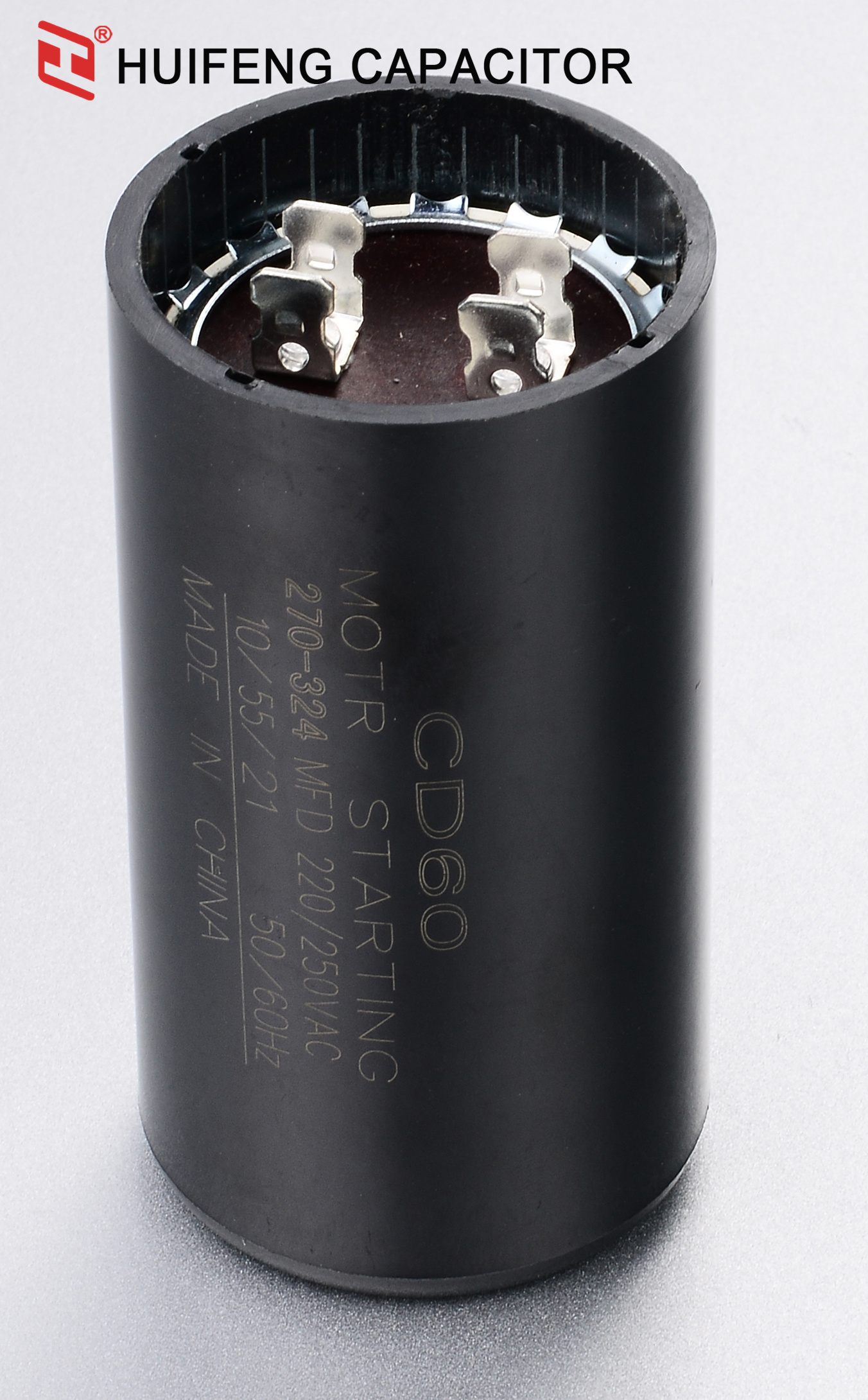
A motor capacitor certificate is a statement about a defined product scope, not a general endorsement of everything a manufacturer sells. CQC certificate CQC09006039887 covers CD60 series A.C. motor aluminium electrolytic capacitors at 250 VAC, 50 μF to 500 μF, ±15%, and is registered for the EU market. The CBB60 motor run capacitor is not listed in its scope. For buyers, that single boundary decides which document answers which question in a project file.
Why certificate scope has become a procurement question
In a single-phase motor platform, the capacitor is one of the cheapest items in the bill of materials and one of the fastest routes to a warranty claim. It is matched to the motor winding, to the control assembly and to the working condition, and a mismatch usually surfaces as a start failure or a short service life rather than as an obvious defect at goods-in inspection.
Because of that shared risk, most procurement teams already ask for certificates. The weakness sits in how those documents are read. A certificate number and a certification body logo are easy to record; the scope line — product family, rated voltage, capacitance window, tolerance — is what actually tells a buyer whether the document applies to the item on the purchase order.
CQC certificate CQC09006039887 is a useful example precisely because its scope is precise. It names the CD60 series A.C. motor aluminium electrolytic capacitor at 250 VAC, from 50 μF to 500 μF, with ±15% capacitance tolerance, and the registration is recorded for the EU market. A CBB60 motor run capacitor belongs to a different product family, and the certificate does not list it. Both statements are ordinary. The risk is that a buyer reads the first and assumes the second.
What CQC09006039887 states, line by line
Read as a scope statement rather than as a marketing claim, the certificate is deliberately narrow.
| Field | Scope recorded |
|---|---|
| Certificate number | CQC09006039887 |
| Product family | CD60 series A.C. motor aluminium electrolytic capacitors |
| Rated voltage | 250 VAC |
| Capacitance range | 50 μF to 500 μF |
| Capacitance tolerance | ±15% |
| Market registration | EU market |
| CBB60 motor run capacitor | Not listed in the scope |
Three features deserve attention. The product family is CD60, an aluminium electrolytic start capacitor built for short-duration starting service rather than continuous running. The electrical window is fixed: 250 VAC, 50 μF to 500 μF, ±15%. And the market registration is recorded for the EU market, which is a market statement — it tells a buyer where the registration is filed, not what the capacitor will do inside a particular motor.
Why the CBB60 run capacitor is a different scope
The two families are often discussed together because they are frequently bought together for the same pump or appliance platform. Technically they are different products, with different construction, different family standards and different electrical behaviour.
- Dielectric and construction. The CBB60 uses metallized polypropylene film in a plastic case. The CD60 uses aluminium foil and electrolytic paper, with the core vacuum impregnated with electrolyte, in an aluminium case.
- Function. The CBB60 is a continuous-duty run capacitor. The CD60 is a start capacitor intended for short-duration starting service. The two are not interchangeable.
- Family standard. The CBB60 specification references GB/T3667.1-2016; the CD60 specification references GB/T3667.2-2016.
- Capacitance range. CBB60 covers 1 μF to 150 μF; CD60 covers 50 μF to 1500 μF.
- Tolerance. CBB60 is stated at ±5%; CD60 is stated at ±15% and also −10 to +20%.
- Voltage range. CBB60 is offered at 250/300 VAC, 320/370 VAC and 400/450 VAC; CD60 at 125 VAC, 200/250 VAC and 300/330 VAC.
None of this is a quality ranking. The point is documentary. A certificate written for one family does not transfer to the other, however similar the two products look in a catalogue photograph or however often they ship on the same pallet.
The wider standards picture supports the same reading. IEC 60252-1:2010, the general standard for AC motor capacitors, describes its own scope in terms of capacitors connected to the windings of asynchronous motors supplied from a single-phase system at frequencies up to and including 100 Hz, with paper, plastic-film or combined dielectrics and rated voltages up to and including 660 V. A standard defines a field; a certificate defines one assessed product scope inside that field. Buyers need both, and they are not interchangeable documents.
Matching the scope against the CD60 catalogue
Scope matching is a comparison exercise rather than a reading exercise. The certificate window has to be laid directly against the ratings actually ordered.
| Parameter | CD60 catalogue range | CQC09006039887 scope | Consequence for the buyer |
|---|---|---|---|
| Capacitance | 50 μF to 1500 μF | 50 μF to 500 μF | Ratings above 500 μF sit outside the certificate |
| Rated voltage | 125 VAC, 200/250 VAC, 300/330 VAC | 250 VAC | 125 VAC and 300/330 VAC variants sit outside the certificate |
| Tolerance | ±15%; −10 to +20% | ±15% | The ±15% build aligns; other tolerance bands need separate confirmation |
| Enclosure and leads | Aluminium case, cable or wire leads | Aluminium electrolytic construction | Lead style is a purchasing choice, not a change of scope |
The practical outcome is simple. A 250 VAC, 400 μF CD60 start capacitor sits inside the scope. A 250 VAC, 600 μF unit, or a 125 VAC unit of the same family, does not. The supplier may well build both — the CD60 range extends to 1500 μF — but the certificate on file only answers for the first. That gap is a documentation task, not a reason to reject the supplier.
Where the CBB60 evidence sits instead
If the bill of materials calls for a CBB60 run capacitor, the CQC certificate is the wrong document to file against it — not because the product is weaker, but because the certificate says nothing about it. The question then becomes which documents do speak to that line item.
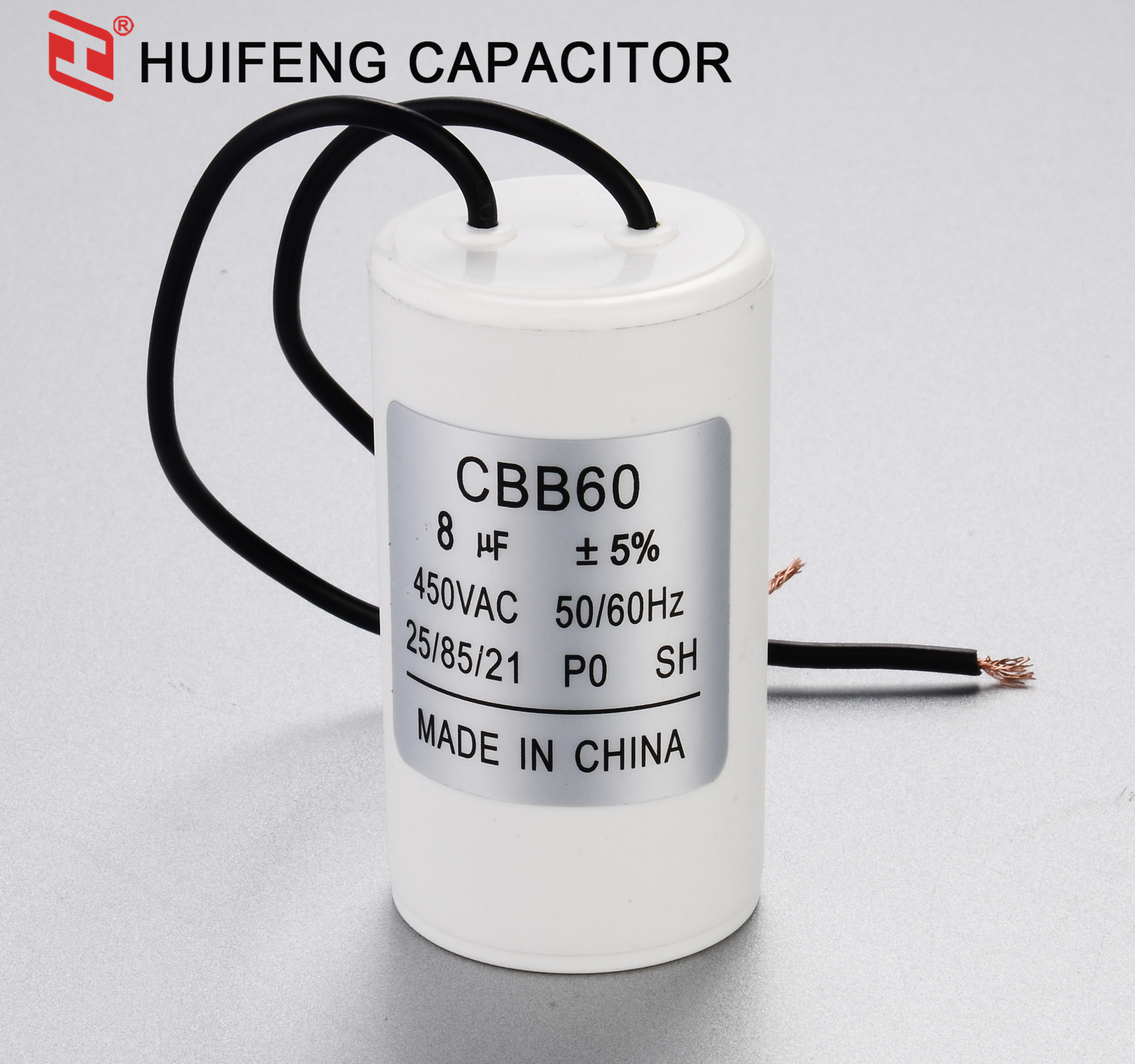
A CBB60 requirement should be backed by its own evidence set. That typically means a separate product-testing record — for example TÜV Rheinland certificate R 50500943, which is listed in TÜV Rheinland's Certipedia database — together with substance-compliance evidence such as RoHS certificate G170323Z38EN, and a management-system record such as ISO 9001 certificate 25024Q10313R1M. Each document answers a different question, and none can substitute for another.
| Document type | Example reference | Question it answers | Question it does not answer |
|---|---|---|---|
| Product certificate with a named scope | CQC09006039887 | Whether a defined CD60 rating was assessed, and where the registration is filed | Whether any other family or rating was assessed |
| Third-party product testing | TÜV Rheinland R 50500943 | Whether CBB60 product testing was carried out and recorded by that body | Batch-level uniformity of every shipment |
| Substance compliance | RoHS G170323Z38EN | Restricted-substance status of the declared material set | Electrical performance, tolerance or service life |
| Management system | ISO 9001 25024Q10313R1M | Whether a quality management system is certified | Conformity of any individual product or rating |
Reading those four rows together is the whole discipline. A buyer who files only the CQC certificate against a CBB60 order has an evidence gap that stays invisible until an audit, a customer questionnaire or a field failure forces the question.
Application fit: water pump motor projects
Taizhou Huifeng Electron Co., Ltd., founded in 1993 and based in Wenling, Zhejiang Province, China, manufactures metallized film, CBB and CD series capacitors for industrial and appliance applications, with Europe and Asia among its main markets. Its documentation matters here because the CBB60 is the family most often specified alongside water pump motors and motor control assemblies, where the capacitor functions as storage and protection in capacitor start/run projects.
The working conditions explain why a run capacitor is specified separately from a start capacitor. Water pump motor applications are described as high-temperature, continuous power-on environments, with requirements for high insulation, stable capacitance, anti-aging behaviour and long service life under continuous operation. The CBB60 specification covers 1 μF to 150 μF at 250/300 VAC, 320/370 VAC or 400/450 VAC, ±5% capacitance tolerance, climate categories 25/70/21 and 40/85/21, and compliance with GB/T3667.1-2016.
A field record shows the same split in practice. A wholesaler ODM customer in the Middle East has taken 100,000 units of the CBB60 run capacitor for water pump and motor applications over a two-year supply period, with stable performance and no negative reviews reported. That is a delivery record, not a certificate: it speaks to consistency, not to scope. A project file needs both kinds of evidence, and one should never stand in for the other.
For mixed bills of materials, the rule that follows is straightforward. Where the line item is a CD60 start capacitor at 250 VAC and between 50 μF and 500 μF, CQC09006039887 is the matching document. Where the line item is a CBB60 run capacitor, or a CD60 rating outside that window, the buyer should request the evidence that actually names that rating — before the order is placed, not after the audit.
Market context: modest growth, higher cost of documentation error
Maximize Market Research values the global motor capacitor market at approximately USD 24.04 billion in 2025 and projects a compound annual growth rate of 4.77% between 2025 and 2032. A growth rate of that order describes a mature market: demand tracks appliance, HVAC and pump production rather than displacing it, and price competition stays constant.
In that environment, documentation discipline is one of the few differentiators that does not require new capital equipment. A supplier that separates CD60 and CBB60 documentation clearly shortens the buyer's qualification work. A supplier that presents one certificate as if it covered both lengthens it — or, worse, defers the gap until an audit surfaces it.
Scoped documents compared with the certificate-folder approach
The traditional approach is a folder. A supplier compiles certificates, test reports and system registrations into a PDF bundle, and the buyer attaches the bundle to the supplier record. It is fast, it looks complete, and it defers the only question that matters at audit: which document covers which line item.
- Line-item linkage. A folder has none; a scoped file maps each capacitor line to a named document with a stated window.
- Audit readability. A folder forces the auditor to re-derive the mapping; a scoped file lets the auditor check it in one pass.
- Variant control. A folder hides the difference between a 400 μF and a 600 μF CD60; a scoped file marks the second one as uncovered.
- Maintenance. A folder is refreshed when someone remembers; a scoped file has an owner per document and a review date.
The scoped approach also has a real cost and a hard boundary. A certificate scope is fixed at the moment of issue: if a project needs a CD60 rating above 500 μF, or a 125 VAC or 300/330 VAC variant, the existing certificate cannot be extended by explanation, correspondence or supplier reputation. A separate test report or a different certificate is required, and obtaining one takes time that a project schedule may not have. The same logic applies to markets. A registration recorded for the EU market does not by itself establish compliance with every requirement applicable in that market, and it says nothing about other destinations. Buyers should map documents to the market their own product ships into, and accept that some answers will arrive after the purchase order rather than before it.
A six-step evidence check for the project file
- Fix the specification first. Record family (CBB60 or CD60), rated voltage, capacitance, tolerance and enclosure before any document is requested.
- Read the scope line, not the cover. Product family, rated voltage, capacitance window and tolerance are the four fields that decide applicability.
- Check the registration market. Compare it with the destination market of your own finished product, not with the supplier's export list.
- Separate document types. Product certificate, third-party test, substance compliance and management system answer four different questions.
- Request scope-matched evidence early for any rating outside the certificate window, so the answer arrives before the order is released.
- Keep the mapping in the purchase record. The next audit should read the same file the same way.
Future outlook
Two directions are worth watching. The first is verifiability. Third-party certificate databases such as TÜV Rheinland's Certipedia allow a buyer to confirm a certificate independently instead of relying on a scanned PDF, and as that check becomes routine, scope errors surface earlier. Suppliers with clean documents gain from the shift.
The second is granularity. Capacitor families are already documented separately by construction, standard and function; the next step is documentation published at rating level, so that a 250 VAC 400 μF CD60 and a 250 VAC 600 μF CD60 are not presented with the same piece of paper. Buyers can ask for that now, even where it is not yet standard practice — the request itself tells a supplier which questions the market is starting to ask.
FAQ
Does CQC certificate CQC09006039887 cover CBB60 motor run capacitors?
No. The scope names CD60 series A.C. motor aluminium electrolytic capacitors at 250 VAC, 50 μF to 500 μF, ±15%. The CBB60 motor run capacitor is a different product family and is not listed in the certificate.
Which CD60 ratings fall outside CQC09006039887?
The CD60 specification covers 50 μF to 1500 μF at 125 VAC, 200/250 VAC and 300/330 VAC. The certificate is limited to 250 VAC and 50 μF to 500 μF, so ratings above 500 μF and the 125 VAC and 300/330 VAC variants fall outside it, and separate evidence is needed for those ratings.
What documents should a buyer request for a CBB60 order?
A separate product-testing record, for example TÜV Rheinland certificate R 50500943, together with substance-compliance evidence such as RoHS certificate G170323Z38EN and a management-system record such as ISO 9001 certificate 25024Q10313R1M. Each document should be checked for its own scope rather than treated as a general approval.
Is an ISO 9001 certificate a substitute for a product certificate?
No. ISO 9001 certificate 25024Q10313R1M certifies a quality management system. It does not state that any individual capacitor rating has been assessed against a product standard, and it cannot close a scope gap left by a product certificate.
Is a certificate registered for the EU market sufficient for EU market access?
The certificate records the registration market for the assessed scope. It is one item in a market-access file, and buyers should verify it against the requirements applicable to their own finished product rather than treating the registration alone as complete.
How does scope matching affect a water pump motor project?
Water pump motor applications pair a continuous-duty run capacitor with a start capacitor on the same platform. Where the CD60 start capacitor is rated 250 VAC and between 50 μF and 500 μF, CQC09006039887 matches that line item; the CBB60 run capacitor needs its own evidence, and so does any CD60 rating outside that window.
Capacitance, voltage, tolerance and climate-category data for the CBB60, CBB65 and CD60 families are collected in the Taizhou Huifeng Electron product brochure.
Tem questões ou precisa de mais detalhes?
Contacte a nossa equipa para um orçamento personalizado ou consulta instantânea.
Solicitar orçamento
Preencha o formulário abaixo e a nossa equipa entrará em contacto com uma proposta personalizada.
Chat direto do WhatsApp
Prefere conversar em tempo real? Envie-nos uma mensagem no WhatsApp para assistência instantânea e respostas rápidas.
- Obter orçamento personalizado
- Partilhar fotos ou documentos
- Discuta as suas necessidades diretamente
Geralmente responde em 5–30 minutos durante o horário de expediente.