
CSV410 Check Valve Fit for Water Treatment and HVAC Systems
Check valves rarely appear on the front page of a water treatment tender, yet they determine whether a pump is protected, whether a treated stream stays treated, and how often a maintenance team has to open a line. In water treatment and HVAC service, reverse flow is a contamination path and a mechanical risk rather than a minor nuisance.
The Stainless Steel Check Valve CSV410 is a stainless steel body check valve from EG Valves Manufacturing Co., Ltd, offered in wafer, lug and double flange configurations, with dual plate, single plate, wafer lift and threaded constructions available, across NPS 1/2” – 48” (DN15 – DN1200) and Class 150 – 1500 (PN10 – PN160). Its manufacturer lists water treatment, HVAC, oil & gas, petrochemical, power generation and industrial pipelines as target industries.
That breadth of configuration is exactly why the useful question is not whether the CSV410 is a capable check valve, but which configuration fits a given line — and which lines should be given to a different design. This article builds that scenario map for water treatment, HVAC and municipal utility duty.
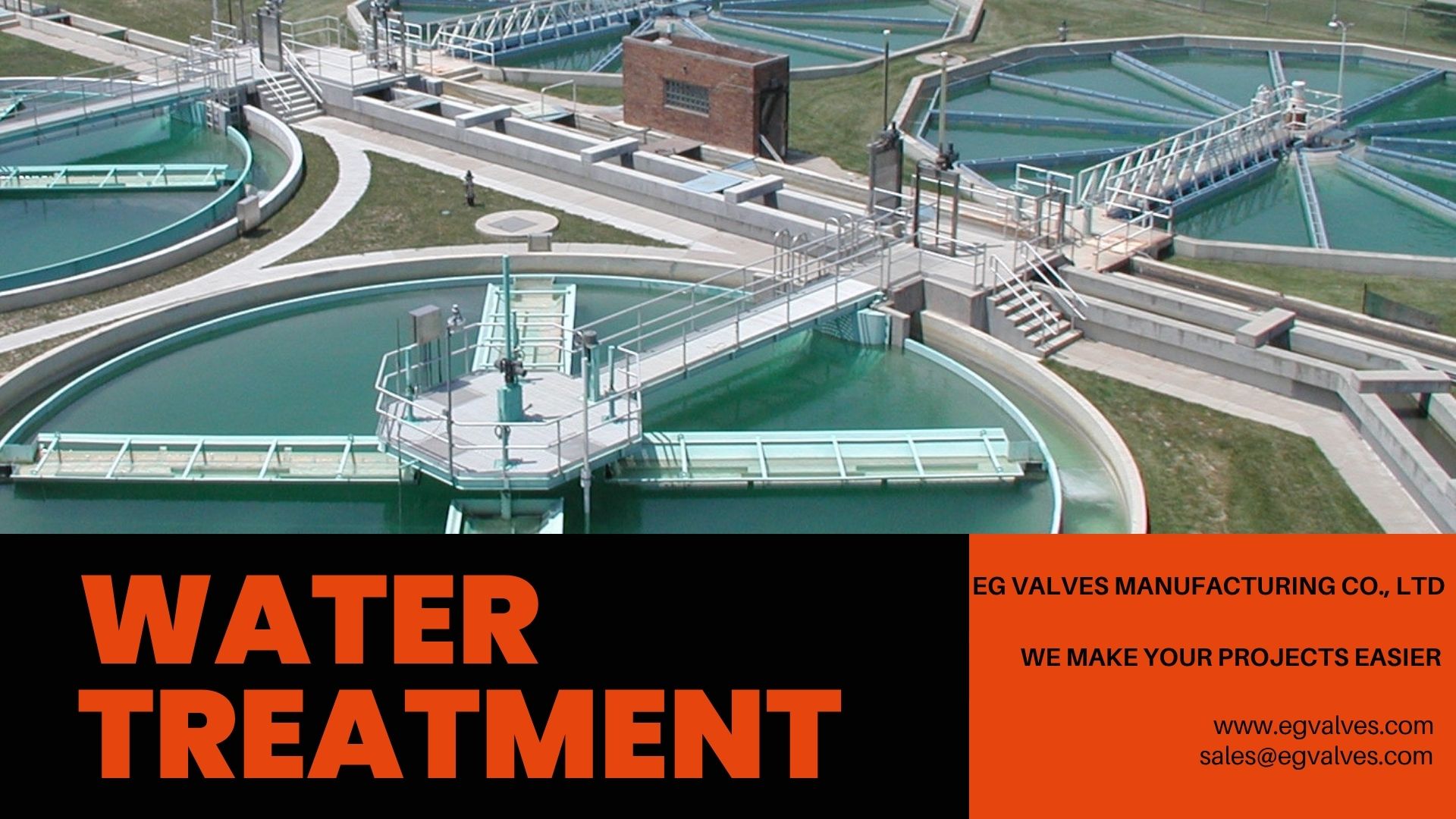
Water treatment and building services plants are the two largest application clusters for stainless steel check valves, but they impose very different service conditions on the same product family.
A Check Valve Is Not a Manual Valve — and That Shapes Selection
A check valve is self-actuated. It opens with forward flow and closes when flow reverses or stops, with no handwheel, lever, gearbox or actuator. In a treatment header or a plant room, the check valve is normally one component inside a manually controlled valve population that also includes manual gate valves for isolation, manual butterfly valves for compact shut-off, manual ball valves on small-bore and dosing lines, and strainers for debris protection.
When a project specification refers to a manual check valve, the practical meaning is a check valve installed in a manually operated, non-actuated piping system — not a valve with a handle. The distinction matters because a check valve cannot be adjusted, throttled or compensated for after installation. Its behaviour is entirely a function of body type, plate or disc construction, spring, seat finish, installation orientation and medium. Every scenario decision has to be made on paper, before the valve is bolted in.
The CSV410 in Its Own Terms
EG Valves Manufacturing Co., Ltd is a valve manufacturer established in 2000 in Wenzhou, Zhejiang Province, China, producing gate, globe, ball, butterfly, check and plug valves and strainers to ANSI, DIN, BS and JIS standards or to customer requirements. All valves are made under ISO 9001-certified processes, and the factories hold API 600, API 6D, CE and PED certifications.
The CSV410 is positioned within that range as the stainless steel body option in the check valve family, alongside the Cast Iron Check Valve CVI405, the Cast Steel Check Valve CVS407 and the Forged Steel Check Valve CVF409.
| Attribute | CSV410 specification |
|---|---|
| Product name / model | Stainless Steel Check Valve / CSV410 |
| Body material | Stainless steel, duplex steel, alloy steel |
| Body and installation types | Wafer type, lug type and double flange type, all optional |
| Disc constructions | Dual plate, single plate, wafer lift and threaded valves are all available |
| Closing spring | High torsion Inconel springs for quick closing |
| Sealing | Seat faces lapped for smooth finish and superior sealing |
| Disc assembly | Secured in place by high strength key |
| Cleaning option | Special cleaning for applications such as oxygen or chlorine |
| Size range | NPS 1/2” – 48”; DN15 – DN1200 |
| Pressure rating | Class 150 – 1500; PN10 – PN160 |
| Reported industries | Water treatment, HVAC, oil & gas, petrochemical, power generation, industrial pipelines |
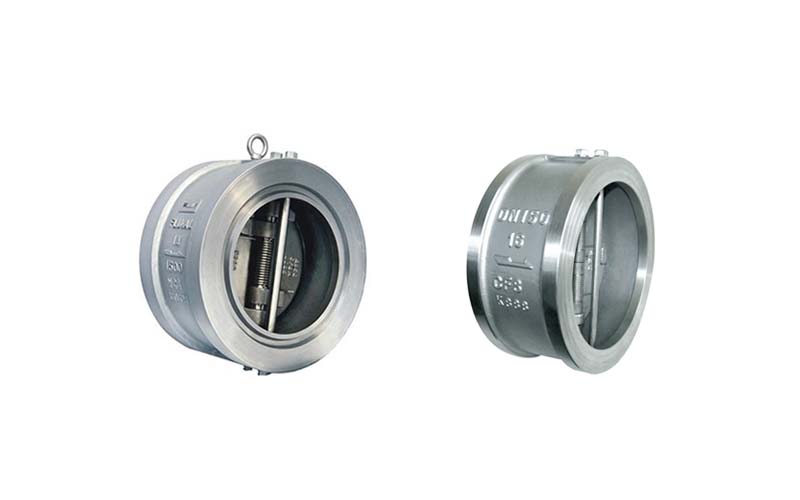
The CSV410 stainless steel check valve: multiple body and plate constructions share one material and sealing platform, which is what makes scenario mapping necessary rather than optional.
How the Construction Choices Behave in Service
Wafer, lug or double flange
The three body styles are not interchangeable conveniences; they answer different installation problems. A wafer body sits between two mating flanges and uses the flange bolts that already exist in the pipe run, which produces the shortest face-to-face dimension — valuable in plant rooms, skids and retrofit work where pipe spacing is fixed. A lug body carries threaded inserts so it can be bolted to a single flange, which is the usual answer where one side of the line cannot be flanged, for example at the end of a header. A double flange body presents two full flange faces and is generally specified where the line is large, where pipe loads and supports need to be considered, or where the valve is expected to be removed and refitted as a unit.
Dual plate, single plate, wafer lift and threaded
Plate construction controls how fast the valve closes and how much space the internals occupy. The CSV410 uses high torsion Inconel springs for quick closing; in dual plate configurations, the two spring-loaded half plates travel a short distance, so closure follows flow reversal closely instead of lagging behind it. That characteristic is why short-travel, spring-assisted check valves are commonly specified on pump discharge lines, where a slow-closing swing check can allow a significant reversal before the disc seats. Single plate and wafer lift constructions are used where the flow path and pressure class call for them, and threaded valves extend the same product family down to the smallest line sizes within the NPS 1/2” to 48” range.
Sealing, assembly and material
Lapped seat faces give a smooth, repeatable sealing surface, and the disc assembly is secured by a high strength key rather than by the seat contact alone — a construction detail that matters on lines with vibration. Stainless steel bodies are generally chosen where the medium is aggressive, where hygiene matters, or where the pipe material itself is stainless; cast iron and carbon steel remain common in neutral, low-pressure water lines. For oxygen or chlorine service, the CSV410 offers special cleaning, which addresses the contamination control requirement that ordinary utility valves do not meet.
Scenario Fit Map: Water Treatment, HVAC and Municipal Utilities
The same valve model can be well matched or poorly matched depending on four questions: what the medium carries, how corrosive the environment is, how often flow reverses, and how the valve is installed. The table below maps those questions to CSV410 configurations.
| Scenario | Service conditions | What decides the choice | CSV410 fit |
|---|---|---|---|
| Potable water treatment (purification) | Clean, safe and easy operating conditions with minimal hazards | Hygiene, continuous operation, sealing repeatability, low maintenance | Stainless steel body with lapped seat faces; wafer or lug body to suit existing flange spacing |
| Wastewater treatment | Smelly, humid environment with toxic gases and relatively harsh working conditions | Corrosion resistance, resistance to solids and fibrous debris, service access | Suitable for the corrosive liquid duty; where heavy solids or fibrous material dominate, a full-body swing or lift design such as the CVI405 is normally the safer engineering choice |
| HVAC chilled and condenser water | Continuous circulation, frequent starts and stops, limited plant-room space | Compact installation, quick closing response at pump discharge, quiet operation | Wafer or lug dual plate configuration between pump discharge flanges |
| Municipal utilities and water storage | Long service intervals, high cost of intervention | Durability, stable operation, consistent documentation | Stainless steel body where the water is treated or chlorinated; cast iron alternatives where the line is neutral and low pressure |
| Chemical dosing and oxygen or chlorine adjacent service | Contamination-sensitive, aggressive media | Cleaning regime, body material, sealing integrity | Special cleaning option with a stainless or duplex body |
Water treatment: clean lines and harsh lines in the same plant
Water treatment projects are frequently described as a single application, but purification and wastewater duty are different operating environments inside the same fence. Purification processes operate under clean, safe and easy conditions with minimal hazards. Wastewater treatment is designed around smelly, humid environments with toxic gases and relatively harsh working conditions. A plant specifying one check valve standard for both areas will either over-specify the clean side or under-specify the dirty side.
The practical split is medium-driven. Where the line carries treated, filtered or chlorinated water, a stainless steel body with lapped seats and a quick-closing plate assembly addresses sealing and hygiene directly. Where the line carries screened or partially treated fluid with solids, plate travel becomes the limiting factor, and the selection should shift toward a full-body design.
HVAC and building services
HVAC duty is defined by compactness and repetition rather than by aggressive media. Chilled-water and condenser-water loops run continuously, start and stop with the plant schedule, and place the check valve immediately downstream of a pump in a plant room where pipe spacing is fixed by the building, not by the valve. A wafer or lug body inside the NPS 1/2” – 48” range allows the check valve to be added to an existing flange pair with minimal pipe modification, and the Inconel spring closing behaviour keeps the closure response close to the flow reversal.
Municipal utilities and water storage
Utility projects judge valves over years rather than commissioning weeks. A relevant reference point is a Brazilian water treatment customer that received a total of 326 gate valves, butterfly valves and check valves in PN16, spanning DN40 to DN2000, for a water storage project. That installation has been in service for eight years, with the manufacturer reporting safe and reliable operation, smooth project operation and stable running with low noise. For procurement teams, the value of such a reference is not the volume alone but the combination of mixed valve types, a single supplier and a multi-year service record.
Limits, Trade-offs and Alternative Check Valve Designs
Scenario fit requires stating where a product stops being the right answer. Four boundaries apply to the CSV410.
- Solids-bearing wastewater. Dual plate and short-travel plate constructions depend on unobstructed plate movement. In services dominated by heavy solids or fibrous debris, a swing or lift design with a full body is generally more forgiving, because the disc movement is not enclosed between flange faces.
- Low-pressure cast iron systems. Many municipal water and drainage lines are Class 125 / PN10–PN16 cast iron systems. A stainless steel body at a high pressure class is not required there, and a cast iron or cast steel check valve may match the same duty with a simpler specification.
- Pressure and size ceilings. The CSV410 covers Class 150 – 1500 and PN10 – PN160 up to NPS 48” (DN1200). Above that envelope, or in very high pressure small-bore service, other models in the same family apply — the CVF409 forged steel check valve reaches Class 800 – 2500 and PN140 – PN320 but only to NPS 2” (DN50).
- Installation orientation and access. Wafer bodies rely on the mating flange pair, so end-of-line positions normally require a lug body. Maintenance planning should also assume the valve will be opened in place, which affects the space reserved around it.
| Model | Body material | Construction | Size range | Pressure rating | Reported industries |
|---|---|---|---|---|---|
| CVI405 Cast Iron Check Valve | Cast iron or ductile iron | Swing, wafer, lift and globe silent types available | NPS 1-1/2” – 24”; DN40 – DN600 | Class 125 / 150; PN10 / PN16 | Water & wastewater, HVAC, building services, municipal utilities |
| CVS407 Cast Steel Check Valve | Carbon steel, stainless steel, alloy steel, duplex steel | Bolted bonnet or pressure seal bonnet; one-piece disc construction | NPS 1-1/2” – 36”; DN40 – DN900 | Class 150 – 1500; PN10 – PN160 | Water & sewage treatment, HVAC, mining, power generation, irrigation, food & beverage |
| CSV410 Stainless Steel Check Valve | Stainless steel, duplex steel, alloy steel | Wafer, lug, double flange; dual plate, single plate, wafer lift, threaded | NPS 1/2” – 48”; DN15 – DN1200 | Class 150 – 1500; PN10 – PN160 | Water treatment, HVAC, oil & gas, petrochemical, power generation, industrial pipelines |
| CVF409 Forged Steel Check Valve | Forged carbon steel, stainless steel, alloy steel | Bolted or welded bonnet; full or reduced port | NPS 1/2” – 2”; DN15 – DN50 | Class 800 – 2500; PN140 – PN320 | Oil & gas, petrochemical, power generation, refining, high-pressure pipelines |
Within water treatment and HVAC, the comparison therefore reduces to two realistic choices. Where the medium is treated, chlorinated, or otherwise aggressive, and the line is inside a plant room or process area, the stainless steel CSV410 with a wafer or lug body is the direct fit. Where the medium is neutral, the pressure class is low, and the line is large, cast iron CVI405 and cast steel CVS407 remain the conventional selections — not because they are equivalent, but because stainless steel buys corrosion resistance that the service does not require.
Market Signals Behind Compact, Manually Controlled Systems
Check valve selection does not happen in isolation. The valves around it define the system, and the market data for manual and compact valve types provides useful context for utility and building-services buyers.
- The global manual valve market was estimated at USD 78.4 billion in 2025 and is projected to reach USD 117.17 billion by 2035, according to Vantage Market Research.
- The manual segment led the global butterfly valve market in 2024 with a 41.2% revenue share, attributed by Grand View Research to cost-effectiveness and simplicity.
- Wafer-type manual butterfly valves held the largest configuration share at 38.5% in 2025, per Dataintelo, a signal of how strongly compact wafer-body construction is preferred in the adjacent product families used in the same plants.
- Manual ball valves dominated the wider valve market with a 28.1% share in 2025 according to Precedence Research, driven by reliability in high-pressure applications.
- On the standards side, ASME B16.34 is the universal baseline for pressure-temperature ratings and wall thickness in industrial valves, while API 600 remains the specific heavy-duty standard for bolted-bonnet steel gate valves in petroleum and natural gas industries.
Procurement Checklist for Check Valves in These Sectors
A scenario map is only useful if it converts into orderable questions. The following checklist reflects the CSV410 configuration data and the documentation that EG Valves provides.
| Decision point | What to confirm |
|---|---|
| Medium | Treated water, wastewater, chilled or condenser water, chemical dosing, or oxygen/chlorine adjacent service |
| Material and cleaning | Stainless steel, duplex steel or alloy steel body; special cleaning where oxygen or chlorine service requires it |
| Line size | Within NPS 1/2” – 48” (DN15 – DN1200); threaded construction for the smallest sizes |
| Pressure class | Within Class 150 – 1500 and PN10 – PN160 |
| End connection | Wafer, lug or double flange; end-of-line positions normally require lug |
| Plate construction | Dual plate, single plate, wafer lift or threaded, according to closing behaviour and solids content |
| Quality evidence | 100% inspection of every valve and EN 10204 3.1 Material Test Certificates to every order |
| System-level certifications | ISO 9001-certified processes; factory API 600, API 6D, CE and PED certifications |
| Commercial terms | Monthly capacity of 8,000 valves; lead time within 25–35 days; MOQ 1 pc for big size valves and 10 pcs for small size valves |
Future Outlook
Three forces are likely to shape check valve demand in water treatment and HVAC over the next decade. First, treated-water quality requirements continue to push stainless and duplex materials into lines that were historically cast iron and carbon steel. Second, building-services retrofit work — where plant rooms cannot be re-piped to accept longer valve bodies — favours compact wafer and lug constructions that fit existing flange pairs. Third, long municipal asset lives put a premium on documentation and service evidence rather than on purchase price alone, which is consistent with the market growth projected for the manual valve category as a whole.
The practical consequence for buyers is that check valve selection will keep moving away from catalogue-level comparison and toward scenario-level justification: which construction, in which line, with which evidence.
Frequently Asked Questions
What service conditions make the CSV410 a suitable check valve choice?
The CSV410 is a stainless steel body check valve that its manufacturer lists for water treatment, HVAC, oil & gas, petrochemical, power generation and industrial pipeline service. In water treatment, purification processes operate under clean, safe and easy conditions with minimal hazards, while wastewater treatment involves smelly, humid environments with toxic gases and relatively harsh working conditions. A stainless steel body, lapped seat faces and a quick-closing plate assembly address corrosion and sealing in both cases, provided the medium does not carry heavy solids that would obstruct plate travel.
Which CSV410 body configuration suits an HVAC pump discharge line?
A wafer or lug configuration is normally used, because both fit between existing flanges and require the least pipe modification in a plant room. The CSV410 is available in wafer, lug and double flange types across NPS 1/2” to 48” (DN15 to DN1200) and Class 150 to 1500 (PN10 to PN160). Lug bodies are the usual choice where one side of the line cannot be flanged, such as the end of a header.
Is stainless steel always the right check valve material for water and wastewater?
No. Stainless steel, duplex steel and alloy steel bodies are selected where the medium is aggressive or where hygiene matters. In low-pressure municipal lines built to Class 125 or PN10–PN16 cast iron systems, a cast iron or ductile iron check valve such as the CVI405 may match the duty. Above the small-bore range, the cast steel CVS407 covers Class 150 to 1500 and sizes to NPS 36” for water and sewage treatment duty.
What size and pressure ranges does the CSV410 cover?
The CSV410 covers NPS 1/2” to 48” (DN15 to DN1200) and Class 150 to 1500, or PN10 to PN160. Within that envelope, dual plate, single plate, wafer lift and threaded constructions are all available. Above the pressure ceiling, the forged steel CVF409 reaches Class 800 to 2500 and PN140 to PN320, but only up to NPS 2” (DN50).
How is the CSV410 prepared for chlorine or oxygen service?
The CSV410 offers special cleaning for applications such as oxygen or chlorine. Combined with a stainless steel, duplex steel or alloy steel body and lapped seat faces, this addresses the contamination control requirement that standard utility valve finishes do not meet. The cleaning requirement should be stated at enquiry stage because it affects preparation, not the basic geometry of the valve.
What documentation should a buyer expect with a check valve order for a water project?
EG Valves builds a dedicated QC team that inspects 100% of every valve and provides EN 10204 3.1 Material Test Certificates to every order. Production runs under ISO 9001-certified processes, and the factories hold API 600, API 6D, CE and PED certifications. Products are manufactured to ANSI, DIN, BS and JIS standards or to customer requirements, and technical guidance is provided to support integration into existing systems.