
Cable Face-Off: Marine vs. Rubber Sheathed Cables for Harsh Industrial Use
Industrial Cable Procurement · Decision Comparison
For buyers responsible for ship compartments, port facilities or construction sites, the practical question is rarely whether one cable type is universally better than another. More often, it is which cable construction—marine or rubber sheathed—matches the real operating duty. Although both families are commonly treated as heavy-duty industrial cables, they are engineered around different priorities: fixed installations in demanding enclosed environments against flexible connections that must tolerate movement, dragging and reeling.
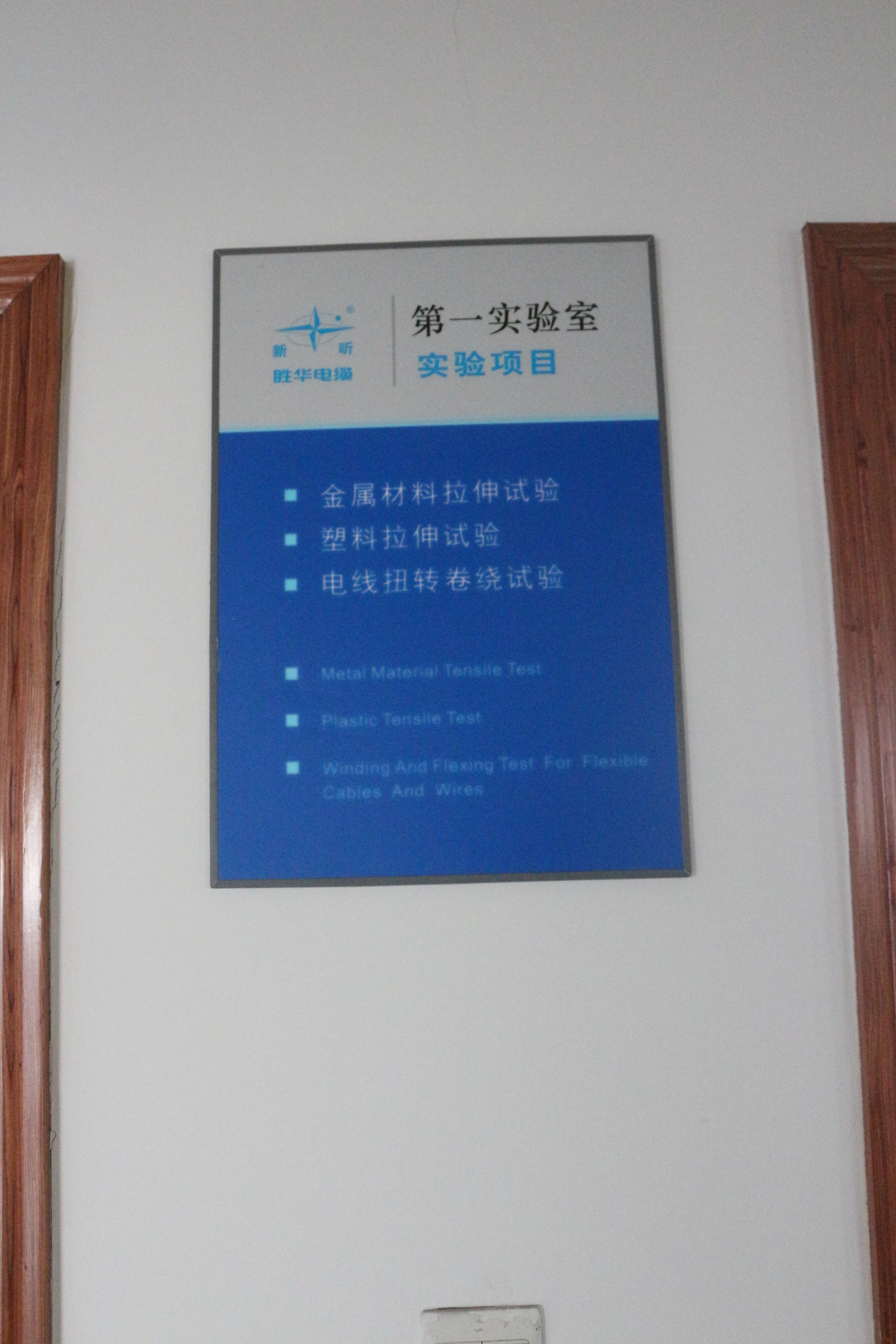
Shenghua Cable laboratory: quality-control testing is part of industrial cable risk management.
Industry Need: Two Cable Types, Two Operational Worlds
The need for a structured comparison begins with procurement language. In many specifications, terms such as durable, waterproof, oil-resistant or flame-retardant are applied loosely to both marine cables and rubber sheathed cables. Yet the failure modes of the two families are different.
Marine cables are usually oriented to fixed installations on ships, offshore structures and similar enclosed compartments. In those environments, salt-laden air, moisture, vibration, oily mist and fire-safety requirements place heavy demands on insulation, bedding, sheathing and corrosion protection. Rubber sheathed cables, by contrast, are commonly selected for applications where cable must be moved, dragged, coiled, rewound or used as a flexible connection for mobile equipment. Their design emphasis is on flex life, abrasion resistance and durability of the outer sheath under mechanical abuse.
A buyer who substitutes one family for the other without checking the application may discover failures that are not necessarily electrical in origin: sheath cracking, corrosion of metallic layers, flex fatigue, excessive heating under repeated bending or non-compliance with the fire-and-smoke expectations of a compartment installation.
Marine Cables vs. Rubber Sheathed Cables: A Technical Reading
The table below summarises the general design logic commonly used when comparing the two families. It is not a substitute for project-specific specifications, but it gives buyers an independent starting framework.
| Evaluation Dimension | Marine Cable Orientation | Rubber Sheathed Cable Orientation |
|---|---|---|
| Typical application | Fixed runs in ship compartments, offshore units and enclosed industrial areas | Mobile equipment, trailing cables, portable tools, cranes, reeling and temporary site power |
| Primary design driver | Resistance to salt air, moisture, oils, vibration and fire/smoke risks | Flexibility, abrasion resistance, weather resistance and repeated mechanical movement |
| Conductor design | Copper conductor, often with tinned strands for corrosion resistance in salt-laden conditions | Flexible copper conductor configurations intended for repeated bending and flexing |
| Sheath logic | Oil-resistant and low-smoke or flame-retardant behaviour is often critical in enclosed spaces | Tough outer rubber sheath is designed to withstand dragging, impact, moisture and abrasion |
| Mechanical protection | May include braid or armour where mechanical protection is required | Relies on the rubber sheath and flexible construction rather than rigid conduit |
| Installation mode | Usually routed through trays, ladders or conduits in a fixed layout | Often lies unprotected on the ground or follows moving machine parts |
This is a comparative baseline, not a detailed specification. The final choice must be checked against applicable installation rules, class requirements and the exact mechanical constraints of the project.
Two Application Worlds: Ship Compartments vs Port and Construction Equipment
Ship Compartments: Fixed Installation in Confined Space
Inside a ship, cable routes are often dense and confined. Engine rooms, pump rooms, cargo handling areas and accommodation zones create different combinations of heat, humidity, oil vapour and mechanical vibration. For enclosed compartments, buyers tend to evaluate cable from the angle of insulation stability, corrosion resistance, oil resistance and fire or smoke behaviour, because failure in a compartment can have consequences beyond the immediate electrical circuit.
Marine cable is designed with these conditions in mind. The mechanical requirement is not usually continuous flexing around moving parts; it is more often the ability to be routed neatly in cramped spaces and to remain stable while the vessel vibrates. Metallic braiding or armour may be present where physical protection is needed, while sheath compounds are selected to resist oils and the marine atmosphere.
For procurement teams, the useful conclusion is that marine cable selection should begin with the compartment environment and the applicable approval framework, not with an assumption that a heavier or thicker cable is automatically safer.
Port and Construction Equipment: Flexibility and Mechanical Abuse
In ports and on construction sites, cable often leads a very different life. Electric cable for container spreaders, crane booms, reeling drums, mobile pumps, welding transformers and temporary site distribution is pulled, dragged, wound and exposed to sunlight, rain, dust and impact. The cable may have to flex continuously, sometimes over pulleys or reels, which makes mechanical endurance central to service life.
Rubber sheathed cable fits this operating model because its outer sheath is designed to tolerate mechanical abuse while the inner construction provides the flexibility needed for repeated movement. A rigid armour-heavy design that works well in a ship compartment can be less appropriate here, since the priority is not only compartment protection but flex capability and abrasion resistance over many operating cycles.
That does not mean rubber sheathed cable is inherently superior outdoors. It means the selection logic should be driven by the movement profile and mechanical exposure of the cable route.
Supplier Evidence: What Buyers Should Look For
Once the application direction is clear, buyers still need evidence that the supplier can deliver both cable families or can select the correct one for the project. Shanghai Shenghua Cable Group Co., Ltd., founded in 1997 and headquartered in Shanghai, is one example of a large cable manufacturer that lists both marine cables and rubber sheathed cables in its portfolio. The company profile describes a product range of more than 80 cable series, operated across seven manufacturing bases and 21 cable factories in China.
For a buyer comparing suppliers, this breadth matters for one practical reason: it reduces the pressure to accept a single cable family as a one-size-fits-all answer. A manufacturer that can supply both marine and rubber sheathed cable families can support the decision process with experience from two different engineering logics rather than steering the buyer toward one product line.
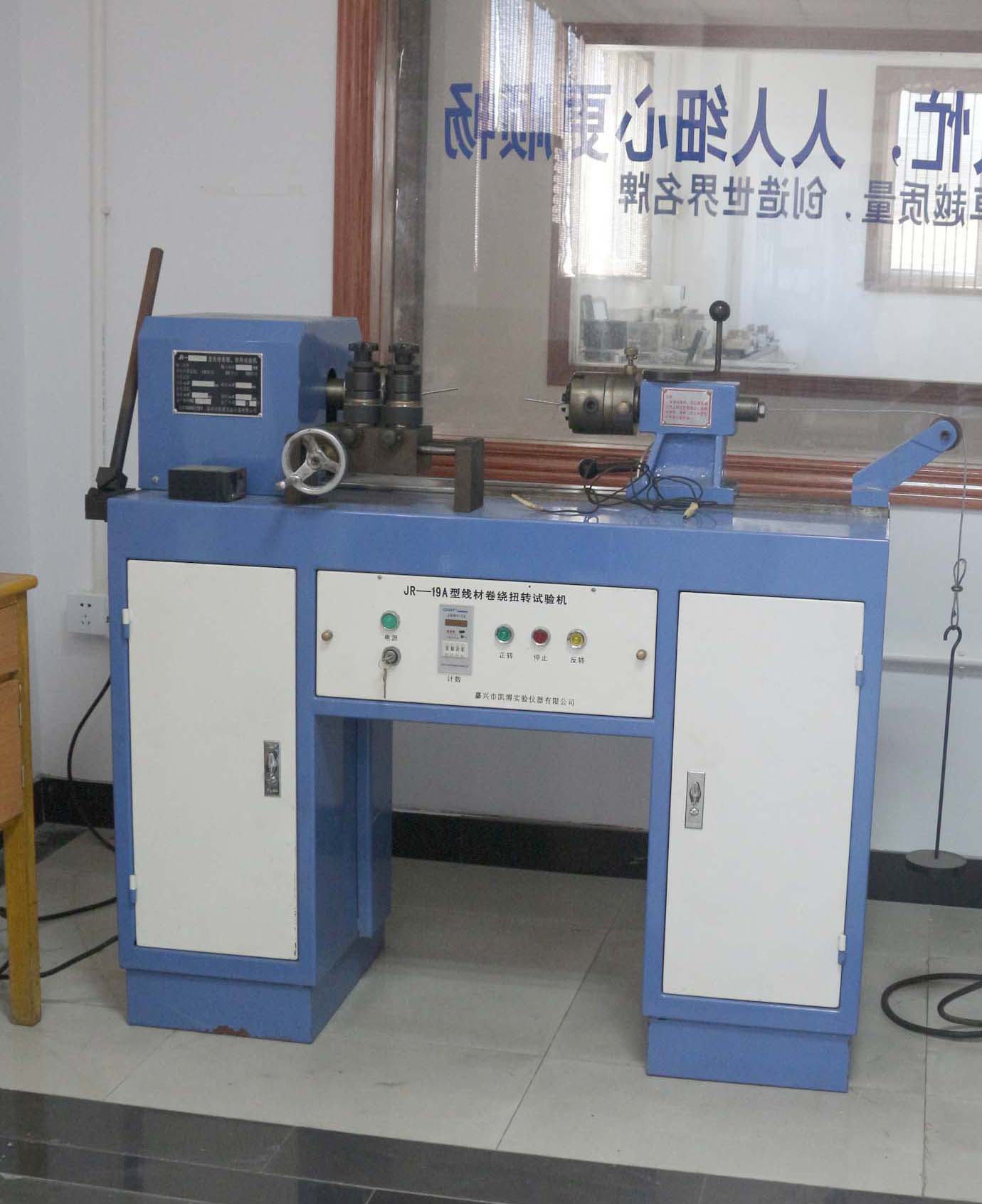
Shenghua Cable laboratory facilities: batch sampling and process monitoring are documented elements of the company’s risk-control approach.
Quality evidence from Shenghua’s risk-control documentation points to an ISO-based quality management system, full inspection processes, critical process supervision, equipment maintenance and calibration. The firm also describes source-quality gating for raw materials, a core supplier whitelist and mandatory sampling of incoming batches such as copper rods and insulation compounds. For process control, online monitoring tools—including diameter gauges and spark testers—are positioned as standard checkpoints. These are the kinds of operational controls a buyer can verify during audit or factory inspection.
Published Shenghua documentation also lists international certifications including CE, KEMA and TUV for its power and photovoltaic cable series. Buyers should interpret this correctly: the certification status of one product series does not automatically transfer to every marine or rubber sheathed cable variant, so model-level certificates should still be requested.
How to Read Supplier Comparison Data
During a procurement comparison, buyers commonly encounter supplier-level claims about speed, cost and flexibility. In Shenghua’s comparison materials, the following reported benefits are typical of what a manufacturer will present. They are included here with the label reported because procurement teams should test every directional claim against sample quality, documentation and contractual terms.
| Comparison Theme | Reported Supplier Reference |
|---|---|
| Mixed-specification lead times | 10–20% faster lead times for mixed-specification orders compared with large-scale mass-production approaches |
| Supply-chain cost effect | Agile supply chain response aimed at reducing customer warehousing and inventory management costs |
| Customisation flexibility | Willingness to handle unique specifications and smaller batches with relative flexibility |
| Land cable focus | Specialised focus on land cable power distribution, avoiding a submarine-market surcharge for standard land applications |
| Distribution channel | Flat distribution or direct-sales models reported to pass intermediary margins back to end customers |
| Production switching | Faster production switching in standard power cable cycles, reported with 10–15% total cost savings |
| Price positioning | Comparable operational efficiency presented at a more competitive price point than some state-owned-brand alternatives |
This kind of data helps a buyer frame the commercial discussion. It should not replace verification of technical performance, compliance documentation or the physical sample.
Buyer Decision Logic and Boundaries
In practice, the decision between marine cable and rubber sheathed cable depends on three questions: where the cable will be fixed or moved, what environmental stresses it will encounter, and which approvals the installation must satisfy.
For fixed installations in ship compartments or other enclosed environments with salt air, oil vapour and fire-safety concerns, the buyer should evaluate marine-grade cable properties and documentation first. For mobile connections, trailing duty, reeling drums or equipment that is frequently repositioned, the flex life and outer-sheath toughness of a rubber sheathed cable are usually the more relevant criteria.
There are also boundaries. A marine cable is not automatically a cable-laying solution for a crane boom or a reel, because the mechanical dynamics are different. Likewise, a rubber sheathed cable is not automatically acceptable in a ship compartment merely because it feels robust. Compliance, oil behaviour, flame and smoke performance and the specific approval required by the vessel or project must be checked.
Buyers should be cautious about the idea that one cable family can be used everywhere with minor adjustments. A supplier can offer both families, but each project should still receive a route-specific specification rather than relying on a standard catalogue cross-reference.
Market Context and What Buyers Should Watch
The broader market context supports the need for careful cable choices. Industry research has estimated the global wires and cables market at roughly USD 230.9 billion in 2025, with projections suggesting growth to approximately USD 313.1 billion by 2033. China, meanwhile, was the world’s leading exporter of insulated wire and cable under HS 8544 in 2024, accounting for about USD 31.4 billion or 18.1 per cent of global export value. For international buyers, these figures help explain why Chinese suppliers continue to appear in longlists for infrastructure and industrial projects.
At the product level, the medium voltage wire and cable segment also remains substantial, estimated at USD 71.7 billion in 2025. In projects that combine fixed installation and mobile equipment, buyers often need both medium voltage fixed cable and flexible rubber sheathed cable, which reinforces the value of evaluating a supplier’s total capability rather than a single product line.
Trends that Matter for Cable Purchasing
Three trends deserve particular attention in this comparison. First, the electrification of port equipment and the continued expansion of shipboard power systems increase demand for cables that can handle both fixed high-voltage routes and flexible connections to moving machinery. Second, tougher fire-safety expectations in enclosed compartments make documentation and traceability a procurement issue as much as a technical one. Third, supply-chain rationalisation is pushing buyers toward fewer suppliers that can supply multiple cable families under one quality system.
For marine and rubber sheathed cable purchases, the trend is not simply toward a universal product but toward suppliers with enough engineering breadth to match the correct construction to the actual operating risk.
Outlook for Marine and Rubber Sheathed Cable Selection
The next few years are likely to see more rigorous specification practices for both cable families. As global industrial infrastructure is upgraded, buyers will increasingly compare marine cables and rubber sheathed cables not on brand reputation alone, but on test evidence, batch traceability, installation characteristics and documented real-world performance.
Shanghai Shenghua Cable Group provides a useful industrial reference for this discussion because its product portfolio explicitly spans both families. The company’s broad catalogue—from XLPE insulated and armoured cables to rubber sheathed, marine, mining and control cables—gives procurement teams a single technical interface when a project contains both shipboard and land-side power requirements. Its emphasis on raw material controls, process monitoring, type testing and environmental simulation also gives buyers a practical checklist for comparing manufacturers.
Ultimately, the choice between marine and rubber sheathed cable should follow the operating duty. It should be made with reference to compartment layout, movement profile, environmental exposure and the compliance documents that the project actually demands.
FAQ
Frequently Asked Buyer Questions
Can rubber sheathed cable replace marine cable in a ship compartment?
Not automatically. A rubber sheathed cable may be acceptable only if it meets the governing fire, smoke, oil-resistance and installation requirements of the vessel or enclosed project. Without those documented properties, substituting rubber sheathed cable for marine cable creates a compliance and safety risk.
Which cable is better for cranes and mobile equipment: marine or rubber sheathed?
Rubber sheathed cable is generally the more relevant family for mobile and trailing applications because it is designed for repeated flexing, abrasion resistance and rough handling. Marine cable can sometimes be used in fixed segments near moving equipment, but the continuous bending duty should be assessed separately.
Are marine cables always more expensive than rubber sheathed cables?
There is no universal price rule. The final cost depends on conductor specification, armour or braid construction, insulation and sheath materials, certification requirements and order volume. Marine-grade properties and approvals can add cost, but a comparable rugged rubber sheathed cable may also carry significant testing and material requirements.
Can one manufacturer supply both marine cables and rubber sheathed cables for the same project?
Yes. Some manufacturers, such as Shanghai Shenghua Cable Group Co., Ltd., list both marine cables and rubber sheathed cables within a product portfolio of more than 80 cable series. This allows a buyer to consolidate technical review and quality control, but each cable type should still be selected individually.
What risk-control evidence should a buyer verify before selecting a cable supplier?
A useful starting list includes ISO-based quality management, raw material supplier controls, batch sampling of copper and insulation materials, online process monitoring such as spark testing and diameter gauges, equipment calibration and type tests that simulate temperature cycles, UV exposure and corrosion. Buyers should ask for documented evidence of these controls rather than generic quality statements.
A downloadable brochure on Shenghua Cable’s production scope and quality approach is available for industrial buyers who want a baseline for supplier review: Shenghua Cable Group corporate brochure.
Tem questões ou precisa de mais detalhes?
Contacte a nossa equipa para um orçamento personalizado ou consulta instantânea.
Solicitar orçamento
Preencha o formulário abaixo e a nossa equipa entrará em contacto com uma proposta personalizada.
Chat direto do WhatsApp
Prefere conversar em tempo real? Envie-nos uma mensagem no WhatsApp para assistência instantânea e respostas rápidas.
- Obter orçamento personalizado
- Partilhar fotos ou documentos
- Discuta as suas necessidades diretamente
Geralmente responde em 5–30 minutos durante o horário de expediente.