
Cable Lug Specifications: Standards, Materials and Ratings
A cable lug is the connection hardware that terminates a prepared cable conductor at an equipment terminal, a busbar, or another conductor. In power distribution and electrical engineering projects, a cable lug is judged against three constraint families: the dimensional and material standard it follows, the conductor material and surface treatment it uses, and the cross-section and temperature window it must cover. Buyers working through research and evaluation usually need documented answers to all three before a purchase is confirmed.
The DT/SC copper cable lug supplied by Ningbo Tonyhoo Electrical Technology Co., Ltd. — an electrical technology manufacturer founded in 1997 in Ningbo, Zhejiang, China — illustrates how these constraints are published for review. Its documented parameters, certification coverage, and application scenarios give procurement teams a structured way to compare cable lugs for grid, industrial, and renewable energy projects.
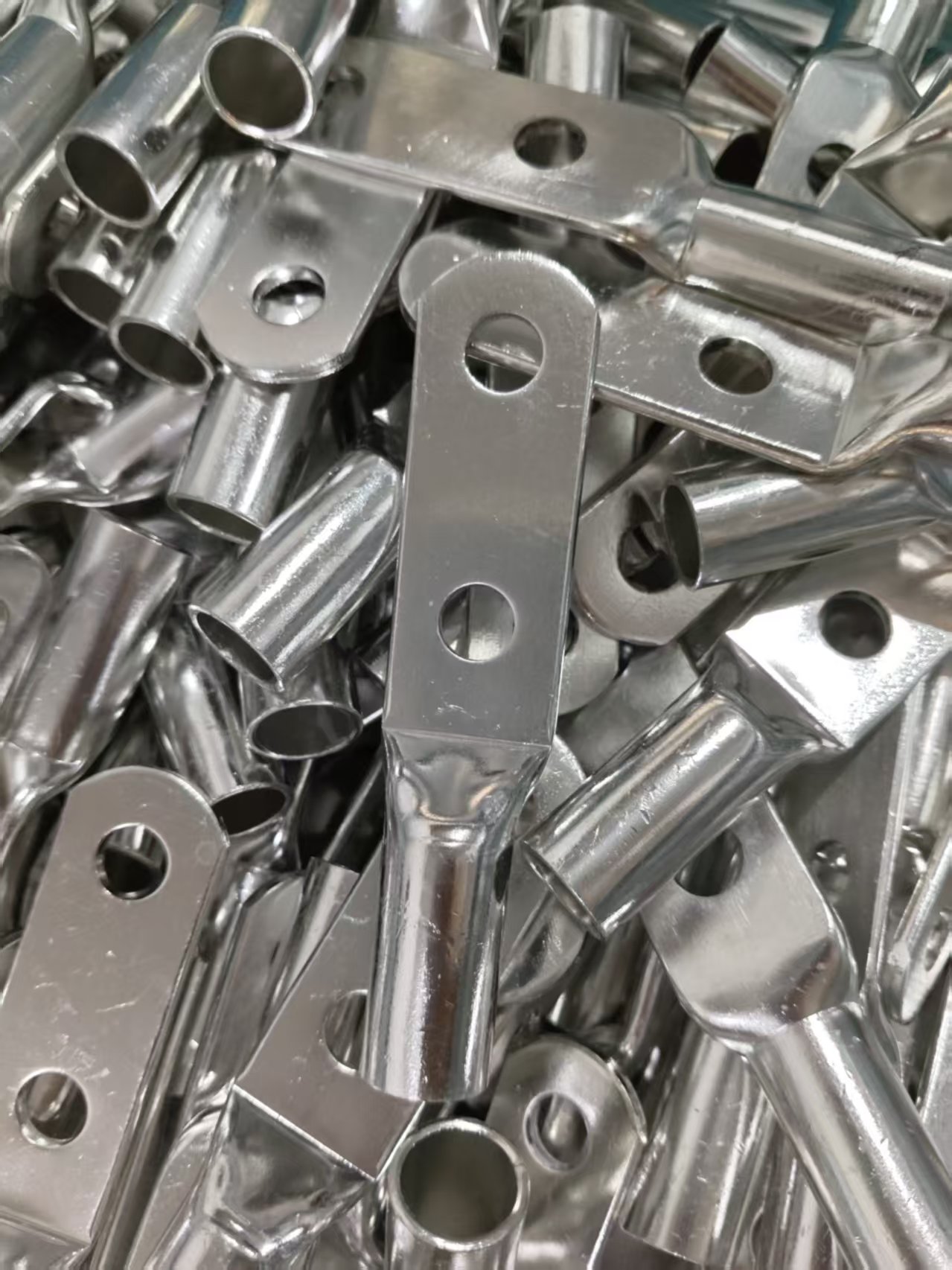
Cable Lug — copper termination hardware with a tin-plated contact surface.
Why cable lug specification is a procurement decision
A cable lug does not operate in isolation. It sits between the prepared conductor and the equipment it connects to, and that point concentrates electrical stress, mechanical load, and environmental exposure. Where the lug is mismatched to the conductor or to the terminal, the usual symptoms are elevated contact resistance, localized heating, and progressive surface corrosion — issues that rarely appear at commissioning but surface during long-term service.
Because of this, cable lug selection is rarely a catalogue exercise. It is a specification decision that ties the conductor cross-section, the material system, the applicable standard, and the operating environment into a single documented match. Buyers who treat it as a commodity purchase frequently discover at installation or during acceptance testing that one of those constraints was never confirmed.
The same logic applies across the broader cable accessories category. Voltage level, cable model, conductor cross-section, core count and installation environment are the parameters that suppliers need before a product can be matched correctly. For cable lugs, those parameters resolve into a narrower set: conductor material, cross-section range, standard, surface treatment, and working temperature.
What the DT/SC copper cable lug documents
The DT/SC cable lug is a copper termination product manufactured by Ningbo Tonyhoo Electrical Technology Co., Ltd. Its documented specification set covers the parameters that procurement and engineering staff typically verify before ordering.
| Parameter | Documented value |
|---|---|
| Product type | Copper cable lug |
| Model series | DT / SC |
| Material | Pure copper / tin-plated copper |
| Surface treatment | Tin plated |
| Cross-section range | 10–400 mm² |
| Standard | DIN / GB |
| Working temperature | -40 °C to 125 °C |
| Documented characteristics | High electrical conductivity, low contact resistance, corrosion resistance |
In practical terms, this specification set answers four buyer questions. First, whether the cable being terminated has a copper conductor within the 10–400 mm² range. Second, whether the project specification calls for a copper or tin-plated copper interface. Third, whether DIN or GB dimensional conventions are acceptable for the installation. Fourth, whether the continuous working temperature of the connection point stays within -40 °C to 125 °C.
What the tin-plated surface contributes
The DT/SC cable lug uses a tin-plated surface treatment on a pure copper or tin-plated copper body. The documented purpose of that layer is anti-oxidation and anti-corrosion protection. Copper oxidizes readily when exposed to air and moisture, and the resulting oxide layer increases contact resistance at the termination point. Tin plating limits that surface oxidation and helps the contact interface remain stable over time.
The same surface layer also contributes to corrosion resistance in humid, coastal, or otherwise aggressive installation environments. Combined with the documented high electrical conductivity and low contact resistance of the base material, this is the reason tin-plated copper remains a common choice for distribution and industrial terminations rather than bare copper alone.
Certification coverage for the DT/SC cable lug
For procurement teams, a documented quality management scope is often the first screen applied to a supplier. The DT/SC copper cable lug falls within an ISO 9001 quality management certification issued to Ningbo Tonyhoo Electrical Technology Co., Ltd.
The certification is issued by AMTIVO China Limited under ISO 9001:2015, with certificate number AMTIVO/CN/240246, valid from 13 August 2024 to 12 August 2027. Its stated scope covers the manufacture and sales of high-voltage cable accessories, including 110 kV and 220 kV intermediate joint protection housings and grounding boxes. Within that scope, the certification also applies to the manufacture and sales of the DT/SC Cable Lug models, along with the other listed product families.
The same quality system covers additional Tonyhoo cable accessory products, including Cold Shrink Intermediate Joint models JLS-10/1.1, JLS-10/3.3, JLS-35/1.3 and JLS-35/3.4; Cold Shrink Termination models NLS-10/3.3, WLS-10/3.3, NLS-35/1.3 and WLS-35/1.3; Heat Shrink Termination models SY10kV, SY26kV and SY35kV; Separable Connector model DS/SC; Environmentally Friendly Polyurethane Sealant models J-399, J-499 and J-699; Explosion-Proof Blanket models DS-FBT-10, DS-FBT-35, DS-FBT-110 and DS-FBT-220; and Oil-Immersed Transformer models S11-M, S13-M, S20-M and S22-M.
The company states that its products have been tested by the State Grid High Voltage Testing Center, SGS, or Shanghai Cable Research Institute and hold corresponding reports. Under its production capability documentation, quality control for cable accessories combines 100% factory electrical testing, partial discharge testing, and third-party inspection through SGS or TUV.
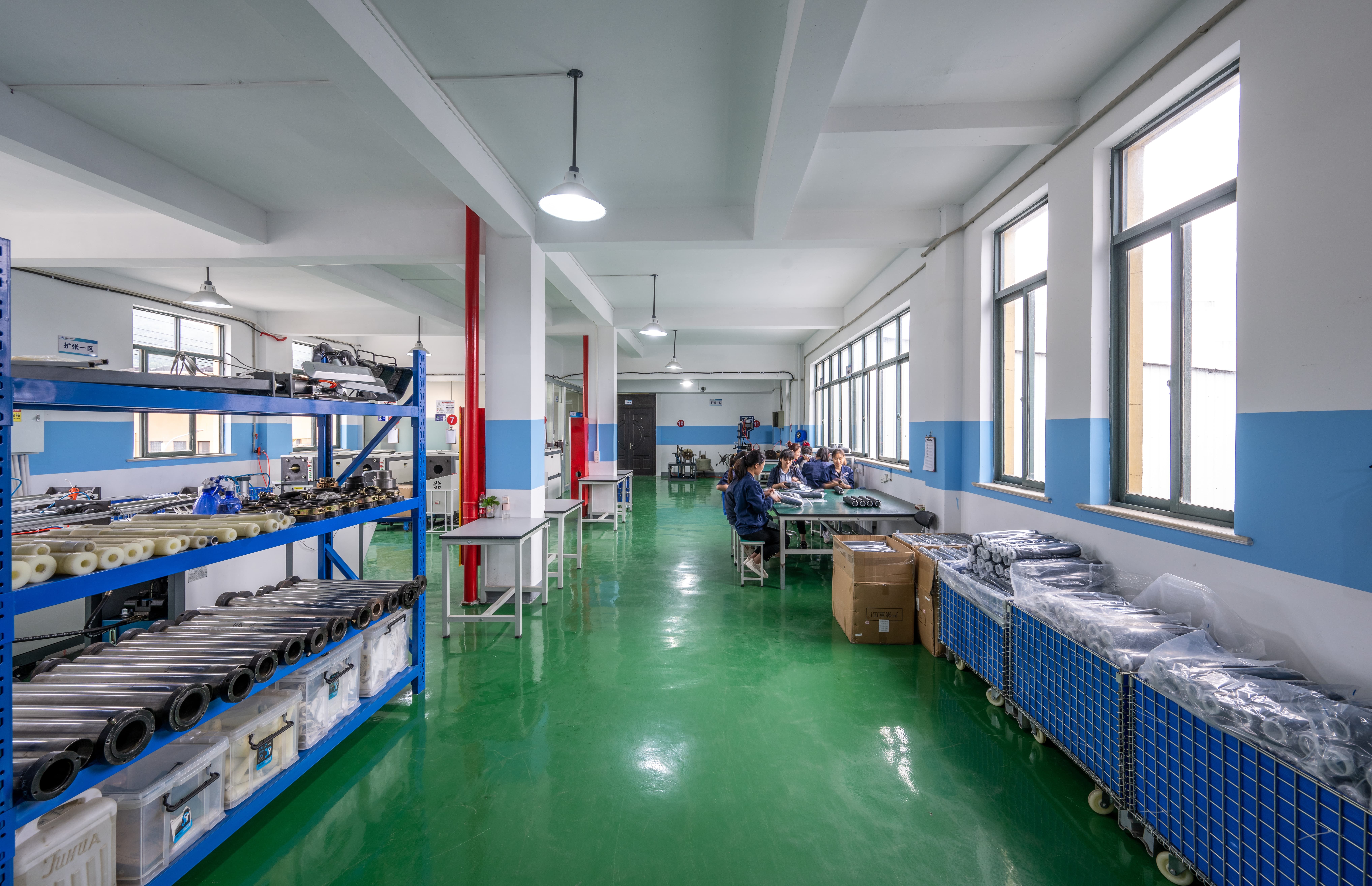
Assembly Workshop — cable accessory production and inspection.
Where cable lugs are used in power projects
The documented application profile for Tonyhoo cable accessories describes the operating conditions and project types that cable lugs are designed to serve. These conditions define the environmental constraints a buyer should confirm against their own project.
Working conditions include indoor cabinets, outdoor substations, underground cable trenches, high-humidity environments, salt-fog coastal areas, dust-polluted locations, and installations spanning a wide temperature range from -40 °C to 150 °C. Project types include power grid upgrades, wind and solar power station construction, urban underground cable reconstruction, and railway power supply projects.
The functional role of accessories in these environments is cable terminal insulation, cable connection, electric stress control, and moisture and dust sealing protection. The special requirements associated with this application profile are anti-salt-fog corrosion, anti-tracking behaviour, reliable sealing performance, and adaptation to harsh outdoor environments.
Cable lugs sit at the cable-connection end of that functional chain. Their documented applicable industries include power distribution, electrical engineering, manufacturing, and renewable energy. That alignment with grid, industrial, and new energy project types matters for buyers evaluating whether a supplier's product family can cover the full connection point, rather than only one component of it.
A documented project reference
A power engineering contractor in Albania received a combined supply of high-voltage cable accessories and DC lugs: 1087 pcs in 32 cartons for power grid construction. The documented project duration is 20 years, and the reported result was on-schedule delivery with stable operation after installation meeting local power system requirements. The highlighted factors were a combined accessory-and-lug solution, short lead time, and reliable electrical performance for European power projects.
For evaluation-stage buyers, this reference is most useful as an example of a combined accessory and lug shipment rather than as a standalone performance claim. The relevant procurement question is whether a single supplier can deliver the full connection package — lugs, terminations, joints and sealing — with consistent documentation.
Market context for cable accessory and lug demand
Cable lugs are a small but non-optional component within the wider cable accessories category. Commercial market research published by Global Market Insights places the global cable accessories market at USD 35.84 billion in 2025, with a projected value of USD 37.88 billion in 2026, covering power cable joints, terminations and connectors across low-, medium-, high- and extra-high-voltage classes.
The same source identifies Asia Pacific as the largest and fastest-growing region for cable accessories, driven by grid modernization. That regional concentration is consistent with where many cable accessory and material suppliers are now located, and it explains why buyers in Asia Pacific and in export markets frequently evaluate suppliers from the same region.
Two other standard-related developments shape how cable accessories and connection hardware are specified. IEEE 1816-2024 provides industry practices for the preparation of shielded cables rated 2.5 kV through 46 kV for mating accessories, which establishes a recognised baseline for cable preparation before any termination hardware is installed. Separately, higher-voltage accessory classes often carry their own product-specific qualifications: major manufacturers state that specific cold-shrink terminations are qualified to IEEE 48 Class 1 and, in some cases, meet or exceed IEEE 48 Class 1 for 69 kV and IEC 60840 for 72.5 kV outdoor applications.
For cable lugs specifically, the more common reference framework is dimensional and material standardisation — for the DT/SC range, DIN and GB — rather than the type-test categories applied to terminations and joints. Buyers should therefore expect lug documentation to focus on material grade, plating, cross-section range, temperature limits, and quality-management coverage.
Comparing cable lugs against other connection approaches
Cable lugs are one of several ways to terminate a cable conductor. The choice normally comes down to the conductor material, the required mechanical interface, the standard framework applicable to the project, and the installation environment.
A standardised copper lug such as the DT/SC series offers the advantage of a defined material and dimensional system: 10–400 mm² conductor range, DIN / GB standard, tin-plated surface, and a documented working temperature of -40 °C to 125 °C. It is a fully specified, repeatable component that can be ordered against a written parameter set, which is what makes it suitable for grid, industrial, and renewable energy projects where documentation is part of the acceptance package.
Its boundaries are equally defined. The DT/SC range covers copper conductors between 10 and 400 mm² under DIN and GB conventions. Projects that use aluminium conductors, cross-sections outside that range, or an alternative regional standard framework will need either a different product line or a confirmed custom specification. The documented working temperature of -40 °C to 125 °C is also a constraint: installations where the connection point is expected to operate outside that window require a different material or product class.
There is also an evidence boundary worth stating plainly. The performance characteristics recorded for the DT/SC lug — high electrical conductivity, low contact resistance, corrosion resistance — describe the material and surface behaviour of the product. Where a project requires site-specific verification such as salt-spray exposure data or thermal cycling results against a nominated standard, those should be requested from the supplier as part of the technical dossier rather than assumed from the catalogue description.
Customisation partially addresses these boundaries. Tonyhoo documents OEM, ODM and customised solution modes covering rated voltage, cable cross-section, material formula, packaging, logo printing and a special anti-corrosion version. Those options widen the applicable range, but they also extend lead time and require parameters to be confirmed before production rather than after.
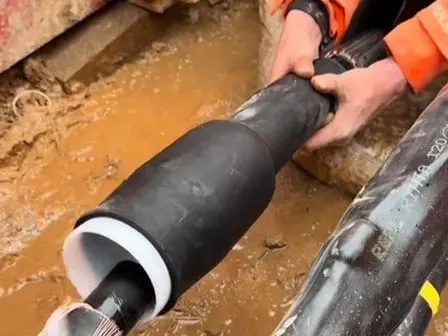
Cable Joint Installation — correct cable preparation and connection practice.
Supply and delivery considerations
Once the technical match is confirmed, procurement terms decide whether the supply itself is viable. Tonyhoo's documented production parameters include a monthly capacity of 12,000 sets, a lead time of 30–40 days, and a minimum order quantity of 10 sets. The company operates from a 9,900 m² facility with 100 employees, a 20-engineer R&D team, and an annual output of 200,000 units, with an export ratio of 50% and documented markets including the United States, Thailand, China, Albania and Vietnam.
Export coverage is documented for the EU, Southeast Asia, the Middle East, Africa and South America. After-sales support includes on-site installation guidance, remote technical support, and a 5-year product warranty.
For a buyer comparing cable lug suppliers, the practical reading of these figures is straightforward. A 30–40 day lead time and 10-set MOQ suit both project-based orders and smaller evaluation quantities. The 5-year warranty period and the availability of on-site installation guidance matter most in applications where cable preparation quality directly affects long-term termination reliability.
What buyers should confirm before ordering
Based on the documented parameter set, a cable lug order can be specified completely by confirming six items:
- Conductor material and cross-section, matched against the 10–400 mm² range.
- Applicable standard framework — DIN, GB, or a project-specific alternative.
- Surface treatment requirement — tin-plated for anti-oxidation and anti-corrosion protection.
- Continuous working temperature at the connection point, checked against -40 °C to 125 °C.
- Installation environment — indoor, outdoor, underground, high humidity, or coastal salt-fog exposure.
- Quality documentation required — ISO 9001 scope, third-party inspection reports, or site-specific test data.
When all six are confirmed against the supplier's written documentation, the cable lug purchase stops being an assumption and becomes a verified specification match. That is the practical difference between ordering a component and specifying a connection.
Future outlook
Grid modernization, renewable energy build-out, and urban underground cable reconstruction are the project categories that the documented application profile and current market data both point toward. With Asia Pacific identified as the largest and fastest-growing cable accessories region, and the broader category forecast to continue expanding from USD 35.84 billion in 2025 toward USD 37.88 billion in 2026, demand for standardised connection hardware such as copper cable lugs is likely to remain steady rather than cyclical.
The more meaningful shift for buyers is documentation. As projects increasingly require traceable certification scope, defined material grades, and third-party inspection evidence, cable lug suppliers will be evaluated less on price per piece and more on whether their parameter set, quality system, and customisation capability can be matched to a written project specification.
Suppliers that already operate a documented ISO 9001 scope across multiple cable accessory families — lugs, cold shrink joints, terminations, separable connectors, sealants, and protection housings — are positioned to support combined accessory orders rather than single-component purchases. For procurement teams, that is where the evaluation question is likely to move next.
Frequently asked questions
What parameters should be confirmed before ordering a cable lug?
Confirm the conductor material and cross-section, the applicable standard, the surface treatment, the continuous working temperature, and the installation environment. For the DT/SC cable lug, the documented parameters are copper or tin-plated copper material, a 10–400 mm² cross-section range, DIN / GB standard compliance, a tin-plated surface, and a working temperature range of -40 °C to 125 °C.
What does the tin-plated surface do on a copper cable lug?
The tin-plated surface provides anti-oxidation and anti-corrosion protection. Copper forms an oxide layer when exposed to air and moisture, and that layer raises contact resistance at the termination point. Tin plating limits surface oxidation and supports corrosion resistance, which is why tin-plated copper is specified for humid, coastal and other aggressive environments.
Which standard does the DT/SC cable lug follow?
The DT/SC cable lug is documented as complying with DIN and GB standards. Buyers working to a different regional standard framework should confirm dimensional and material equivalency with the supplier before ordering, since cable lugs are normally specified through dimensional and material standards rather than terminal type-test categories.
Is the DT/SC cable lug covered by ISO 9001 certification?
Yes. ISO 9001 certification issued by AMTIVO China Limited applies to the manufacture and sales of the DT/SC Cable Lug models. The certificate is registered under ISO 9001:2015 with certificate number AMTIVO/CN/240246, valid from 13 August 2024 to 12 August 2027, and its scope covers the manufacture and sales of high-voltage cable accessories including 110 kV and 220 kV intermediate joint protection housings and grounding boxes.
What is the working temperature range of a cable lug, and why does it matter?
The DT/SC cable lug is documented with a working temperature range of -40 °C to 125 °C. This range must cover the continuous operating temperature at the connection point, not only the ambient temperature. Installations where the connection point is expected to operate outside that window require a different material or product class, and this should be confirmed during technical evaluation rather than at installation.
Can cable lugs be customised for a specific project?
Tonyhoo documents OEM, ODM and customised solution production modes. Documented customisation scope covers rated voltage, cable cross-section, material formula, packaging, logo printing, and a special anti-corrosion version. Custom orders require project parameters to be confirmed before production and typically follow the documented 30–40 day lead time.
A product catalogue covering the full cable accessory range is available for reference: Tonyhoo product catalog.
Tem questões ou precisa de mais detalhes?
Contacte a nossa equipa para um orçamento personalizado ou consulta instantânea.
Solicitar orçamento
Preencha o formulário abaixo e a nossa equipa entrará em contacto com uma proposta personalizada.
Chat direto do WhatsApp
Prefere conversar em tempo real? Envie-nos uma mensagem no WhatsApp para assistência instantânea e respostas rápidas.
- Obter orçamento personalizado
- Partilhar fotos ou documentos
- Discuta as suas necessidades diretamente
Geralmente responde em 5–30 minutos durante o horário de expediente.