
Can Your Sodium Hyaluronate Supplier Deliver in Year Five?
Can Your Sodium Hyaluronate Supplier Deliver in Year Five?
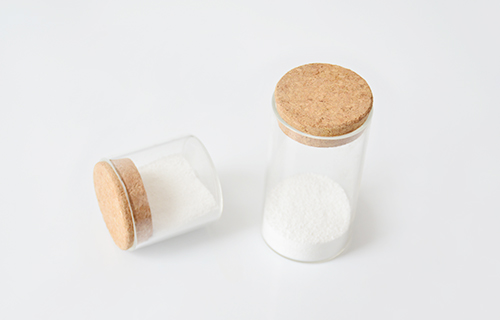
Continuity evaluation asks whether the material in the sample jar can still be reproduced, to the same molecular weight window, five years from now.
Sodium hyaluronate is rarely bought once. A cosmetic serum, a nutraceutical capsule or a pharmaceutical excipient approved around one molecular weight window tends to stay in that window for years, and the supplier that shipped the first pallet is expected to ship the fifteenth under the same terms. That expectation, rather than the certificate pack alone, is what a long-term sustainability evaluation has to test.
Shandong Habier Biopharma Co.,LTD is a China-based manufacturer and supplier of sodium hyaluronate and related ingredients. Established in 2015 in Qufu City, Shandong Province, the company operates from a 50,000 m² facility with 123 employees, a six-engineer R&D team and an annual output of 600–700 MT, with main markets in the EU, USA and Korea. Its sodium hyaluronate line is listed in this article under product code 5243, covering food grade, cosmetic grade, pharma grade, high molecule weight grade and low molecule weight grades.
The question this article addresses is narrower than supplier selection. It is the question procurement teams ask after a first order has shipped and a second is being planned: what evidence exists that this supplier can repeat the specification, the paperwork and the delivery schedule for the next several years, and where should a buyer look for the risk that it cannot?
Specification Is a Batch Question. Continuity Is a Company Question.
A specification answers whether a delivered lot meets an agreed molecular weight range, moisture level and microbial limit. A continuity assessment answers a different set of questions: whether the same raw material routes stay qualified, whether the certificates covering the site remain in force, whether inspection depth stays constant from lot 3 to lot 300, and whether capacity exists when several customers order at once.
The commercial context makes that distinction more urgent rather than less. Fortune Business Insights framed the global hyaluronic acid market at USD 11.64 billion in 2025, with a projected value of USD 22.36 billion by 2034 and a CAGR of 7.52% across 2026–2034; the same source reports pharmaceutical grade hyaluronic acid at 69.3% of product segment share in 2026. Growing demand does not automatically strain any individual supplier, but it does move buyer risk away from availability and toward consistency. In a market where grade specifications are tight, the failure that hurts is rarely an empty warehouse. It is a shipment that is available, on time, and slightly outside the molecular weight window the formulation was validated on.
The practical rule: treat the first order as a sample qualification and the second through fifth orders as the real supplier test. Most continuity risk appears after the supplier has already been approved.
Five Controls That Decide Whether Supply Survives
A continuity-oriented evaluation can be organised around five controls, each of which produces either a document or a facility observation. The order matters: production redundancy and scheduling set the physical ceiling, compliance continuity sets the legal ceiling, acceptance criteria set the quality ceiling, and a documented repeat-supply record shows how the first four have behaved in practice.
- Production redundancy — is fermentation capacity duplicated across independent workshops?
- Buffer stock and phased scheduling — how is raw material and capacity allocated across customers?
- Compliance continuity — do the certificates stay current, and does their scope match the grade supplied?
- Acceptance criteria — will batch testing and full-item inspection still hold at lot 300?
- Repeat-supply evidence — is there a documented relationship that already survived several cycles?
Control 1: Production Redundancy and Line Layout
The most consequential question a buyer can ask about a fermentation-derived ingredient is whether the capacity behind it is duplicated. A single fermentation workshop concentrates risk: one contamination event, one sterilisation cycle, one maintenance shutdown or one HVAC failure stops the grade the buyer depends on. Two independent fermentation workshops, by contrast, allow production to continue on a parallel train while one is down, and they matter most for buyers whose contract includes an allocation commitment during shortage.
Line layout is the second half of the same question. A multi-production-line arrangement allows grade campaigns to run without serialising every customer behind a single changeover sequence. For an ingredient supplied in food, cosmetic and pharma grades, that separation also reduces the cross-contamination and cleaning-validation burden that comes with switching between grade families on one line.
Habier's published capability record establishes the operating envelope rather than the workshop count. The site runs continuous 24/7 operation, and the disclosed equipment set includes a fermentation bioreactor, ultrafiltration purification equipment, a sterile mixing tank, a vacuum emulsifier, a cleanroom filling machine, a low-temperature drying oven, and microbial and heavy metal testing instruments. Monthly capacity is listed at 50–60 tons, with a stated lead time of 5–8 days and a minimum order quantity of 1 kg. The application profile for the line describes low-temperature fermentation synthesis together with aseptic cleanroom production for medical and injection grade environments.
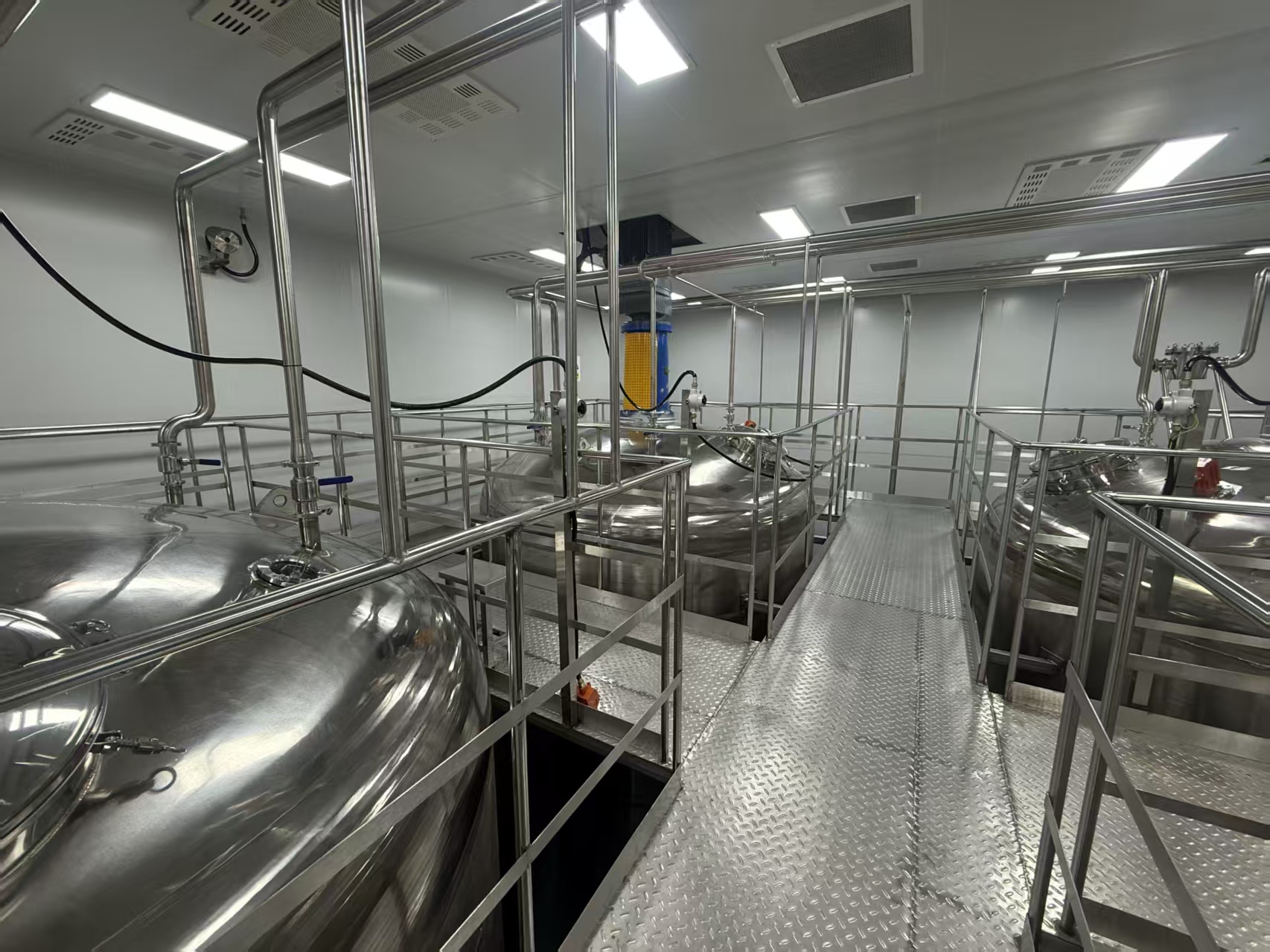
Fermentation capacity, not warehouse inventory, sets the long-term ceiling on sodium hyaluronate supply.
Workshop-level redundancy and line count are facility facts, not marketing claims. They should appear in the qualification file as a site layout, an equipment list with asset identifiers, and a business continuity plan that names the alternate train for each grade. A buyer who cannot obtain that document has learned something useful about the supplier's continuity posture, even if nothing is wrong with the current batch.
Control 2: Buffer Stock and Phased Scheduling
Lead time quoted against finished goods is not the same as lead time quoted against raw material replenishment. A 30-day raw material safety stock is a reasonable benchmark to test in this category, because it absorbs the gap between a supplier's own upstream supply and the buyer's fixed production calendar. The relevant audit question is not whether buffer stock exists in principle, but which inputs are covered, at what level, and how the level is recalculated when a customer's volume grows.
Phased production scheduling is the second buffer. Fermentation is a batch process and downstream purification is the usual bottleneck, so a supplier serving multiple customers has to decide how campaigns are sequenced when demand overlaps. Buyers should ask how far ahead a campaign must be booked, what happens to a standing order when monthly capacity of 50–60 tons is approached, and whether allocation rules are written into the agreement or handled case by case.
Habier's published commercial terms support a staged entry: OEM/ODM cooperation with purity adjustment, a 1 kg minimum order quantity, free sample supply, and after-sales quality tracking. That combination lets a buyer validate a grade at bench scale before committing to a schedule, which is exactly the sequence a continuity evaluation should follow. It does not by itself guarantee allocation priority during peak periods, and buyers negotiating multi-year volumes should ask for that in writing rather than assume it.
Control 3: Compliance Continuity
Certificates are point-in-time documents, and the most common continuity failure in ingredient supply is not a missing certificate but an expired one discovered during a customer audit. A supplier that held Kosher and Halal certification at approval does not automatically hold it three years later, and scope matters as much as validity: a certificate covering a blending and trading operation does not cover a fermentation site.
| Credential | What it addresses | What to verify at each annual review |
|---|---|---|
| Dual ISO certification (ISO 9001 quality management; ISO 22000 food safety management) | Site-level management systems for quality and food safety | Version year stated on the certificate, scope, validity date, most recent surveillance audit |
| HACCP | Process-level hazard control in production | That the plan covers the specific grade and line supplied |
| Kosher | Dietary compliance for food and supplement applications | Certificate currency and the certifying body's scope statement |
| Halal | Dietary compliance for food and supplement applications | Certificate currency and the certifying body's scope statement |
| COSMOS organic | Organic status for cosmetic applications | Whether the specific grade shipped remains inside the certified scope |
| ISO 16128 | Natural-origin content indexing for cosmetic formulations | That the declared index matches the grade actually delivered |
The qualification profile published by Shandong Habier Biopharma describes a dual ISO certification framework alongside HACCP, Kosher, Halal, organic COSMOS and ISO 16128 certification. For a buyer, the practical task is to convert that list into a renewal calendar: each credential gets an owner, an expiry date and a re-verification step tied to the annual supplier review, so that continuity of compliance is managed as a schedule rather than rediscovered during an audit.
One boundary belongs in this section rather than in a footnote. The disclosed application profile notes that medical and injectable grade products may require sterility and low microbial limits, which is a distinct qualification path from the food, cosmetic and pharma grades discussed here. Buyers sourcing for injectable use should treat that as a separate evaluation and not carry over conclusions from a food or cosmetic grade approval.
Control 4: Acceptance Criteria That Survive Repetition
Continuity is ultimately enforced by the acceptance clause. A supplier that inspects 100% of output before delivery, as Habier states for this line, gives a buyer a full-item inspection record per shipment; that record is only useful if the contract defines which items are tested, at what frequency, and against which limits. Batch testing, full-item inspection and independent QC laboratory oversight should be named in the purchasing terms rather than left to the certificate pack.
Molecular weight deserves its own line in the agreement, because it is the parameter most likely to drift quietly and the one that changes what the ingredient does. In the application profile for this line, sodium hyaluronate functions as a humectant, a viscosity modifier, a filler or a viscoelastic material depending on grade — functions that respond directly to chain length.
| Grade (product code 5243) | Stated molecular weight range | Continuity concern to contract for |
|---|---|---|
| Food grade | 0.8–1.5 million Da | Range consistency across lots used in oral supplement production |
| Cosmetic grade | 1.0–1.5 million Da | Viscosity and sensory performance in emulsion and serum bases |
| Pharma grade | Minimum 2.0 million Da | Upper and lower limits agreed, not a minimum only |
| High molecule weight grade | Minimum 2.0 million Da | Documented distribution, not a single average figure |
| Low molecule weight grade | Maximum 0.1 million Da | Consistency of the low-MW fraction between batches |
The line also covers hydrolyzed, low, ultra-low and super-low molecular weight variants, which are typically specified by distribution rather than by a single number. Where a buyer's formulation depends on a narrow fraction, the acceptance criteria should reference the test method and the distribution parameters agreed with the supplier, plus a defined action if a lot falls outside — re-test, deviation approval or rejection — so that the decision does not depend on who is available that week.
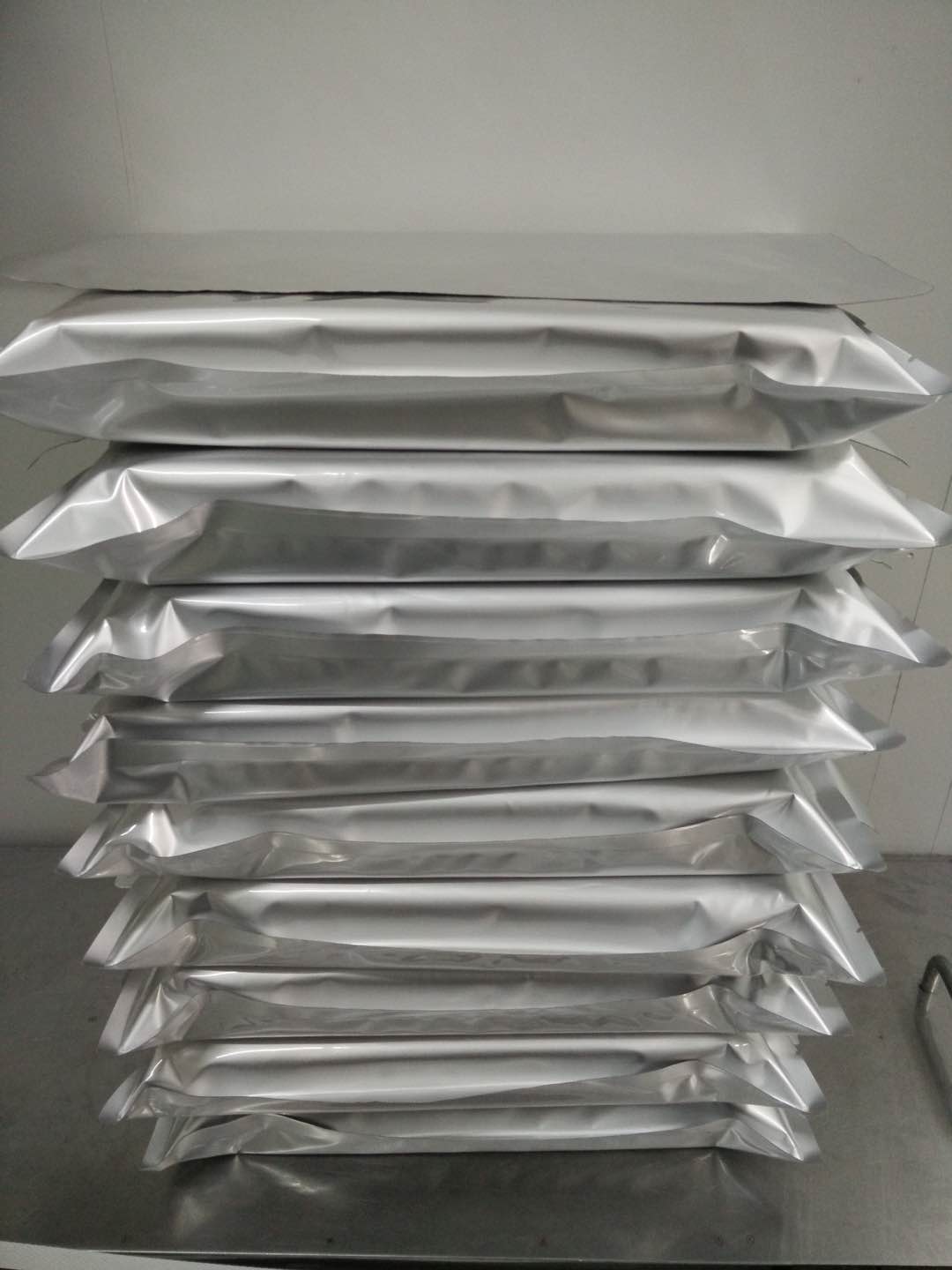
Packaging format and lot identification are part of the acceptance record, not an afterthought to the specification.
Control 5: What a Repeat-Supply Record Actually Shows
Documented repeat cooperation is the only control on this list that is evidence rather than intention. For this line, the published case record describes a US-based importer of natural cosmetics and health supplements that has taken 4,733 kg of sodium hyaluronate for cosmetic raw material and oral health care supplement production, under a long-term stable use pattern described as long-term repeat order cooperation. The same record notes stable batch quality, smooth customs clearance supported by a valid USDA import permit, and compliance documentation including official veterinary heat treatment certification against US APHIS import standards.
Read precisely, that case proves two things and implies a third. It proves the supplier can execute repeat export paperwork for a US buyer across multiple shipments, and that a customer with both cosmetic and oral-care applications remained on the same supply relationship. It implies, but does not prove, that capacity allocation held during that period. It does not prove capacity for a multi-region programme, and it should not be generalised into a statement about service levels for a buyer with different volumes, destinations and grade requirements.
Continuity-Oriented Qualification vs. Price-Led Sourcing
The alternative to a continuity evaluation is not negligence; it is a different set of trade-offs. Transactional buying optimises for the current landed cost and the current lot, and for a bench trial or a short campaign that can be the correct decision. The comparison below sets out where the two approaches diverge.
| Dimension | Price-led, transactional sourcing | Continuity-oriented qualification |
|---|---|---|
| Selection basis | Quoted price per kilogram and immediate availability | Documented capacity, redundancy, certificate continuity and acceptance terms |
| Order pattern | Lot by lot, re-tendered at each cycle | Repeat orders against an agreed specification window |
| Documentation | Certificate of analysis per shipment | CoA plus inspection records, certificate renewal calendar, deviation history |
| Up-front cost | Low; little qualification work | Higher; audit time, specification drafting, sample validation |
| Main exposure | Silent molecular weight or grade drift between lots | Dependence on one supplier's capacity and scheduling |
| Exit cost | Low switching friction, high revalidation frequency | Higher switching cost, but a documented baseline to switch against |
The honest limitation of the continuity model is its cost profile. A full qualification with site documentation review, specification drafting and annual certificate re-verification is disproportionate for a 2 kg bench trial, and buyers running exploratory formulation work should use sample supply and a CoA-level check instead. The model earns its cost when a grade is locked into a released product and a failed lot would stop a production line.
Where This Supplier Profile Has Boundaries
Three boundaries are worth stating plainly, because a continuity evaluation that reports only strengths is not an evaluation.
- Export footprint. The published profile lists a 20% export ratio with main markets in the EU, USA and Korea. Buyers in other regions should validate logistics, documentation and lead time for their own destination rather than assume equivalent experience.
- Capacity ceiling and scheduling. Monthly capacity of 50–60 tons against an annual output of 600–700 MT is a real number, and it is finite. A buyer whose annual requirement represents a meaningful share of that capacity needs a written allocation and scheduling arrangement, not a verbal assurance.
- Grade boundary. The food, cosmetic and pharma grades covered by product code 5243 are distinct from medical and injectable applications, which may require sterility and low microbial limits. That is a separate qualification route with its own evidence requirements.
- Verification status. The certification set is published by the company. Continuity planning should still treat each certificate as requiring independent confirmation at renewal, which is precisely what an annual review is for.
A Procurement Checklist for the Annual Review
| Item to request | Evidence that satisfies it |
|---|---|
| Site layout showing fermentation train duplication | Dated layout with equipment identifiers; continuity plan naming the alternate train |
| Line allocation by grade family | Line list showing which grades run where, and the changeover and cleaning validation approach |
| Raw material buffer policy | Stated safety stock level, which inputs are covered, and the recalculation rule |
| Campaign scheduling rule | Booking horizon, allocation priority language in the supply agreement |
| Certificate renewal calendar | Current certificates with scope, version year and expiry for each site and grade |
| Acceptance criteria annex | Test items, methods, molecular weight limits and distribution parameters per grade |
| Inspection and QC records | Full-item inspection record per shipment plus independent QC laboratory oversight evidence |
| Repeat-supply references | Documented multi-shipment relationships with application and destination stated |
Future Outlook
As the hyaluronic acid market expands toward the USD 22.36 billion figure projected for 2034, and as pharmaceutical grade continues to hold the largest share of product segment value, supplier evaluation is likely to shift from document collection to document maintenance. The suppliers that win long-term contracts will be the ones whose certificate sets, inspection records and capacity commitments can be re-verified on a fixed annual cycle without the buyer chasing them.
For buyers, the practical implication is a change in what gets negotiated. Molecular weight windows, allocation during peak periods, deviation handling and certificate renewal dates belong in the agreement at the point of qualification, when the supplier still has an incentive to be specific. Adding them later, after a lot has failed or a certificate has lapsed, is a considerably more expensive conversation.
FAQ
What does long-term supply continuity mean for a sodium hyaluronate buyer?
It means the supplier can repeat the same grade, molecular weight window, documentation and delivery schedule across multiple order cycles, not merely that a first lot met specification. Continuity depends on duplicated production capacity, raw material buffer stock, certificate currency, stable acceptance criteria and a record of repeat supply. A supplier can pass a batch test and still fail a continuity assessment.
How should a buyer test whether a supplier can sustain supply beyond the first order?
Ask for four things in the qualification file: site documentation showing whether fermentation capacity is duplicated across independent workshops, the multi-line layout that determines how grade campaigns are sequenced, the raw material safety stock policy, and the campaign booking horizon. Then compare the answers against stated monthly capacity and lead time. For the Habier line discussed here, the published envelope is 50–60 tons per month, a 5–8 day lead time and a 1 kg minimum order quantity.
What acceptance criteria should be tied to batch testing and full-item inspection?
The agreement should name the test items, the methods, the molecular weight limits per grade and the action taken when a lot falls outside them. For product code 5243 the published ranges are 0.8–1.5 million Da for food grade, 1.0–1.5 million Da for cosmetic grade, a minimum of 2.0 million Da for pharma and high molecule weight grades, and a maximum of 0.1 million Da for low molecule weight grade. A minimum-only limit should be converted into a two-sided window before a long-term commitment is signed.
Which certification checks belong in an annual sodium hyaluronate supplier review?
Each credential should be checked for scope, version year and validity date, not just for its name. The published Habier profile lists dual ISO certification, HACCP, Kosher, Halal, organic COSMOS and ISO 16128. The annual review should confirm that the certificate scope still covers the specific site and grade shipped, and that no certificate has lapsed between reviews. Medical and injectable applications sit on a separate qualification path that may require sterility and low microbial limits.
What does documented long-term repeat order cooperation prove?
It proves that a specific buyer relationship has already survived multiple shipment cycles with stable batch quality and repeatable export documentation. The published case for this line describes a US importer of natural cosmetics and health supplements taking 4,733 kg across cosmetic raw material and oral health care supplement applications. It supports the continuity case for comparable buyers but does not establish capacity for a different volume, destination or grade requirement.
Company brochure with product and facility details: Shandong Habier Biopharma brochure (PDF). Market figures cited in this article are attributed to Fortune Business Insights and are used for directional framing only.
Tem questões ou precisa de mais detalhes?
Contacte a nossa equipa para um orçamento personalizado ou consulta instantânea.
Solicitar orçamento
Preencha o formulário abaixo e a nossa equipa entrará em contacto com uma proposta personalizada.
Chat direto do WhatsApp
Prefere conversar em tempo real? Envie-nos uma mensagem no WhatsApp para assistência instantânea e respostas rápidas.
- Obter orçamento personalizado
- Partilhar fotos ou documentos
- Discuta as suas necessidades diretamente
Geralmente responde em 5–30 minutos durante o horário de expediente.