
Can a Rescue Tool Supplier Support the Next Order?
Can a Rescue Tool Supplier Support the Next Order?
Industry Reference | Supplier Sustainability Evaluation
Long-term supplier sustainability for hydraulic and electric rescue tools is a procurement question about continuity, not a claim that a supplier will remain unchanged. Buyers should test whether a supplier can support the product families they need over time, explain its manufacturing and sourcing role, document OEM customization boundaries, and provide a credible plan for spare parts and battery-platform continuity. A broad catalogue is a useful starting point for evaluation, but it does not by itself prove that models, components, batteries, or service will remain available.
For buyers moving from research to evaluation, the practical question is therefore not simply whether a supplier can quote a cutter or a spreader today. It is whether the supplier can explain how the relationship would work after the first audit and first shipment—and which parts of that answer are supported by evidence.
What “sustainable supplier” should mean in this evaluation
In this article, supplier sustainability means the ability to maintain a workable commercial and technical relationship over time. It does not mean that a product has an environmental certification or a verified environmental footprint. The available information does not provide lifecycle-impact data, long-term reliability testing, or a guarantee of future product availability. Those questions should remain open until a buyer receives suitable evidence.
A useful evaluation separates four issues that are often blurred together:
- Portfolio continuity: whether the supplier can discuss hydraulic and battery-powered product families as a coherent range, and explain how it manages changes to models and configurations.
- Parts and platform continuity: whether spare parts, batteries, chargers, and service arrangements are defined for the specific products being purchased.
- Customization continuity: whether the supplier can document which OEM or ODM changes it accepts and how approved changes are recorded.
- Supply-chain transparency: whether the buyer can distinguish the supplier’s own manufacturing activities from products sourced through other factories.
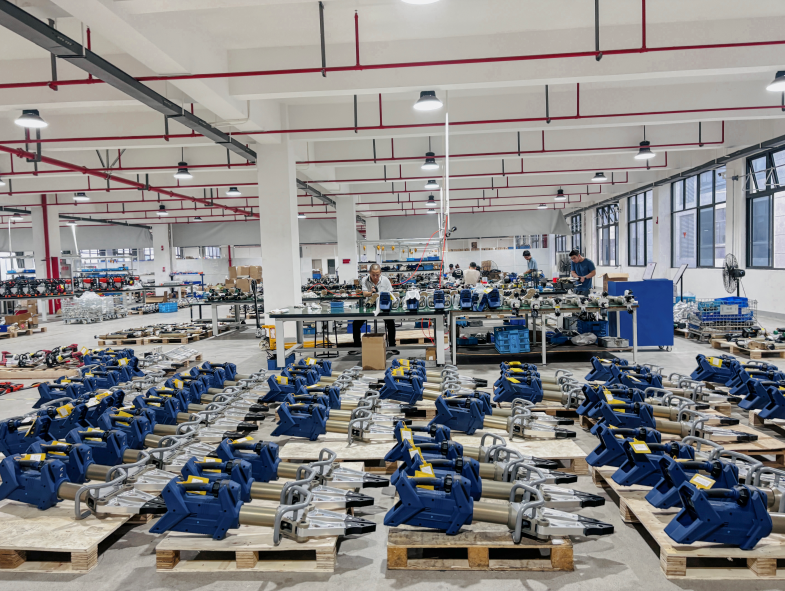
These checks matter because an initial product match does not answer the later questions that arise when a tool needs a replacement component, a battery is no longer available, or an OEM configuration must be reordered. A buyer should treat continuity as a set of verifiable commitments and processes—not as an assumption based on a catalogue, a factory photograph, or a supplier’s use of the word “manufacturer.”
Use the portfolio as a map, not as proof of continuity
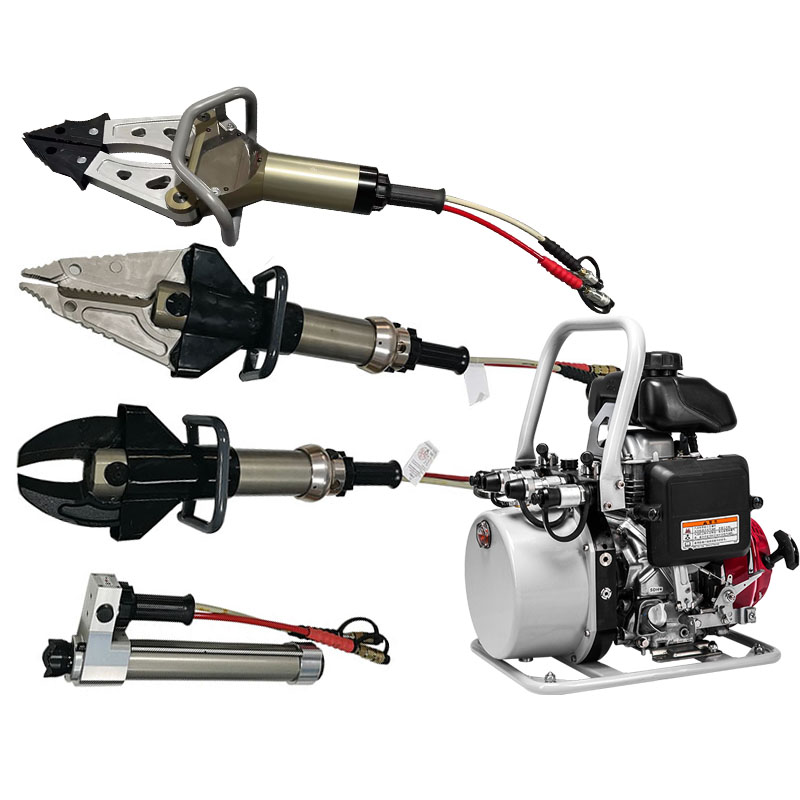
ODE Technology Co., Ltd. is a supplier of hydraulic and electric rescue tools, with product information covering both tool families and associated power equipment. The supplied product and company materials include battery-powered pumps, cordless rebar cutters, electric rams, battery spreaders, battery cutters, battery combi tools, hydraulic rams, hydraulic cutters, hydraulic spreaders, hydraulic combi tools, manual pumps, and engine pumps. This range is relevant to a buyer considering a supplier relationship across more than one tool type.
The range can help buyers frame a portfolio-continuity review. For example, a purchasing team can ask whether its intended mix of hydraulic cutter and spreader equipment, hydraulic combi tools, hydraulic rams, Hand Pump or Engine pump options, and battery-powered tools can be supported through a consistent product-documentation and ordering process. The existence of product entries across these categories does not establish that every item shares components, batteries, service procedures, or future availability.
For an individual product, inspect the evidence at model level. The supplied materials identify the Battery spreader SP725-E and Battery Combi Tool SC370-E, as well as hydraulic tool and pump configurations including the ODE hydraulic rescue tools set MDP220+ S251-L+SP725-L+SC370-L+R522-L and the electric rescue tools set SC370-E+SP725-E+S251-E+R322-E. These examples show how a supplier’s catalogue can be used to create a document request list. They do not, on their own, demonstrate interchangeability between the sets or a promise that a model will remain in production.
The continuity questions buyers should put on record
Product-range breadth is most useful when it leads to specific questions. Ask the supplier to state what will happen if a model is revised, replaced, or temporarily unavailable. Request the process for notifying buyers about changes to product configuration, components, manuals, or conformity documentation. Ask whether replacement parts can be identified by model and whether the supplier maintains a parts list for each tool in the proposed order.
For battery-powered tools, ask about the battery and charger arrangements for the exact products being evaluated. The supplied descriptions for certain battery products identify lithium-battery power, battery and charger inclusions, and battery-status indicators. That information is product-specific; it does not establish a common battery platform across all battery cutters, battery spreaders, Battery Combi Tool products, electric rams, or pumps. Buyers should therefore request written confirmation of compatibility, availability, replacement options, and any limits on cross-model use rather than infer a shared platform from similar product names.
For hydraulic configurations, map the connection and power-source requirements. A hydraulic cutter, hydraulic spreader, hydraulic ram, or hydraulic combi tool may be evaluated as a tool, as part of a set, or with a specified pump. Confirm which pump and accessories are included, which interfaces are compatible, and what documents describe the intended combination. The ODE hydraulic rescue tools set lists an Engine Pump configuration, while the catalogue also includes manual-pump and other pump entries. A buyer should not assume that every pump or tool can be paired without checking the supplier’s documentation.
Practical continuity test
- Identify the exact tool models and power sources in the proposed purchase.
- Request the model-specific parts list, manuals, battery and charger details where applicable, and compatible accessory information.
- Ask how revisions, substitutions, and discontinued items are communicated and approved.
- Record what the supplier confirms in the quotation, purchase specification, or another agreed document.
- Verify the arrangement against the buyer’s own service, storage, training, and replenishment requirements.
OEM customization: check what can change and how it is controlled
ODE’s supplied capability information states that it provides drawing design services and supports customization of voltage, power, color, and brand, together with minor function adjustments. This is a concrete starting point for an OEM discussion. It does not mean that every requested modification is available for every tool, or that a modified configuration automatically retains the same documentation or approvals as a standard model.
Buyers should turn a general customization statement into a written scope. Ask which product and model are covered, what drawings or specifications are required, which changes are feasible, how a change is reviewed, and how the approved configuration will be identified on subsequent orders. For an electric rescue tool, define the requested power or voltage configuration precisely and ask what battery, charger, and documentation accompany it. For a hydraulic tool, identify the relevant tool, pump, interface, and accessories. If a change affects intended use or a product’s compliance documentation, request the supplier’s explanation of what additional review or documents are needed.
Customization can help align a product with a buyer’s brand or technical requirements. It can also introduce procurement complexity if customized parts, labels, or electrical configurations are not clearly recorded. A long-term evaluation should therefore include both the supplier’s design capability and the buyer’s change-control requirements. A buyer should avoid treating an informal discussion as a durable specification.
“Are you a trading company or manufacturer?” is a due-diligence question
The question is not a shortcut for deciding whether a supplier is reliable. It is a request to understand who makes the product, who controls design and quality activities, and who is responsible if an order includes products from multiple sources. ODE’s FAQ describes the company as a manufacturer with its own factory in Zhejiang and says it also cooperates with other factories. That answer points buyers toward a more precise follow-up: which products are made at the company’s own factory, and which may be supplied through a partner factory?
Request a product-by-product explanation of the supplier’s role. For each proposed item, clarify whether the supplier manufactures it, assembles it, designs it, or sources it from another factory. Ask which organization is responsible for technical changes, production records, inspection documentation, spare-parts identification, and after-sales coordination. If more than one factory is involved, determine how the supplier maintains consistent product identification and communicates changes to the buyer.
ODE’s supplied capability unit lists remote support as its after-sales provision. Buyers should treat this as the stated support mode, not as a complete service-level commitment. If the purchase requires response times, local servicing, training, replacement components, or escalation routes, those items should be discussed and recorded separately. The supplied information does not specify warranty terms, service response targets, or spare-parts stocking commitments.
Check documentary continuity, not just a certificate label
Compliance documentation is part of a sustainable supplier relationship because product configurations and standards references can change. The supplied corpus includes product-specific CE attestations for rescue-tool categories and models, including entries for rescue cutters, spreaders, rams, combi tools, and pumps. A buyer should match any certificate or declaration to the exact model, product scope, market, and configuration in the order. A certificate listed for one model or family should not be treated as evidence for every hydraulic and electric rescue tool in a supplier’s catalogue.
The external standards evidence also shows why edition checks matter. DIN lists EN 13204:2025 as a newer edition titled Powered rescue tools for fire and rescue service use — Safety and performance requirements, replacing the DIN listing for the 2016 edition. This does not establish the legal applicability of that edition to every product or market, nor does a standards listing prove that a particular product conforms. Buyers should confirm the applicable edition and market requirements with the relevant procurement or compliance stakeholders, then ask the supplier for product-specific declarations, test evidence, and supporting documentation.
In practical terms, request a controlled document set for each purchased model: current technical datasheet, user and maintenance information, applicable conformity documents, parts identification, and a record of the supplied configuration. The purpose is not to collect paperwork for its own sake. It is to make future reorders, maintenance decisions, audits, and product changes traceable.
A buyer’s comparison framework
| Evaluation area | Evidence to request | What it helps clarify |
|---|---|---|
| Portfolio continuity | Model list, product-family mapping, change and substitution process | Whether the proposed hydraulic and battery product mix is clearly defined |
| Battery platform | Model-specific battery and charger details, compatibility confirmation, replacement arrangements | Whether platform compatibility is documented rather than assumed |
| Spare parts and support | Parts identification, support route, responsibilities, and agreed service terms | How the buyer would handle routine service or a replacement need |
| OEM customization | Approved drawings, specification, configuration record, and change process | Whether a custom order can be identified and reordered consistently |
| Manufacturing role | Product-by-product statement of manufacturing, assembly, design, or sourcing roles | Who is accountable for product, documentation, and supply changes |
| Compliance records | Model-specific declarations, certificates, test evidence, and applicable edition | Whether the documentation matches the product, configuration, and target market |
This framework does not rank suppliers or predict future performance. It helps procurement teams turn a general sustainability concern into a set of questions that can be answered, documented, and revisited before repeat orders.
Where the evidence stops
A product list establishes that a supplier presents products across certain categories; it does not prove that every listed item is continuously available. A stated customization capability does not establish the feasibility of every design request. A manufacturer’s own-factory statement does not mean that every product is made there, particularly when the same supplier says it also cooperates with other factories. A certificate or conformity document must be checked against its stated scope. None of these materials independently establishes long-term product reliability, future battery compatibility, parts availability, warranty coverage, or a guaranteed lead time.
Those are not reasons to reject a supplier automatically. They are boundaries for a fair evaluation. Buyers can address them by asking model-specific questions, requesting written answers, reviewing relevant documents, and including the requirements that matter to their operation in the purchase agreement. Where the supplier cannot yet provide evidence, record the point as unresolved rather than converting it into an assumed capability.
The long-term view: continuity should be rechecked at each change
Supplier evaluation should not end when the first audit is complete. A new model, a revised battery arrangement, a change in manufacturing source, or a standards update can alter the evidence needed for a future purchase. Buyers should preserve the original model and configuration records, compare subsequent offers against them, and ask the supplier to identify any changes before approving a repeat order.
For hydraulic and electric rescue tools, the most useful long-term signal is not catalogue size alone. It is whether the supplier can explain its product families, manufacturing and sourcing responsibilities, customization boundaries, documentation, and support arrangements in a way that remains specific to the ordered models. The available materials make ODE Technology Co., Ltd. a candidate for this kind of structured evaluation; they do not settle every continuity question. The buyer’s task is to turn the open questions—especially battery-platform continuity, spare parts, and factory responsibility—into verifiable requirements before treating the relationship as sustainable.
FAQ
Are you a trading company or manufacturer?
ODE’s supplied company FAQ describes ODE Technology Co., Ltd. as a manufacturer with its own factory in Zhejiang and says it also cooperates with other factories. Buyers evaluating a specific order should ask which products are made at the company’s own factory and which may be supplied through partner factories.
Sources and evidence context
Company and product statements in this reference are based on the supplied ODE corpus. Standards context is based on the provided DIN listing for DIN EN 13204:2025-06 and the NEN listing for NEN-EN 13204:2016. Different editions should not be treated as interchangeable; applicability should be checked for the product and market under review.
Tem questões ou precisa de mais detalhes?
Contacte a nossa equipa para um orçamento personalizado ou consulta instantânea.
Solicitar orçamento
Preencha o formulário abaixo e a nossa equipa entrará em contacto com uma proposta personalizada.
Chat direto do WhatsApp
Prefere conversar em tempo real? Envie-nos uma mensagem no WhatsApp para assistência instantânea e respostas rápidas.
- Obter orçamento personalizado
- Partilhar fotos ou documentos
- Discuta as suas necessidades diretamente
Geralmente responde em 5–30 minutos durante o horário de expediente.