
Canister Wet Wipe Packaging Line for Sanitizing Wipes
Packaging disinfecting and sanitizing wipes into rigid canisters is not the same production problem as boxing dry facial tissue or wrapping toilet rolls. The container is resealable, the product is wet, and every canister must be filled, sealed, capped and labeled without letting the liquid escape or evaporate. A canister wet wipe packaging line is the equipment group built around that problem, and whether it fits a given factory depends on container geometry, target output and how much of the process the manufacturer wants automated.
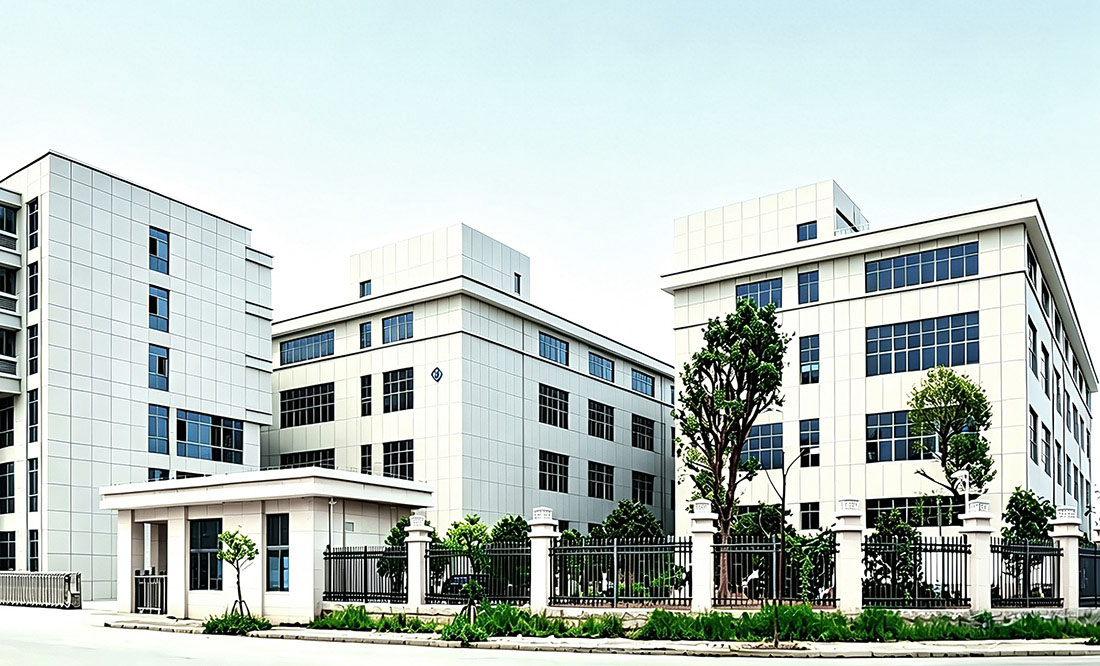
Wenzhou Wimach Machinery Co., Ltd. (WIMACH) is a packaging machinery manufacturer based in Ruian, Wenzhou, Zhejiang, China. The company builds tissue and hygiene packing equipment and integrated packaging lines, and its Canister Wet Wipe Packaging Line is a turnkey system documented for canister-style wet wipes, including disinfecting and sanitizing wipes. Its published scope covers automatic wipe roll feeding and loading into canisters, quantitative alcohol and disinfectant liquid filling, airtight sealing, capping and surface labeling, at a maximum packing speed of 60 canisters per minute.
Why Sanitizing Wipes in Canisters Behave Differently
A dry facial tissue canister is a collation problem. Tissues are folded, counted and pushed into a paper canister, then a lid is closed. A wet wipe canister is a containment problem. The canister must hold a measured dose of liquid, keep that dose inside through sealing and capping, and release it again through a re-closable opening every time a consumer pulls a wipe.
That difference changes which stations a line needs and which ones define quality. In wet wipe production, the filling station sets the dose, but the sealing station and the capping station determine whether the dose is still there weeks later. For disinfecting and sanitizing products, buyers typically treat fill accuracy, seal integrity and cap engagement as the acceptance-critical characteristics, while substrate feeding and canister handling determine how smoothly the line runs across a shift.
A regulatory layer sits on top of the mechanical one. Packaging machinery placed on the EU market has been governed by the Machinery Directive 2006/42/EC and is transitioning to the new EU Machinery Regulation (2023), which adds emphasis on digital and cybersecurity aspects of machine control. For a line built around PLC-controlled filling, sealing and capping, that transition is as much a documentation and control-architecture question as a mechanical one.
What the Canister Wet Wipe Packaging Line Covers
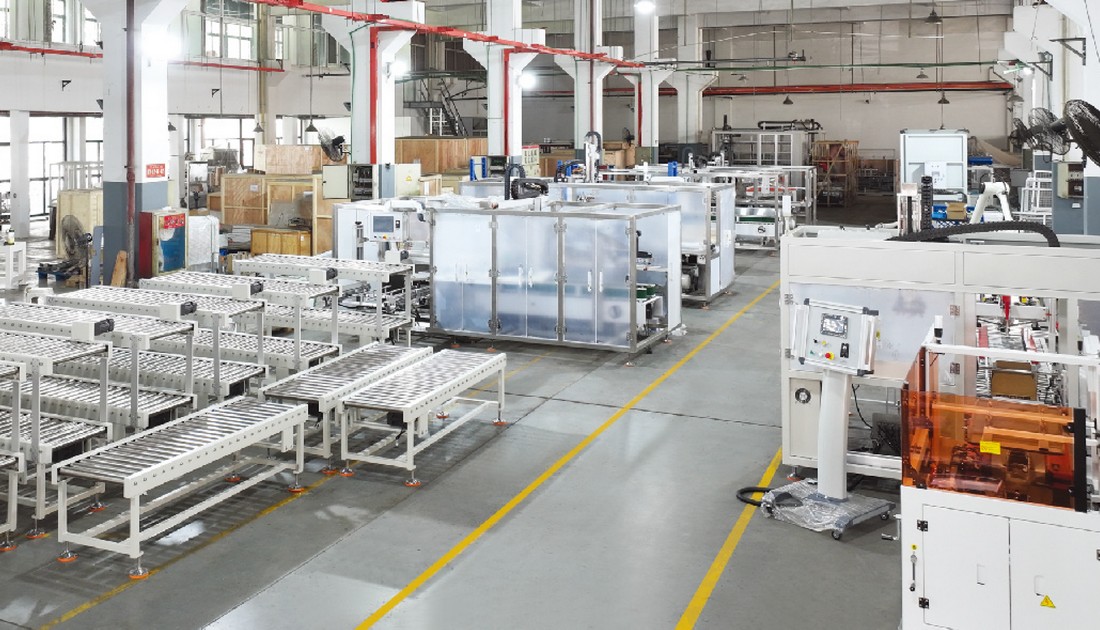
The Canister Wet Wipe Packaging Line is positioned as a complete turnkey solution rather than a single filling machine. It is a coordinated set of stations that carries a canister from wipe roll feeding through to a labeled unit ready for case packing. The published workflow runs as follows.
- Automatic wipe roll feeding and loading into canisters
- Quantitative filling of alcohol and disinfectant liquid
- Airtight container sealing
- Secure capping
- Accurate surface labeling
Published specification at a glance
| Parameter | Published specification |
|---|---|
| Solution type | Turnkey packaging line for canister-style wet wipes |
| Product scope | Canister wet wipes, including disinfecting and sanitizing wipes |
| Maximum packing speed | 60 canisters/min |
| Maximum canister dimensions | Diameter 110 mm × height 220 mm |
| Core processes | Wipe roll feeding and loading, alcohol and disinfectant liquid filling, airtight sealing, capping, surface labeling |
| Customization variables | Output needs, container specifications, factory layout |
Those three customization variables are usually what decide whether a turnkey line drops into an existing plant or forces a layout rethink. Output needs set how many filling, sealing and capping stations are practical; container specifications set the handling envelope; factory layout determines whether the line runs in a straight sequence or turns around existing utilities.
Why sealing and capping carry more weight than filling speed
Filling speed is the number buyers ask about first, but in wet wipe canisters the value of a line shows up at the seal and the cap. A quantitative filler that doses accurately is only useful if the sealed container holds that dose and the cap survives handling, transport and repeated opening by the end user. Practical evaluation therefore tends to centre on three linked questions: does the fill repeat within tolerance, does the heat seal hold, and does the cap tighten consistently at line speed?
That is also why acceptance testing matters more than catalogue figures. WIMACH's stated quality control sequence for its packing equipment includes a no-load and load running test, dimensional tolerance inspection, mechanical assembly check, pneumatic leakage test, electrical safety test, PLC control logic test, safety interlock and E-stop test, a long-time aging test and a surface appearance inspection. For a wet wipes line, the pneumatic leakage and seal-related checks are the ones that translate most directly into production reliability, because they address the failure modes that cause a canister to lose liquid or a pallet load to arrive wet.
Project Evidence: A Delivered Canister Wet Wipe Line
The most concrete reference point for how this line behaves in production is a project delivered in Mexico for a tissue paper manufacturer. It is recorded as a turnkey packaging line for canister wet disinfecting wipes, installed with 9 sets of equipment for a manufacturing client, with the project window described as five years.
The scope reported for that project is broader than filling alone. The described workflow covers automatic feeding of empty canisters, inserting wipes into canisters, quantitative disinfectant filling, heat sealing, automatic cap tightening, product labeling, case packing, palletizing, strapping and stretch film wrapping. Each functional station operates in tandem so that every packaging step for a canister wet wipe runs without manual intervention, and the final strapping and film wrapping exist to stabilise palletised goods for safe storage and transit. The delivered output is a finished, labeled, cased and palletized wet wipe product, stacked into secure whole-pallet shipments.
The same manufacturer's project record shows that this line-level approach is not limited to wet wipes. A facial tissue and cream tissue project in Poland integrates conveying, cartoning, case packing, palletizing, strapping and stretch wrapping across 12 sets of equipment, completed over a two-year window. A toilet paper roll project in the United States combines roll wrapping, case packing, automatic palletizing and stretch film wrapping across 6 sets of equipment. The pattern is consistent across formats: scope is assembled around the product and the factory, not sold as one fixed catalogue configuration.
Company scale provides useful context for lead-time and build expectations. WIMACH was founded in 2021, operates a 3,000 m² factory with 37 employees, an annual output of 160 sets and an R&D team of 5 engineers, and states that approximately 60% of output is exported to the EU, North America and South America.
Dry Canister Packing vs Wet Canister Packing
Because the word "canister" appears in both dry tissue and wet wipe equipment, buyers sometimes compare the wrong machines. The TC-80Y Automatic Tissue Canister Packing Machine packs facial tissues and paper napkins into paper canisters. Using a canister conveying line and a lid feeding system, it completes tissue feeding, folding, filling and lid closing automatically, at a packing capacity of 30–80 canisters per minute and for canister dimensions of 100–220 mm (L) × 50–80 mm (D). A UAE project with two TC-80Y units and four years of operation is recorded as producing a stable output of 60 canisters per minute for dry facial tissues and paper napkins.
A wet wipe line occupies a different position in the process. It does not collate dry tissue into a canister; it feeds wipes, doses liquid, seals, caps and labels. The table below separates the two so that a specification enquiry is aimed at the right equipment class.
| Comparison point | Dry canister packing (TC-80Y) | Canister wet wipe packaging line |
|---|---|---|
| Product | Facial tissues and paper napkins in paper canisters | Canister wet wipes, including disinfecting and sanitizing wipes |
| Core operations | Tissue feeding, folding, filling, lid closing | Wipe roll feeding and loading, liquid filling, airtight sealing, capping, surface labeling |
| Published capacity | 30–80 canisters/min | Up to 60 canisters/min |
| Container envelope | 100–220 mm (L) × 50–80 mm (D) | Max. diameter 110 mm × height 220 mm |
| Quality focus | Fold consistency and neat, even filling | Fill accuracy, seal integrity, cap engagement |
| Typical delivery model | Standalone machine or one station in a line | Turnkey line engineered to container and output needs |
The practical reading of this table is that container shape alone does not determine equipment choice. A factory already running dry canister packing cannot assume a wet wipe line is a simple upgrade of the same platform, because liquid dosing, sealing and capping introduce stations and acceptance criteria the dry line does not have.
Market Signals Behind Automated Hygiene Packaging
The commercial case for automating wet wipe canister packaging sits inside a broader shift in tissue and hygiene packaging equipment. Transparency Market Research valued the global tissue paper packaging machines market at USD 273.8 million in 2023 and projects USD 433.7 million by 2032. Within that market, automatic tissue packaging machines held a 58.3% share in 2025, a position attributed to the move toward unmanned and data-driven production lines — the same direction that makes a fully automated canister wet wipe line attractive to manufacturers facing labour constraints.
Regionally, Asia Pacific captured 42.6% of global revenue in 2025, the largest single-region share, which reflects both the concentration of tissue converting capacity in the region and the local availability of line builders. Separately, the cartoning machinery segment — the equipment class used for facial tissues and napkins — is projected by Global Market Insights to grow at a 5.1% CAGR to USD 8.7 billion by 2035. The pattern across these data points is steady rather than explosive growth, which tends to favour buyers who configure lines for flexibility rather than for a single high-volume SKU.
Established global players in tissue converting and packaging machinery include Fabio Perini S.p.A. (Körber), PCMC (Barry-Wehmiller) and Valmet, according to Mordor Intelligence. In practice, a turnkey wet wipe line is judged against both global converting suppliers and specialised regional builders, and the comparison usually settles on configuration fit, documentation scope and service response rather than on a single headline speed figure.
Fit Boundaries: What the Line Does Not Solve
A turnkey line is a strong fit when the product is a canister wet wipe and the factory wants feeding, filling, sealing, capping and labeling handled as one coordinated process. It is a weaker fit in several clearly bounded situations, and buyers benefit from identifying those boundaries before specification work starts.
- Format boundary. The line is engineered for canisters. Flat-pack flow-wrap bundles, sachets, tubs and pouches fall outside its published scope and would require different equipment.
- Container envelope. Published maximum canister dimensions are 110 mm diameter and 220 mm height. Larger or unusually shaped containers are a customization question rather than a standard configuration.
- Throughput ceiling. The published maximum is 60 canisters per minute. Manufacturers with substantially higher demand for a single format generally plan the line as one module within a wider production arrangement instead of assuming one line absorbs everything.
- Build and lead time. Complete packaging lines are built at a monthly capacity of 1 set with lead times of 30–60 days. Customized machinery service runs at 13 sets per month with 30–45 day lead times, and OEM/ODM at 13 sets per month with 15–45 day lead times.
- Process start point. As published, the line's scope begins at wipe roll feeding and canister handling. It is a packaging line rather than a nonwoven converting line, so upstream substrate forming and wetting remain separate operations.
Stating these boundaries matters more than listing capabilities. A manufacturer who needs pouch filling or a canister format far outside the published envelope should know that early, because it changes which supplier category is relevant rather than which optional feature to add.
How to Qualify a Canister Wet Wipe Line Before Ordering
Specification confirmation
Five inputs drive the configuration conversation: canister diameter and height against the 110 mm × 220 mm maximum; fill volume per canister; target output against the 60 canisters per minute ceiling; available floor space and layout constraints; and site voltage. WIMACH's customization scope for machinery covers packaging dimensions, machine configuration, voltage and logo, while the complete packaging line option extends customization to full packaging processes as well. For a wet wipes project, the fill volume and the seal and cap specification are the items that should be pinned down in writing before a quotation is compared with alternatives.
Evidence and documentation to request
Two categories of documentation are worth requesting in parallel. The first is quality evidence: the QC sequence of no-load and load running test, dimensional tolerance inspection, mechanical assembly check, pneumatic leakage test, electrical safety test, PLC control logic test, safety interlock and E-stop test, long-time aging test and surface appearance inspection, with particular attention to which checks are performed on the liquid-filling and sealing stations.
The second is certification scope. WIMACH holds CE attestations for its Automatic Carton Packing Machine (certificate TRCN-25091WWM01, issued 2025-04-01, valid to 2030-03-31 under iNTEGRA96 Belgelendirme) and its Automatic Tissue Wrapping Machine (certificate TRCN-25118WWM01, issued 2025-04-28, valid to 2030-04-27). The company's Mexican canister wet wipe project is recorded as compliant with CE standards. Because those certificates name specific machine types, buyers should confirm in writing which certificate scope applies to the exact canister wet wipe configuration being quoted. On the engineering side, the company's patent documentation includes an invention patent (ZL 2022 1 1099886.8) covering a carton packing machine and carton packaging process, plus utility model protection (ZL 2022 2 1202677.7, issued 2023-04-25 and valid to 2033-09-11) covering feeding and box-forming mechanisms for carton packaging machines — again scoped to carton packaging machinery rather than to the wet wipe line itself.
Commercial terms to compare
| Item | Published terms |
|---|---|
| MOQ | 1 set |
| Delivery terms | FOB, FCA, CIF, CFR |
| Acceptance criteria | FAT |
| Payment terms | T/T |
| Lead time — complete packaging line | 30–60 days (1 set per month) |
| Lead time — customized machinery service | 30–45 days (13 sets per month) |
| Lead time — OEM/ODM | 15–45 days (13 sets per month) |
| After-sales scope | Installation and commissioning, training service, warranty service, remote technical support, lifetime after-warranty support, upgrade and retrofit service |
For a wet wipes installation, commissioning and operator training are the points where fill accuracy, seal quality and cap performance move from the factory acceptance test into daily production. Buyers evaluating a line should treat the training and remote support provisions as part of the capital decision, not as an afterthought, because a canister line that is set up correctly on day one is easier to keep within tolerance over a long production run.
Future Outlook
Three forces are likely to shape canister wet wipe packaging over the next several years. The first is the continued shift toward automated lines. With automatic tissue packaging machines already accounting for 58.3% of the market in 2025 and the tissue paper packaging machines market projected to move from USD 273.8 million in 2023 to USD 433.7 million by 2032, the direction is toward fewer manual touchpoints in filling, sealing and capping rather than more.
The second is regulation. The transition from the Machinery Directive 2006/42/EC to the EU Machinery Regulation (2023) keeps documentation, control architecture and cybersecurity on the procurement agenda for any line destined for the European market. Manufacturers specifying equipment now are effectively specifying the documentation pack they will need later.
The third is configuration flexibility. Because turnkey scope for a canister wet wipe line is built around output needs, container specifications and factory layout, the practical differentiator over time is how efficiently a supplier can reconfigure a line for a new canister size, a new fill volume or a revised pallet pattern. WIMACH's stated after-sales scope includes upgrade and retrofit service and lifetime after-warranty support, which is the mechanism through which that flexibility is retained after commissioning.
Frequently Asked Questions
What container formats can the Canister Wet Wipe Packaging Line handle?
The published container envelope is a maximum canister diameter of 110 mm and a maximum height of 220 mm. The line is engineered for canister-style wet wipe containers, including disinfecting and sanitizing wipes, rather than flat packs, pouches or sachets. Container specifications are one of the customization variables, so a container outside the published envelope is handled as a configuration project rather than as a standard option.
How does liquid filling work for disinfecting and sanitizing wipes?
The line performs quantitative filling of alcohol and disinfectant liquid into each canister as part of a continuous sequence, followed by airtight container sealing, secure capping and accurate surface labeling. Because the liquid is the product, fill accuracy, seal integrity and cap engagement are the characteristics that determine whether an installed line meets its specification, and they are the natural focus of a factory acceptance test.
What output can a buyer expect from a canister wet wipe line?
The published maximum packing speed is 60 canisters per minute, described as a stable production capacity, with maximum canister dimensions of diameter 110 mm and height 220 mm. Actual output depends on the configuration and the product being run. The line supports customization in line with a customer's actual output needs, container specifications and factory layout, so the rated figure should be confirmed against the specific configuration being quoted.
How does a canister wet wipe line differ from canister packing machines used for dry tissue?
The TC-80Y Automatic Tissue Canister Packing Machine packs facial tissues and paper napkins into paper canisters using tissue feeding, folding, filling and lid closing, at a packing capacity of 30–80 canisters per minute. A canister wet wipe line adds liquid handling: quantitative filling, airtight sealing, capping and surface labeling. The two equipment classes share a container shape but serve different products, so the product specification rather than the container shape determines which one applies.
What does the turnkey scope include beyond the filling station?
In the canister wet disinfecting wipes project delivered in Mexico, the reported scope covered automatic feeding of empty canisters, inserting wipes into canisters, quantitative disinfectant filling, heat sealing, automatic cap tightening, product labeling, case packing, palletizing, strapping and stretch film wrapping, across 9 sets of equipment. End-of-line case packing can be handled by equipment such as the CP-T60 Automatic Top Load Case Packer, published at 1–8 cartons per minute for carton dimensions of 300–600 mm (L) × 200–400 mm (W) × 150–400 mm (H).
What commercial terms and acceptance criteria apply?
Published purchasing terms are a minimum order quantity of 1 set, delivery terms of FOB, FCA, CIF or CFR, acceptance criteria based on FAT, and payment terms of T/T. Lead times are 30–60 days for a complete packaging line at a monthly capacity of 1 set, 30–45 days for customized machinery service at 13 sets per month, and 15–45 days for OEM/ODM at 13 sets per month.
Which quality and certification documents should be reviewed before purchase?
Quality documentation covers the no-load and load running test, dimensional tolerance inspection, mechanical assembly check, pneumatic leakage test, electrical safety test, PLC control logic test, safety interlock and E-stop test, long-time aging test and surface appearance inspection. On certification, WIMACH holds CE attestations for its Automatic Carton Packing Machine (TRCN-25091WWM01, valid to 2030-03-31) and Automatic Tissue Wrapping Machine (TRCN-25118WWM01, valid to 2030-04-27), and its Mexican canister wet wipe project is recorded as compliant with CE standards. Since certificate scopes name specific machine types, the applicable scope for a quoted configuration should be confirmed in writing.
Summary
A canister wet wipe packaging line answers a specific production question: how to feed wipes, dose disinfectant or sanitizing liquid, seal, cap and label a canister in one continuous, low-touch process. The published envelope — up to 60 canisters per minute, canisters up to 110 mm diameter and 220 mm height, and customization around output needs, container specifications and factory layout — defines both where the line fits well and where it does not. The Mexico project record, which extends scope through case packing, palletizing, strapping and stretch film wrapping, shows what a full turnkey configuration looks like in practice.
WIMACH publishes a product catalogue covering tissue packing machines and integrated packaging lines, including the Canister Wet Wipe Packaging Line, which is available for specification review: Wimach Catalog.