
Cannabis Packaging Bags: Buyer Cost-Performance Comparison

Dongguan Chitai Packaging Products Co., Ltd is an integrated supplier example in the cannabis packaging bag market.
Cannabis packaging bags are rarely selected on unit price alone. In a regulated market, the final choice depends on child resistance, smell-proofing, material safety, print consistency, supplier yield, and the ability to meet delivery timelines. This article compares cannabis packaging bags using a cost-performance framework that procurement teams can apply directly.
Why procurement needs a comparison framework
The global cannabis packaging market was valued at approximately USD 3.2 billion in 2025 and is projected to reach USD 21.55 billion by 2034, according to Grand View Research and Fortune Business Insights. North America accounted for 67.9% of revenue in 2025. These figures explain why buyers in the United States and Canada are reviewing packaging suppliers with a stricter set of criteria than ordinary consumer-goods packaging.
The main problem at the decision stage is that visible sample quality does not predict production consistency. A prototype can be produced slowly by hand and tested under ideal conditions. What matters is whether a supplier can reproduce that quality across hundreds of thousands or millions of bags, while keeping defects, odor leaks, and compliance failures at acceptable levels.
At the same time, flexible packaging is gaining ground because it uses material efficiently and lowers cost. Industry research from Future Market Insights identifies flexible packaging, including pouches and bags, as a rapidly growing segment. For buyers, this means the option set is wide, and comparison criteria need to be explicit.
Core comparison criteria for cannabis packaging bags
When comparing cannabis packaging bags, procurement teams should evaluate five areas: yield rate, material integrity, lamination method, production capacity, and quality-control environment.
Yield rate: measure the percentage of usable bags
Yield rate is one of the most direct indicators of a packaging line's health. Dongguan Chitai Packaging Products Co., Ltd reports a stable yield rate of at least 99%, compared with 85% to 92% for ordinary packaging factories. This 7 to 14 percentage point gap translates directly into hidden costs. A supplier with a lower yield may ship fewer usable bags, require rework, or generate waste that the buyer ultimately pays for.
Material integrity: virgin film vs recycled content
The base film determines barrier strength, seal quality, and food-contact safety. A manufacturer using brand-new virgin food-grade film, with no false labeling and no recycled material, can keep thickness and barrier properties consistent. Ordinary factories may add 30% to 60% recycled material to cut cost. In some cases this makes the film 10% to 20% thinner and increases the risk of seal failure or odor permeability.
Lamination: solvent-free vs solvent-based
For high-security applications, solvent-free eco-friendly lamination is the safer process. It avoids the chemical residues that can remain in dry solvent lamination or lamination using inferior glue. Buyers serving markets with strict packaging requirements should ask for the lamination method and material certificates as part of the technical data sheet.
Production capacity and lead time
A comparison based only on samples misses the operational dimension. An integrated production line using digital and gravure printing, fully automatic lamination, and servo bag-making can operate at 280 to 450 meters per minute. Older semi-automatic factories that outsource multiple processes typically run at 80 to 150 meters per minute. The same comparison data indicates that single-line capacity can be 200% to 300% higher, and order-switching time can fall to 15 minutes instead of 2 to 4 hours. This matters when peak-season demand creates pressure on delivery dates.
Quality control and factory environment
Cannabis packaging often requires extra attention to cleanliness because the bag contacts a consumable product. A Class 1,000,000 dust-free workshop and an in-house laboratory are signs that a supplier can perform routine testing for seal strength, barrier performance, and print quality. While this is not a substitute for a specific certification, it gives buyers a verifiable basis to compare suppliers.
Supplier example: Dongguan Chitai Packaging Products Co., Ltd
Dongguan Chitai Packaging Products Co., Ltd is a packaging manufacturer in Dongguan, Guangdong, China, specializing in cannabis packaging bags. The company was established in 2025 as a trade-facing entity, building on a printing and packaging operation that has been active since 2012. Its factory covers 4,200 square meters, employs 45 people, and has an annual output capacity of 30 million units. Approximately 30% of its output is exported to North America and Europe.
The production facility includes two digital printing machines, four gravure printing machines, and 30 fully automatic bag-making machines. Together, these machines support both small and large batches. The in-house laboratory and dust-free workshop are used to check consistency before orders are shipped.
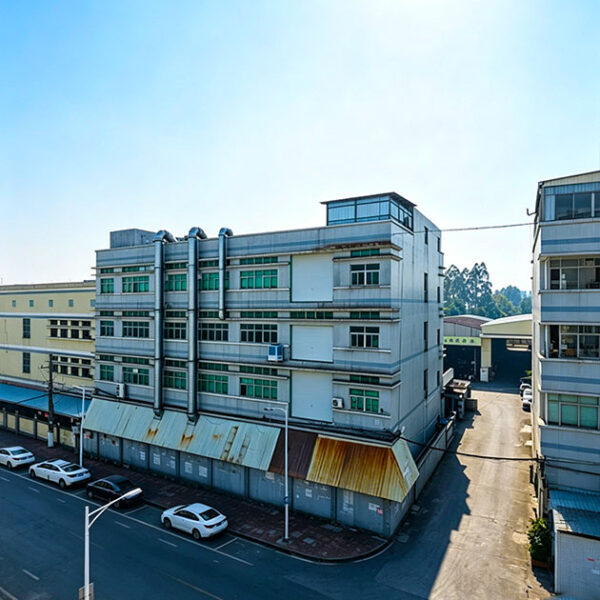
Factory exterior view of Dongguan Chitai's packaging production facility.
Technical explanation: what determines performance
A high-performance cannabis packaging bag integrates four elements: barrier structure, closure mechanism, printing, and storage stability.
The barrier structure is what makes a bag smell-proof. A multi-layer film with high barrier properties prevents odor from escaping and stops oxygen from entering. The bag must not leak air or absorb odors during storage. For long-term storage, the production environment should also support isolation from oxygen and ultraviolet light. According to the storage guidance used by Chitai, a light-proof constant-temperature warehouse at 15 to 22 degrees Celsius and 40% to 60% relative humidity helps prevent THC and terpene degradation over a 3- to 12-month period.
The closure mechanism determines child resistance. In the United States, child-resistant packaging must meet CPSC standards under 16 CFR 1700.20 and be classified under ASTM D3475. Choosing a manufacturer that understands these protocols is part of the compliance process.
Printing matters for brand compliance. Digital presses are useful for shorter runs and detailed labels, while gravure printing is efficient for larger volumes. A supplier with both can match the print method to the order size, which affects both unit cost and minimum order requirements. Mylar bags are a common flexible format in cannabis packaging because they can be heat-sealed and printed while supporting high-barrier lamination.
Application cases and buying scenarios
Cannabis packaging bags are used across retail and wholesale formats, including flower pouches, pre-roll packs, edible packaging, and concentrate storage. In each format, the bag's print surface, barrier level, and closure type must match the product and the channel.
Many buyers need more than a stock bag. They request custom printed marijuana packaging bags, private label cannabis bags, or child proof weed mylar bags with specific dimensions and label application. In an OEM model, the buyer provides the design and the factory executes production. In an ODM model, the factory supplies design and engineering support, helping the buyer adapt an existing bag structure. Both models are common when brands need a differentiated look without building their own packaging operation.
Market trends that affect cost-performance decisions
Three trends influence the buyer's choice of cannabis packaging bags in 2026.
First, the overall market is expanding. Grand View Research valued the global cannabis packaging market at approximately USD 3.2 billion in 2025, while Fortune Business Insights projects USD 21.55 billion by 2034 with a CAGR of 14.35%. Growth increases the number of suppliers, which makes comparison discipline more important.
Second, flexible packaging is taking a larger share. Future Market Insights notes that flexible packaging, including pouches and bags, is a rapidly growing segment due to its efficiency and lower cost. Plastics still dominate materials, accounting for 54.3% of the 2025 material share, according to Grand View Research.
Third, brand-level competition among major packaging companies is strong. Berry Global, Amcor, KushCo Holdings (Greenlane), Sana Packaging, and Dymapak are frequently listed as key players. Berry Global Inc. was identified as a market leader with over 12% share in the cannabis packaging sector in 2025, according to Global Market Insights. The implication for buyers is not to focus on brand names alone; it is to verify production data, test reports, and delivery performance at the factory level.
Comparison with traditional or ordinary packaging suppliers
To make the comparison concrete, the table below shows how an integrated high-barrier supplier can differ from an ordinary packaging factory.
| Criterion | Integrated high-barrier supplier | Ordinary packaging factory |
|---|---|---|
| Yield rate | Stable at 99% or above | 85% to 92% |
| Base material | Virgin food-grade film; no recycled material | May add 30% to 60% recycled material; thickness reduced by 10% to 20% |
| Lamination | Solvent-free eco-friendly lamination | Dry solvent lamination or lower-quality glue |
| Line speed | 280-450 m/min integrated line | 80-150 m/min semi-automatic line |
| Order change | Around 15 minutes | 2 to 4 hours manual setup |
| Daily capacity | 2.5 to 3 times that of an ordinary factory | Baseline capacity; peak-season shortages possible |
This comparison has a clear limitation. A high-barrier integrated supplier is not the most economical choice for every project. A local factory with smaller minimum orders may be more suitable for a low-volume pilot or a non-regulated product line. The premium for virgin film, dust-controlled production, and faster turnaround becomes worth the cost when the buyer needs consistent compliance, branded print quality, and reliable capacity across multiple orders.
Therefore, the purchasing decision should be based on total cost of usable, compliant bags delivered on time, not simply the lowest sample quote.
Future outlook
As regulatory frameworks mature, cannabis packaging bag purchases will likely place more weight on documentation and auditability. Buyers may ask suppliers to provide material declarations, child-resistance test results, and line-side quality records. The flexible packaging segment will keep expanding, and suppliers that can combine high barrier performance with cleaner production methods will have an advantage in cost-performance calculations.
For the buyer, the practical direction is clear: compare the production system behind the bag, not only the bag itself.
Frequently asked questions
Manufacturer reference
Dongguan Chitai Packaging Products Co., Ltd publishes a company brochure with production and capability information. The brochure is available for download at the following link: Company brochure (PDF).