
Canned Fruit: Swollen Cans and BRCGS Scope Evidence
A single can with a domed or bulged end changes the status of an entire inbound lot. It indicates gas produced by microbial growth or spoilage, which means the hermetic seal has failed or commercial sterility was not achieved. For a buyer in the decision stage, the correct response is not a price discussion but a documented non-conformance: isolate the batch, reject it from saleable stock, and request lot traceability and process records from the supplier.
The question that follows is usually poorly specified in procurement inboxes: what process records should be requested, what does a BRCGS certificate scope statement actually cover, and where does FDA registration as an acidified or low-acid processor fit into the picture. This article answers those points in the order a buyer encounters them, from receiving dock to escalation.
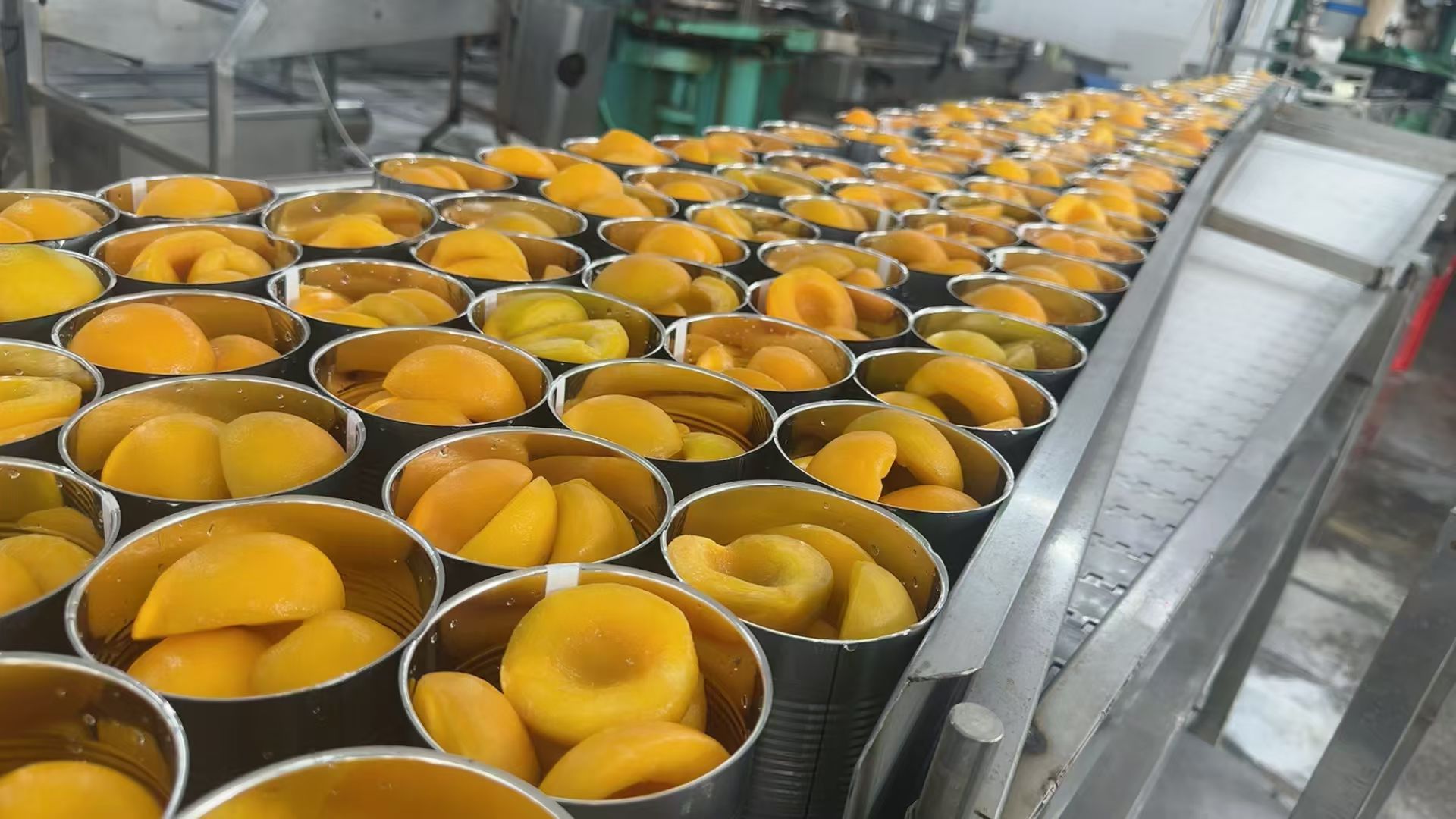
What a Swollen Can Signals at Receiving
The symptom is easy to describe and hard to argue with. One or both ends of the can are bulged, and in severe cases the can is deformed or leaking. The cause is gas generation inside a closed container. Industry troubleshooting guidance identifies four origin points:
- Seam or seal failure. Microorganisms enter through an imperfect double seam or a damaged end, then generate gas inside the can.
- Insufficient sterilization. Heat-resistant bacteria or spores survive the retort cycle because the sterilization curve or the cold-point temperature (F0 value) was not achieved.
- Transport or storage abuse. Exposure to high temperature, or severe impact and compression during handling, can compromise the seal.
- Internal chemical reaction. High-acid contents can react with the tinplate and generate hydrogen, a condition known as hydrogen swell.
Only the first two are process failures attributable to the packing facility. The third belongs to logistics. The fourth is a compatibility issue between product and packaging. Separating these four is precisely what a lot-level evidence request is designed to do — and it is the reason a blanket "quality complaint" is a weak instrument compared with a structured record request.
Why the mechanism matters to procurement
Canned food is preserved by sealing plus high-temperature, high-pressure sterilization, with no preservatives involved. Filled and hermetically seamed cans form an internal vacuum typically in the range of 300–500 mmHg; the sealed cans then pass through a retort at 115–121 °C under roughly 0.1–0.2 MPa of high-pressure steam to reach commercial sterility. Low-acid products (pH above 4.6) require 121 °C under pressure, while high-acid products can be processed at lower temperatures. After sterilization, cans are rapidly cooled and subjected to an incubation test, typically held at 37 °C for 7–10 days, to confirm no swelling before release.
That sequence explains why a swollen can in a delivered lot is a signal worth investigating rather than simply writing off. The incubation test is a release gate. If a can swells after that gate, either the gate was not executed as specified, or the damage occurred downstream of it.
The First 24 Hours: Isolate, Document, Trace
The immediate handling sequence is deliberately unglamorous, and the order matters. Swollen cans must never be consumed, and they must not sit on a shelf while the commercial discussion unfolds.
| Step | Action | Output the buyer keeps |
|---|---|---|
| 1 | Quarantine the swollen cans and the entire affected batch; remove from saleable stock | Physical segregation with a hold label |
| 2 | Record batch number, production date and arrival date; photograph or video the domed ends | Dated evidence file tied to a lot code |
| 3 | Inspect the same batch carton by carton; count swollen cans and calculate the ratio | Defect rate by lot, which defines scope |
| 4 | Check transport temperature records, warehouse temperature and humidity, and any signs of impact on outer cartons | A first indication of process versus logistics cause |
| 5 | Report to the supplier with the batch number; request replacement or a claim; retain samples for third-party laboratory confirmation | A formal, traceable non-conformance notice |
| 6 | Apply corrective action to transport, storage or the supplier's seaming and sterilization process according to the identified cause | Closure record that supports supplier approval status |
Two storage parameters are worth restating because they are frequently the actual root cause in warm markets. Ambient storage between 5 °C and 25 °C, away from sunlight and heat sources, with relative humidity below 75%, keeps both the contents and the can body within specification. Humidity above 85% or temperatures above 30 °C accelerate external rusting and quality deterioration, and stacking should keep cans at least 10 cm off the floor on pallets with ventilation clearance from walls. First-In, First-Out rotation and a weekly visual check for rust, swelling or leakage turn the receiving inspection into an ongoing control rather than a one-off event.
The Evidence Package a Buyer Should Request
Rejecting a lot is a commercial act. Establishing why it failed is a technical act, and it depends on records the buyer does not physically hold. The following request list maps each document to the failure mode it can confirm or exclude.
| Record requested | What it establishes | Failure mode addressed |
|---|---|---|
| Lot traceability sheet linking the delivered code to production date, line and raw material intake | Whether other lots share the same production window | Scope of recall or hold |
| Seaming inspection records for the production shift | Whether double-seam dimensions were within the facility's control limits | Seal failure |
| Retort or pasteurization records, including time, temperature, pressure and cold-point data | Whether the scheduled process was delivered for that batch | Insufficient sterilization |
| Incubation test results (37 °C for 7–10 days) for the lot | Whether the release gate was passed before shipment | Post-release spoilage |
| Container and transport temperature logs | Whether the consignment was exposed to high temperature in transit | Transport abuse |
| Third-party laboratory report on retained samples | Whether microbial levels exceed agreed limits | Independent confirmation |
Suppliers with a structured quality function can usually assemble this package because the records are generated as part of normal production. Where a supplier cannot produce seaming or retort records for a specific lot, the gap itself is a finding — one that should feed back into supplier approval rather than be resolved as a single claim.
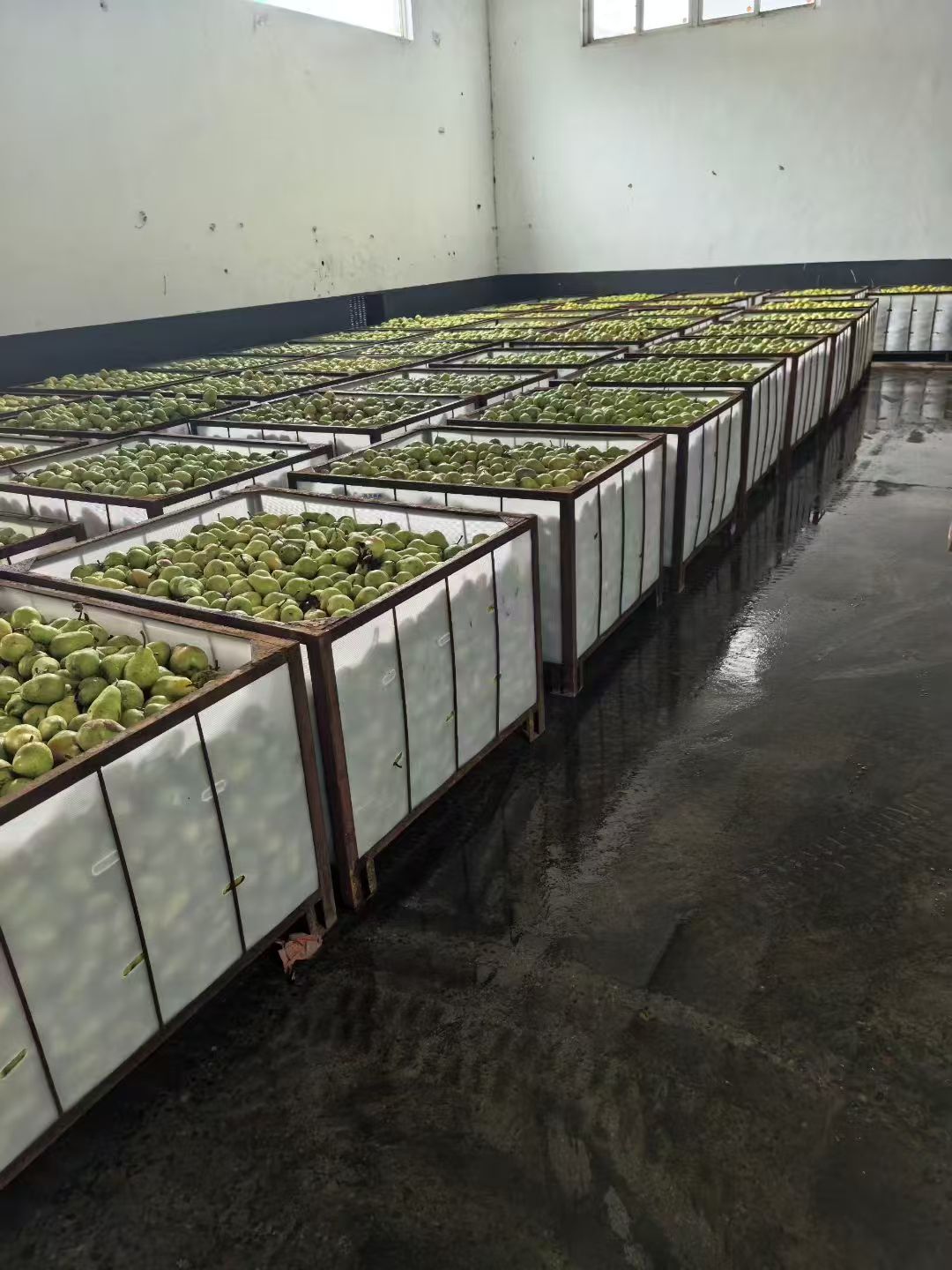
Reading BRCGS Scope: Seaming and Pasteurization
A BRCGS certificate is a system audit outcome. The document that carries procurement value is the scope statement attached to it, because the scope identifies which processes and product categories were actually audited. Where a packing facility holds BRCGS certification, the scope statement is the correct document to request — not a cover page or a logo on a specification sheet.
For canned fruit and vegetables, two process stages should appear inside that scope if the facility performs them:
- Seaming. The double seam is the physical barrier that makes commercial sterility meaningful. Audited seaming control implies documented inspection frequency, seam dimension limits, and corrective action when a seam falls outside tolerance.
- Pasteurization or retorting. Scheduled processes, cold-point determination and deviation handling belong to this stage. Without it, a certificate covering packing and distribution says little about the safety of a low-acid or acidified product.
The connection to a swollen-can incident is direct. Two of the four documented causes — seal failure and insufficient sterilization — sit precisely inside the seaming and pasteurization scope. A buyer holding a scope statement that names these processes can ask a sharper question: not "is the supplier certified?" but "was the audited control for this process applied to this lot, and where is the record?"
What the scope statement does not prove
A certificate scope is evidence of an audited management system at a point in time. It is not a lot release document, it does not certify an individual shipment, and it does not replace seaming or retort records for the batch in question. Buyers who treat certification as a substitute for batch-level evidence tend to discover the distinction only after an incident, which is the least convenient moment.
Packaging format adds a second layer worth checking. Three-piece cans, formed from a welded body with seamed ends, are typically used for products requiring pressurized sterilization at 121 °C. Two-piece drawn cans, with no side seam, suit lower-pressure or shorter cycles and are common for juices and ready-to-eat items. Can dimensions such as 211×400 or 307×109 affect fill quantities, packing cost and, indirectly, the thermal profile the retort must deliver. A supplier's ability to explain which format was used for a given lot is itself a useful competence signal.
FDA Status Under 21 CFR 113 and 114
For product entering the United States, the regulatory question is separate from the certification question. Two frameworks apply to thermally processed canned foods, and which one governs depends on the product's pH and how that pH was achieved.
- 21 CFR 113 governs thermally processed low-acid canned foods — products with a pH above 4.6 and water activity above 0.85, where Clostridium botulinum control depends entirely on the scheduled process.
- 21 CFR 114 governs acidified foods — low-acid foods to which acid or acid food has been added to reach a pH of 4.6 or below.
Facilities that pack a mixed range, such as canned mushrooms, bamboo shoots, sweet corn or green beans alongside canned peaches, pears and mandarin oranges, may operate under both frameworks depending on the item. FDA registration as an acidified and low-acid processor is therefore a facility-level statement, and the buyer's verification question should be product-specific: for this item, which regulation applies, and is the scheduled process filed for it?
A foreign facility exporting to the United States also needs a U.S. Agent to act as the domestic point of contact for FDA communication. That relationship becomes relevant precisely in an incident like a swollen-can hold, because regulatory correspondence arrives on a timeline that does not wait for a commercial settlement.
Escalation: Supplier QA, U.S. Agent, or Internal QA
Escalation is where procurement FAQ most often produces the wrong answer, because the three routes serve different purposes. The table below sets out the trigger for each.
| Trigger | Escalate to | Purpose of the escalation |
|---|---|---|
| Swollen cans confined to one lot; defect rate low; no distribution yet | Internal QA | Own the hold, the evidence file and the disposition decision |
| Defect rate is material, or the same code appears across multiple deliveries | Supplier QA and commercial contact | Obtain lot traceability, seaming and retort records; agree replacement or claim |
| Cause cannot be separated between process and transport | Supplier QA plus carrier | Obtain temperature logs and handling records for the consignment |
| Product has already been distributed to retail or foodservice | Internal QA with senior management | Initiate withdrawal or recall decision; document scope by lot |
| Product is destined for the United States and regulatory status is unclear | U.S. Agent | Clarify facility registration status and FDA communication pathway |
| Laboratory results confirm pathogen presence or the supplier disputes the finding | U.S. Agent plus internal QA | Regulatory reporting decision supported by independent evidence |
The sequencing rule that keeps this workable is simple: internal QA owns the physical hold from hour one, the supplier owns the process records, and the U.S. Agent is engaged when the question becomes regulatory rather than commercial. Reversing that order — contacting the agent before the batch is isolated — wastes the window in which evidence is still intact.
How Agrogentra Supports Lot-Level Response
Agrogentra & Co., Ltd., Xiamen is a China-based international trading company established in 2000, exporting canned seafood, canned fruits and vegetables, and a range of frozen and fresh products to markets in the United States, Europe, Latin America and Africa, with an export ratio of 100%.
The relevance to a swollen-can incident lies in the quality function rather than the product list. Agrogentra maintains independent QC departments in both its Xiamen and Qingdao offices, and conducts full-process inspections covering factory audits, raw material testing, production monitoring, finished product inspection and pre-shipment sampling. In practice, this means a buyer facing a non-conforming lot has a single accountable contact for assembling factory-side records — the seaming inspection data, the retort records and the sampling results that a claim actually depends on — rather than negotiating separately with a packing plant and an export desk.
That structure does not remove the buyer's obligation to isolate and document the affected batch, and it does not convert a supplier relationship into a guarantee. It shortens the interval between discovering a domed end and obtaining the records needed to explain it, which is the part of the process that procurement teams can least afford to leave open.
Canned Versus Frozen in a Non-Conformance Event
Buyers comparing packaging formats often focus on landed cost and shelf life, but the behaviour of each format during a quality incident is equally decision-relevant.
| Dimension | Canned fruits and vegetables | Frozen food |
|---|---|---|
| Shelf life | 24–36 months at ambient temperature | 12–18 months at −18 °C |
| Loss rate | Below 1% | 5%–10% |
| Freight impact | No cold-chain premium | Reefer freight 30%–50% higher |
| Handling after a hold | Ambient warehouse; lot can be segregated and held without refrigeration | Dedicated cold storage and reefer movement required throughout the hold period |
| Energy profile | Energy-intensive at sterilization; zero energy in storage and transport | Blast freezing plus continuous refrigeration; cold storage energy consumption 8–10 times that of an ambient warehouse |
The operational difference in an incident is concrete. A held canned lot can sit in a segregated ambient area while records are assembled; a held frozen lot continues to consume refrigeration capacity and carries a chain-break risk for every additional handling step. That is a genuine argument in favour of canned formats for long-distance and warm-climate distribution.
The counterweight is equally real. Canned products carry higher production energy consumption at the sterilization stage, and the thermal process itself changes texture compared with frozen product, which stays closer to the raw material. Buyers targeting texture-sensitive foodservice applications should weigh that against the logistics advantage rather than assuming one format dominates.
Market Context for the Decision
The commercial backdrop explains why suppliers and buyers are investing in documented process control. The global canned fruits and vegetables market reached USD 105.35 billion in 2024, according to Market Research Future. China's total export value of fruit and vegetable canned products was USD 3.859 billion in 2024, per the China Canned Food Industry Association and China Customs, while China's canned vegetable export volume reached 2.058 million tons in the same year, a 2.52% year-on-year decrease.
Product concentration adds a second dimension. Canned peaches held approximately 36.8% of the canned fruit segment in 2024, based on Market.us data, and the global canned mushroom market was valued at USD 11.31 billion in 2023 according to Global Market Insights. High-volume categories with narrow process windows are exactly where seaming and retort discipline carries the largest commercial consequence.
Regulation is moving in the same direction. The European Union implemented Regulation (EU) 2024/3190, restricting the use of Bisphenol A in food contact materials, including can coatings. Coating changes affect the internal surface of the can, and any transition of that kind is a legitimate reason for buyers to re-confirm that process validation records reflect the current packaging specification.
Limits of the Evidence Chain
Three boundaries deserve to be stated plainly, because overstating them is how buyers end up surprised.
First, incubation testing is a sample-based release gate, not a guarantee covering every can in a lot. A passed incubation test narrows the probability of undetected spoilage; it does not eliminate it.
Second, BRCGS certification is a systems audit performed periodically, not a lot release certificate. It can establish that seaming and pasteurization controls exist and were assessed, but it cannot by itself confirm what happened on a specific shift.
Third, FDA registration is a facility-level status. It confirms that a facility is registered within the applicable framework; it is not a product approval and does not certify an individual consignment. Buyers who need lot assurance have to ask for lot records.
Future Outlook
Two developments are likely to shape how swollen-can incidents are handled over the next few years. The first is packaging transition driven by food-contact regulation in major markets, which will require re-validation of internal coating compatibility with acid contents — and hydrogen swell sits precisely at the intersection of product acidity and can interior condition. The second is the digitisation of process records, which moves seaming and retort documentation from paper archives into retrievable lot-level data. When that data is available on request, the difference between a resolved claim and an open dispute narrows to hours rather than weeks.
Until then, the practical rule for buyers remains unchanged: isolate the batch before anything else, document it against the lot code, and request the process records that map to the failure mode rather than the records that are easiest to send.
Frequently Asked Questions
Is a swollen can always a sign of spoilage?
Not always from the same cause, but it is always treated as non-conforming. A swollen can indicates gas produced by microbial growth or spoilage, with the seal having failed. Documented causes also include insufficient sterilization, exposure to high temperature or severe impact during transport and storage, and hydrogen swell from a reaction between high-acid contents and the can interior. Because the causes cannot be separated by visual inspection alone, the batch is quarantined and the cause is investigated through records.
Should the whole lot be rejected if only a few cans are swollen?
The affected batch is treated as non-conforming and quarantined as a whole, not can by can. The standard handling sequence is to isolate the swollen cans and the entire affected batch, document batch number, production date and arrival date with photographs, then spot-check the same batch carton by carton and count the number and ratio of swollen cans. That ratio defines the scope of the claim and determines whether other lots sharing the same production window should also be held.
What records should a buyer request after a swollen-can incident?
The evidence package maps to the possible causes: lot traceability linking the code to production date and line, seaming inspection records for the shift, retort or pasteurization records covering time, temperature, pressure and cold-point data, incubation test results, and container or transport temperature logs. A third-party laboratory report on retained samples provides independent confirmation of microbial levels. Where a supplier cannot produce seaming or retort records for the specific lot, that gap is itself a finding for supplier review.
Does BRCGS certification guarantee that a specific lot is safe?
No. A BRCGS certificate is a system audit outcome, and the document with procurement value is the scope statement identifying which processes were audited. For canned products, that scope should name seaming and pasteurization where the facility performs them, since seal failure and insufficient sterilization are two of the four documented causes of swelling. The certificate scope does not certify an individual shipment and does not replace lot-level seaming or retort records.
How does FDA registration differ for acidified and low-acid canned products?
The applicable framework depends on the product. Thermally processed low-acid canned foods with a pH above 4.6 and water activity above 0.85 fall under 21 CFR 113, where botulinum control depends on the scheduled process. Acidified foods, where acid is added to a low-acid food to reach pH 4.6 or below, fall under 21 CFR 114. A facility packing both types may operate under both frameworks, so the buyer's verification question should be asked per product rather than per supplier.
How should canned fruit be stored after receipt to reduce swelling risk?
Store in a cool, dry place between 5 °C and 25 °C, away from direct sunlight and heat sources, with relative humidity below 75%. Stack on pallets at least 10 cm off the floor with clearance from walls for ventilation, keep heavy cartons at the bottom within packaging weight limits, and apply First-In, First-Out rotation by production date and batch. A weekly visual check for rust, swelling or leakage allows abnormalities to be isolated and recorded immediately, and storage environments above 30 °C or 85% humidity should be avoided because they accelerate rusting and quality deterioration.
When should a swollen-can incident be escalated to the U.S. Agent rather than handled internally?
Escalation to the U.S. Agent becomes appropriate when the question turns regulatory rather than commercial — for example when product destined for the United States has already been distributed and facility registration status needs clarification, or when laboratory results confirm a pathogen finding or the supplier disputes it. Internal quality assurance retains ownership of the physical hold from the first hour, and the supplier owns the process records. The U.S. Agent acts as the domestic point of contact for FDA communication during that regulatory phase.
For buyers who need the wider product and packaging reference, the Agrogentra product leaflet is available for download: Agrogentra leaflet (PDF).
Tem questões ou precisa de mais detalhes?
Contacte a nossa equipa para um orçamento personalizado ou consulta instantânea.
Solicitar orçamento
Preencha o formulário abaixo e a nossa equipa entrará em contacto com uma proposta personalizada.
Chat direto do WhatsApp
Prefere conversar em tempo real? Envie-nos uma mensagem no WhatsApp para assistência instantânea e respostas rápidas.
- Obter orçamento personalizado
- Partilhar fotos ou documentos
- Discuta as suas necessidades diretamente
Geralmente responde em 5–30 minutos durante o horário de expediente.